Tag: Ed Brubaker
-
I’d like to say Brubaker has some kind of magic where he’s able to escape all the traps of a guy writing female narration. But he doesn’t. It’s still a really good issue and Brubaker doesn’t make the frequent mistakes of female narration–he’s got a really good plot and he sticks to the events and…
-
What Brubaker does here–a sort of prequel to the second arc of Criminal and a concurrent, companion story to the previous issue–is even better than the previous issue… which I didn’t think Brubaker could do. Brubaker had a hard time working out the setting for Criminal in the first arc and wisely left it mostly…
-
Such a good issue…. Brubaker’s able to get more content in because he’s got an increased page count but also because he’s concentrating on doing a standalone story. It turns out it’s not exactly standalone, but the issue has a beginning, middle and end. There’s no messing around with being deceptive in the narrative, to…
-
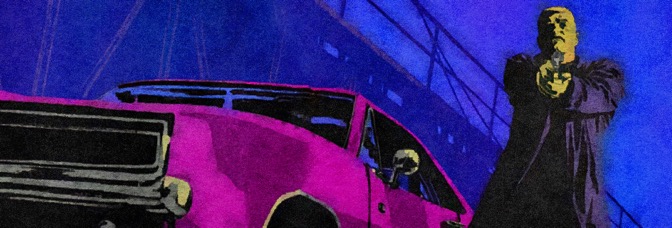
Now I remember this story arc and why I didn’t have any bad memories of it–because it’s great. What Brubaker does in this arc is take a character who’d be on the periphery of another story–a bigger story–and examine him. Tracy’s a tough guy who’d be in one scene of a more traditional noir story…
-
Now I remember this story arc and why I didn’t have any bad memories of it–because it’s great. What Brubaker does in this arc is take a character who’d be on the periphery of another story–a bigger story–and examine him. Tracy’s a tough guy who’d be in one scene of a more traditional noir story…
-

It’s in film noir’s nature to have a double-cross, to have a secret inopportunely revealed and have it affect the protagonist’s plans, whether he be a good guy or a bad guy. So I’m not surprised Brubaker has both of those elements in this issue (maybe twice for each). But Criminal isn’t a film. It’s…
-

In some ways, this issue is the first regular one of the arc. Brubaker’s not introducing anything startling, he’s just telling a story–he’s got enough established already he has material to work through. The result is a very nice issue. The only negative thing I can think of to say about it is Phillips’s one…
-

Brubaker has a reasonably painless reference to the first arc here, letting that arc’s protagonist have a little cameo. Then people talk about him a bit. It’s problematic because Brubaker’s writing the character differently here, so it attracts more attention than it should. Otherwise, it’s all very solid, once again. I think my favorite part…
-

Okay, I’m entering this arc of Criminal enthusiastic. Brubaker either grew up on a Navy base or an Army base–amazing how little biographical information is available about him, even though I know he’s talked about it in at least two interviews–and this arc’s protagonist is an AWOL soldier out to avenge his brother. I don’t…
-
It’s in film noir’s nature to have a double-cross, to have a secret inopportunely revealed and have it affect the protagonist’s plans, whether he be a good guy or a bad guy. So I’m not surprised Brubaker has both of those elements in this issue (maybe twice for each). But Criminal isn’t a film. It’s…
-
In some ways, this issue is the first regular one of the arc. Brubaker’s not introducing anything startling, he’s just telling a story–he’s got enough established already he has material to work through. The result is a very nice issue. The only negative thing I can think of to say about it is Phillips’s one…
-
Brubaker has a reasonably painless reference to the first arc here, letting that arc’s protagonist have a little cameo. Then people talk about him a bit. It’s problematic because Brubaker’s writing the character differently here, so it attracts more attention than it should. Otherwise, it’s all very solid, once again. I think my favorite part…
-
Okay, I’m entering this arc of Criminal enthusiastic. Brubaker either grew up on a Navy base or an Army base–amazing how little biographical information is available about him, even though I know he’s talked about it in at least two interviews–and this arc’s protagonist is an AWOL soldier out to avenge his brother. I don’t…
-
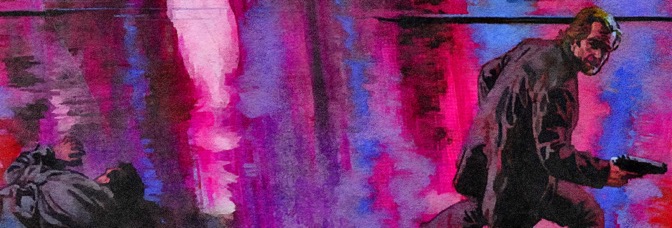
Turns out some of my major assumptions about the plot and its twists and turns were wrong. Unfortunately, just because the girl doesn’t double-cross the hero, Criminal doesn’t retroactively make intelligible sense. After spending almost five entire issues glamorizing crime–in the most negative way of course–Brubaker ends with a really pat “crime doesn’t pay” message.…
-

Finally, a good issue. Maybe if Brubaker had opened with this issue–with some structural editing, of course–I’d feel a little different about Criminal. For the first time, in issue four of five, he shows the reader something about the likely unreliable narrator instead of telling the reader all about him. As much as I hate…
-

Well, there certainly are a lot of developments here. There’s a super villain introduced and he’s, no shock, a psychotic. The girl seduces the brainiac protagonist, who’s spent the first part of the issue thinking he needs to think things through better. Oh, and the cute old man the protagonist looks after–he’s got alzheimer’s and…
-

I’m still not enthusiastic. Even though I don’t remember the specifics of the events, even though I’m sort of fresh reading it, I don’t really care at all. I remember it ends terribly so going through the issue, I’m finding myself concentrating on things besides the story. First and foremost, the artwork. Phillips is mostly…
-

I remember thinking about early seventies Springsteen the first time I read Criminal and I did again this time. Brubaker’s opening narration makes some pretty clear references to Springsteen and then it disappears. I don’t think it ever comes back, but it’s right there on the second page. I always get hung up on whether…
-
Turns out some of my major assumptions about the plot and its twists and turns were wrong. Unfortunately, just because the girl doesn’t double-cross the hero, Criminal doesn’t retroactively make intelligible sense. After spending almost five entire issues glamorizing crime–in the most negative way of course–Brubaker ends with a really pat “crime doesn’t pay” message.…
-
Finally, a good issue. Maybe if Brubaker had opened with this issue–with some structural editing, of course–I’d feel a little different about Criminal. For the first time, in issue four of five, he shows the reader something about the likely unreliable narrator instead of telling the reader all about him. As much as I hate…
-
Well, there certainly are a lot of developments here. There’s a super villain introduced and he’s, no shock, a psychotic. The girl seduces the brainiac protagonist, who’s spent the first part of the issue thinking he needs to think things through better. Oh, and the cute old man the protagonist looks after–he’s got alzheimer’s and…
-
I’m still not enthusiastic. Even though I don’t remember the specifics of the events, even though I’m sort of fresh reading it, I don’t really care at all. I remember it ends terribly so going through the issue, I’m finding myself concentrating on things besides the story. First and foremost, the artwork. Phillips is mostly…
-
I remember thinking about early seventies Springsteen the first time I read Criminal and I did again this time. Brubaker’s opening narration makes some pretty clear references to Springsteen and then it disappears. I don’t think it ever comes back, but it’s right there on the second page. I always get hung up on whether…
-

With the exception, obviously, of the Luke Ross art, this issue of Captain America is the best in story arc. I’m not sure if it’s the best part of the backup story, because–again–I couldn’t stomach it. Shockingly, Ross is a better artist than whoever does the backup. See, out of nowhere, Brubaker decides this storyline…
-
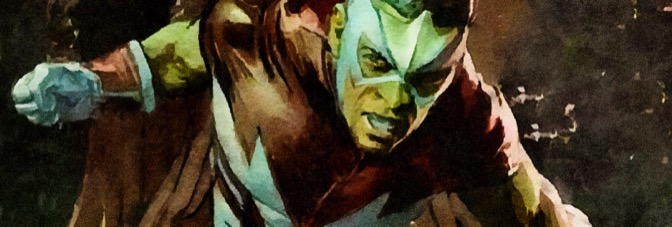
Another three minute read. It’s better this time, as Brubaker follows the Falcon for a lot of the story and he’s writing the Falcon a lot better than Bucky here. This story, Bucky’s coming off like a moron. There’s some awful artwork again–it kind of reminds me of the really bad Don Perlin Werewolf by…
-
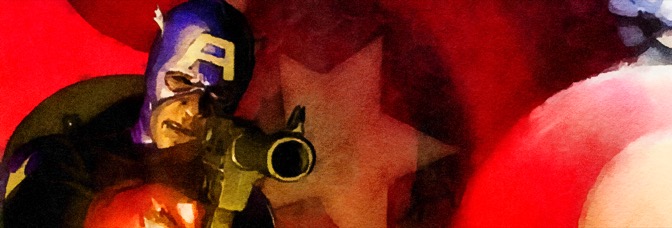
Wow. Four bucks for a comic I read in three minutes. I guess one of those bucks is for the Nomad backup, but I skimmed it then gave up on it. It’s not just poorly written, it’s incompetently illustrated. Now, calling the backup story incompetently illustrated seems unfair given the Luke Ross pencils on the…
-
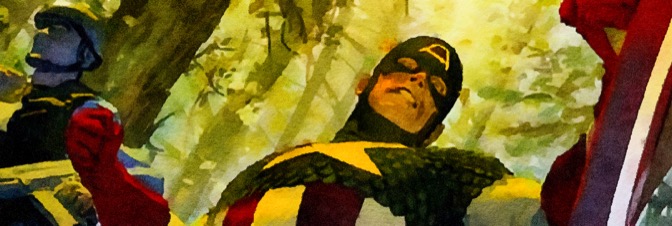
So this is the issue with the “tea baggers,” the issue Brubaker apologized for. Did he apologize for the rest–how he portrays people in Idaho as psychotic anti-government racists, just waiting for a Hitler to lead them? Because I don’t think he did. It’s a lead-in story, a ramp-up. I’m pretty jaded on Brubaker’s Marvel…
-
With the exception, obviously, of the Luke Ross art, this issue of Captain America is the best in story arc. I’m not sure if it’s the best part of the backup story, because–again–I couldn’t stomach it. Shockingly, Ross is a better artist than whoever does the backup. See, out of nowhere, Brubaker decides this storyline…
-
Another three minute read. It’s better this time, as Brubaker follows the Falcon for a lot of the story and he’s writing the Falcon a lot better than Bucky here. This story, Bucky’s coming off like a moron. There’s some awful artwork again–it kind of reminds me of the really bad Don Perlin Werewolf by…
-
Wow. Four bucks for a comic I read in three minutes. I guess one of those bucks is for the Nomad backup, but I skimmed it then gave up on it. It’s not just poorly written, it’s incompetently illustrated. Now, calling the backup story incompetently illustrated seems unfair given the Luke Ross pencils on the…
 The Stop Button