Tag: Ed Brubaker
-
It’s a strange issue. It’s a good issue–though it’s certainly the least ambitious so far–but it’s also a strange issue. Selina doesn’t have as much narration as she had before and now she’s doing much different things. She’s the star of a Bronze Age Batman comic, where Batman dresses up as Matches Malone and investigates…
-
Cooke mixes a lot of styles in this issue. Selina lives her non-costumed life in a more angular city, one with more art deco designs than when she’s got the costume on at night. But Cooke also finds this mixed style for Selina herself. She’s got the modern look, but he also goes for Silver…
-
In his ★★ review of Batman Returns, Roger Ebert said, “no matter how hard you try, superheroes and film noir don’t go together; the very essence of noir is that there are no more heroes.” I disagree about the film, but not all of the quote. I agree with the first part, not so much…
-

I don’t know if I’d noticed before but probably not–Brubaker’s narration for Fade Out has the possibility of not just being a noir touch but also an actual part of the narrative. There’s like a single use of “you” referring to the reader so I’m reading a bunch into it like part of the mystery…
-
I don’t know if I’d noticed before but probably not–Brubaker’s narration for Fade Out has the possibility of not just being a noir touch but also an actual part of the narrative. There’s like a single use of “you” referring to the reader so I’m reading a bunch into it like part of the mystery…
-

It’s my favorite issue of Velvet in a long time and I’m not entirely sure why. It might just be because Epting drawing an American secret agent with grey temples with a bouffant-ish hair cut reminds me of seventies Marvel black and white Gene Colan. It just feels right. But the rest of the issue…
-

It’s my favorite issue of Velvet in a long time and I’m not entirely sure why. It might just be because Epting drawing an American secret agent with grey temples with a bouffant-ish hair cut reminds me of seventies Marvel black and white Gene Colan. It just feels right. But the rest of the issue…
-

It’s another strong issue of Fade Out, which isn’t a surprise. Brubaker and Phillips are doing great work. But it actually looks like Brubaker is doing something a little different with this series. His famous (are they famous, they should be) aside issues–which I believe he’s been doing since Catwoman–this issue features the first time…
-
The Fade Out doesn’t feel like anything but itself. Seven issues in and Brubaker and Phillips have shed any comparisons to their previous work; it’s another in their line of collaborations, but it’s wholly independent from them. One of the factors for it standing on its own so quickly is the lack of fantastical elements.…
-
It’s a good issue of Fade Out but something feels off. Like Brubaker is backing off a bit in the narration–he’s set up the story, he’s telling the reader a whole lot about Gil and Charlie and how they feel and so on. There’s still a great story for Charlie and Maya. It’s also where…
-
It’s a sort of gentle issue of The Fade Out, with Brubaker and Phillips heading to the country. The movie production is doing location shooting–albeit on sets, but they’re away from the studio and things are developing. Charlie the protagonist continues his flirtation with the replacement girl while his flashbacks reveal his relationship with the…
-

It’s a bridging issue. But, since it’s Brubaker, he feels the need to do it to bridge his arcs together. To give that trade paperback an extended cliffhanger, not just each issue in the trade. It lacks texture, it lacks tone. Brubaker actually does have this significant new character (Sean Connery) running around Velvet, but…
-
It’s a bridging issue. But, since it’s Brubaker, he feels the need to do it to bridge his arcs together. To give that trade paperback an extended cliffhanger, not just each issue in the trade. It lacks texture, it lacks tone. Brubaker actually does have this significant new character (Sean Connery) running around Velvet, but…
-

Criminal’s back for a one-shot and, wow, it certainly does do a good job reminding of when Ed Brubaker and Sean Phillips are hitting the high notes on the comic. The special brings back a character, but Brubaker spends more time establishing this Conan knockoff than anything he does with the issue’s protagonist. Having black…
-

It’s a decent, not great, issue of Velvet. Brubaker’s resolution to his rip-off of The Rock works out a whole lot better than I would have expected; he and Epting do a nice talking heads comic with the Sean Connery (sorry, Patrick Stewart more like) telling Velvet just enough of what she thinks she knows.…
-
It’s a decent, not great, issue of Velvet. Brubaker’s resolution to his rip-off of The Rock works out a whole lot better than I would have expected; he and Epting do a nice talking heads comic with the Sean Connery (sorry, Patrick Stewart more like) telling Velvet just enough of what she thinks she knows.…
-

Even though there’s sensational material in the issue, the issue itself isn’t sensational. Brubaker is very measured. He’s meticulous in the plotting, giving just enough hints and just enough callbacks to the previous issues to get to some big surprises. By the time the issue ends, The Fade Out is something of a different comic…
-
Brubaker switches protagonists for the issue–with the normal, screenwriter protagonist basically getting a cameo–and moves over to the actress replacing the dead actress in the movie. It’s a phenomenal comic book, showing more ingenuity from scene to scene than anything Brubaker’s done in The Fade Out in a while. Than he’s done in anything in…
-

I guess Brubaker has seen The Rock. Maybe he’s hoping no one else remembers it…. It’s a bridging issue, which I suppose is to be expected–it is midway through an arc after all–but the places where one would expect Brubaker to excel, he fumbles. He wraps a flashback into the narrative and switches perspective to…
-
I guess Brubaker has seen The Rock. Maybe he’s hoping no one else remembers it…. It’s a bridging issue, which I suppose is to be expected–it is midway through an arc after all–but the places where one would expect Brubaker to excel, he fumbles. He wraps a flashback into the narrative and switches perspective to…
-
Brubaker goes all over the place in the second issue of Fade Out. There's a bunch of stuff with protagonist Charlie's secret partner and best friend–and the way Brubaker narrates from a close third person on Charlie is phenomenal–but there's a lot at the movie studio too. Not to mention the scenes with Charlie and…
-

Leave it to Brubaker–my favorite issue of Velvet so far and she isn't even in her own comic. Instead, it's Brubaker chronicling the efforts of two guys working for the agency (and neither seem to be the corrupt faction out for Velvet) trying to find her. There's really good narration from the first guy, Colt,…
-
The Fade Out is the story of a Hollywood screenwriter in the 1940s. Ed Brubaker writes the comic’s narration in really close third person. Between Brubaker–who has his fair share of writing predictable twists–and the protagonist–who would probably write even more of them–one of them should have noticed the utterly predictable nature of this issue.…
-

Given all the series’s problems as of late, I didn’t expect Brubaker to finish Fatale well. I knew it’d be problematic, but I hoped he’d go for satisfying at least. Instead, he pretends he’s been writing a lot of third person exposition in purple prose so he can finish the comic with a rumination on…
-

Brubaker starts Velvet’s second arc and it’s just as clear as with the first one, there’s something just a little off about it. Epting doesn’t get much opportunity for the period piece stuff this issue either, which is too bad. There’s a whole bunch of exposition with Velvet explaining her thinking about her investigation–it brings…
-
What a frustrating penultimate issue. It’s intentional on Brubaker’s part, but it doesn’t really matter because even though there’s almost no content to the issue–he reveals one big, deep dark defining secret of Jo’s, but it’s handled so matter-of-factly it doesn’t have much weight–even though there’s nothing to it, there’s Phillips’s art. I don’t think…
-
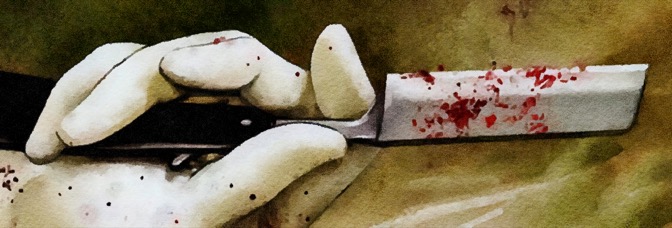
Maybe half the issue is really good background stuff with Velvet’s training after World War II and her mentor. Brubaker’s hostile to the new reader–and even to the regular reader with the bad memory–he doesn’t establish the story in context, he just starts out with his alternating flashbacks. The training and the mentor is the…
-
Maybe half the issue is really good background stuff with Velvet’s training after World War II and her mentor. Brubaker’s hostile to the new reader–and even to the regular reader with the bad memory–he doesn’t establish the story in context, he just starts out with his alternating flashbacks. The training and the mentor is the…
-
Until the last sequence, which tries too hard, this issue of Fatale is one of Brubaker’s strongest in a while. It starts with the big bad guy, the Bishop–who I can’t remember if Brubaker has named before–investigating what Jo’s been doing. Then it goes into a long flashback of the Bishop’s life since 1906. It…
-
This issue, while obviously winding up to the big finish, is a bit of return to form. Brubaker takes the time to introduce a new character–one impervious to Jo's charms–and he's a nice addition. There's some levity amidst Jo's preparations. Speaking of Jo's preparations, Brubaker does go too far with a reveal in the last…
 The Stop Button