-

An audio commentary for the 1989 film, Halloween 5: The Revenge of Michael Myers, directed by Dominique Othenin-Girard, starring Donald Pleasence, Danielle Harris, Ellie Cornell, Beau Starr, Wendy Kaplan, and Tamara Glynn. -


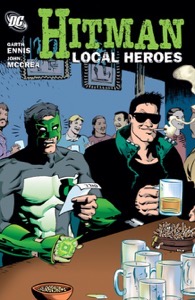
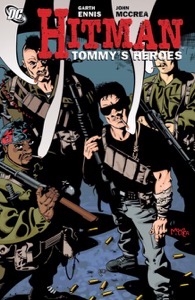
By the fifth Hitman collection, DC has given up on the six or eight-issue collection and just gone whole hog. There are fourteen issues in the Tommy’s Heroes collection. Two full story arcs, a couple done-in-ones (including the DC One Million crossover), and then a haunting two-parter to close it off. Writer Garth Ennis runs Hitman hero Tommy Monaghan through various ringers, starting with the S.A.S. out to get him.
Back in Gulf War One, Tommy and best friend Natt the Hat accidentally killed a British officer. Friendly fire, it happens (apparently a lot with the U.S. military, per Ennis’s S.A.S. blokes’ conversation). Only it was the son of some blue blood, so the S.A.S. wants to show you really can’t kill wealthy Brits, even if you’re a Marine, so they send a fire team to Gotham to kill Tommy and Natt the Hat. Why have they waited so long (the comic’s from 1998)? Possibly because the team leader was too busy undercover in the IRA, possibly because… they just needed to wait for it to be a story.
Especially since it’s going to turn into a gang war, and it couldn’t have been a gang war if Tommy hadn’t recently pissed off the Italian mob.
So, this arc, Who Dares Wins, has Garry Leach inking John McCrea, and while the style is still Hitman, Leach brings a much more absurdist feel to the art. It’s like a gore comedy, always trying to top itself—DC really should’ve paid Ennis or made some intern go through these Hitman comics and change out the fake swear words for real ones, just to see how it reads. Because it’s super gory, super gross (the Italian mob boss has IBS and conducts his business from the men’s, which begs for a Batman versus IBS mobster story but alas no), but there’s no cursing. But they get away with a lot, especially with the Leach inks.
It’s a five-issue arc, with Tommy and Natt on the run from the S.A.S., on the run from the mob, then having to save a kidnapped friend. Not the girlfriend. Ennis doesn’t put her in danger, though the S.A.S. considers it. Lots of the arc is about the S.A.S. being these unstoppable, unconscionable killing machines, leading to inter-team turmoil. Tommy and Natt are kind of just guest-starring in their own story. Ennis is far more interested in the Brits.
I’m pretty sure he did the same setup years later with a Punisher MAX arc. It’d be interesting to compare the two.
The story’s okay. The stakes are kind of low—once Ennis establishes it’ll be an alarming escalation if the S.A.S. team starts killing civilians (versus mobsters or Tommy and Natt), you don’t really have to worry about their hostage. I mean, maybe Natt’s in danger, but… probably not. Ennis started Hitman killing off Tommy’s other best friend. It’d be a lot to off the replacement.
Mostly, it’s a wonderful exercise in glorious, energetic art. McCrea’s always kind of static with Hitman. Leach brings the fluidity.
There’s a perfect example with the one-in-one following the conclusion of Who Dares Wins. Tommy and girlfriend Tiegel are on the outs after a fight over Tommy’s demonic hitman nightmares, so he and Natt head to the bar to get blotto. It’s mostly comedy and character development as Tommy feels like a failure compared to the S.A.S. team from the last arc. They were real hard men; he’s just pretending. So talking heads, Irish jokes, and an absolutely fantastic new bartender.
McCrea inks the issue himself, and it’s got none of that liquidity or smoothness Leach brings. It’s not bad. It works just fine for a pensive issue. It gives Tommy time to think through his monologues and so on.
Leach is back for the next arc, Tommy’s Heroes. Well, for most of it. It’s five issues, and smack dab in the middle Andrew Chui fills in on the inks and… makes Hitman look very silly.
Heroes is about Tommy, Natt, and a couple other local Gotham hitmen heading to Central Africa to work as mercenaries. Officially they’re advisors training the locations to fight the heroin-smuggling rebels, but pretty soon, they discover the people they’re working for are the actual bad guys. Because, of course.
One of the other mercenaries conned into the job is a British friend of one of the S.A.S. guys from the other arc. It gives Tommy a character relationship away from Natt and Tiegel, which is a Hitman rarity these days. Of course, Natt doesn’t want Tommy telling his new friend about the S.A.S. trying to kill them, so there’s some tension.
The tension quickly gives way to the aforementioned working-for-the-bad-guys bit, which becomes really obvious when Tommy’s superior kills a baby. Actually, the superior orders one of the two evil supers to do it; you can see the seeds of The Boys all throughout the arc, though it’s also going to echo Superman-as-stooge in Dark Knight just because it’s the most similar reference point at the time.
There’s a lot of outrageous war comic action, mostly with great Leach inks and much less humor than usual. One of the additional hitmen is the big dopey one, who everyone uses as comic relief to relieve tension. Not everyone like Ennis, McCrea, or Leach. The characters. They all use the guy to blow off steam while slowly realizing his place in the team dynamic.
Tommy’s Heroes is a better story than the S.A.S. one, but it’s also a much more serious one. It may be the most serious Hitman story so far. Ennis tries a little hard to force Tommy’s character development but gets away with it through charm, goodwill, and brute force.
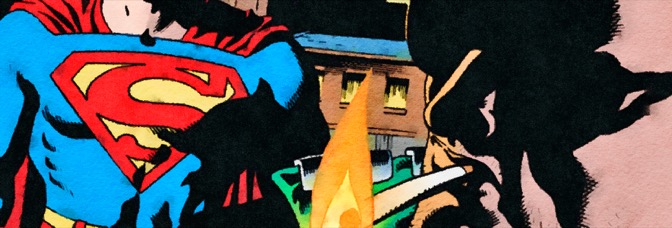
None of it, and none of Hitman, can prepare for the next issue in the collection, another done-in-one. Tommy and Superman, having a long talk on a Gotham rooftop. Leach does the inks. He and McCrea’s Superman is vaguely Kirby-esque, larger than life (and chonky), which just makes the story all the more effective.
Superman’s just had a very bad day and went to talk to Batman about it for emotional support. Batman was useless. Since it’s Superman and Superman’s always saving the world, Tommy figures the least he can do is talk it out with him. So the comic works through three levels of cynicism. There’s Tommy’s affected but earned cynicism, there’s Superman’s reluctant cynicism, then there’s Ennis’s cynicism about the whole superhero thing, as continually evidenced in the very comic book itself.
It ends up being Ennis doing inspiration over cynicism, and it’s absolutely phenomenal. It’s not the best Hitman, but it’s on a shortlist of best Superman.
Then it’s time for the DC One Million crossover, which has a bunch of future jackass rich kids teleporting Tommy to the future so they can use his powers. In the intervening 83,000 years between the present and the One Million timeline (seriously, there ought to be an oral history project on the terrible idea of this crossover from go), the world has aggrandized Tommy into a superhero. The kind who would be suitable for a silly crossover issue.
All that superhero inspirational positivity Ennis ginned up for the Superman issue? He cleanses himself of it in the One Million crossover. All the future superhero sycophants are dipshits (at best), and Tommy’s mortified by the lot of them.
Eventually, he’s going to reintroduce murder-death-kills to the neutered future, hurrying things along so he can get back to his barstool to drink away his sorrows. The best thing in the issue’s probably the punchline cameo, but absolutely no one is trying very hard here. Ennis’s exposition is just to rag on the concept, though McCrea (inking himself) does get to do more goofy humor than usual.
Then comes the devastating two-part finale of the collection.
So, again, just like the Tommy’s Heroes arc was the most serious Hitman to that point… the two-part Katie sets the new standard. Because it’s going to be almost incalculably dark.
The story starts with Tommy and Tiegel having another fight, taking another break. She’s mad about him being a hitman, which is their go-to disagreement. Ennis seems to have forgotten what he enjoyed about writing them together, and now they just argue and, during the arguments, mention the other times they’re happy with each other. We just never see those on the page.
The latest breakup is just to remind Tiegel’s still around, with the inciting incident being a person from Tommy’s past reappearing and taking him back to Ireland. There are a lot of truth bombs, and back story reveals throughout the two issues, but they have very little to do with Hitman proper. Outside it broadly being about Tommy’s character development. Everything he finds out here is a revelation to both reader and Tommy, so we’re privy to his reaction.
The series has already established Tommy was left at the local Catholic orphanage as a baby, and the Mother Superior at the orphanage has been having a long-time love affair with his good friend, the bar owner. Well, I think Ennis only hinted at the latter, but it’s a plot detail in the arc. Because when it’s about Tommy in Gotham, it’s Tommy as a newborn; so instead, it’s about the adults around him.
But it’s not a Gotham story, it’s an Ireland story, and Ennis has a lot of thoughts about how shitty Irish people can be. Mainly how shitty men can be. How infinitely awful, in fact.
It’s a hell of a story.
Excellent, emotive art from McCrea and Leach. It’d probably be nicer if they’d ended the collection with some kind of reprieve, but they don’t. It’s just an even more intense weight than the comic’s ever had before.
Hitman: Tommy’s Heroes might be the turning point where Ennis starts getting more ambitious with the character. Not the romance, unfortunately (I don’t think Tiegel has anything to do outside the arguing in almost four hundred pages), but there’s so much great stuff in these issues. It starts with Leach giving the comic this newfound fluidity, jazzing it up, as it were.
It ends with Ennis… doing whatever that ending does, coming after the Superman issue after the Tommy’s Heroes arc. Just rending the reader, rending Tommy.
On the one hand, I can’t wait to see where Ennis goes next. On the other, it’s a terrifying thought. He and McCrea take Hitman someplace much darker and thoughtful than mainstream DC’s built for. They’re pressing the medium to the limit; it cracks to reveal something cold, desolate, and vibrant.
It’s excellent comics.
-

What a lackluster conclusion. There’s actually a bunch of good stuff, including a triplicated Jodie Whittaker they should’ve been doing since the cliffhanger on the first episode. Still, as the finish to “Doctor Who vs. The Flux,” it’s minimally successful.
The resolution with rubber mask supervillains Sam Spruell and Rochenda Sandall is lousy, and then the hook is exactly what you’d expect anyway. It’s Whittaker’s last season as the Doctor, and of course, the villains know to threaten her with not being regenerated. They’ve been doing it since David Tennant was on the show. It’s been ten years of it. Blah.
There’s some really good stuff with guest star Jemma Redgrave, who hasn’t been on since Peter Capaldi. She and Whittaker have excellent chemistry—when the episode beats Bechdel, it beats Bechdel—only it’s Whittaker’s farewell lap. Maybe they should’ve introduced Redgrave earlier. In Whittaker’s reign, not in this season. Though, in this season too. They could’ve halved this “event” and had something.
There’s some good stuff with John Bishop, who just needed character development away from Whittaker to get into the right zone as a companion. Mandip Gill has decent material throughout until to have a thankless conclusion.
The “Flux”-specific companions all get some final arcs and farewells, with Craige Els, Jacob Anderson, and Thaddea Graham set for an obnoxious spin-off. The good work is from Kevin McNally and Annabel Scholey, who get thankless conclusions too. Scholey’s finish doesn’t even make sense for the timeline, but, whatever most of the universe is destroyed, so does it really matter.
The Sontaran villains are only good compared to Craig Parkinson as the pointless guest human villain. There are way too many qualifications on a way too long, way too thin storyline. Especially since the deus ex machina gives way to an even more effective deus ex machina, they could’ve obviously used. It’s terrible plotting from writer Chris Chibnall, who wasted full episodes of the season on nonsense.
A quarter of the episode plays like a Star Wars 1977 homage, like the BBC finally gave “Doctor Who” to do the riff on it they’d been planning since… 1977. There is some decent CGI work, though. Surprisingly good for the show. Even if the green screen compositing is still lousy.
But the three Whittakers—interacting with different sets of companions, friends, and foes in different times—is possibly the best Whittaker has done when it hasn’t been one of her companions holding up the show. It’s a shame it took them until now to figure out what to do with the character. Still, since Doctors Who are always temporary, it’s hard to get any character development going until they face their imminent recasting.
It’s a real shame they wasted so much of Whittaker, Gill, and Bishop’s limited time remaining on this six-part nonsense. Writer and showrunner Chiball stretched an okay three-parter (it’d have been better in two) way too far with way too little reward.
-

I don’t think I’d ever have foreseen the Heartland Family Crime Saga genre. Or how it basically employs every white actor who isn’t in a Marvel movie (currently) or once tangentially appeared in some East or West Coast Crime Saga. For example, I didn’t recognize George Carroll from his Ben Affleck Boston Crime Sagas. And Melissa Leo’s proving you don’t have to be a British dude to earn off that single Oscar win.
Ida Red is an Oklahoma City Crime Saga; it’s hard not to imagine writer and director Swab feeling very Michael Mann-y for the big shootout, which involves the city’s shockingly dull downtown Underground. The music in the first half is mostly a riff on Tangerine Dream’s Thief score, so I’m sure Swab can talk a lot of Mann trivia. Can he turn it into a good movie?
No, but at least the actors don’t have to be embarrassed by their participation. Though you can see the clock running down on Leo’s contract, she doesn’t rush her big scene, and she does manage to make Swab’s wanting monologue work, but she keeps a brisk pace. She’s basically just playing a riff on Margo Martindale from “Justified.” Swab doesn’t have anything original to do. He just strings together lifts from other movies and sets them in Oklahoma City. It’s shocking the state underwrites their citizenry being portrayed as, at best, sociopaths. Everyone in the movie’s a piece of shit. You’d think the Oklahoma Film and Music Office would hold off on the subsidies unless there’s a positive role model.
Though it’s Oklahoma, so what do they consider positive. The whole movie’s just waiting for Carroll to get arrested for going to the Capitol riot.
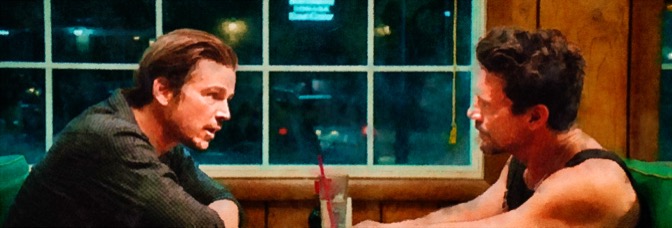
Carroll’s the local sheriff, who’s not very good at his job. The movie starts with federal agent and professional bad movie check-casher William Forsythe teaming up with Carroll. See, Carroll’s in-laws are the local crime bosses. Leo’s in prison, running the thing, with son Josh Hartnett and her dead husband’s brother Frank Grillo doing the legwork. Hartnett’s got a used car lot, and no one wanted him to get into the crime family business, but when Leo went to prison, lots changed. That used car lot is the extent of Hartnett’s personality. He’s less violent than Grillo, but Grillo’s a vicious psychopath. Also, apparently an avid male rapist, but that detail’s only in the first act when the film’s trying to flex its homophobia for the Redbox audience. It takes until halfway through to establish the real crime bosses of Oklahoma City are Black people pretending to be upstanding citizens, and the crackers just do what they say. It’s actually less racist than I was expecting but more homophobic. Not sure about the misogyny because women are only meaningful if they commit crimes.
Deborah Ann Woll, married to Carroll, and Hartnett’s older sister and in the movie for even less time than Leo, is anti-crime. She resents Hartnett and Grillo looking down on her relationship with Carroll, which is basically her being a housewife, silently watching TV with Carroll, and being a terrible mom to Sofia Hublitz. Hublitz is the fifteen-year-old troublemaker who’s got too much of the family blood not to be a rabble-rouser. Hublitz and Hartnett are pals but only for the purposes of the film. There’s no depth to their relationship, which is fine; there’s no depth to their characters either.
Swab’s direction is fine. He and cinematographer Matt Clegg screw up the third act—including badly slowing down the establishing shots in Oklahoma City—but otherwise, it looks fine. John David Allen’s editing is easily the technical win. Except for the swipes. They do swipes like it’s Star Wars. David Sardy’s music—Tangerine Dream-lite or not—is acceptable. Ida Red’s not an inadequate production.
Acting… Hartnett’s fine. He holds it together when he doesn’t have a single character motivation. Grillo’s showier, but it’s just as empty. They’re about even. A better script would’ve been about them and not shoe-horning in Carroll or Hublitz. Hublitz is middling. Woll’s middling. Forsythe’s embarrassing but fine; he really needs to sell his likeness to a CGI company so they can just make him a digital asset. I mean, sure, the writing’s terrible on his aged super-cop thing, and it’s not like he gets an iota of energy off Carroll, but still. Why make him show up when you could just do a digital standee?
Leo’s okay. Mark Boone Junior’s okay. Beau Knapp’s almost good. The writing gets him. Ben Hall’s got a more prominent part than his acting can handle.
It all could be worse. And it’s definitely of note if you’re a Michael Mann aficionado and want to see Swab artlessly mimic him.
Hartnett, Grillo, Leo, and Junior should try doing a good movie together.
-


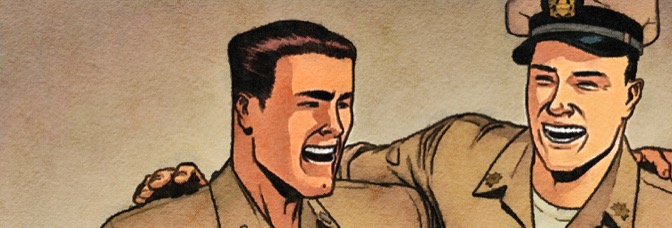
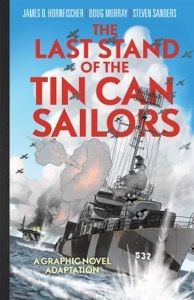
According to the "About the Creators" section, the 2004 prose non-fiction book, The Last Stand of the Tin Can Sailors, is based on declassified documents and interviews with participants, which raises the question of whether or not Last Stand of the Tin Can Sailors comic adaptation writer Doug Murray ever read the book. Or were all the participants original author James D. Hornfischer interviewed so insipid and bland as Murray writes them?
Insipid is almost too complimentary a phrase for Murray's writing because insipid suggests some ambition. You have to try to be insipid. But inept suggests too much basic competence and incompetent… well, it also implies there's a possibility of competence, and there's nothing remotely competent about Murray's script or Steven Sanders's art. I guess some of the military machinery is appropriately detailed, but not all of it. Like, Sanders does not give a crap about detail on the ships, and the comic's all about the ships.
It tells the tale of World War II sea battle where Admiral "Bull" Halsey (played by Jimmy Cagney in the movies, not John Wayne) lets his megalomania and stupidity get in the way of being a good commander and a bunch of people suffer for it. Tin Can Sailors doesn't give a hoot about the casualties of the battle—I'm trying not to just curse the book out because it's not worth the energy—because Murray's primary interests are the low-key racism, boring toxic masculinity, and the occasional vague misogyny. It, of course, can't be racist because the Japanese were sub-human after all… oh, wait, hole in the logic at literal first glance. If Tin Can Soldiers were any more competent, it might be a concerning bit of Christian nationalist, white supremacy, but Murray's a laughable writer. Most Beetle Bailey strips are better written than this comic.
And then there's Sanders. What's worse, his inability to draw people or him using pictures of the ocean instead of drawing the ocean? I kept hoping there'd be at least one good idea for a panel, and maybe there's a first-person POV one with some ambition, but Sanders is so bad at the drawing part of it trying for composition one panel out of 200 pages isn't anywhere near enough.
Murray's also got the problem he can't make the battle interesting because he's got to show the Japanese as incompetent, unworthy enemies to the white men. Also, he's terrible at plotting out the battle. And showing how it affects recurring cast members. And writing those recurring cast members to be distinct characters instead of disposable jingoistic, narcissistic numbskulls. At best. If they really are supposed to be so indifferent to the death and destruction around them—does Murray believe in PTSD, or is it just for wusses—they're even worse. Because it's hard rooting for them.
Murray doesn't, you know, show the Japanese side of things. Sanders would then have to do more than two drawings of their admiral instead of reusing the same one over and over. So it's basically the Japanese did a sneaky maneuver, the Americans caught them, then kicked their asses all day long because they suck, and the USA is great; also, lots of people died, the fleet admiral was incompetent, and whatever. Man up or something.
Murray and Sanders's Last Stand of the Tin Can Sailors is clearly terrible from the first or second page, and there's no reason to keep going with it except self-flagellation. The writing starts bad and stays bad, with Murray missing very obvious opportunities to make the read more engaging or informative. Because it ought to be informative, right? Like, it's a history comic, it ought to convey some historical data into the reader's mind to process. Nope. It's the worst written thing I've read in ages. Murray's copying-and-pasting it in and without the enthusiasm of a disgruntled office temp.
And Sanders.
I mean.
You could read Last Stand of the Tin Can Sailors as your first work of "graphic non-fiction" or whatever they're calling non-fiction comic books these days, and you still wouldn't have read one. Because it doesn't qualify as a comic book.
The whole project is an unmitigated disaster, which then manages to get even worse when it turns out Sanders isn't going to draw any water. So it's not even embarrassing for the creators. I mean, I'm sort of embarrassed I finished it, but I've got the "I'm writing a blog post" excuse. But the creators shouldn't be embarrassed. Their work is too obviously bad to expect anything better from them.
The comic also skips what seems to be the most interesting historical aspect—this battle is when the Japanese air force started doing kamikaze attacks? It's an aside from Murray. Because he does a terrible job. Because the comic's terrible.
Almost unimaginably terrible. Especially in 2021, especially when the medium has gotten so much more competent across the board. It's a dreadful experience.
-

This episode has some real highlights, including a great New York action sequence, but the most impressive one has got to be the comic book talking heads sequence. Jeremy Renner and Hailee Steinfeld are sitting and talking to each other. They’re staring almost directly into the camera in one-shot close-ups, and they just have a conversation. Back and forth, back and forth, just like a Marvel Comics talking heads sequence. It’s pretty awesome and made me think Rhys Thomas really loved the comics.
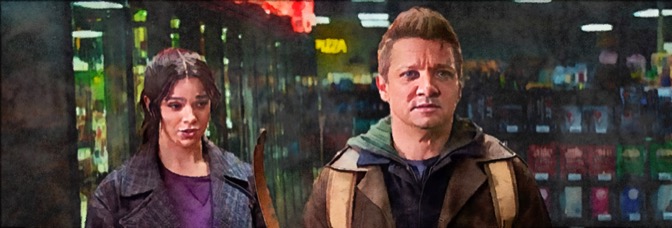
Except Thomas didn’t direct this episode, it was Bert & Bertie, so I guess Bert & Bertie really grok the talking heads formula.
The New York action sequence has Renner and Steinfeld doing a car chase with bows, arrows, and bridges. Not a great car chase, but focusing on Steinfeld’s archery—Renner finally lets her use some of his trick arrows, though he keeps the best one for himself—it’s really distinct for the show. Especially since the episode opens with Alaqua Cox’s villain origin story and feels like they will spend the whole episode on her.
We find out she had to go to public school instead of deaf school because dad Zahn McClarnon couldn’t afford it. It lessens the impact when we later find out McClarnon ran the Tracksuit Mafia and was an actual bad guy. Still, the opening with young Cox (played by Darnell Besaw) and McClarnon plays sympathetic and wonderful. She then trains in martial arts from a young age to be a crime lord to numbskulls when she grows up.
“Hawkeye”’s oddly lethal. Like, for a while, all the stuff with the Tracksuit Mafia is non-lethal because they’re jackasses. Steinfeld has a funny interchange with one of them about his relationship troubles, and Cox doesn’t want the heroes killed, so there’s never any real danger. Until all of a sudden, there’s real danger, except the bad guys are mostly boobs, so Steinfeld and Renner can kick ass. Lethally. No dead bodies, but it’s the Batman Returns logic of “you blow someone up, they don’t survive.”
With Cox’s origin story, the beginning really feels like a Marvel Netflix show. Like they’re going to do a whole episode setting her up. They don’t, but it’s an effective prologue.
And there’s a bunch of juxtapositions between Cox and the heroes. Cox has been deaf since at least childhood, if not birth, and Renner’s now got hearing loss. Cox is a childhood martial arts star, Steinfeld’s a childhood martial arts star; Cox has daddy issues, Steinfeld has daddy issues. The Steinfeld analogs don’t get explored here, but Cox and Renner both having hearing loss is a plot point.
Some terrific acting from Steinfeld and very sturdy work from Renner. They really should’ve done the MCU Dad thing with him from go. He and Steinfeld’s mentor and protege relationship gets some nice development here, altogether avoiding the surrogate dad stuff, which is awesome.
Cox is good; Fra Fee’s solid as her sidekick (the only other polysyllabic Tracksuit).
The cliffhanger’s wanting—another comparison to Marvel Netflix, it’s set up for an immediate, binge watch resolution—and makes the episode feel too short, especially since they very obviously tease a reveal villain for later on. But “Hawkeye”’s the real deal. And the Christmas in New York setting just keeps paying off, this episode seemingly doing a Lethal Weapon homage.
Also—the Tracksuit Mafia’s headquarters is an old KB Toys. The branding’s so obvious you’d think there was a tie-in or Disney owned them, but no, it’s apparently just a KB Toys.
-

Since I never got comfortable recommending the show, it’s fitting “Superman and Lois: Season One” finish on something of a fail. It’s not terrible. I don’t think it’s the worst episode, but it’s definitely in the bottom three. Not because there’s anything particularly wrong with it; there’s just nothing particularly right with it.
It’s a paint-by-the-numbers conclusion to all the unresolved plot threads, dispassionately directed by Tom Cavanagh. Cavanagh stars on “The Flash,” which must take place on another Earth for sure since none of the superheroes are helping with the end of the world as we know it. So his directing is like a vanity thing? Because it’s not because he’s got some intense connection with the material (the show has that director in its pool with producer Gregory Smith) or because Cavanagh’s good at full episodes. Once the middling action resolves, the episode’s a more and more tedious series of epilogues for each character.
There’s nothing good in any of said epilogues. Like, there’s no actual resolution for Alex Garfin and Inde Navarrette. We don’t see them reuniting when she thinks he is dead. Instead, they’re just hanging out at her parents’ latest barbecue, where everyone goes to have a good time. Narratively it’d make so much more sense to have it on the Kent farm, but why bother. Credited to Brent Fletcher and Todd Helbing, the script is just as unambitious as Cavanagh’s direction.
The episode ends with a big surprise for season two, but it’s predictable and not just because it’s the same season finale surprise as “Supergirl”’s first season ended with. Given how understaffed the episode appears to be, they could’ve used a surprise guest star or two. Over-stuffed but empty describes the episode overall, which is a bummer since the season had otherwise been doing a good conclusion arc. They just didn’t have an ending. Or not enough of one.
Especially for poor season villain Adam Rayner, whose most memorable scene where he’s got a medium shot and probably isn’t a CGI model is him doing jazz hands. “Superman and Lois” entirely copped out on a good villain. The less said about A.C. Peterson, the better. He’s easily the worst casting of the series, and they’ve had some iffy moves.
None of the special effects sequences are very good. The energy plasma stuff is fine. But they cheap out in other places, like having all the bad guys this episode be nameless, brainwashed, super-powered soldiers in full uniform, including helmets. Seems cheap.
I also just realized, given the setup for next season, they wasted at least one of the epilogues in the episode and instead could’ve wrapped it all up together. Or maybe just plotted it differently. With a good script and good direction, there are a couple episodes worth of plot points here.
With this script, with this direction, they went on about five minutes too long. Especially since there’s no pay-off at all for the regular cast.
Some better music than usual from Dan Romer. Not with the action stuff, but in the epilogues and only because he plays with the themes. Hoechlin gets two big monologues, and neither of them land because they’re so poorly contextualized.
The episode seems intentionally neutered. Creatively speaking, the only reason seems to be that they had Cavanagh directing and knew he couldn’t do anything else. It’s disappointing as heck, especially since I thought it’d be a banger.
This episode is very much not a banger.
It is a bummer. And it shouldn’t be one.
-

This episode picks up three weeks after last episode’s hard cliffhanger, which had Adam Rayner escaping the Army and zooming off to the sun to suck in its energies. He’s still at it three weeks later. Apparently, it takes a while to charge a Kryptonian flesh battery. We also hear all the voices stuck in his head because he assimilated the Eradicator device (becoming The Eradicator, sans bitchin’ sunglasses). The voices aren’t great. The sun-sucking effects are surprisingly good. But the voices… I mean, I hope it’s the crew of “Superman and Lois” doing the recordings just so there’s an excuse for them being terrible. Without a cute story, however, they’re just awful.
The three-week jump is only important because it’s enough time for Smallville to start going under. Four businesses have closed. You think construction on your street is bad, wait until Dylan Walsh moves the Army in and encamps. The episode starts with Walsh pissed off the local newspaper is calling him on his shit, but it’s too little, too late from newspaper publisher Sofia Hasmik, who’s going to have to sell the paper anyway.
Three weeks is also enough time for Emmanuelle Chriqui and Erik Valdez to have given up on trying to stay in Smallville. Even though Tyler Hoechlin tries to talk Chriqui out of it and Victoria Katongo appeals to Valdez, it seems set. It’s important because Inde Navarrette doesn’t want to move away from Alex Garfin. The show’s really lost track of their character relationship; it doesn’t help Garfin’s kind of bad this episode, but there was an effectiveness to their bond the show’s lost. But seems to know it shouldn’t have.
There’s also the interesting detail Valdez was the only person at the Smallville Fire Department who wasn’t either sexist or racist to Black woman Katongo when she started, which might not be the message to send about this town we’re supposed to care about. Even though everyone’s basically a shit. Though not Kayla Heller, it turns out. She explains to Jordan Elsass she’s really from Central City and the daughter of a convict (so “The Flash” meets Spider-Man: Homecoming maybe?), so they moved to Smallville to get away from it all.
At least Elsass is good. Especially given he and Garfin go to an ill-advised house party, just as Rayner’s ready to invade Earth or whatever.
Hoechlin and Wolé Parks fight Rayner in (Chicago) Metropolis. It’s a good action sequence, with Chicago used for most skyline shots, then clearly Vancouver for the close-ups, and has some tense moments. It takes Elizabeth Tulloch to figure out Rayner’s evil plan for the good guys. Hoechlin and Parks rely too much on punching. And also on Walsh, who has no idea what’s going on either and just postures. But some good scenes for Walsh this episode. It takes him out of his element.
And then the cliffhanger’s great.
Oh, and Hoechlin and Tulloch get this great “parents’ worst nightmare” scene. It’s screwy because of Hoechlin’s Superman muscle suit, but the emotions come through.
Next episode’s season finale ought to be a banger.
-

A critical guide discussing the all fifty issues of the first volume of LOVE AND ROCKETS by Gilbert, Jaime, and Mario Hernandez. -

A collection of film responses discussing the classic Metro-Goldwyn-Mayer films starring William Powell and Myrna Loy, including the THIN MAN series. Includes discussions of each film as well as a feature essay about the Thin Man series. -

There’s some good, bad, and weird this episode. Mostly good and weird. The bad—besides A.C. Peterson ever-wanting Emperor Palpatine and then Eric Keenleyside’s similarly weak performance as the conniving Smallville mayor—is when all the adults of color are mean to Erik Valdez. Valdez and Emmanuelle Chriqui are feeling the fallout from Valdez cheerleading literal supervillain Adam Rayner building a factory. They run into Valdez’s fire fighting crew at the diner, and they’re all super shitty to Valdez, and it’s hard not to see the literal racial optics of it.
Also, the “Superman and Lois” drinking game is how many times Valdez says, “y’all.” I think you’d finish a fifth every scene.
But there’s some more of my imagined Valdez backstory after Inde Navarrette tells Alex Garfin—before they get harassed by the cops, so it’s good to know ACAB works in Smallville too. Navarrette tells Garfin the family’s originally from Mexico, but they’ve been in Smallville for generations, which syncs with my theory Valdez’s dad was some shitty white guy, and his mom was a quietly suffering Hispanic lady.
Anyway.
Navarrette and Garfin are skipping school because Navarrette’s sick of people talking shit about her family. Garfin’s along because they’re de facto dating at this point. Meanwhile, Jordan Elsass is skipping school with junior Kayla Heller, who all of a sudden is showing interest. Of course, everyone at school knows Garfin and Elsass’s grandfather is Dylan Walsh now, and since Walsh is the general encamped in the town… people want the story.
As does newspaper editor Sofia Hasmik, who finds herself disappointed in Elizabeth Tulloch’s journalistic ethics. Tulloch’s not giving Hasmik the whole story about how Tyler Hoechlin’s Superman and Clark Kent and villain Rayner is his half-Kryptonian brother. The Hasmik and Tulloch arc is necessary but sort of weak, at least as far as giving Hasmik anything to do. Another weird thing—she doesn’t have a computer on her desk. Hasmik. The editor of the newspaper.

Meanwhile, Hoechlin’s arguing with Walsh and Walsh’s stockpile of Kryptonite weapons. Wolé Parks is still around, too, figuring into some of the conversations. He and Hoechlin have the single superhero action sequence of the episode. But there’s some more super-powers stuff because Rayner’s sitting around in his cell and flashing back to his secret mission and Peterson being mean to him.

Plus, Valdez and Chriqui have a whole arc about being ostracized in their community.
It’s a full episode. It’s not exactly soapy because it’s a decompression from action episode. The dust has settled, and everyone’s getting their bearings. But not really because the season’s not over, and there’s more super-powered danger on the way.
The episode also reveals how much it’s leaning in on the nineties Superman comics, retroactively making Rayner’s villain costume a little more fitting.
Finally, I’m pretty sure they confirm Melissa Benoist and “Supergirl” don’t exist in this universe, meaning when David Ramsey guest-starred a couple episodes ago… it’s an alternate universe version.
Oh, and now finally, finally—in addition to the nineties Superman comics nods, there’s also some very Superman IV moments. And the promise of another one. But it works. I’m still not sure how much I’d recommend “Superman and Lois,” but I’m reasonably hooked.
-

I’m trying to remember the last Chris Noth-centric episode of “The Equalizer;” it must’ve been last season. This episode has him running around with a machine gun and fist-fighting like they promised him he could do American James Bond or something. Instead, however, it’s old man James Bond with Noth teaming up with previously unrevealed son Wesam Keesh.
It’s a jam-packed episode, script credit to Rob Hanning, and there’s not enough time for cop Tory Kittles to do anything. Or even appear. Also, Laya DeLeon Hayes’s PTSD problem is done. Noth asks about it, Queen Latifah says it’s better, the show’s moved on. Especially since Adam Goldberg’s whole “I want to unfake my death” arc will be tied to Noth’s troubles here, one way or the other.
The episode’s action story has Latifah babysitting terrorist Anthony Azizi, whose men have kidnapped Keesh, while Noth tries to rescue Keesh. Both Noth and Latifah are going to need Goldberg’s hacking help, with Liza Lapira back to babysitting husband Goldberg duty. There’s some more static between Lapira and Noth, but it lacks energy. She generally disapproves of this episode, which is weird since the episode sets up his private security mercenary as a literal angel; he’s just gotten back from saving Syrian children—and then gets mad because he won’t help Goldberg. Or at least he won’t promise to help Goldberg yet.
The family story has the daughter of a college lover visiting Lorraine Toussaint and then Hayes pestering her for the story. Good acting from Toussaint; maybe it’ll go somewhere, maybe it won’t. It’s more than a bit sensational and soapy. But Toussaint’s real good, so it’s fine. It’s sort of like proto-character development for her. Who knows if it’ll last as long as Hayes’s PTSD.
And then Azizi’s a good foil for Latifah. Most of their scenes together are them bickering and broadly talking about global politics like it’s a pre-9/11 terrorism bit. Guess twenty years was long enough of a moratorium on the stories.
Keesh isn’t great, which is also fine because it’s more like Noth’s having fun than actually playing a part.
Solid suspense direction from John Terlesky and the first momentous cliffhanger I can remember in the series, so we’ll see what comes of it.
I’m not sure if “The Equalizer”’s finding its legs, but it certainly seems to be sturdier than it started the season. Not the biggest swings—eschewing the PTSD arc isn’t great either—but it’s gotten a lot better, especially the weaker elements like Goldberg and Lapira.
-

Episode 7: Nevada Day Part 1 – Podcast 60 on the Sunset Strip
The gang returns after a year long break to address the first two parter in the series. So many questions remain unanswered? Will they bring up Rosanne? Will they talk about legalized brothels in Nevada? Will Jamie make a Bee Movie reference? Tune in to find out! -

What is it with Halloween sequels and hospitals? This time it’s Danielle Harris spending most of the movie in the hospital. Sure, it’s officially a children’s clinic and appears to be shot in a converted house, but it’s still a Halloween movie where the lead damsel in distress is in a hospital bed. The plot decision may be a nod to the original Halloween II; Harris is playing Jamie Lee Curtis’s kid (Curtis wouldn’t be back to the franchise for another nine years, of course), so there could be some kind of analog between the two films and experiences.
Only, no, because even if director Othenin-Girard could come up with such a device, he couldn’t shoot it. And even if he could somehow shoot it, cinematographer Robert Draper wouldn’t be able to light it. And even if they managed to pull it off, Alan Howarth’s music would crap it out. Because there’s nothing good about Halloween 5, at least not in the filmmaking itself.
Harris is not bad. She’s effective. Because she’s a little kid, who’s being stalked by a giant, unkillable spree killer. Plus, her adoptive parents have abandoned her in the clinic since Harris tried killing the mom at the end of the last movie. End of the previous film, she succeeded; this one opens with a slight retcon. Mom survived but didn’t come back. So instead, adoptive sister—they call her a step-sister, which is weird—Ellie Cornell visits her a bunch, bringing along her super-cool late eighties friend, Wendy Foxworth. They’re possibly in high school. It’s never clear.
They’ve got a third friend, Tamara Glynn, and they’re all going to party at Cornell’s since her parents are out of town for Halloween and, therefore, the only intelligent people in the movie. Get out of town when it’s time for a new Halloween.
Foxworth and Glynn aren’t important except as potential targets for killer Michael Myers (played here by Don Shanks; it’s hard to tell if he’s doing a good job because the mask looks terrible and ill-fitting). Glynn’s got a dipshit boyfriend (Matthew Walker) who’s going as Michael Myers for Halloween, Foxworth’s got a dipshit boyfriend (Jonathan Chapin) who’s got a muscle car and is also named Michael. You know, in case a large part of the second act is going to be Shanks impersonating Chapin after stealing his muscle car. And then chasing Harris through a Christmas tree farm. With the image flipped, so he’s driving on the wrong side of the car. Because Halloween 5 is thirty years old and no one ever thought to fix one of the film’s goofs in the countless home video releases.
Harris doesn’t have the worst support system. For example, at the clinic, she’s got a nice friend in Jeffrey Landman, and nurse Betty Carvalho is good to her. But Donald Pleasence is apparently her attending psychiatrist, and he physically abuses her to force her psychic connection to killer uncle Shanks.
Halloween 5’s that odd combination of shitty and wrong. It’s a bad movie where they make poor creative choices.
Pleasence is risible. Halloween 5 definitely did not help his acting legacy. None of the teenagers are good. Cornell’s the best, then Foxworth, then everyone else is worse. Troy Evans is in it for a bit, and he’s actually good, which is weird. And Beau Starr is okay. He’s able to muscle through the trash script better than any of the other adults.
There’s a weird Die Hard connection with Carvalho and David Ursin appearing in the film; they both had bit parts in Die Hard. The movie also wants to treat Shanks’s Michael Myers like the Frankenstein Monster, opening with an “homage” to Bride of Frankenstein, then what appears to be a nod to the old blind man trope, but more from Young Frankenstein than anything else. Especially when there’s a “roll in the hay” moment.
It seems more likely it’s a coincidence since a Young Frankenstein deep cut seems beyond Halloween 5.
The only way this movie makes sense is if it were some intricate tax dodge or money laundering scheme. But, as a feature film, the badness is simply inexplicable.
-

It’s a city-in-crisis episode, with a sniper terrorizing New York. Only the show skips the first two attacks, and it doesn’t appear there’s a lot of crisis going on. Even though the expository dialogue makes it sound like everyone’s staying inside when Queen Latifah and Liza Lapira go to the crime scene, there’s a bunch of people loitering around, and the streets behind them are full.
So the danger never seems super imminent.
Lapira’s along because it’s a sniper episode, and she was a sniper in the army. We get some backstory with her shitty misogynist former C.O., Terry Serpico, and then Lapira gets a big standoff scene in the third act. Lapira’s a lot better when she’s not spending all her time mollycoddling Adam Goldberg, who’s barely in the episode.
Tory Kittles also gets a bunch more to do than usual since the city has hired Latifah to find the sniper because they’re incapable. So to keep track—men in the military are at best sexist incompetents, while the NYPD is just incompetent. “Equalizer” doesn’t exactly have politics, but it doesn’t mind casting aspersions on terrible institutions.
Jennifer Ferrin shows up as the DA again; she’s the one who okays hiring Latifah. It’s strange they don’t call the FBI. Or bring in some Army guy to track down their vet-gone-killer.
Of course, given the B-plot is all about Laya DeLeon Hayes having a PTSD panic attack from watching her friend get gunned down in last season’s finale… the show making weird plotting decisions isn’t a surprise. The Hayes arc is fine—though a complete cop-out at a certain point when it stops being about Hayes and is instead about Latifah and Lorraine Toussaint trying to help Hayes—and the ending resolution is strange. Latifah decides Hayes needs professional help to make sure the PTSD doesn’t get any worse but instead brings in… well, there’s that weird plotting thing again.
Because “The Equalizer” knows some things should be taken seriously, except it’s a CBS procedural programmer, so there’s only so much it can do. What if Hayes’s mom wasn’t someone with a very particular set of skills like Latifah, who knew what to do in these situations? The show also doesn’t really address Hayes’s reaction to mom Latifah being out there risking her life in this perilous episode. Bat signal’s up, and Latifah’s got to go, and Hayes is okay with it.
Odd ambitions aside, good acting from Toussaint and Hayes (before she very literally gets put to bed) and probably series-best work from Lapira.
Goldberg’s arc about being recalled-to-life is still treading water, which is again a strange choice. Why introduce a subplot to just immediately stall it out? It’s like they gave Goldberg something to do in one episode and now have to tell him every episode they’re not going to give him more to do.
Nice direction from Milena Govich and some surprisingly solid fight choreography for this CBS show.
-

Venom: Let There Be Carnage is under ninety minutes without the end credits, which is fine. While the third act is a perfectly decent bit of action “gore,” once it’s clear Naomie Harris and Woody Harrelson aren’t going to stop embarrassing themselves, the sooner the movie can end, the better.
Harrelson is the titular Carnage, and Harris is his girlfriend. They grew up together in a home for murderous children—though, twist, it seems most of the people these kids would’ve murdered deserved it, or at least the kids were acting in self-defense—and they took Harris away because she’s got superpowers. She has a Canary cry, a sonic cry, or a “Shriek” (her comic book villain name). When she’s being transported, she tries to escape, so the cop shoots her in the head. Everyone thinks she’s dead, but she’s really carted off to the facility where evil psychiatrist Sian Webber experiments on metahumans. I didn’t think metahumans were a thing in Venom 1, but whatever. They’re just all locked up at Webber’s hospital.
Webber doesn’t get a character name and doesn’t do anything but taunt Harris throughout the film, so it’s hard to have much sympathy. Especially since they’re like torturing the people.
Anyway.
We get all that backstory in the prologue, which has Jack Bandeira playing young Woody Harrelson. In the nineties. When Woody Harrelson was in his thirties. Harris is closer to actual age, but… Carnage asks for some extra suspension of disbelief in the silly movie about the head-eating space aliens who banter with their human hosts. Apparently, they really wanted Harrelson, who I hope got a nice check because his performance is atrocious. The part’s not good either, but there are times where there’s not zero potential. Harrelson and Harris’s parts could’ve been breakthrough roles with better writing, casting, directing, and so on.
The film will occasionally stumble into a Bonnie & Clyde-type tone and then run away from it like director Serkis doesn’t want to try anything at all; no one’s more ashamed of taking Carnage seriously than Serkis. With a better script and a less “realistic” visual tone, it might work as camp. But it’d need better performances. Harris, Harrelson, and cop Stephen Graham would have to go.
Graham’s the cop hounding Tom Hardy. Now, Hardy’s the star, but the story’s entirely about Harrelson and Harris, with Graham having been the one to shoot Harris back when she was a kid in his charge. Graham seems to be suffering from guilt over it, but maybe not. It’s impossible to tell with his acting and the script.
The film sets up Hardy—the human—as a complete doofus who can’t function without the Venom symbiote to take care of him. Hardy voices Venom, too, so large swathes of the film are actually just Hardy talking to himself. It’s fine. He’s slightly better as the symbiote than the human because it’s unbelievable Hardy the human could ever function as an adult with even the scantest responsibilities.
Michelle Williams is back as Hardy’s ex-girlfriend, who both Hardy the human and Venom pine for. But she’s marrying doctor Reid Scott, also back from the first one. Williams and Scott are like Hardy’s square friends. Thanks to Williams being phenomenal and holding the movie up whenever she’s around, it works out really well.
And Hardy’s pretty fun. Much of the dialogue’s bad, and Hardy and Graham are terrible together, but Hardy manages to be energetic while dejected, which is impressive. He always seems too good for the movie. It brings a charm, especially with Williams around.
The direction’s fine, albeit unambitious, rushed, and disinterested. Carnage’s script—credit to Kelly Marcel, from a story by she and Hardy—seems like three episodes of a poorly written cartoon strung together, so, really, anything’s a success.
It’s often silly, sometimes inept, sometimes bad, but usually kind of fun, which isn’t bad given all the constraints. If they could just get a better writer, Venom might be good?
Or at least better more of the time. Because despite some genuinely terrible performances from its actors, Hardy, Hardy, Williams, and even Scott make Carnage an almost all right outing.
-

So, A Woman’s Place Is in the War Effort! bombs Bechdel in a really, really bad way. Like, there better be a scene cut or some really good excuse because it fails it by not giving Kimleigh Smith a name. She’s a Black woman working in an airplane factory in World War II; the Legends end up there and need to work to steal parts so Matt Ryan can rebuild his time machine, and Olivia Swann has a giant arc with Smith. Swann lost her temper at the 1940s racism and had to take over the factory, so the Legends don’t unintentionally get everyone fired, and Smith’s trying to convince her to slow down on the progress. It’s an awkward arc, feeling somewhat dated, especially since World War II movies erase Black people in general and Black women in particular. Still, they eventually get to a good point. Lots of character development for Swann, who seriously feels like she’s being groomed to take over the show.
But no name for Smith. So an amazing Bechdel fail.
The shitty racist boss at the plant is guest star Jason Gray-Stanford, who looks really familiar (I think it must be from “Monk”), and he takes a relatively long break from the episode because there’s not really time for him. In addition to being trapped in the WWII Homefront, the Legends also have to confront Raffi Barsoumian, who went from being the season villain to the second biggest Legends fan after Adam Tsekhman.
There are now eleven team members this season. Eleven. They’ve got to be reaching some kind of breaking point.
The main plot is Swann, Caity Lotz, Jes Macallan, and Lisseth Chavez at the plant. Lotz and Macallan get to work the floor because they’re blond white women. Swann and Chavez get sent to janitorial because shitty racists, but soon discover Smith and the other custodians are helpfully engineering-inclined. Amy Louise Pemberton’s around as Gray-Stanford’s newest suffering secretary, and it’s a good A-plot. Lots of suspense, lots of drama, some laughs. Including Macallan doing an “I Love Lucy” homage and what could be a “Ted Lasso” but probably isn’t. “Lucy” for sure, though.
The B-plot is Shayan Sobhian trying to teach Nick Zano how to be a good host, Persian-style, so Zano can impress Tala Ashe’s family when he moves into the totem dimension with her. They really need to do an episode in the totem; so far, I think they’ve shown a single room and implied another identical room, and neither seems good for “moving in together.” Sobhian and Zano are using Barsoumian as a hospitality learning opportunity because even though he’s ostensibly their prisoner, he’s really just an entitled house guest.
It’s a good episode. It’s way too full—even with some okay scenes, Ashe, Ryan, and Tsekhman are lost in the shuffle—and it could be more ambitious in the factory stuff, but it’s a good episode. It’s Swann’s first episode where she gets to run her own plotline, hence the feeling she’s in line for a promotion.
We also get a big cliffhanger involving the rest of the season; no spoilers, but let’s just say someone’s got a Plan. It ought to be fun. And there’s a nice bit of emotional weight to a twist, which may have repercussions later. So not a big enough swing—and a startling kind of fail—but “Legends” remains in excellent shape this season.
-

Outside wistfully hoping Edward Norton would bring art-house sensibilities to the mainstream, “Hawkeye” is the first official MCU property I’ve ever been emotionally invested in. I mean, obviously, East Coast “MCU” (the Netflix series) were a thing—and “Hawkeye” reminds of them immensely—but in the straight Disney-for-teens MCU? “Hawkeye” ’s it. Go read the Matt Fraction and David Aja comic. Their new Hawkeye, Kate Bishop, is genuinely marvelous. So I really want this show to succeed.
Now, the show is very much not the comic—Jeremy Renner’s Hawkeye is a dad trying to bond with his kids after spending five years murdering gangsters before he got the chance at redemption in Avengers: Endgame not the dopey beefcake Hawkeye of the comics, and Hailee Steinfeld’s Kate Bishop is… entirely MCU in her origin. The episode starts with young Kate (an almost eerily well-cast as young Steinfeld Clara Stack) living through the Battle of New York from the first Avengers movie. Who saves her as she watches the destruction from her Manhattan high rise? Archer Renner, leading her to take up the bow. It’s kind of like that old Earth-3 Batman story where the parents don’t die, and Bruce becomes Batman because he helps people.
Anyway.
The opening titles, which are very Aja-influenced (making it very MCU they didn’t pay or even acknowledge Aja), and recount Stack’s journey from kid to archer, martial artist, and so on. They catch us up to Steinfeld in the present, a college student whose reckless behavior (she’s rich, young, and accomplished) lands her in some amusing trouble. I had been a little worried the show would emphasize Renner too much, but it’s definitely Steinfeld’s show. It’s a baton-passer. It better be.
After meeting Steinfeld, the action cuts to Renner in New York for Christmas with his kids, sometime after Endgame. There’s been enough time for the world to put together a Captain America Broadway show for Renner to cringe through, except when the Black Widow is on stage, which brings up lots of feels for Renner. While he’s not a buffoon and instead does a working-class guy stuck with celebrity (“Hawkeye” is basically Kate Bishop meets Die Hard meets Planes, Trains, and Automobiles), his kids still have to stay attuned to his moods and be his support network. Kind of inglorious because his kids are background, kind of like “guest star” Linda Cardellini as his wife. She isn’t on the trip with them but gets to make reassuring phone calls.
Renner’s part of the episode is some Endgame postscript, leaving the rising action to Steinfeld.
She’s stuck going to a charity ball with rich lady mom Vera Farmiga and her new fiancé Tony Dalton. Dalton’s a skeezy blue blood without much cash in the bank; he’s just waiting to inherit it from rich uncle Simon Callow. Callow gets to be a delight in a small part, filling Steinfeld in on what she’s missed while away at school, while Dalton and Farmiga have to play it straight and slightly mysterious. It’s the first episode, after all.
Steinfeld inserts herself into one of the mysterious situations and pretty soon has to don Renner’s Endgame Ronin costume to save the day, not realizing all the bad guys left in the world want Ronin dead. Luckily, she gets caught on camera (saving an adorable dog), so Renner and family see her on the news, contriving a reason to bring the characters together.
Steinfeld’s fantastic, Renner’s solid, the New York Christmas time thing is perfect. The “Children of the MCU”—the people growing up in this brave new world—are really working out. At least here.
“Hawkeye” isn’t exactly what I was hoping for, but everything I was hoping for it seems to be delivering.
-


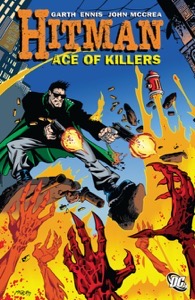
Having read Garth Ennis for so long, I can get a sense of his structure. He’s traditionally too rushed in three-issue arcs, much more comfortable with four or more. Hitman: Ace of Killers collects a six-issue arc and then two done-in-ones. The main story is a siege story, too, with the heroes getting pinned down at the end of the second issue. It’s pretty awesome plotting; like, it’s real impressive given all the character development he’s got going in a four-hour present action or whatever.
So, Nazi demon Mawzir (from the first Hitman arc—and trade) is back in Gotham looking for revenge. He’s pretty sure he’s got a foolproof plan to take out Tommy, which involves taking over one of the mob gangs and having the humans do most of the dirty work so as not to raise attention from the archangels who wouldn’t want a demon doing business on the mortal plane. Only it turns out Tommy’s still too smart for Mawzir. At least if his plan works out. The plan involves Jim Balent-era Catwoman (the politest way to describe Balent-era Catwoman is “cheesecake”) and another visit from Jason Blood and his Demon. Tommy got his start in Ennis and artist John McCrea’s Demon, which I kind of want to read after this arc, which has Ennis sending Etrigan on a delightful mission in Hell. Reminds of good old eighties DC Swamp Thing Hell, though no bugs.
But Mawzir hunting Tommy interferes with fetching, now ex-cop Tiegel getting drunk and putting the moves on Tommy. She gets so drunk she doesn’t remember he’s actually a gentleman when he wants to be—there’s a great bit comparing the demons and angels on his shoulders. When she tracks him down to confront him about what she thinks happened, she too gets stuck in the siege. So it’s Tommy, Tiegel, Natt, Catwoman, and Jason Blood trapped in a Catholic Church, which Mawzir and his human gang are shooting to shit. Mawzir can’t go into the church because holy ground and the archangels would know right away; he has to stay outside and deal with the cops.
Now, outside Tommy’s constant fat jokes about Natt and the Catwoman objectification, the wonkiest thing about the arc is how it fits in, well, Batman’s Gotham City. It’s hard to believe none of the Bat-family wouldn’t notice an hours-long firefight in the middle of the city, regardless of it happening in the Cauldron (Gotham’s Hell’s Kitchen analog). Maybe they were all on a space mission, but it’s definitely a place where having general DC Comics continuity works against the comic.
It’s also the arc where I was most expecting some kind of Preacher nod—Catwoman’s in the story because she got tricked in stealing a magical Old West rifle, capable of killing demons—but then remembered nineties DC wouldn’t force some terrible crossover between distinct artistic properties. Ah, the old days. I mean, outside Balent Catwoman, who Tommy and Natt salivate over in an unfortunate manner.
While the siege takes five issues to resolve, there are a couple big diversions—first, Etrigan’s Hell mission, then drunken “studperhero” Sixpack putting together his team of misfit meta-humans to help out Tommy and friends. Ennis gets away with a couple things with the misfits I can’t believe they let him do on the main DC label. Like, did they switch pages at the printer or something? So there’s a nice balance of humor and suspense and then a whole bunch of romance, as Tommy figures he and Tiegel need to talk out their proto-relationship problems even if they’re in imminent danger. Maybe more so.
Most of the relationship development happens in one of the done-in-ones, but there’s excellent groundwork throughout the main arc. Oodles of chemistry.
Ennis writes the heck out of demon Etrigan, both in Hell and out; I’m thinking I need to hit that Demon series at some point too. He’s got an enthusiasm to it, even though it’s very purple.
Oh, and the siege arc has a lot of Sam Peckinpah references; it’s kind of strange to see Ennis drop all sorts of (specific) pop culture references, but it was the nineties, after all.
The first done-in-one is Tommy and Tiegel’s first proper date, with Steve Pugh doing the art. Pugh brings a lot to it, especially for the constrained setting and story—there’s some banter with Tommy and Natt, then the date going sideways once Tiegel’s parents show up—but having Pugh handle the more human moments… makes it distinct. Not saying McCrea couldn’t have done them, but Pugh’s art is more gentle.
Or something.
It works, but it’s also just fine Pugh’s not back for the second done-in-one, which has Tommy and Natt hunting down a radioactive Santa Claus, hell-bent on killing as many people as he can. There’s a big “Simpsons” reference, and the whole story’s narration feels like a nod to How the Grinch Stole Christmas. It works out nicely. But it’s not as impressive as an action narrative as the main story or a character one as the date issue. It’s a Christmas special, whereas the other two stories have to make their own special.
McCrea’s back on pencils for the Christmas story, with Pugh inking. It looks good. Now, radioactive supervillain Santa attacking Gotham on Christmas Eve… just saying, Batman sort of should’ve noticed.
It’s the best Hitman collection so far. I wasn’t sold on the Tiegel and Tommy stuff but now I’m most definitely invested.
-

Halloween Kills (2021) – 709 Meridian
D and Andrew kick off the show with an audio commentary of HALLOWEEN KILLS (2021), the latest installment in the franchise, directed by David Gordon Green. Starring Jamie Lee Curtis as Laurie Strode and Anthony Michael Hall as Tommy Doyle. -

Most of this episode—save a brief appearance from rubber masked villain Rochenda Sandall—is quite good. Not just the best episode of the season so far (though it’s handily the best episode of the season so far), but an actual good episode.
Doctor Jodie Whittaker is solo in late sixties small village England, trying to stop the Weeping Angels from getting lost-in-time Annabel Scholey for their nefarious reasons. Sure, there’s some tedious stuff explaining why the Angels want Scholey and how it ties into Whittaker’s lost history arc, plus the rules for the Angels are a bit loose here. I mean, they have the same rules as always, but the episode seemingly forgets them from time to time to move the plot along.
But it’s a compelling episode. Whittaker and Scholey are a lot better together than Whittaker has been with her regular companions this season. Whittaker’s relationship with Mandip Gill is on its way for another hard talk because Whittaker’s still lying to her, and then John Bishop is just around. Though when Gill and Bishop team up to help the villagers search for missing ten-year-old Poppy Polivnick, it pretty much just works. Like Gill and Bishop have fine chemistry opposite one another. You wouldn’t be able to tell when they’re hanging off Whittaker.
Whittaker met Scholey in the first episode of the season when Scholey knew Whittaker (and Gill), but they didn’t know her, which ought to make everyone chill out a little because the only explanation for that disconnect is they’re going to survive this adventure for Scholey to again see Whittaker in the future. I think. It’s timey-wimey, who knows. Plus, the “Flux,” which destroyed most of the universe or whatever, didn’t affect Earth’s history. At least not since they did something, but then the rubber mask villains did something and then….
Doesn’t matter. Unraveling it distracts from the strong episode, which has Whittaker and Scholey fortifying in amusing old professor Kevin McNally’s house to survive the Angels.
Then Gill and Bishop are trying to find Polivnick, which leads to some big twists and turns and generally engaging television.
And Thaddea Graham’s a lot better this episode than last time. She’s traveling the Flux-ed universe in search of Jacob Anderson. That storyline is the easy least of the episode, but it’s not terrible. I mean, it’s a definite improvement (until the end) over before.
The writing’s better—this time Chris Chibnall has Maxine Alderton helping him in addition to the plot not being a series of tropes and pop culture steals—and it’s easily Jamie Magnus Stone’s best direction of the season.
The end’s wonky, but it’s a much better-than-lately forty-five minutes getting there.
-

“Legends” hasn’t been renewed yet, and it’s kind of been a bubble show forever, which is why it’s always so nice when they get an early renewal. But this season now seems to be arranging things for a send-off. At least, potentially. Events are perturbing towards closure—or at least not unresolved cliffhangers—and it kind of feels like a victory lap season.
Though it might just feel that way because they do so well here.
The gang has lost their time ship, and last episode teamed up with a 1920s scientist, played by Matt Ryan (in a different role than usual), to get back to the future. Unfortunately, Ryan didn’t account for so many people in the time machine (seriously, there are now nine regular Legends), and they time-crashed off course. Where? Unclear. Maybe dinosaurs.
So while they’re trying to get settled for the night, splitting off into groups for character developing adventures, last season’s big bad, Raffi Barsoumian, has teamed up with an evil AI version of Amy Louise Pemberton (who’s now become a human member of the gang), to destroy Legends. AI Pemberton wants to save the timeline from those meddling Legends; Barsoumian’s just mad they kidnapped him and wiped his mind.
The audience found out about the AI Pemberton and Barsoumian teaming up a few episodes ago, but now we see what they’ve been doing. And it’s actually stuff we’ve already seen, like the time ship getting destroyed in the season premiere or the robot J. Edgar Hoover (Giacomo Baessato) showing up and hunting them down. It’s multiple episodes of the show proper, but it’s all in a row for AI Pemberton and Barsoumian because they’re on a time ship. One of Jes Macallan clones is on board with them, and AI Pemberton doesn’t like her, which leads to some great 2001 riffs.
Meanwhile, in the past—whether prehistoric or not is a plot point—everyone’s stressed out, including regular Macallan and Caity Lotz, who thought they were on their way to a honeymoon in Tahiti. So while Olivia Swann takes Macallan to work out her aggression gathering firewood, Lisseth Chavez takes Lotz to work out hers hunting for dinner. The Swann and Macallan stuff ends up being better than the Chavez and Lotz stuff, but there’s also more of the former. And it’s a scene where Swann really comes through.
Tala Ashe and Shayan Sobhian babysit Ryan, who’s freaking out, leading to some wonderful bonding between Ashe and Ryan. Now, these two actors played love interests in their other “Legends” parts, so there’s something of a base chemistry, but these characters are entirely different, and it leads to some more excellent work. I forgot how great Ashe is in this version of the character. She’s been doing the other one full-time for what seems like two seasons, and this episode’s a great return.
Then there’s a comic subplot for human Pemberton and Adam Tsekhman, who are delightful together, and Nick Zano building the camp while talking himself through relationship decisions.
Plus, the big reveal of where they actually are in history and how it will affect them.
It’s an excellent episode. Kind of a bridging one, kind of a catch-up one with AI Pemberton and Barsoumian’s scheming, and then also kind of a breather. The enormous cast gets a chance to chill and reset, and the episode takes the time to let them.
So even if they do wrap it up and don’t play chicken with a renewal… damn, I hope they get renewed.
-

Krisha is an eighty-minute film with a present action of maybe twelve hours. It’s about a family’s black sheep (Krisha Fairchild) coming to Thanksgiving after some time away. There’s no big exposition dump—it isn’t until the third act the film confirms the basic information the characters have all been dealing with—and for the first half or so, Krisha gets away with it. Right until the third act, when director, writer, and editor Shults brings on the drama, Krisha seems like it may end up somewhere special.
Or at least somewhere ambitious and not predictable.
After the third act, it’s clear the rest of the film was never going to add up, which brings it down in hindsight. It was all busy work to keep the audience distracted.
Of course, since the streaming service we watched Krisha on felt the need to put a “confirm” button under a warning about particularly adult content, I was watching the film with an impending sense of dread. Some of it is because Shults employs distorted angles, a noisy non-diegetic soundtrack, and a fragmented narrative. But also because it all seems like it’s building to something extraordinary. It’s not just going to be a Thanksgiving drama about this obnoxious privileged white family; for much of the runtime, when nothing’s going on except turkey preparation, you can just hear them talking about doing their own research on vaccines or maybe complaining about critical race theory.
When we finally find out what the movie’s all about, almost an hour in, it’s doesn’t derail the film. Shults could take it someplace. Only it’s not a character study of Krisha Fairchild; it’s about how shitty she is to her family, apparently. We get a sense of the hostility from Bill Wise, who tries bonding with Fairchild over how much he hates her sister (his wife) but still stays with her, and when Fairchild’s not receptive, he lashes out with some white male truth bombs.
The third act mainly falls apart because Robyn Fairchild—presumably Krisha’s real-life sister—isn’t good. And because Shults starts playing with the aspect ratio too much, he goes from 4:3 to 2.35:1 to 4:3 for sure, and maybe there’s some 16:9 in there. It’s distracting in the third act, particularly because Drew Daniels does a terrible job lighting it.
For a literal family affair, with the occasional professional actor (Wise and Chris Doubek, both of whom aren’t as good as the non-professionals), Krisha’s impressive. Shults’s editing is outstanding. Fairchild’s performance is pretty good until she becomes the film’s villain. Turns out we weren’t supposed to empathize with her coming into this passively hostile environment filled with bland white people—who make her do the entire Thanksgiving dinner herself while the men all do macho shit—but instead empathize with the family giving her another chance.
I mean, Krisha’s a movie where a wife (Olivia Grace Applegate) complains to a husband (Alex Dobrenko) about how she’d prefer to be enthusiastic about their sex life, and he’s the good guy for telling her to shut up and put out. The whole movie can basically be summed up as the “white, cishets aren’t okay.” Also, upper-middle-class people are energy vampires, which doesn’t seem to be Shults’s intent.
Though you also see someone prod grandma Billie Fairchild into performing from off-camera. She was suffering from Alzheimer’s in real life and apparently not entirely aware she was in a movie. It tracks with the film’s interesting cognitive dissonance about personal accountability, responsibility, and consent.
But, you know, for an indie white guy movie, it’s okay. Like sixty percent impressive low budget, fifteen percent too bland, fifteen percent bad. Fairchild’s performance would be outstanding if she weren’t a caricature, but Shults uses caricature to get away with the non-professional cast. But, sure, technically, it’s successful. Shults’s direction’s okay, and that cutting’s phenomenal. If only his writing weren’t manipulative and deceptive.
Though, who knows, since the entire thing ends up hinging on Robyn Fairchild’s performance, if she were better, things might work out.
-

This episode has several things going on, like Wolé Parks delivering (compared to before) when the story requires it, Emmanuelle Chriqui having a great mom scene (shedding any memory of her lackluster performance a couple episodes ago), one low-key but big twist, what sounds like Man of Steel music cues (but for Super-sons Jordan Elsass and Alex Garfin), and a cameo from David Ramsey to tie the show into the Arrowverse. But it’s also an exceptionally efficient resolution to last episode’s cliffhanger.
While Adam Rayner and his shitty hologram dad A.C. Peterson try to make sure Tyler Hoechlin turns evil, the good guys are all trying to figure out a way to rescue Superman. Except for Parks, who’s planning to kill him no matter what anyone says. And his arguments are starting to work on Dylan Walsh, seemingly because Ramsey is on Elizabeth Tulloch’s “find a non-lethal solution” side. Ramsey actually has a bit to do in his cameo (including name-dropping “Oliver” and making broad illusions to the other superheroes Walsh apparently isn’t calling for help), and he’s good. It’s a little weird because it’s a superhero-free universe besides Hoechlin so far, but they get past it fast, thanks to all the drama.
In the meantime, Erik Valdez is recovering from being taken over by an evil Kryptonian hell-bent on planetary decimation. But more he’s upset because everyone in Smallville is blaming him for inviting Rayner to invest in the town and turn everyone in supervillains. Chriqui and Inde Navarrette try to convince him not to overreact and macho his way through it, leading to a good juxtaposition with Tulloch, Elsass, and Garfin’s story.
Most of the episode is pretty talky—Ramsey’s not in the episode in an action capacity—but the resolution finale, which they only really needed to put off another five or ten minutes to push to next episode, is some very solid Superman action. Director Alexandra La Roche does well with it, juggling multiple opponents and even some space-fighting.
Speaking of the space-fighting, Parks also breaks down how he got to this show’s Earth from his Superman-destroyed one, and it’s unclear why it doesn’t have more narrative weight. Like, bopping between Earths accidentally is a very comic book thing to do, given the episode’s grandiosity—not in a bad way outside some recycled flashback footage for Hoechlin to imagine when he’s getting brainwashed—it seems like there’d be more to it. Maybe they’re waiting.
Especially since the episode opens with actual character development for Parks—and his obnoxious A.I. assistant (Daisy Tormé).
And the episode even avoids an emotional impact-reducing cliffhanger. I wasn’t exactly worried, but it also wouldn’t be a surprise given there are only three episodes left to the season.
-

So, A Brief Reminiscence In-Between Cataclysmic Events confirms a question I didn’t realize I had—who’s the perfect director for a Superman movie? Small Soldier turned “Everwood” star turned TV director Gregory Smith. This episode’s chock full of Superman: The Movie references, most of which fail earnestly, and then some genuinely excellent Lois and Clark stuff for Elizabeth Tulloch and Tyler Hoechlin. I’m sure it wasn’t the intent of the flashback episode, but it really does show how they could’ve made a damn good “Superman” show.
Flashbacks also mean there are weird dodges to preserve some sense of continuity between “Superman and Lois” and the Arrowverse, like Jimmy Olsen getting a mention but not appearing because Mehcad Brooks? Then there’s a scene where young Adam Rayner, played by Ben Cockell (who’s impressively terrible but just doing a pissy evil British white kid, so it’s fine), asks hologram dad A.C. Peterson about other Kryptonians sent to Earth. Peterson starts his torture training immediately, skipping having to say there’s just Hoechlin, but also maybe “Supergirl” Melissa Benoist or her evil Kryptonian counterpart Odette Annable. Rayner’s Fortress of Evil Solitude is in a desert, too, just like Annable’s. Strangely, they don’t seem to be recycling the CGI models—the Fortresses are jank compared to “Supergirl”—it’s just part of the “Superman Family” show bible. A little bit of The Movie, a little bit Man of Steel, a little bit “Supergirl.”
Peterson’s also terrible, but he’s like doing a lousy Ian McDiarmid impression, so it’s kind of funny.
Rayner’s actually better as the all-out megalomaniac Kryptonian villain than I was expecting. It’s not particularly good or special, but he’s pretty dang effective.
The episode’s split into extended flashback, then resolution to last episode’s cliffhanger, then some Smallville stuff, finally another cliffhanger. A terrific cliffhanger. “Superman and Lois” probably binges well.
The flashback also reveals, unfortunately, Michele Scarabelli isn’t very good opposite Hoechlin and Tulloch. Scarabelli was good in her last flashback episode, but it was a younger version of Hoechlin. The problem’s mostly she and Hoechlin lack chemistry.
There are some good moments for Jordan Elsass and Inde Navarrette too. Not great moments, mainly because it’s rushed. The episode races through the resolution to Smallville’s brainwashed supervillains to get to the next cliffhanger; there’s some good character development for Erik Valdez, as he’s one of the recovering. Not the best acting Valdez has ever done (and needs to be), and the script—credited to Brent Fletcher—doesn’t go far enough, but it’s narratively responsible.
But, yeah, give Gregory Smith a Superman movie.
-

One of the reasons it’s easier to look at this season of “Doctor Who” through the lens of previous sci-fi is just talking about the new season of “Doctor Who” is boring. And narratively cheap. Chris Chibnall’s script this time uses two major manipulative devices just to get it across the finish line, and it’s literally about all the series bad guys taking over the universe. Even with the Daleks, the Cybermen, and the Angels, it’s a snoozer.
The episode opens with a title card—“Bel’s Story”—and then we meet Bel, played by Thaddea Graham. She’s on one side of the galaxy, post-Flux, trying to get to the other. She’s got a long-lost love to reunite with, and her only friend is a Tamagotchi. Now, it turns out the episode will be all about two Flux events, with Graham in one of them, but the episode hinting she’s in the other one. Would it be better if she were in the other one? Who knows, but it wouldn’t be as dull. It’s really dull, real rote, once Chibnall does the big reveal.
Though I guess the special effects on Graham’s spaceship journey are better than anywhere else. When Jodie Whittaker’s stuck in the time stream—she’s unstuck in time, we’ll get to it—the special effects are of the “oh, they’re supposed to be bad” quality. Sort of like the villains’ rubber masks. We also find out the bad guys are called “The Ravagers” this episode, which is definitely from Guardians of the Galaxy but I think the term’s been used at DC Comics too. It also doesn’t describe the villains well, like trying to imagine them sitting around and coming up with that name for themselves. The bad guys are mad because there’s a planet Time, which the Doctor apparently helped create then forgot.
No mention of the Time Lords this episode, like Chibnall’s only allowed to mess with canon so much before they hit the reset button at the end of the season.
The heroes are all unstuck in time. Whittaker, Mandip Gill, John Bishop, and Jacob Anderson. Whittaker’s got the ostensible A plot, about the first time the Flux happened, where she isn’t exactly herself, and she’s actually not remembering things right, but it’s suitable for reveals. Her team looks like Gill, Bishop, or Anderson, but we soon find out they aren’t actually those people, and it’s not the future; it’s the past. We also meet Barbara Flynn, who’s very ominous, and you expect her to wink at the camera and joke about being the “Master of Her Domain” or something.
Anyway, Whittaker’s portion of the episode looks like someone really liked the apocalypse epilogue in Zach Snyder’s Justice League. Or at least some of the CGI backdrops. So many lousy CGI composites in this episode. So many.
We get Anderson’s origin story, involving future white people still being racist. Gill fills in as other characters Anderson is misremembering and has the most acting work in the episode. It’s admirable work from Gill, though her actual character gets the shaft. Damsel in distress stuff when she gets it. Bishop’s got a busy work plot to make it all about saving a different damsel for him.
The cliffhanger’s effective at least, but they’re really sending Whittaker out with a lackluster finale. Especially when we find out she shouldn’t even be in the episode; she’s stealing someone else’s place. The whole thing is an eyeroll.
-


Local Heroes collects two story arcs; the first is the Local Heroes one, about metahuman hitman Tommy having to team up with Kyle Rayner Green Lantern to take on the C.I.A. The C.I.A. wants to start controlling the supes, and suddenly it's like The Boys in here. I hadn't realized writer Garth Ennis worked through ideas over such a long term; Ennis has got his themes—like drunk Irish men—but if I've ever recognized echoes throughout his career, I've forgotten. I've also never read this far into Hitman before, and maybe everyone knows about the Boys echo. Whatever. Just saying.
So the main story is four issues. The second story is two issues. All by Ennis and artist Joel McCrea. You get pretty much equal amounts Hitman in both; the difference is there are subplots in the feature story, and the back-up's pretty much all action. Which one is better? Well, the feature's Ennis constantly pwning Kyle Rayner (with D.C.'s consent and, therefore, tacit approval), and it's pretty funny. It even manages to get a little deeper in contrast, with Ennis delving into the moralities of the comic and its protagonist, turning it into a slight humor bit with Green Lantern and sort of leaving it running in the background. Every once in a while, there's a return to it—also because Tommy picks up a new love interest, a suspended Gotham City cop who just happens to be intelligent, head-strong, incorruptible, and adorable with family members. Her name's Detective Tiegel, but he calls her Debs because it's post-feminist when Tommy does it. After all, he clearly respects her.
Another Ennis theme—the lady sidekick.
So Tiegel is also questioning the morality of hanging out with a hitman, which helps keep that subplot going even when Green Lantern isn't pontificating about it.
The bad guys are Truman and Feekle (sound it out); Truman's the brain, Feekle's the muscle. They hire the cops (roping Tiegel into the narrative) to help them kill Tommy if Tommy doesn't play ball, but then after Tommy doesn't, and the cops bungle it, they bring in Green Lantern Kyle Rayner because Kyle Rayner is a dope. Things continue to go wrong, leading to varied team-ups between the good guys against the bad guys. Also, in the background, Tommy is a local hero for standing up to the cops and his continued mourning over his best friend (killed last collection).
Ennis really plays up the neighborhood setting of Hitman, creating a Hell's Kitchen analog in Gotham called "The Cauldron." It's overboard, but it's okay. Like, the comics are from the mid-nineties, years before Daredevil got popular enough to make it seem like a lift. Ennis's wordy Tommy narration almost entirely focuses on his mourning, which is fine. I mean, it's definitely wordy, but it's okay.
Similarly, Tommy and Tiegel are fine. They're cute enough together, but it feels too soon. The story opens with Tommy bemoaning his recent breakup (over being a hitman), and it's not like they have enough chemistry anything needs rushing. They're just a good team. But Tommy's a good partner for anyone. Even Green Lantern Kyle Rayner. Tommy's most crucial superpower is the chemistry Ennis gives him with other characters. Tommy's a smart-ass but not aggressive about it.
The second story has Tommy and his fellow mercenaries and hitmen going up against a bunch of zombies. Some mad scientist kills his partner—it's Gotham City, after all—and wants to prove to the world they figured out how to make zombies.
The narrative's real simple; Tommy gets the job, Tommy goes on the job, it's the job. Sure, there are constantly arriving sidekicks, some with potential drama, but if it plays out, it plays out on the job. It's a mostly action story, and it's full of great zombies. Like, McCrea and Ennis come up with a great twist for the zombies and the rules to zombies. It's inventive in a way they don't need to worry about when there are four issues to the story. Two-parter is set up, cliffhanger, cliffhanger resolve, third act, epilogue. There's no time for subplots or girls or conspiracies. It's lean.
And it's great.
Kind of better than the main story. Because the main story's just good, the second story's great.
Hitman's an outstanding comic.
-

When I read Matt Ryan was leaving “Legends of Tomorrow” as John Constantine but returning in a different part, I initially assumed it was Constantine-adjacent. But it’s not. Even after he started showing up in the opening credits photo roll—“Legends” does a speed-roll of the regular cast without text—and then appeared in every episode’s “starring” list; it seems like a very weird CW “you’re a regular but not getting paid for every episode” deal, I figured it’d have something to do with Constantine.
But this episode, when he finally shows up as a socially awkward, shy, and goofy scientist who can’t stand up to boss Thomas Edison (Chris Britton)? Well, it seems reasonably settled. Ryan really is playing a new character. It also has me wondering if his Constantine being retired means they’re trying for another movie.
Either way, Ryan’s new character is a fine addition. The rest of the cast keeps confusing him for a different departed “Legend” of yore, which becomes a fun running gag. There are high stakes this episode, ones it actually goes about resolving instead of dragging out for half the season, and the first act of the season seems to be coming to a close. Five episodes in seems a little late for my tastes, pacing-wise, but it was worth the wait. Especially once they stop messing around and reveal why Amy Louise Pemberton is so worried about getting to the team in New York.
Because they’re going to blow up after stealing Ryan’s time machine prototype, a fact Pemberton always possessed, had presumably told Olivia Swann and Lisseth Chavez about at least an episode ago, maybe two episodes ago, but the audience is just now finding out. It’s kind of a bummer they used such an eventually obvious, cheap device, but it’s also a fun subplot for Pemberton, Swann, and Chavez in this episode. They’ve got to get to New York by tomorrow and are running two weeks behind, so Swann casts a luck spell, and they have all sorts of adventures. It trades entirely on the trio’s considerable charm.
Especially since the main plot ends up being so heavy. After a fun introduction to Ryan’s new character, setting him up as a comic foil for Caity Lotz, it becomes this dire race against time—literally, of course—as Lotz has to save the team from her own impetuousness.
There’s also some relationship stuff for Tala Ashe and Nick Zano. Not high drama, but compelling and a nice side bit for Adam Tsekhman’s shipper gag. “Legends” is very good at being self-aware, maybe never more so than with Tsekhman, who just gets it.
The episode’s a little disappointing, if only because it’s such an excellent done-in-one time travel episode; the finale is a little too cryptical. The audience knows more about the season villain than the heroes, but the heroes know more about the next stage than the audience. It’s like they forgot to include an establishing shot somewhere.
Very solid direction from Andrew Kasch, and Lotz and new Ryan have good chemistry. The concept’s strong, even if the landing is rocky.