• No Highway in the Sky (1951, Henry Koster)

    No Highway in the Sky has a peculiar structure. It starts with Jack Hawkins; he’s just starting at a British aircraft manufacturer and, during his tour, meets scientist James Stewart, who’s hypothesized a catastrophic, inevitable failure for the latest, greatest plane. Stewart’s convinced the tails will rattle off the planes, which are made with a new kind of metal composite.

    No one has paid any attention to Stewart until this point because he’s absent-minded, but Hawkins is curious, so he gives Stewart a ride home and has a drink. Hawkins remains unconvinced of Stewart’s theory and now more suspicious he’s wrong because it turns out Stewart’s an egg-head who does science at home too. Plus, Hawkins doesn’t think Stewart’s raising daughter Janette Scott right. Hawkins doesn’t have any kids of his own, but he’s not an egg-head, so he knows better.

    It’s a very awkward, vaguely ableist scene, making fun of Stewart with Hawkins having no cachet except… not being really smart.

    Then Hawkins runs into an old war buddy, an uncredited David Hutcheson, who has his own suspicions about the plane, and then Hawkins immediately believes Stewart. At numerous times throughout the film, people will be against Stewart, then change their minds by the next scene. R.C. Sherriff, Oscar Millard, and Alec Coppel’s script is meticulous in contiguous scenes, but then transitions are almost non-existent. Or, presumably, cut for time.

    Anyway.

    With Hawkins convinced, he and big boss Ronald Squire decide they will send Stewart to Canada to investigate a crash. Because Squire hasn’t had his reversal yet, he’s thrilled to be sending Stewart as punishment for complaining. There’s also this strange—possibly unintentional—subtext with Hawkins and his wife (Elizabeth Allan, credited but not really in the movie) watching Scott while Stewart’s away. It seems intrusive, probably because Stewart and Scott only really have that first scene together to develop their character relationship. Everything else is for the plot.

    The plane trip to Canada is where No Highway gets going because it turns out Stewart’s in one of the planes he predicts will fail. So even though he’s previously been entirely indifferent to potential deaths, they’re suddenly on his mind. Specifically, movie star Marlene Dietrich, who’s on the plane with him; Stewart’s wife liked Dietrich’s films, so he tells her how to, maybe, survive a crash into the Atlantic.

    Stewart tries telling the pilot (an uncredited and very good Niall MacGinnis) and telling the friendly stewardess, Glynis Johns, but no one believes him enough to turn the plane around. Instead, they believe him enough to consider the possibility, which leads everyone to resent Stewart as the plane becomes Charon’s ferry. Maybe.

    Lots of good acting on the plane ride, along with some unfortunate composite shots. No Highway’s a tad overconfident in its special effects, with director Koster giving his actors way too much to do in front of lousy projection shots. The instincts are good, but the execution’s disappointing.

    After the flight, everyone is again forced to reexamine their relationship with and opinion of Stewart. Not just the people on the plane but also Hawkins, Squire, and—eventually—Scott. The third act turns Stewart back into the subject after begrudgingly making him the protagonist for the second. The film would rather stick to Johns or Dietrich and their experiences with Stewart, but since he’s the only active player, he’s got to play protagonist.

    The third act is split between Hawkins (handling the professional repercussions) and Johns (taking the home life ones). Johns and Dietrich end up with one really good scene together—along with Scott for a bit—where they talk about who wants to fail Bechdel more. There’s an excellent subtext to the scene, though, with some really incisive moments from Dietrich. In the third act, Johns sort of runs out of character; she’s just a good British homemaker, even if she’s not currently married. There’s only so far she can go.

    Most of the film’s problems resolve after that rocky first act. After a certain point, all of Stewart’s associates just talk really nice about him, which the film says makes up for them talking shit earlier. Not playing ableist assholes, Hawkins and Squire do much better (though basically just doing a quality assurance procedural). Johns suffers because her role goes nowhere, but she’s good. Dietrich’s got some good stuff. Stewart has a handful of good and great scenes, but for the most part, he’s just okay. The film doesn’t allow him an internal arc, instead making him project it; sure, acting out provides dramatic fodder, but limitedly.

    Koster’s direction is occasionally peculiar, and he and cinematographer Georges Périnal don’t know how to shoot inside the airplane, but it’s all right. Koster’s good with the actors, and he keeps the pace up. The other technicals—besides the composite shots—are solid.

    It takes a while for the film to get going, but once it does, whenever No Highway gets good (and it frequently does so), it gets very good.


    This post is part of the Aviation in Film Blogathon hosted by Rebecca of Taking Up Room.

  • Every Secret Thing (2014, Amy Berg)

    There’s a lot to say about Every Secret Thing and nothing to say about it. And some things can only easily be phrased as complimentary insults, like Rob Hardy’s photography is valuable because the movie’s an object lesson in how not to photograph a film.

    Or how director Berg’s a great example of why a director needs to be able to work with their actors and know what’s good and what’s not. It would also help if Berg were better at the visuals, but directing the actors would’ve made a big difference.

    Though maybe not Diane Lane. Lane’s a celluloid vampire here. She sucks the life out of every frame. Well, every byte; Thing’s shot on video, so maybe Hardy’s just inept on the format. Though if he told Berg they could shoot a dark room with visible daylight under the shades and say it was nighttime… well, that one’s still on him.

    Or maybe say something about Robin Coudert's omnipresent and lousy music. Billy McMillin and Ron Patane’s editing is about the only competent technical, and they clearly were cutting together a mess.

    Because once you get past the snide not-compliments, Every Secret Thinghas serious problems. A lot of the acting’s terrible, some of it because the direction’s terrible, some of it because Nicole Holofcener’s script is terrible. I’m sure not all of it is Holofcener’s adaptation (the movie’s from Laura Lippman’s novel) because the narrative trickery and manipulation are straight out of middling crime novels. And, you know, incredibly famous crime thrillers, making the whole thing very predictable as far as villains, with some very convenient details withheld until the third act.

    The film’s about eighteen-year-olds Danielle Macdonald and Dakota Fanning; they’ve just gotten out of juvie for kidnapping and killing a baby when they were eleven. There are flashbacks peppered throughout the film to reveal more and more about that incident, but Macdonald protests her innocence while Fanning mopes.

    Now, the film will treat Macdonald as suspicious because she’s fat; mom Lane bullies her about it, and Macdonald talks about it at length to other characters. And the movie is all about demonizing her; I’m not sure I’ve ever seen anything do fatphobia as phrenology, but Every Secret Thing wants to be a pioneer.

    Separate from that treatment of Macdonald’s character, the movie also has a lot to imply about interracial relationships between Black men and white women. There’s also a vice versa couple (Black lady, white man) around too, but the film’s distracted during those scenes because they can do a “poor people are classless” thing instead.

    So, again, the best worst things about Every Secret Thing are technical incompetencies because they distract from the more problematic issues.

    Anyway.

    Another little girl goes missing, and the original baby’s mother goes to cops Elizabeth Banks and Nate Parker and says to investigate the recently released duo. Banks was the uniform cop who found the dead baby, and she’s still got PTSD. It’s not actually important because there’s no character development in the movie, just timed reveals. Because it’s terrible.

    Who took the baby, and will the good guys get there in time. There’s inherent tension—especially since the parents, played by Sarah Sokolovic and Common, are very sympathetic. Common because everyone treats him like shit for being a Black guy, including Black cop Parker. The movie threatens to explore Parker’s hostility but thankfully does not.

    Acting-wise, the best performance is… Banks. Kind of by default. Macdonald’s bad in a terrible part, Fanning’s not good in a terrible part, Lane’s “pull out the thesaurus” bad. Sokolovic and Common are better than the main cast, same with Parker. But, of course, it doesn’t help the flashback children actors—Brynne Norquist and Eva Grace Kellner—are lousy, and Berg has even less ability directing kids than adults.

    For a second, it’s nice to see Julito McCullum (Namond, Wee-Bay’s kid on “The Wire”) in a tiny part, but then you realize he’s in this movie. Sure enough, Thing ruins it.

    Because Every Secret Thing is faulty. Sometimes it’s worse than faulty, but it’s always faulty.

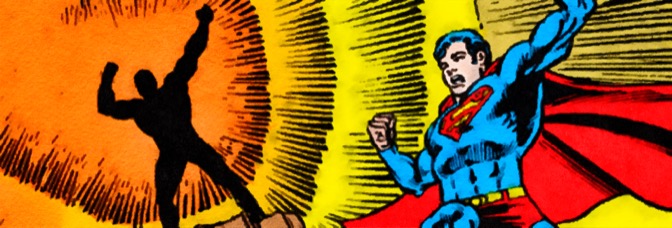
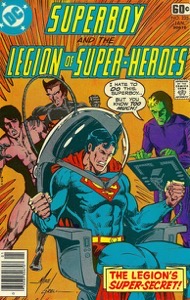
  • All-New Collectors’ Edition (1978) #C-55

    Anc3e55

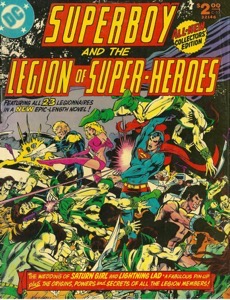
    The cover promises an “epic-length novel,” which apparently works out to sixty-one pages. It’s four chapters, starting with Superboy traveling to the future for Saturn Girl and Lightning Lad’s wedding. Once there, he discovers a militaristic world where the Legion (and the U.S.) is fighting moon colonists, led by the Chinese. We find out later it’s the Chinese. Because they stole something from the Americans in the 1980s.

    It’s initially not too moldy, but once the action gets to the moon and the Chinese villain is basically future Fu Manchu, it’s ick. Though the scene doesn’t last long, and the whole moon colonists versus Earth thing is a time aberration red herring.

    The “bad guys” interrupt the wedding, kidnapping the couple after their vows; the plan is to ransom them for the polar ice caps to create oceans on the moon. As if there are any polar ice caps in the future.

    Anyway.

    Superboy wants to go to the past and fix the timeline; Wildfire intends to attack the moon and rescue the hostages. Writer Paul Levitz does each of those missions as a chapter, then brings everyone back together for the finale.

    The Superboy team goes back to 1978, natch, where they’ve got to stop a mysterious businessman from destroying the United Nations. Only Superboy can’t be seen in 1978 (Superman’s there, after all), and the villain is prepared for the Legionnaires even though they ought to be a surprise. There’s not much in the way of time travel hijinks (though there’s a disappearing spaceship in a park eight years before The Voyage Home), and there’s not enough time for it to be a mystery, but it’s engaging.

    The hostage rescue story is more exciting. Lightning Lad and Saturn Girl are in danger, and it turns out the Legion’s got the wrong kind of powers to rescue them. Unless they can all work together and figure out the right power formula to save the day. Err. The couple. While the chapter relies a lot on familiar characters—whereas the time travel one is about the period and villain—it’s better with the danger tension.

    The finale, however, is a familiar Legion villain monologuing about his evil plan with an editor’s note every fifth panel referring to a previous Legion of Super-Heroes comic. And Levitz does even try to cook up a good solution; it’s very basic, very silly. Though Mike Grell and Vince Colletta’s art sells it.

    I’ve always been bearish on Grell and Colletta’s a punchline, but their art’s good. There’s a lot of it, but Grell loves drawing capes, and lots of the heroes have capes, so it works. The flow’s good, though. It’s about the flow. And it’s consistent through the sixty-one pages. Even the opening with Superboy is good art, along with the interesting tidbit Smallville pre-Crisis was in… Massachusetts or something?

    Levitz’s plotting is good. His details less so. Despite being three times the size of a regular story, there’s very little character work. Wildfire’s a dick, and Superboy’s fed up with him. The newlyweds only get to respond to their plight, nothing else.

    It’s an immensely readable “epic-length” novel, but it’s not particularly substantial. Unless you’re really into the mystery villain and all the callbacks to previous Legion stories.

    The last few pages are a combination Legion history and roll call, going over the various heroes, giving each a paragraph, and a nice drawing from James Sherman (inked by Jack Abel). Nothing in the backup relates to the main story’s callbacks, which is kind of amusing; the feature requires different reader foreknowledge than Levitz drops in his history lesson.

  • Frasier (1993) s07e02 – Father of the Bride

    This episode’s very funny, but often in a “the less you think about it” way. The script’s credited to Mark Reisman (his first credit on the show), and it very impressively gives almost everyone in the main cast a story thread. Except for John Mahoney, who gets a couple hilarious bits but not a thread, and Peri Gilpin’s is tacked onto Jane Leeves’s.

    The A-plot is Kelsey Grammer inadvertently taking over Leeves’s wedding planning. Well, wait; he very intentionally takes over the wedding planning, but he inadvertently puts himself in that situation. The episode uses audial gags three times, always to strong effect, with the first being a bad case of hiccups leading Leeves to believe Grammer wants to pay for her entire wedding. She’s frustrated with her interfering mum in the U.K. and is so relieved Grammer’s saving the day, he can’t find a way to back out. The “paying for the wedding” plot goes unresolved; once Grammer starts taking over the wedding, auditioning harpists, caterers, and ministers, it’s the raucous center of attention.

    The B-plot is David Hyde Pierce’s new girlfriend, Loryn Locklin, being a high-priced escort. Not because they met somewhere, and he doesn’t know, but rather because he doesn’t know the dating service he’s using is actually an escort service. So, his mistake entirely. Grammer finds out about it from Saul Rubinek, who does his one requisite guest scene as Leeves’s fiancé. The escort thing is an aside for later; otherwise, Rubinek’s there to make things even more awkward for Grammer backing out of his wedding funding commitments.

    There are some great scenes for Grammer, who gets more and more obsessed with throwing the perfect wedding, and a few excellent ones for Leeves. Hyde Pierce has some excellent deliveries, but the jokes immediately start molding. See, Locklin doesn’t know Hyde Pierce doesn’t know she’s an escort, which means he’s just being an asshole. So it’s a mistaken identity bit, only an unnecessarily mean-spirited one.

    Locklin’s lack of characterization also brings attention to Leeves and Gilpin’s plots, which are of the “decorate and be decorative” nature. Leeves wants to do the decorating, and Gilpin’s upset about Leeves’s wanting to decorate her in an ugly bridesmaid dress. They pass Bechdel for a few scant moments before failing it again.

    Sure, it’s an episode in Leeves’s long-going marriage arc, so they will be talking about her marrying dude Rubinek and male boss Grammer interfering, but the dynamics play out a little weird.

    Though often very funny. From the first scene, there are a lot of laughs, and they don’t slow down. The episode’s got some actually inspired jokes and bits throughout (a little broad at times but still), and there’s even time for some father and son time for Grammer and Mahoney. Director David Lee maintains great momentum, and the structure’s phenomenal.

    It’s just some of the themes are thin and easy.

  • Night Court Theme Fits All: All Creatures Great and Small
  • Read My Mind
  • Fortress
  • Ginseng Roots (2019) #9

    Gr9

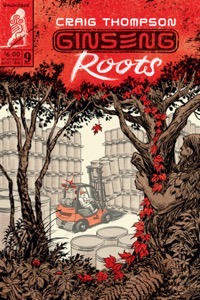
    As a series, Ginseng Roots is a litany of successes; some are unimaginable because of the content (who knew Wisconsin ginseng farming trivia could be so engaging), but the overall success is creator Craig Thompson’s ability to present the information. This issue’s all about the current ginseng industry through the perspective of one company—Hsu’s Ginseng Enterprises. While the comic’s not exactly an advertisement for the company (though I’m curious what science says about all the health claims), the issue is impossible without the company. Specifically, Thompson’s interviews with the owners about their business and what’s going on with ginseng.

    I always wonder how much license Thompson takes with the interviewees’ statements. Are these direct quotes just visualized, or what? Because the flow is terrific. Everyone Thompson—comic Thompson—interviews has just the right personality for presenting the information. They’re likable, even when they don’t seem like they’re going to be (the Hsu guys seem nice, the white guy competitor initially seems like a jerk but turns out to be a-okay too).

    The issue also features a cameo from Trump, tied to the Wisconsin Foxconn factory debacle, which has entirely fallen apart since Roots #9 dropped. Thompson didn’t have time for a follow-up in the issue itself, so there are some links and quotes for more current information on the inside back cover. It’s interesting to see some positive perspectives on it—the Foxconn executive is wild about ginseng and its ostensible health potential (this product is not intended to diagnose, treat, cure or prevent any disease)–but since it turned out to be hooey, it’s complicated.

    Ditto all the health stuff. Either ginseng really does help with gene regeneration, or it doesn’t. If it doesn’t, are the ginseng companies knowingly hyping a false product and so on. Presenting the issue like a visualized annual report from Hsu’s Ginseng actually helps with the accuracy responsibility; Thompson’s interviewing and presenting those interviews, not making his own statements.

    It’s actually incredible this issue’s so good, given all the caveats.

    Though a lot less than usual, Thompson does get in some personality throughout. There’s a great Swamp Thing reference when discussing gene regeneration. Almost every page is a design masterpiece, fitting in all the interview content but visually exciting, even when it’s just fields.

    There are a couple things Thompson hurries through (Canadian ginseng), and all the content seems very pre-COVID-19. Still, the issue’s also very concerned with current business conditions, so it’s just another caveat Thompson overcomes.

    Thompson would probably make a fortune illustrating company annual reports. Or he should anyway.

    It’s not the most exciting Ginseng Roots, other than being a success against the odds, but it’s another excellent one.

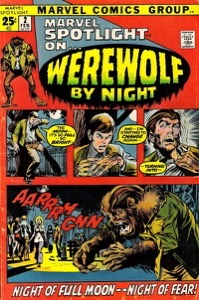
  • Marvel Spotlight (1971) #4

    Ms4

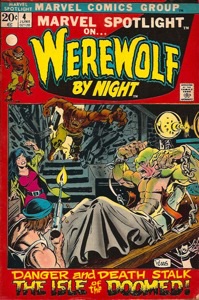
    The issue opens with a splash page of Jack Russell, in his hip seventies clothes, waking from a nightmare about being the Werewolf by Night (unsure if it’s a nightmare or a werewolf outing), and it’s somehow obvious the art this issue’s going to be superior. In that one page, artist Mike Ploog gets in some great, active figure drawing and a fantastic expression on Jack. It’s probably the best Werewolf story so far, even if it didn’t have the best art—Ploog gets to do all sorts of things, including introducing a tragic femme fatale—but it’s also got a somewhat wild script from Gerry Conway.

    Keeping with the now established structure, Jack opens the issue with his family, then they disappear. But he also meets a writer named Buck Cowan, who’s sneaking around the house looking for information. Cowan knows all about the Darkhold, Jack’s real father’s European castle, but nothing about the werewolf. It’s a strange exposition method, but then again, Cowan and Jack’s scheme to get Jack’s step-father’s boat involves Cowan wearing a disguise… so everything about it’s a little strange.

    Except Cowan can’t accompany Jack on their boat trip—some eccentric bought Jack’s dad’s castle and shipped it over from Europe. Jack’s evil step-father Philip sold it right after Jack’s mom died, and he got control, which means the eccentric was able to ship it over in five months? And rebuild it? I’ve lost count of Werewolf months, but I think they’re only on four, actually. Plus however much time has elapsed since last issue, it’s not clear it’s a month later.

    Though it’s definitely some multiple of a month because wouldn’t you know it, Jack forgot it’s going to be the full moon, and he’s going to werewolf out.

    Once he gets to the private island, he’s got too many immediate problems to worry about getting furry, including the aforementioned fetching femme fatale. She’s a younger teenager named Marlene who wears sunglasses all the time, and her dad’s an intense creep who runs a private institution and employs a machine gun-toting thug.

    The werewolf will fight that thug, which gives Ploog something different from a Frankenstein’s monster stand-in, especially since they’re duking it out in a castle. Ploog gets to mix three different visual tropes, and the result is sublime (and not at all disjointed).

    Conway changes the formula a little, giving Jack a big thought balloon sequence on the boat, then taking over for the werewolf’s beast narration. The werewolf gets occasional thought balloons, but most of it’s Jack narrating the werewolf’s adventure in the exposition boxes.

    It works out.

    There are twists and turns, big reveals, secret liaisons, and a great cliffhanger. The beginning’s unsteady as far as the writing, but Ploog holds it all together. Conway does all right, but the comic’s all about the art, and Ploog keeps delivering through various set pieces and moods.

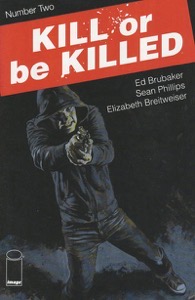
  • Kill or Be Killed (2016) #3

    Kbk3

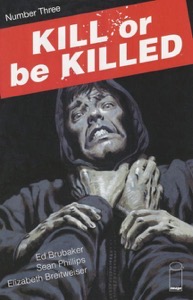
    What is the deal with the heads? Seriously, this issue starts with talking heads between Dylan and Kira—which has numerous issues—and it really looks like artist Sean Phillips cut out a head and pasted it on a body. But without adjusting the scale.

    It’s comically weird, though it does improve in the rest of the issue.

    The scene takes place after Dylan’s first night out Punishering; best friend Kira, who’s dating his roommate and having an affair with him, wants to talk. He’s afraid he’ll confess to her because he’s madly in love with her, and he wants to tell her everything anyway.

    Now, Kira and Dylan will go and have their talk later on. He will say nothing; she will talk at him about their problems on a very macro scale without any specifics. It’s actually an improvement over the first scene, which sounds like writer Ed Brubaker got the dialogue from a soap opera trailer.

    This issue has two big reminders of why this comic didn’t click with me before. Didn’t click with me, meaning it pissed me off to the point I stopped reading it.

    First, Dylan’s obnoxious white college bro philosophy thoughts. Maybe half the issue is just Dylan’s narration, thinking about what he’s done—killed a guy because the demon in his head told him to do it—while going about his day as a graduate student in New York City. There’s a Times Square scene, there are some library scenes, and Kira and Dylan will have their big scene at Coney Island—Phillips is going all out on the travelogue. No wonder he doesn’t have the energy for heads.

    But Dylan’s just full of shit. His narration is just stream of consciousness bullshit from an asshole. And it’s unclear if Brubaker knows it. Every time it seems self-aware, there’s something like the second anti-click reminder—the ladies mooning over Dylan without him realizing. Now, suppose Dylan had become a killer vigilante and started seeing the ladies seeing him differently. In that case, he’d be… becoming (see: Manhunter), but he doesn’t notice them agog at his new manliness.

    Also, when Dylan and Kira hang out and have no substance or chemistry beyond Dylan’s narration telling us they have chemistry, it’s another sign of trouble for Brubaker’s handle on the situation.

    I remain committed to the read-through, even if it just keeps disappointing.

    However, it’s not a bad comic overall, just self-indulgent and annoying. It rallies a bit towards the end. It does read way too quick, though.

  • The Equalizer (2021) s02e18 – Exposed

    “The Equalizer” wraps up season two with a cliffhanger; it’s been renewed for two more seasons, which means it’s safe for a good while, so it’s a playing renewal chicken cliffhanger. Though it is kind of perpendicular to one. No spoilers.

    The cliffhanger’s manipulative but also not. It’s predictable (the scene leading up to it is literal fodder), but they unexpectedly don’t go very far with it. “Equalizer” still limits how dangerous things get for anyone but Queen Latifah, which is both good and bad.

    But more about that approach next season.

    The season finale opens with Latifah breaking into the Cuban embassy in Washington D.C. to get some information on her nemesis, the guy who killed off Chris Noth and saved the show awkwardness. Though now the whole show is about Latifah avenging Noth’s character, not a great character arc, all things considered, especially since this episode’s all about Laya DeLeon Hayes realizing her mom being “The Equalizer” is cool.

    The A-plot is actually Hayes’s, with Latifah’s adventure with guest stars Brett Dalton (returning new CIA guy) and radical Cuban communist terrorist (sure, Jan) Gabriel Sloyer playing B-plot. The B-plot has more twists and turns, but the A-plot’s got all the heart.

    It starts with Hayes and best friend Cristina Angelica at school, where Angelica’s ex-boyfriend, Will Edward Price (a perfectly shitty white boy), ruins her class president campaign speech with revenge porn.

    As Angelica spirals and Hayes initially doesn’t want to go to Latifah for help (Angelica says no parents), the episode does a crash course in the bullshit people in these situations experience, including the school administration victim-blaming. It’s harrowing, especially after Hayes goes to see cop Tory Kittles (back to his single scene per episode). He tells her just because they’re on a TV show doesn’t mean they can pretend the white boy’s going to be held accountable.

    Unless Hayes maybe wants to call her mom. But Kittles doesn’t know it’s her mom, obviously (and unfortunately, I was really hoping Kittles and Hayes would team up and Latifah’s identity would be the cliffhanger).

    The episode’s got three credited writers—Terri Edda Miller, Andrew W. Marlowe, and Joseph C. Wilson (it’s probably the best thing Marlowe’s name’s ever been on)—and it feels like a couple of them worked on the Hayes plot, one on the Latifah one. The episode’s brimming; Angelica’s in danger, which Hayes experiences, but Hayes also puts herself in danger. And then Latifah’s off poking the sleeping bear who said he’d kill her family if she poked him. It’s all very intense, made more so by Latifah not really knowing what’s going on with Hayes because sometimes it’s more important to be James Bond.
    Even if you can’t say so.

    There’s some kind of cute but also forced interaction between Hayes and Liza Lapira. They bond while Adam Goldberg (showing off his guns this episode—flesh guns, not bang bang guns) fights a Russian hacker.

    Hayes’s stuff is excellent. It’s melodramatic but exceptionally earnest and sincere (Eric Laneuville directs, which no doubt helps). The rest is fine. If the A-plot weren’t so affecting, the B-plot would be flimsier.

    “Equalizer”’s still uneven—why is Kittles so pointless again—but it’s going into season three on relatively solid ground.

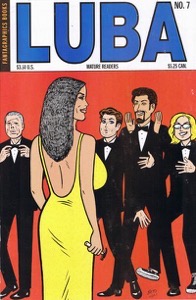
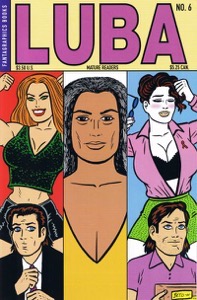
  • Luba (1998) #7

    L7

    This issue came out over a year after the previous one, and creator Beto Hernandez does some deck cleaning, mostly for Luba and Khamo’s so-far series-long arc about him being in trouble with the police.

    But first, there’s a Steve Stransky story; Steve’s been in Luba before (and maybe New Love) as Guadalupe’s friend, but he’d been in Love and Rockets too. Only I kind of forgot. Or I had the thought he was a returning character but didn’t think it was relevant enough to look up. So this story has a bunch of Steve Stransky antics and some other returning characters from Rockets.

    It also reveals Fritz was married (and divorced) at least twice, the first time to a gangster of some kind, the second time to a deadbeat musician who Steve knows. Beto’s characterization of Fritz is very different this issue than usual. It’s a little strange how Beto’s brother Jaime did a secret husband reveal in his Rockets spin-off, and now Beto’s doing it here. Or is he? If I forgot Steve Stransky, did I forget Fritz’s husband? Beto doesn’t cover character histories in the roll call.

    So a meteor is going to hit the planet and presumably wipe out human life. Everyone’s acting a little weird and calling in old debts; for Steve Stransky, it means getting Fritz to meet up with her ex, who wants some money from her. The ex also knows Igor, and Igor suddenly knows Fritz, and I really don’t remember these storylines intersecting before. It’s okay, though, even if Fritz’s character’s different (there’s some continuity, however, with her model boyfriend, Enrique, showing up in a wordless part).

    Even if Fritz is sympathetic to her ex, her sister Petra is very much not. Steve has a crush on both Fritz and Petra. And also Guadalupe, who’s around but without any story for herself. Because it’s a Steve story. The meteor crisis kind of lets Beto do whatever he wants. With this first story, anyway. The second is a different beast.

    The second story is about Luba and Khamo’s bewildering experience regarding his criminal connections. In the last issue, Beto did a big twist: Khamo’s helping one gang against another, not the cops, and his handlers have plans for Luba. It raised many questions and made Khamo seem suspicious in ways dangerous to Luba.

    If this story’s resolution holds, Beto’s not going to be doing anything with those threads. The story’s strange and discomforting, but it’s effectively done. Beto introduces one weird thing after another before wrapping up; it feels like a defeat, but the arc seemed written into a corner anyway.

    The last story is about Hector. His ex-girlfriend, looking different than his first appearance where he hallucinated her, is getting a restraining order against him. Petra doesn’t like him being forgiving, while Fritz is all of a sudden upset Hector isn’t still into her, even though she gave him to Petra.

    There’s a brief Venus appearance and gag at the start of the story, but it’s all Hector, including a courtroom scene where he thought balloons his way through the proceedings. The art and narrative are so disconnected it feels like Beto was doing an experiment with the Marvel Method, drawing from a plot, then adding the dialogue to the finished art. It’s also got the meteor’s impending arrival in the background.

    The issue ends up being strongest for Petra, who gets a surprisingly (but maybe not unexpected) arc.

    Also making the issue seem weird is the lack of Pipo, who appears but doesn’t have any lines because she doesn’t speak English and—besides Luba—no one speaks Spanish in the issue. I guess it feels more Love and Rockets than Luba.

    It’s good, of course. But it’s not as good as the rest of the series has been.

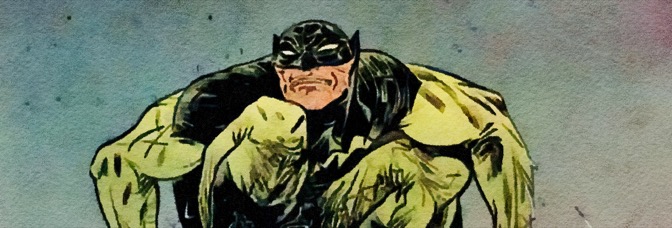
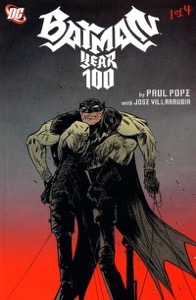
  • Batman: Year 100 (2006) #1

    Bmy100 1

    This first issue of Batman: Year 100 is an all-action issue. It’s the future, so people can get around pretty quickly, including federal cops flying around in, I don’t know, hovercraft. Helicopter cabins without rotors or skids. But the future’s also got its low-tech; the first sequence has a pack of police dogs chasing “The Bat-Man of Gotham” across the rooftops. They’ve got retina cameras to make them futuristic, but initially, it’s just a dog pack chasing the vigilante scene.

    Actually, it’s too bad creator Paul Pope doesn’t show how the dogs operate on the rooftops. I’m sure it’d be awesome.

    Because even though there’s minimal story, barely any characters, and the most writing comes in the opening and closing “news” briefs (courtesy future Reuters) on the front and back inside covers, Batman: Year 100 is divine. It’s forty-eight pages of detailed, thoughtful, exuberant Pope art. Who cares what it’s about.

    The issue sets up Bat-Man a little; he’s been in Gotham long enough to make an ally with the police coroner, but copper Jim Gordon doesn’t know anything about him. The comic’s set in 2039 (a hundred years after Detective Comics #27), and the previous century’s Bat-Man has become an urban legend. No one even believes the new one exists until he gets caught on the various cameras; a federal police officer has been killed, and Bat-Man is the prime suspect.

    The comic does get to the investigation. It starts with the dog chase, then a people chase as the federal cops descend on a Gotham building, and cuts to the federal cops in Washington having a slightly comedic bicker session, freaking out about the situation. Lots of great expressions from Pope in that scene. It ends with a special cop being called in, Tibble. That special cop doesn’t hunt Bat-Man yet; he just gives Gordon shit because jurisdiction tropes.

    So Pope is, you know, building a narrative. It just doesn’t matter as much as the action. The comic’s about the rush of reading it, of experiencing the movement in Pope’s panels as the Bat-Man and the story hurl forward. Like the opening chase sequences, the issue’s a race, with Pope trying to maintain momentum until the last panel.

    I read Year 100 when it came out and remember it being a disappointment overall, but damn if this issue isn’t a thrill.

    Oh, and the José Villarrubia colors are gorgeous. The whole thing’s gorgeous.

  • Superboy and the Legion of Super-Heroes (1977) #236

    Sbl236

    Who’s James Sherman, and why have I never heard of him before? He pencils two of the three stories in the issue, with Bob McLeod inking him on the first, Joe Rubinstein on the second, and he’s good. He’s a little too designed-focused, but more on the second story, and the design element comes from the narrative. But he’s good. Great expressions. Pretty good flying superhero sci-fi space action.

    Though the first story doesn’t just have sci-fi action, it’s also got some sports ball.

    The story begins with Superboy convincing Brainiac 5 not to pay attention to his monitor duty and play three-dimensional chess instead. As if it didn’t feel enough like “Star Trek.” Brainy was supposed to be keeping an eye on Cosmic Boy and Night Girl, who are on vacation on Cosmic Boy’s home planet.

    Now, during the sports ball sequence, the girls are scantily clad for the game. The boys are in shorts and t-shirts. It seems a little weird, but then Cosmic Boy and Night Girl put on their superhero costumes, and they’re both basically wearing lingerie. It’s comically revealing for both of them, but more Cosmic Boy because he’s the story’s lead. Once the rest of the Legion shows up to help them, Night Girl gets squat. Her powers don’t help.

    The one other female superhero is also in an absurdly scanty outfit (the cape doesn’t offset it). Otherwise, for a few pages, anyway, I thought Legion would try to balance its gazes.

    The actual story involves some funny-looking alien terraforming the planet. The superheroes utilize their powers in precisely the right way to save the day, which makes me wonder if writers Paul Levitz and Paul Kupperberg came up with the solution or the problem first.

    The second story is about an evil alien spaceship interrupting Mon-El’s vacation. Levitz writes this one solo, and, wow, is there a lot of Mon-El interior monologue. Thought balloons crowd the emptiness of space.

    Michael Netzer pencils this one, with Rubinstein and Rick Bryant on inks. The art’s low okay; the sci-fi spaceship stuff is all good, but the Mon-El action is eh. Might also just be a boring story with too many thought balloons. The end’s a cop-out too, which doesn’t help.

    The last story is where Sherman comes back and goes wild with the design stuff. Lightning Lad and Saturn Girl want to get married, but it means leaving the Legion (unlike failing to explain Cosmic Boy’s bustier-based costume or Night Girl’s thong, writer Levitz does cover the marriage rules for new readers). So they go to mind-reading VR place to test whether or not they should get hitched or stay on the super-team.

    Sherman goes all out with the transitions as the VR throws the heroes into unexpected sci-fi fisticuffs. He’s got detail and consistency—though McLeod’s a better inker for him than Rubinstein—but the repetitive visuals get tedious fast.

    There aren’t any standouts as far as the stories go; the first one “wins,” but only because the third one’s draggier than the second one, which is already tedious. Nice art, though. And the character work is solid. They’re just doing boring things.

  • Frasier (1993) s07e01 – Momma Mia

    The season’s off to an excellent start with this episode, which also inadvertently shows how much “Frasier” has changed getting to season seven. First is with Kelsey Grammer directed episodes; Grammer’s first couple efforts didn’t have him around—I think he was entirely absent in one, and showed for the intro in the other—but he’s front and center for most of Momma Mia.

    The second development is more subtle and also possibly a result of an already full episode—David Hyde Pierce isn’t low-key lusting after Jane Leeves in their scene together. Leeves has only got one scene (it’s going to be a full episode, after all), but gets to be in on the first reveal of the episode’s punchline—Grammer’s dating a woman who looks just like his mom (guest star Rita Wilson) and doesn’t know it.

    Except Hyde Pierce sees it right away and talks to Leeves about it. Dad John Mahoney’s going to have to wait for a little while later into the episode so they can build more tension.

    While the episode opens with Grammer’s meet-cute of errors with Wilson, which involves Peri Gilpin’s fix-up not showing up for him, then Gilpin telling the wrong lady she’s caught Grammer’s eye, the episode’s all about Mahoney’s birthday weekend. Grammer and Hyde Pierce are taking him to the family cabin—“Frasier” has gone to many a family cabin and I’m pretty sure none of them have been the same cabin. This cabin is a rental, however, so they get a continuity pass.

    Though it doesn’t make sense why they’d rent a cabin when they’ve already got their… never mind.

    Hyde Pierce and Grammer quickly start bickering once they arrive, which seems like obvious Crane boys drama in the script—credited to Rob Hanning—but it’s actually all set up. They’re children, with dad Mahoney, and lady who looks like mom Wilson. Leads to some very funny scenes. The episode’s got a lot of laughs, both deliberate ones the script sets up, but then also a bunch of physical material for Hyde Pierce. He’s afraid of the bugs, you see. They even do an absurd bit where he’s got a suitcase with nothing but different kinds of bug repellant. It’s too broad but at least quick.

    By the end of the episode, they’ve gotten past all the laughs for some sincere family moments for Grammer, Hyde Pierce, and Mahoney. Despite Mahoney and Hyde Pierce sharing a plot thread, observing Grammer on his separate one with Wilson, there’s even a nice moment for Mahoney and Grammer. It’s an extremely well-constructed episode.

    It’s really funny. There are a couple hiccups—the suitcase of bug repellant is the stand-out—but there are a dozen really good laughs. Leeves and Gilpin don’t get a lot of screen time, but they’re very good with what they do get, especially Leeves.

    Season seven’s looking good.

  • Marvel Spotlight (1971) #3

    Marvelspotlight3

    There is no backup story in this issue, just Jack Russell’s third adventure as Werewolf by Night. Writer Gerry Conway—through Jack and the werewolf’s narration—is very clear about it; the first outing as the werewolf was two months ago, meaning we’re skipping Jack’s second Larry Talboting and going straight to the third.

    There’s not much story to the adventure, starting with the werewolf interrupting a biker gang trying to assault Jack’s sister, Lissa. His evil stepfather, Phil, only appears briefly. Conway’s keeping the family stuff on the back burner. The story this issue’s all about setting Jack up for this next adventure, not this one.

    Once the first lycanthropic night passes, Jack tries to hitchhike home and finds himself with a Peter Lorre-type who takes him to one of those desolate European castles all over L.A. The Peter Lorre-type’s wife, Angela (not Harkness), starts torturing Jack for information about the Darkhold, which she thinks is Jack’s inheritance.

    Jack, however, doesn’t know what she’s talking about, so she sics her pet Frankenstein monster on him. There are various fights between the werewolf and the monster, some convenient black magic gone wrong, and Jack’s promise (to himself and the reader) he’s going to track down this Darkhold book.

    In other words, a bridging issue, but one so early, who knows where the story’s headed. Conway sticks to his narrative approach from last issue—the werewolf thinks a lot, Jack talks a bit to himself but doesn’t think a lot—at least until the narration-heavy second half, where Jack’s recollecting has to move the story along from set-piece to set-piece.

    The story’s not the point, however. The point is Mike Ploog's absolutely phenomenal artwork. It’s getting to see Ploog do his own Frankenstein Meets the Wolf Man, page after glorious page. Of course, there are some great Ploog expressions, but since most of the comic has monsters fighting, the emphasis is on the action.

    It’s wonderful.

    The finale’s a tacked-on mess, with Ploog and Conway rushing through a resolution in one page, but right up until it, the comic’s a visual delight. Ploog gets to do strange action—werewolf versus bikers–and then the more traditional monster versus monster action. Whether the modern California setting or the dark castle setting, Ploog does a great job. The figure drawing, the expressions, and the settings; it’s breathtaking work and more than makes up for the story being perfunctory.

    Also… Conway (and his editor, Stan Lee) don’t seem to know what the word “penultimate” means; they just know it’s a fifty-cent word. But it comes on that lackluster last page, just punctuating it being a disappointing finish.

    Ignore all missteps for the masterful Ploog art.

  • Kill or Be Killed (2016) #2

    Kbk2

    I’m not reading the back matter on Kill or Be Killed for lengthy reasons, but if there’s some explanation why artist Sean Phillips is drawing the twenty-somethings with odd bodies—their heads are too big for their bodies and slightly too round—I may regret not knowing.

    May.

    This issue opens with another of the illustrated micro-prose, which writer Ed Brubaker established last issue. On one side of the page is black letters on white, lots of white space because the narration’s relatively terse, even when there’s a lot of it, and images on the right from Phillips. The two things move in unison, what protagonist Dylan thinks about while experiencing or witnessing the visuals.

    Except, also not, because Brubaker starts the comic where he ends the comic, and Dylan’s not thinking about the same things at the beginning as at the end because it’s all past tense narration. It’s an entirely acceptable, basically successful technical device—the text alongside the images.

    I also don’t like it.

    Maybe they’ll win me over, but it seems like a cop-out. The minimally successful approach; basically, it’s just taking the prose specials of the eighties and, instead of type-setting them, having your letterer do them. The comic doesn’t credit the letterer (it’s apparently Phillips), so maybe he’s just using Blambot fonts anyway, and it’s still just type-setting.

    Anyway.

    I’m not sold on it, though they use the same device later in the issue with better effect; maybe because the white space does something with the visuals later, instead of just pushing them to one side.

    This issue has Dylan making his first kill—to appease the demon who’ll kill him if he doesn’t kill an evil person. The demon doesn’t appear. Actually, there’s not much follow-up on the first issue's outstanding things—best friend turned roommate’s girlfriend turned illicit lover Kira wants to chat with Dylan about their status. He puts it off because he’s figured out where to get a gun and, thanks to the gun kicking off a madeleine moment, who to kill.

    When Dylan does finally get back to Kira, carrying her to bed, it’s where the figures are so obviously distorted. So Phillips has got to be doing it intentionally. Right?

    Especially since the rest of the issue, the other people Dylan encounters—his dealer (who’s a hoot), his mom (who’s always in another room), flashback friends, flashback Dad (the comic rushes through Dad having killed himself and the inevitable repercussions on Dylan)—they all look normal. It’s Dylan and Kira who look like strangely molded action figures.

    Dylan’s first victim’s crime is particularly terrible, making him a worthy target, but it’s also a narrative gimme. Brubaker takes two big shortcuts—the gun acquisition and the victim selection—so hopefully, those contrivances will somehow pay off.

    After the oversized first issue, this one seems a little too quick, especially since we don’t meet anyone else. We hear about them in Dylan’s narration, but only Kira really gets to exist in scenes, and even then, they’re really quick.

    But it’s okay. Full disclosure—this read-through isn’t my first attempt with the series, and I’m trying hard not to get derailed. I’m trying to keep an open mind here.

    Hence not reading the back matter.

  • Superboy and the Legion of Super-Heroes (1977) #235

    Slsh235

    This issue’s got two stories, benefits of being a fifty-two-page giant on the regular. The first story’s by Paul Levitz, Mike Grell, and Vince Colletta. Colletta also inks the second story, but the rest of the team’s different; second story is Gerry Conway and George Tuska.

    The comic itself is basically burying the lede—Conway’s second story follows up on last issue’s cliffhanger and buries that lede in a literal sense. The first one’s lede-burying is more abstract. The Legion is fighting pirates who want good modern technology for their backward planet, and Brainiac 5 wants to make sure no one listens to the terrorists’ point of view.

    What is it, 1776 or something?

    It’s also interesting because Levitz writes Brainiac 5 as an egomaniac, but Conway doesn’t.

    And it reveals how much trouble it’s going to be keeping up with the cast; I seriously thought the guy arguing with Brainy was named Garth, but it’s Cosmic Boy, whose name is Rokk. He just looks like Aqualad, whose name is Garth.

    The techno-pirates aren’t even the main plot, which involves Superboy’s annual brainwashing. The first attack interrupts the brainwashing, something the entire Legion knows about, at least the whole line-up for this issue. Unfortunately, there’s no exposition explaining if this secret requiring brainwashing is new or old; meaning, should a regular reader know they’ve got to brainwash this secret from Superboy’s mind, or is it something Levitz is introducing for the first time here, twenty-ish years into the publishing history.

    It wouldn’t be necessary if the secret weren’t so blasé. The idea is Superboy would blab if he knew the truth. Superboy, who keeps his identity secret, and so on. It’s a weak finish to an engaging story. Levitz and Grell handle the talky action well; there’s lots of well-balanced banter and exposition. Grell’s future art is good, but his figures are elongated. Superboy, in particular, often looks like his chest has been stretched.

    And, now, the second story, which opens with a note explaining it’s continuing from last issue. Last issue had four Legionnaires turning into a giant monster who attacked Earth. This story’s got nothing to do with that event. It takes half the story to even tie into the previous issue; it feels like you’re reading out of order.

    This story’s about some angry dude claiming the Legion let his kid die because they wouldn’t let the dude capture a space monster with magical healing radiation. It’s set at a trial with testimony from the various participants, with a device able to determine if they’re telling the truth. The truth as they know it.

    Conway touches on the differences in how prejudice and bias affect one’s experiences, but only very briefly and in the coda. It’s actually a thoughtful, empathetic observation from Brainiac 5, who’s not an asshole this story. It’s nice Conway gets the moment in, especially since the rest of the story has to wind itself silly to gin up some drama. Conway hides way too many details from the reader to create drama, not just how it all relates to the previous issue.

    And unfortunately, does zip with the themes Conway explored in the previous issue.

    But it’s fine.

    Once again, Superboy and the Legion of Super-Heroes is fine.

  • Doctor Strange in the Multiverse of Madness (2022, Sam Raimi)

    Doctor Strange and the Maddening Mouthfuls of Multiverses is barely a sequel to the original Doctor Strange outing, which is fine; the original was six years ago, and star Benedict Cumberbatch has gotten more mileage out of his non-solo appearances. However, given it’s a sequel to the Disney Plus show, “WandaVision,” which was a deliberate, thoughtful examination of the trauma Elizabeth Olsen (second-billed in Multiverse) experienced as an MCU character… it’s not great they (they being screenwriter Michael Waldron, who did not write “WandaVision” because it was well-written) turn Olsen into a one-to-two note supervillain here. She’s a Disney villain, right down to how calling herself a “witch” means she’s bad now.

    Olsen’s performance is, you know, excellent. No notes. She’s terrific. It’s a bad part, but it’s good acting.

    Cumberbatch starts the movie dreaming about a ponytailed version of himself fighting a monster alongside teenager Xochitl Gomez. Then he goes to ex-girlfriend Rachel McAdams’s wedding to someone else, who the movie never actually introduces because it’d require too much writing. Instead, a giant one-eyed octopus monster invades New York City, and Cumberbatch has to save the day. In doing so, he discovers the monster’s after Gomez, who isn’t a figment of his unconscious, but rather a real teenage girl who’s spent her life accidentally jumping from universe to universe. And someone’s after her.

    Benedict Wong, who’s taken over Cumberbatch’s job as Earth’s sorcerer supreme since the Avengers movies, also shows up to fight the monster. So pretty soon, they’re all sitting around to talk multiverses. Wong and Cumberbatch are funny together, and they decide they’re going to help Gomez with the demons pursuing her.

    Cumberbatch has the great idea to ask Olsen for help, only to discover she’s actually the evil stepmother. Sorry, supervillain.

    There are some big action set pieces, but then it’s off to the multiverse for Gomez and Cumberbatch while Wong’s trying to stop Olsen on Earth. Regular MCU Earth. Doesn’t go great for Wong.

    Olsen’s trying to steal Gomez’s multiverse jumping power so she can find a universe where her sons are real (she made them out of magic on “WandaVision”). Also, dreams are views into other universes, which seems like it should be important but isn’t.

    There are some big and not-so-big cameos along the way, but most of the movie is pragmatically setting up the finale to be as contained as possible. See, it turns out Gomez jumps to the universe most likely to quickly hurry plots along, so if you need to get to a universe populated by Marvel heroes from alternate realities (or franchises), Gomez’s on it. She and Cumberbatch also pick up a variation of McAdams along the way, so while McAdams has a lot to do in the movie, it’s all busy work and emotional labor for Cumberbatch (who she doesn’t even know, not really).

    Of the action set pieces, only a few are inventive. Well, one, actually. There are some other okay ones, but only one is anything special. The rest are a combination of good CGI and decent humor. Primarily because of Gomez, Wong, and McAdams. Cumberbatch plays well off the actors who can do the humor better. Olsen doesn’t get any humor; she just gets to turn the internal turmoil and suffering to eleven with no payoff.

    Despite all the cameos, Multiverse avoids bringing back anyone to give Olsen an arc. And since all the cameos are otherworldly—other-universey—they don’t carry any emotional heft, though there’s an excellent joke for one of the cameos. And the acting on them’s not bad, especially the most fantastic of them.

    Raimi’s direction is fine. He’ll occasionally show more enthusiasm than the baseline, which is pretty rote. Of course, it doesn’t help he’s apparently disinterested in all the world-building in the second act, but considering it’s all fluff… he’s not wrong.

    The movie doesn’t overstay its welcome, which is good, even if it means the finale just reveals they didn’t actually do an arc for Gomez (instead treating her as an accessory for Cumberbatch). Multiverse takes an incomplete on character development overall, promising next time maybe Cumberbatch will grow a little.

    Okay music from Danny Elfman, decent photography from John Mathieson (except in the cameo-heavy part of act two, where some setting appears to be off with the cameras), and excellent production design from Charles Wood. Even when the setting’s incredibly obvious, Wood makes it unique.

    Multiverse only runs a couple hours, but because it’s truncated. With an actual first act, it’d add on at least another twenty minutes. It’s almost like they should’ve just done it as a TV series, though more Waldron writing wouldn’t do anyone any favors.

    It’s mostly middling, with some good performances and solid filmmaking. Given how much the film disses Olsen’s efforts for the overall franchise, hopefully, she can escape any sequels, prequels, sidequels, or spin-offs.

  • Marvel Spotlight (1971) #2

    Ms2

    From the first page, it’s clear there’s going to be something special about Werewolf by Night. The narration tells us we’re in modern Los Angeles, but artist Mike Ploog visualizes it like an old Universal horror movie set. The architecture, anyway; the accruements are all modern.

    The page has three panels; the first two have a figure stumbling through the “mist-moistened” city, and the third reveals the figure—our narrator—to be a werewolf. And, wow, does Ploog draw a great wolfman.

    The following few pages are werewolf action, running from the cops, dispatching a mugger; lots of movement, and lots of narration. Then the action cuts to Jack Russell waking up from a nightmare on his eighteenth birthday. Outside being a California beach stud, he’s a traditional Marvel protagonist with a lot of family drama backstory; his mom is married to a rich asshat, and he’s got a little sister (from actual dad, not stepdad). Something is going on with dad’s chauffeur, a brute who apparently has the run of the place, and the whole scene just gives Jack bad vibes.

    The comic’s set over the three nights of the full moon, the second interrupting Jack’s birthday party. Writer Gerry Conway gives Jack a lot of out-loud monologuing (versus thought balloons); all those self-exclamations also contribute to the Marvel hero feel. The werewolf gets lots of thoughts, but they’re somewhat disconnected from Jack. It’s very dreamy, and a great success thanks to the Ploog art.

    The story brings in Jack’s tragic inciting incident for his “Marvel hero” origin, complete with flashbacks to the old country where we discover his real father was a werewolf too. And he really had a Wolf Man-style experience. The comic uses that movie’s “Even a man who is pure of heart…” poem (no credit to Wolf Man or writer Curt Siodmak, Marvel’s gonna Marvel).

    In the present, Jack discovers an insidious plot going on around him, which the werewolf is all too happy to unravel with its claws. In other words, fantastic action finale. Ploog can draw the hell out of a fight scene.

    It’s not just about his figures and action, however. Ploog’s also got these wonderfully expressive faces, all the drama playing out over them. It’s a gorgeous comic.

    And, if you’re reading it through Marvel’s digital offerings, it’s just a great Marvel origin comic for Werewolf by Night. But Marvel Spotlight #2 (in print) has a Venus reprint by Bill Everett.

    It’s an eight-pager about Venus discovering a mysterious thirteenth floor in an office building infested with a swarm of murderous gargoyles. When she tries to tell the cops about it, they call her a silly girl (even though she’s always been right in the past).

    Everett’s art’s good—it’s not quite good girl, but it is a glamour girl as superhero (well, ixnay on super, she’s given up her god powers)—and the story’s engaging enough. It’s a bummer Marvel doesn’t include it with the digital copy of Spotlight #2.

    To be sure, the Werewolf by Night feature’s enough, but the backup’s a fun, quick read.

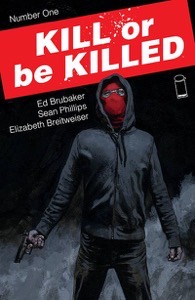
  • Kill or Be Killed (2016) #1

    Kbk1

    Kill or Be Killed kicks off with approximately thirty-three pages of story. I feel like it’s got to be thirty-two, but the quick count was thirty-three. And writer Ed Brubaker packs those thirty-three pages.

    The comic starts with a bunch of gory action killing as our hero, Dylan, shotguns a bunch of bad guys. Well, presumably bad guys. He only kills bad guys, he assures us in narration; Sean Phillips’s art captures the gloom and gore. It’s a lot to start an issue with, but Brubaker and Phillips get through it as the narrator—who’s talking directly to the reader—decides to fill us in on his backstory.

    Dylan’s a twenty-eight-year-old graduate student in New York City, living off inheritance and student loans, older than his peers because one of his suicide attempts got him kicked out of school. He’s got no girlfriend—though we get to meet an ex in a flashback in the flashback—and his roommate has stolen his best friend (dating her). As Dylan’s domestic life gets more complicated, with his best friend, Kira, starting an affair with him behind the roommate’s back, he soon finds himself once again suicidal.

    Luckily, he’s got one of those apartment buildings like Selina Kyle in Batman Returns and he survives the attempt… only a demon shows up demanding Dylan kill bad guys to make up for the demon not getting his soul in the suicide. A murder a month to keep the demon away.

    The issue ends before Dylan’s done the deed, but we know he’s clearly heading in that direction from the opening.

    There’s a lot of narration. A lot of it. Some of it’s tedious, some of it ages poorly (the comic’s from summer 2016 and Brubaker’s not great at future-telling), but it rarely gets to be too much. There’s always gorgeous Phillips art to offset any narration-related lag. The New York City stuff is phenomenal, the character figures—their figures look artificially small—not, but it’s only in medium or long-shots. Close-ups, talking heads, Phillips’s on it.

    The comic’s intense, unpleasant, and exceedingly well-produced.

  • Cyrano (2021, Joe Wright)

    Cyrano has good production design from Sarah Greenwood and costumes by Massimo Cantini Parrini. And there’s one time Ben Mendelsohn doesn’t seem terrible. And I suppose his musical number is the most personality the film ever shows because it’s like a really shitty Disney number, like a “Disney’s jumped the shark with that one” type thing.

    Otherwise, Cyrano is a dumpster fire.

    The film’s a musical, based on a stage musical by screenwriter Erica Schmidt, songs by Bryce Dessner, Aaron Dessner, and Matt Berninger, and music by the Dessners. All of the writing is bad. The songs, the music, the adaptation. All of it. Bad.

    Now, Wright’s direction is terrible—particularly of the actors when saying lines of dialogue to one another, but still. The writing’s bad. Wright does risible work throughout—the war scene’s inept and embarrassing, both for the viewer and cinematographer Seamus McGarvey, who’s never impressive but never inept like Wright. Not until that war scene. Then Cyrano looks as silly as it plays, which the rest of the film usually avoids.

    Now, it does always sound as silly it plays. The Dessners’ musical score is omnipresent because someone understands the flat delivery from the cast is a problem and so there needs to be some emotion somewhere. Even if it’s the bad music. But then there’s the singing.

    So, Peter Dinklage as Cyrano. It’s a stunt cast. Fine. He’s not good. He’s sometimes awkwardly, uncomfortably bad (while still better than most of his costars), but he also cannot sing. And Cyrano is a musical. So Dinklage sludges through ever song and the more he sings the worse the number. It’s bewildering and starts early enough there’s no time Cyrano isn’t barreling down a mountain away from the tracks.

    Now, while Dinklage can’t sing, his leading lady can’t sing or act. Haley Bennett’s the object of his affection and she’s bad. She’s bad opposite Dinklage, she’s bad opposite himbo Kelvin Harrison Jr., she’s bad opposite aspiring rapist Mendelsohn. Her singing numbers are lousy and seem like someone really wished they got to direct a Sarah McLachlan video in 1994 but didn’t get the job and has been stewing over it for thirty years.

    How old’s Wright?

    Anyway.

    Himbo Harrison. He’s not good either. He’s the least disastrous casting, however. The film does a particularly bad job establishing Harrison’s character, specifically Schmidt’s script. The material’s just not there. But Wright also does a terrible job directing Harrison and Dinklage’s pseudo-friendship. Somewhere in the third act it’s clear the relationship needed to be strong but it’s barely trifling.

    Dinklage already has a best bro in Bashir Salahuddin, who’s not bad like most of the cast, possibly because Salahuddin doesn’t get too much material. Though Joshua James gets less than Salahuddin and is atrocious.

    The cast and crew’s commitment to making a long, lousy movie could be seen as impressive so long as one doesn’t suffer the film itself.

    Cyrano’s godawful, start to finish.

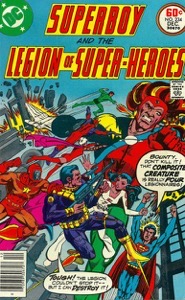
  • Superboy and the Legion of Super-Heroes (1977) #234

    L234

    I’m going with DC’s current conventional wisdom on where to start reading Paul Levitz Legion of Super-Heroes (based on their latest collection of those issues), and I’m not surprised to see the first issue in that run written by Gerry Conway. Back to the seventies, where creator runs were short and had to be nimble.

    This issue only has one call back to previous events. Otherwise, it seems to be starting its plots.

    The A-plot has Superboy and some other Legionnaires flying out in space to capture a space dragon. Conway and artists Ric Estrada and Jack Abel juxtapose the space dragon hunt with a bounty hunter—called Bounty, natch—hunting down some harmless old fugitive. The exposition promises the two subplots will make sense, but first, we need to check in on planet Earth, where Legion leader Wildfire is just too hot under the collar for decorum with the politicians.

    The A-plot brings Bounty in pretty quickly—or at least there’s nothing else Bounty does after his introduction before he’s incorporated—but the strong B-plot of the issue is the Legion lacking confidence in Wildfire. And Wildfire lacking confidence in himself. It’s never overly dramatic, the arguments are constrained, and it’s just steady character development. It’s a neat device. Conway’s exposition is occasionally tiresome, often ableist, but the plotting and some of the dialogue are solid efforts.

    When Bounty is fighting the monster—a Composite Legionnaire (they get zapped together and, since they’re giant now, have to wreak havoc on future Metropolis)—he’s got endless thought balloons; they’re universally bad. The character feels unnecessary for the story.

    Besides the internal organization turmoil stuff, it’s basically just a giant monster movie. They need to stop the monster before it destroys too much stuff. There are also some space dragon origin flashbacks to pad out the story’s first half. Conway’s pacing, despite the verbiage in his exposition, is strong.

    Estrada and Abel’s art is decent. Some of the giant monster pages are quite good, giving off fifties sci-fi movie poster vibes.

    It’s perfectly fine superhero sci-fi team stuff.

  • Luba (1998) #6

    L6

    This issue is primarily a comedy soap opera, expertly executed by creator Beto Hernandez. But first, he does the opening Luba story, only it’s a Khamo story. Juxtaposed against Luba and Ofelia herding the children—and getting ready for Socorro to go away to gifted school—is Khamo and the “cops” he’s helping.

    It turns out he’s not helping the cops; he’s helping some mobsters, presumably using his old connections to get rid of someone’s competition. It raises many questions—the most critical being, does Khamo understand the danger he’s put his family in (because his handlers talk about it in English, so he can’t understand them), or is he a dupe, or is there something even worse going on. It’s four pages, and it haunts the rest of the issue. It’s also brilliantly paced, with Beto jumping from scene to scene as Khamo and various drug dealers discuss karma. Khamo and karma? It’s an out-of-nowhere subplot twist, and I’m already antsy worrying about the resolve (especially since Luba’s only whole conversation is about feeling impending doom).

    So good.

    The rest of the comic is about Hector Rivera, a new character Beto introduced last issue, only without naming him. He gets a name here. Last issue, Hector helped Socorro and Joselito get home after they have an adventure; in this issue, they run into him when they’re out with Aunt Fritz. Fritz likes Hector, much to his surprise and delight, and pretty soon, they’re getting busy.

    The story’s mainly about Fritz trying to set Hector up with her sister, Petra, only Petra’s resistant. Fritz has too many boyfriends already to add a third to the mix (especially since we find out she’s added Fortunato, but he’s not a regular). So the story’s basically her having awkward conversations and sweaty sex. Meanwhile, Hector’s utterly enamored with the only temporarily attainable Fritz and trying to avoid the matchmaking too.

    Beto does a whole range of scenes, like some fun ones with Petra gossiping about her sister at work, touching ones (one of Fritz’s boyfriends is more serious than she realizes), and just thoughtfully executed ones, like Hector bonding with Venus over comic books. It’s a great feature (at eleven pages, it’s the longest of the three).

    Before the next longest feature, at eight pages, Beto does a one-page Doralis bit about “legged sea people.” These are the in-between merpeople and human people, whose magical origin story is similar to what Fortunato told Pipo last issue. And there’s Fortunato on the TV—a recurring visual motif—to emphasize his supernatural origin. It ends with a nice moment for Luba and Socorro; Beto’s been spotlighting their mother and daughter relationship well these last few issues.

    The final story is another Hector one, although he’s sharing it with Petra this time. She’s just discovered her ex-husband is remarrying and hasn’t invited her to the wedding, so she decides to try to spoil it, only she’ll need Hector’s help.

    For semi-exhibitionism to distract from the nuptials. Because Petra’s being petty, which she doesn’t tell Hector about. Meanwhile, he’s worried about telling her about his brief romance with Fritz; on the one hand, he doesn’t want to lie; on the other hand, he’s concerned about Petra’s reaction.

    Though the last story established Petra at least assumes Fritz and Hector made the beast with two backs.

    Beto also reveals Petra’s a born-again Christian, which I think has to be the first mention because I’d really think I’d remember. Though I don’t think she ever tells Hector she’s born-again, his bros are all gossiping about her to him. Hector can overcome Petra being a jock and religiosity, only we still don’t know how Petra actually feels.

    Hector’s a fine new character, though Beto goes overboard with his thought balloons, seemingly trying to justify his shoehorning in as a protagonist. He’s not a new recurring supporting character like Fortunato; he’s an entirely new lead. One who gets lengthy thought balloons to explain his behavior, something the main cast never gets.

    It’s the most traditional thing Beto’s done with Luba, but it also seems the riskiest. Or maybe I just remember his brother Jaime’s lousy luck trying to make Locos a thing.

    Oh, and the back cover color comic? It’s a lengthy fart joke set at Socorro’s going away party. It’s awesome.

  • The Equalizer (2021) s02e17 – What Dreams May Come

    I’m sure it’s happened before, but this episode has a guest star who appeared on the eighties “Equalizer,” too. In the first scene of this episode, Queen Latifah meets with spy guy Neal Benari to check up on her nemesis, who’s overseas after killing Chris Noth (offscreen). Presumably, we’ll get some sort of return visit from the bad guy this season, with “Equalizer” maybe finally ready to put Laya DeLeon Hayes in real danger.

    Hopefully not.

    Anyway, Benari was on a couple episodes of the original show.

    Hayes gets her own arc this episode, involving her going to therapy to talk about having a vigilante mom with Latifah and a dad who wants to know all about Mom’s goings-on. Roma Maffia plays the therapist and is delightful because it’s Roma Maffia, and it’s nice to see Hayes finally get to do this arc after hinting at it a few episodes ago.

    The main story of this episode involves a missing reporter, played by Brittany Bellizeare. Her brother comes to New York looking for her, fueled by physic visions.

    In other words, “The Equalizer”’s going to do its supernatural episode now, months before Halloween.

    Yusuf Gatewood plays the psychic brother. Gatewood’s way too good for the part. He acts the heck out of the show, which gives him almost nothing to do, but he’s very active doing it.

    Rob Hanning gets the script credit. The episode will weave around various cast members’ beliefs in the supernatural, with Adam Goldberg playing the voice of reason. His wife, Liza Lapira, is the avowed non-skeptic, while Latifah’s more guarded and unwilling to take a side. We later find out Lorraine Toussaint is a true believer in the shining. She introduces a new backstory for Latifah involving a psychic premonition before Latifah’s father died.

    They don’t say her father isn’t Edward Woodward… fingers crossed.

    The mystery’s convoluted but thoughtful, with the psychic stuff being a bit of a red herring once they get to political corruption. Second-half guest stars Shirley Rumierk and Roberts Jekabsons don’t compare well against Gatewood; Rumierk’s okay but nothing more. Jekabsons’s bad.

    The family stuff with Hayes is solid; the family psychic stuff is not.

    Eventually, the episode cops out on the psychic stuff because, of course, it does.

    Oh, and Tory Kittles is back to having nothing to do on the show, making his multi-episode arc just a pointless look into how nice it is when he’s around more.

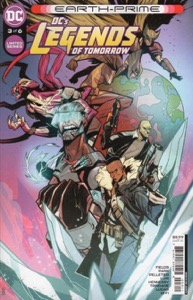
  • Earth-Prime (2022) #3

    Ep3

    I can only assume the cast getting teleported away at the end of the feature story will matter in later Earth-Prime issues. Maybe they’re doing the Arrowverse version of the Beyonder.

    While I’ve been aware of the series (an “in-continuity” comic story for the CW Arrowverse shows, which are all now mostly canceled), I didn’t have any plans on reading any of it until “Legends of Tomorrow” got canceled. They shared a preview of the story, and the nostalgia twangs hit right, with the comic starting with Ray and Nora. He’s the Atom, she’s a fairy godmother and former villain, they’re cute enough together, though on the show it’s cuter because the actors are married.

    The art’s fine—Paul Pelletier pencils, Andrew Hennessy inks—but it’s not photo-realistic for the characters. Broad strokes. They also avoid distinguishing characteristics, particularly when Dominic Purcell’s Mick Rory shows up. Ray goes to get help from Jax, who used to be Firestorm, and finds the Hawkpeople there. These characters left the show at least a season before it was canceled (the credits identify the team as “Ex-Legends”), so it’s a nice trip down memory lane with departed cast members. Mona shows up. It’s definitely targeted at regular viewers, and writers Lauren Fields and Daniel Park clearly enjoy running the reunion story. The Hawkpeople disappeared for most of the series, so having them interact with the more developed cast’s interesting. Also, Fields and Park aren’t above acknowledging some of the show’s first season bumpiness.

    It’s a good feature. If you’re a “Legends” fan. And it’s not too bittersweet; it’s a “the adventure never ends” type deal, something the show never got to do.

    But then there’s a back-up, which reveals what series finale guest star Donald Faison was doing during some of that episode, including more cameos. The script’s from Fields and Park again (it makes Faison’s character more likable than the show did), with art by Jose Luis and Jonas Trindade. It’s fine. But it’s intended to get readers excited for a never arriving new season of the show.

    It’s a bummer. It’s bittersweet in the right ways and—through no fault of the creators—a bummer in the wrong ways.

  • Them! (1954, Gordon Douglas)

    Them! combines Atomic Age giant monster sci-fi and “by the book” police procedural, with a little (too little) war action thrown in. Nine years after the atomic bomb tests in New Mexico, residual radiation has caused common desert ants to grow to enormous sizes. In their hunt for sugar, these ants quickly have become carnivores, feeding on the random, unlucky camping family.

    The film opens with highway patrol coppers James Whitmore and Christian Drake happening across a little girl (Sandy Descher) wandering the desert. They find her family’s camper, seemingly torn open; no other survivors but a damned peculiar footprint in the sand.

    Unfortunately, it’s New Mexico, and there are sandstorms all the time, so these footprints will appear and disappear through the first act when they’re still trying to figure out what they’re dealing with. The FBI gets involved (because Descher’s missing dad was an agent) in the form of James Arness. Arness is a charisma vacuum. Whitmore’s muted but with a lot of personality and character; Arness is the opposite. When Joan Weldon arrives as his love interest and is just as milquetoast… well, their sparing flirting interactions beg for a giant ant to come in and eat one or both of them.

    Weldon’s a government scientist, flown out because of the footprint, sidekick to her father, Edmund Gwenn. They’re both doctors, but she’s a girl; the movie tries to get mileage out of it for so long it’s a surprise in the third act when no one’s giving Weldon shit anymore.

    The title comes from Descher’s eventual witness statement—she can’t describe the giant ants; she can just scream, “Them!,” over and over. Got to keep them (no pun) a surprise for the reveal, which happens pretty soon after that scene. For the rest of the movie, whenever someone’s talking about the giant ants, even when it’s different giant ants because there’s a very detailed plot development regarding princess ants on their wedding flights, the actors always emphasize “them” in their deliveries. It’s cute, albeit tiresome.

    The film keeps the gang together as it travels from New Mexico to Washington D.C. to California by limiting who knows about the giant ants. Gwenn says you can’t cause a public panic; Arness and Whitmore already know the score, so they’re the perfect flatfoots for the procedural. Lots of interviewing witnesses, not a lot of giant ants.

    Except sometimes, there are a lot of giant ants. They can do the life-size monsters, but they can’t do enough of them, especially not after Gwenn’s shown nature documentaries of real ants to frighten everyone at the potential.

    But when it’s limited numbers of giant ants, Them! scores better than it seems like it can too. Director Douglas doesn’t do anything particularly impressive, but he does do all right when it’s Whitmore and Arness versus giant ants in the desert. The finale set piece—set in the concrete Los Angeles river bed—is inspired and bigger than expected, but it’s also where Them! runs into technology and budgetary constraints. The desert is where the film’s most successful giant monster thriller action-wise.

    It’d probably help if the acting were stronger overall. Whitmore’s good, but once pretty boy Arness shows up, it’s obviously Whitmore’s demoted to sidekick. Gwenn’s solid as the scientist who warns everyone about the atomic future, getting through a bunch of mealy dialogue, but it’s not a particularly good part. Arness and Weldon are tiresome or bad. Onslow Stevens is also bad as the general who oversees the operation, though most of the other supporting cast is fine. Fess Parker works hard in his little scene, a pilot who no one believes has seen giant ants.

    The procedural storytelling covers the acting deficiencies, right up until the finish, when the movie rushes the finish and at a reduced scale.

    Them!’s fine. It seems like it should’ve been better, but it’s also not unimpressive as is.

  • Luba (1998) #5

    L5

    This issue’s got three stories, but thanks to creator Beto Hernandez’s structure of the second one, it feels like four stories.

    The first story is the Luba story, though something in story two (and a half) calls back to one of her solo stories even though she’s not actually in it.

    Beto just opens with a cast list again, including little relevant details to catch up with the characters’ current storylines.

    All right, the Luba story. Luba takes daughter Socorro to visit a gifted school. There’s great mother and daughter stuff for Luba, but while they’re gone, the other kids get it in their heads Ofelia’s writing a book about Luba. So the story starts with this great mom and daughter stuff, then becomes this great Luba and Ofelia thing, with the undercurrent about Luba’s other daughter, Doralis, coming out as queer (and how seemingly all Luba’s kids but one are gay).

    Beto ends the story on this beautiful, perfect note; it’s a divine five pages.

    The second story is all about the drama behind Doralis’s TV show; Doralis doesn’t figure in, rather Luba’s other daughter, Guadalupe, but more her husband, Gato. Everyone’s just found out Gato sold Pipo (who produces the show) out to the media, and now he’s writing a book about her. The story’s from Boots’s perspective. Boots is the new accountant and an inspired new character from Beto. She’s an inherently funny character, which carries over even to her narration (she’s writing about the drama, not participating until the last page).

    But this story is where Beto sneaks in the half story, with Boots doing a flashback to the first time Pipo and her son, Sergio, came to the United States. At the time, Pipo was still married to Gato, so he came with them, but they were separated, so when she ends up with a stud, it’s all right.

    It just turns out we’ve already met the stud before, as some years in the future—or recent issues’ present—he’s going to hook up with Luba. And this issue reveals some of the background to that liaison, full of mystical realism but urban.

    It’s outstanding stuff. And it’s never a distraction from it being Pipo’s story, right up until it becomes Guadalupe’s story.

    Like the first story, Beto finds a sublime finish for it.

    Then comes Socorro’s story, which might be the best in the issue. The three stories do very different things and work in unison; they’re not competing. But this story’s particularly fantastic.

    Socorro and little brother Joselito follow Luba out one night after their father has stormed out (post-Luba fight, though we never know what they’re arguing about). They steal a neighbor’s car, leading to a hilarious but dangerous sequence with little kids driving a car.

    Only Socorro’s a genius, so she’s got very good, very reasoned observations.

    Beto then changes the perspective over to a different character, some punker who’s just broken up with his girlfriend, and she kicked him out of his own place. Too high to go home (he’s crashing at his parents), he wanders around. Simultaneously, Socorro is trying to get Joselito home safely.

    It’s a fanciful, verbose story—with Beto using much thinner lines than usual, giving the art some tension—with another great conclusion. It’s a slice of life colliding with comic strip hijinks.

    The color one-pager on the back cover is a lovely formal thing with Fritz doing ballet. Beto plays around with colors and movement.

    Once again, it’s an excellent issue; as usual, Beto takes entirely unexpected routes to that greatness. During the first story, it doesn’t seem like anything will be better than the second story engenders a similar reaction, but then the third—not even about the regular cast—blows the first two away.

    It’s exceptional comics.

  • From Dusk Till Dawn (1996, Robert Rodriguez)

    From Dusk Till Dawn doesn’t have any great performances; it has a bunch of decent ones, a couple good ones, thankless ones, middling ones, bad ones, maybe problematic ones, but no great ones. And it could use a great performance because the script’s full of scenery-chewing dialogue courtesy second-billed Quentin Tarantino.

    Tarantino writes a movie he’d want to see, but also one where it’s clear he’s the center of attention. So when it comes time for Salma Hayek’s dance number in the grandiosely sleazy biker bar and strip club where most of the movie takes place, Tarantino’s the one who gets the table dance. He’s the one who gets to suck on some girl’s foot. And he wants everyone watching to know he’s that guy.

    His character is a rapist and murderer who has just broken his brother out of jail. George Clooney plays the brother. Genes are funny. Clooney’s the cool, collected professional thief who talks in soulful monologue, listens to people, and only kills civilians when absolutely necessary. He also gets shitfaced when he’s upset and makes terrible decisions, which tracks since he keeps Tarantino alive even though Tarantino’s a monster.

    None of that backstory is important to From Dusk Till Dawn. There’s a lot of talking about it because there’s a lot of talking in the movie's first hour, but none of it matters. Once the batshit hits the fan—oh, the sleazy biker strip bar is actually a vampire den—Clooney becomes just another member of the ensemble. He spent the first act and a half of the movie keeping the plot and Tarantino on point, though in the latter case, just cleaning up after the raping and murdering.

    Clooney’s one of the decent performances. Unfortunately, he doesn’t have the personality for the dialogue without better direction on his performance, and director Rodriguez’s got zero interest in directing performances. He also gets bored with all the talking; not a good combination.

    Clooney and Tarantino need to get into Mexico; all the cops in Texas are looking for them. The film mostly shows it via a TV newscast where the liberal local Texas news media tracks a tally on how many Rangers the brothers kill. John Saxon and Kelly Preston cameo on the TV news; Saxon’s okay, Preston’s terrible. It’s a tedious bit, and she makes it worse.

    There’s also a liquor store hold-up where the brothers watch Michael Parks and John Hawkes have a lengthy Tarantino scene. Parks is real good, and Hawkes is pretty good, but the scene’s a draggy way to start. Once it becomes clear Clooney’s actually Tarantino’s sidekick, Dawn loses a bunch of immediate potential; it’s all about Tarantino’s whims.

    To get into Mexico, Clooney decides they need to kidnap Harvey Keitel and his teenage kids and ride across the border in their RV. Keitel’s a former minister; his wife died a horrific death, and he’s lost his faith. Juliette Lewis and Ernest Liu play the kids. Liu’s adopted. Clooney and Tarantino make fun of him for being Asian. They also talk a lot of shit about Mexican people. On the one hand, you can kind of see them doing Clooney against type, only it’s not exactly (he just talks trash, he doesn’t act it). On the other, it’s just Tarantino in-virtue signaling because he’s an asshole.

    Anyway.

    Lewis is good. Liu’s fine. Keitel’s good. Keitel’s got a silly part in an eventually gory movie, and when the time comes for him to step up, it’s mostly just to pass the baton over to Lewis, which is kind of cool. The movie takes little note of it (based on the script structure, it is, actually, because she’s a girl), but she’s the protagonist, and it carries. Rodriguez’s got a little more interest in Keitel and the family.

    When the action gets to the vampire bar, there are more supporting cast members to play it out. Hayek’s got an incredibly thankless part, but Fred Williamson and Tom Savini do all right. Especially Savini. Danny Trejo’s oddly bad as the bartender, and then Cheech Marin tries really hard in three different parts. Sadly the bit is it’s Cheech cameoing in three different parts. The amusement factor runs out when the first one drags on, and the film never re-ups.

    Rodriguez is more enthusiastic about the gory, slimy, bloody vampire action, so it’s disappointing when it turns out Tarantino’s got no story for it. After moving all the pieces into position, the script craps out.

    Good production design from Cecilia Montiel, even if Rodriguez and cinematographer Guillermo Navarro rush over it. When he’s not cutting together one of Tarantino’s ego trips, Rodriguez's editing is good.

    Dawn’s okay—Keitel can carry the thing after it’s clear Clooney can’t, with Lewis able to keep it afloat when she needs to take over, too—but it’s utterly desperate to cool; and it’s barely, rarely chilly.

  • Doctor X (1932, Michael Curtiz)

    Doctor X has pretty much the wrong prescription for everything. After a genuinely creepy first act, which has police autopsy consultant Lionel Atwill telling the cops the only place a monthly serial killer could get a particular scalpel is at Atwill’s school and then giving them a tour and everyone there being in some way familiar with cannibalism, the movie becomes an old dark house picture before going off the rails with its finale reveals. But it’s also a lousy gag comedy, with reporter Lee Tracy bumbling around—a lot of bumbling—and then a weird romance with Tracy unintentionally wooing Atwill’s daughter, Fay Wray. Sometimes it seems like the wooing is intentional, but then it’s the opposite during other scenes.

    Robert Warwick plays the police commissioner who’s investigating the case. Atwill takes back to his medical school to introduce all the suspects, but then Warwick disappears from the main plot. It’s a real bummer because, without Warwick, there’s room for so much bad acting. Bad acting and weird decisions from the screenwriters and director Curtiz.

    The most annoying weird bit is George Rosener as Atwill’s creepy butler. Roesner spends the first quarter of the movie just looking suspicious—according to a witness, the murderer’s really ugly, and Roesner’s creepy dude fits the bill. For the audience, anyway. See, when Atwill takes all the suspects out to his Long Island house to hook them up to blood pressure monitors and try to get them worked up watching murder reenactments, it’s pretty clear Atwill’s not good at his job and isn’t going to be able to catch the killer. Especially not since, based on the nonsensical resolution (which turns movie-long clues into plot holes), none of his ideas about catching the killer would’ve worked. There’s a lengthy fight scene at the end, and as it drags on, one has time to reflect on how little the bad science makes sense given the reveal.

    So it would help if Doctor X had a bunch of good acting to make up for the script.

    It does not.

    Best is Warwick, then Atwill (after a lackluster first half, he recovers well in the second), then Wray. And Wray’s not particularly good; she’s got a terrible, silly part and no chemistry with Tracy because he’s a pest. But she’s not bad. And there’s a lot of bad. The worst is Preston Foster. He’s atrocious.

    Oh, wait, I got sidetracked talking about Roesner. Who’s also got a terrible part because he’s not actually a creepy butler; he’s just a regular dude who no one in the movie knows is a creep. There’s a whole scene where he teases maid Leila Bennett (who’s good, but barely in it), and you think he’s intentionally being mean, but then he’s weirded to Wray later, and she’s okay with it, taking it as concern. Who knows how it’d play if director Curtiz weren’t entirely checked out regarding his cast’s performances.

    The color photography from Ray Rennahan is just okay but charming. He’s trying harder than almost everyone else, who’s not trying at all. And why would you with the script? But, still, someone had to realize Tracy shouldn’t be just bumbling for long scenes, all by himself.

    It’s not the worst, but it’s still a reasonably comprehensive fail.