• O Brother, Where Art Thou? (2000, Joel Coen)

    O Brother, Where Art Thou? is a frustrating, adequate success. There’s some excellent filmmaking and even better performances. Still, the Coen Brothers’ adaptation of Homer’s The Odyssey is at times too stringent and, at other times, narrative spaghetti on the wall. The falling pieces are co-stars John Turturro and Tim Blake Nelson, who spend the first half of the movie establishing themselves and seemingly firmly affixed, only to drop.

    The film’s got three creative impulses: an Odyssey adaptation set in the Deep South during the Great Depression (and seemingly the most whitewashed Southern movie since Gone With the Wind), Turturro, Nelson, and George Clooney doing a prison break, and then Clooney trying to reunite with ex-wife Holly Hunter. The third impulse ties into the first, with the Brothers Coen entirely sacrificing the prison break movie to enable the romantic comedy.

    Sort of. It’s all intertwined, with various details relying on previous details from another impulse—not to mention the entire “old-timey” musical aspect. The musical aspect is the foundation; everything else, except maybe the Clooney and Hunter stuff, is built off the musical. And it works. The only real disappointment is the finish, a series of deus ex machinas punctuated with a reminder of where the third act went wrong, then a nostalgic pull on the heartstrings for the good old days of the 1937 South, when they beat racism for good.

    There’s also the whole other aspect of the film’s title being an empty reference to Sullivan’s Travels only very much only to signal the film literate in the audience.

    Anyway.

    Besides all that mess, O Brother’s a delight. Clooney, Turturro, and Nelson all give fantastic performances. Knowing the Coen Brothers have it all storyboarded and there aren’t rewrites makes it all the more impressive as the actors start flexing their physical performances. Lots of busybodies and silly expressions, often in the background, and it’s swell.

    Clooney’s the suave, fast-talker of the group—when Hunter swoons at his nonsense, it’s more than believable as the audience has been swooning to it for over an hour at that point—Turturro’s the dim one, Nelson’s the dimmer one. And immediately lovable. Turturro’s initially a little potentially dangerous, while Nelson’s always huggable if they weren’t covered in mud and probably manure.

    Their adventures take them through various Odyssey-related set pieces, though anyone substituting O Brother for CliffNotes would fail the test. Even without the Cyclops (John Goodman) ending up at a Klan rally, realized as a musical number out of Fantasia. They meet several interesting characters: Goodman, guitarist and the boys’ Black friend, Chris Thomas King (who sold his soul to the devil to play the guitar better, a perhaps too gentle reference to Robert Johnson’s Cross Road Blues; King plays “Tommy Johnson”), Michael Badalucco as “Don’t Call Me Babyface” Nelson, and state governor Charles Durning.

    Oh, yeah. Durning’s failing re-election campaign against reformer Wayne Duvall is the major subplot, which also wasn’t in The Odyssey; though it’s been a while. And Durning’s such an abject delight it doesn’t matter. The Coen Brothers use that subplot to make the second half work.

    The best performance ends up being Clooney, though, for a while, he’s got serious competition from Turturro (before Turturro disappears and they have Clooney turn up the charm). Clooney seems like he’s got one peak through the first act but then reveals he can take the performance higher, which is fun to watch. The film appropriately appreciates and revels in its leads’ performances.

    Hunter and her new beau, Ray McKinnon, are just fine. Hunter’s stunt casting in a thin part; she’s just got to be exasperated and charmed by Clooney, which is also the audience, while McKinnon’s just got to be a capable dweeb. Though based on third-act revelations, there’s a whole other potential layer to McKinnon the film pretends isn’t there.

    Racism, it’s the racism layer.

    Anyway.

    Incredible photography from Roger Deakins (though the digital color grading is really obvious if you know it’s there) and fantastic production and costume design, courtesy Dennis Gassner and Mary Zophres, respectively. And the music’s great.

    O Brother is an excellent time, with some major and minor asterisks.

  • Mamo (2021) #1

    Mamo1Creator Sas Milledge is masterful when it comes to introspection. Despite Mamo often being full of expository dialogue, it’s about the characters when they’re not talking, why they’re not talking, what they’re thinking about instead, and so on. Just like most of the book, it’s understated, thoughtful, and fantastic.

    The issue begins with teenager Jo riding her bike out to the seaside cliffs to consult the town witch. It’s windy, and the trees are swaying, with Milledge preternaturally keeping Jo moving as well as the scenery, implying two things at once. Milledge employs various styles in the comic without ever changing the visual norms; the pacing is sublime.

    Jo’s mom is cursed, and only the town witch can help. Jo finds the town witch hanging out with her cat, reading a book while lounging in her hatchback. Milledge does a fine job establishing the world—there’s magic (the magic people are called the Fae), towns are supposed to have witches, and normies are supposed to have basic magic education.

    Except Jo doesn’t find the town witch, she finds Orla, who’s a few years older—old enough to have a hatchback, not a bicycle—and isn’t interested in helping. Until something unexpected happens involving something supernatural, but it’s not entirely clear what. Because it’s magic, and Orla knows what it means, even if the reader doesn’t. It’s remarkably assured work from Milledge and only in the first four or five pages.

    Orla and Jo talk on the way back to town, walking through a stunning forest, where they find out more about each other. It’s excellent pacing; Milledge’s superb at adjusting the speed.

    There’s not just time for Orla to meet Jo’s family but also for a big reveal and then a cliffhanger, with Jo’s expository jabbering helping set the tone.

    Mamo’s ostensibly YA comics, but it’s really just a great comic about characters who happen to be in that demographic. I already adore this book.

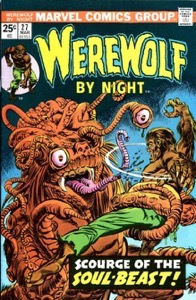
  • Werewolf by Night (1972) #27

    Wbn27There are numerous things to talk about this issue, but the teaser for next issue muscles them all out. Next issue is Lissa’s eighteenth birthday, an event the series has been promising for twenty issues and three years. I’m not taking the teaser as a promise, especially when writer Doug Moench is so comfortable retconning.

    The biggest official retcon is Jack remembering Wolfman Jack’s adventures. It’s always been a problem for the book, which has Jack narrating his werewolf outings, only then clarifying later he doesn’t remember what goes on when he’s the werewolf. So how’s he narrating? Moench just does away with it, which is fine. I think in the early issues, they hinted at it being like a nightmare state. Whatever.

    Moench might also move Buck Cowan’s house, or it could just be artist Don Perlin not doing much detail in his establishing shots. Perlin will be a thing to talk about, but first… Moench’s narration for Jack. He’s very intentionally writing it as a hard-boiled homage because nothing says hard-boiled like a blond-haired, blue-eyed surfer bro who’s Eastern European royalty and has a moneybags stepfather (slash uncle). I mean, maybe Jack does spend his non-werewolf times watching old Bogart and Brando movies and rocking out to the Stones—Jack ain’t no hippie, y’all—it’s not impossible since we never, ever see Jack do anything but werewolf out. But, also, no. Sure, Jan.

    The story this issue involves the werewolf stumbling across an old nemesis of Topaz’s from India. Topaz forgot to tell anyone in getting back her “esper” powers (never called them esper powers before); she had to give her evil, womanly sinful side of her soul to the bad guy, Dr. Clitterhouse. Dr. Glitternight. Whatever.

    The issue’s silly but okay, with Perlin leaning in on the long shots for action. He’s better at those. He’s also not bad at the slimy monsters. Wolfman Jack? Not great; slimy, tentacle monster, all good.

  • The Terminator (1988) #1

    T1If I knew there was a licensed Terminator monthly from the late eighties, I’d forgotten. I knew there was the Burning Earth limited (which concludes the NOW Comics license, with Terminator then headed to Dark Horse), but I didn’t remember there was a regular series. Though after one issue, it’s got squat to do with The Terminator. Outside the very obvious—the near future humans talk about Skynet all the time—the comic’s its own thing. I mean, its own thing meaning recycling other sci-fi bits, including moon colonists coming to Earth. But decently assembled.

    However, just because writer Fred Schiller can fill a couple dozen pages and penciller Tony Akins can break out the scenes, it doesn’t mean it’s successful. With Jim Brozman inking, Akins has good comic timing, which doesn’t help for a Terminator comic. His action composition is confusing, and the characters rarely look the same from panel to panel; even the visual clues to identify someone change. Thank goodness the moon people wear special outfits.

    They were on Earth in their spaceship, collecting kelp so they can feed themselves back on the moon. The moon people thing’s pretty neat. It offers an entirely new view into the seemingly rote future. Except, no, this future has humans working with the Terminators and, in turn, the Terminators trying to be nice to the humans.

    There are also Terminator babies, which has potential.

    Does the comic have potential, though?

    It amuses as an oddity, but so far, there are way too many characters—Schiller seems inspired by Aliens for how he handles the team dynamics; there are fifteen people. Schiller skips establishing the human resistance soldiers and instead emphasizes the moon people’s origin. It’d be okay if the comic were the adventures of John Conner, but it’s original characters.

    The Terminator could be a lot worse. There’s nothing to suggest it’s a hidden gem, but it could be much worse. And it’s not dull. Hopefully, Akins gets better at the action.

  • House of Bamboo (1955, Samuel Fuller)

    I had a variety of ways I was going to open this post. I was going to make a Robert Palmer reference for my apparent target demographic (it would have read: Director Fuller has cranes and knows how to use them). Except it turns out… Fuller didn’t have a dozen cranes roaming the Tokyo streets. He shot it on a minimal budget for locations, and the city shots were done guerilla without permits. It’s okay, though, I think. The thank you to the Tokyo cops might’ve been bribes.

    But I also thought about talking about the film as a relic from the past. It’s a crime saga set in post-war Japan, filmed on location. Also, on some very elaborate sets on sound stages, where Fuller presumably does get to use his flock of cranes (to excellent effect; he directs the hell out of Bamboo). It opens with Jack Webb-lite narration describing how military policing works in Japan, initially following American army captain Brad Dexter and Japanese official Sessue Hayakawa. They’re investigating a train robbery at first, and then the story jumps a few months, so there can be more narration when stickup artist Biff Elliot’s shot with the same gun used in the opening robbery.

    Oh, yeah, there’s a big train robbery opening, with Fuller and cinematographer Joseph MacDonald taking full advantage of the wide, glorious CinemaScope frame.

    Then the action cuts ahead a few more weeks with Robert Stack arriving. He’s Elliot’s pal from the service and just out of jail. He thinks Elliot’s got a gig for him, except Elliot’s dead, and his widow (Shirley Yamaguchi) didn’t know he was a crook until she read it in the paper.

    Now, Stack thinks white guy Elliot is ashamed of Japanese wife Yamaguchi because he kept her a secret from everyone. Except it’s actually because the other Japanese women are shitty to Yamaguchi for marrying a white guy. The way it’s presented, with Yamaguchi the victim of bigotry on her man’s account, seems to be telling American women if they’re racist to their husband’s buddy’s war bride, they’re being as bad as a Japanese woman.

    Also, Yamaguchi talks about how Americans could have no idea how the social pressure works… even though interracial marriages were still illegal. It’s peculiar. Bamboo’s very pro-Japan (well, pro-American colonization project Japan), but Fuller’s also sympathetic to particular plights (who wouldn’t want a wife “taught since childhood” to dote on her husband) and seemingly oblivious to others.

    His obliviousness is a blessing at times, however. He made it through making the movie with Stack in the lead. The only thing worse than Stack playing tough guy is Stack playing sensitive romantic. See, he’s going to fall in love with widow Yamaguchi… at the same time, he’s asking her to pose as his squeeze to help him infiltrate Elliot’s gang.

    Robert Ryan leads the gang. Ryan is mic-drop fantastic. No notes. Even when he seems to jump the shark, it’s to build up to something else later. Rising action is unfortunately rare in Bamboo too; only Ryan gins up enough momentum.

    The supporting cast runs hot and cold. Yamaguchi’s okay in an endlessly problematic part and not bad opposite Stack, which is an achievement. She’s barely in the third act, though, because the movie has to acknowledge she and Stack aren’t ever going to kiss, so what’s the point?

    Cameron Mitchell plays the second-in-command, who Stack inadvertently starts to replace, further engaging Mitchell. Mitchell’s great. Bamboo somewhat compensates for Stack’s wooden performance, with the other actors bringing the heat. Except Mitchell can easily do it, whereas Yamaguchi’s already got a lot on her plate. And Ryan’s supposedly enamored with Stack, but there’s no reason for him to be.

    Ryan fills the gang with ex-military officers drummed out of the service for being violent criminals. Besides his lack of affect, the only significant thing about Stack is his ostensibly impressive criminal record. Only Ryan’s not using him for any of that stuff. Ryan’s just another goon. Plus, Ryan spends their scenes waiting for Stack to start acting, which everyone else has figured out isn’t happening.

    But Ryan and Fuller seem sure Stack’s got to have something at some point.

    Nope.

    An uncredited DeForest Kelley also gets to upstage Stack as Ryan’s other named goon.

    Bamboo’s a great-looking film. Fuller loves the wide frame, and he loves doing the Tokyo travelogue—including a finale set at a rooftop amusement park—but he’s got no sense for the script. Or at least how to make it with Stack playing it. Bamboo is an eighty-four-minute movie running almost twenty minutes too long. Stack’s a terrible lead in the first act. Eventually, he gets sympathetic because of the plot, but he’s an American bully, shoving his way around Tokyo and trying to intimidate everyone. However, he’s nice to kids, which is a tell.

    Oh, and bad music. Bad in it’s from 1955, so, of course, it’s going to be “ethnic” themed. Except composer Leigh Harline one-ups it by going Hollywood Chinese music. When it’s just thriller music, it’s usually fine.

    House of Bamboo isn’t a success, but it’s a superbly made film. Fuller does masterful work. And Ryan’s so good.

  • Catwoman (2002) #7

    Cw7Last issue ended with Holly, on assignment from Selina (but maybe a little too gung ho), shot by dirty cops. This issue opens with them approaching; luckily, Selina gets there in time. Selina rushes Holly to Leslie Thompkins’s clinic and reveals she knew Holly was a recovering addict this whole time.

    As Leslie gets to operating, Selina takes the scant information she’s got—Holly was trailing an undercover narc before seeing some cops kill him—and heads over to Slam Bradley’s. Meanwhile, very special uncredited guest star Crispus Allen shows up at the dirty precinct to help out in the murder investigation, not suspecting he’s after some fellow officers.

    Most of the issue is Selina and Slam bantering and getting the skinny from his contact at the precinct. Writer Ed Brubaker wastes no time getting to the meat of the corruption; the precinct has taken over the local drug trade, shooting down anyone who gets in their way. It’s good exposition stuff, tough capes noir, with some really nice layouts from penciller Brad Rader.

    The other big change this issue is the narration. There isn’t any. Brubaker’s not narrating from Selina’s perspective (or Holly’s, like last issue). And with Selina wearing her mask most of the time, there’s less potential insight into her emotions. The issue’s very quick—Selina wakes Slam up at four in the morning or thereabouts, and the cliffhanger is the morning news—something the art doesn’t convey.

    The art this issue’s a tad disappointing. Rader has Rick Burchett and Cameron Stewart inking; Burchett makes it all look like an issue of Batman: The Animated Series, with Stewart presumably the one who gives Slam some visual character. It’s too bad, though it’s worst at the open and improves throughout.

    It’s a compelling story, slightly bland visuals or not, and Brubaker’s plotting is impressive. I was expecting another first act for the arc since last issue was a Holly “fill-in,” but no, he’s full speed ahead on the story. And already writing Slam and Selina great together.

  • Black Panther (1998) #1

    Bp1I remembered Priest and Mark Texeira’s Black Panther being good, but I didn’t remember it being a comedy. I also didn’t remember Black man Priest writing it for the white audience. His protagonist is CIA guy Everett K. Ross, who thinks T’Challa’s just like any other diplomatic liaison and isn’t anywhere near as badass as everyone makes him out to be.

    Ross admits he’s wrong real quick.

    He narrates the story, possibly as a report to his superior (and lady friend) Nikki. She’s frustrated with how long he takes to get to the point, but Priest’s having way too much fun with Ross’s fractured narrative. We open with a pants-less Ross cowering on a toilet, scared of a rat, abandoned by T’Challa and his security detail. Over the comic, we get the backstory on how Ross got the mission, some of what brought T’Challa to New York, and the tantalizing promise of a devil.

    Now, Marvel-616 has any number of potential devils, and even as Nikki tries to get Ross to hurry up getting out the punchline, he waits until the last couple pages. It’s worth the wait.

    There are some scenes without Ross’s humorous blabbering—he doesn’t just blabber in the narration, but in dialogue, too–mainly about T’Challa’s trip to New York. There’s been a murder tied to one of his charities, and he’s come to town to investigate. Ross is along for the ride. Somewhere along the way, he loses his pants.

    Texeira’s art is good. At times it’s a little static (and the rat’s strangely missing from the splash page when it ought to be an over-the-shoulder shot), but mostly on the talking heads. Texeira delivers on the action, which is somewhat sparse (since Ross is so bad at concise storytelling). Priest’s good at concisely rendering Ross’s lack of conciseness. It’s a lot of fun.

    And whatever the revealed devil may bring, especially given Priest’s inventiveness, is very promising. Presumably, T’Challa will get a bit more character, too, instead of guest-starring in his own book.

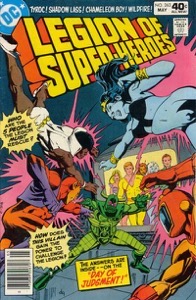
  • Legion of Super-Heroes (1980) #263

    Los263When I was a kid reading Who’s Who, I always thought Wildfire had one of the coolest designs. I can’t believe I hadn’t seen Cosmic Boy or whoever’s dressed like a male stripper (maybe I blocked it). But, as ever, Wildfire proves to be not cool; two big examples this issue, first being shitty to Dawnstar with some major misogynist vibes, then being shittier to Tyroc (the only Black person in the future?). Tyroc’s got something going on back home and has to get there. Wildfire yells at him for having obligations while Black and promises to see him ejected from the Legion.

    Though, given his living situation, Wildfire’s very much an incel, so all of it tracks except why he wasn’t kicked out of the Legion already.

    In other words, duck that guy.

    Anyway.

    The story’s about some Legion parents coming to Earth and getting captured by a new villain. Not Wildfire or Tyroc’s parents, or any of the issue’s Legion roll call, actually. Not having anyone be too invested—except Wildfire being super mad at Tyroc having agency—lets writer Gerry Conway off the hook for some character work. Though he’s got a surprising lot of it in the opening with the parents. It’s downright fascinating. They’re these future parents from different planets (some who’ve never been to Earth), and they’ve all got powers like their kids, only they don’t use them for superheroing. They’ve never met, so they’re bonding. It’s like a really good “Love Boat” first arc.

    The parents don’t seem to know it was Brainiac 5 who created the monster who destroyed Legion headquarters and killed untold billions or trillions, then got a pass on it from his paramilitary gang. Weird thing for the Legion not to tell folks when asking for government handouts and demanding no oversight.

    The issue ends on a rote cliffhanger. I wonder if they’ll save the parents.

    Jim Janes pencils with Dave Hunt inks. Janes’s very bland, very generic. His heroes look like the illustrations on eighties, Made in China generic action figure packaging. So… not good, but could be a lot worse. Especially for Legion.

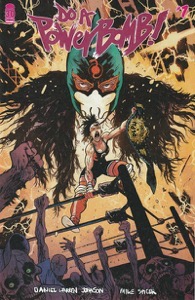
  • Do a Powerbomb (2022) #1

    Dab1There’s something about the comics form and wrestling. The way an artist can choreograph the fight to emphasize the danger and drama. Because of the ring, much like boxing, the attention can better focus on the action. Unlike boxing, there are flamboyant outfits and a range of moves, though Powerbomb creator Daniel Warren Johnson doesn’t seem to be creating any new wrestling moves here, at most amplifying existing ones. Well, so the commentators imply. And no comic creator seems to do a wrestling bit without loving the potential of the “sport.”

    Quotations because it’s still pro-wrestling. Johnson mentions the physical risks for entertainment in the back matter, which is the first time I can remember ever seeing it put so plainly. They’re (bad) actors, (sometimes good) athletes, but they’re actually risking their lives to put on this show.

    Powerbomb #1 is the series setup. It opens with champion Yua Steelrose defending her title against Cobrasun. Yua’s successfully fended off nine previous challenges, so she’s ready for this next one. Unlike the seemingly rowdy and callous Cobrasun, Yua’s all about family, whether it’s daughter Lona or just the fans. The fans are family too. Except then it turns out Cobrasun’s bringing more to the ring than just trash talk, and Yua’s in for a devastating match.

    When the fight and immediate fallout are done, the action jumps ahead ten years. Lona’s desperate to become a pro-wrestler herself, except she can’t find a trainer. In addition, her family’s unwilling to support her, and she can’t do it alone.

    Enter a creepy punk with a lightning grip with an offer.

    Now, the creepy punk was actually in the comic before—and his creepy lair (oh, it’s a lair) is the first-panel establishing shot—but Yua and Lona’s story is so compelling he doesn’t make as much of an impression as he would otherwise. The final reveal promises one hell of a comic, though it could probably get away with just being seven different wrestling matches visualized by Johnson. The art’s controlled frantic, bursting with energy, and the writing’s full of heart.

    It’s an outstanding comic, both in terms of art, writing (Johnson’s dialogue’s just okay sometimes, but his pacing’s phenomenal), and setup.

    Can’t wait for more.

  • Daughters of the Dust (1991, Julie Dash)

    Daughters of the Dust is an epical story told lyrically. Set in 1902, the film tells the story about the time a specific Gullah family headed to the mainland and north into the twentieth century. It opens with Cheryl Lynn Bruce returning home to make the crossing, bringing along photographer Tommy Redmond Hicks to document the occasion. Bruce had left home, got some education, and became a Christian.

    She’s very surprised to find her sister, played by Barbarao, also returning home. Bruce is the good sister who went off and assimilated into the popular culture. Barbarao is the scandalous sister, though it turns out she’s not the one who ought to feel scandalized. Barbarao’s bringing along female friend Trula Hoosier.

    Despite the awkward situation (with the audience not having details, just the awkwardness), Bruce tries to make conversation. She remembers childhood details, which leads to Hicks mansplaining about the slave trade. The Gullah are descendants of African captives enslaved by plantation owners on the lower Atlantic. In 1902, it’s living memory, something Hicks doesn’t understand (yet). Barbarao and Hoosier laugh at Hicks’s naivete, and the rest of the water taxi ride is presumably much more quiet.

    We don’t know because the action moves to the family’s day on Ibo Landing, named after the Ibo people, who figure into local mythology. Except, again, it turns out it’s living memory, which adds some devastating context to why people living in a tropical paradise (albeit with bad soil) would want to get the heck out. It also will lead to character development for Hicks and male “lead” Adisa Anderson. Quotations because, although Anderson gets quite a bit in the first act, he’s only the male lead because he’s the only male with a character arc.

    The family—the Peazant family—is de facto matriarchal, led by Cora Lee Day, though granddaughter-in-law Kaycee Moore is making a power grab with the move north. Day’s not going, something none of her family seems to have really internally acknowledged. The film takes place over two days, with occasional flashbacks and a future-tense narration from Anderson’s (as yet) unborn daughter (Kai-Lynn Warren). Day also narrates a bit, starting before Warren, which provides some framework for how the narration will work in slipping through time.

    Eventually, Warren will appear visually, the hope of the family—the first child to be born off the island—but also the child living inside this story she’s learned. It’s beautifully done. There’s nothing writer and director Dash attempts she doesn’t accomplish. The bigger the swing, the better the hit.

    The film’s got several subplots, most supporting the main plot—the family leaving—through character development. Anderson’s miserable because someone raped his wife, Alva Rogers, and he’s worried she’s pregnant with another man’s child. It’s made him remote, angry, and violent, especially when Rogers won’t tell him who did it. Anderson goes to great-grandmother Day for advice but doesn’t listen when she gives it.

    Rogers spends much of the film bonding with Barbarao and Hoosier, who are able to sympathize with her situation–finding just how much and why fuels Rogers’s character development arc, which becomes one of the film’s most consequential. But they’re all exceptional.

    The best performance is Day. Despite being one of the two narrators (and the only one active onscreen)—and being very open in her narration—Daughters reveals more and more about Day as it progresses. Everyone orbits her, and Dash explores their different and similar trajectories. But Day has layered the performance so well, each new detail just informs a previous choice and sets up subsequent ones. It’s a singular performance, though the same can be said of a few more.

    Barbarao, Moore, and Rogers are the other singular performances. Rogers is the last to go from simmer to boil, and when she does, it’s phenomenal and something it turns out the film’s been working towards the whole time.

    Technically, the film’s sublime. Dash’s direction is deliberate and concise, honed both with the performances and composition. Color is crucial in Daughters, whether the blue ribbon on future child Warren or the indigo stains on the palms of the formerly enslaved family members, providing a visual reminder of generational differences and experiences.

    Arthur Jafa’s succulent photography, toggling between tropical forests and white sand beaches, is simultaneously extraordinary and mundane. Similarly, John Barnes’s score inhabits the scenes, modern for the audience’s ears, while providing an emotional gateway into the characters’ lives, even as Dash waits to reveal various details.

    Then there’s Joseph Burton and Amy Carey’s editing. Their cutting makes it all happen. Dash and her editors use slow motion to great effect, focusing and guiding the audience’s attention.

    Great production and costume design—Kerry Marshall and Arline Burks Gant, respectively.

    Daughters of the Dust is a marvel. Dash, her cast, her crew all do superlative work.

  • Under Siege 2: Dark Territory (1995, Geoff Murphy)

    It’s never good when the worst thing about a Steven Seagal performance isn’t the Steven Seagal performance.

    Kidding.

    Sort of.

    And while he’s terrible in Under Siege 2: Dark Territory, he’s far from the worst performance. Stunt cast villain Eric Bogosian is much worse, for instance. As is Seagal’s sidekick, Morris Chestnut, who’s playing a Black sidekick out of the sixties. But Territory humiliates Chestnut (and all the female actors) regardless of their abilities. So the worst performance must go to Everett McGill, whose “soldier of fortune” tough guy only shows any enthusiasm when he gets to be pervy with fourteen-year-old Katherine Heigl. The rest of the movie, McGill’s a joke. That scene, it’s real creepy.

    Heigl is playing Seagal’s niece. He’s meeting her train in Denver, and they’re going together to Los Angeles. It’s unclear why. Her parents have recently died in a plane crash—hence the train travel—but since Seagal refuses to talk for most of the film (not a bad move), we don’t get any information on what they’re planning on doing in L.A.

    They just happen to be on the same train as Brenda Bakke and David Gianopoulos, who are two employees at a secret military installation run by Kurtwood Smith. The tedious opening titles reveal Smith and his gang, including the CIA guy from the first movie, Nick Mancuso (who’s the butt of a joke he doesn’t seem to get), have a secret agent spy scope that pulls in the moon, the stars, the planets, and the satellites, and the little bitty space men. It can even perv on women sunbathing, which the film gleefully explores.

    Anyway.

    Bogosian designed the satellite (an earthquake gun out of a Bond movie), only then he got fired for being unstable, so he faked his death, teamed up with domestic terrorist wannabe McGill, and hatched a plan to ambush Bakke and Gianopoulos on the train for their spy codes. Much of the film feels rewritten between scenes, though it never seems to get any better, just makes less sense.

    McGill’s crack team of red shirts for Seagal to take out later on include familiar faces like Jonathan Banks and Peter Greene, along with Scott Sowers as “the racist one.” Why’s he racist? Because.

    Dark Terrority’s also got the interesting problem of director Murphy. He’s not good at any of it. He’s not good with the actors, he’s not good with the fight scenes (he bungles every one of Seagal’s fisticuffs), and he’s not good with the pyrotechnics. The movie’s got lots of good explosions; it just doesn’t shoot them well.

    However, much of the action is green screen and cinematographer Robbie Greenberg’s atrocious lighting for it. On the other hand, the actual stunt guy (not Seagal) climbing on the train is fantastic.

    Basil Poledouris’s score is bad but could be worse. It’s kind of funny how obviously Poledouris wants to give Seagal the Robocop theme.

    There’s some actual “Die Hard on a train” inventiveness in the second act, but the movie quickly forgets about it, especially since Murphy can’t direct it.

    Also returning from Part 1 are Andy Romano and Dale Dye. Romano’s actually pretty dang good, all things considered. And, unlike almost everyone else, Dye doesn’t embarrass himself.

    Oh, and the bad mid-nineties CGI.

    Dark Territory’s a briefly fascinating time capsule, but otherwise, it’s terrible, boring, and gross about teenager Heigl every chance it gets.

  • Absolution (2022) #1

    A1Despite the Blade Runner font on the cover and the future vibe, Absolution is—so far—just a future dystopia action comic. I’m hesitant even to call it sci-fi. The potential science behind the fiction is all general stuff: the protagonist, Nina, is an assassin on potential parole. Potential meaning if she gets a high enough score for killing bad guys during her live streams, she’ll get an acquittal.

    If she fails, they’ll blow up her head because, you know, “Suicide Squad”’s old enough (and ubiquitous enough) to be trope fodder.

    The issue’s just her latest hit, with some flashbacks and then commentary from the commentators. Nina narrates, which writer Peter Milligan relies heavily on to carry some of the story. Artist Mike Deodato Jr. draws one heck of a corporate future dystopia city, and the stylistic panel grids nicely juxtapose the action and exposition. But the issue’s very much setup, including lots of Nina’s backstory (for now, you’re not going to not reveal something about your assassin anti-hero in later issues), so Deodato could potentially shake up the style.

    While streaming, shitty white men on the Internet comment on her not being attractive enough to them and complain about, you know, brown people existing. I wonder how these future stories are going to age in twenty years.

    But it’s solid action. Having everyone be shitty to her helps make Nina sympathetic (though there’s some concern in how Milligan writes the female stream commentator, who throws out non-sequiturs about sexism because she’s all the way caricature).

    Speaking of character and caricature… Deodato bases faces on real people. Gerard Depardieu plays the issue villain, and I think Woody Harrelson’s one of the stream commentators. It’s kind of fun. Also, it tracks Depardieu’s such a garbage guy.

  • American Gothic (1995) s01e08 – Strong Arm of the Law

    It’s all hands on deck for this episode (except for Brenda Bakke), like everyone wanted a chance to work with guest stars Matt Craven and Richard Edson. Craven and Edson are in town to shake down the local business owners. They’ve got a couple more in their gang, doofus Jim Gloster and rapist Joseph Granda. Initially, they give off big ex-con carpetbagger vibes as they’re from Michigan, but once we find out their actual backstory….

    Well, “Gothic”’s got its sense of humor, after all.

    They don’t show up in the first scene, though. Instead, the cold open is Lucas Black and Christopher Fennell snooping around a house, hoping to see a girl taking a bath. When he goes to peek, however, Black witnesses a murder. By pig men.

    Post-credits, the boarding house (now apparently run by a white lady instead of the Black woman from before) has four new guests who take a suspicious interest in Black, which Jake Weber doesn’t seem to notice.

    The episode ends up being a Gary Cole one, as he has to deal with the interlopers, but for the first act, it seems like it’ll be more balanced between the cast. Deputy Nick Searcy and reporter Paige Turco, not to mention the townsfolk, think Cole brought in the out-of-town muscle to remind folks they need to be more appreciative of their demonic sheriff. Weber’s got an autopsy of their murder victim, which seems like it ought to tie him in, especially since Black starts snooping on his fellow boarding house guests.

    At one point, he’s got to use anti-demonic powers (no Sarah Paulson this episode, either), and it’s a tepid power, even given “Gothic”’s capabilities as a mid-nineties TV show. But Black versus the gang is toothless; even though we’ve established they’re vicious killers, they’re mostly just bullies and within limits.

    As Cole starts facing off with them and manipulating them, the rest of the cast and their potential subplots fade away one by one.

    There’s some good acting from the regular cast—Cole, Searcy, Black, Weber; Turco gets a really shitty part this episode, and then they whiff on its execution. I’m not sure director Mike Binder is a good fit for network television. And then Craven and Edson are fantastic, though differently. Edson’s just a hoot, but Craven’s phenomenal. The whole episode seems like it’s setting up a showdown for Craven and Cole.

    Then it doesn’t, which just makes the ending way too pat.

    It’s a good forty-five minutes of television but a middling “Gothic.”

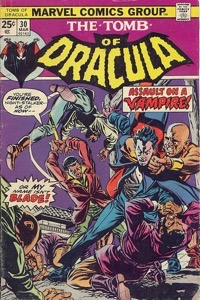
  • Tomb of Dracula (1972) #30

    Tod30I love how writer Marv Wolfman makes sure Dracula’s racist towards Blade to in-virtue signal, except van Helsing and his daughter were racist towards Blade too. And hero Frank Drake is constantly racist towards Taj. It’s an unfortunate trivia note to an otherwise solid fill-in issue. Or at least, the Tomb of Dracula version of a fill-in. It’s the same team; it’s just nothing to do with the main story.

    Instead, it’s a series of flashbacks as Dracula works on his diaries. He’s just buried Shiela and is standing over her grave, working through some mental gymnastics to escape any blame for the situation. He told her he was Count Dracula, Lord of the Undead, didn’t he? Maybe if she’d listened to him, she wouldn’t be dead now.

    Joking aside, it’s… character development. Wolfman’s in a pickle with character development on Dracula because any character development will make him sympathetic at this point, and Wolfman wants to keep him a villain. Hell, Dracula wants to stay a villain—he’s rambling about people expecting something different from him.

    He’s got three different journal entries for the evening, with Blade showing in the final one; it’s a recounting of their first encounter.

    The first flashback is about a Prussian politician’s wife convincing Dracula to kill her husband. While Dracula’s narration complains about her being a bother, he still agrees to do the deed. Only he’s in for a surprise once he gets there. I think Wolfman must’ve been reading some World War I history based on the cameos.

    Great art on it from Gene Colan and Tom Palmer makes up for a lot. The story peaks early when Dracula’s thinking about how the wife is pretending his rotten flesh doesn’t stink when he usually has to hypnotize the ladies into not smelling it.

    What?

    Major detail. Should’ve been in issue five or something. It’s issue thirty.

    The next flashback is about Dracula getting involved in a family squabble where the dad doesn’t want to pay for his daughter to go to blind school anymore because he’s a selfish prick. Meanwhile, the daughter asks Dracula to play dolls with her. Great art, somewhat oddly paced story, decent finish. However, Dracula’s inability to understand complex grief and panic ring false.

    The Blade story’s the last one. It takes place in 1968, so pretty soon before Tomb starts (the series, at least its start time, is rather well-established for a comic). Dracula’s holding court in China, and Blade wants to talk to him. Cue some racism.

    It’s the action story, the one where they can put Blade on the cover to promise an appearance while really delivering a glorified cameo. Despite being their first meeting, Blade doesn’t need to be Blade for the story to work. It’d be better if it weren’t him. And not just because it’d (presumably) cut out racist Dracula.

    Still, excellent art, of course, because Colan and Palmer aren’t going to deliver anything else.

    The issue starts much better than it finishes, and, despite whatever he’s doing with the racism bit, Wolfman’s tentative character development for the Count is something new in the book and something good.

  • Doom Patrol (2019) s04e06 – Hope Patrol

    This episode picks up some hours after last episode’s “all the characters are probably babies now” cliffhanger. While fixing up a car (with some great Riley Shanahan bodywork), Brendan Fraser explains to Diane Guerrero he’s had an epiphany, and they’re all about to die, so they better get their houses in order. Guerrero wanted to fight the bad guys (whoever they may be) and expected buddy Fraser to be all set to go.

    Instead, he shrugs her off, and she’s left on her own. Heading down to the Underground to consult the other personalities, she also finds them unwilling to help. The conflict gives Guerrero some great material, and she does really well. This season might be the one where she becomes consistently good.

    But not having Fraser (and Shanahan) to hang out with means Guerrero doesn’t get to pair off with anyone, while the rest of the episode’s spent on duos.

    Matt Bomer (and Matthew Zuk) and new friend Sendhil Ramamurthy get trapped in the big bad’s alternate dimension. Well, not exactly trapped because Ramamurthy can open portals, but Bomer’s not sure what’s going on. Especially not when the omnipresent stooges are walking around with giant scissors, ready to cut off heads.

    Bomer and Ramamurthy have an excellent episode “together,” to the point I got curious about how they shoot the scenes. Does Zuk read Bomer’s lines? Do they have them played back? Is Ramamurthy just vamping? Regardless, great work and some excellent character development from Bomer, who’s usually working through old emotional shit instead of getting new stuff to navigate.

    Speaking of new and old stuff to navigate, April Bowlby and Michelle Gomez are still paired off. Their reconciliation from last episode—made under extreme circumstances—is holding; right up until they find out they need to break into the Ant Farm, which is the Bureau of Normalcy’s headquarters and full of terrible memories for both–like Bowlby’s boyfriend getting murdered by Gomez’s stooge, again played by Daniel Annone.

    It’s a good arc for the two of them, but it’s not as much about character development as exposition and figuring out how the season’s big bad ties into past events on the show. It’s very nice to have Bowlby and Gomez pals again, though. They’re excellent together.

    The final dynamic duo is Joivan Wade and Elijah R. Reed. We got to see a kid version of Wade show up at Reed’s door last episode, but we missed the (occasionally mentioned) baby version, whose diapers Reed had to change.

    It’s a solid friendship arc, even as it backtracks over Reed’s previous appearance when he told Wade it was too late for them to save the friendship. Given Wade’s continued reluctance to talk to anyone about getting rid of his superpowers and Reed just being a regular guy, their scenes end up making Reed the protagonist. It works out, but if there’s anyone the show doesn’t seem to know what to do with this season, it’s Wade.

    Doesn’t he have an ex-girlfriend turned terrorist out there still?

    Anyway, another excellent episode. It’s the mid-season finale, so it’ll be a while for the cliffhangers to resolve, but the show manages to get most of the team together for the last scene.

    Some outstanding music from Kevin Kiner and Clint Mansell, particularly during Fraser’s second epiphany scene. Fraser (and Shanahan), as usual, do fantastic work.

    It’s going to be a long wait for next episode.

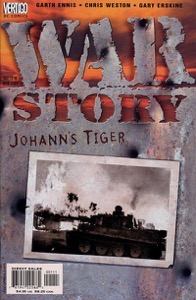
  • War Story: Johann’s Tiger (2001)

    Ws1I was a little curious whether writer Garth Ennis was going to be able to get away withJohann’s Tiger in 2023. The comic came out twenty years ago when Nazis and Nazi sympathizers weren’t (openly) part of the public discourse. Tiger is one of those “German army” stories, though. They’re not Nazis; they don’t like the Nazis; they’re just trying to survive with war and preserve the lives they can. Well, the lives on the same side, but still. They feel bad about the rest, but it’s war, after all.

    It’s a tank story. Ennis would go on to more tank stories, but he very quickly gets to the heart of what makes a tank story so singular. It’s a group of guys living inside “burning coal.” Tiger’s cast is also different because they’re trying to escape the war, heading west hoping to find the Americans. They want to surrender and be done with it. Germany has lost, the Russians aren’t so much kicking ass as grinding it, and the commander—Johann—doesn’t want his men to die for Hitler’s war of aggression.

    Johann narrates the comic. At times, I wondered what it sounded like in its native German, then realized Ennis wrote it in English. It’d be interesting to hear in German. He’s trapped with his memories of the war and his profound (and profoundly justified) self-loathing. See, Johann wasn’t ever a gung-ho Nazi; he was just utterly indifferent to the suffering they and he caused. Until all of a sudden, he wasn’t, and it’s breaking him, page after page. Getting his men to safety is all he can do to alleviate the damage. It’s not about amends; it’s about saving instead of killing.

    At the same time, he’s an experienced tank commander and sees the world through those eyes, which Ennis does a phenomenal job with in the dialogue and narration.

    There are several excellent battle scenes, which artists Chris Weston and Gary Erskine visualize superbly. Weston’s layouts remind of more lionizing war comics, but he and Erskine’s details are all the horrors.

    It’s an excellent book.

  • Ginseng Roots (2019) #10

    GR10It’s been a while since I’ve read Ginseng Roots and even longer since I’ve read the first few issues of Ginseng Roots, but I’m pretty sure when creator Craig Thompson brings up Roots’s generative problems, it’s for the first time. In issue ten of twelve, he reveals after spending months trying to turn his research into a comic, he was left without any drawn pages and ready to get into animation.

    A very amusing Hollywood meeting cures him of that ambition.

    Now, Thompson had established a creative malaise and trying to get out of it with this new project… but I don’t think he’d mentioned problems realizing it once he’d done the legwork.

    The issue opens with Thompson and his siblings hanging out with their parents before leaving small town, ginseng farming Wisconsin, while the parents talk about death. The way Thompson visualizes it—with he and his siblings passive observers on the sofa while the parents sit in their regular chairs and discuss death for the nth time—is devastating.

    Thompson has a chance for a eureka moment with the parents, something he’ll only have much later and even further away. It turns out Thompson’s work is big in South Korea, and his publisher there would love to bring him over. He calls up little brother Phil, who started the issue with him visiting the parents, and invites him to come along; it’ll be a chance for them to reconnect.

    The comic then becomes this whirlwind of South Korean ginseng industry information, framed through Thompson first casually, then explicitly. The local news is willing to fund his research in exchange for filmed footage, as they’re making a ginseng documentary. So these two American ginseng farmer’s sons, familiar with ginseng as a food product, not a cultural item, all of a sudden immersed.

    In some ways, the issue’s very controlled. It’s mostly a travelogue. Not much visual digression, except when he gets food poisoning and the series mascot has a bout on the toilet. Otherwise, it’s all very tight. Even when Thompson lets brother Phil render his experiences a couple times in the issue’s last few pages.

    It’s a great device. Half the panel is Craig Thompson, the other half Phil, art, writing, and, most importantly, perspective.

    The issue doesn’t have the highest gee whiz rating the series has ever reached, but it’s an exceptional comic. Especially given how little time is left, Thompson—the protagonist—has to make something of his experience.

    There’s some beautiful travelogue art of South Korea. Thompson ably toggles between almost comedic people and then hyper-realistic settings.

    Roots is such a good book.

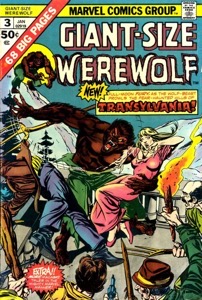
  • Giant-Size Werewolf (1974) #3

    Gsw3Giant-Size Werewolf #3 might be artist Don Perlin’s best… oh, wait. He just penciled. Sal Trapani inked. Perlin was penciling and inking over in regular Werewolf by Night at this point. Okay, never mind. I mean, it’s okay art—especially for Perlin—but it’s nowhere near as impressive with someone else helping out. Especially since my biggest compliment was Perlin doing a nod to Mike Ploog’s Topaz every sixth panel. The other five panels aren’t good (people’s noses change shape, or their eyes move up and down on their heads between panels in the same scene). But there seems to be an attempt at a Ploog nod.

    Maybe it’s coincidence.

    But Perlin does better with the Eastern European Universal Monsters village setting than he ever does in L.A.

    The Werewolf story is thirty pages, the bulk of the issue but not considerably longer than the reprint backups (four, five-page stories). The feature comes with the caveat the first chapter is a red herring to fill pages. Jack, as the werewolf, goes back to his family castle off the coast of Monterey. Writer Doug Moench goes overboard with his adjectives and adverbs here, including variations of Monterey. It’s a lot.

    He (Jack) thinks Topaz is being held prisoner there; only once he completes the level, he finds out—rather anti-climatically—she’s actually being held in another castle. His family’s summer villa back in Transylvania. After a brief chat with step-father and uncle (I just realized Werewolf is Hamlet with a happier family situation), Jack and seventeen-year-old sister Lissa are off to the old country to find Topaz. Lissa wants to go because it might have to do with the Darkhold, and she’s been about to turn eighteen for three years and over two dozen comics. It could happen anytime. Birthdays are weird in the Marvel Universe.

    They get to the airport and run into Jack’s best friend, forty-something Buck Cowan, who the comic goes out of its way to imply is way too touchy-feely with Lissa.

    In Transylvania, they discover the villagers are angry at a traveling band of Romani people. The band is hanging out at Jack’s family castle; only when he gets there, they’re not. Worse, Topaz is being held somewhere else again! Only this time, Jack’s going to werewolf-out to rescue her.

    The story’s got some twists and turns and silly werewolf fights, but Perlin and Trapani aren’t bad when the action’s in long shot. And even though Moench’s obnoxious writing of Jack’s inexplicable narration (past tense describing things Jack doesn’t remember), the actual dialogue’s okay. It’s nice to have Topaz back, all things considered.

    It’s a much better Giant-Size Werewolf than I was expecting. Not good, but not a waste either.

    The backups are similar in quality. They’re all early fifties Atlas reprints, mostly without writer credit.

    George Roussos has art chores in the first story about a creeping, killer mist. It turns out to be an inter-dimensional thing, kind of like Lovecraft. It’s decent throughout, but the finish is blah.

    The second story’s much better, though, with a similarly blah finish. Written by Carl Wessler, with art by Pete Tumlinson, it’s about a suicidal eighty-year-old who discovers a magic spot in the river. It doesn’t drown you; it sends you back in time. He keeps going back, getting richer and richer (thirty-five years before Back to the Future Part II revived the trope), only there are bad guys after him. With a better ending, it would’ve been something.

    Still, engaging.

    Then there’s an all-horror killer rat story; art by Manny Stallman. A random guy happens upon a man talking to rats, and the rats understand him. The rat-keeper is planning on having the rats kill the guy until the guy mentions a rich uncle. It’s fine. Cute rats.

    The last story has inks by Abe Simon and pencils by none other than Don Perlin, twenty years before he did the feature. The guys at a newspaper send a female reporter out to cover a strangler case, even though it makes her a target, and she doesn’t want to go. Once she arrives in the town, she immediately finds herself trapped by the stranger. Or does she?

    It’s okay. The reveal’s logic is fine; it’s just too rushed.

    All in all, a solid Giant-Size. Well worth the four bits.

  • Doom Patrol (2019) s04e05 – Youth Patrol

    Wow, it’s so good.

    Even for “Doom Patrol,” it’s so good. It’s a very “Doom Patrol” episode, too; the team has a mission, then something happens, and they have to go on a side mission. Given guest star Mark Sheppard finally reveals there’s a narrative reason for the main cast to remain young, it’s not impossible the show will finally acknowledge its way of detouring the characters through arcs instead of action sequences.

    Though, it’s really only Diane Guerrero and April Bowlby who are “staying” young. Brendan Fraser and Riley Shanahan are a robot (exceptional physical performance from Shanahan this episode). Matt Bomer and Matthew Zuk are radioactive, so they probably don’t age regardless of magic. Then Joivan Wade and Michelle Gomez aren’t part of the original “Doom Patrol,” at least as far as how Timothy Dalton (who appears in recap footage) saved them from death.

    Now, after three seasons, we’re getting some more details on that process.

    Until Bowlby accidentally gets everyone cursed (not Bomer, sorry, he’s off on a mission), anyway. She wakes up from their adventure a couple episodes ago (last episode not featuring the regular cast and instead catching up with Abi Monterey, who’s not in the episode despite the recap only being about her) and discovers she’s not young anymore. But since Wade didn’t check on her, she misses the team briefing where Sheppard explains the season big bad is after their “longevity.” And it looks like Bowlby lost hers.

    So she snoops around Dalton’s office and finds something she thinks will help. Instead, she curses everyone (not Bomer) with de-aging, initially hormonally, but eventually physically as well. With a furious Sheppard taking charge, they head off to Toledo in search of a cure.

    They make it one pit stop before Gomez and Bowlby get into an argument and abandon the group, while Fraser and Guerrero find some fellow youths who know about a great party.

    It ends up being an excellent episode for most of the cast. Oh, right—Bomer. He’s off trying to find the alien energy parasite baby and instead finds himself trapped in returning guest star Sendhil Ramamurthy’s flashbacks. It turns out they’ve got a lot in common. It’s a good arc. Excellent performances, but dealing with more significant issues than the rest of the team, who have some elementary problems they just can’t figure out how to solve.

    Wade’s still upset old friend Elijah R. Reed has given up on him after not hearing anything for ten years, Guerrero’s feeling guilty about enjoying driving the body (and not feeling like it’s hers), and then Bowlby still really hates Gomez. Justifiably.

    Outstanding performances from Guerrero and Wade, but Gomez. Wow, Gomez. She gets one hell of a scene. And Sheppard, too, gets far more textured scenes than his bellowing curses suggest.

    It’s a great episode. Excellent direction from Chris Manley, but the script (credited to Shoshana Sachi) is just phenomenal.

    Oh, and the music—Kevin Kiner and Clint Mansell do even better work than usual, especially with Guerrero’s big scene.

    So good.

  • Doom Patrol (2019) s04e04 – Casey Patrol

    “Doom Patrol” has been having a fine season to this point; fine enough, one hopes they’re prepared for a non-renewal, but the series hasn’t been sublime. Every so often, “Doom Patrol” has a way of being sublime, where the story’s quirkiness, the characters’ humanity, and the Kevin Kiner and Clint Mansell music is just right, and the show transcends.

    Hasn’t happened this season until now. And it’s not even with the regular cast or—until the finale—part of the season arc. There’s a reveal at the end to tie things together (but not too much of a reveal, of course) and raise the show’s aim for the season. It sure seems like they’re going to have one heck of a season arc.

    Anyway. This episode features the return of Abi Monterey as Chief’s daughter, Dorothy. Is it as in Oz? I can’t remember. Chief was (will be?) played by Timothy Dalton in seasons one and two. He doesn’t come back this episode for a cameo, though we do hear—in the opening recap from Monterey—she’s seen him, spent a hundred years hanging out, and now she’s found peace with his death.

    And him spending most of her life treating her like an apocalypse child just because she can conjure her invincible, sometimes uncontrollable imaginary monster friends into reality. So, they’ve got some unresolved baggage since he left the mortal coil.

    Monterey departed “Doom Patrol” at the start of Season Three, after they resolved her leftover season arc from Season Two (Covid prematurely ended it), heading off with The Dead Boy Detectives in a back door pilot for another HBO Max/Vertigo show. When “Dead” went to pilot, however, Monterey (and the “Patrol” actors) weren’t part of it. So it’s nice to have her back.

    For much of the episode, it again feels like a back-door pilot, but this time for Monterey, guest star Madeline Zima, and possibly returning guest star Alan Mingo Jr.

    Monterey’s been hanging out in Danny the Street, who’s still providing a welcoming, safe space for those in need, but the world outside’s shitty, so Danny’s getting more and more to capacity. They’re set up as a campground where Monterey can mope in her Airstream, and Mingo can belt out a song whenever necessary.

    As Mingo returns from a day out in the world full of shitty little bigots—specifically shitty little white skater bigots—a bunch of metal bugs invades Danny. Mingo’s character is a drag queen who knows a lot about the world not being the way it seems like it should. So Mingo and Monterey are having a heart-to-heart (well, more like Mingo’s trying to have one) as the bugs take out their friends.

    Wait, I forgot. The episode opens with an animated comic sequence: Monterey reading her favorite comic, Space Case.

    Okay. The bugs turn the people into space zombies right out of the comic; Monterey realizes it and, in a panic, apparently brings the hero (Space Case) out into the real world, where Zima plays her.

    So it’s Monterey, Mingo, and Zima battling a bunch of space zombies; only Zima doesn’t know how to deal with the threat without destroying them. And the people they were before the bug bite, leading to a “real world” hero arc for Zima.

    Further complicating matters is Zima’s comic book nemesis also showing up, played by Tyler Mane. They’ve got a lengthy backstory, which Monterey summarizes, and it becomes clearer why she’s such a fan of the comic.

    It’s a mic drop great episode. Great performances from Monterey and Mingo, excellent writing (credit to Tom Farrell). Kristin Windell’s direction is strong too. “Doom Patrol”’s so good. I can’t wait to see where it all goes this season.

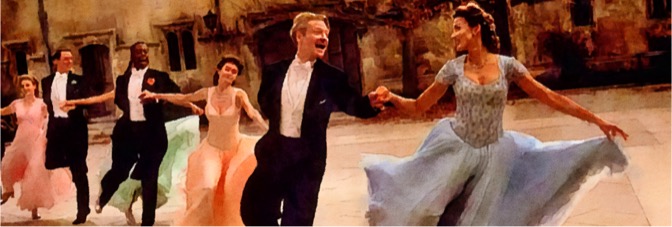
  • Love’s Labour’s Lost (2000, Kenneth Branagh)

    It’s a funny idea, and it would explain a lot about Love’s Labour’s Lost, but I don’t think screenwriter, director, and co-producer Branagh cast Alicia Silverstone on a bet regarding whether or not he could get her to deliver an okay monologue.

    He succeeds and she succeeds, but just okay, and it takes most of the movie. No, outside Adrian Lester, Natascha McElhone, and maybe Carmen Ejogo, Branagh doesn’t seem to have any actors in the leads he’s happy with. He’s one of the eight leads, of course, and he’s delighted with himself. He shows off somewhere in the late second act; he and McElhone get to do a scene from a great Shakespeare production in a middling adaptation on a disappointing set.

    Branagh’s Labour’s is set just before World War II. Unlike some adaptations, the World War II setting will be necessary to the film’s narrative. Unfortunately, not so much to the character development because Silverstone’s the Princess of France, and asking her to do character development and deliver one okay monologue is a bridge too far.

    Okay, real quick, here’s the setup. Top-billed and “lead” Alessandro Nivola decides, with war looming, he’s going to lock himself up in a library and learn for three years. Obviously, in the original play, there wasn’t World War II looming, but the effect in this Labour’s is to make Nivola seem like a foppish Eurotrash jackass who doesn’t care about the Nazis. Or would if Nivola had any character development. The film’s a musical—supposedly a thirties musical homage but not at all because there are usually only six performers and the movie’s Panavision—and Nivola manages to sing, dance, and monologue just well enough for his performance not to be a failure. He doesn’t succeed at anything, though, not even on a curve, especially not as far as romancing Silverstone.

    See, Nivola and sidekicks Lester, Matthew Lillard, and Branagh have sworn off women for their academic pursuits. Silverstone and her sidekicks, McElhone, Emily Mortimer, and Ejogo, are on a diplomatic mission to Alderaan (or whatever Nivola’s country’s called, sadly not Freedonia) and they read the boys won’t be able to talk to them. Because of Branagh’s staging, directing, and Silverstone’s acting, the intentional trickery falls flat. There are multiple disguise sequences, which Branagh also messes up. He does a great job directing some of the film—not the musical numbers, except when it’s Nathan Lane, who’s the GOAT, and somewhat Timothy Spall, who feels like a Branagh idea gone wrong, not a studio casting mandate.

    Oh, right, another thing: the songs performed by these not singers and dancers (except Lester and Lane) aren’t original to the film. They’re doing covers of thirties show tunes, which weren’t written with World War II or, you know, the King of Navarre’s romance troubles in mind. There are some good numbers (very much not dinner theatre Fosse) but never particularly good. Never good enough to cover the problems. So why do them?

    Though when they’re not doing a musical number, Branagh relies on composer Patrick Doyle’s score to do all the film’s emoting. Even during Branagh and McElhone’s scenes.

    The film barely runs ninety minutes and manages to plod through much of that runtime. Unfortunately, it takes way too long to get anywhere with the romance pairings—the musical numbers are asides, irrelevant to the plot—and then it’s time for the movie to end. Except, Branagh’s still doing a World War II movie, and he somehow brings it to a satisfactory conclusion. Miraculously, given the film’s annoying newsreel footage summary device… not to mention the very uneasy previous eighty or so minutes. It’s a hell of a save.

    Performances: Branagh, McElhone, Lane; they’re great. Lester’s good. Spall and Ejogo get an incomplete. Nivola and Silverstone pass, him likable, her sympathetically. Lillard and Mortimer aren’t entirely unlikable, but they’re too thin to be sympathetic.

    Technicals are all good. Alex Thomson’s photography’s great. Utterly wasted but great. And editor Neil Farrell is up to Branagh’s considerable requests for cutting the film into something sensical.

    Whoever did the lackluster sets… it’s not their fault. Either Branagh didn’t have the money he needed, or he was bullshitting his way through the project. Seems more like the latter.

    But one hell of a save for that finale.

  • All Creatures Great and Small (2020) s03e07 – Merry Bloody Christmas

    Pun fully intended, Callum Woodhouse continues to show why he’s “All Creatures”’s trickiest casting but also its most successful. This Christmas special is set, appropriately, at Christmas, only war’s on, and no one’s feeling like celebrating this year. Especially not with Nicholas Ralph chomping at the bit for his chance to go—after the proper season’s finale where he and Woodhouse signed up, which was basically the season arc… it turns out they might not get shipped out anyway. They’re exempt because they’re vets or whatever.

    There’s no annual Christmas party in the offing, not until Anna Madeley discovers her love interest, Will Thorp, is moving away. She invites him over and then has to put together a party, so it doesn’t look like she just invited him over.

    The special filters much of the household goings-on through guest star Ella Bernstein. She’s playing a refugee from… somewhere, presumably in England, though maybe not. She’s Jewish, adorable, precocious, and fascinated by Christmas. She also basically fills the function of Ralph for the special. Ralph and Rachel Shenton are entirely support here.

    The veterinary case this episode—outside Bernstein getting to meet Mrs. P. (I’m entirely on board with Patricia Hodge now, even if last we saw the manor, she was getting it ready for the war effort, and now it’s empty) and Tricki Woo (played, as ever, by Derek), who have a kitten problem only a little kid can help with—is about Samuel West and the racehorse he nursed back to health in the regular season. It was a great episode for West. This episode sort of hopes everyone forgets how emotional he got because he quickly finds himself letting old war buddy Michael Maloney bribe him into ignoring some medical conditions.

    West’s change in behavior doesn’t go unnoticed, not when Woodhouse comes out to the stables to help out and discovers something suspect.

    It’s a very emotion-filled episode for West, Woodhouse, and Madeley, as they once again have to contend with their abnormal but normal, actually, family structure, with great acting from all three. Woodhouse gets to be the stand-out; well, and Madeley, but not in the family arc, though she seems to have a realization about doing emotional labor for the boys).

    Besides West’s slightly rushed character arc and a couple of places they obviously cut out another scene for time, it’s a stellar episode.

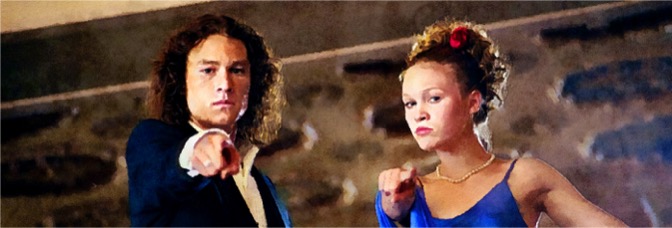
  • 10 Things I Hate About You (1999, Gil Junger)

    10 Things I Hate About You is from that strange period in American mainstream filmmaking when they knew you couldn’t make too many jokes about high school girls anymore, unless you establish at least twice they’re eighteen so it’s not technically illegal.

    There’s also the issue of Andrew Keegan’s sexual predator, who the film treats as something of a joke throughout. Things takes place in the beautiful Pacific Northwest, with lots of white faces, big houses, and big lawns. It’s the perfect location for a Disney teen comedy, except Things is Touchstone and, therefore, tougher. But there’s never significant bullying; nerdy Joseph Gordon-Levitt and David Krumholtz are teased but never assaulted. And Krumholtz invites a lot of the teasing (for a while, anyway).

    The film’s based on Shakespeare’s Taming of the Shrew, which I’ve never read or seen, so I’m not sure if Keegan’s character in the original is quite as repugnant. Since the film’s from the late nineties, it doesn’t even think Keegan’s too bad, like it can’t hear him talk, and it doesn’t acknowledge what his character motivation must be after we find out his backstory.

    With those asterisks aside, the film’s a charm offensive from leads Julia Stiles and, especially, Heath Ledger. Director Junger often just stares at Ledger, waiting for him to do something charming or perfectly timed. Sometimes Stiles will be staring at him too long, too, because he’s just so damn charming. They’re both delightful, even as the film gets more serious and director Junger (thanks to Mark Irwin’s bland photography) doesn’t really know how to adjust for it.

    The film’s also desperate for soundtrack album sales to the point Stiles’s favorite band, (the real-life) Letters to Cleo, figures into the story a couple times and then is back again for a vertigo-inducing live performance. Whether you’re a fan of the band or not, Things doesn’t use them (or much of the music) very well. Especially not once it just does one montage after another. The movie doesn’t even remember its title until the third act.

    Though the montages probably help move through without unraveling the plot, which has high school senior Keegan lusting after sophomore Larisa Oleynik, who can’t date until her older sister, Stiles, also dates. Larry Miller plays their single-parent dad; he’s hilarious if just a textured caricature. Gordon-Levitt likes Oleynik too, so Krumholtz convinces him they’re going to get Keegan to hire Ledger to date Stiles, freeing up Oleynik to date….

    Well, Gordon-Levitt thinks she’ll be dating him, even though all of her scenes are about her wanting to date Keegan. Throw in Ledger and Stiles falling for each other, and you’ve got yourself a teen movie.

    The film obviously had a much different original cut—the end credits have the blooper reel, many of which are from scenes the film didn’t use; the bloopers are funny, and the scenes usually aren’t. Or they’re super problematic even for Things.

    Outside Keegan, who’s fine but just a superficial jerk, the performances are uniformly good or better. Ledger and Stiles are obviously the better, but Oleynik’s good, ditto Gordon-Levitt. Allison Janney has a great cameo (cut down) as the school guidance counselor, while Daryl Mitchell’s the teacher who knows Keegan shouldn’t be sexually harassing Stiles, but it’s the late nineties, and he’s not going to actually do anything about it.

    Decent editing from O. Nicholas Brown helps, especially during the montages, and if Irwin’s photography weren’t so flat, Junger’s direction would be downright good.

    10 Things I Hate About You has its collection of caveats, but its successes—Ledger and Stiles’s successes—are considerable.

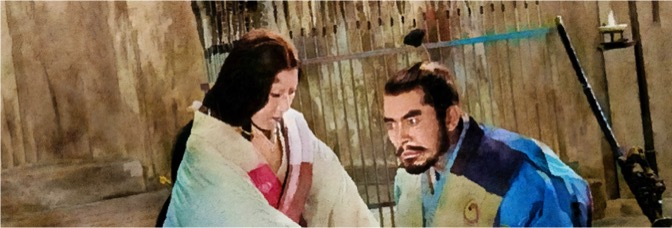
  • Throne of Blood (1957, Kurosawa Akira)

    Co-producer, co-writer, director, and editor Kurosawa loves himself some Macbeth. Throne of Blood is Macbeth in feudal Japan, with Mifune Toshiro and Yamada Isuzu as the doomed couple. Kurosawa and his co-writers structure the film as a historical war epic, with modern-day bookends, and then fit Mifune and Yamada’s Macbeth into the war epic. But as Mifune and Yamada take over the narrative (Throne’s got a sublime pace), the war epic falls back, and it becomes more focused on Mifune as a military commander.

    The screenwriters open up the play, adapting it for a different culture (if similar calendar year), with different behavioral norms, but they keep the arc for Mifune—at least in terms of character development–super close to the play. There are a couple things they don’t integrate from the play, but the film’s never the less for it. Not to mention Kurosawa gets to bring in Japanese supernatural; Macbeth’s Weird Sisters—no offense to “Chilling Adventures of Sabrina”—haven’t been a trope since, well, long before motion pictures. And they were an extraordinary event in the original play; you couldn’t just go find yourself a witch.

    But in Throne, when Mifune and sidekick Chiaki Minoru come across a forest witch (Naniwa Chieko), they’re not super-surprised. Forest witches aren’t unlikely in Throne’s world. It adds a bunch of texture to Mifune’s descent—including worrying the witch has somehow possessed Yamada–and layers to the relationship with Chiaki. Once Mifune starts fulfilling Naniwa’s prophecy, Chiaki gets a very active role.

    Kurosawa does a lot to avoid any stagy vibes—Throne’s bookends start in long shots and gradually move in, showcasing the scale but also the merciless onslaught of time itself (another layer, Throne just as a historical drama). And then, whenever anyone’s in the forest, Kurosawa gets the camera into the literal bushes and looks out at them, making the forest a character. At least for point of view.

    But when Mifune gets back home and he and Yamada just sit around and emotionlessly bicker about whether he should take the proverbial horse and kill his boss to fulfill prophecy. These scenes are—almost by definition—stagy. It’s just Mifune and Yamada in an enclosed space, no one else but them. Again, Kurosawa turns it into intense character drama; only we don’t know the stakes. There’s no backstory for Mifune and Yamada in Throne and given her capacity for expression is literally painted over (though the makeup will change, relevantly to the plot), their relationship and its changes throughout are unknowable.

    It gives both of them lots of potential for the parts, and both realize it, though Mifune gets more just because of the plot. Because of their opaque relationship, Throne is often a character study–especially given the relatively brief present action.

    After the prologue, Throne spends about covering a rebellion via messenger updates to lord Sasaki Takamaru and his court (which includes Shimura Takashi, in what amounts to a cameo). Through the updates, Sasaki and the audience learn samurai Mifune and Chiaki basically save the day single-handedly, defeating the invaders and traitors. When the action cuts to Mifune and Chiaki in the forest, we learn more about their take on the rebellion and the general political situation. Throne is a political drama, but Mifune’s not a political animal, something his introduction establishes. There’s significant foreboding even before they realize they’re lost in the forest and come across the witch.

    For a while, since the forest is so militarily important (the main castle is the Forest Castle, after all), it seems Throne will spend a lot of time on it. Especially since, you know, it’s Macbeth. But once Mifune and Chiaki are through, it’s a while before it comes back. On their way out, however, they get lost in the fog and the fog will be around for most of Throne. It actually was already in Throne, in the prologue, with Kurosawa and cinematographer Nakai Asakazu showing off with fading back in time. Throne’s a special effects spectacular. There are some big effects sequences, but then there are some obviously complicated, precisely executed in-camera effects to get some of the shots. It’s beautiful work.

    Even being a Macbeth adaptation and working toward potentially familiar plot points, Kurosawa, his co-writers, and Mifune surprise, time and again. So good.

    Mifune’s performance is fantastic. Even with the battle action in the third act, it’s all about watching him. With Kurosawa structuring the scene perfectly; Throne’s partially a rumination on the universality of Shakespeare and the potentials of adapting.

    Great, disquieting score from Sato Masaru. The technicals are all outstanding.

    Yamada and Chiaki are both excellent, with the film hinging on them as well, but Mifune’s the star. Well, Throne all together is the star; truly masterful work from Kurosawa and company.

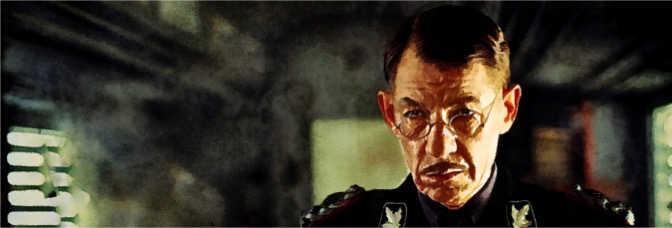
  • Richard III (1995, Richard Loncraine)

    Richard III takes place in an alternate history where the British are five hundred years late with their royal wars, but still in the 1940s for technology and rising fascism. The film doesn’t update Shakespeare’s dialogue, so it’s the cast performing while dressed—increasingly—as Nazis. Except they’re British.

    Well, not Annette Bening or Robert Downey Jr. Bening and Downey don’t do accents, implying there’s an accent-free United States out there. The people they’re playing in the play (who are people from history) were not American. There wasn’t a United States when the events took place. So I thought there might be some subtext to them being American. Nope. Richard III doesn’t do subtext, but it especially doesn’t do it with Bening and Downey.

    Bening is not good, but she tries. Downey’s terrible. It’s unclear how hard he’s trying. He performatively fidgets in the backgrounds occasionally, presumably to keep himself in the movie, since it doesn’t do anything for his character development. Bening tries with the character development.

    Doesn’t go anywhere, but again, she does try. And there are hints of better scenes. For example, in the second half of the film, when Ian McKellen is taking over, Bening gets together with the other women for an establishing shot and then a cutaway, but presumably, they’re very upset.

    No one in the movie gets a good part except McKellen, but it’s not like Richard doesn’t fail him too. The first act’s dynamite, with McKellen plotting against brothers John Wood and Nigel Hawthorne and forcing the audience to conspire with him. They handle the plays asides with McKellen directly addressing the camera, tickled pink with his plotting. This device almost entirely disappears by the finish, apparently an appropriate adaptation of the source play.

    But it’s not a good adaptation of it.

    Similarly, no one really thought through the third act’s visual clashes—attempted usurper Dominic West (not good, not too bad) is dressed as a British commando from a WWII movie, complete with beret, off to fight… the British Nazis. Director Loncraine is initially bad at the war action but gets much worse for the finale. Richard III coasts through most of its run time on McKellen, trying to keep ahead of the film being entirely out of steam. It seems like it’ll make it; then comes the battle finish and Loncraine’s terrible work on it.

    The film has big visual problems throughout, but Loncraine at least seemed to be trying to do something. Unfortunately, the finish is a smorgasbord of thoughtless bad.

    Other than McKellen, who’s great when the film lets him be, the best performances are Kristin Scott Thomas (who should’ve had Bening’s part for sure) and Maggie Smith. Smith’s got about three scenes and seven lines. Scott Thomas has about double. Nowhere near enough for either.

    Jim Broadbent plays McKellen’s chief sidekick and is relatively bland and obvious. It should be a better performance. There are excellent supporting players like Wood and Hawthorne, but also Jim Carter, Bill Paterson, Tim McInnerny, and Edward Hardwicke. All the actors are game (well, not Downey); it’s just Loncraine and company doesn’t put it together.

    Peter Biziou’s photography is okay. Not the occasional composite shots. But Paul Green’s editing is jerky, and then Trevor Jones’s smooth jazz score is a (bad) choice.

    Also, real quick—they reuse the same slamming door sound for about three minutes straight, regardless of door, and I’m wondering if it sounds so familiar because it’s from DOOM or something. DOORSLAM.WAV.

    Anyway.

    Richard III’s a slightly interesting but quickly pointless staging of the play. It’s never stagy, I suppose, but whatever they do instead doesn’t work either. McKellen’s first-act performance is singular, though. The rest is okay to good, but he has a unique first act.

  • Sum Up | The Nostalgia Merchant: Forty Years of Classic Movie Watching

    I’ve been watching classic movies my whole life. As a kindergartener, I was so scared by Young and Innocent’s blinking, black-faced murderer I refused to participate in an eye-closing exercise. My childhood Saturdays were filled with Svengoolie’s best, my dad and I recording them and trying to edit out the commercials. For anyone not forty-plus and American, Svengoolie is the Chicago-area local TV kid-friendly horror movie host.

    King Kong, The Mole People, Frankenstein, Godzilla, Creature from the Black Lagoon. Well, wait, we watched Creature with 3D glasses we got through a supermarket promotion, and it was a night-time thing, not a Svengoolie.

    The 3D effect barely worked, but it was a nice thought.

    By twelve, I was a big Thin Man fan. I don’t remember how I first saw it. There are many possibilities because I grew up with classic movies: my parents, their friends, my best friend’s parents, a grandma, an aunt, neighbors, video store clerks. There was always someone around talking about an old movie. It’s entirely possible I first saw Thin Man when it came out on VHS, and my parents and their friends rented it to watch, presumably for the first time without commercials.

    It’s much easier to be a classic movie fan when you’re not living in the era before the TV listings (only available in the newspaper) even identified what old movie was airing in the 2 a.m. slot.

    I do remember my mom and I watched Ex-Mrs. Bradford at some point around then, too, back when we went through the movie listings in the Sunday TV supplement to see if anything good was playing. We got cable around that time, but comprehensive listings were a few years off, and I don’t remember if we had AMC at the start.

    AMC would become a big deal. I used to record AMC during the day, come home from work, watch taped AMC until I fell asleep, wake up, go to work, repeat. I rarely made it through two movies unless they were short. Though, kind of wonderfully, classic movies tend to be short.

    But it took me a while to get into classic movies beyond the Universal monster movies or The Thin Man. Color Hitchcock didn’t count as classics because they were in color. Growing up in the early eighties, lots of TV was still the sixties, which were in color. The fifties always surprised me when they were in color. Then the thirties Technicolor musicals would completely bewilder.

    If you had color, why didn’t you always use it?

    The thing about black and white in the eighties was it was still everywhere. Lots of people still had black and white TVs. People wanted color. They wanted color, and they wanted convincing special effects. Classic movies offered neither of those things. So while classic movies became more and more accessible and available, I was mostly seeing films starring still active stars—Gene Hackman in particular, but soon Clint Eastwood and Paul Newman, with Steve McQueen also in there. I’d see something different every once in a while; we had a LaserDisc player, which meant Criterion, and my dad had a solid collection of classics. But I more wanted Jaws Criterion; movies twenty years old, not forty or sixty.

    But then I read Washington Goes to War, and something about history clicked, so I started reading more history books. The book, about Washington D.C.’s World War II-fueled boom, mentioned The More the Merrier, which synergized the interests—movies about contemporary events, which had since become history, had all sorts of layers I loved thinking my way through.

    So pretty soon after high school, I started watching old movies profusely and intentionally. I’m not sure if the classics were fifty percent—I saw a lot of movies—but it was close.

    It was the early days of the Internet; I couldn’t read Films of the Golden Age online, but I know I found their website to subscribe. AllMovie might have been a thing, offering on-demand film history information. We’d had at least two of the Encarta CD Encyclopedias from Microsoft, and they were great for film history, though arguably better when they licensed clips from Turner.

    They later had longer Leonard Maltin entries, historical not capsule, and a back catalog of Roger Ebert reviews you’d otherwise have to read on microfilm at the time. You could learn lots.

    And learning has always been a part of it. X, y, or z happens in the movie, and it’s a reference to something—if I knew about Vichy water before undergrad and the film professor telling us, I don’t remember. But I do remember finding it out after having seen Casablanca a few times. Until then, I just thought Claude Rains was being dramatic (totally in line with Louis), not making a contemporary political statement about the human condition.

    It was tough only learning about classic film passively or through osmosis. But, as I deliberately tried to know more, the interest became much more rewarding; things suddenly made sense. For example, I was in middle school when I first started noticing actors in old movies sometimes didn’t appear together, but then others appeared together all the time. It’d be years before I learned about the studio system, even as MGM/UA’s home video branding tried to hammer the idea in. I also didn’t know about the studios owning theaters or the Production Code. I’m not sure I learned it was called the Hays Code until college.

    Today, I’m sure you could learn all I’d pieced together from my parents, grandparents, family friends, video store clerks, Maltin capsules, audio commentaries, something I’d once read somewhere (I’m still convinced I read Bride of Frankenstein was severely edited down to 70 minutes), and everything else in five good hours of Wikipedia. It’s an entirely different time to get into classic film. A better time.

    Growing up, rare movies airing on television were major events. I remember one time Out of the Past aired, people had multiple recordings going at once in case someone’s VCR failed. VCR recordings always seemed to fail when you really didn’t want any problems.

    Now, of course, you can watch Out of the Past, no network of friends with good PBS signals and decent VCRs required. You can read all about its making without happening upon a book or lucking into a helpful citation. I remember film books were bad at citations.

    Though many classic film books were memoirs, which wouldn’t have them.

    You probably can’t easily read the old, out-of-print memoirs easily today. And they’re not floating around used bookstores. But there’s still Open Library. Life will find a way.

    And there are, of course, classic movies with VHS releases and no subsequent home video releases. No DVD, no Blu-ray, no streaming. Well, some of them are available streaming because of copyright lapses and so on, but they don’t look as good as Out of the Past. After years of being wishy-washy about classic movie releases, Warner Bros. fully committed to Warner Archive and released countless rarities. Unlike the Criterion Collection, which remains expensive but not unattainable (if you started at jump), it soon became clear one would have to pick and choose wisely with Warner Archive. There was already too much when they dropped the initial set, and they just released more and more.

    Now, in 2022, Warner Archive is probably in trouble. They’ve probably been in trouble for what seems like a decade but is perhaps only six or eight years. For whatever reason—despite a rabid fan base—Warner always seems ready to get rid of the MOD label and delete the masters from the hard drives, even before they started deleting the masters from hard drives. They were also bad about the no-brainer streaming platform. And then there was Filmstruck.

    So despite the studios bungling it, they still managed to deliver more classic movies than anyone could imagine. Warner Archive ran out of titles of their own to release and started releasing licensed titles from other studios.

    And TCM has remained a champion of classic film, even though it’ll be twenty years since I’ve watched it. The website, when properly run, has been phenomenal over the years. It never fulfilled its promise but sometimes seemed like it would, which is better than anything else has done.

    As a genre, classic film has opened up as well. Mainly in the last fifteen years, thanks in no small part to TCM and film scholars and enthusiasts who aren’t cishet white men soapboxing about Magnificent Ambersons being better than Citizen Kane, actually. There’s still a lot more opening up to do and a disappointing amount of support from the studios, but it’s not impossible. The studios might not come around, but the people will.

    I have, until now, avoided the subjective nature of the phrase “classic cinema.” One person’s classics are another’s childhood favorites, and so on, but every year, more movies become classics. Today, with a thriving silent film restoration cottage industry, it seems unlikely we’ll lose a film for every one aged into the category. Of course, significant restoration efforts are needed, but much of it is in the hands of those disinterested studios, who shove their classic movie catalogs into drawers until required.

    One has to imagine they’ll care when it gets closer to those catalogs moving into the public domain, but one’s often wrong.

    And I’d love to make a good Warner Bros. zing here, but it’s not like Disney has their Fox catalog streaming on Hulu or Disney+. They are at least licensing the titles; Sitting Pretty has a Blu-ray. I remember when you could buy it with the other Clifton Webb Mr. Belvedere movies from a table at Comicon.

    Of course, doing the math from my childhood—thirty-five years from the end of the Golden Age—for the kid today, it’s the mid-eighties, which I suppose is better than the early nineties. But classic movies—even as I have an arbitrary cut-off here on the blog—aren’t about saying before or after this point; they’re a combination of nostalgia, historical interest (there’s a reason fifties movies never caught on like Golden Age), inventive filmmaking, ambitious performances, and so much more.

    There’s also a lot of cringe and problematic content, which is sometimes worth navigating, and sometimes not. Thanks to de facto curators like Criterion and TCM (not to mention astonishingly toxic other fandoms), classic cinema is easily the most welcoming, inclusive (while lacking in specific diversity) fandom I’ve encountered. As a cishet white man, my experiences have been different than many; at best, much of my demographic has just been rude and tried to gatekeep. And there are worsts–lots of them.

    When I pop in The Thin Man (not how it works), make sure it’s rewound (also not how it works), and hit play (still how it works), I’m greeted with waves of nostalgia. Nostalgia for other movies with the same cast and, say, the novel; so, nostalgia for the content and related content. But also for my memories, some shared with friends and family, some solo. Those memories include the details I’ve learned, read, or heard over the years. Of course, since I’m a big fan, there’s specific content I get nostalgic about too. But it all synthesizes into a metaphorical beanbag chair of perfectly fit comfort.

    And now, without further ado, an entirely unplanned list of classic film recommendations, in no particular order: Canyon Passage (1946), Napoleon (1927), Wild River (1960), Bright Victory (1951), The Last Hurrah (1958), The More the Merrier (1943), The Grapes of Wrath (1940), Of Human Bondage (1946), Anastasia (1956), Grand Hotel (1932).
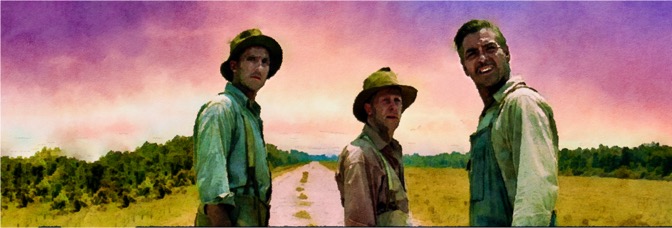

  • Wayne’s World (1992, Penelope Spheeris)

    Wayne’s World ought to be a no-brainer. Slick, soulless media exec Rob Lowe turns public access metalhead slackers Mike Myers and Dana Carvey into real celebrities; only they don’t like the deal they’ve made with the devil. Along the way, Myers meets metal rocker chick Tia Carrere, and they fall in like until Lowe tries to steal her away with the promise of success. It’s a ninety-four-minute movie; it shouldn’t be that hard.

    Yet Wayne’s World manages to fumble entirely, all the way to the disastrous third act. The film’s “documentary crew follows around real people” bit, which director Spheeris profoundly underutilizes, ought to have defined World as a precursor to, you know, the early-to-mid aughts found footage. Instead, the movie completely forgets about it. Even though when Myers and Carvey are talking to the camera, they’re never more likable. Especially Carvey, whose performance is atrocious. No doubt, Spheeris is bad directing actors, but there’s not a single moment of Carvey footage in the regular film they shouldn’t have reshot. He looks inordinately uncomfortable the entire time.

    Spheeris is only slightly better at directing his or Myers’s “SNL” gags. They’re some of the film’s more genuinely funny moments because writers Myers, Bonnie Turner, and Terry Turner can’t seem to find any situational comedy in the situations. The Turners have major sitcom credentials too, which adds to World’s inexplicable fumbling.

    As for Spheeris. I always—read: when I was thirteen or fourteen—thought Spheeris got the gig because she was really good at directing American verité and musical performances. Based on the Alice Cooper performance in World, she’s not good at the latter. It’s unclear about the former because World’s got no reality after the first act or so, when they flex shooting on location in Aurora, Illinois. In the second “act” (World would be a frustrating and pointless narrative to chart), the action moves between various sets with some exterior establishing shots in or around Chicago. In another genuinely inexplicable move, all the doors open out. Not sure who was responsible for that choice, but it’s a bad one. When they all go over to see Lowe’s fancy apartment, and Carrere can get impressed, Lowe opens the door out into the hallway to let them in.

    What.

    Okay, Spheeris. In hindsight, it seems more like she got the job so a woman could co-sign on the foundational misogyny of the film. It’s sometimes friendly, validating misogyny, but, hey, Myers and Carvey are so cute it’s not like they’re bad guys. Especially not since Lowe was still on his rehabilitation tour with World. He looks like he wants to strangle his agent for talking him into the gig. And his outfits, which everyone says are great, are cartoonish in hindsight. Or they cut the scenes about him wearing suits for someone 6’ or taller.

    Carrere is a heavy metal babe who’s going to go with whatever guy loves her for her looks AND her music. Though her big performance is a cover, which makes very little sense but it’s in the third act where nothing matters anymore. Carrere works her ass off in World. She’s not very good. Maybe her Chinese accent doesn’t help. But she knows it’s a primo gig, and she tries. As long as she’s willing to strip down and occasionally slut out, World’s a fine showcase.

    Unlike Lara Flynn Boyle, who the film repeatedly humiliates as a gag because sad girls deserve to be publicly mocked and derided. Wait, she didn’t originate the part on “SNL”? I assumed she was a weird continuity carryover. It’s so much worse when she’s not.

    Also, the movie’s super shitty to Colleen Camp for some reason. Like, screw you, Wayne’s World. You had to get Brian Doyle-Murray because Bill didn’t return your calls.

    The best performers are Myers and Carvey’s film crew, who have a half dozen lines total but care about getting future gigs, especially Lee Tergesen. He’s a delight.

    Myers and Carvey (mostly Myers) have enough stupid charm to get the thing through, but just barely.

    An “SNL: Wayne’s World Best Of” is likely a better use of time. Probably not ninety-four minutes of it, but….

  • Leather Underwear (1990) #1

    Lu1I’m trying to imagine how Leather Underwear would’ve read when it dropped in 1990, one of the first comics from then early twenty-something creator Roger Langridge. The comic is entirely a riff on religion, specifically Christian, more specifically Catholic, starting with a strip about the Catholic abortion service run by one Sister Knuckles. She’ll be back later, after the opening story… Professor God and Doctor Jesus.
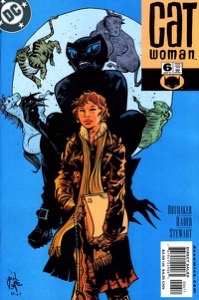
    They’re a father-and-son comedy team. They’re hanging around Heaven, experimenting on the humans, bickering, smelling the Holy Ghost. It’s a quick mood setter for the comic, with Langridge getting to do some physical reaction humor with the characters. The Sister Knuckles strip is almost too confrontational a way to start the comic, too jarring without context; God and Jesus come through.

    Until someone farts, anyway.

    The second story is about Sid Bicycle going on a Divine Comedy-esque adventure, starting with seeking enlightenment from a heathen on a mountaintop. Sid ends up in the afterlife, rightly or wrongly, and meets God—who Langridge writes a little harsher here than, say, Ennis will do in Preacher—and then goes off for tea and crumpets with Satan. It’s the best-written story in the issue, just because Langridge is going all over the place without having a strong character to fall back on if the story thins down.

    Not a problem with the following story, which is the promised Knuckles the Malovent Nun feature. Knuckles has broken out of her original convent and is setting a new religion with herself as Pope. Langridge finds the right balance between obscene and funny. He never makes too extreme a joke if he can get by with a tamer variant, so when he does unleash, it’s always justified. Knuckles is a lovably loathsome character who finds immediate success and fame and fortune because it’s religion.

    Then comes a Noah retelling, which is fast and funny. It’s not quite an illustrated prose piece, but closer to it than a comic. Langridge still has a fine sense of layout, though. While it’s interesting to think about how Langridge would develop after this book, there’s a lot of great art in it, even if his lines are a little thicker. His expressions are already dead-on. So such good faces.

    Speaking of, the next comic is a single-pager written by Cornelius Stone: Clockedin Facehead in Face Value. It’s six panels of contrast humor, some better than others. It’s fine.

    Then Professor God and Doctor Jesus are back to close out the issue in a few pages. One of them cheats at Scrabble. Poorly enough to get caught. It’s very funny and a nice way to close the issue.

    Finally, inside back cover, another one-pager written by Stone with a couple characters writing in a Book of Destiny and making things happen. The end’s a little pat, but the pace is better than the other one-pager. The problem with both strips is the setup’s fine, but there’s not enough for six or eight panels.

    It’s a really good comic. You can see where Langridge changed and where he grew since, but Underwear stands up just fine on its own.

  • Doom Patrol (2019) s04e03 – Nostalgia Patrol

    This episode leaves the butts behind—had to—and gets going with the other big bad of the season. The season premiere had special cameo guest star Mark Sheppard explaining he and the other wizards knew the Doom Patrol would have to fight the butts this season, but they’ve also got to fight someone or something called Immortus. This episode slowly introduces that villain to the team while letting everyone work through some unresolved issues.

    Things pick up immediately after last episode; April Bowlby’s mad no one wants her to be team leader, Matt Bomer can’t convince his alien energy baby parasite to trust him, Michelle Gomez is sad she’s making Brendan Fraser be a super-powered weapon and not a person, Diane Guerrero’s floundering, and Joivan Wade wants to go hang out with old friends. He couldn’t before when he was Cyborg because… well, even though half the episode’s character development is in Wade’s subplot (Gomez gets the other half, everyone else is having a quirky superhero episode), the show passes the buck on letting Wade explain himself.

    After his accident in high school—ten years ago—he ditched his friends and hasn’t seen them since. “Doom Patrol” has always had problems with years. Most of the regular cast literally sat around the mansion for decades, waiting for the show to start. Wade hanging out with pals Elijah R. Reed, Zari James, and Moses Jones at an early eighties sitcom pizza parlor (where they go on to play LaserTag), it feels more uncanny than the team trying to save Bowlby from being trapped inside her old movies.

    Where the episode stumbles with Wade, it excels with Gomez. She’s the new team leader, and instead of being a ruthless hard-ass, she tries to be more empathetic, which disappoints the gang. Then things go wrong on the mission, and Gomez is forced to become a leader right fast. Unfortunately, she drinks her way through instead, leading to a phenomenal drunken monologue from Gomez. Kristin Windell’s direction is solid throughout, but that scene with Gomez is spectacular. Great editing from Brian Wessel too. And then Gomez. So good.

    Despite ending on a precarious cliffhanger, lots of the episode is for laughs. Given the amount of f-bombs throughout, they could’ve called it Phucked Patrol instead of Nostalgia. The script, credited to Tanya Steele, is good, with some of the Wade stuff a little thin, but then leading in hard on the f-bombs—at least one cast member a subplot (save Wade) gets to do an f-bomb string. It’s hilarious, especially since Bowlby complaining about the cursing was a plot point in a previous episode.

    The quirky superhero action is good. Guerrero, Fraser, and Riley Shanahan are trying to find Bowlby in a sixties horror movie while talking about Guerrero’s out-of-nowhere potential romance (or potential for romance). Shanahan has some excellent humor body work while Fraser’s making Guerrero (and the audience) uncomfortable with his willingness to discuss her love life. Then Bomer and Matthew Zuk make a new friend in the old movies while not paying enough attention to the warning signs.

    Sendhil Ramamurthy—a returning DC Comics adaptation actor (he was on “The Flash” one season, and terrible)—plays the new friend. He seems like he’ll be back, along with some more new characters.

    It’s a good episode. Lots of showcases for the cast—Bowlby in the old movies is great—and it’s too bad they couldn’t crack the Wade storyline. It’s just too forced. But, otherwise, “Doom Patrol”’s sailing smoothly into the season.

  • Catwoman (2002) #6

    Cw6Still newish penciller Brad Rader (his second issue) leans a little too heavily into the Silver Age romance comic homage, but otherwise, it’s a near-perfect comic. Writer Ed Brubaker figures out how to give the story the done-in-one feel while still kicking off a new story arc. So it’s part one of four, but really (presumably) part zero of three.

    It’s a prologue from Holly’s perspective. She’s out working for Selina, an East End Peculiar, trying to get some information on a new dealer while reconnecting with people she hasn’t seen in a while. Brubaker sets some of it up with the first scene, which has Holly filling out an email personality test. Her choices on that test come up throughout the issue, whether introducing the romantic interest, filling in some details of Holly’s story post-whenever she last appeared in a Catwoman comic, or addressing Holly’s addiction recovery.

    She still hasn’t told Selina about her relatively recent sobriety and how she tried to avoid triggers, which Selina is now asking her to seek out. Lots of excellent character development for Holly, with her self-reflection arc causing her to make some ill-advised, daring choices to get the issue to a dramatic conclusion and set up the story arc with a good cliffhanger.

    Brubaker, Rader, inker Cameron Stewart, colorist Matt Hollingsworth (who’s got to show shitty Gotham during the day), and letterer Willie Schubert (the narration is Holly’s journal—in her head presumably—and the lettering conveys personality) knock it out of the park.

    The comic’s from the relatively short period between ubiquitous email (or enough you can turn it into a plot point) and smartphones. Lots of Holly’s day is frustratingly boring in a way a smartphone would help. In addition to everything else, it’s historically fascinating–just an all-around excellent book.