• Staying Alive (1983, Sylvester Stallone)

    As Staying Alive celebrates its fortieth birthday, I’m sure there’s information on the web to answer some of my most burning questions. For instance, did they shoot John Travolta and Finola Hughes singing numbers for the in-movie Broadway show (Satan’s Alley), or was it always a rock ballet? And what about the Frank Stallone songs—did director, co-writer, co-producer, and very special guest star Sylvester Stallone always plan on using his brother’s bland early eighties soft rock, which saps the energy out of all their scenes, which are many—or at some point was better music on the table? The film’s got five Bee Gees songs (plus the title track; trivia note: Stayin’ Alive was abridged on the soundtrack album, not in the movie itself). Were the Brothers Gibb too busy, or did they just not want to continue the story of Saturday Night Fever lead John Travolta?

    So many questions.

    Staying Alive runs a somewhat long ninety-six minutes. Once the Broadway show rehearsals start, it’s too rushed, but until it gets there, it plods. It still plods during the rehearsals—Travolta has to listen to an entire song to understand he’s hurt love interest Cynthia Rhodes by eighties stalking Hughes—and then there’s an endless “romantic” dance sequence. But there’s theoretically potential during the rehearsals; they’re what Alive promised during the opening titles, a bargain basement All That Jazz. Except Stallone can’t direct the dancing scenes.

    Or, more, he can direct them, but then he slows them down, which makes the dancing far less impressive. Unless the whole point is Travolta’s athletic exertion faces, which the film inadvertently showcases for most of the third act. The rehearsals ought to be a no-brainer—Travolta, Hughes, and Rhodes are preparing for a show while in a love triangle. There’s plenty of drama, but they also have to work together for the show to work. Maybe it’d work if show director Steve Inwood weren’t so wooden (despite wearing outfits too extreme for a “Thriller” knock-off video). The scenes where Inwood and Travolta “act” opposite one another are some of the film’s worst, which is saying something, because even though Inwood’s bad… he’s only got a half-dozen scenes where he talks. Hughes is just as bad but in the movie, so much more often.

    She’s the rich girl rock ballet star who practices free love, something Travolta just can’t understand, though he definitely should be while he’s sleeping with lovestruck co-worker Rhodes; he’s also going home with various girls from his bar job. Travolta and Rhodes work at a dance studio by day, then he waiters at a club while she sings at another. He doesn’t like her working at the club because it’s skeezy, only once we see it… it’s fine? Like, if he knew about her lovestruck coworker at the club—Frank Stallone—he might have a reason to dislike it, but we see him see Frank for the first time. And he can’t be worried about it being dangerous. Despite it being 1983 and prime “dirty old New York,” the city’s incredibly safe. He’s going to let Rhodes walk at least forty blocks home at one point.

    Alive also could be about two dancers—Travolta and Rhodes—and their troubled personal relationship but their success in their field of chosen professional pursuit. She’s a little older, which sort of makes her a stand-in for the Karen Lynn Gorney character from the first movie. Except it’s not because Stallone and co-writer Norman Wexler are astoundingly bad at the romance stuff. They’re slightly better with Travolta’s character development arc, which involves realizing he shouldn’t mistreat people (especially women), only for mom Julie Bovasso to tell him it’s okay, actually. It’s what makes him so awesome.

    Bovasso is the only other actor to return from Fever. No one else gets mentioned except the dad character, who seems to have died between movies, and Travolta has left mom Bovasso alone in Brooklyn while pursuing his Broadway dreams.

    Bovasso’s scenes all feel inserted later, raising even more production questions, especially about Travolta’s possible original character arc. Maybe he sings about it. The scenes’ tacked-on feeling goes so far as to forget the movie is taking place at Christmastime. Maybe. Definitely winter because Travolta never wears enough clothes (but neither does anyone else).

    The eventual musical has to be seen to be believed, and if Stallone weren’t so bad at directing it, it would be a camp classic; it should be a camp classic.

    Based on the opening titles, which feel like an All That Jazz rip-off (sorry, not calling it a homage, given it’s set to a Frank Stallone song), it seems like at least the editing’s going to be good throughout. Mark Warner, Don Zimmerman, and Peter E. Berger do okay with the editing, even after Stallone starts all the slow motion. The cinematography from Nick McLean is occasionally (and unintentionally) great. Stallone’s got some bad shots and a real lack of visual continuity, but McLean does a fine job with dirty old New York. He lights about a third of Travolta’s approximately 75,000 close-ups okay. The other two-thirds, he’s bored too.

    Johnny Mandel does the “score,” which doesn’t even get mentioned in the opening titles, and produces at least one of the Frank Stallone songs. Is it one of the better ones? I don’t know; I was too busy dancing to Stayin’ Alive to pay attention during the end credits.

    Acting-wise, Bovasso wins on the technicality she’s in three and a half scenes. Rhodes is likable, even if she weren’t so tragically sympathetic as she lets herself get played, over and over, by Travolta.

    Travolta’s reasonably bad. He seems better during the Broadway rehearsal portion of the plot; shame it’s rushed.

    Hughes is terrible. Also, Stallone’s really bad at shooting her dance, so when Travolta’s ostensibly impressed with her craft (in addition to her looks), it doesn’t seem legit. Though at least Hughes gets to dance. The movie forgets Rhodes wants something more than the chorus line too.

    If it weren’t terrible, Staying Alive could be good. Given the setting’s inherent drama and potential visuals, it ought to be good. Shame Stallone turned it into a weird vanity project for his brother, and an even weirder “toxic masculinity is good, actually” commentary. Because the questions the film raises about Travolta being a Brooklyn disco king grown over are good ones, it’s just Stallone, Wexler, and Alive have bullshit answers to all of them.

    Still, it’s ninety-six minutes of early eighties Hollywood ego train wreck; after all, sometimes you need to strut.


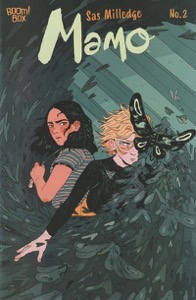
  • Mamo (2021) #3

    Mamo  3With each issue of Mamo, I consider starting by saying there’s no one like creator Sas Milledge in terms of visual pacing. At least for her character’s “performances.” Throughout the issue (and never concurrently), protagonists Orla and Jo have these reaction shots where Milledge has just paced it so perfectly their emotions come alive. Milledge’s other pacing devices are expert, but this particular one seems singular. It’s filmic in a way comics, even talking head comics, rarely attempt.
    Or maybe the artists never manage to pull it off because there’s a history of how reaction shots work in comics, and Milledge eschews it for something different. More modern.

    It also just could be because Mamo takes place in a tranquil, patient setting—even when there’s danger, it’s slow-moving (or gives the appearance of slow-moving because moths aren’t fast until you’re trying to save one from a cat)—but I think it’s Milledge. She’s cracked something with Mamo’s character development arc. It’s not just the pacing of conversations and story beats; it’s the actual plot details. We find out more about magic this issue, only not as much from witch Orla as ostensible non-witch Jo.

    Though the opening touches on how magic works in Mamo, and Orla invited Jo into the proverbial fold last issue, it’s just not necessarily as initially exciting as it might seem, being a witch. The two travel continue traveling around town, fixing up the various problems resulting from previous town witch (and Orla’s grandmother) passing without having a succession plan in place. We meet Jo’s uncle and his sheep; they’re acting super-weird, but they’re also super cute because they’re sheep, and Milledge brings a lightness into the book even as Jo and Orla are actually dealing with witch bones and their magical power.

    But Jo then reveals she might have a shortcut to finding the other sites—she’s been lifelong pals with the birds around town, who can talk because Mamo’s always got magic, not just when witches are involved (something Milledge gently implied last issue). It also means Jo’s had a much more fantastical life than Orla assumed, changing their relationship dynamic just as they make a big discovery for the cliffhanger.

    From the first issue, it was clear Mamo was going to be outstanding, but Milledge is upping the ante every issue. It’s superior work.

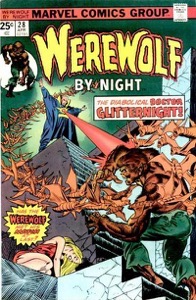
  • Werewolf by Night (1972) #29

    Werewolf by Night  29Werewolf by Night somehow manages to straddle being an utter debacle on every possible level while simultaneously being perfectly in sync. Writer Doug Moench and artist Don Perlin have reached simpatico like Moench gave in to Perlin’s art and just started describing it in the narrative instead of trying to make it fit the pre-existing story he had in mind. Only once does Moench slip—when Perlin thought they were making just eighteen Lissa Russell into an old woman.
    Also, Perlin doesn’t draw the Haitian mystic lady as a Black woman, but instead as some vaguely—well, actually, vaguely European in a particularly problematic way too—white hag. But Moench’s dialogue is… well, he embraces doing his version of an old Haitian lady’s dialect. It’s cringy even for a comic from 1975.

    But the silly main plot, which has Wolfman Jack fighting “weredemon” Lissa, it’s kind of great. It’s not good. Moench throws out a bunch of established continuity, like the werewolf knowing Lissa’s his sister, so her being even smellier as a weredemon would probably help. And the narration—Jack, fully narrating the werewolf fight he’s observing first-hand but, you know, not because he’s narrating the panel action—has this repeated dream device. Jack remembers all the times he and Lissa wrestled when they were kids, which doesn’t sound like the siblings at all. The one time Moench finds some real emotion, he ignores it, and the rest of the time, there’s some weird patriarchal shit going on too.

    At least Jack doesn’t think about how he wishes she’d have married his forty-five-year-old bestie Buck Cowan instead of turning into a werewolf like him.

    Oh, the demon thing… Old Scratch hisself cursed the Russell family with lycanthropy, so the weredemon should be the standard.

    Doesn’t matter. Something about the way Moench writes that narration of Perlin’s mostly bad but still somehow vibrant and active panels just works. Maybe Moench’s dismissal of canon? Though Jack being a shitty misogynist about psychic ex-love interest Topaz (he doesn’t dig her now she’s not as mystically powerful because he’s a twerp) sucks.

    It might just be symbiosis—and Lissa’s extremely long birthday subplot having such a bullshit conclusion—but I do wonder if the book’s finally found the formula.

    It’s a successful comic—you get your two bits worth—but it’s not a good one.

    Maybe Moench just paced it well. It’s definitely not worth going back to figure out its (almost infinitely asterisked) success.

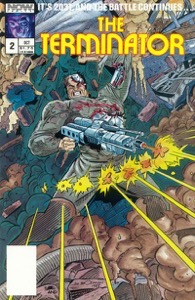
  • The Terminator (1988) #3

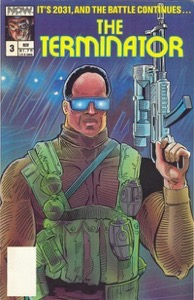
    The Terminator  3Tony Caputo once again gets the guest writer credit—but he’s written two of the three Terminator comics, so how’s he a guest (maybe because, if you read the indicia, you see the original characters are copyright the first artist)? He also completely shuts down the story arc he started last issue. I mean, there’s still little Tim Reese, brother of Kyle (Michael Biehn from the movie), and they go to the brainwashed human town… but Caputo seems to be cleaning house otherwise.
    He also reveals there’s no Sarah in “The Sarah Slammers,” the name of the outfit Tim meets up with. I don’t know why I assumed there had to be a Sarah, maybe because it seems like they have a female commander in the previous issues. However, this issue makes it clear the commander’s a dude. A tough dude named Leahy. So I guess they’re named after Sarah Conner? Like homage?

    Ooof.

    The issue doesn’t need any extra strikes against it, either, not with the art. Thomas Tenney and Jim Brozman are back from last issue, pencils and inks, respectively, but the art’s much, much worse. The most polite description of Terminator #3’s art is amateurish; colorist Rich Powers changes people’s hair colors between pages, even the good robot—synthetic (guess Caputo saw Aliens too)—who’s the only one with a giant eighties mullet in the comic so it’s not like you could confuse him.

    Speaking of confusion—someone, either Caputo or lettered Ken Holewczynski, went back to calling the ‘Nators ‘Gators again. I think there are only a couple of times this issue and only one character doing it; there’s a chance it could be a regional nickname for the Terminators. Unlikely, but I wanted to give the book the benefit of the doubt.

    Because even though the art’s bad and the dialogue’s bad, Caputo’s got an okay plot and an incredible pace. While the story runs long—twenty-seven pages—and there’s some fluff at the beginning, it’s eventually compelling. Not with Tim and his little girlfriend, not with the humans’ inability to crack the Skynet computers, but when they’re on the run from the Terminators. All of a sudden Terminator clicks.

    It’s not a good comic but it is effective by the end. If you make it through the art and the obnoxious kid.

    Oh, right—it takes place three years after The Terminator. At least three years after the future part of Terminator (Reese going back in time). Will that detail be important? Doubt it.

  • Catwoman (2002) #9

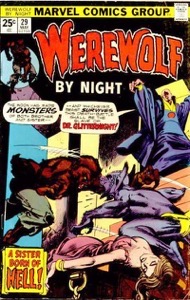
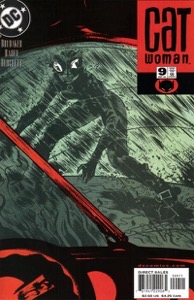
    Catwoman  9The finale proves way too much for penciler Brad Rader and inker Rick Burchett. It doesn’t look like a Batman: The Animated Series comic; it looks like a generic riff on one. Rader and Burchett rush through every character who isn’t Catwoman or Slam, which is kind of nice, I suppose. They were the leads of this arc, though this issue doesn’t have any time for anything but Catwoman’s complicated scheme to clear Holly’s name.
    Oh, Holly and her girlfriend Karon are better illustrated than the norm. However, the dirty cops, who aren’t actually interchangeable, are where the artists really rush. And guest star Crispus Allen, who opens the issue talking on his phone to Montoya over at Gotham Central; they really should’ve had him break the fourth wall to announce the new series.

    Anyway.

    Selina’s plan involves getting Allen on her side, tricking a mob boss, using Slam as bait for the dirty cops, and so on. It’s a very tell, don’t show conclusion, with Rader getting some of the composition right until the big fight scene, and then he whiffs it. Burchett’s inks don’t help anyway, but it’s all composition problems.

    And Allen being so front and center in the issue, he makes Slam and Selina feel like the guest stars.

    It’s a pretty good resolution issue, but there’s nothing special about it, which is unfortunate. It’s unclear if writer Ed Brubaker’s in a hurry or just out of time (since he spent the first issue of the arc on a Holly done-in-one); the pacing’s fine for a talky triple-cross story or whatever; it’s the plotting where Brubaker falls short.

    The last page reveals a secret villain, promising they’ll be back some time. But, even as the villain decides Catwoman needs to be dealt with… it just feels like another way to move the book’s focus away from Selina.

    Also, I don’t know if they do anything with the stolen diamonds from last issue. Maybe they give them to Leslie off-page.

    Again, it’s adequate. But I was definitely expecting more.

  • Infinity 8: Volume Seven: All for Nothing (2018)

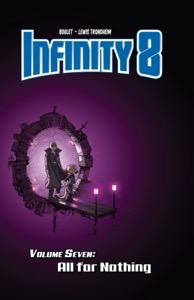
    I8 v7All for Nothing is an almost entirely different kind of Infinity 8. Creator Boulet is writing and illustrating (Lewis Trondheim shares the story credit), which gives the volume its own distinct feel. There are some obvious differences—it’s not about a fetching female agent (something the Lieutenant complains about on the bridge), but rather a tough guy alien sergeant. The assignment isn’t investigating; it’s capturing and interrogating. We also get the backstory on the space graveyard. It’s not what anyone thought.
    The volume begins with some children playing on an unspectacular planet in an insignificant solar system. The aliens look vaguely amphibious, but there’s no sign they’re good in water. I mean, they do swim—which figures in beautifully later—but they’re not merpeople. A little boy gets upset at how his footie match turned out, and an alien (different species) stranger gives him a necklace, telling him it’s important. Then the stranger disappears because the boy can ask any questions; the planet has recently made first contact, and things are on the precipice of changing as the species enters the galaxy.

    There are a couple more points in the boy’s life where the same alien reappears to give him back the necklace. The boy, Douglas, keeps losing it. The last time is when Douglas is saying goodbye to his female friend, who’s excited to explore the galaxy, while Douglas assumed they’d stay and get married.

    Then the action cuts to the Infinity 8 standard—ship stopping for space graveyard, agent brought to the bridge, briefed on the time-warping, sent out to investigate. Only, as mentioned, there are some differences, including the Lieutenant not taking the time to brief the sergeant (who appears to be Douglas grown up and toughened by a life in the stars). When the sergeant organizes his crew to disembark, they discover their target—the unknown alien Douglas met before—is already waiting for them in the shuttle bay. He heard they wanted to interrogate him. Why not make it easy?

    Except it then turns out the alien—let’s call him Hal—isn’t there so much for the interrogation but to show Douglas how the necklace will be so important. Both to Douglas and to Infinity 8. After a lot of time-based action beats (Hal’s got a time grenade, for instance), Douglas and Hal end up out in the space graveyard, with Hal giving Douglas the whole story.

    Complicating matters is Douglas’s commanding officer, who’s become convinced Douglas is somehow in league with Hal from before. Douglas tries—and fails—to explain the peculiar situation with the necklace.

    There’s a lot of action, with the rest of Douglas’s crew coming after him as he and Hal journey to the center of the graveyard to meet up with the mysterious ship from the previous volume. Once they’re on board, Hal fills Douglas in on more of the series backstory, including the motivations, but also revealing there’s a temporal disturbance. It’s unrelated to the graveyard, but being so close to the graveyard, it might be causing time-space ripples.

    Including ones Douglas soon comes to care about.

    Can the unlikely duo team up to save life, the universe, and everything? Obviously, it’s the penultimate volume, so there’s a cliffhanger, but they make a cute team.

    Hal’s got a really bland, really pleasant face, and he’s initially a lot of fun. Unfortunately, Douglas doesn’t react well to a childhood tchotchke getting him in trouble in the future, so he tries to stop Hal. Hal can’t be stopped, but he does hold the attempt against Douglas. Until the second half of the volume, basically when Hal figures out he needs Douglas to save the day—another flip of the norm, as he’s saving his day, not the Infinity 8’s—it’s the bickering stage in the buddy flick. However, Boulet finds the heart sooner than later, making Hal more of the protagonist. The resolution (and cliffhanger) feels almost like an epilogue; Douglas returns to the regular story, already in progress.

    Boulet’s art is fun, light, and spry. Lots of great movement, lots of excellent design work. He barely spends any time aboard the Infinity 8, and most of the scenes take place in previously unexplored areas. The script’s really smart too. Much of the comic’s an exposition dump, which Boulet integrates into Hal’s personality; he’s naturally expository.

    Douglas is initially annoying for a handful of reasons—changing as he ages, but still annoying—only to become one of the series’s most genuinely sympathetic characters.

    It’s an outstanding Infinity 8. It’s different enough it’s a stand-alone, at least in terms of Boulet’s ambitions and accomplishments, while still being integral to the overall story. Boulet mixes Douglas’s species’ relatively recent star-faring in with the ancient graveyard and Hal’s atemporal experience of existence. All for Nothing is exquisite work, much heavier than usual, but also much lighter and joyous when it wants to be.

    I can’t wait to see how 8 wraps up.

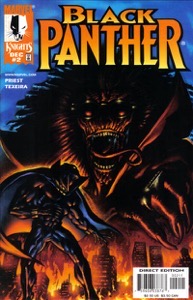
  • Black Panther (1998) #3

    Black Panther  3Black Panther is from just before the “writing for the trade” concept, which then led to the “waiting for the trade” purchasing decisions. But this issue very much feels like it’s meant to be read in the middle of a trade, not as the single Panther released in a four-week period. It’s not a bridging issue but a (brief) exposition issue.
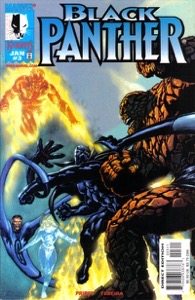
    Writer Priest does the backstory on the main villain—Achebe—who has taken over Wakanda in T’Challa’s absence, and how he sold his soul to the devil (Mephisto) to get revenge on his wife. She betrayed him to invaders, running off with them as they stabbed him thirty-two times. So he made a deal to come back and avenge himself on everyone who ever knew her, stabbing them thirty-two times. It’d be a much more compelling story if it wasn’t Ross telling it to his boss over a sandwich in the CIA commissary.

    But there’s also T’Challa tracking down the little girl’s killer, which Achebe engineered from afar. It leads to Mephisto tempting T’Challa through a series of flashbacks to Black Panther appearances in other Marvel comics. They’re single-panel action shots for Mark Texeira to illustrate quite well; there’s no story to them. Except for the implication T’Challa can pick whatever ex-girlfriend he wants back so long as he bends the knee to Mephisto.

    Now, he hasn’t met up with Mephisto yet; Mephisto and Ross are still chilling back at the apartment or whatever. All of Priest’s careful fracturing—out Pulp Fictioning Pulp Fiction—is lost here. It’s willy-nilly, like editors Joe Quesada and Jimmy Palmiotti were done with the gimmick. Quesada’s storytelling credit this issue shows up as being part of the writing process, not the art process like before. Panther was one of the first Marvel Knights series and all, but it shouldn’t be losing momentum so fast.

    And it doesn’t lose all of it. It just stalls. There’s still a bunch of good art and compelling sequences. It’s just Priest goes from Ross telling the story to Mephisto (presumably) narrating it while focusing on T’Challa for events Ross doesn’t witness. Did we break away from the existing narrative structure? Does it matter?

    I’m hoping—and assuming—Priest recovers next issue.

  • The Crimson Kimono (1959, Samuel Fuller)

    The most gracious explanation for The Crimson Kimono’s politics are it takes place in a universe where the U.S. didn’t concentrate 125,000 plus American citizens in camps during World War II. Even in that universe, there are problems, like white people Glenn Corbett and Victoria Shaw gaslighting Asian guy James Shigeta about his ability to perceive racism. Short answer: he can’t, and he’s projecting his own feelings of inadequacy (for not being white) on others. Then a bunch of the movie is just about white over the age of thirty not being able to compete with coeds and strippers for men’s attention, which is the true validation.

    Except for that metric shit ton of worms, Crimson Kimono’s pretty great, actually. It’s director Fuller with a crane, tracking shots, and location shooting in L.A. He loves it. He also loves showcasing the Japanese culture as it exists in L.A. He even lets it get ahead of him, like when he lets an actual Buddhist reverend (Ryosho S. Sogabe) act in addition to performing a ceremony. The ceremony’s for Bob Okazaki’s son, who received a posthumous Medal of Honor in the Korean War (there was one Nisei soldier who did at the time; it took the military until 2000 to award the rest). It’s a lovely sequence, even if it’s a bunch of icky propaganda. Ditto the Big Red One recruiting poster in Little Tokyo.

    The film starts as a streamlined police procedural. Stripteaser Gloria Pall does her number, goes backstage, and finds a gunman waiting in her dressing room. The gunman chases her out onto the street, where he shoots Pall dead. The cops show up—Corbett and Shigeta—and while interviewing Pall’s manager (a fantastic Paul Dubov), discover she’d been working on a Japanese culture-influenced act… The Crimson Kimono.

    The act involves someone breaking bricks before Pall strips. Shigeta goes to find that guy while Corbett tracks down the artist of Pall’s portrait in the kimono. The opening titles are a time-lapse of the portrait being painted, so it all wraps together very nicely. Again, Fuller directs the heck out of Kimono.

    Thanks to the Skid Row Michelangelo Anna Lee, Corbett discovers the artist is a fetching coed (Shaw). While he’s trying to get her to identify their prime suspect through sketches and mug books, Shigeta tracks down Pall’s stage partner for the new act, George Yoshinaga. Yoshinaga’s a delight. So’s Lee, but Lee’s a delight because of her performance and the script; Yoshinaga’s a delight because he clearly loves being in a movie. There are a few other background actors who also clearly think it’s a hoot, but Yoshinaga’s got the most significant part.

    Except then Corbett puts Shaw’s sketch of the suspect on the news, making her a target, so she needs to move in with them.

    Oh, right. In a bold narrative efficiency, Fuller’s script makes Corbett and Shigeta roommates. At a hotel. They were in the Korean War together; Corbett, the white sergeant in a Nisei unit, and Shigeta the guy who saved his bacon. Now they’re L.A. detectives; Shigeta’s trying to make sergeant, but it’s a strange red herring subplot—everyone forgets about it about four seconds after it comes up. But they spend all their money living in a nice enough hotel suite, splurging on room service every once in a while (though it sounds like every day).

    When Shaw’s in danger, they move her in with them. But don’t worry about it being untoward; even though Corbett very much uses the close quarters to put the moves on her, they’re going to bring in Lee to chaperone. And supposedly the rest of the suite’s full of plainclothes cops (we never see any).

    Having all the characters together means Fuller doesn’t have to go anywhere to get the love triangle going—Shaw goes for soulful Shigeta instead of pretty boy lothario Corbett (who’s such a man slut even the local nuns have the hots for him)—but also Lee’s around to offer womanly advice to Shaw when needed.

    Awesome efficiency and kind of a great idea for a TV show, albeit it one with racial gaslighting and intense copaganda.

    The acting’s all decent with asterisks. Except Lee; she’s just great. Corbett’s playing a few years older (check the gray streaks), which doesn’t quite work. He’s blandly good-looking, blandly charming, but not in bad ways. Shigeta gets to do more, but often against amateur actors. Not to mention the eventual gaslighting. Shaw’s fine, though given how Corbett possessively paws her without her reacting, it’s low-key terrifying imagining what the movie thinks her life is usually like when she’s not a police witness.

    Great black and white photography from Sam Leavitt, occasionally, forgivably bad cutting from Jerome Thoms (Fuller was shooting amateur actors and locations without filming permits, I’m sure the footage was a delight). Fine music from Harry Sukman. It’s a good-looking, extremely inventive low budget production. Fuller and Leavitt luxuriate in those long tracking shots.

    Fun uncredited bit part from “Batman” police chief Stafford Repp.

    Crimson Kimono’s problematic in the extremis, but also a darn good picture.

  • Legion of Super-Heroes (1980) #265

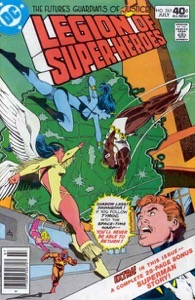
    The Legion of Super Heroes  265Given Jim Starlin once took his name off a Legion story because it wasn’t published as a Super Spectacular, I started wondering if regular writer Gerry Conway just did the plot for this issue—letting J.M. DeMatteis handle the script—because there’s a Radio Shack advertisement posing as a Superman comic accompanying. With pencils by none other than Jim Starlin.

    I mean, I doubt it, but it’s a question.

    The Legion story wraps up the Tyroc arc, which Conway’s been cooking for a couple issues. Tyroc—the only Black Legionnaire–ran off when they needed his help, causing team shithead Wildfire to go on a very pointed rant about Tyroc’s audacity and whatnot. Last issue, we found out it’s because his island homeland dimension hops every three hundred years or something. This issue finishes up that story and gets rid of the Legion’s only Black person, about four years after his first appearance. He doesn’t die; he just doesn’t escape with Shadow Lass and Dawnstar. The optics outweigh the spoilers—it’s not a particularly compelling tale, anyway.

    Not the modern-day part, at least. Tyroc’s having a panic attack and ignoring all Shadow Lass and Dawnstar’s questions about being locked away from their own dimension for the rest of their lives. Eventually, he tells them the origin story of the island. A group of captive Africans, being transported in the slave trade, defeated their captors and found the island somewhere in the Atlantic. Soon after landing there, the island disappeared into another dimension. Then a few hundred years later, after they’d settled in, the island went back to Earth. And repeat. So they’re isolated both by being an island and also because they’re not permanently part of Earth’s history.

    Tyroc’s a mutant (they don’t call him a mutant, of course), and he’s worried the use of his sonic powers has accelerated the window the island spends in Earth dimension.

    There’s a lot of iffy and worse art from Jim Janes and Dave Hunt. It wasn’t worth the build-up, but it’s not absent good ideas.

    Is The Computers That Saved Metropolis!, brought to you by DC Comics and Radio Shack, also not absent good ideas? It’s an almost thirty-page combination advertisement for Tandy Computers, a middle school computer history lesson, and Superman versus… Oh, wow. I thought writer Cary Bates created villain “Major Disaster” just for this comic (a giveaway at Radio Shack, reprinted in a number of DC comics), but he’s a Green Lantern villain. I thought for some reason they didn’t want to use a good villain like they’d need Radio Shack’s permission to use him; presumably, school teacher Ms. Wilson (Margaret to Superman) doesn’t appear again.

    Anyway.

    Starlin pencils, Dick Giordano inks. It’s funny how the “backup” has so much better art than the lead story here. Starlin’s always okay, sometimes better. There are some particularly good Superman action panels, as there should be, given Bates refers to him as the “Action Ace” a couple times.

    Now, I must’ve had this comic at some point. I can’t imagine it wasn’t everywhere in the early eighties, either for free or close to it, but I’ve got no memory of the story. Major Disaster gets Superman to breathe in Kryptonite dust, then sets about showing off how Superman’s lost his super-smarts, which he uses to calculate all his action acing. The issue’s revelation Superman’s constantly doing math to figure out how not to kill everyone with his derring-do is… cool. Like, Superman as super-smart was always a neat bit.

    Good thing Superman just gave Margaret’s class a couple Tandy TRS-80 microcomputers, which can do the math for him. Of course, he and the kids have worldwide micro-radio communication, but the best computers for crunching numbers aren’t in the Justice League Satellite; they’re available at your local Radio Shack®.

    Major Disaster’s a lousy villain, and it’s too long—not to mention Bates (and Superman) contribute to erasing Hidden Figures’s NASA Black ladies (wait, is that erasure the connection with the first story?)—but it could be a lot worse. Like, Starlin’s heat vision panel’s fantastic.

  • Désirée (1954, Henry Koster)

    With some notable omissions (paramours, they’re French, after all), Désirée is shockingly historically accurate. Napoleon really did have an ex-girlfriend named Désirée, who ended up the queen of Sweden, her husband his former general and then adversary. The film gets big and little details right. On its face, Désirée is just a resplendent CinemaScope melodrama. The costumes are gorgeous, the sets are grandiose, the performances are… well, more on the performances in a bit.

    Jean Simmons plays Désirée. She does well aging up over the years, though the film’s makeup and hair designers roll back some of the aging in the third act. Not just for Simmons but everyone (except Marlon Brando). Simmons starts the film as a young woman—no longer a child or something to that effect—who happens to meet a man and invite him over to meet her sister, played by Elizabeth Sellers. The man is Joseph Bonaparte (played by Cameron Mitchell, who works his ass off in the background part). He brings along his brother, Napoleon (Brando). The brothers pair off with the sisters, Mitchell and Sellers, Brando and Simmons.

    At this point, Napoleon’s a success, but not enough of one anyone’s listening to his ideas. The film tracks Napoleon’s story through Simmons’s informed, nearby perspective, which seems like a narrative device but, again, is actual history. Obviously, the better story is more focused on Simmons and Désirée, but it’s a CinemaScope melodrama. Brando eventually throws Simmons over for Josephine (Merle Oberon, who’s great in a glorified cameo), and Simmons ends up with general Michael Rennie. Rennie’s pretty sure Simmons spends her life in love with Brando, which provides a real subtext to their relationship as things get complicated first by Brando’s rise to power, then Rennie’s move to Sweden in opposition to him.

    Most of the history comes through in Simmons’s diary entries (the film’s based on Annemarie Selinko’s historical fiction novel done as the real Désirée diary), and the second half of the film is just a series of quick, sometimes fun, sometimes not scenes. Simmons and Rennie have chemistry, Oberon and Simmons have chemistry (Simmons can have kids with her French general, Oberon can’t with hers), and then Sellers and Mitchell, every once in a while, show up and provide all this character. There’s also a whole movie in Simmons and Seller’s older brother and guardian (an uncredited Richard Deacon) bickering with the Bonaparte sisters; not sure of the historical accuracy of that bit.

    While Brando and Simmons get the top billing, followed by Oberon and Rennie, it’s really Simmons’s picture. Brando should get an above-the-title “and” credit after Rennie. Every time Brando shows up in his fake nose and pound of make-up, he’s done like one portrait of the actual Napoleon or another. Director Koster shoots him in medium and long shots, sometimes to show off the sets, which is both good and bad. The bad is when they’re the wanting exterior sets, and the shots are framed to fit the set decoration exactly. Again, CinemaScope melodrama.

    In his first scene with Simmons, Brando brings some intensity. It’s also the only scene where he’s shot in anything near close-up. The only other intensity he’ll bring later is rapey; he’s always trying to get Simmons alone, regardless of their spouses. It’s not a good performance from Brando. He’s got no insight into the character, either as written (Daniel Taradash’s script does give him some material, too, Brando just ignores it) or historically. Instead, Brando lets the make-up do the acting. And whatever Koster and cinematographer Milton R. Krasner do to make Brando seem shorter. Is it forced perspective, is it heels, or did they hire lots of taller people? Rennie was 6’4”, Brando was 5’9”, Simmons was 5’6”.

    Anyway.

    Simmons is solid in the lead. However, she doesn’t really get a character arc because her destiny (get it) is tied to Brando. Rennie’s okay too. Brando’s not incompetent, just not good or interesting. He’s got nothing to say with the performance.

    The production’s decent, though Alex North’s music is a little flat. Koster’s a bland visual director, but he’s got his moments with the actors and some of the staging.

    Besides wasting Brando as Napoleon, Désirée is a perfectly reasonable and surprisingly historical CinemaScope melodrama.

  • Do a Powerbomb (2022) #3

    Do a Powerbomb  3Powerbomb does not disappoint with its first issue at the tournament. Creator Daniel Warren Johnson starts with a bunch of emotion—last issue’s cliffhanger revealed wannabe wrestler Lona’s dad is actually Cobrasun, the wrestler who killed her mom. The opening scene fills in the backstory when Dad visits her uncle.
    Their quick, boozy conversation reveals the ground situation we didn’t get in the first issue (since it was from Lona’s perspective as a little kid). Mom and Dad didn’t want to have to try explaining Dad being the heel wrestler, but eventually, they were going to tell Lona. So Mom knew she was wrestling Dad. So did the uncle. And it’s not impossible Mom knew he’d killed her.

    But Powerbomb isn’t just about Lona’s sadness and Dad’s self-loathing; it’s about all the wrestlers in the tournament’s loss and self-loathing. When one team loses, they lose everything, something Johnson makes sure the reader feels—especially as it dawns on their opponents, who alternately show empathy and apathy.

    It also turns out the other wrestlers aren’t playing by the same rules as Lona and her dad (she doesn’t find out Cobrasun’s her dad, though his protectiveness is a liability); pro wrestling in other dimensions isn’t a show; it’s for real. One of the other teams—who we haven’t met yet—is from Earth, so presumably there will be something to that match if and when it happens.

    This issue has three fight scenes: two wrestling matches and a bar fight. Johnson emphasizes emotionality over mechanics. Well, the emotionality in the bar fight and one wrestling match, then the brutality of the other match. It helps set up the cliffhanger. Lona and Dad barely make it through their first day, and the next promises to be even more dangerous.

    Once again, it’s a great issue. Johnson’s got a nice narrative distance pivot with Lona and Dad becoming joint protagonists (though uneven, as he’s keeping big secrets) while downgrading Necro, the inter-dimensional necromancer throwing the tournament, to an announcer role. The action’s faster-paced than before too, which is fine for the opening matches, but presumably, Johnson will slow the fights down again at some point.

    The issue’s so affecting—the losers’ losses so palpable—I’m hoping against hope for a mega-happy ending. The not-psychopathic characters, even those just introduced this issue, deserve it.

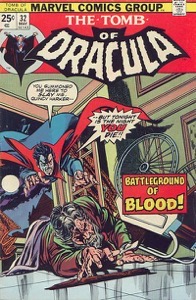
  • Tomb of Dracula (1972) #32

    Tomb of Dracula  32Well. Writer Marv Wolfman reveals a lot this issue; it’s almost entirely nonsense, but there’s a lot of it. There are conclusions (of sorts) to Taj’s Indian sojourn and Frank Drake’s South American capitalist exploitation. Taj can’t stop the villagers from breaking in to kill his vampire son; Frank discovers he’s surrounded by worker zombies who move to kill him after he says hello to one of them. Not sure what they’d have done if he had ignored them.

    It’s all part of Dracula’s plan, which includes something for Rachel, too—teased in an editor’s note but not revealed until the cliffhanger. He’s spent a dozen issues maneuvering nemesis Quincy Harker’s friends away, and now it’s time to strike. Despite Wolfman dragging out these subplots for ages, they make almost no sense, given Dracula’s plots over the same issues. He’s going to Harker’s now because Harker has a file about how Dracula is losing his powers. Like a white paper. Dracula apparently knows he’s losing strength, but not why, nor does he know the author of the white paper.

    So Dracula had been isolating Harker—though, not really because Frank Drake’s just a shitty white guy who abandoned the vampire hunters—just in case he had need to call on him for a MacGuffin. Harker’s finally got the MacGuffin handy.

    In the ensuing “battle, “ Dracula runs afoul of all Harker’s traps in the house. Or if he doesn’t get caught in one, Harker shows it to Drac to humble brag. All the while, Harker narrates in the present tense—presumably his internal monologue—and it’s awful. There’s this gorgeous Gene Colan and Tom Palmer art and this terrible narration from Wolfman. So much terrible narration.

    But the narration isn’t the only problem: we’ve already seen Dracula in a trap house before. Maybe not this exact one, but he’s done a haunted house, he’s done a trap skyscraper… put them together, and it appears Dracula hasn’t learned shit over thirty issues; good thing for Harker.

    We also learn why Harker wears dark sunglasses all the time. It’s a strange detail, revealing Dracula hasn’t just been incompetent since waking up in Tomb #1.

    The cliffhanger promises we’ll get more resolution next issue, but I’m not sure I believe Wolfman.

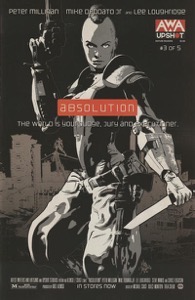
  • Absolution (2022) #3

    Absolution  3Artist Mike Deodato Jr. gets a little too bored with the art this issue—it’s another fight scene at night in a skyscraper. That repetitiveness figures into the problem Absolution’s revealing about itself writ large. The concept lends itself too much to repetitive storytelling. High-tech super-assassin Nina needs to kill bad guys in a way to score approval with her (civilian) audience, who watch her stream. And because the future’s just as shitty as the present, she’s got to be sexy doing it (which raises a question for later). So she does well, her score goes up. Then she goes something wrong, or something bad happens, and her score goes down. So she needs to do well again. But then something will go wrong again.


    She starts this issue with an easy kill, but then it immediately goes wrong. So wrong a micro-bomb goes off in her brain to remind her to work harder. The explosion knocks her out, and she wakes up at the doctor’s. Not the legit doctor, but the underground “help those in need” doctor. This introduces a new character—Ann—who’s non-binary, which is apparently a thing for the comic so writer Peter Milligan can muse on whether non-binary people are real. Except Ann’s also… Nina’s only real friend and a good one at that, so… his musing’s confused and unnecessary.

    That musing figures into the main plot, which has Nina deciding the way to get her score up is to off the rapist introduced last issue. The first page of this issue is post-rape, which needlessly gives Absolution some grit cred. It turns out the rapist is a high-powered businessman who sues anyone who threatens to talk about him being a rapist, including Woody Harrelson and the other talk show hosts.

    I’m not sure this guy’s a believable villain. I mean, he’s a believable villain, but nothing about Absolution’s future implies he’d be considered one.

    Once he’s established, it’s all about Nina taking him out. And, of course, what will go wrong when she does. It also reveals a problem with the scoring system. Milligan really needed to explain it better.

    But it’s compelling and whatnot. However, Deodato ends up drawing people in the same scene at all different kinds of scale. He doesn’t even have time for fun photo-referenced faces. And I hope they don’t try to turn it into a streaming series. It’s clearly only got enough story for a ninety-minute and change movie.

  • Project Wolf Hunting (2022, Kim Hong-sun)

    Watching Project Wolf Hunting (sadly not a Good Will Hunting reference), I kept wondering if the human body holds as much blood as the film suggests. It’s violent to the extremis, with every mutilated corpse creating a standing river of blood. It takes the film a while—well, at least ten minutes—to start gushing blood everywhere, but there’s the implication of it from the start.

    Hunting beings as a police procedural, set in 2017. The Philippines has flown some Korean criminals home on extradition; one of the returning criminals’ victims blows himself up along with pedestrians at the airport (and presumably his target). We never find out what the criminal did exactly, but the implication is… financial fraud. The post-exposition shot features a river of blood (of course) and a blown-off leg. Hunting’s going to be gruesome.

    Fast forward five years, and the Korean government’s making another run, except this time, they’ve learned their lesson. They’re going to take the criminals back to South Korea on a cargo ship, and there are going to be experienced cops on board to keep the prisoners in line.

    Now, right away, there are some issues. Like why the cops—outside boss Park Ho-san and female detective Jung So-min—are questionably competent. There’s also the question of why you’re putting regular cops in charge of the transport instead of corrections officers or even the Special Service, led by Sung Dong-il, who take over the command room in Busan port to monitor the ship. But also, why isn’t the transport outfitted for these dangerous criminals, because they’re not financial criminals, they’re splatter-punks. Led by Seo In-guk, they like to eviscerate their victims, hacking or bashing them to literal pieces.

    The whining cops seem like sitting ducks if anything were to happen, especially once doctor Lee Sung-wook sneaks below deck and gives some blood-encrusted guy in an ice bath an injection. The guy—Wolf Hunting (no, not really, but… sort of)—also has his eyes sewn shut, because Hunting isn’t for the faint-hearted. Though the eyes are never particularly gross or even disquieting, maybe because once the creature awakes, he’s covered in so much blood it’s hard to make out details.

    Choi Gwi-hwa plays the creature. He’s supposed to stay asleep for the trip from the Philippines to South Korea, but once Seo stages his breakout and the ship’s corridors run with blood, it makes its way down to the Choi’s holding cell and drips on him, resurrecting him.

    The voyage starts with a dozen cops, two dozen prisoners, and an indeterminate amount of crew members—who apparently voted to allow the Korean government to use them as a prisoner transport, much to their regret—but they’re down to a dozen by the hour mark. Hunting runs just around two hours; if you just cut out the graphic violence, it’d probably be eighty. Tops. The whole point is the blood and gore.

    Except director Kim’s not really into it. I mean, his special effects team does fantastic work, but Kim doesn’t do anything with it. His action scenes are boring, all about characters you don’t care about dying horribly, but since there’s always ultra-violence, it doesn’t garner any immediate sympathy. Kim—who also wrote the film—even establishes the cops as assholes (before revealing the criminals are all splatter-killers).

    The film’s also got some very obvious limits. For example, none of the violence against women is sexually motivated; the handful of ladies get butchered without any lewdness, though there’s some low-key homophobia (in some of the sequel setup).

    Despite being a bad action director and a worse horror director, Kim’s fine with the rest, which is sort of a Jurassic Park movie. No one who’s too annoying lives long enough to impact the film, and the survivors working their way through are all solid enough, if not sympathetic. Female cop Jung and quiet family killer Jang Dong-yoon have an unspoken bond, mainly because they’re the only two competent people in their group.

    Sung ends up having a much bigger part than implied initially, and he’s a tad tepid, like a metaphor for director Kim’s own disinterest. But the other main cast is all right. Like, Seo’s scary, and Park’s okay. The acting’s fine.

    Good photography from Yun Ju-hwan and great special effects.

    The third act’s got way too many reveals and way too many sequel setups, but the film’s entirely competent until then. It’s gruesome without being exploitative, unpleasant but not enthusiastic enough to be repugnant.

    If you’re looking for something so bloody and gory you become numb to disemboweling, Project Wolf Hunting’s just the ticket.

  • Black Panther: Wakanda Forever (2022, Ryan Coogler)

    Not to mix metaphors or cross franchises, but Black Panther: Wakanda Forever is a Herculean effort from director Coogler and his co-writer Joe Robert Cole. It’s not quite a Herculean success, but it’s a success, which is more than enough given the numerous constraints they’re dealing with.

    First and foremost, the unexpected, tragic, and real-life heroic passing of Black Panther star Chadwick Boseman. Cooler and Cole handle it quite well, turning the entire film into a non-exploitative mourning of Boseman from the perspective of his little sister, Letitia Wright. After the prologue, which features Boseman’s off-screen death, the film jumps forward a year. Mom (and again Queen of Wakanda) Angela Bassett wants Wright to grieve, while Wright wants to avoid it and concentrate on her work.

    At its best, Wakanda Forever is about juxtaposing Wright against other characters, starting with Bassett. But Wright then starts encountering other alter egos thanks to the film’s events, first Dominique Thorne as a nineteen-year-old wunderkind who has built a vibranium detector (and had it stolen, without her knowledge, by the U.S. government). Naturally, the U.S. doesn’t think Africans should have that vibranium, and they want it; if they can find it themselves, fine, but if CIA director Julia Louis-Dreyfus has her way, they’ll kill all the Wakandians for it.

    The film’s incredibly upfront about shitty white people working hard to get white supremacy going again after the Blip. There aren’t any Black people in the post-Blip U.S. government, apparently, not even as window dressing. But Louis-Dreyfus doesn’t show up until halfway through the movie when Wakanda Forever gets around to being a sequel to the first film. Until then, it’s about mourning Boseman… and the discovery of vibranium outside Wakanda, which no one knew about.

    It’s in the ocean, where its presence has allowed an undersea kingdom—led by “mutant” king Tenoch Huerta—to thrive while entirely hidden from the surface world. Except with the U.S. searching for vibranium, Huerta’s realized he’s got to deal with the potential invaders. So he goes to Bassett hoping to find an ally and is surprised when she’s not thrilled at the idea of killing a young American Black woman just to appease Huerta.

    Eventually, Wright and Huerta bond over their shared experience of keeping murderous colonizing white people at bay—though Huerta’s experience was the conquistadors—and Wright’s thinking about the more modern threats.

    Except Huerta appeals to Wright’s destructive side, Thorne to her creative one. It could lead to a great balancing arc, but at some point, Wakanda Forever can’t be about a character arc; it’s got to be a Marvel movie. Albeit one with some incredibly nuanced politics and characters. At least until the third act, which ends up feeling more like the end of the second act because there’s so much left unresolved for Black Panther 3. They should have just done another hour and gotten through it. Instead, they minimize almost all the character development and then take the movie away from Wright in the epilogues. Then, just when it seems like she’ll get to sit and play it out, they come back and take away some more.

    The film runs just over two and a half hours, so another hour would’ve been a very big swing and probably too much of one. Coogler’s direction’s solid throughout, but during the first act, he’s got some phenomenal stuff going on, particularly with Bassett. The special effects visuals too, but his focus on the performances is key. In the lengthy second act (he and Cole do three first acts, mostly consecutively, while keeping the previous ones running), he gets to do the incredible undersea kingdom sequences—and make Huerta’s little wings on his ankles the coolest superhuman physical attribute in a superhero movie maybe ever—but the character work eventually starts stalling. Wakanda Forever brings in deus ex machinas really early.

    The second act also reintroduces characters from the previous film who’ve been absent—Lupita Nyong'o and Martin Freeman, both in glorified cameos. Freeman’s just there for a not all white people hashtag, and to reveal Louis-Dreyfus’s casting as a super-spy ice queen is actually about her getting to do sitcom beats. Better than the high-key racism, I guess.

    And there’s a reason Nyong’o doesn’t get much, but it’s a contrived reason, not a good one.

    Until Nyong’o shows up, Danai Gurira gets a bunch as Bassett’s chief general and Wright’s odd-couple sidekick. It’s like a quarter her movie. Then she loses all of it. In return, like a couple other characters, she gets an Iron Man suit for the finish. Or the Wakanda Forever version of an Iron Man suit. It’s all in the third act, though, where everything’s a little too lacking. Coogler and Cole ran out of time for the story, then Coogler ran out of energy for the directing.

    So Forever finishes a strong, still very special okay, instead of a qualified great.

    Wright’s a solid lead; the film fails her, sometimes pointedly, but she does well in a challenging situation. Huerta ought to be a breakout. He’s close, but again, the film doesn’t give him an actual arc. The standout performances are Bassett and Winston Duke.

    Gorgeous photography from Autumn Durald Arkapaw, even all the composite shots, and a good soundtrack and decent score from Ludwig Göransson. Hannah Beachler’s production design and, especially, Ruth E. Carter’s costumes are fantastic.

    Wakanda Forever is an often rousing, always emotional, unfortunately, singular success.

  • War Story: Screaming Eagles (2002)

    War Story Screaming EaglesThe cynic in me—combined with Dave Gibbons doing the art, the protagonist sergeant not getting a name until the finish, and the soldiers being in Easy Company—makes me wonder if Screaming Eagles didn’t start as a Sgt. Rock special. At least at some level. It’d be Sgt. Rock Gone Wild, so maybe it didn’t last long as one, but….

    The issue’s the least of the three War Story entries so far, mostly because of Gibbons. Dave Gibbons can draw, of course, but he doesn’t bring any personality to the comic. There’s technical prowess but not achievement. And he seems to miss drawing a balled-up fist when he really needed to draw a balled-up fist. But I guess no one is going to tell Dave Gibbons to do the panel over again. Not in 2002, not for a Vertigo special.

    Anyway.

    Screaming Eagles is set in Europe’s last days of the war. Before V-E Day, but individual German units are surrendering, and the officers feel comfortable sunbathing and letting the enlisted men haul the proverbial water. The Easy Company sergeant gets the order to secure a country house—behind enemy lines—for a general’s visit. He requests fresh men. His lieutenant tells him to take the three other original remaining members of Easy Company who landed before D-Day. Four out of 140. The sergeant would rather not. The lieutenant tells him to stop being such a wimp and goes back to his sunbath.

    On the way, the men have an accident with a surrendering German general, who initially refuses to surrender to an enlisted man. The sergeant convinces him otherwise.

    When they arrive at the house, they find it full of loot. The German generals have been stocking it with stolen cash, art, cars, food, and wine. Lots of wine.

    Assessing the situation, the sergeant decides when they report back—days late—it’ll be because the Jeep was damaged, the radio broken, and they had to walk back behind enemy lines. The men are surprised their hard-nosed sergeant’s got a scheme, but he insists—they’re the last four of Easy Company, and they’re going to get a couple actual vacation days.

    So they get drunk and eat well, with things looking up even more when one of the men meets a German farm girl thrilled at the idea of a (consensual) Roman orgy. She even has three friends who are down.

    The soldiers enjoy the briefest respite before they have to return to the bullshit, punctuated with the sergeant finally having enough downtime to be verbose and monologue about what’s wrong with the military. Not even what’s wrong with the war (the Nazis need killing), just the bullshit of the rules and regulations designed to hide those responsible from accountability and so on. It’s a great monologue. It might even be more powerful from Sgt. Rock, and it’s enough to get Screaming Eagles through.

    Writer Garth Ennis opens and closes with text set in the present, talking about an unnamed WWII veteran and how he’s coped. It’s Unforgiven to the point I expected the sergeant to look like Clint Eastwood, not Joe Rock. Unfortunately, Ennis tries too hard with the text, which doesn’t really matter since nothing he can do compares to Gibbons’s lack of personality on the art.

    Screaming Eagles gets an unenthusiastic pass; it ought to be a lot better. Though also maybe not; cut out the seriousness and the sergeant’s splash page flashbacks to his men dying, and it’s a sixties Army comedy. And no one was going to say (or maybe even realize) having Gibbons was working against the piece.

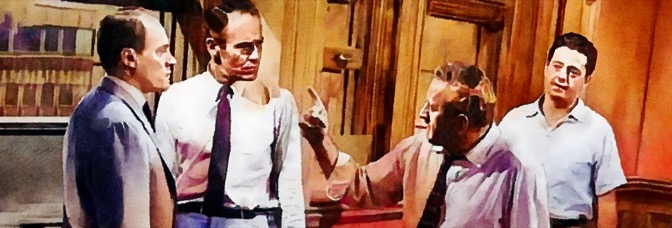
  • 12 Angry Men (1957, Sidney Lumet)

    Director Lumet wrote at length about his compositional decisions for 12 Angry Men in his book about filmmaking, aptly titled Making Movies. The camera starts up high, looking down at the jury room and its jurors, then gradually moves down and in; by the third act, it’s in tight, low-angle close-ups. It’s beautiful, sublime work with gorgeous black and white photography from Boris Kaufman.

    But it’s only one of Lumet’s moves, and, while eventually the most important, it’s not the most startling. It’s a gradual, deliberate device. You can watch it as the film progresses, identify where Lumet makes changes. The most startling and deftest move is how Lumet brings the audience into the jury room as an active observer. The height and angle of the shot are part of it, but when it comes to the men sitting around talking and arguing, Lumet wants the audience to have a seat at the table. The camera becomes subjective, whether a juror speaking directly into it or the camera peering at someone, trying to suss out what they’re thinking.

    But at one point, Lumet entirely flips it, giving the camera a second-person viewpoint. Loudmouth marmalade salesman and baseball fan Jack Warden makes a big scene, then has to apologize to someone. It’s the first time Warden’s acknowledged he can be wrong—he’s bigger on identifying when someone else is incorrect—and Lumet shoots Warden in one shot. There are a couple cutaways to the wronged party, but it’s mostly just this long take of Warden being extra, then realizing his error. The length of the shot isn’t for Warden, however, it’s for the audience. So much of 12 Angry Men is about a group of men looking at others; the shot of Warden doesn’t have the ten other guys. And the wronged party is in close-up, from Warden’s perspective. The rest of the room is silent, some doodling, some daydreaming, many smoking, many silently watching, just like the audience. It puts the audience in the in-group and Warden temporarily in the out-group. It’s an incredible beat and a literal relief.

    The film opens with a jury getting their instructions from a bored judge (Rudy Bond); Bond makes sure the men know if they vote guilty, they’ll be sending the defendant to the electric chair. They retire to the locked jury room, and men settle in, making small talk, and reading the newspaper. Really quick ground situation establishing and hints at character details. Only one of them has an actual character arc throughout, Lee J. Cobb. A few others have shorter arcs as they realize they’re not so sure about their initial guilty verdict, but Cobb’s the one who the film—from a strict distance—reveals enough about for him to have an arc.

    Led by jury foreman Martin Balsam, the men take an initial vote. Eleven guilty, one not guilty; Henry Fonda is the holdout. He’s not ready to send an eighteen-year-old Hispanic kid (John Savoca) to the electric chair without at least talking about it. 12 Angry Men runs ninety minutes and change, mostly continuously, but it’s not exactly real-time.

    Most of the jurors have passively decided: Balsam, John Fielder, Jack Klugman, Edward Binns, Warden, Joseph Sweeney, George Voskovec, and Robert Webber. Of course, they’re assuming the prosecuting attorney’s not just going to lie.

    Then there are the die-hards with other reasoning. Cobb has issues with his son—Savoca’s accused of killing his punchy father after having enough one night. Ed Begley’s a racist. E.G. Marshall’s a stockbroker who needs the prosecuting attorney to be unimpeachable to preserve his investment in the “system.”

    The system, of course, is patriarchal white supremacy, which 12 Angry Men couldn’t even talk about if it knew what it was talking about. Not in 1957. But the film’s very much about Fonda convincing the men to question their prejudices and preconceptions. Some of the men bend to reason; some react to the opposition having such shitty logic (if not the bald racism), and some just need the confidence to (earnestly) share their truths.

    Reginald Rose’s screenplay (based on his earlier teleplay for an episode of “Westinghouse Studio One”) never gives the actors too much about themselves. Almost everyone eventually shares the basics: their jobs, their family situations—no names, not until the end, and then only a couple. They’re a group of white men in a situation with social norms, but there are bullies operating on different levels; they’re still strangers, even when they’re in the exact same demographics, and they’re trying to figure out how to talk with one another. Their frustrations (and fulfillments) might play out in dialogue, but the performances are all physical. We’re watching the men find their voices, good and bad, both through their dialogue and just their physicalities. It’s an exceptionally well-made film. The way Lumet watches the performances, the way the men interrupt one another, listen to one another; it’s an actors’ picture, to be sure, but almost more a reaction picture.

    They’re all setting one another off, intentionally and not, to great success.

    The best performance is Cobb. After him, the top tier is Fonda, Marshall, Warden, Sweeney, and Voskovec. Then Begley, Klugman, Binns, and Balsam. Fielder and Webber are both good but have the most caricatural parts. Webber’s the closest thing the film’s got to comic relief, while Fielder’s just the sweet, meek guy.

    Besides Cobb and Fonda, the other big star is Kenyon Hopkins’s score. The film doesn’t need the music for drama—and Men doesn’t use it to punctuate—but the music’s still essential to the experience. Just like the audience, it’s also got a seat in the deliberations, another active participant.

    Great editing from Carl Lerner.

    12 Angry Men’s one of the true masterpieces of film. Everything about it improves on repeat viewings: the acting, the directing, the music. All of it. Just staggering.

  • Mamo (2021) #2

    Mamo  2While reading the first issue, I didn’t realize Mamo issues were double-size. I just thought creator Sas Milledge had some preternatural sense of pacing; she does have it, but the issues are also double-sized. They don’t feel like two issues slapped together, either. Milledge fluidly paces the issue—starting with a cliffhanger resolution through a bunch of character development and reveals. There’s never a false step. It’s incredible. Mamo #2’s even better than the first one.
    The opening cliffhanger resolution leads into witch Orla explaining to mortal Jo how her witch grandma wasn’t buried right (for a witch—or anyone, really), and it’s causing the disturbances around town. When they start investigating, it turns out Grandma wasn’t just doing the regular town witch stuff; she was also keeping the ordinary folk ignorant of the fae (the magical creatures) around them. So they didn’t just not know what to do when she died; they had no idea they had to do anything. And unless Orla (and Jo) fix it, magical nature will literally retake the town.

    Plus, the mystery of grandma’s improper burial. And Milledge gradually reveals more of Orla’s backstory regarding her relationship with her grandma and why no one around town remembers her even though she keeps saying she grew up there. Milledge also puts in a lot of work on world-building, doing a genuinely exceptional job with it. Jo’s learning about the world around her, information she should’ve had, but Orla’s a somewhat standoff-ish teacher. Everything’s a surprise—grandma not being buried right, grandma not educating the town about the balance with the magical—not to mention having a sidekick.

    Orla’s also learning from Jo, whose family welcomes her in—there’s a hilarious and heartwarming breakfast before they start their first day on mission together. There is a lot of excellent character development set against the seemingly tranquil but upset world. Milledge once again manages to make the pages convey the breeze and the sounds of the nature the characters find themselves in. It’s such gorgeous work.

    We also meet some of the other townspeople, who, it turns out, know more than Jo (and less than Orla), which gives Milledge some mileage in the unintentionally unreliable narrator department. It’s exceptional work.

    The issue’s a delightful, often immediately rewarding experience. And the soft cliffhanger—set in a flashback—is superbly executed.

    I can’t wait to read more Mamo.

  • Werewolf by Night (1972) #28

    Wbn28I’ve been wondering why Werewolf never does an issue in-between Jack’s werewolf nights—so, you know, the majority of his life—and Doug Moench “delivers” here, complete with entirely unsuitable hard-boiled narration for surfer bro Jack. After last issue’s second-night cliffhanger, they all had an uneventful third night. Then they didn’t talk for a week, just moped around, presumably because neither Jack nor Buck wanted to console Topaz, whose soul is in peril.


    But then Lissa shows up just before her birthday. And then Dr. Glitternight comes back to threaten Topaz; she’s got two weeks to deliver her father, even though he died back in issue #14 or something. Two weeks is also how long Lissa has before she too becomes a werewolf. Moench vaguely touches on their curse being something to do with Dad being a warlock (at one point, Satan hisself had damned the Russell family to Larry Talboting for eternity).

    So they all decide to head out to the family island, where they can turn into werewolves in peace, something no one’s thought of doing in twenty-nine issues of the comic. For a brief moment, it seems like artist Don Perlin might be able to do the “dark and stormy night” castle stuff.

    He cannot. I’ve been going soft on Perlin as of late, complimenting his thumbnail long shots, which I’d have been proud to draw as a tween. But, holy shit, his art is terrible this issue. So bad editor Len Wein should’ve apologized.

    The castle and its reveals end up being even worse than the lousy soap opera first half of the comic. Perlin’s got lots to draw, and he’s terrible at all of it. Well, the thumbnails, I guess. But the rest? Atrocious.

    And sister Lissa’s much-ballyhooed eighteenth birthday? Eh. The werewolf transformation isn’t a cop-out, but the utter lack of character development disappoints. The comic’s been promising this occasion since the first issue or maybe even Marvel Spotlight. Moench whiffs it.

    Nowhere near as bad as the art, but still. He’s had the time to plot it, and he didn’t.

    Werewolf barely reads like a professional comic; everything comes off silly and amateurish. This poor book. Curse of the Werewolf, indeed.

  • American Gothic (1995) s01e09 – To Hell and Back

    To Hell and Back aired out of order; way out of order. It was one of the infamous summer burn-off episodes, airing about nine months later than it should have. No one tried to kill serialized seasonal narratives like the networks.

    The episode’s all about Jake Weber, starting with a flashback to when he killed his wife and daughter in a car accident. He was drunk. The show’s been teasing the details since the pilot, but now it’s the anniversary, and he’s got a very similar case going on in the present day. Town-drunk Robert C. Treveiler went out after a party—a hospital fundraiser, no less—and got in a wreck. He walked away; wife Laura Robbins wasn’t so lucky; plus, she and Weber had a star-crossed meet cute at the fundraiser, so it’s even worse. Weber then starts imagining his wife (played by Andi Carnick) in her place, the added stress pushing him towards drinking.

    Sheriff Gary Cole—perhaps demonically aware of Weber’s, well, particular demons—does whatever he can to make things more difficult for Weber. When Weber’s off trying to suss through his shitty day-and-a-half at the local blues club, Brenda Bakke puts the moves on him. Or something approximating them. It’s never clear why Bakke’s tempting him, but then Weber leaves and finds Cole waiting for a bottle and a deal.

    Sleep-deprived Weber seems very aware Cole’s got something supernatural (and evil) going on; will he give in?

    And here’s the funny thing—it doesn’t matter. I mean, it does matter, and Weber’s got a significant character development and reveal arc going on, but the way they leave things… it doesn’t matter. Either Weber’s leaving, or he’s staying. The finish, which emphasizes his character arc, doesn’t resolve it.

    Good thing the network pushed the episode out of order so far. It’d be terrible to know what was happening with the show’s first protagonist.

    The B plot involves Lucas Black spying on weird old neighbor William Morgan Sheppard and his cousin, Paige Turco, getting upset he’s becoming such a gossip. It’s an excellent arc for Black, though it duplicates another episode’s arc… meaning he didn’t learn anything the last time. I think it also involved his friends, Evan Rachel Wood and Christopher Fennell, teasing him into some behavior.

    Excellent script—credit to Judi Ann Mason and Robert Palm—with barely okay even for 1995 TV drama direction courtesy Oz Scott. Scott at least gives the actors time but still manages to work against them with some of the gimmicks.

    Even with Scott fumbling, the episode is successful, a testament to the writers and, especially, the actors. It’s a terrific showcase for Weber while also giving Bakke and Black decent spotlights. Turco and Cole—despite having a lot to do—are just supporting their plots’ protagonists.

    Outstanding stuff.

  • The Terminator (1988) #2

    T2The credits for this issue say Tony Caputo (also NOW Comics publisher) is the guest writer. Except we’re on Terminator #2; it’s not like there’s an established team. Plus, penciler Thomas Tenney is new too… but not a guest.


    Tenney and inker Jim Brozman deliver possibly better art than the last issue, but it’s not more interesting. Instead, it’s all very blandly composed, with Tenney sure readers want to pour over the page to discover child soldiers early and so on.

    The child soldiers belong to Johnnie-O and the Synth-Slashers. Johnnie-O doesn’t make it through the first action scene (he’s a grown-up leading child soldiers, boys and girls, but the boys are stronger). The rest of the issue is Tim trying to get his less capable comrade Ann away from the Terminators. Sometimes they’re called ‘Nators, sometimes they’re called ‘Gators. Whatever proofreading they had going at NOW wasn’t enough.

    The issue juxtaposes Tim and Ann’s journey with last issue’s rag-tag unit, Sarah’s Slammers. Terminator needed a guest writer to come in and lean further into its worst details. Though when the characters discuss The Terminator: The Movie, the units just have numbers and don’t sound silly. Except they can only repeat the Kyle Reese line from the original. Apparently, no rights to anything else.

    Reese just recently went back in time. Or at least, they thought he went back in time, but the place blew up. The resistance fighters are telling the moon humans about it. Also, in the need for proofreading department, one moon person tells them all the androids on the moon are cool and chill, then the android they brought with them immediately says he’s the only android on the moon.

    The questionably action-packed finale brings Tim and Ann into the existing plot. The last line of dialogue reveals a “surprise” movie connection.

    Hopefully next issue, they get some creative regularity on the book, but… there’s only so much anyone’s going to do with this comic.

  • Hot Millions (1968, Eric Till)

    Hot Millions is an entirely amiable, often charming light comedy about career embezzler Peter Ustinov’s attempt to keep embezzling in the computer age. The film starts with Ustinov getting out of prison, late for his exit because he’s busy doing the warden’s taxes. He was caught by the computer last time, and he’s out to show them what for.

    Ustinov co-wrote Millions with Ira Wallach, and the film’s first half showcases him. It changes once Maggie Smith becomes more central—promoting her to co-lead—which is quite a promotion given Smith’s introduction is just an establishing sequence for Ustinov moving back into his old flat. He charms the pants off his landlady, apparently, as he charms the pants off pretty much everyone. The first act is just Ustinov methodically figuring out where to go to rip off a computer.

    His investigation requires him to pose as a businessman, identify the best company and the best potential computer-man, then impersonate said computer-man to work at the company. Ustinov finds recent widower Robert Morley, sends him off on his life’s dream to catalog moths in South America and goes to work for Karl Malden at a concrete conglomerate. A computer runs all their books, overseen by suspicious vice president Bob Newhart.

    Eventually, through contrived coincidence, Smith starts working for Ustinov—he lies to her about his name—and gets the attention of both Malden and Newhart. Unfortunately, it’s entirely likely they keep the offices too warm to encourage the female staff to wear less; both are lechs, though only Newhart actually pursues Smith. In an attempted escape from such a situation, Smith invites Ustinov over for dinner, where the two find they have more in common than just disliking Newhart.

    Music. They have music in common. Don’t be crude. It’s a lovely sequence, probably the best directing Till does the entire film. There are lots of good scenes in Millions, but they’re usually working thanks to the script and actors, never Till. Both his pacing and his composition are off; the former leads to Millions dragging a little too often (it’s ten minutes too long, but there are also about ten minutes of relationship development for Ustinov and Smith missing); the latter means editor Richard Marden can’t cut the montages well. Marden’s got great timing on the montage sequences, set to Laurie Johnson’s cheerful score, but the actual shots are iffy. And then there are scenes where the actors jump around a little between takes. Till mustn’t have fretted shot continuity.

    The plot involves Ustinov’s elaborate embezzling, which seems to have involved the computer, but Millions never gets too technical. The eventual solution to Ustinov’s first problem—disarming the alarm and its omnipresent flashing blue light—is a non-technical dodge. The computer stuff was all empty calories of red herrings; the film doesn’t even acknowledge Ustinov’s ability to learn this specific business machine and how to hack it.

    While Smith gets a character arc—again, impressive since she doesn’t really have much time until the second half—Ustinov does not. But, since he’s lying to everyone about something (or everything), it seems like he will have some kind of comeuppance in the finale. Unless the script comes up with some major reveal in the resolve to provide cover.

    Good photography from Kenneth Higgins, good comedic performances, and an affable vibe get the film through its slower patches. And Till’s disappointing direction. Ustinov and Smith are more than delightful enough to keep Millions going.

    Plus, great Cesar Romero cameo in the third act. Not sure why they thought they needed a cameo for two scenes, but Romero’s awesome.

    It is a little off-putting to see Newhart playing such a creep, even as he tries to work against the script and underplay it, which doesn’t work, but the effort’s appreciated. Maybe if Till were doing something, it’d work better.

    But Millions works darn well, considering.


  • Catwoman (2002) #8

    Cw8Batman doesn’t appear in this issue, but he really ought to be here somewhere. What with the cops moving a bunch of heroin through the city to make a deal with the Russians. One would think the Darkknight Detective would give a shit. But he apparently does not. It’s hilarious how bad Batman is at his job.
    Anyway.

    Enough about useless white men and on to the awesome ones.

    Writer Ed Brubaker, penciler Brad Rader, and (sometimes) inker Rick Burchett do incredible work in this issue. The pace is phenomenal, starting with the cops pestering local businesses in the East End to put up Holly’s wanted poster. It leads to Karon, Holly’s girlfriend, calling the apartment to check on her, which wakes Slam, who’s on the couch (with a kitty), getting some shut-eye before he and Selina execute their plan.

    The way Brubaker plots their plan is capital–it has different moving parts for each of them; Slam confronting a cop (which still hasn’t paid off) while Selina gets some information from a fence. Meanwhile, the cops (and their mobbed-up bosses) talk about their big deal for the night. Nothing can go wrong. We don’t see them setting up the deal; we don’t hear Selina’s plan to foil them (which Slam swears he doesn’t think is the worst idea, just not a good one because he doesn’t realize Selina’s the GOAT). Brubaker’s revealing the cops’ brash dealings in (for a comic) real-time, while Selina’s messing with them, but we don’t know to what end.

    It’s brilliantly executed, heist-y stuff. Rader’s page layouts and visual pacing are exceptional; even at his best, nothing indicated he would do anything this good on the book. And Burchett, inking on his own (Cameron Stewart assisted last issue), only occasionally makes it look way too much like “Batman: The Animated Series.” It’s usually during the action sequences, so the lack of detail isn’t particularly painful.

    And Burchett’s inks on the open’s outstanding; Slam and Selina are figuring out their team-up dynamics, and it’s gorgeous art. Fun, but serious.

    Great heist-y cliffhanger, a sparing return of Selina’s narration, and some B plot building on the Mister Big… Brubaker balances it all beautifully. Catwoman already got great fast, but this issue’s sublimely raising the bar even more.

  • Black Panther (1998) #2

    Black Panther  2The misadventures of Everett K. Ross continue, with writer Priest still hopping around the flashbacks to give the most bang for the two and a half bucks. It starts with Mephisto, last issue’s hilarious and extra cliffhanger. For some reason, Mephisto’s waiting for T’Challa; Ross (and Priest) don’t tell us (or Nikki, Ross’s boss, who he’s debriefing). Instead, we get these occasional check-ins on the odd couple sitting on a couch, Ross without any pants (but a Pez dispenser in his sock), and Mephisto silent until just the right moment.
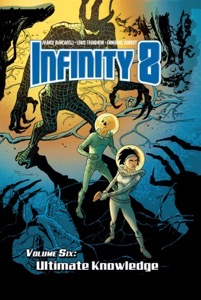
    Just the right moment for comedic effect. Priest makes Ross’s adventures cringe-worthy and absurdist; Mephisto handles the latter (at least until the mud wrestling), while the former has Ross showing up at the airport to pick up T’Challa blaring Kool & The Gang’s Jungle Boogie. No way they were doing that scene for the movie (Cracker and Martin, indeed). We also haven’t seen Ross and T’Challa have a regular scene together, but Ross implies he’s been the King’s U.S. handler before.

    Meaning T’Challa knows Ross is a goober. I’m sure if so, Priest will get some solid laughs out of it later. Or at least hearty chuckles.

    Ross still doesn’t get to losing his pants, but we do find out why everyone got arrested (the mud wrestling). Before then, however, Priest works on the B plot about T’Challa’s political problems back home. It’s T’Challa’s arc, while Ross’s ostensible A plot gives the comic such a distinct, immediate personality.

    Then there are the drug dealers and the tough guy, “is he dangerously racist or was it just 1998” Brooklyn cop who seems like he’ll be back later. There’s also Black Panther action with T’Challa confronting the drug dealers a little bit later in the timeline. It’s a fascinatingly fractured timeline.

    Excellent art from Mark Texeira, who—if I’m reading the credits right—is drawing over Joe Quesada’s panel breakdowns, with Alisha Martinez then doing “background assists.” Quesada’s credit is “storytelling,” and if he’s responsible for the pacing, he does a fantastic job. The comedy timing of the book is phenomenal, but the dramatic moves are good too.

    Black Panther’s great.

  • Infinity 8: Volume Six: Ultimate Knowledge (2018)

    Infinity8Much of Ultimate Knowledge is the best-written Infinity 8 has been so far, and Infinity 8 has been exceptionally well-written so far. But this volume pairs an odder couple than usual, so there’s constant banter. The partner is also a know-it-all, verbose historian, and he’s always got something to say about whatever they’re experiencing (or running from).
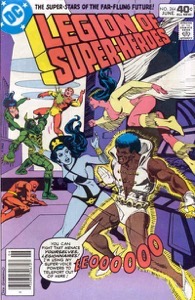
    The volume opens introducing the historian—Bert—and the agent, Leila Sharad. Also, more than any of the other volumes, Bert is the lead here; Leila’s the comic relief and occasional blunt object. Leila confronts him about a possibly stolen antiquity (she’s in customs) and ends up causing an incident involving the dead flesh-eating aliens from the first Infinity 8 volume. It’s a slightly familiar scene because the series used it as a non sequitur reference to the first volume back in the second volume–a long-cooking Easter egg.

    Except when Leila gets the assignment from the captain—go to the center of the solar system-sized space graveyard and wait for the ship they found out about last time—she’s going into the mission with a lot more information. And a clear purpose. So she demands Bert come along. Their first meeting was tense, with quite a few deaths, and she wants to make it up to him.

    Of course, she’s a hard-ass, and she doesn’t want to show any empathy, so he can’t figure out why she’s making him go along.

    The other big change is the creeper lieutenant, who hits on Leila as usual (the only one he left alone was the nun) but goes on to explain he knows it’s all getting reset, so it doesn’t matter how he behaves anyway. So, he’s worse; though presumably, time will reset, and no one will know it.

    Except for the captain.

    Bert and Leila fly to the center of the graveyard, waiting for the spaceship’s arrival, and go sightseeing. After some good banter and comedy of errors, they discover a metal orb, which seemingly brings the dead being’s consciousness to (holographic) life. Immediately following this discovery, plant roots reach up and grab the sarcophagus they were looking at, and our heroes give chase.

    The roots are part of a plant-based life-form, who’s had plenty of time to talk to the dead beings, but no actual experience with other life forms. Ultimate Knowledge then detours into hard sci-fi with Bert trying to piece together how this life-form works (and thinks) while Leila’s distracted by the beautiful scenery and her own good jokes.

    The finale has some action—both explosions and chase scenes—as they get back to rendezvous with the spaceship from last time, but they also learn more about the nature of the graveyard on their own. Turns out having Bert along—someone who thinks to use his tricorder instead of just zapping everything to oblivion—leads to, well, maybe not ultimate knowledge, but definitely more knowledge.

    And then, just in case Knowledge hasn’t been heady enough for the reader, there’s a last page spin everything about the graveyard (and the series) around again. Since it’s on the last page, the characters don’t have time for their minds to be blown; there are hard cliffhangers and soft cliffhangers, but this one’s a conundrum cliffhanger. Bert spends the third act explaining to Leila (and the reader) how to think about the things they encounter, and it sums up something special.

    Excellent writing from Emmanuel Guibert and Lewis Trondheim; Trondheim gets second-billing in the script credit for the first time (I’m pretty sure). Bert’s a fabulous lecturer, and Leila’s the perfect bratty foil for him. I hope they return, especially since their character arc is left unresolved.

    Franck Biancarelli’s art is often gorgeous; the plant life-form, Bert’s gentle expressions, Leila’s harsh ones; Biancarelli brings a slightly different energy to everything, which gives Leila and Bert’s personalities additional layers. Knowledge is dense, exposition, and detail-filled, but their experiences of the unknown—including one another–are where the creators focus.

    Again, it’s fantastic.

    And that final reveal ratchets expectations for the next volume unlike anything the book’s done before.

  • Legion of Super-Heroes (1980) #264

    The Legion of Super Heroes  264Turns out the only time Wildfire isn’t a raging asshole is when he’s ostensibly worried about his kidnapped parents. Either I forgot, didn’t realize, or didn’t care his parents had gotten taken last issue. They didn’t stand out (I think some parents got kidnapped off-page) because they weren’t assholes like their kid. It’s a really weird failing for writer Gerry Conway, who can write Wildfire freaking out about someone not saying hello to him, but when he’s actually supposed to be concerned….
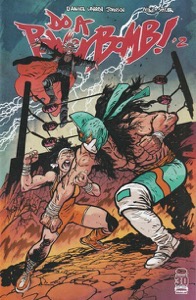
    Nothing.

    The issue opens the Legionnaires causing a sky-traffic accident. Unlike the last time (I can’t remember who was writing that issue), Wildfire doesn’t threaten to incinerate the civilians in their car. He’s almost sympathetic this issue, though it’s probably just rebounding from him being such a prick every other issue.

    After serving a bunch of red herring—including on the cover (which features Shadow Lass and Tyroc fighting, whereas they’re pals in the comic and Tyroc’s literally in two panels on the last page)—the issue settles into a mystery. After tracking the bad guy and the kidnapped parents to a remote power station, which turns out to be a trap, the Scooby gang starts investigating who might be after them and why. Well, they know the why—Legion patron R.J. Brande going bankrupt.

    Or should I say, “B.D. Brande,” as his company’s building reads this issue. Jack C. Harris didn’t pay much attention when editing. It’d be difficult to pay too much attention—Jim Janes and Dave Hunt’s artwork is exceptionally bland and exceptionally boring. Janes occasionally does some okay composition work, but he’s also got some goofy angles. And his figures are terrible. It’s unclear how much Hunt’s inks help or hurt.

    The bad guy turns out to be another of Conway’s rote Legion villains, though next issue promises something different, which is something at least. The cliffhanger reveals Tyroc’s got a good reason for running off last issue, though if he had a smartphone (in the year 2972 or whatever), the calendar app would change his life.

  • Do a Powerbomb (2022) #2

    Do a Powerbomb  2Well, despite being curious about something related to the issue’s Brobdingnagian last page reveal when creator Daniel Warren Johnson set it up last issue… I can’t remember the last time I’ve been as surprised by a comic. It’s a perfectly solid narrative choice but also entirely unexpected. Johnson started Powerbomb last issue doing one comic, then changed to another, then another. So now he’s on to a fourth–or at least a three and a half.
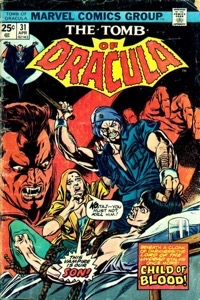
    It’s still about Lona Steelrose teaming up with an inter-dimensional necromancer (named Necro), who loves pro-wrestling and wants to stage his own tournament, but the tournament is just a MacGuffin. The reveal this issue promises so much character development and such wide arc swings, Lona will be lucky if they don’t decapitate her.

    Necro gives Lona the backstory in the opening. He tried taking over the galaxy, got busted, and exiled to an island where he discovered the earthly joy of television. So what’s his favorite show? Pro-wrestling, of course. But fighting to the death is passé (and why would anyone do it) unless there’s some fantastic prize.

    He’s a necromancer, after all, so why not have the prize be resurrecting a person of the winner’s choice.

    Now, presumably, Necro could just resurrect someone without the whole wrestling tournament, but why wouldn’t he combine the two?

    Lona’s not only got to decide if she wants to do an inter-dimensional death match to potentially resurrect her mom but she’s also got to find herself a partner because Necro’s throwing a tag team tournament.

    In her search for a partner, she sees a particularly brutal wrestling match, which also gives Johnson the opportunity for some action. The issue’s very visual talking heads for most of it—including Lona’s decisive call home to dad to say goodbye—but the wrestling’s gruesome.

    In a good way, both in terms of artistic skill and narrative import. I can’t imagine next issue will have another big reveal—Johnson’s got to start the story sooner than later; he’s only got five more issues—but there’s so much material he’s already got to work through.

    Powerbomb’s fantastic.

  • Tomb of Dracula (1972) #31

    Tomb of Dracula  31The “Taj in India” C plot has been running seven issues, so half a year, and it’s just now getting to him staking his vampire son. The cover shows Taj thrilled to do it and the wife begging him to stop; the interior’s the opposite; the entire point of Taj going home was to stake the kid before the villagers do it. And to slap his wife around for being… a woman, basically.
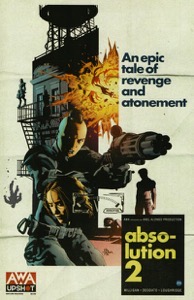
    Anyway.

    Writer Marv Wolfman and penciller Gene Colan cover the Taj C plot simultaneously with the Frank Drake C plot. Frank’s down in South America working for his shitty white guy pal and not noticing all the workers seem to be literal zombies. Neither subplot gets any resolution (and Frank’s doesn’t even get a real cliffhanger), but maybe next time, we’ll finally get some movement on the Taj story. I mean, we won’t, but still. I’ll pretend.

    Then we get a half page of Rachel Van Helsing (once the series lead) moping around with an ominous, text-only cliffhanger. Great art from Colan and inker Tom Palmer, but it’s the laziest check-in Tomb could do.

    The actual A plot involves Inspector Chelm finally getting the upper hand in his hunt for Dracula. The issue opens with Drac killing a member of Parliament’s daughter (a week after killing the wife), assuming such loss will inspire the guy to vote for “The Master.” It’s unclear the guy doesn’t know “The Master” is Dracula, but there’s also a conspiracy group subplot (almost entirely in expository dialogue) and then a qualified reveal of Dracula’s great scheme.

    Qualified because Wolfman reveals the good guys know there’s a great scheme, and they reveal to Dracula they know it, but the reader doesn’t find out. If it goes at Taj pace… it’ll only be four issues before we hear about it again.

    Wolfman does a neat little “mixed media” thing with a newspaper report about the Parliament member’s daughter’s death.

    Quincy Harker making his own speakerphone, so he doesn’t have to hold the receiver because he’s too busy reading papers, is less neat and makes it hard to sympathize with the heroes. Sure, they’re not trying to take over the world and kill everyone, but Dracula’s not out there making Rube Goldberg speakerphones either.

    Gorgeous art from Colan and Palmer, some of their best even: it’s a police conspiracy thriller guest-starring Dracula, and they make it happen.

  • Absolution (2022) #2

    Absolution  2I’m unsurprised to see writer Peter Milligan downshift Absolution’s pace this issue. The action opens on streaming assassin Nina finishing her outing from last issue and quickly becomes about establishing the actual ground situation. First issue, Milligan did the world set-up; now it’s time to lay out Nina’s “normal” life.
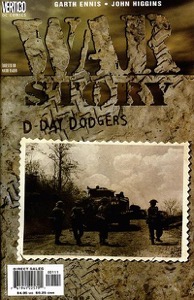
    While the action might open on Nina, the issue starts with a yucky one-page scene introducing one of Nina’s fans, a masseuse coerced by a powerful customer. Throughout the issue, the fan—Stevie—messages Nina, and it’s not clear how Nina reads those messages (or any of the messages). Milligan still uses Nina as a first-person narrator, but the stream comments add a different layer. The reader’s experiencing both, and even though I’m not a fan of stream comments, they’re a successful device.

    Less successful is the brief panel discussions about Nina and her assassinating. Andy Garcia cameos as Nina’s doctor, who scrapped the killer instinct out of her brain (which also comes up in Nina’s plot line a bit). Artist Mike Deodato Jr. barely tries to disguise the photo referenced Garcia, though no one else this issue (except Woody Harrelson as the panel host again) jumps out.

    Milligan and Deodato do Absolution as an eighties cyberpunk, with revised futurism and dystopian details. Unfortunately, the panel’s dated, and if Milligan weren’t being so obvious, it’d be more successful.

    But the plot’s moving into unexpected territory, at least based on the plotting so far. I’m waiting to see how Milligan paces next issue. He’s got choices.

    Absolution’s an okay “soft sci-fi” action book. It’s compelling and looks good. Some of the writing’s problematic—the panels and their smooth-talking liberal intellectual guests—but the rest makes up.

  • War Story: D-Day Dodgers (2001)

    DdayD-Day Dodgers ends with a ten-page series of splash pages, with artist John Higgins moving through a battlefield, a poem accompanying the imagery. The poem, “The Ballad of the D-Day Dodgers,” is from an unknown author. Higgins’s pages tie the poem’s lines to the various characters we’ve met throughout the issue, which is a fairly standard war story until the “D-Day Dodgers” plot point arrives.

    Writer Garth Ennis’s opening text block informs the reader of the setting and situation—the Allied troops working their way (too slowly to be exciting news) through Italy, which has taken long enough they’re basically forgotten, even though they’re still very active. A new second lieutenant is arriving, a blue blood named Ross, whose never been in battle before. He falls for the enlisted men’s chicanery, he’s shocked at the captain’s disillusionment with the war, and he can’t believe the British military would sacrifice all these men to keep the Germans distracted.

    Even with the captain, Lovatt, calmly explaining the situation—sometimes while taking potshots at the local destroyed church’s Jesus on the cross (he’s not an atheist, just a disappointed Catholic)—the comic’s about Ross waking up to the reality he’s found himself in. He’s thick enough he doesn’t realize when he’s learning things, like when the capable sergeant major takes him out on patrol, and Ross proves himself to his fellows but doesn’t know it.

    Much of the comic’s talking heads, Ross is going overboard trying to prove himself to Lovatt, who can’t make the new officer understand the bleakness of their situation. Not even after they get their mission briefing, and Lovatt explains (both to the brass and Ross) what’s wrong with the plan.

    It’s a good comic throughout. Ennis brings up some interesting ideas but can’t really bring them into focus well enough; they’re ground situation instead of foundation when they ought to be the latter. But the visual montage and how Lovatt and Ross’s last conversation leads into it put Dodgers over.

    Oh, right. “D-Day Dodgers.” Right before the army sent these soldiers to their deaths, some lady (literally a lady) told Parliament they were all a bunch of lazy “D-Day Dodgers.” However, since Ross is from the same social class (which gets addressed) and new (which doesn’t), it doesn’t really resonate other than as an apt (and tragic) title.

    Higgins’s art is excellent; he changes his line thickness based on emotional intensity, which is cool. Then his montage sequence is just one emotional gut punch after another. It’s a rending, rewarding read.