Category: 1998
-

It's Becker (Ted Danson) on a blind date. Danson lets himself get set up after some razzing from Terry Farrell, who's got a wonderful new boyfriend (Brian Cousins). Cousins is a big sweetie, who treats Farrell and everyone else with respect and kindness. He does wear shorts–he's a UPS driver, apparently–and is just the kind…
-

This episode doesn't have the belly laughs the other ones so far have featured, but it does finally give Terry Farrell something to do. Something to do she can do well, which is constantly lie to Ted Danson and Alex Désert about what's bothering her. It's actually rather impressive they got twenty-five or whatever minutes…
-

Cheaply animated family-targeted KING KONG adaptation, complete with (recycled?) original songs from famous Disney songwriters the Sherman Brothers. Sadly none of the songs are for Kong; all of them (all three of them) are pretty generic and have nothing to do with the movie’s specifics. The bad script is more damaging than the cheap animation.…
-

Do you want to hear Ted Danson whine about people talking about sex too much? If so, this episode of “Becker” will test your resolve. The premise is simple; Danson hasn’t had sex in a long time and he’s confronted multiple times throughout the day with seductive situations. I’m actually surprised Standards and Practices let…
-

So if “Becker” is going to get on more solid ground, post-pilot, it sure isn’t happening with this second episode. It exacerbates the problems from the previous episode, without offering much in the way of improvements. Sure, Terry Farrell is a little better, but Ted Danson doesn’t get a good doctor arc. After however many…
-

Reasonably charming “real story” of CINDERELLA has a likable lead performance from Drew Barrymore, a decent (though not charming) performance from Dougray Scott as her prince, and a great one from Anjelica Huston as her wicked stepmother. It’s never quite as realistic as it pretends, because the script’s a mess. Tennant’s direction is a little…
-

I have a history with “Becker.” When it first came on, I was aware of it because it was the new Ted Danson show post-“Cheers,” Terry Farrell had jumped ship from “DS9,” and Alex Desert from “The Flash” was on it. I watched a lot of TV in the 1990s. But I didn’t watch “Becker.”…
-
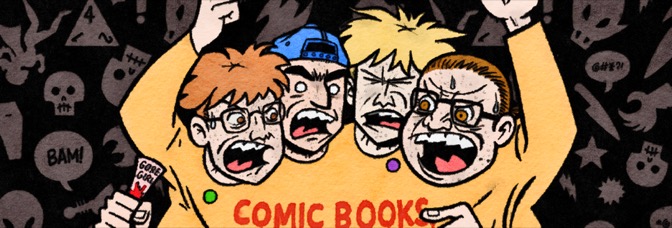
Either Evan Dorkin’s got the Eltingville TV rights back or whoever has them is a complete numbskull because the book’s so relevant you could subtitle it “An Incel Fable” and it’d be totally appropriate, narratively speaking. But it’d be somewhat intellectually dishonest, as Dorkin started The Eltingville Club long before the incels had a self-identity…
-

The most impressive thing about Why Do Fools Fall in Love isn’t how well Tina Andrews’s script does with exposition. Not just exposition as it plays out, but how Andrews foreshadows later revelation. The film is and isn’t a biopic of singer Frankie Lymon, focusing instead on his three widows–and is and isn’t a biopic…
-

The opening narration of Lick the Star, which isn’t from the same character as the end narration, explains the ground situation. Ostensible protagonist Christina Turley has just returned to school after her father accidentally ran over her foot. So she’s on crutches. She worries her group of friends has ostracized her for her absence. Good…
-

No Looking Back runs just under a hundred minutes. The first half of the film–roughly the first half–evenly relies on its cast. In fact, top-billed Lauren Holly almost has less than either Jon Bon Jovi and director Burns (acting, second-billed) in the first half. It’s a love triangle and she’s the prize. Burns is coming…
-

Mothra 3: King Ghidorah Attacks is simultaneously accessible but also one for the Mothra fans, which is a bit of a weird thing to think about. The film presupposes there are going to be dedicated Mothra fans in the audience and gears a lot of references towards them–at the moment I was appreciating the imagination…
-
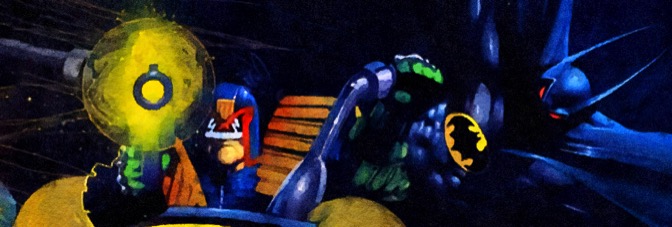
Batman. Judge Dredd. They ought to be an interesting team-up, right? Judge Dredd is the law, Batman isn’t. There’s a lot of gristle for competing philosophies, if one wanted to do a story with a lot of gristle. The Batman/Judge Dredd Files consists of three one-shots and a two-parter. It took DC eight years to…
-

Star Trek: Insurrection has a lot of problems, but they’re peculiar ones. None of them affect the film’s overall quality. Sure, it’d be nice if the sci-fi action sequences worked out better, but they aren’t the point. Even though director Frakes clearly has some set pieces in the film, he always relies on his actors…
-

The Thin Red Line is about fear, beauty, solitude, loneliness. Director Malick’s approach is, frankly, staggering. Thin Red Line is an odd film to talk about because in most ways, it’s my favorite film. One of the great things about a good movie–not even an excellent or an amazing movie, but a good movie (and…
-

SLC Punk! is controlled chaos. Or chaotic control. Director Merendino is incredibly careful about everything–how he uses crane shots to open up the low budgeted film, how he and Esther P. Russell cut scenes, which flashback footage goes where, how protagonist Matthew Lillard’s narration works (hint: it’s in an Austenian sense), how the film fits…
-

Where’s Marlowe? is a pseudo-documentary about a pseudo-documentary about private investigators. Miguel Ferrer is the private investigator and he seems like a good fit for the role, only director Pyne and co-writer John Mankiewicz don’t actually need him for anything. The point of the film, as things move along, is getting the documentary makers (played…
-

Trina Robbins does a rather good job hiding The Once and Future Story’s PSA status. It’s a perfectly good one too–Wonder Woman is translating some tablets and there’s spousal abuse in it and then Diana also discovers something similar going on with the archeologists she’s working with. There are multiple interventions and the situation generically…
-

Robert Rodriguez gives his actors a lot of time in The Faculty. The supporting cast–mostly the titular faculty of a high school (albeit one suffering an alien invasion)–gets to be showy. The film opens with a great showcase for Bebe Neuwirth, Robert Patrick and Piper Laurie. The main cast of kids trying not to be…
-

Wayfinders is half history lesson–maybe a third history lesson, to be more accurate–and then the remaining turns out to be about a seafaring attempt. A number of Pacific Islanders have learned the ancient seafaring navigation practices and, in giant canoes, sail from the Marquesas Islands to Hawaii. Only director Evenari kind of keeps that development…
-

Where to start with The Parent Trap. There’s the structure–Nancy Meyers and Charles Shyer split their script into three distinct parts. Well, maybe even three and a half. There’s the opening where Lindsay Lohan goes to summer camp and meets her twin. Then there’s the part where the twins meet the opposite parents–I’m not explaining…
-

Godzilla is tolerably bad for about the first half, then it takes a turn for the far worse as the characters start having longer conversations. Dean Devlin and Roland Emmerich’s dialogue would be hilariously bad if it were in small parts, but they string together these scenes. There’s no action, just a lot of bad…
-
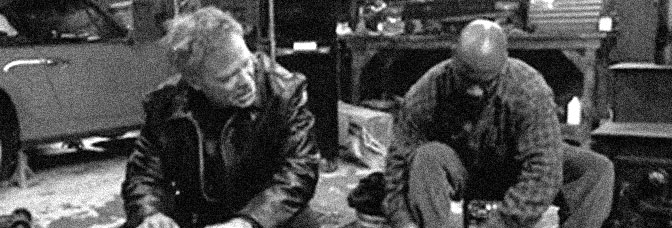
Tedious and unexceptionally bad “heist gone wrong” movie about a bunch of robbers on the run has strong performances–Ving Rhames is a solid de facto lead, Donnie Wahlberg, David Caruso, and John Leguizamo are all good. Linda Fiorentino as the hitchhiker/femme fatale the gang picks up, however, is surprisingly mediocre. But because the script’s bad…
-

Debutante isn’t perfect. There’s some awesome sound design, but director (and editor) Jones pushes it a little to carry over into other scenes. It works a little bit, but not always. So it isn’t perfect. Otherwise, it’s probably perfect. Selma Blair plays the protagonist, who probably has the least lines in the short. She’s got…
-
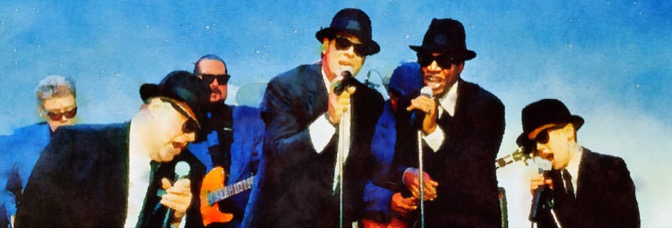
I found something good to say about Blues Brothers 2000. The end credits are seven minutes. The only good thing about this movie is it ending any sooner. 2000 is truly one of the worst movies I’ve ever seen, particularly because it’s not even amusing in its badness. If it was amusingly bad, it would…
-

Halloween H20 is a mishmash. It’s a sequel to a seventies slasher movie, it’s a post-modern slasher movie of the Scream variety, it’s a thoughtful sequel, it’s a somewhat successful rumination on redemption and the cost of such redemption. Director Miner’s composition is, appropriately, more John Carpenter homage than mimicry. He and cinematographer Daryn Okada…
-

Someone must have realized Soldier had a lot of problems because there’s a terribly edited montage showing how Kurt Russell’s socially engineered future soldier is crushing on Connie Nielsen while her husband Sean Pertwee looks on in concern. It gives Soldier a Shane feel, something the rest of the film doesn’t have. Like I said,…
-

For maybe forty minutes–from twenty minutes in to the hour mark–Lost in Space is actually rather engaging. It’s not any good as a narrative, but Hopkins’s direction of the space sequences is phenomenal. The film opens with something familiar, a dogfight out of Star Wars, but the later sequences are not. They aren’t original, but…
-

I remember liking Small Soldiers the first time I saw it. I was wrong. This time watching it, all I could think about was how Dante and DreamWorks studio chief Steven Spielberg ignored they had a terrible script. Of course, Dante still does a good job. He has a fantastic Bride of Frankenstein homage, which…
-

For a stupid comedy, Safe Men is pretty good. Hamburg’s well-aware of what he’s doing and the film is stupid in a funny way. It’s about, basically, eight men and they’re all pretty dumb to a certain degree. Of the two smartest, one is a kid and the other is Steve Zahn, who’s character is…
 The Stop Button