The Stop Button
blogging by Andrew Wickliffe
Category: 1996
-

This episode’s got an outstanding last scene, which basically makes up for the rest of it. And the last scene is outstanding because of David Hyde Pierce as a showcase for his mix of physical and dialogue comedy, nothing else. It’s a bit of a deus ex machina just because Hyde Pierce hasn’t had anything…
-

Look Before You Leap is one of those exemplar “Frasier” episodes. It’s just the regular cast, it’s just the regular sets, and it’s perfect situation comedy. The episode starts with Kelsey Grammer taking Eddie the dog for a walk, which should’ve forecasted everything being off since Grammer abhorring the dog is one of the show…
-

Is the “member of the Italian-American social club” visits a WASP-y sitcom a trope or just does seem like a trope? I feel like every sitcom with a sufficient number of episodes is going to to get to it eventually… at least when you still could make Godfather and GoodFellas dialogue references. Not sure anyone’s…
-

Shelley Long is a very good guest star for “Frasier.” She irritates John Mahoney in a particular way he’s never been irritated before and it leads to some great expressions from him and some great one-liners too. Long’s also really good with David Hyde Pierce; they’re both snobs but he wants to be more of…
-

I miss guessing when an actor will be directing an episode based on their character going out of town for the show. The episode opens with Kelsey Grammer rushing through one last call to the show—my “Frasier” ears are broken because I had no idea it was Jodie Foster and I tried on this one—before…
-

The episode begins with Jane Leeves in bed with boyfriend Tony Carreiro, having slept in, and her antics trying to get him out of the apartment unseen. Since she’s not up to referee John Mahoney and Kelsey Grammer, they’re already bickering with one another. There’s a nice layering to the plot threads, which all come…
-

It’s the first Kelsey Grammer-centric episode in a while, with Grammer realizing he doesn’t have any friends outside his family and ending up stuck with annoying new bestie Griffin Dunne, who Grammer can’t dump because Dunne’s in a wheelchair and what if Dunne thinks it’s about the wheelchair. Kind of wants to turn ableism inside…
-

I thought this episode was the season finale but, no, it’s not even halfway through the season. As Kelsey Grammer realizes he’s still pining for station manager Mercedes Ruehl (they’ve behaved since their on-air tryst) and commits to doing something about it, Ruehl is accepting a transfer to Chicago. They’ve both been fantasizing about each…
-
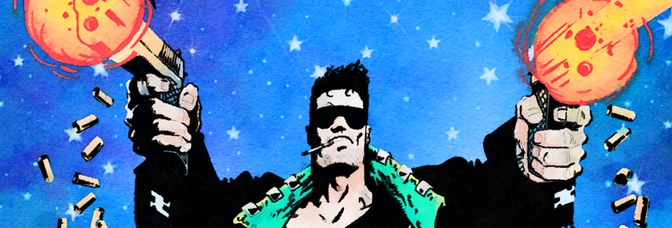
A Rage in Arkham is the first Hitman collection, but it’s not all the first Hitman stories. There’s his first appearance, during the Bloodlines crossover—which I can’t forget to address, in a Garth Ennis and John McCrea Demon annual, then a Contagion tie-in with Hitman and Batman, then the first three issues of the ongoing,…
-

There are two profoundly well-directed scenes in the third act of The Daytrippers, including the last one, so you really want to give what you can of it a pass. Daytrippers is very straightforward, even through the various complexities of the third act, but just because Mottola (who wrote as well as directed) knows what…
-

Emma keeps misplacing things. For a long stretches, it misplaces second-billed Toni Collette (who goes from being the subject of the first half to an afterthought in the most of the second half to just a plot foil in the third act). There’s also lead Gwyneth Paltrow’s painting. The film opens with Paltrow’s paintings of…
-

Love and Rockets #50 is a perfectly solid issue of Love and Rockets. Beto’s Palomar farewell is outstanding in its execution, with him employing a lot more comic strip-influenced narrative techniques than usual. He doesn’t have enough room, it’s clear, and some things are rushed. Mario’s back for the finale too, which is fitting since…
-

In Greetings from Africa writer, director, and star Dunye mixes formats. Her first person comments to the camera are black and white video. The dramatized story is color film. Very, very colorful film. Dunye and cinematographer Sarah Cawley have some affected, formalist shots–even though Dunye’s the only one giving first person narration, Nora Breen (as…
-

Dear Diary was originally a TV pilot, which didn’t get picked up, then got (slightly) re-edited into a short. It’s impossible to imagine it as a weekly show, just because Diary does so little to establish what would be its regular cast. It opens with star Bebe Neuwirth writing about her day in her diary.…
-

Waiting for Guffman is a story of dreams and dreamers. Director (co-writer and star) Guest opens the film with shots of a small American town, Blaine, Missouri. It’s a town with a lot of history and a lot of heart. Sure, it’s all absurd history, but those absurdities just make the heart beat stronger. Guffman…
-

The Phantom has three distinct visual spaces, more or less corresponding to the three acts. First act is in the remote jungle, second act is modern age–New York City–third act is evil villain pirate stronghold. Underground evil villain pirate stronghold. The last half hour of the movie is the cast running around a “slightly better…
-

She’s the One has a fantastic first act. Some of the banter doesn’t connect, but all of the performances are strong and when the banter does connect, it makes up for the rest. Director, writer, and star Burns relies a little too much on “gentle” homophobia for the banter between his character and Michael McGlone’s.…
-

From the opening credits, Andrew Dickson’s score sets the tone for Secrets & Lies. It’s going to be severe. I don’t think there’s a light moment in the score–any of the film’s lighter moments, usually involving Timothy Spall’s ability to make people smile (he’s a photographer, so it’s a good ability), are mostly silent. The…
-
A couple immediate thoughts occurred to me as Bed of Roses started. First, is it a good idea to be watching Bed of Roses? (Spoiler: no, it’s not). Second, what’s going on with Mary Stuart Masterson’s performance? It’s not a movie saving performance because it’s a terrible part. Only director Goldenberg (who also wrote the…
-

Mothra has the arguably unlikely problem of having way too many good ideas at once. For over an hour, director Yoneda is able to keep all the balls in the air. Sure, things fall apart in the third act, but the pieces are still glorious and the first two acts are stupendous. It’s a kids…
-

There’s a mature way to talk about Independence Day. I should know, I’ve started writing this response about twelve times and this attempt is an entirely new draft. The mature way involves complementing David Brenner’s editing, complementing director Emmerich’s ability to integrate the special effects (regardless of their quality) and saying something nice about some…
-

Trainspotting moves. More than anything, director Boyle concerns himself with the film’s pace, whether through Masahiro Hirakubo’s glorious editing or lead Ewan McGregor’s narration, the film immediately sets a fast pace and keeps it throughout the film. Nothing can slow the film down, not even big events, because there’s no real plot. It’s sort of…
-

Bottle Rocket is such a masterpiece of narrative design, it eschews drawing any attention to that design. Somehow Anderson and Owen Wilson manage to tell a satisfactory long short film and affix an additional thirty minute postscript to the whole thing. It’s like a movie and a sequel all in ninety minutes. Or maybe they’re…
-
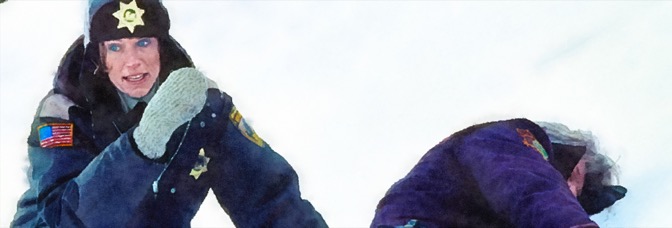
Much–probably most–of Fargo is exceptional. The Coens take over half an hour to bring their protagonist into the movie. They spend that first half hour with the villains, even having time to make said villains simultaneously lovable and even more dangerous. William H. Macy isn’t just some loser who schemes to rip off his father-in-law,…
-

I don't know if I'd say Bullets is back on track, as Lapham's been relatively uneven so it's hard to know what kind of track he's trying to keep the series on. But this issue's definitely an improvement, just in terms with how tightly he tells the story. It's set in the trailer park from…
-

First Contact works out well for a number of reasons. The script’s structured beautifully, it’s well-cast, Frakes knows how to direct for both humor and action… but also because it’s not a possessive picture. The film involves time travel, sending the “Star Trek: The Next Generation” crew into the past (but still the future) and…
-

Given his rather infamous history of personal problems, one’s got to wonder what having to humiliate himself by acting like a twelve year-old-when nineteen-did for Edward Furlong in T2 3-D: Battle Across Time. Especially since the short accompanied a theme park attraction, undoubtedly seen by more people than saw most of Furlong’s films at the…
-

Escape from L.A. is an action movie without any real action until the final set piece. And that final set piece is excellent–lots of hang gliders and practical effects. But the rest of the action? It’s terrible CG. Instead of imagining real set pieces, director Carpenter (and co-writers Kurt Russell and Debra Hill) fall back…
-

There are two significant problems with The Ghost and the Darkness. Its other primary problem corrects itself over time. The score–from Jerry Goldsmith–is awful (he basically repeats his terrible Congo score). It makes the film silly, like a commercial. A great deal of the film is about the wonderment of Africa, something Hopkins and cinematographer…
-

I’m loathe to say it, but The Rock isn’t bad. Its good qualities are questionable, but it’s not bad. Besides some of the acting, what’s best about the film is how it fuses the action and adventure genres. Bay does his action stuff in traditional adventure settings—there’s a setting straight out of Indiana Jones and…
 The Stop Button