Category: 1982
-

Night Shift distinguishes itself immediately. The opening sequence is magnificent, featuring two crooks (Richard Belzer and Badja Droll) chasing down pimp Julius LeFlore and inciting the incident for the film. Director Howard has three credited editors on Night Shift—Robert James Kern, Daniel P. Hanley, and Mike Hill—and their cutting is deft. Lowell Ganz and Babaloo…
-
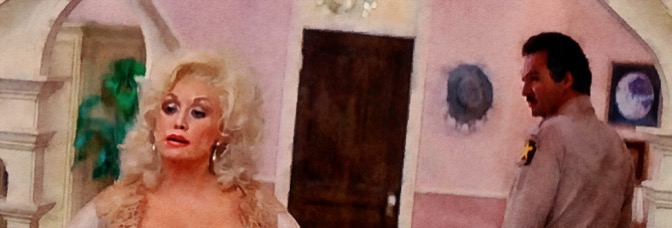
The funny thing about The Best Little Whorehouse in Texas is how much doesn’t actually work and how much of it appears to be entirely director Higgins’s fault. Higgins is no good at storytelling in summary (affable but bland narrator Jim Nabors can’t be helping things), and the musical numbers suggest he’s more an occasionally…
-
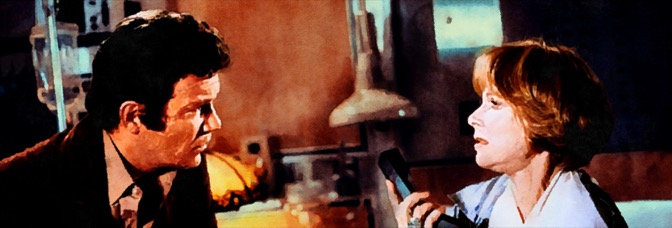
At the beginning, Visiting Hours pretends it will be about network news commentator Lee Grant. Despite being openly Canadian, the film also pretends it takes place in Washington D.C., based on the hate mail responses protagonist Michael Ironside frames on his wall. They never specify, so maybe he did write Grant when she worked in…
-
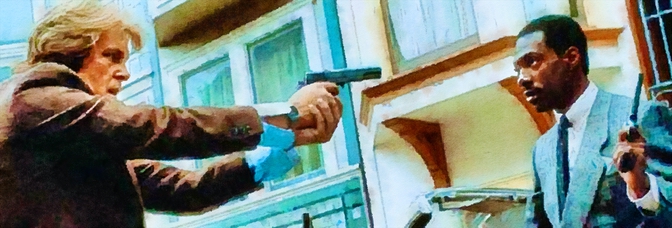
About seventy minutes into 48 Hrs., Nick Nolte apologizes to Eddie Murphy for the racial slurs he’s been calling him since Murphy showed up in the movie. Nolte’s just doing his job, he explains, “keeping him down,” which is an unintentionally honest moment about cops and Black men. Murphy nods to it, but says, “that…
-

At the end of Still of the Night, the film puts aside the “whodunit” to give second-billed Meryl Streep—who’s playing the femme fatale part but not at all as a femme fatale—a lengthy monologue. It’s all one take, Streep just acting the heck out of this mediocre thriller monologue. It doesn’t make the film worthwhile,…
-

Not noir noir about architect Richard Moir discovering there might be something shady about the shady property developers he’s designing for. He teams up with community organizer (and initial foe) Judy Davis to figure out what’s going on. The occasional extreme stylizing is fine but not as impressive as how fast director Noyce keeps the…
-

A Charlie Brown Celebration opens with Charles M. Schulz introducing the special–which is twice as long as a regular special–and explaining he and director Bill Melendez had a little bit different of an idea for this one. It’s going to be a series of vignettes (though Schulz doesn’t use that term), with some longer ones…
-

Love & Rockets is an anthology. Los Bros Hernandez–Beto and Jaime–alternate strips. In this first issue, Beto gets six parts, Jaime gets five. Most of Beto’s are chapters in one story, Bem. The issue runs sixty-eight pages. This #1 is actually L&R’s second; Los Bros put out a thirty-two page ashcan a year before. Fantagraphics…
-

Basket Case is endlessly creative. Director Henenlotter doesn’t have the budget to execute anything, but it never stops him from trying; sometimes to mesmerizing effect. The film’s got these scenes requiring a lot of special effects and utilizes (obvious) stop motion to get them done. It’s all part of the buy in. Basket Case doesn’t…
-

Tootsie opens with Dustin Hoffman giving acting classes. He’s a failed New York actor–but a well-employed waiter–who must be giving these classes on spec. It seems like Hoffman being a beloved acting teacher might end up having something to do with the plot of Tootsie, which has Hoffman pretending to be a female actor in…
-
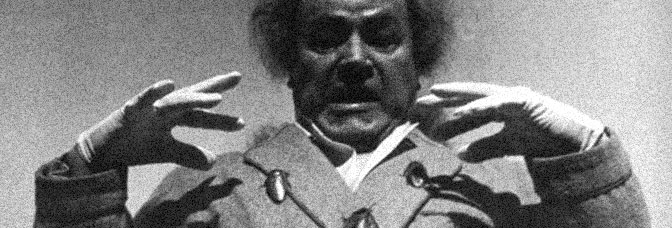
Creepshow is an homage to 1950s horror comic books. Director Romero and writer Stephen King go out of their way to make it feel like you’re reading one of those comics. It’s about the anticipation. The terror isn’t promised, it’s inevitable. So watching Creepshow is about waiting for the kicker. For the most part–and certainly…
-
Turkey Shoot is a peculiarly charmless bit of trash. It’s a Most Dangerous Game story with multiple potential victims, prisoners of the state in a dystopian future. Their hunters consist of an evil lesbian (Carmen Duncan), a vicious fop (Michael Petrovitch) with a pet monster and a bureaucrat who’s so out of shape one has…
-

Friday the 13th Part III is shockingly inept. Director Miner has a number of bad habits, some related to the film being done in 3-D, some just with how he composes the widescreen frame. Miner favors either action in the center of the frame or on the left. The right is unused. Miner’s shooting for…
-
Firefox has three distinct phases. First, there's retired Air Force pilot Clint Eastwood getting recruited into an espionage mission. This part of the film barely takes any time at all–there's three missing months–Eastwood, as the director, does not like montage sequences. Even the opening exposition setting up the movie is cut together quickly; Ron Spang…
-
For E.T., Spielberg takes an incredible approach–every scene has to be iconic, every scene has to create a sense of nostalgia for it. It requires absolute control of the viewer and Spielberg’s only able to accomplish that control thanks to John Williams’s score. Every note in the score–and its corresponding image on screen–is perfect. As…
-
Cat People is so brilliantly made, often so well-acted, it's surprisingly those elements can't make up for its narrative issues. Screenwriter Alan Ormsby has a big problem–he's got to turn his protagonist from a victim to a villain to a victim. Sadly, he and director Schrader choose to employ the lamest technique possible towards the…
-

I’ve probably seen Diner ten times but I still don’t know where to start with it. Barry Levinson sets the present action between Christmas and New Year’s, so one probably could sit down and chart out what happens on each day. There’s a big basketball bet driving some of the narrative, but mostly just for…
-

Maybe it’s Sheldon Kahn’s editing, which doesn’t do the picture’s content justice, but Richard Pryor: Live on the Sunset Strip doesn’t feel seamless. The first twenty minutes or so do, however, which makes the change jarring. All of a sudden, the reaction shots of the audience aren’t believable. Someone, either Pryor or director Layton, decided…
-

In a practical sense, one can just watch Poltergeist and be in awe of the technical qualities. Hooper’s Panavision composition and Matthew F. Leonetti’s photography alone are enough to make it a singular experience. But then there are Hooper’s additional touches–like how a scene’s establishing shot is usually the third shot in the scene, the…
-
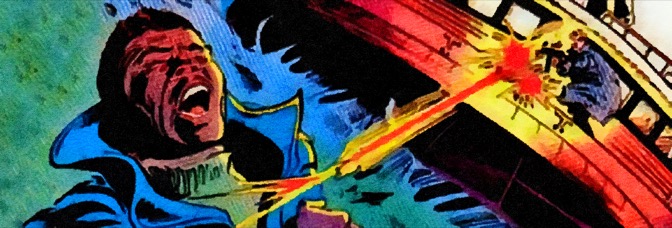
Well, Wolfman certainly didn’t try too hard with this issue’s cliffhanger. The good guys are about to be run over by a boat, or whatever that situation is called. For a comic book about the supernatural, most of Wolfman’s Night Force action is pedestrian. And when it is supernatural… the scenes never last very long.…
-

This issue features Swamp Thing and company–I’m tempted to start singling Liz out because I think she remains a character, but I’m not sure yet–on an island with a bunch of scenes from classic movies. You get to see Tom Yeates, for a couple pages, do a King Kong adaptation. It’s awesome. Unfortunately, Pasko established…
-

Swamp Thing continues his cruise ship adventure, ending up fighting a giant undersea monster. It reminds a lot of the first series, only this time there are subplots. Casey, Swamp Thing’s former charge, has turned out to be an evil psychic. Or something along those lines. It means more action scenes for Yeates, who handles…
-

Yeates’s art takes a strange turn this issue. He spends less time on Swamp Thing than he does on the supporting cast. There’s a lot of action this issue too—Pasko does a great job pacing, considering how many big events occur—and even those Yeates handles oddly. He hurries through them, not taking the time to…
-

So Swamp Thing now has his supporting cast… at least for now. Casey the mute wasn’t cutting it. It impressive what a good issue Pasko and Yeates produce with all the handicaps. It’s all about the evil organization running an evil clinic. Swamp Thing shows up and gets duped into believing it’s real–his doctor turns…
-

This issue concerns a demon who possesses people in order to feed on children’s souls. The children in question must be murdered, of course. The demon targets minority children as it turns out their troubled souls taste the best. So it’s definitely disturbing, but not as terrible as he could have made it. In some…
-

And here’s where Pasko hits his stride. The issue features Swamp Thing versus a town of teen vampires who have not just ruined the town but done so out of boredom. Though I suppose their argument vampires don’t have to worry about money rings true. Pasko handles the villainy of the characters and their supernatural…
-

Pasko immediately identifies the bad guys this issue—not just the regular bad guys, but the bad organization too. It’s the Sunderland Corporation and I’m pretty sure they’re around the rest of the series. As for the regular bad guys, Pasko’s got a goofy, steel-handed corporation espionage guy who’s straight out of the first series and…
-
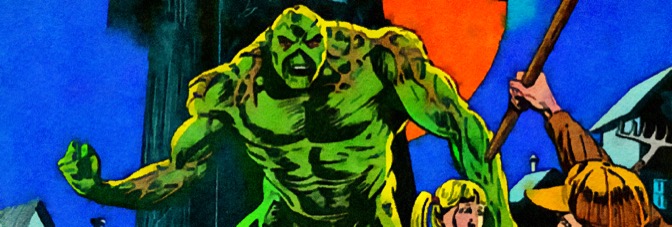
For his first issue, Martin Pasko basically just rewinds a little from where the seventies series left Swamp Thing and picks up like it’s just another issue. There’s an ignorant small town (this time in the South), a helpless child everyone calls a witch and Swamp Thing’s miserable. It’s like nothing has changed. The issue…
-

I’ve probably known of Vincent since Batman but I’ve never seen it. It also turns out I didn’t know much about it–I though Vincent Price starred in it (he narrates) and I thought it was live action (it’s stop-motion). Price reading Burton’s narration–it’s a beautiful bit of rhyming, reminding a little of Karloff and The…
-
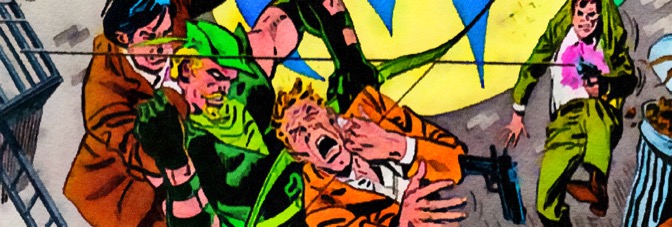
Good to know editorial disconnect isn’t something recent. Conway apparently hadn’t been reading the excellent Catwoman backups running in his issues of Batman and Detective because here he’s got her guest-starring and menacing Vicki Vale and acting… well, cat-shit crazy. Sadly, the issue features some of the best Vicki Vale writing Conway has done since…
 The Stop Button