The Stop Button
blogging by Andrew Wickliffe
Category: 1972
-
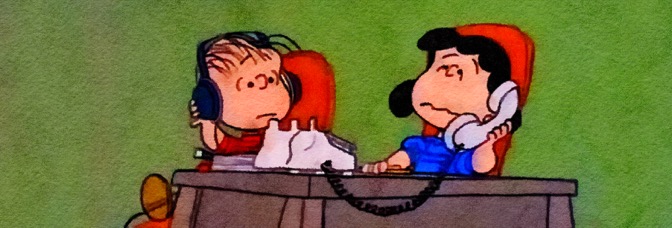
A lot goes on in You’re Not Elected, Charlie Brown, with the actual class president election stuff coming in at the end of the first act. Instead, Elected starts with Sally (Hilary Momberger-Powers) having school troubles. There’s a long conversation about all the possible school problems with Charlie Brown (Chad Webber), only for it to…
-

The Night Stalker moves with ruthless efficiency. It’s a TV movie, so it’s got a mandated short runtime–seventy-four minutes; Richard Matheson’s teleplay has a brisk pace, something director Moxey embraces. There’s rarely a dull moment in The Night Stalker. It’s always about waiting for the next bad thing to happen. The film opens with lead…
-
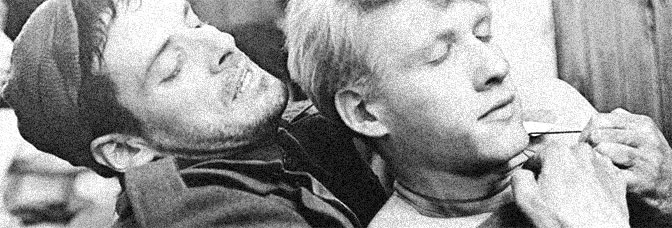
When Slaughterhouse-Five is just about World War II, director Hill can handle it. He doesn’t understand the humor, but he can handle it. The script doesn’t understand its own humor, as screenwriter Stephen Geller tries to force his own sense of humor on the source material, but Hill just makes it worse. Especially when he’s…
-

Godzilla vs. Gigan is a little like a filmed ballet or play. It’s a performance of its Kaiju ballet. The Kaiju ballet has a stage–a surprisingly large soundstage with a miniature Tokyo or Mount Fuji landscape for serve as the ring in which the men in suits wrestle. The men in suits are not the…
-

The King of Marvin Gardens is an extremely quiet film. Jack Nicholson’s protagonist is a radio monologist, which suggests the viewer should listen to the content of his dialogue, but the secret of Marvin Gardens is that content’s unimportance. After a brief introduction to Nicholson’s job and life, the film immediately moves him into an…
-

From the lengthy opening credits to the big action finale, it's always clear sound is important in The Getaway. Editor Robert L. Wolfe does some wonderful transitions with sound foreshadowing the cut and the next scene, but there's something more to it. That something more is the isolation theme running through the film–Steve McQueen starts…
-

Could Beware! The Blob be less competent? Possibly not. Screenwriters Jack Woods and Anthony Harris approach Beware! like a spoof. It’s a comedic early seventies handling, complete with hippy jokes, racism, some cracks at small businessmen, pot, Eastern Europeans… Woods and Harris cover just about everything they can except maybe feminism. Some of these jokes…
-

Silent Night, Bloody Night is notable for three things. First, but sadly not foremost, is Adam Giffard’s daytime photography. Not much of the film takes place during the day, but when it does, Giffard makes it look fantastic. Even though he’s shooting questionable settings… which contributes to the second notable item. Director Gershuny is not…
-

Our Lady of the Sphere has two definite narratives. Jordan’s cut-up animation seemingly defies narrative, as eggs are landing on the moon, which then grows flowers, but I found two definite ones. The first has to do with a falling child. Jordan opens Sphere with the child falling, later showing the fall begin (and end).…
-

Half a Death gets off to a troubled start thanks to Tod Andrews. He’s only in the episode for the first scene, but he’s just awful. Watching Eleanor Parker act opposite him is painful. While Henry Slesar’s script is no great shakes in the dialogue department, Parker still turns in a good performance. Andrews just…
-

Ladies and gentlemen… the writing stylings of Roy Thomas! Yay! Yay! Oh, wait. Umm. No. Not yay. I suppose if someone wanted to read some really bad seventies young person counterculture dialogue, he or she could read Roy Thomas’s Adam Warlock story. It’s painful to read. And eventually painful to see too. It’s another issue…
-

Deadhead Miles is a piece of great seventies filmmaking. It’s not a great film, but a great piece of filmmaking. The distinction’s important. Most of the film is about a peculiar truck driver, played by Alan Arkin, and his adventures after picking up a hitchhiker, played by Paul Benedict. Arkin’s truck driver is not particularly…
-

Horror comics can get away with overwritten narration; other genres it stands out, but something about horror… it fits. Writing this issue’s narration, Wein goes overboard with the narration. Some of it works, more doesn’t. But his thought balloons for Swamp Thing (there aren’t any for Alec Holland, just Swamp Thing) work. They’re still a…
-

I don’t know if I can think of a more mild mystery than They Only Kill Their Masters. It’s a solid vehicle for James Garner, giving him a lot of leading man stuff to do and a fair amount of internal conflict. But it’s so slight, so genial, it doesn’t leave much of an impression.…
-

Director Moxey has–there’s no better word for it–a compulsion for zooming. He absolutely loves it. I imagine it saved the time and money needed for additional set-ups–and I think short zooms from character to character were a 1970s TV movie standard–but it looks just terrible. It kills some of the scenes in Home for the…
-

I was going to start this post saying complementary things about Richard Fleischer, something about how his mediocrity doesn’t get in the way of the film (and the film’s melodramatic mediocrity). Then he goes too far at the end, plunging the damn thing ever further into the muck. And The New Centurions is unbearably melodramatic.…
-

Talking about The Godfather earnestly has got to be hard. Also talking about it not in relation to its sequel–which happens less and less these days, something I’m going to blame on the sequel discussion scene in Scream 2. It’s stunningly unsurprising. My most profound observations this viewing–and its been ten years or so, since…
-

Conquest of the Planet of the Apes is about a bunch of ape slaves overpowering their human masters. Any film with a thirty second recap of the previous sequel by Ricardo Montalban has to be at least amusing, but Conquest is actually better than amusing (until the actual revolt begins). Since the film didn’t have…
-

Pocket Money is, in addition to being an excellent film, an example of a couple interesting things. First, it’s a 1970s character study, which is a different genre than what currently passes for a character study (if there are character studies at all anymore, since Michael Mann and Wes Anderson stopped doing them). The 1970s…
-
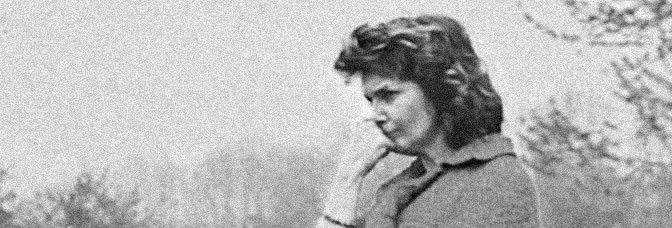
Paul Newman must have had an interesting experience directing Man-in-the Moon Marigolds. His wife played the lead and their daughter played her daughter, the film’s protagonist. The mother’s awful (Joanne Woodward isn’t awful, the character is awful) and Newman sticks with her. Woodward manages to infuse her with some humanity, but only so much is…
 The Stop Button