Category: 1966
-
The Plague of the Zombies opens at its lowest point—the film involves Haitian-style voodoo (not really, the movie’s version of Haitian-style voodoo) being practiced in a Cornish village, and the high priest has a trio of Black men drumming. Throughout the film, we’ll learn about the voodoo setup (though not a lot, including what they…
-
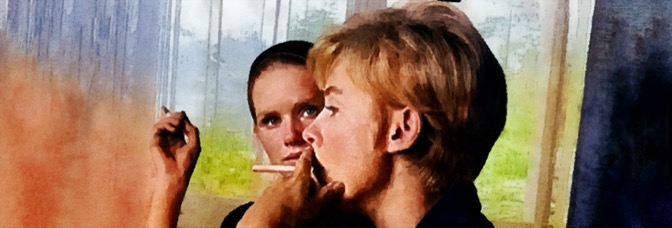
Persona begins with a series of unrelated, sometimes startling, sometimes disturbing images. It’s leader on the film reel, and it establishes the film’s narrative distance. We’re not just removed from the action; the action’s on display at multiple levels, including one involving a young boy, played by Jörgen Lindström, who provides bookends for the film.…
-

The actual chain gang sequence of Girl on a Chain Gang is in the third act. There are no actual chain gang sequences; all of that action happens off-screen, almost as though producer, screenwriter, and director Gross couldn’t afford enough chain to make it happen. But getting there is quite the ordeal for characters and…
-

Blow-Up is a day in the life picture. It opens with protagonist David Hemmings on his way out of a flophouse; he’s not a tramp; he’s a wonder kid fashion photographer who’s been undercover all night to snap pics. The film reveals all those details gradually. It takes until about halfway through the picture to…
-
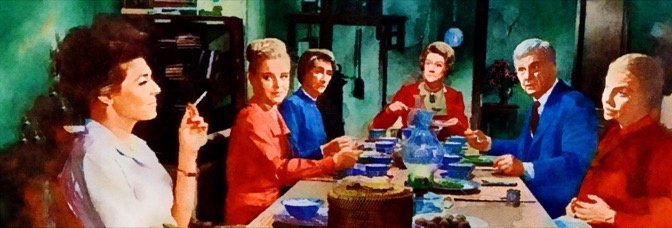
First, it’s actually 8 Women; Jane Chang doesn’t count because she’s not white. Though I suppose it could just be counting good Christian women, then Anne Bancroft doesn’t count. Women is a Western, just one set nearer to modernity and not in the American West. Instead, it’s about a mission in China on the border…
-

The Appaloosa could be worse. Director Furie apes styles he doesn’t understand how to use—his Leone-esque angles, the Acid Western—with what’s a fairly traditional Western, albeit just with a Mexican supporting cast. Well, okay, so Marlon Brando is the only gringo playing a gringo. All the other White people are supposed to be Mexican. You…
-

What’s so incredible about A Man for All Seasons is how big director Zinnemann makes it while keeping it small while keeping it big. The settings are big—palaces, estates, and so on—but Zinnemann keeps the set pieces small. He and cinematographer Ted Moore will do big establishing shots, but only after they’ve gotten into the…
-
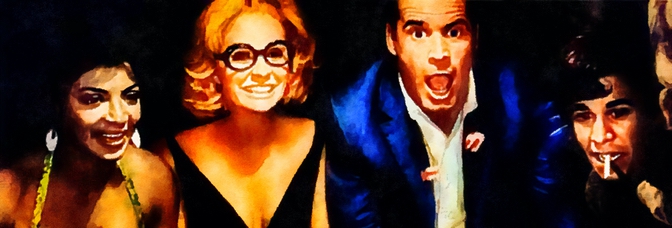
Mister Buddwing is kind of amazing. And exceptional. But only if both those descriptors are used as pejoratives. Like. Wow. What a mess it is. What’s funny is how director Mann maybe sees what he’s trying to do with the film but doesn’t see how he’s not achieving it. The film wants to be edgy…
-

Who’s Afraid of Virginia Woolf? opens with this gentle, lovely music from Alex North. It’s night, it’s a university campus, a couple is walking silently as the credits roll; the music’s beautiful. Then the couple–Elizabeth Taylor and Richard Burton–get home. And pretty soon they start yelling at each other. And they don’t stop until the…
-

Despite being all about baseball–specifically baseball games–“Charlie Brown’s All Stars!” barely has any logic to how its baseball works. It’s summertime and Charlie Brown (Peter Robbins) loses the kids’ first game of baseball for them. Although, really, no one else on the team is any good, but he’s the only one who wants to play…
-

The Good, the Bad and the Ugly ends up being about three criminals–of varying type–hunting down some stolen Confederate gold. But that Confederate gold story line takes a break after getting setup in the first ten minutes–for almost an hour of the two and a half hour plus film–so Good, the Bad and the Ugly…
-
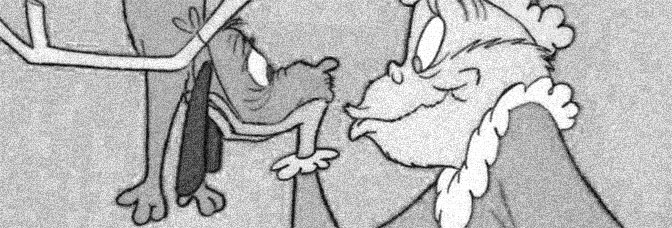
How the Grinch Stole Christmas! has three rather distinct things going on throughout the twenty-six minute television special. It also some some indistinct things going on–the Whoville songs, while charming, are nowhere near as impressive as the big things. First, but not foremost, is Washam and Jones’s direction. Although Grinch is a Dr. Seuss adaptation,…
-
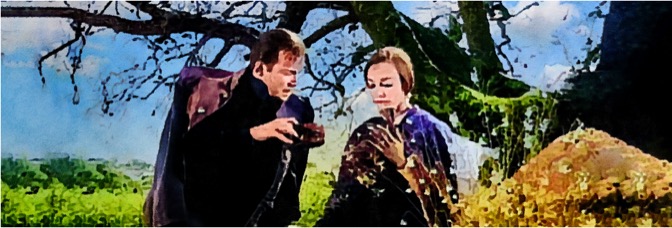
Incubus is the day in the life of a dissatisfied succubus (Allyson Ames) who, after killing three men in the ocean and condemning their souls to hell, decides she wants a challenge. Her sister, also a succubus (and played by Eloise Hardt), counsels her against the impulse. But Ames won’t be dissuaded. She wants to…
-

Right away, Djano sets itself to have a problem–gunfighter Franco Nero is just way too good. Just when he’s too unstoppable, too unbeatable, the film finds a way to make him even more unstoppable, more unbeatable. The first act of the film has him taking on a band of Confederate soldiers who have rallied behind…
-

Burt Ward is really bad in Batman: The Movie. Sure, he’s just around to parrot Adam West, who’s a horny, kind of dumb, know-it-all. The problem is it doesn’t seem like anyone else is in on the joke because director Martinson does such a bad job. There are some okay scenes in Lorenzo Semple Jr.’s…
-
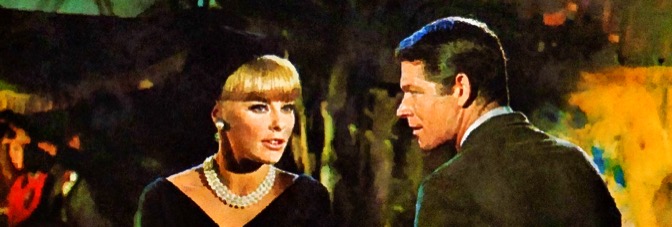
The Oscar is a spectacular kind of awful. It’s the perfect storm of content, casting and technical ineptitude. Director Rouse probably doesn’t have a single good shot in the entire film. It might not even be possible with Joseph Ruttenberg’s photography and the maybe studio television level of the set decoration. Though there is this…
-
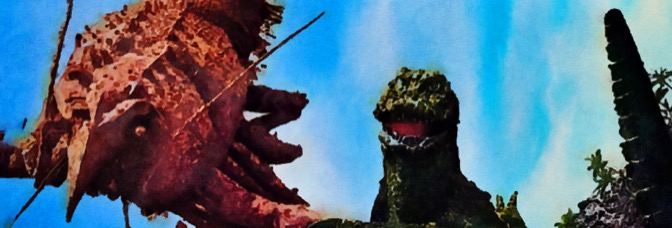
I’m having a difficult time writing about Ebirah, Horror of the Deep because, even though the movie isn’t good, I wish I liked it more. I wish I enjoyed it more. As a cultural artifact, Sea Monster is definitely interesting. Most of the film has to do with these four not so bright dudes–even Takarada…
-
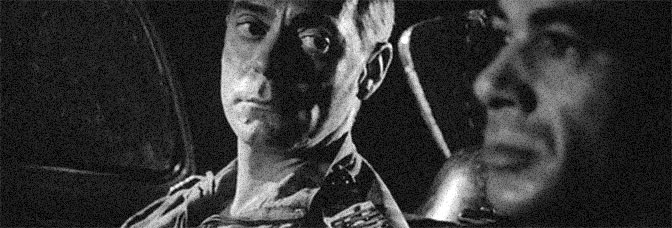
The Battle of Algiers is brilliantly constructed. Director Pontecorvo deceptively frames the film–he also gives most sequences a date and time, which shows the viewer how greater events are progressing, but Pontecovro also gives multiple times in a day, which puts the viewer on edge even though the exact time isn’t really useful. Pontecorvo and…
-

I knew Freiheit was a student film going in–I just didn’t realize the director wasn’t a teenager. The director in question is George Lucas and I thought he was a teenager because the short is so painfully obvious. It’s a “single person running in the woods” student film, which is practically its own genre. Freiheit…
-

“It’s the Great Pumpkin, Charlie Brown” is near perfect. Director Melendez and writer Charles M. Schulz create this beautiful little experience. The special’s excellence is in its structure. “Pumpkin” has the main plot–Linus waiting for the Great Pumpkin, which actually starts as Linus writing the Great Pumpkin–and then the two subplots. First, the other Peanuts…
-

Director Deitch does a couple brilliant things with The Hobbit. First, he condenses a novel of some three hundred pages to eleven minutes. I’m fairly sure it’s not a faithful adaptation, but there’s a wizard, a hobbit and a ring so it’s fine by me. Second, he turns The Hobbit into a folk tale. Or…
-
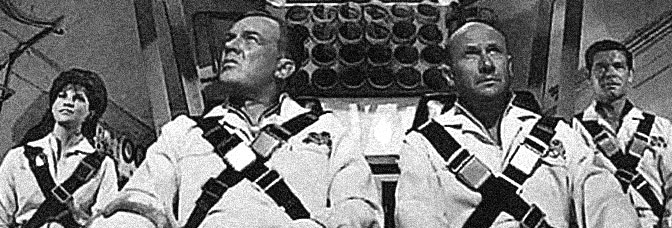
Among Fantastic Voyage‘s many problems, the two salient ones are the general lack of tension and the utter lack of wonderment. Fleischer is responsible for both, though maybe not so much the first. The story can’t really be tense because there’s very little at stake. The film’s principal characters–reduced in size to perform brain surgery…
-
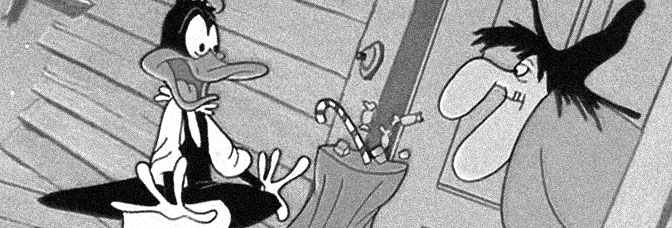
Expository dialogue in a cartoon? I’ve never heard anything so silly before… in A-Haunting We Will Go, the witch introduces Speedy Gonzales. Unfortunately, she does not cook him. Strangely (and sadly since the character dynamic is amusing), Daffy’s nephew doesn’t get an introduction. The stuff with Daffy and his nephew isn’t bad–and the animation on…
-
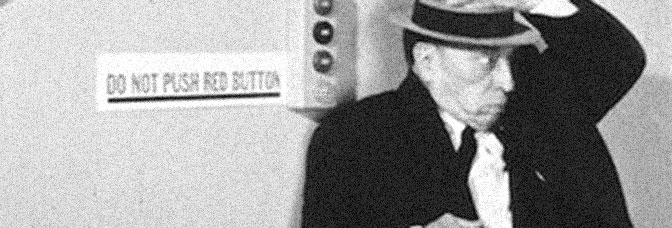
The Scribe isn’t totally silent, but Buster Keaton is throughout. While he’s old (Keaton died soon after the film, an instructional short finished shooting), he and the filmmakers don’t make it obvious. There’s some stunt footage where it’s obviously not Keaton—flying around, hooked on a crane (it’s a construction safety film)—but some where it’s less…
-
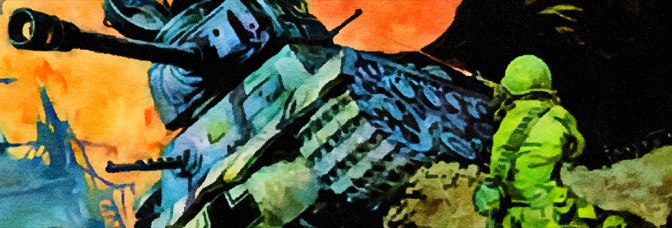
Goodwin and company recover for the fourth–and tragically final–issue of Blazing Combat. The issue opens with Goodwin returning to, if not controversial, then uncomfortable topics–he and Gene Colan (Colan’s art this issue is far better than his already good art in the previous one) have a depressingly real story about American racism. It might be…
-

There’s a lot of great art this issue… but it seems like Goodwin was getting worn out. There really aren’t any stories with any bite–even the WWII one with the marine taking gold teeth from every corpse he finds. The opening story, credited to Joe Orlando but apparently pencilled by Jerry Grandenetti, is an indistinct…
-
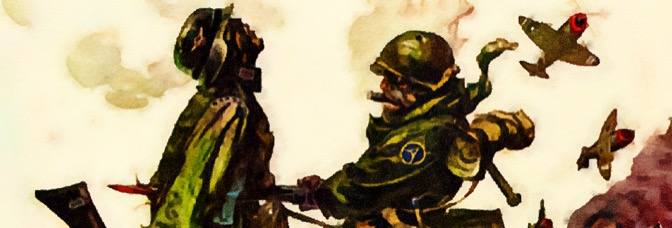
I can’t believe it, Goodwin tells a joke. In fact, he sets up his entire Revolutionary War story for a joke. I suppose the issue kind of needs it, since he opens with this famous Vietnam story, “Landscape,” the best illustrated of the three Joe Orlando stories this issue. “Landscape” is about a South Vietnamese…
-

I can’t believe I’ve never heard of Stuart Whitman before–I just went through his filmography and nothing jumped out (except Interrupted Melody and it’s a bit part, but going to be amusing in a moment)–anyway, I can’t believe I’ve never heard of him because he’s kind of like a Glenn Ford who can’t act. An…
-
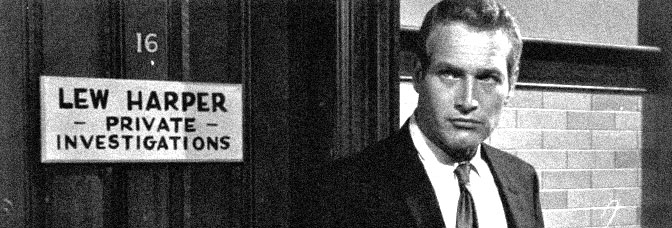
Harper may very well be an anachronism. I’m not quite sure how to use the word. There’s certainly something off about it. It’s based on a novel written in 1949–a detective novel in the vein of Chandler, which explains why it feels like Chandler–but then it’s filmed in 1966 and it’s not a period piece,…
-

Novelists make interesting screenwriters (though maybe not as much any more). When they adapt their own work, however, it might not be the best idea. The adaptation allows them to package their interpretation of themselves, as opposed to actually adapting a work from one medium to the next. The Face of Another, adapted by Abe…
 The Stop Button