The Stop Button
blogging by Andrew Wickliffe
Category: 1963
-
The Terror is not camp, which is bewildering, not just because it’d be better if it were camp, but because, based on its vitals, it seems like it can’t not be camp. The film stars Jack Nicholson as a Napoleonic officer—he does not attempt an accent, thank goodness—who gets involved with some supernatural goings-on involving…
-
Writer, director, and producer Fuller ends Shock Corridor’s main plot so quickly, it’s like he’s in a hurry to get to the epilogues. Except the epilogues are where Corridor falls flat and doesn’t have the time to get back up. As the film progresses, Fuller makes some significant achievements and builds up such an incredible…
-
What's a Nice Girl Like You Doing in a Place Like This? is an absurd but arty comedy short. Director Scorsese mixes full motion video with stills, which sometimes do stand-ins for scenes—like protagonist Zeph Michaelis marrying Nice Girl Mimi Stark—sometimes just for expository stuff. See, Michaelis is a writer who gets a new studio…
-

It’s very difficult, even when an effects shot fails, to not be impressed with director Polák’s practical ambitions with Icarus XB 1. The film needs effects shot-it’s about a starship on twenty-eight month voyage from Earth to Alpha Centauri. The first starship to take that trip. So there’s general establishing shot stuff in space but…
-
At just about three minutes of “action,” The Critic is the perfect length. It opens with some abstract animation–black shapes dancing around variously colored backgrounds, as active (versus tranquil) classical music plays. The designs get more complex, but for the first thirty seconds (so fifteen percent of the action), Critic plays it straight. It’s some…
-

A Child Is Waiting had all kinds of production clashes between producer Stanley Kramer and director Cassavetes. And, apparently, between stars Burt Lancaster and Judy Garland and director Cassavetes. Kramer even fired Cassavetes during editing; none of those problems come through in the finished product. In fact, the lead actors not liking Cassavetes’s style doesn’t…
-

Love with the Proper Stranger has a lot to resolve in its third act. There’s a somewhat sizable supporting cast, the act two cliffhanger for leads Natalie Wood and Steve McQueen’s romance is precarious–there’s a lot. So it’s striking when Proper Stranger just doesn’t do a third act. Director Mulligan loves the New York location…
-

Had Alexander the Great gone to series instead of just being a passed over pilot and footnote in many recognizable actors filmographies, it seems likely the series would’ve had William Shatner’s Alexander continue his conquest of the Persian Empire. The pilot is this strange mix of occasional action, Greek generals arguing, and battle footage from…
-

Director Malle sets up The Fire Within as a series of events. They don’t feel like events–or even vignettes–because protagonist Maurice Ronet is so transfixing. As the film progresses and the viewer gets to know Ronet better, gets to understand him better, Fire changes. The film is always about Ronet’s plans, Ronet’s actions and how…
-

I’m not sure what’s strangest about An Actor’s Revenge, but my leading two candidates are Ichikawa’s direction, which intentionally tries to make it feel stagy, or Mochizuki Tamekichi and Yagi Masao’s score, which alternates between jazzy and melodramatic. Both make Revenge a peculiar viewing experience and, while Ichikawa definitely has some talent as a director,…
-

Once you get past Jeffrey Hunter (at thirty-seven) playing a character about fifteen years younger–and some other significant bumps, Seven Miles of Bad Road isn’t entirely bad. It shouldn’t be entirely bad, even with those bumps, but it’s an episode of “The Chrysler Theatre,” shot on limited sets with limited imagination from director Douglas Heyes.…
-

Nightmare at 20,000 Feet races. Director Donner and writer Richard Matheson pace out the episode perfectly–though it being a “Twilight Zone” episode means they can also utilize some of the series’s credit formula to great effect. The episode has a few phases. Introducing William Shatner and Christine White (they’re married, he’s just recovering from his…
-
Every once in a while in Hud, it seems like Paul Newman's eponymous lead character might do something selfless. Not redemptive or nice, but selfless. It's not the point of the film and not one of its promises–it's just visible how significant it would be for Brandon De Wilde, playing Newman's orphaned nephew. Hud fires…
-

While The Great Escape runs nearly three hours, director Sturges and screenwriters James Clavell and W.R. Burnett never let it feel too long. Part of the quick pace comes from the first half hour being told in something like real time and another big part of it is the aftermath of the escape taking up…
-
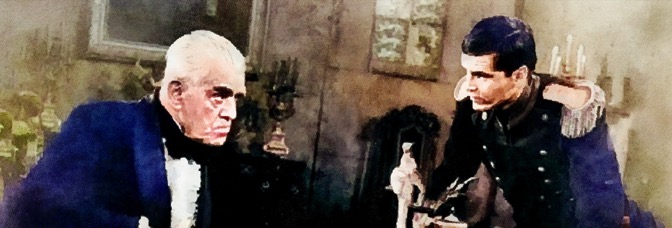
It might be too easy just to call The Terror terrible or to go into the various puns one could make with “terrible” and the title. It’s not a surprisingly bad film at all. It’s an expectedly bad film, given it opens with a pointless scare attempt. Boris Karloff shows up in the first scene-walking…
-

The first half of Dementia 13 is surprisingly good. From the first scene–pre-titles even–Coppola establishes some great angles to his composition. He keeps it up throughout with close-ups jump cutting to different close-ups; excellent photography from Charles Hannawalt makes it all work. During that first half, the film is basically an old dark house picture,…
-

Sure, at one point the Human Torch appears to be a naked Ken doll painted red, but come on… it’s The Human Torch. I think it’s unintentional, but at times director (and star) Glut makes the Torch’s “flaming on” seem positively painful. Or maybe the rubber hand Glut ignited just melted fast. The Torch short…
-

Shockingly enough, Paramount Pictures produced Stopover in Hollywood. Watching the short, it’s hard to believe any studio put money behind the lame travelogue–especially since it doesn’t make any use of the Paramount studio. Just off the content, I would have guessed Marineland paid for it–and maybe the Corriganville Movie Ranch theme park–since those two attractions…
-
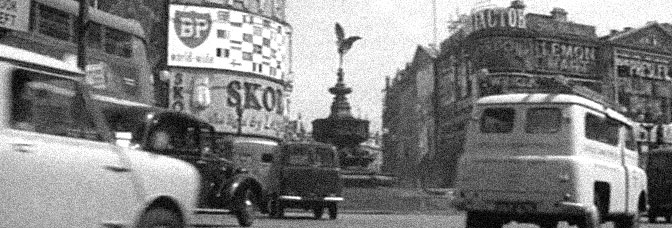
Big City doesn’t have much ambition, so it should be hard to screw it up. But director Dixon manages. He’s not much for creative composition. City looks like a bunch of moving postcards, which is fine… it’s a travelogue after all. There is one sublime sequence of storefronts, but it’s not indicative of the rest.…
-

The Nose is an example of pinscreen animation. If I understand it correctly, thousands (over a hundred thousand, for example, in the case of The Nose) of pins are put on a board and moved and photographed under different lighting situations. The result is startling. Directors Alexeieff and Parker are able to not just create…
-

I’m missing why Speedy Gonzales is the good guy in Chili Weather. He’s trying to steal food (the theory being the factory has food so it should give food to his friends) and he tortures the guard cat. If one got really creative, he or she could interpret Weather as commentary on the Mexican government…
-

What makes The Haunting so good–besides Wise’s wondrous Panavision composition–is the characters. Yes, it succeeds as a horror film, with great internal dialogue (Julie Harris’s character’s thoughts drive the first twenty minutes alone and the device never feels awkward), but those successes are nothing compared to the character interactions. The Haunting chooses to be both…
-

For the second issue, Magnus has much more reasonable villains. Someone figured out how to make robots look like humans and is trying to take over the government. Manning sets it up pretty well–there’s lots of action, lots of big fight scenes, but he does take a moment for Leeja and her senator father to…
-

Manning neglects to establish one important point in Magnus‘s first issue. Are robots sentient? Evil or not, Magnus is smashing up a lot of robots here and the heroic little kids throw one off a roof just because they can. It’s rather important. Maybe I’m thinking too much about it, but the dying robots certainly…
-

When I started reading these comics again, I had no expectations. I read them as a kid, but as I grew up, I really only read Silver Age on recommendation and no one ever recommended a reread of these. Most of these issues, so far, are absolutely fantastic. This issue, with the Vulture returning, has…
-

Lee gets back on track (subtly developing Peter Parker too–the flirtations with Betty Brant at the Bugle give him the courage–apparently, it’s never pointed out–to ask Liz Allen out on a date), not just introducing the Lizard, but also sending Spider-Man to Florida. The comedy scenes with Peter and Jonah heading down are absolutely hilarious.…
-

Guess who wins in a fight between Doctor Doom and Spider-Man? Guess who wins in the rematch? If you guessed Doctor Doom both times, you get a twelve cent sucker, which is what this issue cost when it came out. It’s a twelve cent sucker too. Lee opens it with some expository paragraph about how…
-

It’s the first appearance of Betty Brant. I hadn’t been expected it, but now I’m looking forward to it. She and Peter’s romance was always effecting. Even here, her thought balloon foreshadows the eventual dating. Lee fits a bunch into this issue (oh, it’s the first appearance of the Sandman too), including the first battle…
-
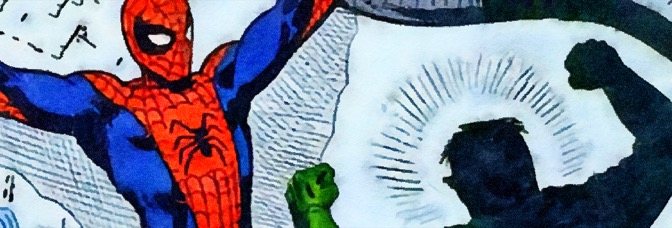
Besides the first appearance of Doctor Octopus–and the Spider-Signal–there are a couple other things I noticed. First, Spider-Man’s catching bad guys at the beginning of the issue. That brief scene is the first suggestion he’s actually been out crime fighting. Second, the banter starts this issue, between him and Doctor Octopus (or am I supposed…
-

Again, Lee goes an interesting route here. There’s no real introduction to the supporting cast yet–Aunt May’s in the issue, but the police chief has more effect (I don’t think Aunt May has any lines)–and Spider-Man’s still all about the benjamins. I’m not sure what rent was back in the 1960s, but he must have…
 The Stop Button