Category: 1940
-
Rebecca opens with protagonist Joan Fontaine narrating, establishing the present action as a flashback—which is kind of important considering how much danger Fontaine will be in throughout. She’s got to make it since there’s the narration. Some of that danger is in Fontaine’s head. Or, at least, she sometimes apprehensive of the wrong person. Sort…
-

It’s entirely possible The Invisible Woman’s concept is a good one—instead of a horror movie, doing a screwball comedy where the female lead is invisible most of the time. Woman is—at best—indifferently acted, poorly directed, atrociously written, without even reasonable special effects. But the idea itself isn’t necessarily bad. The film opens with suffering butler…
-

The best thing about The Invisible Man Returns is quite obviously Cecil Kellaway. He’s a Scotland Yard inspector who’s spent the eight years since the last movie preparing for another invisible man attack, making sure the Yard’s ready to go technologically. Worst thing about The Invisible Man Returns? It’s a little long? There’s nothing really…
-

Smart, fun, and funny political satire slash history lesson about the rise of Machine politician Brian Donlevy, charting his path from Depression-ravaged forgotten man to thug to politician to lover to fighter. Great performances from everyone involved–Donlevy’s got the least flashy part but he holds the whole thing up. Muriel Angelus is great as his…
-

Well-executed British propaganda short about very British sisters Martita Hunt and Mary Clare fending off Nazi infiltrators during a blackout. Great performance from Hunt and excellent direction from Hurst. It’s a good seven minutes. Streaming.Continue reading →
-

Primrose Path gets fun fast. Given the film opens with nine year-old Joan Carroll stealing a neighbor’s tamales (instead of buying them) for her and her grandmother, Queenie Vassar, it sort of needs to be fun. Vassar’s the maternal grandmother, not related to despondently alcoholic dad Miles Mander. Ginger Rogers is the older daughter, who…
-
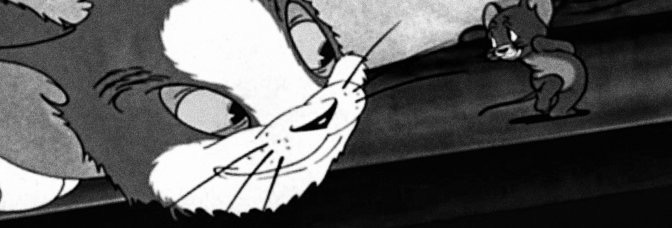
Until the exceptionally racist caricature of “Mammy Two-Shoes” arrives, the most distinguishing thing about Puss Gets the Boot is the exceptional cruelty of the cat. Puss is the first Tom and Jerry cartoon, before Tom is named Tom (he’s Jasper here) and Jerry doesn’t get an onscreen name. For the first two minutes, it’s just…
-

Vigil in the Night is supreme melodrama. I mean, in its first ten minutes, the film manages to establish a small English town’s hospital, introduce stoic nurse Carole Lombard and her flighty sister Anne Shirley, throw them into tragedy and crisis, and kick Lombard into an entirely new setting. Vigil in the Night is an…
-

The Grapes of Wrath starts in a darkened neverland. Director Ford and cinematographer Gregg Toland create a realer than real Oklahoma for protagonist Henry Fonda to journey across. The locations and sets aren’t as important as how Fonda (and the audience) experience it. It’s actually rather hostile for this beginning. It’s all about Fonda getting…
-
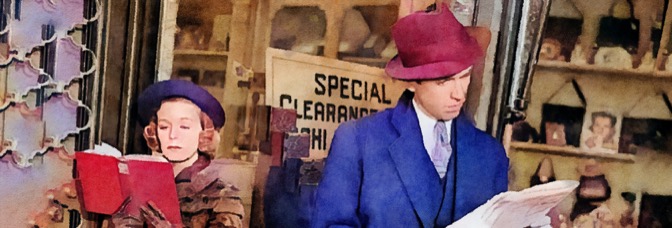
The Shop Around the Corner has a lot going on in a limited space. It’s not particularly long–under 100 minutes–and it mostly takes place in (or outside) the titular shop. And, while the present action is about six and a half months (there’s a big jump), the back story defines a lot of the characters…
-

It should be obvious British Intelligence is based on a play, so much of it takes place in a single house, but director Morse and screenwriter Lee Katz open it up enough it never does. Actually, even though it’s a low budget picture, their expansive approach even obscures the concentration around the one setting. Intelligence…
-

Tepid at best hour-long B picture has leads Fay Wray and Charles Lang trying to save Wray’s father’s bus company. The bad guys are the unlicensed hired car firm. Bad direction from Woodruff (with the exception of an out-of-nowhere car chase too late in film to make any difference). Wray and Lang are appealing rather…
-
I always forget awful films have always been made; I usually establish some arbitrary point in the mid-fifties when they started getting unwatchable. Then something like The Ape comes along and reminds me I need to set that point earlier. The film’s based on a play, which must be a hoot considering how many different…
-

It’s been a long time since I’ve seen this film. There’s no discernible reason for it to be called The Mummy’s Hand. I can only guess it has to do with the way they cut the trailer, maybe having the hand come out as a shocker. It’s not a traditional Universal horror film; it’s one…
-

John Wayne gets first billing in The Long Voyage Home, but the picture really belongs to Thomas Mitchell, Ward Bond and Ian Hunter. The film’s a combination slash adaptation of four one-act plays–which is somewhat clear from the rather lengthy sequences tied together with shorter joining scenes–and while Wayne gets one of his own, it’s…
-

George Sanders can do no wrong in The Saint’s Double Trouble, so much so, he has the ability to smooth the film over. He’s such a joy to watch, the critical part of the brain shuts down. Eventually, as the film nears the conclusion, Sanders looses his control, letting judgments percolate to the surface. This…
-

I wonder, did Lew Ayres ever feel like Jimmy Kildare was a heel? I mean, he’s an unbelievably nice guy–he won’t propose to nurse Mary Lamont (Laraine Day sleepwalks through almost all of Dr. Kildare’s Strange Case, since there’s only one scene where she needs to do anything) because he doesn’t want to make her…
-

I Love You Again is such a confident success–the whole thing rests on William Powell and everything he does in the entire picture is fantastic–it’s hard to think of anything wrong with it. It moves beautifully, its ninety-nine minutes sailing by, the supporting cast is all excellent and every one of its big comic scenes…
-

A lot of Strange Cargo is really good. Borzage isn’t the most dynamic director, but every time he has a startlingly mediocre shot, he follows it with a good one in the next few minutes. The film’s got lengthy first act–thirty minutes–and then moves from confined location to confined location. The first act is the…
-
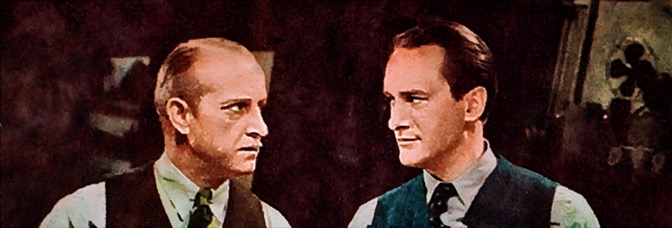
Speedily paced. The Saint Takes Over is somehow fast, running sixty-nine minutes, but quite full of content. It’s so full of content, in the first act, I was convinced George Sanders was somehow going to remain non-central to the picture, since so much time was being spent establishing the ground situation he finds himself in.…
-

Any movie with a Somerset Maugham reference like this one (to The Moon and Sixpence) is going to get me to go a little soft on it, but given how late the reference fully realizes, Lucky Partners was already reasonably safe. When I saw Lewis Milestone directed it, I knew there’d at least be some…
-

One Crowded Night opens strong enough–a Mojave desert motel and lunch counter, run by a family with a past, with employees with romantic woes. It’s an RKO B-picture, as the most recognizable people in the cast are bit players from bigger films. It’s filmed on location (at the motel) and it starts centered around Anne…
-

Diverting, well-handled seventy minute B picture has flight attendants (sorry, stewardesses) plotting to marry rich customers, screaming, running around, and even cat fighting–it’s astoundingly sexist. It’s also a commercial for American Airlines; a likablely performed one. Supporting Jane Wyman is awesome, leads Virgina Bruce and Dennis Morgan are fine. DVD, Streaming.Continue reading →
-

Just okay class comedy gets by on Cary Grant’s considerable charm as he tries to win ex-wife Katharine Hepburn back before she gets married again. Thin characters and stagy adaptation limit Hepburn most (Jimmy Stewart’s manifestly miscast). The rushed finish doesn’t help things either. Some nice direction from Cukor, though never in the pacing. DVD,…
-

Excellent propaganda thriller with Joel McCrea as an American reporter heading to Europe before the outbreak of WWII. He finds himself in a bunch of intrigue concerning fetching Laraine Day and her father, Herbert Marshall. George Sanders is great as a British reporter. Outstanding pace, set pieces, and script. Magnificent direction from Hitchcock. DVD, Blu-ray,…
 The Stop Button