
I wasn’t particularly concerned about Sherlock Frankenstein #4 going into it. I knew Lemire would have something good cooked up.
And he does. He and Rubín don’t just do the history of Sherlock Frankenstein, they do the history of the Black Hammer universe, at least in the twentieth century. It goes from Golden to Silver to Bronze. Lemire doesn’t break out all the heroes it goes through, just gives Rubín space to show off some familiar–and not familiar–designs.
Lots of double page spreads this issue. Rubín goes crazy with it to great success. Lucy and Sherlock’s meeting pays off.
And the ending of the book, which has very little to do with Black Hammer itself, is a perfect finish to this series. Lemire’s been doing a lot with the “supervillains” of BH. The finish embraces that work (more than it does having a Lucy investigates issue).
It’ll be interesting to see what Lemire does with the next spin-off, which is Lucy-less.
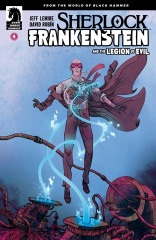 I wasn’t particularly concerned about Sherlock Frankenstein #4 going into it. I knew Lemire would have something good cooked up.
 The only thing wrong with Sherlock Frankenstein is realizing it’s almost over. I don’t know why I thought it was six issues; just being hopeful, I guess.
 Lemire just won the Cthulhu game. For over ten years, comic book companies–usually indie ones–have been doing Cthulhu stuff. Boom!, Avatar (obviously), Archie, Dark Horse, Image. And Lemire just won it for Dark Horse with this issue of Sherlock Frankenstein.
 The panel composition. David Rubín sometimes spirals the panels in double-page spreads, sometimes just moves action horizontal, always guiding the reader’s eye. It’s a visual treat, which is particularly awesome given it’s a talking heads issue.