Category: ★★
-

The last twenty or so minutes of Darkman are when director Raimi finally lets loose. He’s been building to it, hinting at how wacky the movie’s going to get, but it doesn’t all come together until the end. And the end is when Darkman has the most standard action sequences. There are big set pieces.…
-

The Last Jedi is a long two and a half hours. It’s an uneven split between Daisy Ridley, Oscar Isaac, and John Boyega. Ridley’s off with Mark Hamill–but really having a FaceTime via the Force arc with Adam River–while Isaac is doing his damndest to get everyone killed because he doesn’t want to listen to…
-

Johnny English runs just under ninety minutes, which is one of the film’s secret weapons–nothing ever goes on too long, not the good stuff, not the bad stuff, not the mediocre stuff. There’s not a lot of bad stuff–more varying degrees of mediocre; when things then get better, when things finally pay off, it’s a…
-
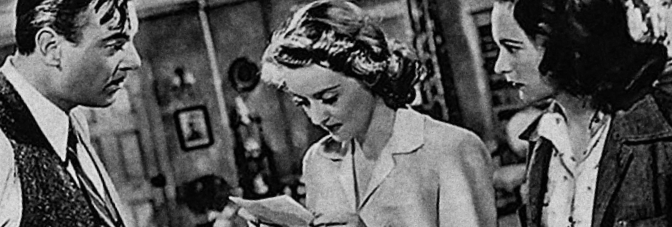
Bette Davis and George Brent never kiss in Dark Victory. He’s a brilliant neurosurgeon, she’s a mysteriously ill young socialite. He saves her, they fall in love. But does he really save her…. Victory gives Davis an excellent part, right up until the end of the film. It’s a somewhat bumpy ride–in the first act,…
-
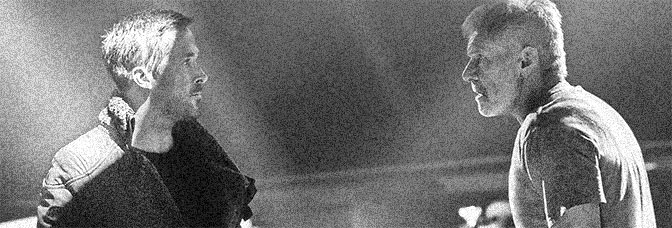
Whatever its faults, Blade Runner 2049 is breathtaking. Director Villeneuve’s composition, Roger Deakins’s photography, Dennis Gassner’s production design, all the CGI–the film is constantly gorgeous. It’s got nothing beautiful to show–the world of 2049 is a wasteland, all plant life is dead, the endless L.A. skyline is (while awesome) nasty, San Diego is a huge,…
-
Power of the Press runs a thin–not slim, but thin–sixty-four minutes. It’s paced better than expected (publicity stills suggest quite a few cut scenes); scenes never seem rushed, scenes never seem truncated. Instead, they’re just deliberate. Otto Kruger is a blue blood New York City newspaper publisher who dabbles in fascism. He couldn’t buy his…
-

The Narrow Corner runs seventy minutes; it speeds along. Robert Presnell Sr.’s script has somewhat lengthy, complicated scenes where he tries to fit in information. The movie doesn’t need all that information–the subplot about Reginald Owen translating a Portuguese epic poem–because director Green isn’t going to do anything with it. The film has a somewhat…
-

The Goodbye Girl is excessively genial. Usually at the expense of lead Marsha Mason. It’s her movie too. Not hers to lose, because it’s so much her movie–she’s The Goodbye Girl–instead hers to be taken away. And take it away writer Neil Simon does. The film starts being about single mom Mason getting dumped by…
-
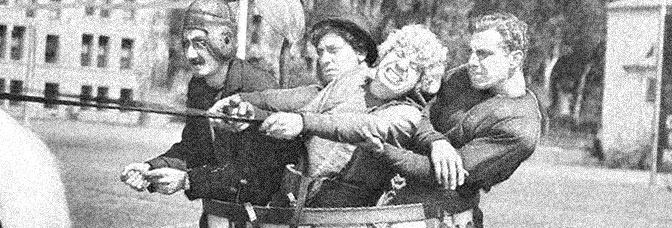
Horse Feathers finally finds its funny sometime in the second half. The film plays like the main plot has been removed and just a subplot remains, so it’s impressive it ever does. And when it does, it’s depressing–director McLeod and (wow, four) writers Bert Kalmar, Harry Ruby, S.J. Perelman, and Will B. Johnstone know how…
-

De Palma is director Brian De Palma talking about his films. He’s talking to the directors, Baumbach and Paltrow, but without ever addressing them by name. De Palma’s filmmakers have zero presence in the film, until the epilogue. Matt Mayer and Lauren Minnerath’s editing is magnificent, especially how they’re usually able to keep De Palma…
-

Despite being an adaptation of a stage play and having one main set, Desk Set shouldn’t be stagy. The single main location–and its importance–ought to be able to outweigh the staginess. Desk Set does not, however, succeed in not being stagy. It puts off being stagy for quite a while, but not forever, which is…
-
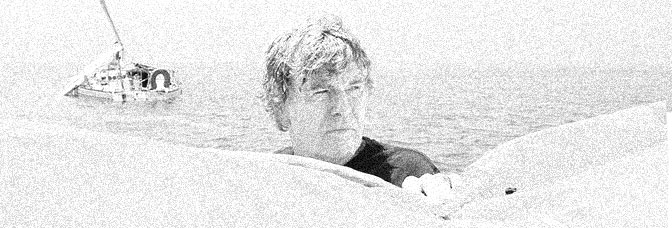
All Is Lost is the harrowing tale of an unnamed man (Robert Redford) on his damaged yacht in the Indian Ocean. The film runs 106 minutes. It’s harrowing for all of them. Director Chandor knows how to harrow. The film has a mundane reality about it. Redford has no back story, no character development, almost…
-

Love with the Proper Stranger has a lot to resolve in its third act. There’s a somewhat sizable supporting cast, the act two cliffhanger for leads Natalie Wood and Steve McQueen’s romance is precarious–there’s a lot. So it’s striking when Proper Stranger just doesn’t do a third act. Director Mulligan loves the New York location…
-

But I’m a Cheerleader is too short. It runs eighty-five minutes, which would be fine if the narrative fit into director Babbit’s affected, aspirationally camp style. But Brian Peterson’s script is front heavy. And Jules Labarthe’s cinematography is too flat. Rachel Kamerman’s production design is loud, but Labarthe shoots it too shallow. He’s also not…
-
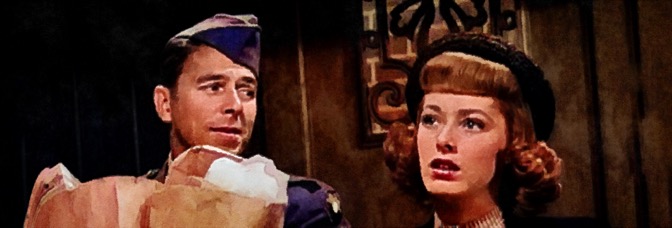
The Voice of the Turtle runs an hour and forty minutes. There’s a split about forty minutes in and, in the second hour, leads Eleanor Parker and Ronald Reagan are playing slightly different characters. Screenwriter John Van Druten adapted his play (with additional dialogue from Charles Hoffman) and had to “clean things up.” The play…
-
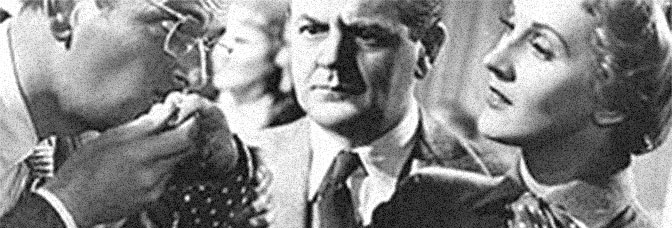
Second (after QUARTET) in a trilogy of anthologies adapting W. Somerset Maugham short stories has good acting, okay writing, and some excellent direction (from Annakin not French) but just doesn’t quite work out due to its lopsided attentions. Maugham introduces the stories, sometimes getting cut off mid-sentence, which is sort of funny, sort of not.…
-

Dustin Hoffman and Mia Farrow are John and Mary, respectively, and they’ve just woken up after spending the night together. They met at a singles bar. Is it going to be a one night stand or is it going to be something more? Both come with some baggage, though of different varieties. Farrow’s last serious…
-

Ridley Scott’s director’s cut of Alien feels like vaguely engaged exercise more than any kind of devout restoration. Its less than artistic origins–Scott cut it together a combination, apparently, of fan service and studio marketing needs–actually help it quite a bit in the first act. Scott’s new cut rushes things, though it doesn’t really rush…
-

Maybe I’ll Come Home in the Spring opens with a montage sequence. Sally Field is hitchhiking cross country (supposedly, it’s all California) while audio of her calling home to her parents–after running away to become a hippie–and letting them know she’s all right. The exact amount of time she’s away, where she went, how she…
-

Wonder Woman has one set of official, awkward bookends and one set of unofficial ones. The former does lead Gal Gadot no favors–after spending a moving building a character, it goes all tabula rosa and turns Gadot into little more than a licensing image. The latter does the film no favors. The latter is lousy…
-

Somewhere in the second act of The Mean Season, the film just starts slipping and it never corrects. The opening titles, set against stormy Miami weather and a vicious (though not graphic) murder, establish the film’s momentum. Everything moves fast, whether it’s establishing unsatisfied reporter Kurt Russell and his newsroom sidekicks, his girlfriend Mariel Hemingway,…
-
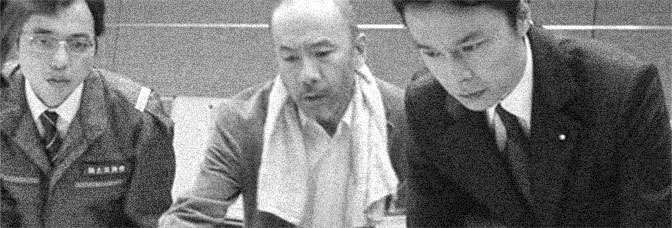
Shin Godzilla is the story of hard-working bureaucrats responding successfully to a national crisis. When the giant monsters invade, you can’t do better than the able public servants of Shin Godzilla. And for most of the film, directors Higuchi and Anno pull it off. The first act of the film, with the introduction of the…
-

The first thirty-nine percent of Never Say Goodbye is phenomenally paced. It could be a short movie, if there were a little tragedy through in. A little melodrama. Seven year-old Patti Brady is moving back in with mom Eleanor Parker after living six months with dad Errol Flynn. They’re divorced. Flynn’s a successful cheesecake pinup…
-
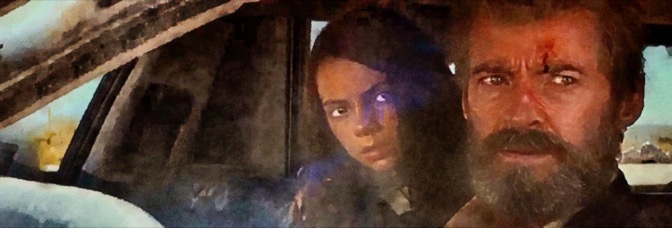
The strangest thing about Logan, at least in terms of the plotting, is how director Mangold is desperate to reference a film classic–one with a plot perfectly suited to what he’s purportedly trying to do with Logan–and he doesn’t follow it through. In any of the neat ways he could. Instead, he goes for obvious…
-

Joanne Woodward and Diahann Carroll are American tourists in Paris who meet expat jazz musicians Paul Newman and Sidney Poitier. They pair off on color lines (a change from the source novel, where Newman’s character romances Carroll’s); the men grapple with possibly returning to the States with their new ladies while still trying to hit…
-

My Bodyguard is more than a little frustrating. Alan Ormsby’s script either completely changes in the second half–just in terms of how he constructs scenes, how much willful suspension of disbelief you need, whether or not lead Chris Makepeace is ever going to have a story of his own–or director Bill chucked a lot of…
-

Right away, Djano sets itself to have a problem–gunfighter Franco Nero is just way too good. Just when he’s too unstoppable, too unbeatable, the film finds a way to make him even more unstoppable, more unbeatable. The first act of the film has him taking on a band of Confederate soldiers who have rallied behind…
-

Journey Into Fear has a number of insignificant problems, a couple significant ones, and one major one. The major one is Foster’s direction. It’s not bad, it makes good use of the sets, it even uses some of the supporting cast well, but it’s not frightening, it’s not exciting. Journey Into Fear, not just because…
-

Stylist for hire. Stylist for hire. Denis Villeneuve is a stylist for hire on Arrival. He assembles a wonderful crew and they all do great work. Joe Walker’s editing is always assured, never flashy. Bradford Young’s photography is phenomenal. Arrival’s got a great color palette. Bored with its beauty or some such aesthetic. Excellent music…
-

Seems Like Old Times is an enthusiastic homage to the screwball comedy. Most of the action takes place at Goldie Hawn’s house, where she’s trying to hide fugitive ex-husband Chevy Chase from current husband–and district attorney–Charles Grodin. She’s a public defender who takes in all of her clients, giving them jobs so they can provide…
 The Stop Button