Category: ★½
-

Seven is a gorgeous film. It’s often a really stupid film, but it’s a gorgeous film. Even when it’s being stupid, it’s usually gorgeous. Director Fincher has a beautiful precision to his composition; he works great with photographer Darius Khondji, editor Richard Francis-Bruce and composer Howard Shore (about half the time with Shore). Seven is…
-
Ah, the socially responsible children’s movie, or: the progressive soulless capitalism of the Walt Disney Corporation, twenty-first century iteration. I went into Zootopia waiting for it to be great–I assumed the filmmakers would take responsibility for the big questions they imply–then I waited for it to be good, then I waited for it to be…
-
The extended version of Batman v Superman: Dawn of Justice isn’t just the extended version of Batman/Superman, it’s Batman v Superman: Dawn of Justice: The Ultimate Edition. There’s a second subtitle on the thing. It’s doubling down on the idea the extended cut in the post-DVD era. It’d be desperate if anything added in the…
-
A lot of The Hunger is so exquisitely directed by Scott, it almost seems like there’s nothing the narrative could do to mess it up. His Panavision composition is precise, fixated on the small detail, whether it’s David Bowie’s stubble or Catherine Deneuve’s sunglasses. These details become larger than life, filling the frame, but Scott…
-
She’s Dressed to Kill is a simultaneously a perfect TV movie and a disappointment. It’s a murder mystery set on an isolated mountain; Eleanor Parker is a recluse fashion designer who has a show and the attendees can’t stop being murdered. Only the killer has followed the attendees, as the murdering starts before the fashion…
-
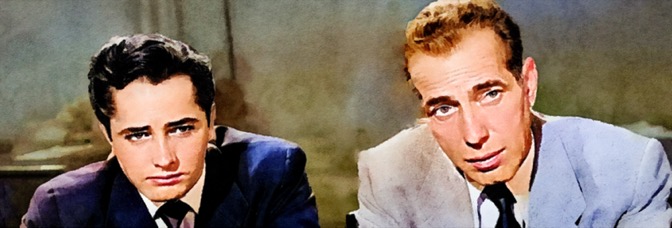
Knock on Any Door opens with Humphrey Bogart, then heads into a lengthy flashback detailing the life of young thug John Derek. Bogart’s his attorney, defending him on a murder rap; Bogart’s opening statement leads to the flashback. It’s a lengthy flashback, introducing not just Derek but Bogart and the assorted Skid Row denizens who…
-

The uncredited editor of The Sheik had a thankless task–during the first act, director Melford is packing in so much expository information all the cuts to introduce new information. The Sheik’s silent, the editing of the first act is always important in a silent film. There needs to be a certain pace, there needs to…
-

D.O.A. is a wonderful example of a gimmick having nowhere to go. Edmond O’Brien is a small town accountant who decides to spend a week in San Francisco drinking and carousing (leaving girlfriend and secretary Pamela Britton back home). Out of the blue, he gets poisoned and has to solve his own murder. His investigation…
-
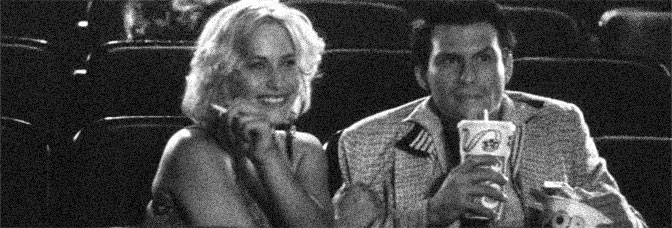
The best thing about True Romance is some of the acting. The biggest problem with the film is who’s doing that great acting. It’s not leads Christian Slater and Patricia Arquette, who the film eventually just ignores in order to further its supporting cast (which is sort of fine, as they’re better–especially than Slater–but it…
-

There’s not much story to The Streetfighter. There’s some, but it’s usually dumb. Director Ozawa isn’t interested in developing lead Sonny Chiba as a character. He’s one of the best “karate men” (I really wonder if that term’s just the subtitles) in Japan and he’s a mercenary. He’s got a chubby, lovable sidekick, Yamada Goichi,…
-

Black Christmas has a lot of significant problems, but the film’s strengths make up for (or just distract from) a lot of them. But then there’s director Clark. He can’t make the film scary. He can make it disturbing–and often does, even when it’s not successful otherwise–but he never makes it scary. And when Olivia…
-

Given The Bedroom Window was part of my VHS EP collection, I’ve lost count of how many times I’ve seen it. I do know I haven’t seen it in at least a decade and I also know this time is the first I’ve ever wondered about the source novel. The Bedroom Window is very busy;…
-

Memories of the Sword has two, very simple problems. The first is director Park. He’s bad at directing this film. It’s not clear he’s bad at directing films, but he’s bad at directing Memories of the Sword. He fundamentally doesn’t understand action scenes, which means he doesn’t understand how to do the first act of…
-

There’s a lot of good stuff in On Her Majesty’s Secret Service, some of it really good. Director Hunt and editor John Glen have a great time with the fight scenes. The film opens with a hurried, though a playful introduction to George Lazenby in the title role, then moves immediately into one of the…
-

Nothing really works out in Return of the Jedi. Even the opening, which is about as good as it can be with director Marquand’s inability to direct the actors and do the special effects, doesn’t exactly work out. Jedi’s problems keep bumping into each other, knocking over the good stuff. What good stuff? Jabba the…
-
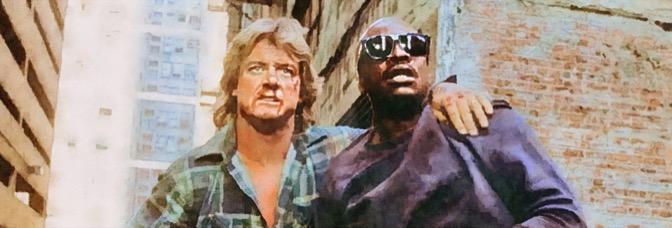
Maybe a third of They Live is amazing. The film has three distinct parts. The first, where Roddy Piper arrives in L.A.–Piper never gets a name and L.A. never gets identified, though director Carpenter obviously expects the viewer to recognize it and understand its use–is the best. It’s a Western, sort of. Piper’s the Man…
-
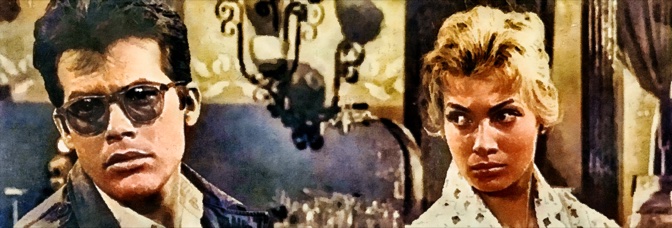
Ashes and Diamonds is unexpectedly on the nose. There’s even a scene where protagonist Zbigniew Cybulski taps his nose; I had no idea it meant director Wajda was going to go for not just narrative obviousness in the third act, but also visual obviousness. In just a few minutes, Wajda and co-screenwriter Jerzy Andrzejewski (adapting…
-

I’m not sure what’s strangest about An Actor’s Revenge, but my leading two candidates are Ichikawa’s direction, which intentionally tries to make it feel stagy, or Mochizuki Tamekichi and Yagi Masao’s score, which alternates between jazzy and melodramatic. Both make Revenge a peculiar viewing experience and, while Ichikawa definitely has some talent as a director,…
-

The Exorcist III is a weird movie. It’s a somewhat surreal detective story–one seeped in Exorcist continuity, only without the original cast (mostly) returning. That disconnect from the original, along with its incredibly uneven tone (the opening titles cut between a big action sequence with helicopters and some scary church imagery), actually helps the film.…
-
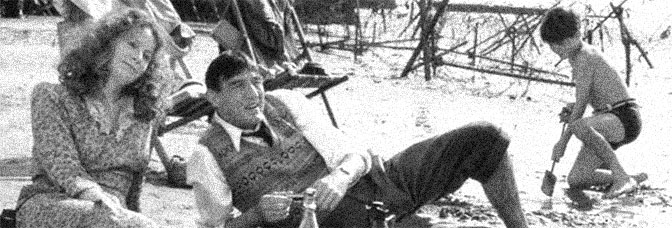
Director Boorman presents Hope and Glory as a series of vignettes. It opens with England declaring war on Germany in 1939 and goes until the next summer. The film concerns pseudo-protagonist Sebastian Rice-Edwards, who is nine. He obviously does not age over the film’s present action, which is more of a problem with his younger…
-

On one hand, Five Graves to Cairo is a solid stage adaptation. Director Wilder, who adapted the play with Charles Brackett, makes it feel like a film. On the other hand, Cairo–partially because Wilder sticks to the setting so thoroughly and never opens up the film–doesn’t really go anywhere. After implying complications, it ends just…
-

The Palm Beach Story is a narrative. Director Sturges opens with a rapidly cut prologue showing stars Claudette Colbert and Joel McCrea getting married, where he inserts clues for what will eventually be the film’s utterly pointless deus ex machina. Sure, Palm Beach runs less than ninety minutes so it’s possible the viewer be sitting…
-

Mad Max: Fury Road opens with a voiceover from “star” Tom Hardy (who’s billed before Charlize Theron, but below her; very Towering Inferno) explaining how he’s Mad Max and he’s crazy haunted with all the people he never saved. In many ways, it’s Hardy’s biggest moment in the film and he’s not even on screen…
-
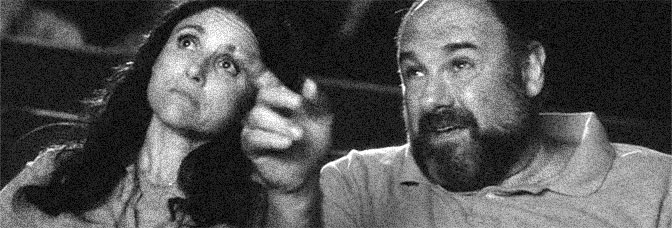
For most of Enough Said, I marveled at how director Holofcener–apparently in an act entirely lacking irony–created the perfect film to fail the Bechdel test. The Bechdel test, which is all the rage, requires two female characters talk about something besides men. Well, besides talking about men, the characters in Said do not do much.…
-
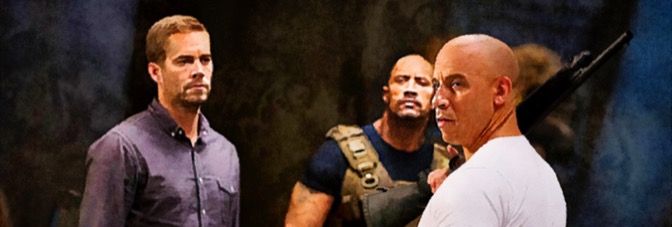
For the most part, Fast & Furious 6 is a delightfully absurd action concoction from director Lin. The film drops the Fast and the Furious “family” into a James Bond movie; thank goodness, because it’s hard to imagine Roger Moore able to outdrive the bad guys here. And it’s even set in London (and later…
-

The Galapagos Affair: Satan Came to Eden has way too long of a title. The subtitle is a reference to something the viewer will probably be unfamiliar with until the epilogue (it’s the title of a book by one of the documentary’s players), but at least it shows a certain engagement from the filmmakers. Their…
-

Director Jarecki tries to appear like he’s staying out of Capturing the Friedmans. His voice occasionally appears behind the camera when interviewing but these questions are usually for effect. Jarecki is deliberate in the construction of the documentary; he only lets it get away from him once. Capturing the Friedmans examines a sensational child abuse…
-
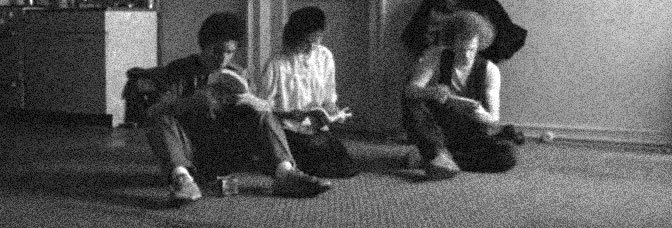
It’s sort of amusing how Fame, a film about high school, gets an incomplete. The film is rigidly structured–the four years of high school, plus the auditions at the beginning for the characters to get into said high school, a performing arts school in New York. The characters’ stories develop throughout the film in a…
-

The point of Grease isn’t the story, which is good, because screenwriters Bronte Woodard and Allan Carr do a disastrous job plotting. They also do a terrible job of writing their characters–ostensible protagonists John Travolta and Olivia Newton-John have the worst characterizations in a film full of bad characterizations. It doesn’t help the supporting cast…
-

There’s a lack of consistent mood to The Goonies. The film has its phases and the mood and tone change from phase to phase, but Chris Columbus’s script changes characterizations between these phases as well, which is rather disconcerting. For example, while the film introduces the villains–Anne Ramsey as the mother, Robert Davi and Joe…
 The Stop Button