Category: Foreign
-

Darkness Falls runs fifteen minutes. The entire short film is set up for its end twist, which multi-hyphenate (including writer and director) Vinsencius hides fairly well. The short never meanders towards its conclusion, instead it just stops and muscles through a bunch of expository dialogue and then ends. The narrative requires newly introduced characters to…
-

Where to start with Rashomon? Starting at the beginning means talking about the bookends–three strangers stranded in the rain, two telling the third different versions of the same story, each ostensibly true. The rain pours down around them, drowning out their voices. Rashomon is a film without a protagonist; it eschews the very idea of…
-
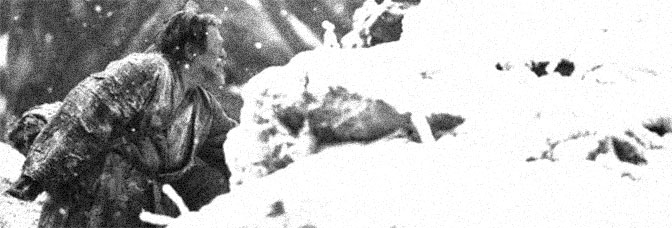
The Tiger: An Old Hunter’s Tale is a rather ambitious piece of work from director Park. Maybe too ambitious. It’s not just about juxtaposing old aged hunter Choi Min-sik against the last tiger in Korea (the film’s set during Japanese occupation when the Japanese were having all the tigers exterminated), it’s also about juxtaposing almost…
-

Mothra 3: King Ghidorah Attacks is simultaneously accessible but also one for the Mothra fans, which is a bit of a weird thing to think about. The film presupposes there are going to be dedicated Mothra fans in the audience and gears a lot of references towards them–at the moment I was appreciating the imagination…
-

Mothra 2: The Undersea Battle is incredibly disappointing. It should be glorious in its stupidity–Mothra at one point turns into a giant fish-moth. Or is it moth-fish? There’s an underwater city raised up. There’s a furry E.T. or Gizmo-type creature and it’s got magical piss. Mothra 2 should be entertaining at the very least and…
-
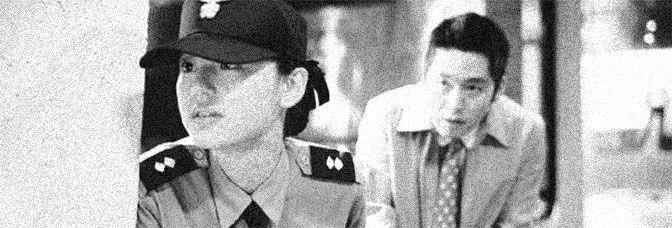
Narratively, Windstruck falls apart in the last thirty-five minutes. Director Kwak’s screenplay stops and starts–not vignettes really, but definitely episodic. Leads Jun Ji-hyun and Jang Hyuk have their romantic courtship, which gets off to a rocky start as police officer Jun confuses Jang for a purse snatcher, set to sixties American rock and roll and…
-

Mothra has the arguably unlikely problem of having way too many good ideas at once. For over an hour, director Yoneda is able to keep all the balls in the air. Sure, things fall apart in the third act, but the pieces are still glorious and the first two acts are stupendous. It’s a kids…
-

Director Malle sets up The Fire Within as a series of events. They don’t feel like events–or even vignettes–because protagonist Maurice Ronet is so transfixing. As the film progresses and the viewer gets to know Ronet better, gets to understand him better, Fire changes. The film is always about Ronet’s plans, Ronet’s actions and how…
-

While watching Godzilla, Mothra and King Ghidorah: Giant Monsters All-Out Attack, I had a daydream. I day dreamt Craig Armstrong, composer of The Incredible Hulk score, had been brought in the redo the score of Attack for the U.S. home video market. He did not. Instead, Ôtani Kô actually did compose the score for the…
-
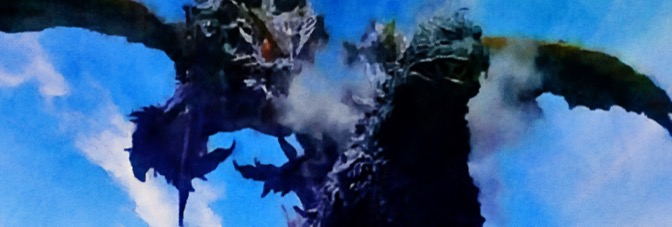
To say Godzilla vs. Megaguirus is good for a while might be a stretch, but it’s definitely okay for a while. It’s a Godzilla movie with a lot of CG, whether it’s the giant monster itself swimming or the millions of prehistoric dragonflies out to sting him. Director Masaaki tries hard to integrate various effects…
-

Godzilla vs. Destoroyah does a lot. It mixes an Aliens rip-off into a Godzilla movie, then tries new things for the giant monster fight, all while finishing off the series. Destoroyah is meant to close off the franchise, giving director Okawara plenty of opportunities to tug at heart strings. Okawara’s attempts at homage and reference…
-

Godzilla vs. Mechagodzilla is outrageous spectacle. The film has the perfect combination of story, director and special effects. The film allows its giant monsters limited personalities, feasible motivations. It even manages to raise questions of morality as this version’s Mechagodzilla is piloted by the anti-Godzilla task force. They’re blowing up just as much as the…
-

Godzilla vs. Mothra ain’t bad. It ain’t bad at all. While Ohmori Kazuki’s script leaves something to be desired in general, it doesn’t leave anything in specific to be desired. It doesn’t fail to do something. It sets forth its concept and fulfills it. I’m thinking mostly in terms of the human stories, which are…
-

Not much goes right in Godzilla vs. King Ghidorah. Director Ohmori has a strange way of being boastful about really lame ideas and even worse technical executions. He spends a lot of time–and the film’s not short, it runs an hour and forty-three–trying to show off the film’s big ideas. It’s a bunch of time…
-

Terror of Mechagodzilla is an uncomplimentary mix of a sixties Godzilla movie with the production values of a seventies Godzilla movie. It’s got a lame monster with cool powers and a cool monsters with lame powers. The Mechagodzilla fight scene is mind-numbing. He shoots rockets at Godzilla. Explosions incur. Director Honda has all these resources–an…
-

I want to be more enthusiastic about Godzilla vs. Mechagodzilla. It has a number of good moments, often involving giant monsters, which is impressive. Godzilla facing off against a mechanical Godzilla (not to mention a flesh-covered cyborg–nothing dead will go), it’s a great visual. Director Fukuda milks it and he milks it well. The film…
-

Godzilla vs. Megalon is madness. There are two distinct portions of the film and both of them are crazy. Initially, these portions might more seem stupid than crazy, but they’re crazy. Director Fukuda gets to make an espionage thriller and a Godzilla movie where Godzilla communicates with the other monsters. He even shakes hands with…
-

Godzilla vs. Gigan is a little like a filmed ballet or play. It’s a performance of its Kaiju ballet. The Kaiju ballet has a stage–a surprisingly large soundstage with a miniature Tokyo or Mount Fuji landscape for serve as the ring in which the men in suits wrestle. The men in suits are not the…
-

Godzilla Raids Again has all the elements it needs to be a quirky success. It has a low budget and rushed schedule, resulting in a hodgepodge of awkwardly effective sequences amid otherwise inept ones. The script, from Murta Takeo and Hidaka Shigeaki, mixes inert melodrama with giant monsters. But then the script keeps getting distracted–there’s…
-

I don’t know if I wish All Monsters Attack were better or if I just liked it more. Because I wanted to like it more–I wanted it to be as wacky as the concept would allow. The concept–a little boy (Yazaki Tomonori) gets valuable life lessons involving working parents, bank robbers, bullies and even criminal…
-

Fun, odd-ball Godzilla movie has the monster defending Japan from a giant radioactive sludge monster. Director Banno uses the film to make an impassioned environmental statement and, against the odds (and despite a terrible suit for the sludge monster, Hedorah), he succeeds. Great special effects otherwise. Banno goes all in on his Godzilla as Japan’s…
-

There’s not much story to The Streetfighter. There’s some, but it’s usually dumb. Director Ozawa isn’t interested in developing lead Sonny Chiba as a character. He’s one of the best “karate men” (I really wonder if that term’s just the subtitles) in Japan and he’s a mercenary. He’s got a chubby, lovable sidekick, Yamada Goichi,…
-

Somewhere near the end of the second act, The Beauty Inside internally collapses. The film’s well-directed, well-acted, often quite well-written, but it’s got one heck of a MacGuffin and no one can figure out how to address it. The Beauty Inside is about a man who changes into a different person every time he wakes…
-

Memories of the Sword has two, very simple problems. The first is director Park. He’s bad at directing this film. It’s not clear he’s bad at directing films, but he’s bad at directing Memories of the Sword. He fundamentally doesn’t understand action scenes, which means he doesn’t understand how to do the first act of…
-

There are two big sequences in Rules of the Game. There’s the hunting sequence, which concentrates on the rabbits and pheasants before–and as–they are killed for sport. The animals are hunted without motive or enjoyment. Until a line in the third act connects events, the hunt is mostly just a way to inform Nora Gregor…
-

In the Mood for Love runs under a hundred minutes. Its present action is somewhat indeterminate, but less than a year total and a few weeks for the longest continuous sequence. As for the length of that continuous sequence, I’m not sure. There’s such a smoothness to William Chang’s editing. It’s calm and measured. It’s…
-

Director Wong crafts Days of Being Wild as a series of vignettes, only with the film’s principal character never the protagonist of any of these vignettes. Wong and editors Kai Kit-wai and Patrick Tam go for lyrical transitions (or none at all); combined with the emptiness of Wild’s Hong Kong (busy places at times they…
-

I’m having a difficult time writing about Ebirah, Horror of the Deep because, even though the movie isn’t good, I wish I liked it more. I wish I enjoyed it more. As a cultural artifact, Sea Monster is definitely interesting. Most of the film has to do with these four not so bright dudes–even Takarada…
-

Diabolique has an extremely messy script. Not just in how the film changes gears multiple times as far as the pace. The entire film takes place in a week (and a day, maybe) and the first half or so takes place in three days. Director Clouzot is initially deliberate with those seventy-two hours, encouraging the…
-

Assassination is not effortless. Director Choi makes it look effortless, whether he’s doing an intricate action sequence or one of the film’s many complicated expository scenes. But then there’s also the entire structure of the film, which opens with one character as protagonist, slowly moves to another, but keeps the initial character around as antagonist.…
 The Stop Button