The Stop Button
blogging by Andrew Wickliffe
Category: Japanese film
-

Godzilla vs. Gigan is a little like a filmed ballet or play. It’s a performance of its Kaiju ballet. The Kaiju ballet has a stage–a surprisingly large soundstage with a miniature Tokyo or Mount Fuji landscape for serve as the ring in which the men in suits wrestle. The men in suits are not the…
-
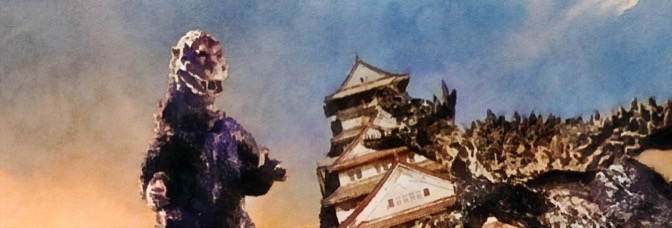
Godzilla Raids Again has all the elements it needs to be a quirky success. It has a low budget and rushed schedule, resulting in a hodgepodge of awkwardly effective sequences amid otherwise inept ones. The script, from Murta Takeo and Hidaka Shigeaki, mixes inert melodrama with giant monsters. But then the script keeps getting distracted–there’s…
-
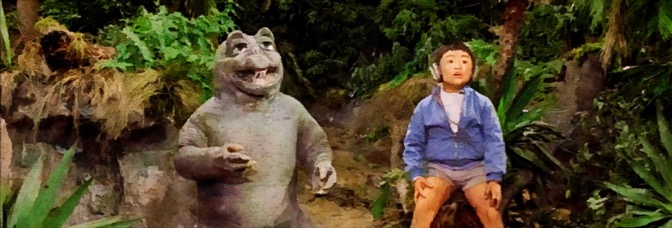
I don’t know if I wish All Monsters Attack were better or if I just liked it more. Because I wanted to like it more–I wanted it to be as wacky as the concept would allow. The concept–a little boy (Yazaki Tomonori) gets valuable life lessons involving working parents, bank robbers, bullies and even criminal…
-

Fun, odd-ball Godzilla movie has the monster defending Japan from a giant radioactive sludge monster. Director Banno uses the film to make an impassioned environmental statement and, against the odds (and despite a terrible suit for the sludge monster, Hedorah), he succeeds. Great special effects otherwise. Banno goes all in on his Godzilla as Japan’s…
-

There’s not much story to The Streetfighter. There’s some, but it’s usually dumb. Director Ozawa isn’t interested in developing lead Sonny Chiba as a character. He’s one of the best “karate men” (I really wonder if that term’s just the subtitles) in Japan and he’s a mercenary. He’s got a chubby, lovable sidekick, Yamada Goichi,…
-

I’m having a difficult time writing about Ebirah, Horror of the Deep because, even though the movie isn’t good, I wish I liked it more. I wish I enjoyed it more. As a cultural artifact, Sea Monster is definitely interesting. Most of the film has to do with these four not so bright dudes–even Takarada…
-
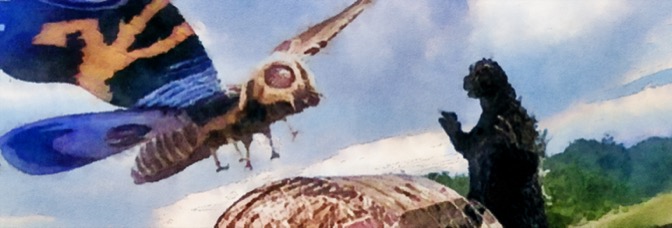
I’m not sure if Mothra vs. Godzilla should be much better, but it certainly should be somewhat better. There are constant problems with the film; little things, big things, but clearly fixable things. Like the composite shots. They’re terrible. Director Honda, seemingly overwhelmed with all the landscape sets, relies on occasional composite shots to give…
-

Strangely enough, Son of Godzilla ends well. It’s a surprise because the film loses a lot of steam throughout. Whether it’s the human plot or the Godzilla plot, the scene inevitably fails because of director Fukuda. Unless it’s one of the multiple times writers Sekizawa Shin’ichi and Shiba Kazue completely fail. Son of Godzilla constantly…
-

I’m not sure what’s strangest about An Actor’s Revenge, but my leading two candidates are Ichikawa’s direction, which intentionally tries to make it feel stagy, or Mochizuki Tamekichi and Yagi Masao’s score, which alternates between jazzy and melodramatic. Both make Revenge a peculiar viewing experience and, while Ichikawa definitely has some talent as a director,…
-

In An Autumn Afternoon, director Ozu has a peculiar approach to how he presents his cast delivering dialogue. They stare just off camera and speak calmly, gently, no matter what. Ozu and photographer Atsuta Yûharu are incredibly precise with the composition; while Hamamura Yoshiyasu’s editing needs that precision, it also creates a distance. And Autumn…
-

Drunken Angel never hides its sentimentality. The film’s protagonist, an alcoholic doctor working in a slum (Shimura Takashi in a glorious performance), is well aware of his sentimentality. He resents it–Shimura has these great yelling and throwing scenes–but it’s what keeps him going. It also allows director Kurosawa to have intensely sentimental sequences without affecting…
-

The Human Condition I: No Greater Love is about, you guessed it, the human condition and the problems with being a humanist when you’re working in a foreign country your country has invaded and occupied. The film takes place in 1943, in Japanese-controlled Manchuria. It’s a desolate spot, but lead Nakadai Tatsuya doesn’t want to…
-

Phantom tries hard not to have a narrative. On the surface, one could argue it really doesn’t–an unnamed woman and man talk. Director Soler has his actors recite their dialogue without much emotion. There are a couple really funny moments, but never do the characters seem to get tired. It is a narrative, of course–it…
-

Final Deadball is a strange little thing. At first I thought it would be incomprehensible without seeing Deadball–Final is a short spin-off semi-sequel for one of the supporting cast in Deadball–but halfway through there’s a big expository scene so one might be able to understand it without seeing the feature. I wish I had some…
-

No doubt, Deadball is a strange one. And not just because thirty-six year-old Sakaguchi Tak is playing a seventeen year-old and actress Hoshino Mari is playing his sixteen year-old male sidekick. I’m not even sure the suggestion conservative Japanese politicians are really in the pockets of Nazis is Deadball’s strangest feature. It’s just a messed…
-
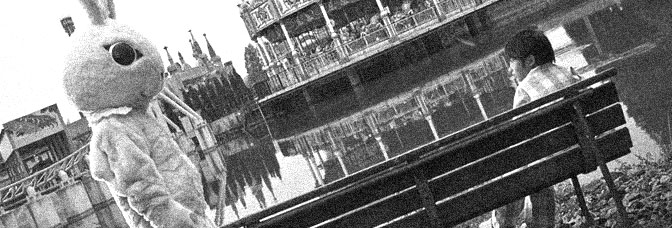
Near as I can recall, Tormented is my first modern Japanese horror movie. Somehow, I’m still familiar enough with the genre to know this one’s highly derivative. The writers throw in something else ominous every few minutes just to keep the picture moving–and it’s only eighty minutes so they clearly didn’t have any initial story,…
-

Wow, it ends with Godzilla and Minya (Godzilla’s son for those unfamiliar–there’s no mama; I’m pretty sure Godzilla’s asexual) waving to the camera. How sweet. Destroy All Monsters is barely a Godzilla movie, really. The monster only shows up at the beginning for the establishing of the ground situation–the narrator explains it is a near…
-

So… Godzilla dances in Invasion of Astro-Monster. He also boxes a little. Unfortunately, the boxing part does little to liven up the last half, which is incredibly tiring. The dancing comes earlier—though not by much, but enough to “help.” Godzilla doesn’t appear in the film until the middle mark. Instead, the film’s about astronauts Nick…
-

The end of Rodan makes the monster’s death tragic—there are two Rodans (giant pterosaurs) and one commits suicide after its mate dies in volcano fumes. Even more tragic is the Japanese defense force hounded these big dumb birds until they intentionally attacked populated areas and those volcanic fumes? The defense force, advised by a rather…
-
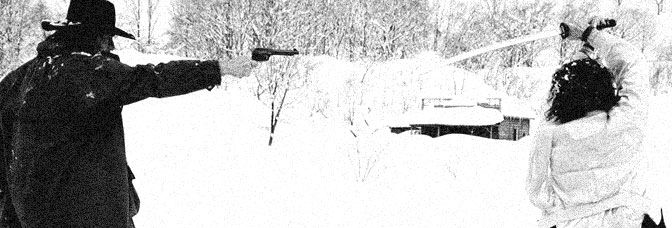
This film reminds me of one of Quentin Tarantino’s Rolling Thunder Pictures presentations from the nineties. Sometimes they were good films. Sometimes Tarantino was just friends with the filmmakers. He has a small role in Sukiyaki Western Django. It’s a joke as a concept picture–what if you made a Western, set in Nevada, starring Japanese…
-

The most surprising thing about Godzilla 2000 is learning the director had made other moves in the series before this one. The writers too. It’s a little surprising, since it’s so full of lame lifts from American blockbusters (including Independence Day, which seems a little strange, given Toho made Godzilla 2000 after the American bungling…
-

I read somewhere the Japanese started producing anime because there was no way to combat live action American imports. With its narration and lame plotting (it somehow isn’t epical–maybe because Tomb of Dracula was produced for television, complete with convenient commercial breaks), it’s an awful way spend ninety minutes. Unfortunately the entire cast isn’t credited,…
-
I read somewhere the Japanese started producing anime because there was no way to combat live action American imports. With its narration and lame plotting (it somehow isn’t epical–maybe because Tomb of Dracula was produced for television, complete with convenient commercial breaks), it’s an awful way spend ninety minutes. Unfortunately the entire cast isn’t credited,…
-
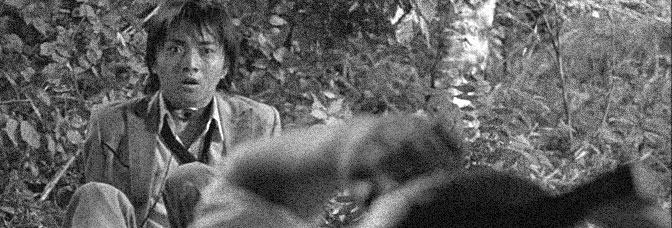
Battle Royale has to be seen to be believed. It shouldn’t work–a film about teenagers killing each other (under a government mandated law) played as a sweeping melodrama, but it does. It’s somehow brilliant, all thanks to director Fukasaku. The action takes place on this tropical island and Fukasaku fills it with beautiful shots and…
-
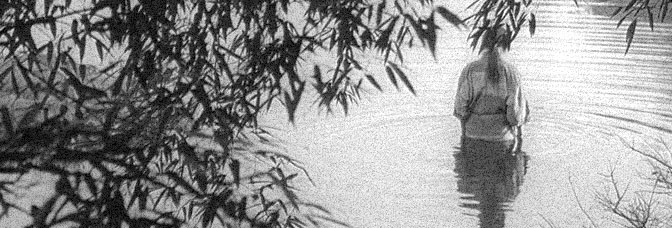
Sansho the Bailiff is one of cinema’s most depressing pieces. I don’t think, after about twenty minutes into the film, there’s a single positive moment. Good things happen–occasionally–but they only lead to bad things (or the revelation of bad things). The film opens with an epigraph, establishing the time period and some basics. It also…
-

Maybe half of Ghidorah is interesting. Or has the potential to be interesting. After the giant monster-heavy opening credits (stills of Godzilla and Rodan in battle), that aspect disappears for a while. Instead, Ghidorah is a strange mix of reporter and political intrigue movies. Hoshi Yuriko is a reporter for a news program covering strange…
-
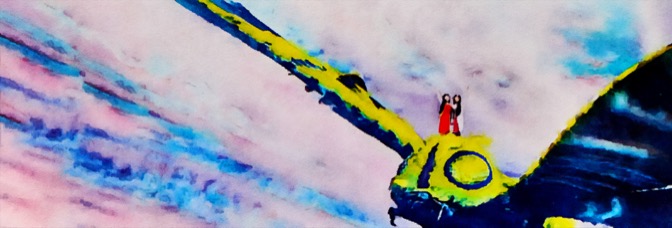
Mothra is a strange mix of Japanese monster movie, 1950s Hollywood sci-fi and Disney. The last ingredient only becomes clear at the end of the movie, though it’s probably present throughout (as Mothra returns home with the two fairies, it’s clear Mothra would have made a fine animated feature). But the strangest element of Mothra…
-

Japanese manga adaptations tend to be absurd–at the same time amateurish and sublime, as all the actors in Battlefield Baseball keep a straight face throughout. The movie’s low budget, so very few of the punches connect and waiting for Versus’s Sakaguchi to have similar, beautifully choreographed fight scenes (even with Kitamura producing) is in vain.…
-

Episodes of the “Twilight Zone” ran thirty minutes, or whatever without commercials, for a very good reason. Stretching a one-note story out to an hour would be too exasperating. Woman in the Dunes stretches it out to, I guess, two and a half hours. The film starts interestingly enough. An entomologist looking for bugs finds…
-
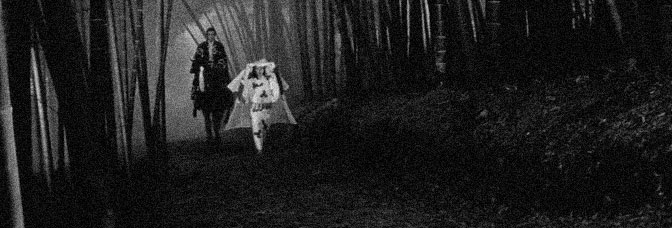
I thought I was going to start this post with a witty remark regarding the film’s use of repetitiveness to excellent overall effect, but then the movie ended and, by that time, much of the excellence had drained. Kuroneko is a gorgeous film–Shindo uses theatrical lighting effects for ghostly emphasis, which really works–and for a…
 The Stop Button