Category: Comedy
-

The funniest thing in Birdman is, surprisingly, not when Michael Keaton and Edward Norton get into fisticuffs and Norton’s in nothing but speedos. The funniest thing in Birdman, which is about former superhero movie megastar Keaton staging a pseudo-intellectual comeback stage production of a Raymond Carver adaptation, is–after Norton makes fun of Keaton’s character’s overly…
-

Mystery Train is a comedy. It’s many other things–an examination and comparison of various kinds of differentness–but it’s also a very funny comedy. In fact, Jarmusch keeps characters around for nothing else. Train is the interconnected story of seven people (across three chapters) all culminating at a Memphis hotel. Cinqué Lee is the suffering bellboy,…
-
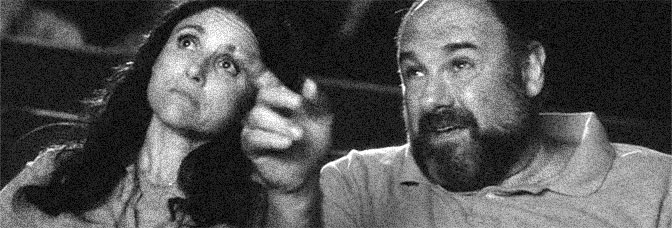
For most of Enough Said, I marveled at how director Holofcener–apparently in an act entirely lacking irony–created the perfect film to fail the Bechdel test. The Bechdel test, which is all the rage, requires two female characters talk about something besides men. Well, besides talking about men, the characters in Said do not do much.…
-

Where’s Marlowe? is a pseudo-documentary about a pseudo-documentary about private investigators. Miguel Ferrer is the private investigator and he seems like a good fit for the role, only director Pyne and co-writer John Mankiewicz don’t actually need him for anything. The point of the film, as things move along, is getting the documentary makers (played…
-

Bullets Over Broadway has a lot going for it. Between Chazz Palminteri, Jennifer Tilly and Dianne Wiest, there’s a lot of great acting and great moments. There are a decided lack of great scenes, however, thanks to director Allen’s choice of John Cusack as leading man. Cusack doesn’t so much give a performance as imitate…
-
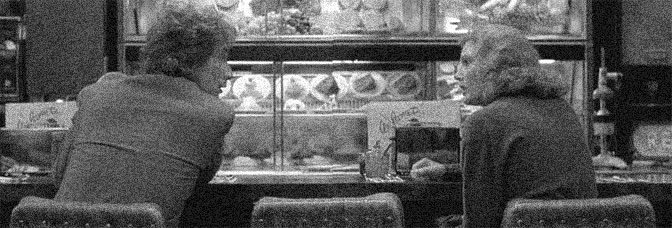
Cross My Heart has a significant problem right off. Its gimmick work against the film. The opening scenes establish Annette O’Toole and Martin Short’s leads as they prepare for a date. Each has the help of a second (for exposition’s sake, though it doesn’t make the exposition particularly natural); both actors are appealing, both characters…
-

Bruce Campbell carries Army of Darkness. Not because there’s anything wrong with the movie–well, not so wrong it needs carrying–but because he’s got such a difficult role. His protagonist has to be sympathetic and stupid, a hero and a jerk. The audience can never stop to wonder if they should be rooting for Campbell, even…
-
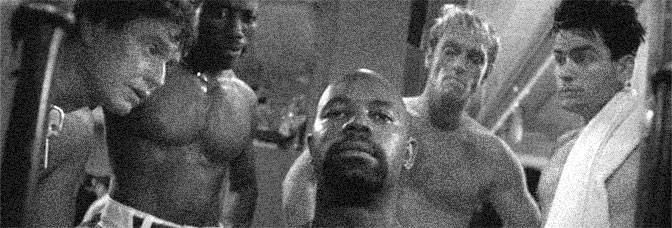
There’s so much strong acting in Major League and director Ward’s script has such likable characters (and such a hiss-worthy villain in team owner Margaret Whitton), the film moves on momentum alone for quite a while. It’s only in the third act, when Ward throws in an unnecessary plot twist to ratchet up tension. He…
-
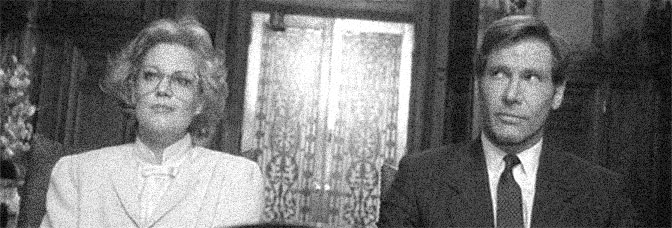
Towards the end of Working Girl, the film seems to jump around a bit with the timeline. It seems to jump ahead, but then it turns out it doesn’t. And it only seems to jump ahead because of how director Nichols and editor Sam O’Steen structure a couple transitions. It’s not a big thing, but…
-
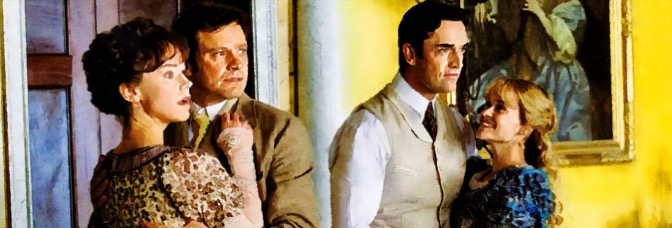
Oliver Parker takes an interesting approach when it comes to adapting The Importance of Being Earnest from play to screen. He doesn’t worry much about opening up the film; at the beginning of the film, he showcases late nineteenth century London and later does quite a bit with Colin Firth’s country estate… but during the…
-
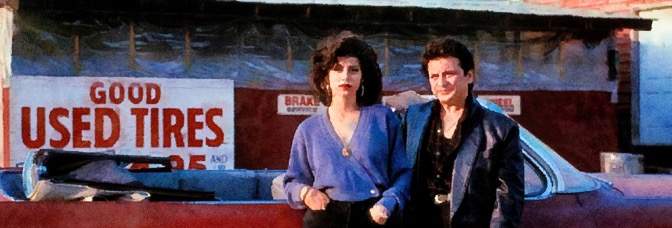
My Cousin Vinny succeeds due to a strange combination of Dale Launer’s script and the charm of the cast. It’s a strange combination because director Lynn seems entirely inept at facilitating it–all of Lynn’s directorial flourishes flop (for a while, he tilts the camera for emphasis and then forgets about it) and the rest of…
-

When Mannequin is at its best, it makes one forget about its worst. There’s a lot of weak writing–and some strong writing–and director Gottlieb is terrible with actors. What’s so strange about his inability to direct them (most visible with Carole Davis) is how well other performances turn out. Both James Spader and G.W. Bailey…
-
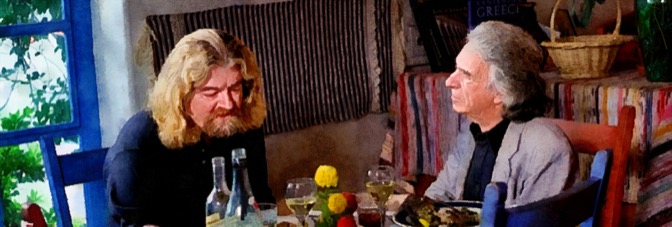
Besides being generally awful, the most annoying thing about An Alan Smithee Film: Burn Hollywood Burn is how it never fluctuates. Once the director–Arthur Hiller took his name off, amusingly not as a publicity stunt but because of writer Joe Eszterhas–and Eszterhas’s script establish the rather paltry quality of the plot and the jokes, it…
-

I thought the biggest joke in Le Fear II: Le Sequel was, not to rip off Maltin too much, the title. I didn’t realize it was an actual sequel. I thought writer-director Croot was spoofing the idea of making a sequel to a crappy horror movie. But, not. It’s an actual sequel, though there’s no…
-

It’s hard to imagine how Our RoboCop Remake would play for someone who doesn’t only love the original Robocop, but has seen it quite a few times. A lot of the humor in Remake is broad, but enough of the choices are subtle and incisive (while sometimes still maintaining a wink), one has to be…
-

After Hours is meticulous. Director Scorsese, editor Thelma Schoonmaker and cinematographer Michael Ballhaus work with exacting precision throughout, with the first third of the film serving to prepare the viewer for the rest. The film follows boring, regular guy Griffin Dunne as he impetuously pursues an attractive mystery woman (Rosanna Arquette) in Soho in the…
-
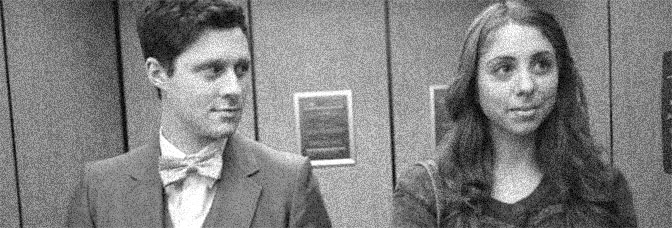
The last scene of Old Stock doesn't exactly overshadow the rest of the film, but it certainly sets it apart. It's one of the more subtle finishes to a film. Without giving the viewer any guidance, director Genn and writer Dane Clark close the picture with a silent reference to a line in the dialogue.…
-

Bottle Rocket is such a masterpiece of narrative design, it eschews drawing any attention to that design. Somehow Anderson and Owen Wilson manage to tell a satisfactory long short film and affix an additional thirty minute postscript to the whole thing. It’s like a movie and a sequel all in ninety minutes. Or maybe they’re…
-

Nothing Sacred is an idea in search of a script. It’s a little surprisingly they went forward with Ben Hecht’s script, which plays like he wrote it on a bunch of napkins and left director Wellman to piece together a narrative. Fredric March–who has shockingly little to do in the film–is a newspaper reporter who…
-
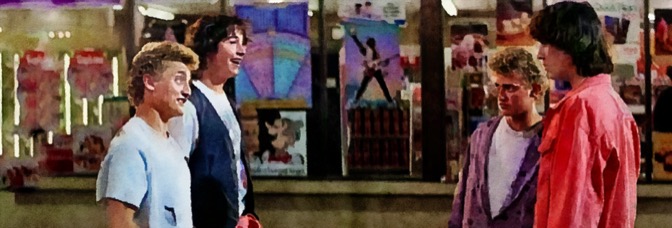
About halfway through Bill & Ted’s Excellent Adventure, the film becomes truly excellent. Dimwitted metal heads Alex Winter and Keanu Reeves have successfully brought historical figures to the present and loosed them on the modern world–the mall. That sequence of the film, along with Terry Camilleri’s Napoleon at a water park, is when the film…
-
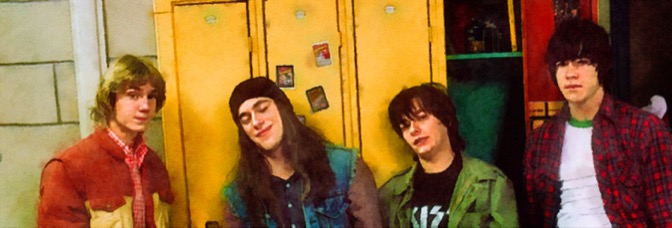
Detroit Rock City is going to be difficult to talk about. It’s painfully unfunny, yet fully embraces the idea it’s the complete opposite. Maybe director Rifkin really thinks his weak seventies pop culture references, his sight gags, and his terrible cast are funny. Or maybe he’s just good at hiding any awareness of the film’s…
-

It’s hard to describe what’s wrong with Rally ’Round the Flag, Boys!; not because its ailments are mysterious but because the sentence is just a little problematic. Rally is a light handling of what should be a mature comedy. It deals with big issues–fifties suburban malaise and boredom, not to mention a strange post-war animosity…
-

With the exception of Jill Eikenberry, all of the cast members from the original return for Arthur 2: On the Rocks. Cynthia Sikes replaces her. Eikenberry’s absence means she’s the only person who doesn’t embarrass herself. I’m sorry, did I say embarrass? I more meant humiliate. Worse, director Yorkin and screenwriter Andy Breckman don’t just…
-

Given its ninety minute length and having Jane Fonda perform the comically explicit narration, it might be easy to dismiss–or just describe–Better Living Through Chemistry as a genial amusement. Certainly lead Sam Rockwell can do this role in his sleep. He's a small town pharmacist in a bad marriage (Michelle Monaghan is great as the…
-

From start to finish, Mr. Bean’s Holiday proves a constant delight. Hamish McColl and Robin Driscoll’s plot is simple–send Rowan Atkinson’s constantly aloof and impossibly unlucky Mr. Bean to France on a holiday. There’s an immediate scene establishing the travel route and then Atkinson gets in trouble at every point along the way. He eventually…
-

Memoirs of an Invisible Man is pointless. Most of its problems stem from the film’s lack of focus–in some ways, given Chevy Chase is a stockbroker and leads a life of extreme comfort, it ought to be an examination of eighties yuppies. Only a few years late. Except it’s obvious director Carpenter doesn’t want to…
-

I’m trying to imagine how Bean would play to someone unfamiliar with the television show. Depending on one’s tolerance for bland family comedy-dramas, it might actually play better. Because Bean, the movie, removes a lot of Bean, Rowan Atkinson’s character, and instead fills the time with Peter MacNicol and his problems. His job is on…
-

Lovesick is an unassuming comedy. Director Brickman will occasionally bring in frantic, sitcom-like plotting to jazz things up momentarily, but otherwise the film’s exceedingly calm and measured. It only runs ninety-some minutes; it’s gradual, without much conflict at all–in fact, when there’s conflict introduced, Dudley Moore’s protagonist will actually relieve pressure on the situation. It’s…
-

Dear Heart starts awkwardly and ends awkwardly. At the beginning, director Mann and writer Tad Mosel are very deliberately setting up their protagonists and the setting. The awkwardness makes sense. That very solid foundation allows for everything following. The ending, which plays–at least for Geraldine Page’s character–like a reverse of the opening for a while,…
-

G.B.F. has a lot of problems. First and foremost, it should probably be called My G.B.F. just because making it a possessive statement would add some depth before starting it. Second, worst makeup in a movie ever. It’s unclear if it’s makeup artist Gage Hubbard’s fault, cinematographer Jonathan Hall’s fault or some combination (it seems…
 The Stop Button