Category: Classics
-

Even when the story falls apart, Del Ruth’s direction still keeps Taxi! somewhat afloat. It only runs seventy minutes and the first half is pretty good stuff. When it starts, the film’s about one cab company trying to muscle out its competitors-Guy Kibbee and James Cagney being some of those competitors. But Taxi! soon becomes…
-
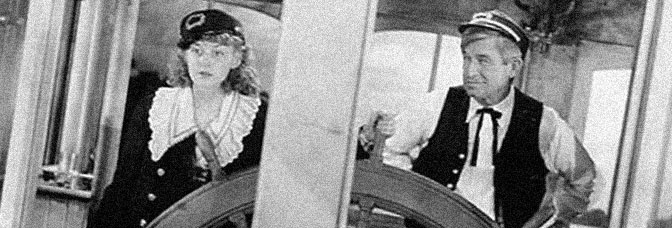
The best scene in Steambout Round the Bend is the wedding between Anne Shirley and John McGuire. Neither Shirley nor McGuire is particularly good in the film, but McGuire’s about to be hung and so they’re getting married. Steambout is often a comedy and Eugene Pallette–as the officiating sheriff–tells some really bad jokes at the…
-

Crusading newspaperman Humphrey Bogart has to contend with his paper going out of business, the mob, and his ex-wife getting remarried. Writer-director Brooks’s ambitious are beyond what he can realize. Great performances from Bogart, Ethel Barrymore (as the paper’s owner), and Kim Hunter (as his ex). Almost entirely superb supporting cast. Great black and white…
-

It should be obvious British Intelligence is based on a play, so much of it takes place in a single house, but director Morse and screenwriter Lee Katz open it up enough it never does. Actually, even though it’s a low budget picture, their expansive approach even obscures the concentration around the one setting. Intelligence…
-

The Body Snatcher has half an excellent foundation. Nineteenth century medical genius Henry Daniell can’t escape his past associations with a shady cabman (Boris Karloff). These past associations being of the grave robbing variety. There’s also Daniell’s romance with his maid (Edith Atwater), which humanizes the character throughout the first half, since Daniell’s supposed to…
-

Quite surprisingly, The Seventh Victim–in addition to being a disquieting, subtle thriller–is mostly about urban apathy and discontent. Though there aren’t any establishing shots of New York City (or of the small New England town protagonist Kim Hunter comes from), Robson and writers Charles O’Neal and DeWitt Bodeen are quite clear about it. There’s no…
-

The Leopard Man has such beauteous production values–one would never think it was a low budget picture, not with Robert De Grasse’s lush blacks and he and director Tourneur’s tracking shots–it’s a shame the acting fails the film. A lot of the problem the script. Co-screenwriters Ardel Wray and Edward Dein try hard to show…
-

Murder on a Honeymoon is a tepid outing for Edna May Oliver and James Gleason’s detecting duo. It’s the third in the series and, while Oliver and Gleason are back, it’s clear some of the magic was behind the camera. Robert Benchley and Seton I. Miller’s script is a little too nice (in addition to…
-

The Thirteenth Guest has a lot of problems, but its biggest failing is Frances Hyland’s script. Hyland doesn’t just have a lot of logic problems, he also has a bunch of lousy humor. There’s Paul Hurst’s moronic police detective, who Hyland relies on for Guest‘s version of comic relief. Hurst whines a lot and annoys…
-

Like most lame melodramas, Disgraced‘s plot only works because characters all of a sudden act completely differently than the story has previously established them. Disgraced concerns a department store model (Helen Twelvetrees) who starts hanging around a regular customer’s fiancé. Romance ensues. She’s got to hide the affair from her father, who would rather she…
-

Given all the excellent components, Deadline at Dawn ought to be a lot better. It has a compelling plot–a naive sailor and erstwhile murder suspect (Bill Williams) has to solve the crime before he ships out, but he’s just met a city hardened girl (Susan Hayward) and crushing on her and she’s warming to him–and…
-

As its title suggests, Murder on the Blackboard concerns a murder in a school, specifically an elementary school. Only one student appears; Blackboard concentrates on the rather shady goings-ons of the staff. There’s a drunk janitor, a lecherous principal, not to mention a love triangle between teachers. And, one mustn’t forget, Edna May Oliver’s Ms.…
-

I Married a Witch often seems too short. Director Clair rightly focuses the picture around leading lady Veronica Lake, with Frederic March getting a fair amount of attention too, but the narrative outside them blurs. And it shouldn’t blur, given the high stakes election backdrop. Clair’s focus also extends to troublesome plot points. Witch goes…
-

Framed feels a little like it was a silent turned into a talkie. About half the time, instead establishing shots for scene changes, there are expository title cards. Usually they’re for time changes, as though director Archainbaud couldn’t think of anything else. It’s hard to say how many of Framed‘s problems are Archainbaud’s fault. Most…
-

Ellery Queen and the Murder Ring‘s title confuses me for a couple reasons. First, Ralph Bellamy’s Ellery Queen disappears for long stretches of the seventy-minute runtime. When he does show up, he usually makes a mistake or overlooks something, then someone else comes in and gets the investigation back on track. Second is the Murder…
-

Superman and the Mole Men is somewhat hard to watch–and not because of the goofy mole people costumes. The bad guys in the film aren’t the mole men, but the evil redneck townspeople who hunt them down. Mole Men runs less than an hour (a theatrical pilot for the “Adventures of Superman” TV series) but…
-

Phenomenally well-made but exceptionally racist thriller about a Caribbean voodoo cult brainwashing Dorothy Burgess into a sleeper agent. Jack Holt’s her unknowing husband, Cora Sue Collins is their daughter. Second-billed Fay Wray is the good White lady versus suspected race traitor Burgess. Like I said, racist; really, willfully racist. Holt’s great, so’s Collins. Great finale…
-

How to describe Cat People…. When a swell, blond American (Kent Smith) meets a dark (but not too dark) Eastern European woman (Simone Simon), she rouses all sorts of non-apple pie passions in him. Being a swell guy, he pressures her into marrying him–she’s clearly emotionally disturbed, but it’s okay… Smith hires her a great…
-

Tepid at best hour-long B picture has leads Fay Wray and Charles Lang trying to save Wray’s father’s bus company. The bad guys are the unlicensed hired car firm. Bad direction from Woodruff (with the exception of an out-of-nowhere car chase too late in film to make any difference). Wray and Lang are appealing rather…
-
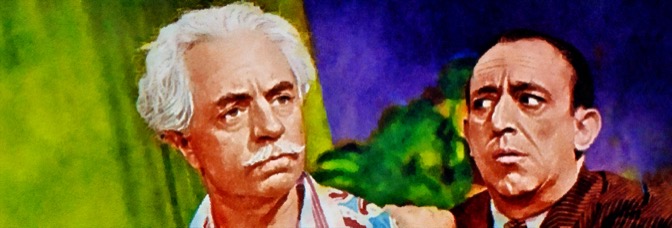
The Senator Was Indiscreet is a fun enough little film. It’s little for a few reasons; sadly, the primary one is the budget. Enough of the film takes place in William Powell’s hotel room, one would think it’s a play adaptation. The story is more ambitious than the finished film can realize. Powell’s a dimwit…
-

It’s hard to find anything good about Enter Arsene Lupin. Ella Raines isn’t as bad as the other primary cast members, though she’s not as good as some of the bit players. The film does hold some historical value both in the use of the Universal European backlot set for England–apparently, 1944 London looks a…
-

If it weren’t so predictable, The Greene Murder Case would be a little better. Not much better–part of the film’s charm is the obvious foreshadowing, since director Tuttle’s obviously on a limited budget and he couldn’t do much anyway. There are no natural exteriors, which is fine; the one artificial exterior–Tuttle’s establishing shots tend to…
-

Come Live with Me features exquisite direction from Clarence Brown. Whether he’s pacing out a reveal, directing a conversation or just being inventive with composition, he does an outstanding job. George J. Folsey’s photography helps, as do the fantastic sets. It’s a shame good direction can’t overcome a truly lame screenplay from Patterson McNutt. The…
-

MGM cut at least twenty-five percent out of Mark of the Vampire, which accounts for some of the plotting problems but still leaves the film a little messy. Ben Lewis’s editing is weak during dialogue exchanges, not just in general. And no amount of studio interference could have changed Browning’s reliance on weak special effects.…
-

The Greek anti-defamation league, if it existed, mustn’t have had much power when Isle of the Dead came out. It’s a quarantine drama, a genre I’m unfamiliar with but certainly has a lot of potential, set on a small Greek island. There’s nothing on the island besides an amateur Swiss archeologist (Jason Robards Sr.) and…
-
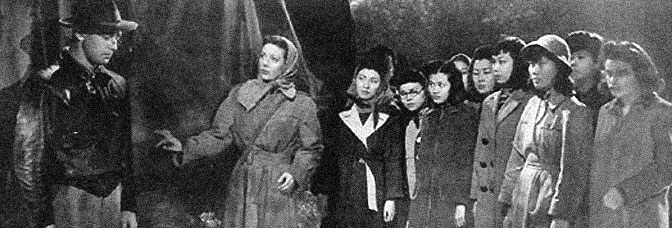
China has a lot to do. While it’s a propaganda picture meant to rally American support for the Chinese, it’s also propaganda for the future of China. Loretta Young plays a school teacher and her charges, in almost every one of their scenes, extol the virtues of Western democracy. There’s also the redemptive aspect for…
-

While I Like Your Nerve is urbanely genial, it’s a somewhat high concept romantic adventure comedy. Douglas Fairbanks Jr. is a playboy–though not one of means–living it up in South America. He travels from country to country (they are, of course, so small he can drive) and stirs up trouble. But then he sees Loretta…
-

Sh! The Octopus is a painfully unfunny spoof of the “old dark house” genre. Instead of a house, though, it takes place in a lighthouse on a rocky island. That setting should be enough, but it appears Warner only budgeted for the lighthouse model. The action principally takes place inside the lighthouse, in its large…
-

Running about an hour, The Most Dangerous Game shouldn’t be boring. But it somehow manages. Worse, the boring stuff comes at the end; directors Schoedsack and Pichel drag out the conclusion with a false ending or two. The film doesn’t have much to recommend it. That laborious ending wipes short runtime off the board, leaving…
-

Although the title suggests otherwise, The Ghost Ship is not a supernatural thriller. It is, however, a very effective suspense picture. Russell Wade (in a sturdy lead performance) is a new officer. On his first ship out, he begins to suspect the captain–Richard Dix, who steadily gets creepier–is a little off his rocker. Of course,…
 The Stop Button