Category: Directed by Buster Keaton
-

Hard Luck starts as a… failed suicide attempt comedy. Nothing morbid, just absurd and slapstick. And a little dumb. Star, director, and writer Keaton always has dangerous ideas for ending his life, but never particularly good ones. There’s a lot of physical humor from Keaton during this section; situational physical comedy. Most of it is…
-
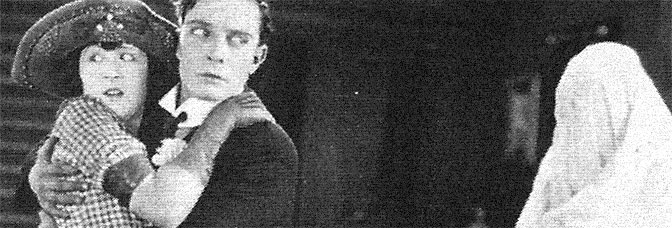
The Haunted House has some excellent gags. There’s a lot of set gags in the finale, when bank clerk Keaton ends up in the–well, the haunted house. His coworker–a delightfully evil Joe Roberts–is actually a counterfeiter who uses the haunted house to print money; the haunted bit is just a cover. Lots of great comedic…
-

I’m not sure what the best thing is about Neighbors. There’s the comic pacing, there’s the comic acrobatics, there’s the story, there’s the acting. Co-directors Keaton and Cline quickly introduce this fantastic setup–Romeo and Juliet across a fence in an alley and then immediately get into two very complicated Keaton-fueled acrobatic mastery. It segues into…
-
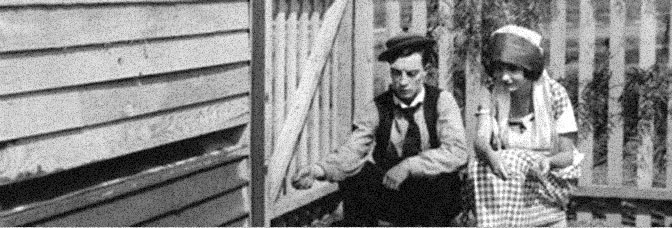
The Scarecrow opens with a lengthy practical effects sequence. Buster Keaton and Joe Roberts are roommates and they have an elaborately designed “concise” home. It’s like IKEA’s dream, only with manually pulled ropes instead of some kind of remote control. (There’s also a gag Chaplin had, a year later, in The Kid). Turns out the…
-

Convict 13 has some undeniably funny stuff in it, but directors Keaton and Cline rely almost entirely on physical comedy. By physical, I mean actors doing choreographed comedy. Sometimes it’s Keaton, both for the smaller sequences and the larger, or Joe Roberts as a gigantic, revolting prisoner. Both senses of revolting. Oh, right. Real quick–Convict…
-
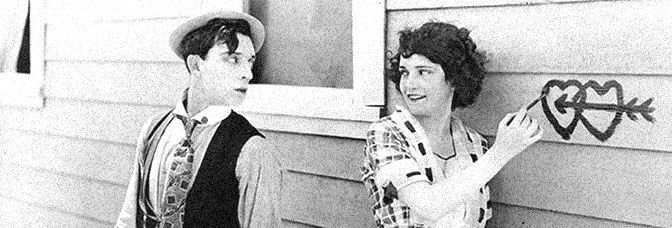
One Week is pretty much perfect. Directors Cline and Keaton structure the short beautifully. It takes place over a week, the passage of days torn off calendar pages, as newlyweds Keaton and Sybil Seely set up their home. Literally, set up; they’re constructing their own pre-fab and things go wrong. The tone of the comedy…
-
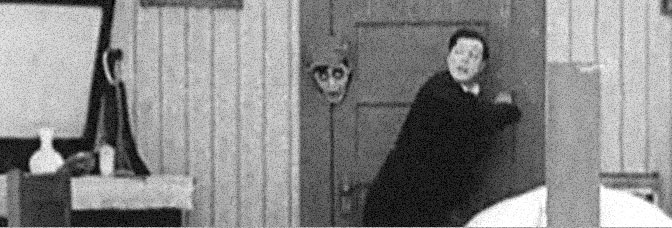
The ‘High Sign’ starts innocuously enough. Leading man Buster Keaton is out of work and answers a want ad to be a clerk at a shooting range. Maybe the tone of the short can be determined from Keaton stealing a cop’s gun to practice, because things don’t stay innocuous for long. In addition to the…
 The Stop Button