Category: Comics
-

Friday is actually Friday #1. Or “Chapter One.” I went into it cold, only aware it was Ed Brubaker writing and Marcos Martin on art. I figured it was a done-in-one, but it’s actually the start of a new serial. The titular Friday is one Friday Fitzhugh, who’s just come home from college to her…
-
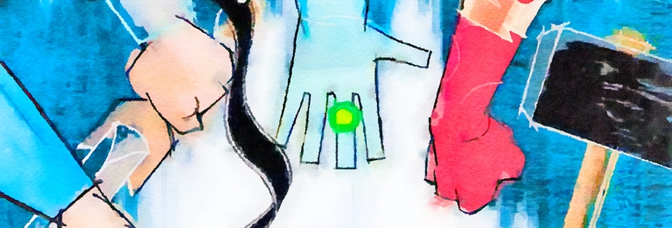
It would be wrong to describe Justice League: The New Frontier Special as hack work. Darywn Cooke’s art on the feature, even his plotting of it, is not hacky. Neither is the Robin and Kid Flash story’s art, courtesy Dave Bullock and Michael Cho. Even the Wonder Woman and Black Canary go to a Playboy…
-
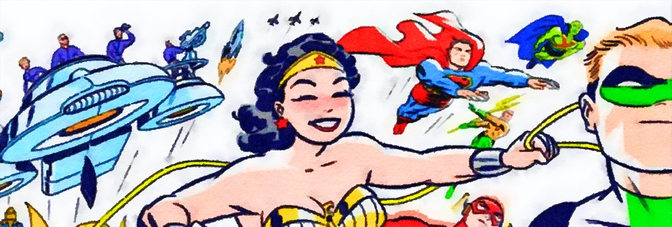
Darwin Cooke’s most impressive achievement with The New Frontier isn’t the art, which is a mix of sublime, grandiose, muted, and bombastic, or keeping track of all the characters (there have to be hundreds), but the voice he finds for characters. He starts big, with Losers member Johnny Cloud narrating the team’s adventures on Dinosaur…
-

Some of Sleeper doesn’t age well. There’s a whole plot line about the secret society running the world and, in 2020, it seems like a very dated trope. To be fair, it was dated in 2003 when Sleeper came out, but writer Ed Brubaker was at least utilizing the trope to sabotage it. There’s also…
-
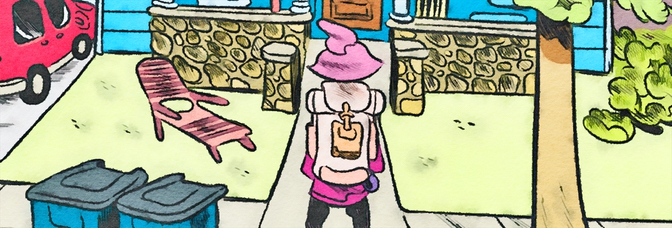
This first issue is, sadly, the only issue of Chad Agamemnon. Creator Nowak wrote and drew the book for the Ann Arbor Public Library and, whatever the arrangement, it wasn’t feasible for the book to continue. A bummer, because it’s charming as all heck. The titular Chad is a young wizard in exile, cast to…
-
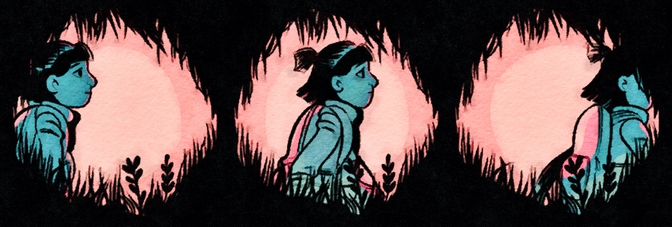
To Be Seen is this lyrical piece about an unnamed female tween narrator and her life at a particular time. There are six vignettes in the comic, with most of them echoing throughout others. The strips are gentle, sometimes funny, sometimes scary—Nowak captures that period where in childhood where you’re figuring out the world isn’t…
-
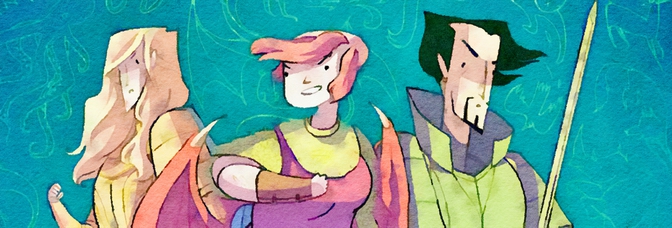
Nimona started as a webcomic, which explains some of how creator Noelle Stevenson paces it and sets the narrative distance. It often feels very much like a traditional newspaper strip, showing the (admittedly peculiar) domestic lives of its cast. The first book opens with teen Nimona sneaking into supervillain Balister Blackheart’s secret lair, telling him…
-
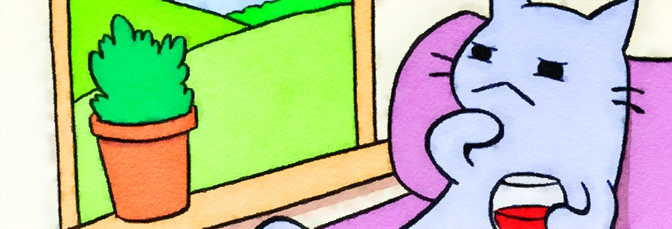
Flimsy’s Mewsings is approximately thirty-seven single page comic strips—there’s one two-pager, a recipe—of adorable kitten Flimsy offering life advance. Gentle stuff like be kind to yourself, remember the lesson and forget the mistake, be genuinely interested in other people, email the friends you haven’t in a while, drink wine, try to remember “guys” is a…
-

Barracuda is one of Garth Ennis’s… what shall we call them… NC-17 action comedy limited series. He’s got a bunch of them at Vertigo, a few a handful of other places. The difference with Barracuda is it’s for Marvel (it’s the only Punisher MAX spin-off, which is something since Ennis loved spin-offs for Preacher and…
-
Barracuda is one of Garth Ennis’s… what shall we call them… NC-17 action comedy limited series. He’s got a bunch of them at Vertigo, a few a handful of other places. The difference with Barracuda is it’s for Marvel (it’s the only Punisher MAX spin-off, which is something since Ennis loved spin-offs for Preacher and…
-

Weird Melvin #6 gives the series a conclusion, but definitely not the one I’d been hoping for. The story title is something like part five, so—for whatever publishing reason—last issue’s fill-ins were really fill-ins. This issue opens with Melvin and the Kid headed back to base with some stolen diapers. Melvin’s going all in on…
-
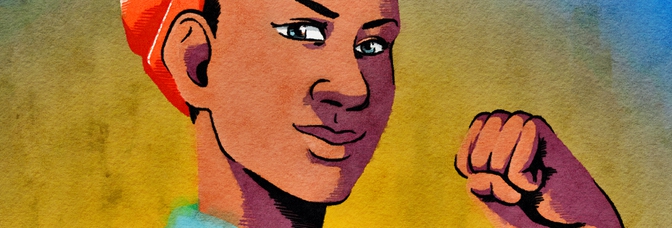
There are a sea of faces in Amazons, Abolitionists, and Activists. Sea of faces, sea of names, which is the point. The book is a history of women ignored in history books, though not always. Writer Mikki Kendall doesn’t avoid the awkward subjects, like Susan B. Anthony’s white supremacy or the significant racism of her…
-

Shadow of the Batgirl is a bit of a bummer, though I’m not exactly sure why. It’d be nice if it were good. It’s not bad… not if you’re getting it from the library versus spending the sticker price. And there’s a big library subplot in the book so it’s appropriate. It just feels stretched…
-

Weird Melvin #5 is a flashback issue. Only, not really. There’s clearly some publication history trivia to the series; the cover says this issue has the first two Weird Melvin comics in it, previously unpublished. They present a new origin story for both Melvin and the Kid, who have much different histories in the first…
-
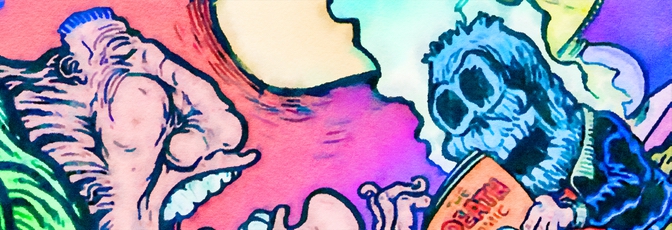
There is a very good chance Weird Melvin might gross me out next issue. Hansen gets pretty close in the cliffhanger, which features two lady monsters (a mother and daughter) pregnant with half-mutated giant insects, half-monsters. What’s most surprising is the grossness isn’t in Hansen’s detail but in the action and implications of the action.…
-

I spent the first ten minutes of Queen of the Sea underwhelmed. The book’s set in the mid-1500s—maybe—it’s unclear because creator Dylan Meconis isn’t doing a straight historical fiction thing. Meconis is sort of doing Elizabeth versus Mary but not exactly. The world is a lot like fourteenth century England, but it’s not exact. Everything’s…
-

Hansen introduces a whole new character—or two, actually—but one with history with Weird Melvin; his sidekick, reformed monster Shag. Shag hangs out in Weird Melvin’s abandoned headquarters. Seems like he’s been there a while… but he’s finally ready to walk out. But Shag doesn’t come into the comic until the third-ish act. I’m not sure…
-

Leave it to Hansen to make it weirder. The issue starts with a bookend—Melvin’s still unnamed comic fan sidekick is berating Weird Melvin for not stopped Monster Fanboy (who owns every comic every published and hordes them in an underground lair and is, actually, a monster when it comes to collecting)—and then goes into flashback.…
-

Weird Melvin is a gloriously weird comic. Creator Marc Hansen brings the weird to the art—not just the muscle-bound grotesques (Melvin and, later, a regular human) but also Melvin’s cyclops nemesis, Sy Cyclops. The comic starts from Sy’s perspective, as he nitrous ups his car and hits Weird Melvin full speed. Good thing Melvin’s almost…
-

Harley Quinn: Breaking Glass is a Young Adult graphic novel reimagining of Harley Quinn, set in high school, with Harley making friends and enemies while living with a delightfully supportive group of drag queens, fighting gentrification and 1% incels. It’s also almost two hundred pages of Steve Pugh art. It’s the new Mariko Tamaki too,…
-
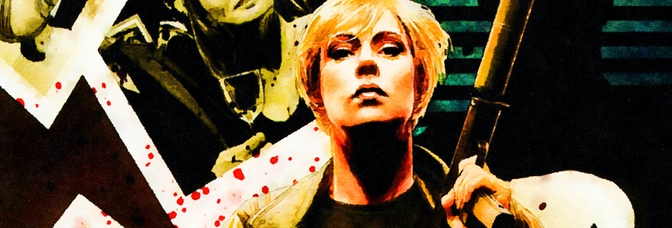
Bill Reinhold’s back on inks—solo—this issue. It doesn’t have to be Tom Palmer, it could be someone else, but it needs to be someone else because Medina and Reinhold completely botch the finish. Ennis is going for something—something confused, because there have been too many issues in the arc and not enough focused ones, but…
-
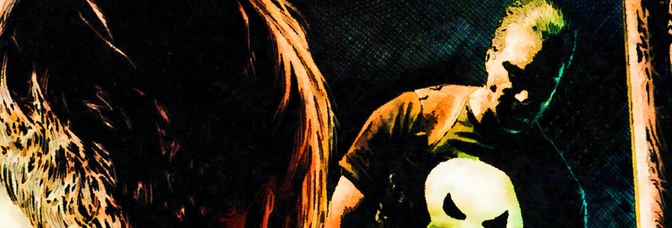
Tom Palmer on inks this issue—he also did some of the previous issue’s inks; he makes Medina’s pencils look a lot more pensive. People are thinking, listening, far better than before. Even if maybe Palmer on inks just show off how Medina isn’t the right fit for the material. It’s mostly a talking heads issue,…
-
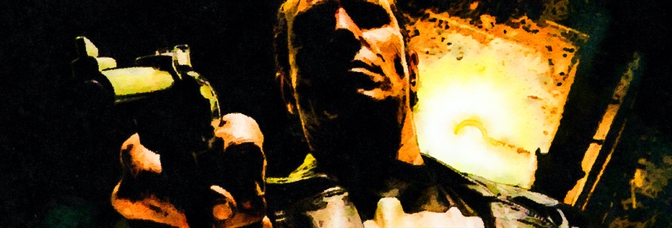
It’s not a light issue. There’s barely any Frank; he’s just sitting around and listening to sixth widow Jenny tell him her life story. She was a mafia princess. She got married off to a full-on psychopath who, on a good night, just beat and raped her. The other mob widows knew about it, lied…
-
Ennis brings all the threads together this issue. Frank, the widows, the mystery woman, the cop. The cliffhanger resolve has Frank taking one to the chest. The issue opens with Frank thinking about how unlikely the house where the damsel widow has brought him seems like a front for a trafficking operation. He’s just about…
-
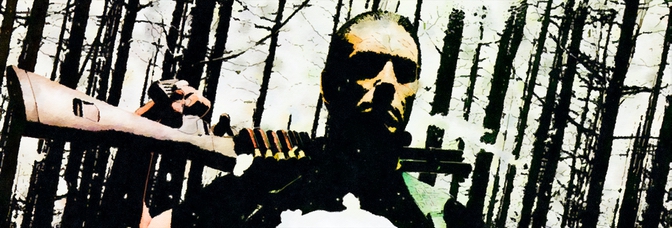
Lots of action this issue. Frank’s taking out of a convoy of mob cars—the first page has Medina and Reinhold doing photo-reference on James Gandolfini but the character never figures in later so it’s not The Punisher vs. The Sopranos—but there’s a catch. The widows have put their decoy damsel in distress in one of…
-
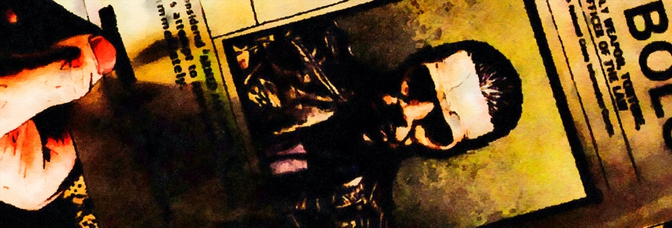
Ennis opens the issue with Frank killing a couple child pornographers. It’s a few pages, with Frank considering his options considering the kids (and victims) are at home, as well as how much he wants to watch the perpetrators suffer. The growing itch he didn’t realize he had the desire to scratch. It’s Ennis’s long-term…
-
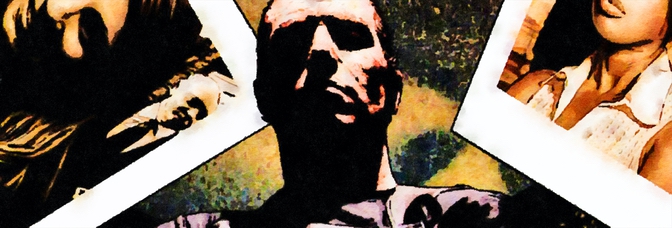
There’s barely any Frank in this issue. He opens it—gets the first two pages, then writer Garth Ennis shifts the action entirely to the villains. Frank’s been up against the mob, he’s been up against the Russians, he’s been up against big business, but now he’s up against a group of women he’s widowed. Hence…
-
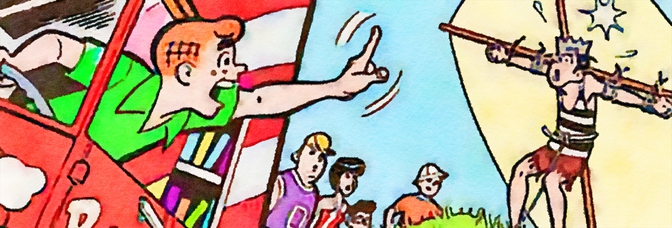
Are Christian comics better or worse since Archie Gets a Job! (from 1977)? The comic promotes a combination of functional illiteracy and profound ignorance, not to mention encouraging teasing of people’s appearances, particularly fat-shaming. Just like Jesus, no doubt. The comic’s all about Archie and Jughead getting summer jobs at school teacher Mr. Weatherbee’s beach-front…
-
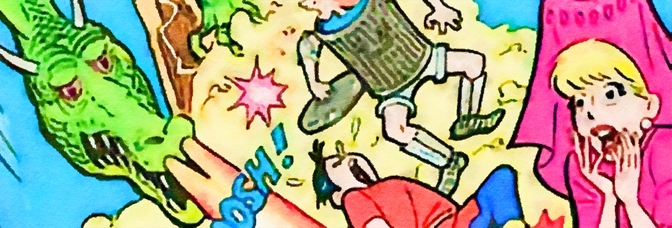
Archie’s Parables is Christian comics propaganda from the 1970s and is a great example of why it never would’ve occurred to me to read an Archie comic before, what, 2010 or something. But Parables, courtesy Spire Christian Comics and creator Al Hartley. Though using the word “creator” for Hartley is… a lot. Despite both writing…
-

So last issue was a surprise as far as creator Marc Hansen’s plotting for Doctor Gorpon goes and this issue is no different. The issue opens having to resolve three cliffhangers—all of the monsters Gorpon has captured over the years has gelled into sentient ooze bent on destroying him, his former assistant is at the…
 The Stop Button