Lazarus (2013) #20

Lazarus  20

It’s been too long since I last read Lazarus. The comic’s bimonthly and has been for a while. Maybe forever (no pun intended). But, with Lazarus’s big cliffhangers of late, I guess I expected Rucka to be more sensational with this issue. Instead, he’s reserved. He’s not showing off.

This issue is the first one where I decided I’d read Lazarus again. I probably would have made that decision, but not for a while. With this issue, however… I want to go back immediately following its conclusion. Because Rucka’s pacing is strange. It’s deliberate, it’s distracting, but Rucka’s able to maintain an intense ambition to his storytelling.

And Lark gets to do a bunch this issue. A military combat sequence–beautifully constructed–and a nice little hand-to-hand fight. And some nearly noir machinations scenes. Lark’s not the artist to do the fantastical, which helps make Lazarus’s dystopian future realistic, but Lark is the artist who does the work. So it’s fantastical Lark, which seems an oxymoron, but isn’t.

Really good stuff. I hope the next issue comes out sooner than two months.

Lazarus 20 (November 2015)

Lazarus #20It’s been too long since I last read Lazarus. The comic’s bimonthly and has been for a while. Maybe forever (no pun intended). But, with Lazarus’s big cliffhangers of late, I guess I expected Rucka to be more sensational with this issue. Instead, he’s reserved. He’s not showing off.

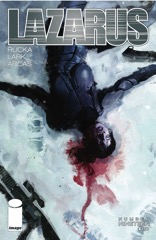
This issue is the first one where I decided I’d read Lazarus again. I probably would have made that decision, but not for a while. With this issue, however… I want to go back immediately following its conclusion. Because Rucka’s pacing is strange. It’s deliberate, it’s distracting, but Rucka’s able to maintain an intense ambition to his storytelling.

And Lark gets to do a bunch this issue. A military combat sequence–beautifully constructed–and a nice little hand-to-hand fight. And some nearly noir machinations scenes. Lark’s not the artist to do the fantastical, which helps make Lazarus’s dystopian future realistic, but Lark is the artist who does the work. So it’s fantastical Lark, which seems an oxymoron, but isn’t.

Really good stuff. I hope the next issue comes out sooner than two months.

CREDITS

Poison, Part Four; writer, Greg Rucka; penciller, Michael Lark; inkers, Lark and Tyler Boss; colorist, Santiago Arcas; letterer, Jodi Wynne; editor, David Brothers; publisher, Image Comics.

Lazarus (2013) #19

Lazarus  19

It’s so good. Do I always start a Lazarus response with that statement? “It’s so good.” Like every time I read the comic, I’m surprised by how good Rucka and Lark do on the comic. It’s always a surprise too. Rucka hits a new ceiling. He integrates Lark and his abilities in an entirely predictable but entirely unexpected way. It’s great stuff.

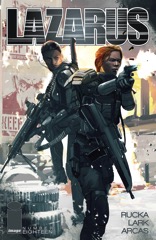
Lark’s art is real strong this issue overall. He’s got really varied storylines going on, each needing distinct, immediate visuals. Lark finds a tone for each. What’s really cool–and something Rucka did carefully–was get someone likable into every storyline. Or someone comically unlikable (the evil, incestuous sister). It brings a soap opera element into it. And then Lark and Rucka deliver an action sequence.

Lazarus, very, very discreetly, mixes genres. And Rucka does it really well. It might be why the first arc didn’t connect–it was setting up the situation to allow Rucka all the freedom. The painful exposition about the dystopian future, for example, set up the second storyline, which is where Lazarus started to get good. And now it’s one of my favorite comics.

Awesome last sequence too; just awesome.

Lazarus 19 (September 2015)

Lazarus #19It’s so good. Do I always start a Lazarus response with that statement? “It’s so good.” Like every time I read the comic, I’m surprised by how good Rucka and Lark do on the comic. It’s always a surprise too. Rucka hits a new ceiling. He integrates Lark and his abilities in an entirely predictable but entirely unexpected way. It’s great stuff.

Lark’s art is real strong this issue overall. He’s got really varied storylines going on, each needing distinct, immediate visuals. Lark finds a tone for each. What’s really cool–and something Rucka did carefully–was get someone likable into every storyline. Or someone comically unlikable (the evil, incestuous sister). It brings a soap opera element into it. And then Lark and Rucka deliver an action sequence.

Lazarus, very, very discreetly, mixes genres. And Rucka does it really well. It might be why the first arc didn’t connect–it was setting up the situation to allow Rucka all the freedom. The painful exposition about the dystopian future, for example, set up the second storyline, which is where Lazarus started to get good. And now it’s one of my favorite comics.

Awesome last sequence too; just awesome.

CREDITS

Poison, Part Three; writer, Greg Rucka; penciller, Michael Lark; inkers, Lark and Tyler Boss; colorist, Santiago Arcas; letterer, Jodi Wynne; editor, David Brothers; publisher, Image Comics.

Lazarus (2013) #18

Lazarus  18

I’m getting sick of my Lazarus posts. I hope you all aren’t. They go the same way–hated it for the first arc, then started loving Lazarus and now I await every issue with baited breath and count the hours till its release.

But I’ve got to say all that stuff again. Good thing I already did. This issue’s so good. Even with the most obvious, most manipulative cliffhanger I’ve ever seen. Because Rucka does everything else in the issue so well, even how he structures the cliffhanger–doesn’t hurt having Lark’s awesome art (assisted by Tyler Boss on inks). Lark gives Rucka so much leeway–there’s a Forever action scene. Forget everything else.

There’s Forever versus a bunch of soldiers. By Michael Lark. And it’s awesome. It’s so good. It brings back that old Lark thrill of seeing him realize something for the first time.

As usual, it’s excellent.

Lazarus 18 (July 2015)

Lazarus #18I’m getting sick of my Lazarus posts. I hope you all aren’t. They go the same way–hated it for the first arc, then started loving Lazarus and now I await every issue with baited breath and count the hours till its release.

But I’ve got to say all that stuff again. Good thing I already did. This issue’s so good. Even with the most obvious, most manipulative cliffhanger I’ve ever seen. Because Rucka does everything else in the issue so well, even how he structures the cliffhanger–doesn’t hurt having Lark’s awesome art (assisted by Tyler Boss on inks). Lark gives Rucka so much leeway–there’s a Forever action scene. Forget everything else.

There’s Forever versus a bunch of soldiers. By Michael Lark. And it’s awesome. It’s so good. It brings back that old Lark thrill of seeing him realize something for the first time.

As usual, it’s excellent.

CREDITS

Poison, Part Two; writer, Greg Rucka; penciller, Michael Lark; inkers, Lark and Tyler Boss; colorist, Santiago Arcas; letterer, Jodi Wynne; editor, David Brothers; publisher, Image Comics.

Lazarus (2013) #17

Lazarus  17

Where did Lazarus come from? Every time I read it, I have to remember it wasn’t always one of my favorite comics. Far from it. But now, even when Rucka can turn the series at a ninety degree angle and still come out doing not just something special but something special for artist Lark too–I just have to wonder… where did it come from? Did Rucka know he’d eventually be able to take it across genre without ever leaving the world he set up?

This issue is not a traditional Lazarus issue. It’s a war comic. It’s even a homefront comic. It’s a war comic with the soldiers, it’s a war comic with the generals. It’s still a Lazarus comic with the family politicking. It’s a lot.

The Lark art is phenomenal. The digital snowflakes do serve the story, but sadly hinder me getting to gawk at Lark’s art.

Lazarus 17 (June 2015)

Lazarus #17Where did Lazarus come from? Every time I read it, I have to remember it wasn’t always one of my favorite comics. Far from it. But now, even when Rucka can turn the series at a ninety degree angle and still come out doing not just something special but something special for artist Lark too–I just have to wonder… where did it come from? Did Rucka know he’d eventually be able to take it across genre without ever leaving the world he set up?

This issue is not a traditional Lazarus issue. It’s a war comic. It’s even a homefront comic. It’s a war comic with the soldiers, it’s a war comic with the generals. It’s still a Lazarus comic with the family politicking. It’s a lot.

The Lark art is phenomenal. The digital snowflakes do serve the story, but sadly hinder me getting to gawk at Lark’s art.

CREDITS

Poison, Part One; writer, Greg Rucka; artists, Michael Lark and Tyler Boss; colorist, Santiago Arcas; letterer, Jodi Wynne; editor, David Brothers; publisher, Image Comics.

Lazarus (2013) #16

Lazarus  16

For the first time in ten issues or so, Lazarus doesn’t sit well.

Oh, it’s fine–the script’s certainly stronger than the first arc of the series, but Rucka’s got a problem. He’s got an artist without time for the comic so what’s he going to do? A fill-in issue. But Lark does most of the art, just nothing exciting. Instead of exciting, there are these graphic design fill-in pages by Owen Freeman and Eric Trautmann. Diagrams, journal entries, all sorts of malarky.

And it is malarky. Rucka’s got his story–this secret agent nun trying to do something–and he tells it so Lark never has to get too involved with the art. Lots of night scenes, lots of black. Long shots with narration. No one actually talking for most of the comic.

Fill-in issues, done-in-one issues, they’re a necessary evil to modern comics.

Lazarus 16 (April 2015)

Lazarus #16For the first time in ten issues or so, Lazarus doesn’t sit well.

Oh, it’s fine–the script’s certainly stronger than the first arc of the series, but Rucka’s got a problem. He’s got an artist without time for the comic so what’s he going to do? A fill-in issue. But Lark does most of the art, just nothing exciting. Instead of exciting, there are these graphic design fill-in pages by Owen Freeman and Eric Trautmann. Diagrams, journal entries, all sorts of malarky.

And it is malarky. Rucka’s got his story–this secret agent nun trying to do something–and he tells it so Lark never has to get too involved with the art. Lots of night scenes, lots of black. Long shots with narration. No one actually talking for most of the comic.

Fill-in issues, done-in-one issues, they’re a necessary evil to modern comics.

CREDITS

Mercy; writer, Greg Rucka; artists, Michael Lark, Tyler Boss, Owen Freeman and Eric Trautmann; colorist, Santiago Arcas; letterer, Jodi Wynne; editor, David Brothers; publisher, Image Comics.