• Werewolf by Night (1972) #5

    Wbn5

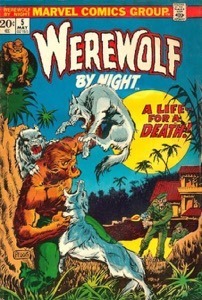
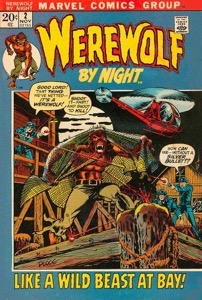
    Artist Mike Ploog is back to inking himself, and it is glorious from the first page. There’s even a recap of the previous issue, so everyone can see what they missed not having Ploog ink himself. The recap also burns some pages for writer Len Wein, who’s got the somewhat inglorious task of picking up the series on a downturn. Wein’s scripting is fairly indistinguishable from previous writer (and Werewolf creator alongside Ploog) Gerry Conway.

    The action begins with Jack reverted to human form and heading back to collect sister Lissa from captivity. Unsurprisingly, he can’t just rescue her because the bad guy from the last issue has an evil brother, but this one’s a scientist who wants someone murdered. In exchange for the werewolf doing the deed, brother bad guy will cure Lissa’s lycanthropy. I’d be remiss not to mention—because it was a silly development and shouldn’t be forgotten—in Werewolf’s current canon, Jack and Lissa are Satanically cursed; they become werewolves because Satan wills it. Where the heck is Mephisto in this continuity?

    Anyway.

    Wein’s got no time for Satanic curses, so Jack’s going to go kill some guy for the scientist villain who’ll then cure Lissa. Lissa is unconscious this entire issue; she was unconscious most of last issue. No one writing Werewolf’s got time for her.

    Speaking of time, this issue takes place on the fourth full moon in the monthly sequence but calls it the third. They made a mistake a couple issues ago doubling up full moons—they skipped the second night straight to the third—but they roll it back here. Jack missed the second night but had two third nights in a row. I guess it’s good they’re back on track, though I wish they’d move the story along instead of doing immediate sequels to previous issues. Every villain’s got a brother or a daughter to continue the action the very next day, while human Jack spends most of the daytime unconscious or off-page.

    No character development here… just glorious action, both werewolf and human. Wolfman Jack’s prey is in a fortified mansion with militarized guards, meaning it’s werewolf versus machine guns, but also Jack hightailing it on a motorcycle at one point. And since it’s 100% Ploog, it’s fantastic even as it gets more and more absurd.

    Given all this book’s got going for it—so far—is phenomenal Ploog art or the promise of phenomenal Ploog art… it’s concerning knowing he won’t be around much longer. Maybe Wein’s just finishing old business, and now the comic can get moving.

    More likely, it’ll just be a series of contrived villain-of-the-month stories, but one can hope.

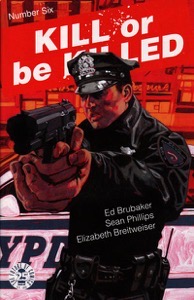
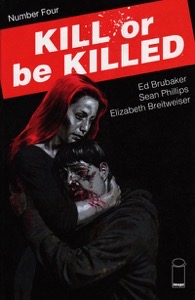
  • Kill or Be Killed (2016) #8

    Kbk8

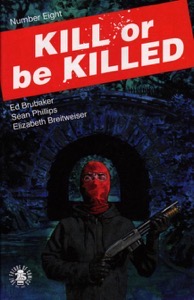
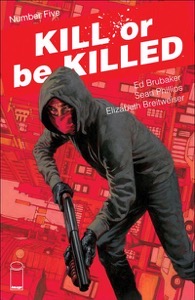
    I wish I hadn’t made the fumetti joke about last issue and the photographs; in this issue, when there are newscasts, artist Sean Phillips just copies and pastes some video captures. Sigh.

    This issue’s back to Dylan’s perspective, starting before Kira’s experiences last issue but covering them. When she’s hiding out in his closet during his nookie with his new girlfriend—no longer ex-girlfriend Daisy—he smells her perfume, which kind of lessens the previous issue’s impact. Probably reads terribly in the trade. Going back to Dylan as narrator just reminds how well the comic works without him, especially since he’s so unreliable at this point. He even lies to Daisy about his dad committing suicide, which seems odd given they used to date, and so it’d be a long-term lie? Not to mention Dylan’s never told the reader he’s schizophrenic; we had to find out from Kira last issue.

    It’s about a month since his last victim, and the NYPD is cracking down on white guys in hoodies with backpacks. I’m not sure what’s more unrealistic, the NYPD actually cracking down on white guys or the idea they’d do anything if they found him. Copaganda stories have been precarious since the advent of smartphones, but they’re positively molding these days.

    Dylan identifies what seems to be a good target—a lobbyist who jobs in Central Park—but in addition to the cops being deployed like there’s some eleven-year-old Black kid accused of stealing a pack of gum, he’s also minus his (fake) medication. His dealer isn’t getting back to him as promptly as usual, which ties into two issues ago’s cliffhanger with the Russian mob. At least Brubaker’s moving things along and not letting the B-plots fester.

    It’s far from the worst issue—Dylan and Daisy have an actual conversation about things, they don’t just talk at each other—and Phillips’s art doesn’t have any of the more significant problems, but it is a letdown from last issue. It’s also weird the lady cop angle from a couple issues ago doesn’t continue here either. You usually see this kind of erratic plotting in something with creative changes, not creator-owned works.

    But whatever… in for a penny and all that.

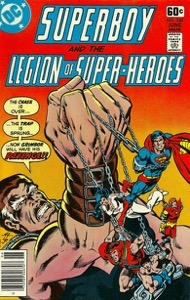
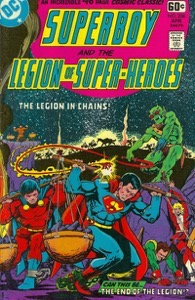
  • Superboy and the Legion of Super-Heroes (1977) #240

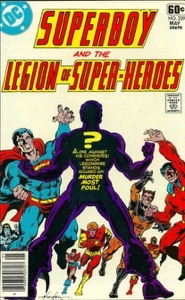
    Slsh240

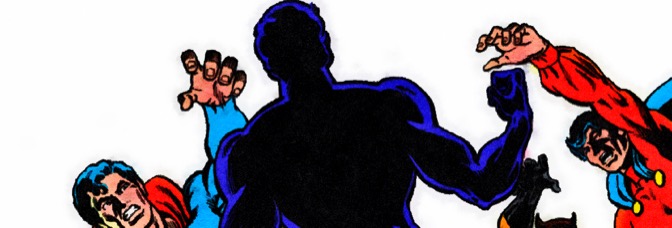
    So Howard Chaykin doing layouts of a teen superhero book without being pervy. All the dudes look about forty-five. It’s hilarious. It’s not good, but it’s hilarious. There’s only one female Legionnaire in the story—Phantom Girl—who’s not as scantily clad as Cosmic Boy, so not the salacious Chaykin one might expect. Also, he’s just doing layouts (over Alan Kupperberg’s layouts, according to Kupperberg), with Bob Wiacek finishing. And maybe Al Milgrom, who’s got editor credit, doing more inks (according to Milgrom, not the credits).

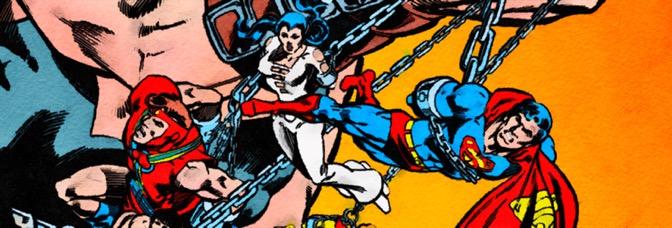
    Not good art. Like. There are some cool ideas for visuals—Colossal Boy holding up a bridge and various future stuff—but it’s a patriarchal decorum story set in a cool-looking sci-fi future. The patriarchal decorum thing is the subtext; the main plot is about a bad guy named “Grimbor the Chainsman” hunting down the Legion because they locked up his lady love, Charma (whose power was to charm men), and she died in prison. Because they put her in a lady jail and ladies hate Charma; the power she had over men worked in reverse over ladies. Everyone’s really boringly straight in the future.

    Including Cosmic Boy, who’s bummed out because he misses the Legionnaires who just got married and left. He’ll never get married and leave, though, he assures Superboy, who’s all up in his business; Legion over ladies.

    Superboy and Phantom Girl have that patriarchal decorum thing going; he wants to make sure Cosmic Boy’s not lollygagging over missed friends and failed romances. If you’re going to be a Legionnaire, your head’s got to be in the game. Meanwhile, Phantom Girl’s made at Colossal Boy about something he did last issue, and her subplot is about not being allowed to have feelings if they go against the boys.

    Cool.

    Jack C. Harris scripts from Paul Levitz’s plot. The plot’s better than the script, though only slightly. After spending the issue setting up a second part, they wrap it up in a few pages anyway, so there’s at least a wasted page forecasting a future adventure. They’ve also got the problem the bad guy’s got a real motive–shame it was too early for them to call the story The Wrath of Grimbor. The “chainsman” stuff is weird, though maybe it’s all a metaphor for a bunch of vanilla straights bullying bondage enthusiasts.

    And the story comments on how Legionnaires are cast based on how their powers will combine to resolve plot points, which is a little on the nose.

    The backup, however, is a visual delight. James Sherman on pencils, Bob McLeod on inks, it’s absolutely gorgeous. The art sustains for the whole story, all twelve pages, with some standouts even on the last page. It’s great-looking superhero art, just phenomenal.

    The story’s about how Dawnstar’s a stuck-up b-word who needs to learn to play well with others. She’s one of those uppity Native American descendants gone to space who became navigational mercenaries, and she’s only in the Legion because she gets paid. She’s not some nerd who wants to be a superhero.

    She and three other trainees need to go on a real mission, only she’s pissed everyone off, and no one wants to work with her. Will she survive on her own? Will she learn a valuable lesson about teamwork?

    What’s funny is how the setup for Dawnstar being the focus is team leader and trainee trainer Wildfire asking her out on a date. Mind you, he’s a complete asshole in addition to not having a physical form outside his super-suit. So there’s a considerable power dynamic thing going on, but, obviously, the comic will not acknowledge it. Please.

    Again, truly great art, so it doesn’t matter. Levitz plots, Paul Kupperberg scripts. The dialogue’s much better than the feature. Not great—it’s also not a great dramatic arc—but much better.

    That Sherman and McLeod art, however, is divine.

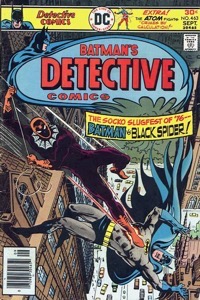
  • Detective Comics (1937) #463

    Dc463

    The feature has art by Ernie Chan and Frank McLaughlin. Chan’s figure drawing is rough. Batman looks silly and uncomfortable, contorting his way through the story. Gerry Conway’s got the script credit, so when the mystery villain turns out to be a Punisher clone called the Black Spider… well, at least they got Conway to write it?

    I’m assuming the Black Spider turns out to be a Black guy. Not because of the name, or at least not entirely because of the name; Black Spider rants about the superfly drug dealers who need a Black Spider to eat them up. He doesn’t want to fight Batman, who’s already injured, and can escape their first encounter.

    The story starts with Batman interrupting a drug deal and getting shot in the shoulder. The injury will plague him the rest of the story—the fight with Black Spider and against other assorted thugs—and maybe it’s why he’s such a dick to his friends. When Commissioner Gordon shows up at the scene of the drug bust, after saving Batman from a pissed-off city official who wants to arrest him, Batman’s condescending to his old pal. Who even gets a thought balloon thinking about how shitty Batman’s being to him.

    When Batman’s similarly shitty to Alfred, a few pages later, Alfred gets no thought balloon.

    Not sure why Batman’s got to be a prick, but Conway’s fully invested in it.

    After the big fight with Black Spider, Batman gets in more trouble with Gordon and the city official (Arthur Reeves, who I’m pretty sure recurs), then heads off to the cliffhanger.

    If the art were good, it’d probably be fine. But the art’s not good, so it’s tiring. And it’s tiring at eleven pages.

    The backup has good art—Mike Grell pencils, Terry Austin inks—and it’s better. Bob Rozakis scripts: it’s the Calculator out to get a college professor during a lecture. Luckily for that college professor, his good friend the Atom is in the audience and able to protect him from the Calculator. Except the Calculator knows the Atom’s weaknesses.

    Just as writing, Rozakis’s exposition is only slightly better than Conway’s, but Rozakis isn’t writing a dick Batman and jive-talking thugs. Instead, he’s just doing an action bit about the Atom trying to save his friend, who gives a boring lecture. And the art’s real good; superior superhero action in only six pages.

    The backup’s cliffhanger reveals next time the Calculator will be fighting Black Canary, so it’s a villain backup. Novel enough for the seventies.

  • A Walk Through Hell (2018) #1

    Wth1

    I was geared up for a Garth Ennis war comic, but A Walk Through Hell is a supernatural horror police procedural; FBI agents are the leads (so far), but still. And it’s very modern; it opens with an active shooter situation at a mall at Christmastime, there are tweets, one of the characters bitches about Trump. It’s very interested in acknowledging as many zeitgeists as possible, which, again, I wasn’t expecting.

    It’s okay supernatural horror police (FBI) procedural. Feels a lot like it’s an Avatar comic, not an AfterShock. Specifically, it feels a lot like Alan Moore’s The Courtyard and I’m really hoping that feeling goes away; I don’t want to see Ennis aping Moore.

    Goran Sudžuka does the art, which is good. He paces it well, has a good amount of detail; the issue opens with foreboding narration from one of the leads, which repeats and expands at the end, as we find out something’s going very wrong.

    But there’s not much to it so far. It’s sensational and exploitative, but there’s no meat yet. All of Ennis’s devices work to engage the reader in things besides the story, because the story’s going to start next issue. This issue’s the prologue, though also not a great one on those terms because the characters aren’t established yet. It’s not the traditional Ennis male and female cop team though; those usually involve the guy being incompetent and the lady being badass. He’s not going that route. There’s also not a lot of humor, just impending doom.

    We’ll see. It’s a terrible time to be reading this comic for numerous reasons but… there’s never going to be a good time to read a comic with this content.

    I vaguely remember the characters’ names—the narrator mentions them in the opening narration, but since it’s set against someone else’s horrific experiences, they don’t click. Though at least one of them is hard to spell, I remember. Lots of Zs. I don’t know. I was expecting some WWII comic, not a ripped from the bloody headlines.

  • Werewolf by Night (1972) #4

    Wbn4

    It’s a better issue than last time but still far from the Werewolf heights. The issue’s enough to stop the free-falling, though; if only Marvel gets someone who can ink Mike Ploog’s pencils. Frank Bolle does the job here, and, while better than Frank Chiaramonte, he’s still not great. The werewolf at least looks scary, and the faces are better; they’re less Ploog-y, however. The cost of competent inking is apparently the personality.

    But there’s also not much personality in the story either. It opens with the werewolf on an abandoned movie backlot, some great white hunter out to get him, then flashbacks back to last issue’s cliffhanger; Wolfman Jack has rescued sister Lissa, who’s unconscious, and is carrying her away to safety. When the werewolf puts her down, she wakes up and realizes it’s Jack. There’s also a bit about her fear she’ll become a werewolf, too; along with the silver bullet vulnerability (this issue might be the first to show it), the family genetics curse is a lot different in the new Werewolf ground situation. Jack’s not just a werewolf; he’s a Satanically cursed soul.

    Oddly, the issue has none of that crap in it. Conway gave it up just a month and a half later.

    After the werewolf runs off from Lissa, the great white hunter kidnaps her, then waits for the werewolf to change and kidnaps Jack too. He’s been following Jack, having searched him out when he realized there was a werewolf. The hunter’s name is Joshua Kane. Conway writes him like George Kennedy from Cool Hand Luke but rich and evil; it’s so fun to read characters written like actors but not in the desperate hope of casting them in the role. Ah, the seventies.

    Anyway.

    It’s an all-action issue for at least two-thirds, with Kane hunting Wolfman Jack through this abandoned movie backlot. Mostly they stick to the Old West street and the fantasy castle. The setting seems like a better idea than it plays out, partially because the hunt’s not particularly dramatic. Kane will release Lissa if he can hunt the werewolf; it’s left somewhat unresolved. At one point, there’s a massive exposition dump about Kane tracking Jack, which Conway left out of the villain reveal sequence. Again, though, it’s Marvel-style, so maybe Ploog didn’t pace it right. Or maybe Conway really wanted to do the big dump later on.

    Whatever.

    Werewolf started something special, quickly fell on its face, and is now picking itself up… maybe.

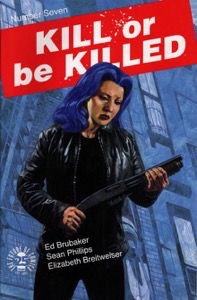
  • Kill or Be Killed (2016) #7

    Kbk7

    Wait, what just happened?

    Writer Ed Brubaker just took Kill or Be Killed on a seemingly unplanned detour, bringing back Kira—the friend who started dating Dylan’s roommate but then started sleeping with Dylan (in the first arc)—and entirely redefining the character.

    Not to mention giving her a character.

    Also, she’s got blue hair now. And Sean Phillips’s art problems are gone. A literal wave washed over the comic, left Kira’s hair blue, and carried away all the cruft. At least for this issue.

    The issue’s split between Kira’s narration and her therapy session. In both, we learn a lot more about her life, including she might not have been entirely honest with Dylan—fingers crossed. Until this issue, her one backstory detail was her single mom was a swinger who’d have orgies, and Kira would watch as a kid, which Dylan liked because he’s a fucking creeper.

    Nothing in this issue invalidates that story, though nothing confirms it, and the timeline doesn’t work out, meaning—as long as it’s just not a leave-out—Kira lied to Dylan about herself, making the character so much more interesting.

    The issue starts with Phillips illustrating photographs from a scrapbook Kira’s mom had. The mom’s sick. Kira’s in therapy talking about it, the scrapbook photos run concurrent to the session, then to the rest of the issue. There’s narrative ambition. In this utterly unambitious comic, there’s finally ambition.

    Phillips does a great job with the photographs; so glad they didn’t do fumetti, like a couple issues ago with a newspaper photo. The therapy session suggests Kira needs a new therapist and Brubaker wrote the dialogue based on the ELIZA computer therapist program from the 1960s. Not awesome dialogue—not to mention if you’re going to come for the king (of Aunt May’s “Ultimate Spider-Man” issue), you best not miss—but it works out thanks to Kira’s narration.

    And Phillips holding the art together throughout.

    I don’t know if there’s a way for Brubaker to right the ship, but this issue knocks the book onto a much better course (though Brubaker’s famous for his inspired, done-in-one fill-in issues). There’s a big reveal at the end, too, coming after a fantastic awkward solo scene for Kira.

    The dialogue is much better here too. It’s not just teen soap opera one-liners meant to fill pages; Kira has conversations with her step-sister and mother. I refuse to let myself be too hopeful for this book but damned if Brubaker doesn’t still have it.

  • Gattaca (1997, Andrew Niccol)

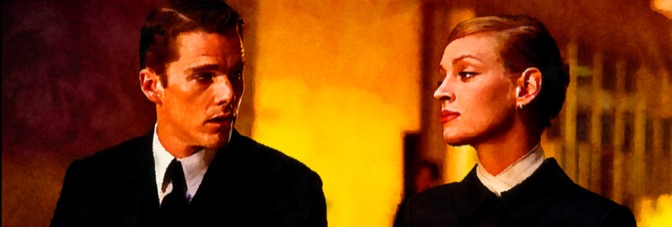
    Gattaca is a science fiction triptych character study by way of film noir. And while the film’s a murder mystery, it only uses the film noir device—narration—for a non-mystery section of the film. The narration ends with the murder mystery, not coming back until the finale. It’s an absolutely fantastic structure from writer and director Niccol, who’ll then lean into the character study elements, sometimes employing noirish visuals but always slightly not.

    But Gattaca doesn’t take place in a dangerous world, and noir’s all about danger.

    The film takes place in the near future when parents-to-be go to their location geneticist, and they pick out the best egg to grow into a baby. The film actually doesn’t get into whether or not the mother carries the baby at all, but it seems like maybe not. Not important. The film takes place in the future, where the next pandemic kills off all the anti-maskers and anti-vaxxers, and the rich liberals need to figure out what to do about the icky poors.

    Anyway.

    Ethan Hawke is a “God-child;” his parents left his genetics up to fate, and fate delivered them someone with a bad heart, among other ailments. We find out Hawke’s origins in the summary flashback, which he narrates. It starts a few minutes into the film, five or seven minutes; the film opens with Hawke scrubbing loose skin from his body and being a neat freak, shows him getting tested at work, then the flashback to explain he’s not like everyone else at the Gattaca installation; additionally, because he’s pretending to be someone else.

    The Gattaca installation is a future NASA, where the best of the best prepare to explore the galaxy—or at least the solar system—and the even better best get to actually go on the missions. It’s finally Hawke’s turn, boss Gore Vidal tells him; one more week. The week will be the present action for most of the film but first is the thirty-plus minute flashback establishing Hawke and the future.

    A murder kicks off the flashback, but that murder’s got nothing to do with the material it covers. Niccol lucks out at Hawke’s ability to narrate and make his character more sympathetic—he comes off like a prick in the pre-flashback setup, just another prig in a world of them—just through his vocal performance. The film traces his childhood, as mom Jayne Brook wants the best for her son, and dad Elias Koteas just wants a better son next time. Then the younger brother excels because he’s got the right genes, and how even mom gives up on young Hawke. It’s devastating, especially since Hawke—narrating from the future—doesn’t remark on the obvious psychological turmoil.

    He runs away from home as a teenager, and in the next scene in the flashback montage is Hawke, now a custodian at the Gattaca installation. Since he was a kid, he’s been a space junkie, and everyone thought cleaning the spaceships would be the closest he ever would get, but he’s got a plan. Just because you’ve got perfect genes doesn’t mean you might not get hit by a car or fall down the wrong stairs, and then what can you do. Tony Shalhoub brokers a deal for Hawke to assume partially paralyzed Jude Law’s identity, which requires lots of cosmetic and mental work; in exchange, Hawke supports Law. Presumably, Gattaca pays well. They never talk about money in the future. Maybe there isn’t any.

    The flashback changes speed throughout, emphasizing teenaged Hawke’s adversarial relationship with his brother (Chad Christ and William Lee Scott play the teenage versions, respectively), then also Hawke and Law’s initially testy relationship. In addition to being a depressed drunk, Law thinks Hawke’s genetically inferior and resents having to be in this arrangement. Especially since it means sobering up (at least occasionally).

    As the flashback gets closer to the present, Hawke explains he’s running out of time with his heart defect—they can predict when your body’s going to give out with 99% surety, and he’s passed due—and the only thing impeding his space dream is this one crappy mission director at work.

    Who turns out to be the murder victim.

    And Hawke carelessly left an eyelash near the scene. His eyelash; not one of the ones Law plucks for him to plant.

    The film runs 106 minutes, so the next seventy minutes (minus credits) take place over the few days before Hawke’s mission is scheduled to depart. The police show up at work, initially led by old school detective Alan Arkin, who’s convinced the eyelash guy must be the killer—one of the other things they screen out in the eugenics is the propensity for violence and criminal behavior—so Hawke’s got to stay on his toes.

    Simultaneously, his coworker Uma Thurman starts getting interested in him romantically, but in Gattaca, romantic interest comes after running a potential partner’s genetic code. Thurman’s good enough for Gattaca in the brains department, but she’s not going to get a shuttle mission because she’s got a bum heart; sometimes, even with the eugenics, things still go wrong with the science.

    Back at home, Law’s preparing for a year without an identity—Hawke’s leaving the planet; he can’t be in two places at once, which means Law can’t be anywhere.

    Then there’s Loren Dean’s genetically superior police commander, who thinks presumably regular guy Arkin’s investigating the wrong leads, but Arkin thinks Dean’s all genes and no gut. The murder investigation gives the film a different, contentious structure running through the already established one-week-to-lift-off structure. It throws a wrench in Hawke and Law’s plans, but they need to adjust around it. Similarly, Thurman’s last-minute romantic interest in Hawke further complicates things.

    The film gradually becomes that triptych character study: Hawke, Thurman, Law. Maybe Dean sharing some of the third spot with Law. The script mixes drama—family drama, as Hawke and Law have become the brothers neither had—romance, the general hard sci-fi of future eugenics and spaceflight, and murder mystery. Niccol’s script is phenomenal.

    Along with that already considerable success is Niccol’s breathtaking direction. Gattaca’s a muted future, filled with people genetically engineered not to be impressed with the wonders around them. Niccol and cinematographer Slawomir Idziak shoot it clear but saturated with color. Then there’s the Michael Nyman score, which tracks the emotions of Hawke and the other actors throughout. The colors and the music mix and mingle, creating an encompassing backdrop for the actors’ performances.

    Niccol does a great job with the actors. Hawke, Law, Thurman, Dean. Arkin’s kind of an extended cameo, along with Xander Berkeley, Ernest Borgnine, and Shalhoub. Everything about Gattaca—except Nyman’s score—is controlled or constrained. The music soars with the possibility of breaking free, and when characters actually get to do it too, Niccol scales appropriately.

    Gattaca’s an exceptional film.

  • Night Court Theme Fits All: Automan
  • The Intruder (1962, Roger Corman)

    The Intruder has third act problems of the deus ex machina nature, and they’re actually welcome. If the film figured out how to finish better, it’d be more challenging to talk about. It’s already an exceptionally unpleasant experience.

    William Shatner gets top-billing as the title character. He’s a slick, charming, clean-cut Northern (well, Western—he’s originally from California) white supremacist who heads to a Southern town to stir up trouble thanks to a recent integration ruling.

    Director Corman and writer Charles Beaumont (adapting his novel and co-starring as the pro-integration school principal) never humanize Shatner’s character. They initially make a joke about it—he helps a little girl off the bus—but then they immediately establish he’s an evil person in search of stupid evil people who need a leader.

    He’s in luck; the town’s full of stupid evil people. So Shatner works out a deal to organize the white trash for Southern blue blood Robert Emhardt, who’d never, and do something about the impending integration.

    Unfortunately for everyone, Shatner doesn’t realize how dangerous stupid makes evil people, even the respectable ones like Emhardt.

    The film juxtaposes Shatner’s story with local newspaperman Frank Maxwell. Maxwell starts the film believing you follow the law even if it says to integrate. Seeing how Shatner affects his fellow townsfolk, Maxwell becomes an integrationist himself. Even though it might lose him wife Katherine Smith. They have a particularly painful scene together where Smith says she’ll stop being so racist because she has to do what her husband says. Intruder’s solution for racism is always patriarchy and some toxic masculinity for effect. But only for those who need it. Otherwise, just patriarchy.

    When the film’s heading towards some kind of showdown between Shatner and Maxwell, it’s on solid ground. The juxtaposition works. But Shatner can’t leave well enough alone—he’s already done some heavy petting with Maxwell’s teenage daughter, Beverly Lunsford, if not more, but he also decides he needs to rape Jeanne Cooper. She’s married to traveling salesman Leo Gordon, and since Gordon’s machismo threatens Shatner, he needs to assault Cooper when Gordon’s a way to prove he’s a man.

    It’s an exceptionally unpleasant scene in a film with nothing but unpleasant scenes.

    But it puts Shatner and Gordon on a collision course, which changes the dynamics. It’s not about Shatner being a racist piece of shit and Maxwell realizing racist pieces of shit are bad; it’s about Gordon and Shatner’s sales styles. And, of course, Shatner assaulting Cooper. But more the sales styles.

    There’s also the story of Black high school student Charles Barnes, who gets caught up in the hostilities. The film avoids putting a face on the white students or their parents (outside Lunsford). It’s too busy implying the racist white people aren’t the white school parents. They’re the barely employed white trash who have time to drop everything and make racist picket signs to threaten children.

    The third act problems save the film from an unsuccessful scene where Maxwell appeals to the good whites because Corman and Beaumont know it’d play hollow. The resolution they do find, however, plays contrived. Even if there’s a lot of good acting in it.

    Obviously, completing the performances is tricky because they’re primarily mundane villains. Terrifying ordinary white guy racists. Maybe they’ve got bad teeth, but nobody in the movie, save Shatner probably, has good teeth.

    Gordon’s good, Cooper’s good, Maxwell and Lunsford are good. Lunsford gets a weak part, however. Though she does at least get to have a showdown with her mom’s racist dad, Walter Kurtz, who berates son-in-law Maxwell for not being racist enough.

    It’s all distressingly realistic.

    Shatner’s performance is exceptional. He’s got maybe one iffy scene—a rally—but only because you can’t believe anyone would fall for such loud stupidity. Or at least you didn’t used to be able to believe it. Reality hasn’t let The Intruder age. It just kept making it more and more true to life.

    Corman’s direction’s good. He and cinematographer Taylor Byars do a lot with focus and contrast. There are some weird things—lack of high school establishing shots, for example—but they always seem like they’re probably budget-related.

    Good music from Herman Stein.

    The Intruder’s pretty good—with that incredible Shatner performance—but it’s got a lot of problems, so it’s almost better it’s not indispensable overall.


  • Superboy and the Legion of Super-Heroes (1977) #239

    Slsh239

    I went into this issue doubly hesitant because it’s about Ultra Boy being framed for murdering his ex-girlfriend, An Ryd, and I avoid Ayn Rand fans. Maybe it’s just the letters; maybe there’s no connection. Or just a name familiarity one. The character’s barely in the comic, just long enough to double-cross Ultra Boy and then get double-crossed by her actual murderer.

    The issue’s got those frustrating layout and finisher credits—Jim Starlin did the plot and layouts, Paul Levitz gets a plot assist and dialogue credit (which I assume also means exposition boxes), and then Joe Rubinstein gets the finished art credit. Based on how the faces never sit on right the faces in anything but close-ups, it sure seems like Rubinstein got the inglorious task of drawing the faces on Starlin’s empty heads. As a result, Mon-El and Superboy don’t just look the same; they look the same, with their faces sliding off in the same way.

    The close-ups are good, though. And it’s mostly just the crowd shots where there are problems.

    Overall, it’s a solid enough issue. The Legion tries to bring Ultra Boy in before the Science Police get him, only he wants to prove he’s innocent. He’s got a big escape—where Levitz nicely reminds readers Ultra Boy can only use one power at once—and then he’s got to go underground, which allows an editor’s note to last issue’s reprint. There’s another editor’s note about the last time the Legion was on trial for something, only four issues ago… is the framed Legionnaire plot the most common in the book, I wonder.

    Although Ultra Boy can escape the Legion heavyweights, he’s not ready for Chameleon Boy to have done his homework on possible safe houses. It quickly turns into a manhunt and target plot for the Legion and Ultra Boy, but then a detective subplot for Chameleon Boy. They come together nicely at the end, resolving things well enough for a good cliffhanger and the promise of future repercussions.

    Some of the characters are red herring suspicious, with the actual reveal being a cheat where the comic kept vital information from the reader. It’s okay—the surprise is decent—but it works slightly against the Chameleon Boy subplot.

    The issue mixes things up nicely, though if two issues from now it’s just another renegade Legionnaire, it’ll be disappointing. Also, how do you do character development when you’ve got fifteen characters in crisis every issue? Even when the issue implies a character having some thoughtfulness, there’s never anyway followup. Even protagonist Ultra Boy ends up real shallow.

    But still, the mystery’s engaging enough to get it through.

  • George Carlin’s American Dream (2022, Judd Apatow and Michael Bonfiglio)

    The first half of George Carlin’s American Dream is a history lesson. Big history and little history; it’s the history of comedy in the second half of the twentieth century; it’s the story of Carlin and his family. It’s the story of his career and how success changed his life; how some things got better, then new things got worse. It’s fascinating and humanizing.

    The second half is about directors Judd Apatow and Michael Bonfiglio trying to figure out how they can work in sensational footage from twelve years after Carlin died. They try to tie it in with interviewee Paul Provenza talking about how people wished Carlin were around to comment on the dumpster fire the world’s become since he’s left. But it was always that dumpster fire; we just didn’t have it on video. Carlin in the smartphone era would have been more interesting than a poorly cut montage—Joe Beshenkovsky does a fine job throughout the three-and-a-half-hour documentary, but when they ask him to ape The Parallax View, Beshenkovsky flops.

    It’s not all his fault; I’m sure he didn’t pick the Carlin material to accompany the visuals, but the cutting’s not good. The material selection and the piece in general—only a few years after Spike Lee did it earnestly and sincerely in BlacKkKlansman—is a lousy finish for American Dream. The second half is rocky overall; the landing is bad; if it weren’t for interviewee (and daughter) Kelly Carlin, they’d have sunk it. It’s a bad idea, drawn-out, coming at the end of a half-assed conclusion.
    Because the second half of American Dream starts with the promise of Ronald Reagan’s presidency fucking with Carlin’s mojo just when he was determined to prove everyone wrong. According to the doc, nothing worked out for Carlin during the Reagan years. He was too busy working to pay off the IRS. So, creatively, he kept hitting snooze.

    Except… he didn’t. He started his HBO specials, did “Comic Relief,” and apparently changed his entire professional perspective because of Sam Kinison (or so Dream tries to imply). The first half gets Carlin through high school dropout, radio DJ, traditional stand-up comic, mainstream TV guy, seventies counter-culture sensation, pseudo-has been, coke fiend, wife’s alcoholism, fatherhood, comeback precipice.

    Only nope, the comeback would take fourteen years. Per Dream, even though in between Carlin was in Bill and Ted, for example. The movie’s something the documentary doesn’t address until—it’s got a linear structure, which is problematic anyway—but it doesn’t address his casting until it’s covering years later.

    It also buries some ledes later when it presents Dogma as being about Carlin, the ex-Catholic; though the doc does not use much of that footage—and never points out Carlin was right about the priests raping kids, probably because it’d piss off useless, pearl-clutching interviewee Stephen Colbert. Then it talks about Dogma as Carlin’s mourning picture; his wife died just before filming. But then it reveals it’s actually about Carlin meeting his second wife. After spending the almost two-hour first half showing its subject’s facets and collisions… the second half goes for easy manipulation. Apatow and Bonfiglio half-ass the finish, but there’s probably no way not to half-ass it since they’re covering thirty years in less time. Plus they need their five-minute “America sucks, subscribe to HBO Max and rebel” commercial.

    Carlin, of course, deserves better. American Dream does an all right job showcasing old material, though nowhere near as much as you’d think. It doesn’t discuss the popularity of the HBO specials after the first one, doesn’t discuss his wife producing them (after making a big deal out of her feeling left out during the events in the first half, it leaves her out of the second). The second half feels like parts two and three, and the epilogue abridged. It’s a shame.

    Hopefully, it’ll get more people to watch more George Carlin. But not, oddly enough, on HBO Max.

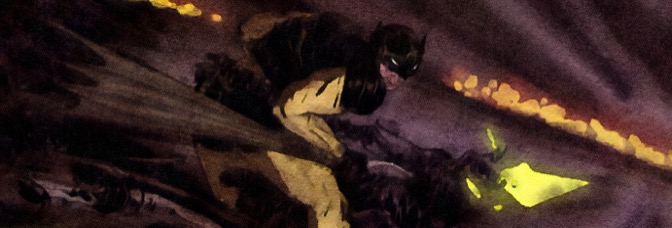
  • Batman: Year 100 (2006) #4

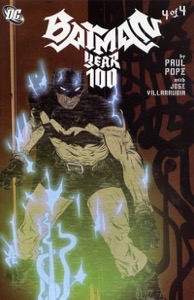
    Bmy100 4

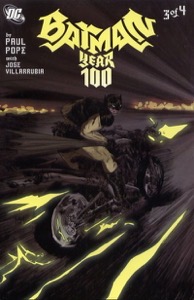
    Despite an exceedingly dull finale, a disappointing motorcycle chase sequence, and numerous pointless teasers, this issue ends better than it begins. The first scene is Batman 2039 trying to convince one of his allies he’s not the problem, he’s the solution. There will be a similar sequence at the end for another character, who can’t decide if they should trust him, but there’s at least action going on somewhere else juxtaposed for that dilemma. Unfortunately, the opening one is just talking heads, and all of it’s boring.

    It resolves with Batman finally meeting up with Jim Gordon via hologram, and they agree to work together. Gordon knows the federal cops are lying about Batman, so he trusts him. Gordon’s also just finished reading his grandpappy’s file on the original Batman and now knows all the secrets of the proverbial Batcave. Should Gordon’s knowledge of these secrets affect how Batman 2039 treats him? Yes. But creator Paul Pope saves that “reveal” for the last few pages when he finally gives some clues to the Bat-Man’s identity. Sort of.

    If Pope did Batman: Year 100 because he was trapped in a contract with DC for a Batman comic and decided to just bullshit his way through it with references and reveals, it wouldn’t be any different than what he came up with. Instead, after three issues of teasing the Bat-cycle, Pope does the issue’s only notable action set piece around it, and it’s boring. Not just the story parts of it, not just the writing on the chase and the twists he gives away or the twists he forecasts, but the art. It’s a boring Paul Pope motorcycle chase scene. I never wanted to see that kind of thing. Icky bad.

    The finish has Batman explaining the comic's plot to the bad guys, at least one of whom knows the comic’s plot, but Pope’s been keeping it from the reader. So Batman’s gonna explain it to everyone, including Gordon, who’s a wallflower because he’s got nothing to do. The idea of him having something to do was a red herring; Gordon’s even less important to the comic than Batman’s sidekick… who apparently has never heard of Robin before. Except, you know, the sidekick’s name is Robin.

    Maybe he thought the kid in tights was named John Blake or something.

    In addition to the boring action and tedious exposition, the character writing is bad. It’d be better read without any reflection, just the feeling of minor disappointment; examining all of Pope’s fails through the comic is depressing.

    Pope doesn’t even come up with a good finale, visually speaking. It’s humdrum. They should’ve at least hired him a ghostwriter, though maybe writing it was part of the deal. He wanted to guarantee no one would ever think Batman: Year 100 could’ve been a good idea.

    It’s a sixteen-year-old comic, and I still want my six bucks back.

  • Werewolf by Night (1972) #3

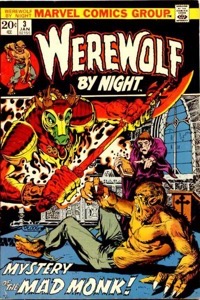
    Wbn3

    Oh, no, is Werewolf by Night going to run off the rails this early? I’m hoping it’s just Gerry Conway burning out on the writing, though the Frank Chiaramonte inks ruin the Mike Ploog pencils too. Actually, the final art’s so de-Plooged, I wonder if he even finished the pencils. There’s occasionally effective art, mostly with the pacing, but it’s never good.

    And the final fight sequence is terrible.

    The issue opens some months after the previous one, if anyone’s keeping track of continuity, with Jack now living with Buck. It initially seems like Conway’s closing outstanding B-plots quickly; last issue they took the Darkhold to a priest, this issue opens with the priest finishing the translation.

    Little does the priest know it’s going to unleash literal Hell.

    Priest calls Jack, Jack drives out to see him, forgetting—as usual—it’s the full moon tonight and he changes while driving, crashing the car. By this very early point, things are clearly wrong with both writing and art. The human faces aren’t Ploog-y enough, then the werewolf is… bad. But the writing on the car crash is similarly bad, only without Conway having the excuse Chiaramonte might be inking it wrong.

    Things go downhill from there, with Wolfman Jack heading out to the priest’s mission to discover an evil spirit has possessed him. This evil spirit was once a priest himself, and wrote the Darkhold in the Middle Ages. It’s a really, really bad, reductive history for the Darkhold—which gets passed around as a scroll until Jack’s dad gets it in the fifties or whatever, and then binds it. It’s too bad Jack’s dad had that binding hobby, because the Darkhold makes him a werewolf.

    Meaning the Russell family werewolf curse is one generation old and is actually demonic possession. Satan himself wants Jack Russell or something.

    It’s bad but maybe not spectacularly bad. It’s predictably bad seventies comics. Up until the bull-helmeted Roman spirit soldier from Hell shows up to fight the werewolf.

    Alongside that silliness, Jack’s sister, Lissa, has an actually scary arc where she’s trying to get to the priest’s place only the evil spirit has filled the valley with flesh-eating fog. All the human figures are bad, most of the werewolf stuff is bad, but disintegration to skeleton scenes are all good. Too bad they’re not important to the story.

    The comic ends on a cliffhanger where they forget how many nights Jack has wolfed out this month. It’s very obviously one, but they say it’s two. Not sure if that gaffe’s Conway or editor Roy Thomas’s fault, but they both have been doing bad work all issue so it’s no surprise.

    I knew Werewolf’s art was going to get intolerable eventually (Don Perlin for the win), but I had no idea I’d have to sit through badly inked Ploog. And vapid, pseudo-Christian Satanic panic.

    Big sigh.

  • Frasier (1993) s07e04 – Everyone’s a Critic

    It’s as though “Frasier” heard me across time and made some immediate adjustments—it’s another radio station episode, but unlike last episode, it features a bunch of scenes for Kelsey Grammer and Peri Gilpin at work. It’s also got regular station guest cast (Edward Hibbert), and then station manager Tom McGowan’s practically a regular.

    There are some caveats, of course, but for the episode overall, not the station stuff.

    Or if there are station-related caveats, they’re part of the bigger caveat, which is guest star Katie Finneran. Finneran plays the station owner’s daughter, a ditzy, dull rich girl testing out Mom’s properties to decide her future career.

    The episode introduces Finneran as the B-plot but then brings her back up to the A-plot. It’s good plotting—Joe Keenan gets the script credit, which is full of laughs—but it’s entirely based on everyone thinking Finneran is terrible. While she’s tedious and annoying, so’s everyone else at the station in one way or another, at least the radio personalities. It’s McGowan’s bit—he’s managing all these Seattle talk radio prima donnas–but Finneran’s a bridge too far, apparently.

    The opening has Grammer foisting Finneran off on Gilpin (who doesn’t know she’s a bore yet), then going home to find out David Hyde Pierce has gotten a job as a culture critic. The episode has many Grammer and Hyde Pierce rivalry hallmarks, but the Finneran subplot takes some of the space from them, so the episode doesn’t feel rote. It just feels awkwardly mean and a little misogynist. Would everyone give Finneran the same kind of shit if she were a wealthy, dippy son?

    Also, since Finneran’s never mean-spirited or even as snooty as Grammer or Hyde Pierce, the hostility is off-putting. Finnegan’s character isn’t tiring in her scenes as much as everyone’s reaction to her, like when Jane Leeves sits and glowers at her. Though Grammer’s sucking up to her at that point, so Leeves is also glowering at Grammer. That sequence, which has six seasons of history—Leeves regularly seeing Grammer playing sycophant to some rich jackass or another—is the most inaccessible I think “Frasier”’s ever been. Outside “Cheers” references.

    Leeves is great at glowering, don’t get me wrong, and it’s an appropriate response, but it requires a lot of show knowledge.

    There’s some good material for John Mahoney, who gets the C-plot about Eddie the dog hunting down a kid’s missing hamster, as well as reacting to Hyde Pierce and Grammer’s competitive bickering. Maybe it’d be more of a rivalry episode if Hyde Pierce were in it more, but the episode doesn’t follow him at all.

    There’s also a weird continuity gaffe where Mahoney and maybe Hyde Pierce both know Finneran without ever having met her (onscreen). Perhaps something got cut. It’s okay—and even amusing—but glaring.

    It’s a funny, well-acted episode—Hyde Pierce in particular—and it’s nice they know they need to mix up the standards a hundred plus episodes in… but it’d have been nice if they could do it without being jerks. I kept expecting director Pamela Fryman to right the ship but nope.

  • Frasier (1993) s07e03 – Radio Wars

    It’s another new-to-“Frasier” writer credit this episode: welcome, Sam Johnson and Chris Marcil. I just realized the title, Radio Wars, might be a nod to the annual Bar Wars episodes of “Cheers.” There’s not much warring, though, mostly just Kelsey Grammer getting pranked.

    The episode begins with Grammer asleep in bed, a phone call waking him. The Academy of Radio Psychiatrists (or some such organization) is calling to ask why he hasn’t gotten back to them about the statue they’re making in his honor. It starts as an award; they add the statue when the show cuts from Grammer to the radio station, where the new comedy guys are pranking him.

    Bryan Callen and John Ennis play the pranksters. They’re both fine but entirely incidental. The script keeps pretending Peri Gilpin’s got her eye on Callen but never even puts them near each other in a scene. Their scenes are just setups for Grammer’s great reactions when he figures out the prank.

    Grammer emerges from his room, humiliated and outraged, only to discover both Jane Leeves and John Mahoney think it’s hilarious. Apparently, they were listening to the radio at six in the morning for this new radio show.

    David Hyde Pierce will figure into some of the later antics, occasionally laughing at Grammer’s credulity, but he’s generally more sympathetic to Grammer’s plight. Especially once Mahoney tells Grammer he’s partially inviting the bullying, which leads to a fantastic sequence where they talk about Grammer and Hyde Pierce pretending to be John Steed from “The Avengers” as kids.

    It also leads to a great joke for Hyde Pierce regarding Leeves; this episode’s less chaste about Hyde Pierce’s attraction than the season’s been so far. They at least allow the joke. And the script’s full of good “Frasier” jokes; it’s an enthusiastic script, really flexing the cast. There aren’t any subplots, but everyone gets a little something to do, with Hyde Pierce and Leeves getting the least. Since it’s a work plot, Gilpin gets more than usual, though it’s all bits, no story.

    Tom McGowan shows up for a couple scenes as the station boss, which distracts from no one else at the station putting in an appearance. The episode also glides over Grammer and Gilpin not having any scenes during the radio show; everything happens off-screen, but the script knows how to use the constraints for good setups.

    It’s a good episode, with some excellent laughs; it’s a little “by the numbers,” but not too much. It’s a solid first showing for Johnson and Marcil, with strong performances from the cast. It’s a bit of a Grammer showcase, but everyone gets at least two good spotlights.

  • Selected Declarations 22.05.24

    I just found out comments haven’t been working. Probably since I “upgraded” to the new WordPress plan. Quotation marks because comments not working is just the latest item on the list of fails related to the new Pro subscription. Besides being able to install plugins—I broke the site with one already, obviously—there’s nothing better to the plan. The site’s worse for the upgrade, but what else am I going to do… use Blogger?s

    I could have remained on the previous plan, presumably in perpetuity, but they’d keep reminding me to upgrade since they’ve discontinued the previous plan. Realistically, I had to upgrade. They (WordPress.com) were sure I was going to love it. It immediately broke parts of the site, and they told me it wasn’t happening, but eventually, the ticket got to someone who said, yes, what you’re seeing is real; it happens in a small percentage of cases. But there’s still a visual error they can’t fix because I’m not on one of the eight themes they’re apparently supporting. WordPress, which gave bloggers the choice of tens of thousands of themes, now has limited themes. And none of them are for blogs. They’re all for competing with Squarespace.

    But the site looks good on my iPhone, so I’m okay with it. Whenever I test something, I try it on the iPhone. Maybe I’d test it on the desktop if the unfixable visual error weren’t occurring.

    Lots has happened lately. Lots in the world-at-large, lots in the world at-small. Lots to encourage more escapism—hence reading five different comic series instead of one—and I’d had some of the plans before anything had happened. I was just sick of waiting on projects, like the WordPress.com upgrade. I was just sick of waiting to do it. Might as well get it over with; what’s the most it could break? The pages, as it turns out. Most of the pages. Not the posts. Ugh. Some of them.

    One fun thing the upgrade allows is monitoring 404 errors, which I highly recommend if you’re able. There’s lots of stuff missing from the site—the Batman: Year 100 reread is because someone (or some bot) used a sixteen-year-old link (to a .html file). I’d been meaning to read that one for ages, and it’s inspired me to add a Batman to the regular schedule; like the book says, always start with Batman.

    I do appreciate having a detached project (about escapism), however; even if most of it feels like fixing something I paid extra money for WordPress to break. Don’t even get me started on it breaking MarsEdit integration. However, I figured out that fix before even finding the post providing instructions on circumventing the “upgrade” at the app’s site.

    If Wombo Dream would just add custom image sizes, I’d be cooking with gas.

  • Kill or Be Killed (2016) #6

    Kbk6

    I’m trying to imagine my take on this issue if I’d kept reading Kill or Be Killed the first time I tried. Would I have been validated, disappointed, disinterested, indifferent, enthused? Probably not enthused.

    Writer Ed Brubaker changes things up this issue entirely, complete with a rationalizing explanation in the back matter, but basically, he’s given up. Kill or Be Killed is no longer an askew generic seventies Marvel white male hero turned vigilante take. It’s no longer Ed Brubaker’s Complete Lowlife Meets Criminal: Crime and Punishment 2017.

    It’s now just a cop story.

    And not even an original cop story. It’s a cop story with a female detective who got her promotion for optics, and her uniformly male colleagues treat her like shit and demean her for fun. Makes me wonder if Brubaker watched the U.S. remake of Prime Suspect too.

    It’s fine. It’s a fine, very traditional narrative. Her boss shuts her down once she realizes a connection between these seemingly random murderers, so she goes to a newspaper. Brubaker didn’t even update it enough for her to go to a news blog.

    Now, the inclusion of the female cop isn’t exciting. Sure, it’s Brubaker course adjusting the series, but it’s standard stuff. He’s introducing a joint protagonist, after all. Lots of setup and exposition, all narrated by Dylan. Brubaker forgets Dylan’s been being an obnoxious “Well, actually” snob in his narration for the previous five issues and makes him bashful about using artistic license providing the cop’s backstory.

    This tone change comes after Brubaker entirely cops out (no pun) of the cliffhanger resolve, where Dylan’s gunfight with the cops turns into a contrived escape. One artist Sean Phillips didn’t even bother visualizing like the narration describes. Dylan clearly says the cops dive away from his shotgun warning shot. They barely back up. I’ll get to the art. Phillips is done with the action with a capital D.

    But then there’s also Dylan’s chance meeting after his escape, which the narration promises will be important later if the reader doesn’t forget like Dylan forgets. For all its faults, outside trying to appeal to white men who buy comics, Kill or Be Killed was never desperate before. Now it’s desperate. Brubaker’s trying to make it accessible.

    Dylan hooks up with the ex-girlfriend during his exposition dump about the cop. We get a montage, which is probably Phillips’s best art in the issue, and it’s just a couple Netflixing and chilling with some bong rips too.

    The cliffhanger threatens the Russian mob—so now Dylan’s got the cop and a realistic Bond villain after him. Again, desperate to be accessible. But, you know what, it might have worked. It might still work going forward. It just doesn’t work here because, wow, Phillips is checked out.

    Not just with the dive, not just with the weird bodies looking like he reluctantly stuck them onto his still lovely New York City urban landscapes, but the lady cop. He draws her a different way every three panels. The first time she shows up, she looks like Kira, the best friend who Dylan was sleeping with (which would’ve made the comic so much better), but then no consistency whatsoever.

    It’s a very strange fail for Phillips—especially this issue—besides her boss is photo-referenced to the point they should credit the actor. Maybe lady cop’s shitty boss problems would be more engaging if the art weren’t tediously static.

    I don’t just not know what to expect from Kill or Be Killed going forward, but I don’t think Brubaker or Phillips know either. So it’s suddenly a more interesting mess, especially since it’s not even halfway finished.

  • Superboy and the Legion of Super-Heroes (1977) #238

    Slsh238

    This issue reprints a couple Adventure Comics from 1967, written by a sixteen-year-old Jim Shooter, proving he was better at writing comics in his teens than in his thirties. Though I’m sure there’s an abundance of evidence on that one.

    Shooter also does the layouts, with Curt Swan penciling and George Klein inking. The art looks pretty much like every other competently produced Silver Age comic. The story’s about the new president of Earth declaring the Legion of Super-Heroes a youth gang and banning them; the Legion only finds out about it when they get back to Earth from missions in space, saving countless lives.

    Some Legionnaires get arrested quickly; others go on the run and become fugitives as they try to discover what’s gone wrong with their world in just a few days.

    The plot’s amusingly similar to a recent one where time travel changed the future, and no one believed Superboy when he told them they were all acting differently. Maybe they should’ve remembered they’d had this similar adventure.

    Though Superboy’s barely in this issue, and Supergirl makes far more of an impact. The sixties Legion didn’t have the scantily clad superhero wear (for boys or girls), but they also didn’t even pretend to count the female Legionnaires as regular members. It’s a boys club and feels very much like a teenage boy wrote it.

    Because one did.

    It’s a little belabored (this one double-sized issue collects two old issues), and the reveals aren’t surprising–except when Shooter apparently creates the “meddling kids” reveal from “Scooby-Doo” two years before the first cartoon aired—but it’s not terrible. On the contrary, it’s precisely what you’d expect from a Silver Age comic book.

    Swan and Klein don’t do a lot with the future setting, but it looks enough like Flash Gordon (the 1930s serials but with the limitless comic budget) to amuse.

    It’s also interesting to see how Shooter worked out solutions based on powers but without the thoughtfulness of current series writer Paul Levitz.

    Not quite interesting enough to make me glad I read the issue instead of skipping ahead, but I also don’t regret it.

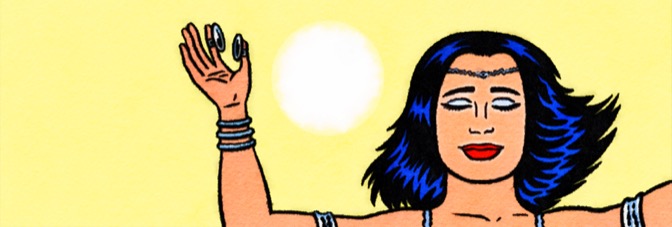
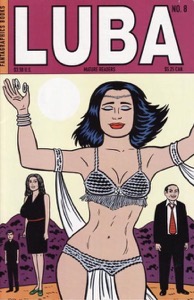
  • Luba (1998) #8

    Luba8

    I'm getting worried I was supposed to be reading Luba's Comics and Stories simultaneously to Luba. The last two issues have had ads for the other comic, which makes me wonder what creator Beto Hernandez's version of the Superman shield with the reading number would be… probably something amazingly obscene.

    Hopefully.

    This issue's almost entirely about Doralis's show going off the air, only it's not about Doralis. She figures in a couple times, both times with huge revelations, but she's never the protagonist of the stories, rather a dramatic punchline. The first time it's in Boots's recollection of the final straws on the show, as Doralis and Pipo lash out at one another. Boots protects Doralis and her secret, which Beto then shares with the reader. It's a surprise, though also not entirely unexpected. So keeping Doralis at a distance makes sense.

    That story's the second in the issue. Before it, there's Luba going to a leather and latex club with Pipo and Fritz. This issue establishes—across most of the stories—Pipo and Fritz secretly dating and repercussions on the cast, which is one of the reasons I'm worried I should've been reading Comics and Stories. The last time Beto covered Pipo's romantic pursuit (and forward advances) of Fritz in Luba, Fritz wasn't interested.

    Now they're basically together. Of course, Fritz's still got her boyfriends, including Sergio. All those boyfriends take a back seat, though–Fortunato's around and seduces a bunch of the ladies this issue. He'll figure into almost all of the strips, including a cameo in Sergio's later.

    This issue might be where Doralis loses her show, but it's the Fortunato issue.

    So, the first story is Luba at the club, Sergio trying to convince her to tell his mom, Pipo, to stop being immature and slutty, especially around his girlfriend, Fritz. Only then Fortunato shows up, and all the ladies flock to him.

    Second story is Boots's recounting of the last days of Doralis's show. Guadalupe and Sergio's drama figures in late in the story, with Sergio again declaring his love and Gato showing up to throw a wrench in their moment. Or at least their possibility of a moment. It's most interesting because the story—running for pages—starts with Guadalupe being an observer, then protagonist enough to fill the pages with thought balloons, only to turn out to be Boots's story entirely. It's deft work from Beto.

    The epilogue is Gato hanging out with the rest of the people who helped ruin the show—a gossip publisher and the girl who worked on the show but conspired against it. It's an excellent one-pager for Gato; we've been hearing about this plot since New Love and Beto spent most of Luba resolving it in the background, but he's never shown this side of the story. It's brief and perfect.

    Then it's back to Fortunato. We get another chapter in his origin—he'd already told Pipo he was fished from the sea, but in flashback, and then Doralis's story about Atlantians with legs hinted at his fantastical lineage. This time Boots is telling the story (as Pipo's told her). It's got a couple great punchlines. Boots is Beto's finest device in Luba; she's a close but distant narrator, always ready with a great joke or a surprise.

    Fortunato, Pipo, and Fritz also figure into the following story. It's a Sergio story; at six pages, it's the longest in the issue (though the first three or four stories do sort of run together). He's mad at mom Pipo for mooning over Fortunato and making a fool of herself with Fritz, so he rushes off to the airport and his next match. Unfortunately, he runs afoul of football hooligans and rich men's wandering wives while having a minor breakdown about his home situation. Everyone thinks it will ruin his football, but he's determined not to let it.

    It's a good story for Sergio. It's been a while since he's had one, and he's usually only sympathetic when someone's very maliciously wronging him, which I suppose also happens here, but still. Beto employs different pacing; most of this issue has been conversations (and Fortunato), so the mood change here is nice.

    The next strip is a one-pager with Guadalupe thinking about her life. Doralis and the show figure in, but it's otherwise a dozen-plus panels of Guadalupe thinking. It's good… but if there's a reason for Guadalupe to think people think so poorly of her… I don't remember it. It'd be from Love and Rockets, but no, don't remember her being terrible, which makes her very sympathetic though it's kind of not her story even though she thinks her way through it.

    The last story is another Luba story; four pages. It's the finale of the Doralis cancellation fallout, but the middle's more about Fritz. Then the finish is Luba and Ofelia getting into a nasty fight for the first time in ages. As the last story, it's both a non sequitur and not.

    Overall, Beto's more ambitious in the second half of the issue than in the first. The first's very complicated and intricate, so it's forgivable. But then the best thing—in this comic where everyone's been talking about Fritz, but it's been ages (issues) since she's gotten to be a protagonist—is the back cover color strip. It's just different images of Fritz in the different areas of her life, with the different people. It's fantastic, and probably the most successful Beto's ever been tying the seemingly unrelated back cover strips to the main content.

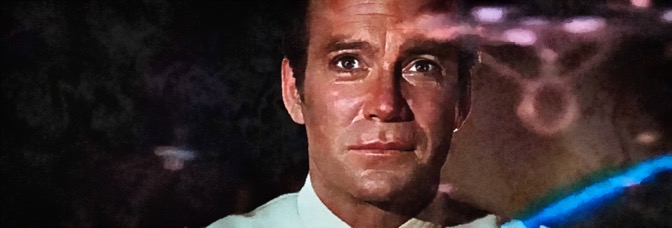
  • Star Trek: The Motion Picture (1979, Robert Wise), the restored director’s edition

    Star Trek: The Motion Picture: The Restored Director’s Edition occasionally feels like a fan project. Or at least a temp project. Like the new opening titles, set in gold. They look like they were done using an iPhone app. Then there are shots where they couldn’t find the original materials, so the picture suddenly looks terrible, like a hacky up-convert to 4K. There are plenty of spectacular restored shots, but when they’re bad, they’re really bad. And they’re usually during effects sequences.

    The reason for restoring the director’s edition is because it was made for DVD, and they didn’t do the new special effects in high definition. It took the restoration team a while to convince the studio. The end credits break out the first and second teams, and some of the names are the same; they came back twenty years later to do the same work again, just with eight million more pixels.

    The result’s… okay?

    In addition to the bad titles and the damaged original footage or whatever, there are a few times the changed special effects don’t work in high definition. Only once is it distracting, when William Shatner, Leonard Nimoy, and DeForest Kelley all lose the edges of their bodies in front of a starfield because portrait mode choked on their pajama costumes.

    Some of the CGI is good, some of it is middling, and a couple shots are lousy. It’s sometimes annoying but usually forgivable; they’re well-intentioned.

    Content-wise, the narrative is unchanged from the last director’s edition (as far as I remember it). A space cloud of enormous power invades the galaxy, headed straight toward Earth, and the only starship in intercept range is the Enterprise. Except they’re undergoing a massive retrofit to make the ship movie-ready in 1979, not impressive for TV in 1966; plus, they’ve got a new captain, Stephen Collins, leading the same old crew.

    But not Shatner, who’s a desk jockeying admiral now, or Kelley, who’s retired to take up some weird future New Age thing if his gold medallion is any indication, or Nimoy, who’s retired to his home planet Vulcan to give up all emotion and… get a more blinged-out gold medallion as a reward. They really missed the chance for Kelley and Nimoy to compare bling.

    When Star Trek: The Motion Picture isn’t meandering through its sci-fi thriller plot, it’s vaguely about Shatner desperately wanting to relive his glory days and using catastrophe to do it, dragging Kelley along because Shatner can’t do it without him. There’s actually maybe the argument Admiral Kirk’s going through some depression and saving the known universe is just the way to get out of that funk. So long as he gets some help from his friends.

    Shatner and Kelley act that arc, which is occasionally in the script. Nimoy shows up later and sort of figures in, but not really. Shatner’s arc stops when he and Kelley get to worry about Nimoy instead. But more significant than either of those arcs is Collins’s G-rated romance with Persis Khambatta. They used to know each other when he was stationed on her free love planet. They’ve got a bunch of unresolved feelings—not to mention Shatner assuming command of Collins’s ship and everyone on the crew being thrilled—and it gets more runtime than any of the other arcs. Also, it figures into the A-plot of the alien spaceship out to destroy Earth.

    There is lots of good acting from Shatner, but Kelley’s an absolute deadpan riot throughout. Nimoy’s okay once he gets over his “logical means rude” bit. Collins is bland but affable. Wise directs the heck out of Shatner and Khambatta in entirely different ways but to similarly strong effect. Even as the finale plods—before racing too quick to the finish—Khambatta’s mesmerizing.

    Sturdy support from the rest of the crew—Walter Koenig gets the most fun, George Takei and Nichelle Nichols get lots of background busywork, James Doohan’s around in the first act, then relegated to occasional “dannae ken if she can take any more” scenes. Unfortunately, Motion Picture’s got a clunky story, something the director’s editions improve but can’t fix.

    Still, the special effects are glorious, the Jerry Goldsmith’s music’s peerless, and the movie’s generally great looking. Except for the pajama costumes, of course. Wise and the very large cast do wonders even with those silly, silly costumes. There are lots of people around at all times; even if they don’t get lines, they do have to react to the dire circumstances, all while in onesies.

    I do wish they didn’t have that really bad footage in this version, but otherwise, all drive systems are good to go.

  • Teen Wolf Too (1987, Christopher Leitch)

    There are worse movies than Teen Wolf Too. There have to be worse movies than Teen Wolf Too. It’s a mantra you can use when watching Teen Wolf Too. Of course, given the era, there may be even a worse theatrically released movie from the same year (1987). But Teen Wolf Too is just the wrong combination of worthless and ponderous.

    The obvious worst aspect of Teen Wolf Too is lead Jason Bateman. His performance is so inept, he’s not miscast, it’s a joke he was tested. A lot makes sense once you realize Bateman’s dad, Kent, produced the movie as a vehicle for his kid who couldn’t act. What’s so unfortunate about Bateman’s acting is his apparent effort. He clearly working with some suffering acting coach because his deliveries are laborious. Lots of pausing to think and consider, which just prolongs scenes and makes the deliveries longer. The less Bateman acting, the better, but there’s so, so much of it.

    Because Teen Wolf Too can’t afford the makeup people from the first one, which leads to a lousy werewolf mask for Bateman, but then he’s barely in it. Bateman’s only got a handful of scenes wolfed out besides the numerous (four or five) montage sequences, where they can also use a stuntman.

    Including an indescribable—but seriously, not worth seeing it for yourself—song and dance number where Bateman’s obviously not singing or dancing. See, Stuart Fratkin’s back from the first movie—well, Fratkin’s character is back. The original actor, Jerry Levine, didn’t return. Since he’d have been thirty or whatever acting opposite maybe just eighteen Bateman. Fratkin’s older but not lots and lots older. Mark Holton’s back from the first movie; he’s lots and lots older. He’s some weird non-trad who went to college to physically assault teenagers.

    But Fratkin. He wanted to get Bateman to college to create a new Teen Wolf sensation, and so he’s prepared the song and dance number for Bateman’s Teen Wolf coming out. And hired dancers. Again, indescribably bad. Again, don’t find out for yourself. Don’t even YouTube it.

    So, the first movie was high school, and this one is college. Bateman’s playing Michael J. Fox’s cousin from the first movie, who doesn’t think he will be a werewolf because neither of his parents are werewolves. There’s not not an implication the parents are related.

    Anyway.

    James Hampton is back from the first movie as Fox’s dad and Bateman’s uncle. There’s also not not the implication Bateman’s parents are dead. It’s like the Cat People remake, actually, when you think about it. A lot like it.

    Hampton’s not any good because the script’s terrible. Much like untalented white guy lead Bateman, screenwriter Tim Kring failed upward, though maybe he learned to write someday like Bateman learned to act once his dad stopped making his movies for him.

    Sorry. Hampton.

    Hampton’s not good. But he doesn’t appear embarrassed to be in the movie, which is incredible because everyone else looks mortified. Even Bateman. Bateman looks just as miserable as everyone watching him act.

    The film’s cast is a varied assortment of established actors down on their luck, middling ones about to quit acting for something else, or lousy actors kicking off careers acting poorly.

    You feel bad for Kim Darby and Paul Sands (though Sands is terrible and Darby’s just bad), but not John Astin. Astin’s atrocious. Fratkin’s awful, Beth Miller’s awful; Holton’s bad but not especially bad. Estee Chandler plays the love interest, who Bateman mentally abuses, and the script treats like shit.

    Chandler’s sympathetic. She’s one of the few people not actively making the movie worse. She’s trapped in Teen Wolf Too.

    Leitch’s direction is terrible, Mark Goldenberg’s music’s terrible, Jules Brenner’s photography is terrible. On the other hand, the editing–the movie’s got four editors and is ninety-five minutes—isn’t incompetent.

    Don’t watch Teen Wolf Too.

    Unless Jason Bateman’s dad is paying you to watch it.

  • Batman: Year 100 (2006) #3

    Bm100 3

    Year 100 started with Jim Gordon (named after granddad) not knowing anything about “The Bat-Man of Gotham” and thinking it was an unlikely urban legend in the first issue to revealing he was the warden of Arkham Asylum. And it was filled with super-villains. And then he let the federal police kill them all, getting his job at Gotham PD as a reward.

    Wouldn’t you want a good reward for allowing such a thing? Not, you know, being the last good cop in a corrupt dystopia?

    Gordon does his confessing to the doctor lady, who was helping Batman 2039 with his federal morgue break-in but turned off comms to patch up Gordon. At multiple points during their scene, it seems like he’s going to say something meaningful or revelatory, but instead, he just says, “wow, Batman’s real, huh,” repeatedly. Or at least twice.

    Considering he spends the second half of the issue at granddad Commissioner Gordon’s cabin upstate looking at pictures of the old Batman, this current Gordon didn’t know there was a real Batman because he had his head up his ass. Especially since he knows all the rogue’s gallery’s names.

    So dumb.

    It raises the question—did DC editorial not care about a better script because it’s Paul Pope or because they knew no one cared about a Batman comic being good, actually. Or even sensible. Also, the comic seems to be reversing course on the continuity to Frank Miller, instead implying Batman’s a series of guys, like James Bond actors or something.

    While Gordon’s on his information quest, Batman 2039 is getting into major fights with the cops, who lock down the city after he escapes again. Unfortunately, it’s not a particularly great escape sequence. There’s a fight scene with a psychic cop, but it’s boring, and every time the story’s begging for some gorgeous Pope art… Pope instead cuts to Gordon discovering something or having a pat epiphany.

    The issue’s also got a lengthy talking heads sequence where the angry doctor lady yells at Batman for being irresponsible, but Pope doesn’t want to give away any details about the characters, so the argument’s pointless. It’s noisy, it takes up pages, and there’s nothing else to it.

    Obviously, there’s some good art in the comic, though the new “Batmobile” (the Batcycle, like, come on, it’s a motorcycle, it’s not a mobile) is disappointing. Pope put a lot of thought into the design but not into what the thing might do.

    The comic feels incredibly slight—with only one issue to go—and I’m remembering why I almost immediately forgot Paul Pope ever did a big Batman project.

  • Werewolf by Night (1972) #2

    Wbn2

    Frank Chiaramonte inks the Ploog this issue, resulting in some really good art, but not the sublime standard Ploog’s set doing his own inks. It seems like Chiaramonte takes over a few pages into the comic; after a while, the faces lose that Ploog character. The expressiveness. Or maybe, since it’s eventually just the villain, his henchman, and the werewolf, no one cared about the expressions.

    Before that winnowing down, writer Gerry Conway works on his subplots. The Darkhold is the major B-plot, with Jack and his new best friend and roommate Buck Cowan taking it out to a former university professor priest turned labor organizer priest for translation. They also meet up with Terri, who appeared in one panel in the first appearance of Werewolf by Night and had a different hair color. She sort of joins the supporting cast. It’s hard to say because once Jack heads out with the villain, it’s full moon and transformation time, not time for love.

    The comic opens with the “third night” of Jack’s transformation cycle, seemingly making the issue an immediate sequel to the last one. Some of the other details fit—Jack having just moved in with Buck, for example—but there’s no mention of the previous issue’s memorable adventures.

    Probably because this issue’s villain has similar evil plans, though the last villains’ schemes didn’t involve the werewolf for experimental purposes, they did have a bunch of non-lycanthropic experimenting going on. I think the werewolf fought someone in Marvel Spotlight who wanted to fix themselves through experiments too. Jack just can’t stop running into magically-inclined mad scientists.

    But he also fights a shark. The comic opens with the cops, then a mysterious helicopter, chasing the werewolf through the Los Angeles docks and into the ocean. Werewolf goes in the water, shark’s in the water. And even though the werewolf doesn’t want to fight, the shark’s got different ideas.

    The chase is good. The shark is eh. There’s another potentially big set-piece at the end of the story, and Ploog rushes it as well. The accompanying narration is more interesting than the shark fight; Conway’s got a peculiar, close first-person angle on it—but it’s neither the werewolf nor Jack narrating. The werewolf doesn’t have the vocabulary, and Jack doesn’t remember all the full moon adventure details. I’m curious if that double-extended narrative distance will ever change.

    But for now, I’m just waiting to see what happens with the Darkhold and Terri, but hopefully not forty-something Buck and under-eighteen Lissa (Jack’s sister, who the issue establishes hang out at he and Buck’s pad).

  • Kill or Be Killed (2016) #5

    Kbk5

    This issue is where I jumped off Kill or Be Killed the last time I tried reading it. The funny part is I’m now utterly dispassionate about the issue. Sure, I can see where Sean Phillips’s lagging art would’ve bothered me—Dylan runs into his ex-girlfriend (who I think they teased in the first or second issue) and they both have really poorly sized heads through their re-meet cute.

    And there’s some weird hostility in writer Ed Brubaker’s narration for Dylan. Lashing out at the reader. But the reader is also whoever’s listening to Dylan’s confession; this issue makes it seem very much like he’s telling someone his story, not just narrating. We’ll see on that one, though. Brubaker likes crime fiction a lot, and crime fiction doesn’t care how tenses work.

    In addition to Dylan meeting his ex-girlfriend again—outside his boxing gym, where he goes for lessons since a Russian stripper beat him up last issue (but months and months before, Brubaker’s doing the time jump)—he goes to coffee with Kira. They sit awkwardly like strangers because they’re not knocking boots since she and his roommate broke up.

    There are a couple victims in this issue—the demon, who also appears briefly (meaning Dylan hasn’t seen the demon in his dad’s old painting, which was around his apartment, in the two-plus months since the last issue), told Dylan he had to kill one person a month, I think, which means it’s pretty easy to count the passage of time. Not quite a lunar cycle, but close enough.

    Anyway, the victims are a little more creative. One’s a dog killer who got off with a temporary insanity plea, and the other’s Bernie Madoff.

    The cliffhanger promises nothing’s ever going to be the same starting next issue, so who knows, maybe it’ll at least stabilize. I sure didn’t think so last time, though. I guess I wasn’t ready to be so disappointed but now, bring it on.

    Also, while Phillips has problems with the figures and the half splash pages accompanying text aren’t great, he still does a fine job with the New York City scenery.

  • Teen Wolf (1985, Rod Daniel)

    Teen Wolf is a rather dire Wolf. The best things about the movie are James Hampton as the dad and the werewolf makeup, which seems entirely designed to allow for a stuntman to play Michael J. Fox when he’s decked out.

    Otherwise, it’s never better than middling and often much worse. Some of the problem is the script, though clearly not all of it, unless writers Jeph Loeb and Matthew Weisman introduced subplots to never address later, but most of it’s director Daniel and maybe editor Lois Freeman-Fox. Teen Wolf’s got absolutely no flow. Every scene feels like it’s the first time the characters have ever met… wait, I guess that one is script-related. Loeb and Weisman don’t do character arcs.

    Ostensibly, Teen Wolf is about Fox accepting himself for himself and realizing his best friend Susan Ursitti is the right girl for him even though she’s not glamorous like Lorie Griffin. Griffin’s surprisingly not a cheerleader, instead doing a one-woman version of Gone With the Wind for theater teacher Scott Paulin. The film goes out of its way to suggest Paulin’s abusing her, but it’s always a joke because girls are property in Wolf. Paulin’s terrible. There’s not much good acting in Teen Wolf and some really bland bad acting, but Paulin somehow manages to be bad, bland, and eccentric. He’s atrocious.

    Of course, Daniel doesn’t direct the actors. At all. Fox is all over the place, whereas Ursitti and Griffin are nowhere. Hampton handles it because he’s a professional, then other supporting actors just sort of luck into not needing much direction because the script’s so thin, or the film’s cut their characters down to nothing. Mark Arnold’s the bad guy; he’s Griffin’s boyfriend who goes to another high school. He’s on the basketball team, and they regularly trounce Fox and his team.

    So, Teen Wolf is a bad high school sports movie with a werewolf subplot. When Fox turns into a werewolf when the wolfsbane blooms and the autumn moon is bright… well, wait, no. Fox can turn into a werewolf whenever he wants. The movie treats lycanthropy as peculiar but not unheard-of; it’s one of the script’s most successful moves because it allows Arnold to be a credible threat. He hates Fox for being different. The werewolf “curse” is an othering thing, not a bloodlust thing.

    Griffin thinks it’s hot, Ursitti thinks it’s not, but Fox wants to be popular, so he’s going with blonde Griffin. But, again, Griffin’s not some popular girl; she’s the one being groomed and abused by the theater teacher. She hates her boyfriend and, seemingly, her life. Small wonder with both Arnold and Paulin treating her like their personal property and then Fox trying to do the same.

    Though Fox is also miserable. He’s miserable before he’s the werewolf, miserable after. It doesn’t go anywhere.

    Jerry Levine plays Fox’s obnoxious best bro. Levine needs some direction. He’s supposed to be an amusing wiseass. He’s a desperately unfunny one instead. Despite being filmed in Pasadena (in for Nebraska), Teen Wolf feels like a Canadian movie from the era that statement was a pejorative, and Levine seems like the one American who went north trying to make it. And then not.

    Also, Daniel didn’t have Fox get rid of his Canadian “sorries.”

    Besides Hampton and Arnold, the other decent performance is Matt Adler as Fox’s friend who doesn’t like the werewolf business. It’s not a subplot in the film (probably in the script, maybe even filmed), but Daniel and Freeman-Fox only leave it in the background of the finished product, with Adler not even getting to voice his discomfort. Other people talk about him when he’s not around.

    But he’s got an arc.

    Also, Fox’s teammates Mark Holton and Doug Savant get an arc. They watch him become an attention-seeking ball hog and don’t like playing anymore. Savant gets Teen Wolf’s biggest diss when he’s shut out of the third act.

    Jay Tarses plays Fox’s basketball coach. He’s terrible but funny, like Daniel couldn’t screw up Tarses’s deliveries even when working against them. James MacKrell plays the mean vice principal. He’s bad and not funny.

    Teen Wolf is a smelly dog. It doesn’t even help it’s only ninety-two minutes. Daniel and Freeman-Fox constantly use slow motion to drag things out.

    Oh, and the original soundtrack… woof.

  • Superboy and the Legion of Super-Heroes (1977) #237

    Slsh237

    This issue is weird. The story’s weird, and the issue’s weird. The story’s weird because it’s about the Legion committing numerous intergalactic crimes because their financial benefactor is in danger. The issue’s weird because, well, the art is… lacking.

    And the art’s from Walt Simonson and Jack Abel. I’m not the most well-read on Simonson, but I know he’s not supposed to remind you of Rob Liefeld, so maybe it’s Abel’s inks. Because the faces are all bad, but then about half the figures are bad too. Like, giant muscles and hands and little heads with too small faces on them. The only decent panels are the superhero team long shots. Otherwise, it’s a high-grade eyesore.

    Also, the spaceship design—the stuff new to the issue because there’s a callback to Mon-El’s story last issue—looks like “Star Trek.” Like Klingon ships from “Star Trek,” just without thoughtful nacelles.

    Now on to the story.

    The Legion is gathered to have a retirement party for Lightning Lad and Saturn Girl, who have to quit because they’re married. They’re barely in the story—just in the first of the six chapters—and they get so little to do or say, it’s like writer Paul Levitz is avoiding them.

    They fly off on their own, and the Legion financier, intergalactic businessman R.J. Brande, has a moment before little drones attack him. Brande looks a little like Harry Mudd from “Star Trek: The Animated Series.” The silly mustache.

    Anyway. Some guy’s out to kill Brande for bankrupting his family, and he’s holding him hostage unless the Legion goes and steals three artifacts. He says it’s to rebuild his family fortune, but it’s really to destroy the galaxy or something.

    It doesn’t occur to the Legion they should be suspicious of the villain’s story until the last chapter, which is part of the weirdness. The story’s weird in its thoughtlessness like Levitz was phoning in the plotting.

    The first quest is a relatively simple follow-up to Mon-El’s adventure last issue. This team of Legionnaires has to fight space pirates. It’s also where there’s some really figure drawing on Superboy; just really bad. It’s a strange sequel to the story last issue because that one was all Mon-El reflecting on the adventure as he did his thing. This time he’s got pals, and there’s just a lot of talking. It’s easily the most successful, story-wise, of the quests.

    Because the second quest has three female Legionnaires breaking into the Legion base, where team leader Wildfire and Princess Projectra have to stand guard. Princess Projectra is giving Wildfire shit for not being human anymore and, therefore, a big buzzkill. Kind of mean. Then Shadow Lass comes in and whines about how she only joined the Legion to meet a husband, but it’s a ruse for her compatriots to steal something.

    From their team.

    Instead of… telling them what’s going on. Though given how shitty they are to each other, I mean, would you want to talk to them if you didn’t have to?

    The third quest has that Legion team assaulting a less advanced but still spacefaring species. Making fun of their appearances as they do.

    All this shitty intergalactic behavior from the Legion—as far as they know—is to save their wealthy benefactor. So the people they assault, the things they break, the things they steal, all that damage is okay because their patron is in danger.

    Sure, the whole galaxy or solar system or whatever is in actual danger, but they don’t know that detail. Apparently, the Legion’s motto is “the richer you are, the more people we’re willing to hurt for you.”

    The jerk store behavior and the bad art do not make for a good read.

  • Batman: Year 100 (2006) #2

    Bm100 2

    About a third of this issue is talking heads. First, it’s unnamed Batman 2039 and his team—including a new Robin, who starts the issue working on a bitchin’ motorcycle for Bats—talking through what led up to last issue’s issue-long chase sequence, and then it’s cop Gordon and his gang looking through the archives for information on “The Bat-Man.”

    Both sequences are strange, though for different reasons. The Batman one because creator Paul Pope is trying to avoid doing any character introductions and instead focus on their conversation about the dead cop and Batman’s inability to remember enough details. It’s a briefing with occasional personality (usually from Robin 2039). It’s not interesting, but it’s also not grating like Gordon’s sequence.

    So the Gordon sequence. They’re going through the archives—remember, last issue, no one had any idea there was a “Bat-Man” a hundred years ago, and even the modern incarnation was a surprise to Gordon. In Year 100 continuity… Detective Comics #27 is in continuity, something something something in the sixties in continuity, The Dark Knight Returns is in glowing continuity. Then maybe something from Dark Knight Strikes Back. I didn’t read Strikes Back so I don’t know if it’s what Pope’s talking about. The most attention goes to the DKR stuff, which means in Year 100 continuity, Batman in Dark Knight was at least seventy, not fifty-five or whatever. Also, Zorro would be out.

    It’d be better if Pope weren’t just overtly winking and nodding to Frank Miller. But, it still wouldn’t be good. No one knows about there being a Batman in Gotham City for eighty years because the records were destroyed. It also means no one in Gotham in 2039 remembers anything from twenty years before. Seems like mass amnesia would have more repercussions.

    The other two-thirds of the comic are action procedural. Gordon goes to the crime scene to see what the federal cops are lying to him about; Batman breaks into the federal cop morgue to look at the guy he supposedly killed.

    Exquisite art on all of it, though obviously better on the action. Pope doesn’t make the talking heads sequences interesting visually; he matches the monotony and tediousness of the dialogue. Appropriate, but also, why do the scenes if you’re not interested in doing the scenes. Especially since the first issue established Year 100 can run on pure adrenalin. Contriving reasons to be reticent during exposition dumps….

    The second half of the comic does a lot to redeem the first, though it’s clear Pope doesn’t actually have a good story, which is foreboding given there are two issues to go.

  • Werewolf by Night (1972) #1

    Wbn1

    Werewolf by Night’s got a cliffhanger to resolve at the beginning of its first issue, which is awkward. Especially since writer Gerry Conway’s going to take so many shortcuts. He’s in a race to resolve everything, concluding in a breakneck single-page wrap-up, and he never gets a chance to setup Werewolf as its own book. Nevertheless, there are the vaguest hints; more on those in a bit.

    First, the cliffhanger. We last saw Jack Russell, titular Werewolf by Night, turned to stone by a teenage mutant girl whose father had been doing experiments on innocent people trying to find a cure for her. They were going to use dark magic from the Darkhold, a book Jack wants because… some other villain told him about it.

    This issue starts with the werewolf still stone and Jack narrating a recap. The gorgon eyes stuff doesn’t work on werewolves who turn back into humans. Just as Jack changes, his new pal Buck Cowan arrives. He’s chartered a seaplane, but before anyone can say, “I hate snakes, Jock,” the duo runs into mutant girl, her now paralyzed father, and their reluctant mutant thug.

    It’s an entirely different take on the mutant girl than in the previous issue, which had her as tragically, sympathetically evil. The father surviving his fall is a weird and mostly pointless change. Also, the idea she got her father a new outfit and a wheelchair in the few hours since she’d turned Wolfman Jack into stone…. Conway’s going to end the issue with just as silly of a time twist too. I hope it’s not going to be a regular narrative device.

    Since Jack gave the mutant girl his name in the previous installment, she just follows him back to the mainland, where she can threaten his sister, Lissa, and Buck too. Luckily, it’s the second night of the full moon, so Jack can turn and save the day.

    But what if being turned to stone somehow cured him of his lycanthropy? Wouldn’t that twist be a heck of a series starter?

    Speaking of the series, the hints at what Werewolf might be like when not resolving existing cliffhangers: Jack and Buck hanging out, Lissa too? In the previous installments in Marvel Spotlight, Conway avoided sister Lissa; talked about her a bunch, avoided her. Now she’s finally around. And Buck and Jack have a good enough rapport, with Jack trying to hide the furry alter ego from both his costars.

    As before, the draw is the Mike Ploog art. The werewolf stuff is great, the human stuff is good—Jack’s an often shirtless action star now, with absolutely phenomenal hair. Ploog draws great expressions, great movement, but the hair is just out of this world.

    The only time the art lags is with the mutant girl and her father plotting. Otherwise, even with brief family drama stuff (Jack and Lissa’s step-father is a complete prick), all the art’s magnificent. Ploog’s art enthralls, page-to-page, panel-to-panel.

  • Kill or Be Killed (2016) #4

    The most unrealistic thing about Kill or Be Killed is Dylan isn’t a white supremacist. Like, historically speaking. Also, his classes in graduate school. Much of this issue’s about him trying to find his next target, starting with a subway fantasy about taking out a couple punks, but then it turns out he’s just watching too much Death Wish 3 or whatever.

    Okay, Dylan watching Death Wish movies is also somewhat unrealistic.

    But after the subway shootout fantasy, he opines you can’t just kill Black drug dealers in parks because it’d be racist; besides, they’re just a cog in the wheel. To find bigger fish, he’s got to do research, which means reading newspapers and police blotters. Dylan’s a copaganda-invested vigilante. It leads him to a strip club where he’s sure the girls are human trafficked from Russia, so he’s going to kill their handler.

    Kbk4

    At the same time, his affair with Kira has accelerated, leading to their content-less soap opera babbling about her boyfriend (and his roommate) taking place while they’re both naked. The roommate’s getting suspicious because Dylan keeps going out every night from 2 to 4 am. This is why The Punisher lives alone.

    Overall, it’s an okay issue (relatively speaking). Writer Ed Brubaker tries really, really hard to rationalize Dylan through his narration. It’s not entirely successful, and it seems vaguely half-assed, but at least Brubaker’s trying to be thorough. But it reads like his notes on a project, not a finished project. Kill or Be Killed needs an editor, not Eric Stephenson’s “editorial supervision.”

    Artist Sean Phillips gets in some great New York City street scenes, but he’s also got his scale problems. Lots of Dylan’s head looking oversized for his body—in panels where the other people have standard-sized heads—but this issue also has Phillips drawing other characters awkwardly small. Seriously, the whole thing could be explained if it were Dylan’s fantasy he’s playing out with his action figures.

    There’s a biggish reveal at the end, along with a wrench in his relationship with Kira; neither are particularly engaging, but at least they’re dramatic blips in a series so awkwardly otherwise without them.