• All Rise (2019) s03e09 – Truth Hurts

    I want to be more enthusiastic about this episode of “All Rise,” but I don’t trust the show anymore. They’ve resolved Simone Missick’s extra-marital flirtation arc with (not appearing this episode) Sean Blakemore. Again. They promise this time. For sure. This time it’s over.

    For sure.

    The resolution arc involves Missick’s husband, Christian Keyes, who hasn’t had this much to do all season. Even though—as Keyes points out—he’s been selfless primary caregiver to their infant daughter, he comes off looking like a complete asshole this episode. I’ve always wondered if Keyes—recast from the original actor—was a stopgap before a potential fourth season without the character. It doesn’t seem like it anymore, but who knows? The show’s always been terrible with Missick’s marriage.

    Keyes has strong-armed his way into a case of Wilson Bethel’s; Missick’s the judge on the case. It’s a continuation of a Jessica Camacho arc from like four episodes ago. Unfortunately, this season’s longer arcs are a mess. It’s a lot of drama for everyone involved, which Bethel (in his capacity as director) leans into a little much. He tries to match scene intensity with shaky camera work or fast cuts, which never works out.

    And while Bethel does get the twist ending of the episode—it’s a talky, too vague, too hurried twist, he’s hands off from the main plot. J. Alex Brinson is defending a strip club customer accused of drugging a dancer. Evan Arnold’s the exceptionally well-cast sexual predator, Lindsey Normington plays the dancer. Bethel’s supposed to try it, working with Lindsay Mendez to gain the trust of the club’s dancers, only to kick it to newbie Ronak Gandhi.

    The arc has multiple twists, including Gandhi’s major crush on Normington and not professionally respecting Mendez enough. It’s harrowing, with good supporting performances from Brinson and Missick. It’s all about Gandhi and Mendez, though.

    Meanwhile, Camacho literally hops between plots, visiting all her pals without a case of her own. It’s still entirely unclear if “All Rise” is downgrading Camacho for an easy exit or if they just can’t manage all these characters.

    And then Marg Helgenberger shows up for a brief cameo to remind everyone she’s going to show up from time to time.

    In addition to the twist ending, there’s a ruling with future repercussions (“All Rise” is about to wrap up its first OWN season). Even with the occasional direction problems, it’s one of the season’s better episodes; it almost feels like they know what they want to do with the show. Almost.
  • Evil (2019) s03e09 – The Demon of Money

    For a show about literally Satanic demons and humans cannibalizing each other to serve their dark lords, “Evil” hasn’t had any significant cast deaths. Certainly not any of the leads, none of the supporting regulars; I don’t even think they’ve had a repeat guest star die off.

    Well, unless you’re killed by one of the show leads. I can think of one character.

    This episode ends with a supporting character’s death, a relatively big one, with an absolutely lovely finish for regular viewers. I assume everyone who watches “Evil” at this point is a regular viewer.

    But the finale’s this tense sequence with one character out to kill another returning guest star, but then another returning guest star interceding. At any point, it could’ve been any of them to go. Incredibly suspenseful for “Evil,” which usually shies away from horror and suspense.

    Great direction from Yap Fong-yee.

    The main story is about a haunted stock, which ties into the demon map, which ties into returning guest star (no spoilers) Li Jun Li, who came back in what seemed like a cameo last episode but now seems almost a regular recurring character? The episode leans heavy on making Li part of the team in some capacity, thanks to her fortune-telling skills (straight from God’s lips to hers) and really liking hanging out with Herbers’s kids. They go to an indoor amusement thing with a ball pit. It’s silly and broad (Li has Vatican bodyguards), unlike “Evil,” but also what it needs.

    While last episode seemed like the series was getting a soft reset in preparation for season four, this episode pulls back on that idea in some areas while accelerating in others. Thanks to the shocking finale, the actual cast change will have major repercussions.

    Though any lasting repercussions would be novel on the show.

    The mystery doesn’t get much resolution, rather a punchline, as there are more important things going on, like Li being able to tell Christine Lahti’s in league with the dark ones, Kurt Fuller getting Herbers to read his Satanically influenced book draft, and so on. The stock plot, which has the principals giving each other a stock tip to test a scary man appearing, gets a little lost in the second half, but it also doesn’t really matter.

    Some terrific acting from Aasif Mandvi, whose incredulity crumbles when faced with an imminent supernatural threat.

    It’s an “Evil” episode where things happen. It feels like ages since they’ve done one of these.

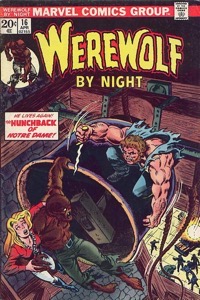
  • Werewolf by Night (1972) #16

    Wbn16

    Mike Friedrich writes, adding his name to the list of seventies Marvel writers who tried to make hash out of Werewolf by Night with limited success. The issue credits have some enthusiasm for pairing two Mikes (Friedrich and Ploog), but then Frank Chiaramonte’s the inker, so how much can they really do? The most Ploog the issue ever gets is probably Topaz; Chiaramonte leaves her alone the most. I think it’s Ploog’s last issue, which makes the watered-down werewolf even more disappointing.

    And then the villain.

    This issue's villain is a mutant; his mutation contorts his spine and gives him super-strong skin. He begins the issue hijacking a French airliner; Jack and Topaz are connecting through Paris, done with their Tomb of Dracula crossover and ready to get back to Los Angeles. Except then there’s a fourth full moon (which the comic doesn’t explain at all, unfortunately). So Jack changes, running amok in the airport, then getting into a pissing contest with the hijacked airliner.

    Thanks to the hijacker attacking the werewolf when it boards the plane, the werewolf decides he’s the bad guy. Topaz tries to control Wolfman Jack, which the bad guy observes, so he kidnaps Topaz and, because it’s a Hunchback of Notre Dame thing, literally takes her to the cathedral as a hostage.

    The werewolf goes to save her, surprising bit of emotion in the finish, and scene.

    Friedrich doesn’t do well with the Jack narration. He does well with some other things, ranging from the historical detail—hence why the fourth full moon begged explanation—and his willingness to put the werewolf in everyday situations. It’s a plane hijacking guest starring Werewolf by Night. It works way better than it should.

    The villain’s a little flat throughout, but Friedrich has an arc for him. The groundwork’s there.

    I’d thought Ploog was done after the Dracula crossover (anything to save another Chiaramonte inking), and this issue appears to be it. Unfortunately, art-wise, it’s a wanting finish, even with the usual caveats.

    Overall, the whole thing’s wanting; there are just some solid moves from Friedrich, even if they don’t end up working out.

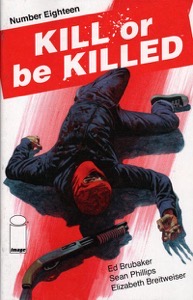
  • Kill or Be Killed (2016) #19

    Kbk19

    Based on the end reveal and what it means for the series-long narration… well, Kill or Be Killed, specifically writer Ed Brubaker’s work on it, goes from disappointing, tedious, and grating to pitiable. He’s even commented on the narration device to the reader before—when this arc started—so promising it’s not something lousy and then it being something worse than lousy….

    If this were a script Brubaker had written at twenty and drawered for a couple decades, it’d make so much more sense.

    Anyway.

    Besides the sad ending, it’s a temporarily exciting issue–Die Hard in a Mental Hospital—but mostly an annoyingly tepid one. Brubaker and artist Sean Phillips, who’ve been doing talking heads scenes for years, entirely fumble this issue’s. Intrepid police detective Lily Sharpe is visiting vigilante Dylan in his mental hospital, and they’re going to talk about right and wrong. It’s a Punisher scene, probably a Punisher scene Brubaker’s written (or at least watched on “Daredevil”), and it’s terrible. Worse, Brubaker tries to soften the reader to Dylan’s perspective with a pointless two-page rambling about climate change and how it’s not liberals versus conservatives; it’s not rich versus rich. Sorry about your colorist, Ed, but we can quickly start with liberals versus conservatives. Especially since it’s less “rich” than capitalism, but he (or Dylan) doesn’t make that observation either.

    Such a waste of pages. Though the opening sequence feels like Phillips only wanted to do so much art and no more, including the issue being set during a snow storm, so Phillips doesn’t have to draw the whiteout.

    Kill or Be Killed is on me; I made this decision. But, wow, I did not need to know how lost Brubaker got on this book. I also didn’t need to see Phillips’s art continue its descent on it; just bring someone else in, like, wow.

    One last disappointment then done forever. Unless they actually get a movie this time.

  • Prey (2022, Dan Trachtenberg)

    Prey is roughly thirty years late. It’s a Predator prequel with ties to the existing franchise (mainly the second one), but it’s a conceptual no-brainer and one they’ve been doing in the Predator licensed comics for decades. The movies established the Predators had been to Earth before, so why not show one of their earlier encounters? Of course, obviously, anthology series never work; studio reticence makes sense. It’s still a no-brainer.

    The film takes place in the eighteenth century on the Northern Great Plains. A Comanche tribe happens across a visiting Predator and, thanks to the ingenuity of a (shouldn’t have been) unexpected hero, survives to tell the tale. And tie into the future continuity.

    Amber Midthunder is the unexpected hero, though she’s only the unexpected hero to the tribe. Especially once big brother Dakota Beavers rather shittily reveals he’s been cribbing off Midthunder’s notes their whole lives and taking credit for the synthesis. Her brains, his brawn; well, specifically his male brawn. Midthunder’s a capable hunter, but she’s still a girl. Can’t give the girls too much to do; who else will get up early and go gather.

    Beavers leads the tribe’s war party; about a half dozen other red shirts who don’t even care Midthunder knows how to track or treat wounds. Girls, icky bad. Beavers appreciates her contributions, occasionally letting his confidence buck cultural constraints, but he still treats her like competition, not a comrade. Prey could’ve used another six or seven minutes on their relationship, especially how their presumably deceased father figures in. Michelle Thrush plays their mom, but they don’t have any family scenes together, just Thrush and Midthunder, then Midthunder and Beavers, then Thrush observing Beavers’s successes as a hunter from a distance. There’d have been time for it (and not just because the end credits are a shocking eight and a half minutes, Prey desperate to get away from the ninety-minute mark like it’s a nineties action movie).

    Even underdeveloped, Midthunder’s a strong enough lead—and Beavers is fine enough support—to keep Prey going through its first and second acts. The third act, when the film becomes the inevitable, rushed series of original Predator homages, is pretty good but never adds up for Midthunder. The problem with doing character development in a Predator movie is the formula doesn’t actually need any, and director Trachtenberg and screenwriter Patrick Aison stick very much to the formula.

    They just put another movie at the beginning of it.

    Trachtenberg’s direction is always okay and sometimes inspired. Unfortunately, none of those inspired moments come in the third act. Despite four (or six, depending on how you count) precursor Predator movies, Trachtenberg’s got no fresh ideas for his homage sequence. It’s almost like they shouldn’t have done it. But still, always okay, sometimes inspired, never bad.

    Lovely cinematography from Jeff Cutter, good music by Sarah Schachner, solid editing from Claudia Castello and Angela M. Catanzaro. Prey has a bunch of pastoral sequences, establishing Midthunder and her faithful dog (alternately the star and not the star of the show), but Trachtenberg hurries through them. At the film’s beginning, I was expecting Prey to go long with its Malick moments. But it doesn’t go anywhere near long enough with them.

    Quibbles aside, Prey’s done more for the franchise than anything in decades. Hopefully, Disney’s better making movies about invisible alien monsters killing (mostly deserving) humans than Fox. They sure seem up to the task after this one.

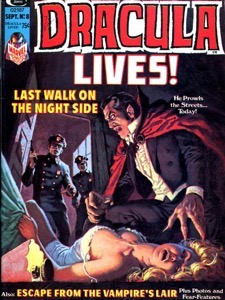
  • Dracula Lives (1973) #9

    Dl9

    Until the last story, which might be the least impressive entry in an issue of unimpressive entries… I think the most successful art, overall, in the issue is Ernie Chan’s one-pager. It opens the issue, with a Tony Isabella script, all about the various ways of killing vampires. It’s amusing and practical; statements it’s difficult to make about the rest of the issue.

    The first story’s the most disappointing, just because it continues Doug Moench’s okay “Dracula vs. the NYPD” story from the previous issue. This time Frank Robbins is penciling with Frank Springer inking. It’s a cartoony style, with disappointing character work. Not sure if it’s Robbins or Springer, but the people look lousy. Neither good nor bad is Dracula, who’s more inhuman. The story involves Dracula tracking down the guy who looted his castle and having to figure out how to get his wares back.

    Meanwhile, the cop whose wife Dracula killed last issue is out to get him. His fellow cops believe his story of a vampire forcing the guy to kill his own wife, which tracks. Imagine what police accountability was like in the seventies.

    Interestingly, Dracula’s still a somewhat mythic figure, with the lady who buys his stuff at auction (seriously, hasn’t another Tomb story used this bit) wishing he were real. Well, she finds out.

    For a panel, it seems like the Franks are at least enthusiastic about good girl art but then not really.

    The disappointing art sets the tone for the rest of the issue, with the most personally disappointing coming up next. It’s another Moench story (there are four features, one movie review, and a letters page, yet another change of regular content), with art by twenty-one-year-old Paul Gulacy and inks by Mike Esposito. It’s about Dracula versus some other vampire; this other vampire’s terrorizing a European village, which pisses Dracula off because it means no easy feeding there.

    I’d love to say baby Paul Gulacy has the chops.

    He does not. He’s got better panels and worse panels, and you can see proto-Gulacy at work (even the almond eyes), but you can’t really see how good he’ll get from this one.

    The story’s got a strange finish, kind of jokey. What’s more bizarre is the other two stories have the same kind of finish.

    They have a different writer, though—Gerry Conway.

    His first story has Alfredo Alcala art. Alcala’s a better inker than penciller and inker. His faces are flat in the wrong places, and his figures are strange. His backgrounds are fantastic. The story’s about a young couple; the evil girl convinces the boy to rob a jewelry store for her.

    Meanwhile, Dracula’s around. Their paths cross. Unlike the Moench story, this one begins and ends with light humor. It’s a weird tone, especially with the art. The whole issue just feels off.

    The last story—the only one where the art’s more successful than that Chan one-pager—is about a mysterious figure in a top hat hunting Dracula. Sonny Trinidad does the art. The art’s good. The story’s terrible. Conway takes a big swing with it and completely misses. So again, the issue feels off, especially with usually sturdy (on Lives anyway) Conway fumbling both his stories. Moench’s got more art problems, so it’s hard to say. But Conway’s stories go wrong because of the writing.

    The movie review—by Gerry Boudreau—covers the Hammer Dracula film, The Scars of Dracula. Boudreau hates it, though with less personality than Moench or Isabella had in their previous reviews.

    No Bram Stoker’s Dracula adaptation here.

    Unfortunately—and unexpectedly—I’m back to wondering if Lives is worth it again.

  • The Orville (2017) s03e10 – Future Unknown

    “The Orville” has had great episodes and middling episodes this season; there haven’t been any bad episodes, and there haven’t been any just good episodes. It’s entirely fantastic, or it’s relatively bland (for “Orville,” so still well-written, acted, directed, just not a zowee).

    This season finale—and current series finale—is a wowee zowee; directed by and script credited to creator and top-billed Seth MacFarlane, it does a phenomenal job of wrapping up the season’s outstanding story arcs (which in turn are the show’s outstanding story arcs). In addition, there are a few returning guest stars—Victor Garber’s got a brief scene towards the beginning of the episode; he’s the only admiral who comes back for the finale. One is a big surprise for a quick hello, and the other gets the episode’s second plot.

    While the title, Future Unknown, kept having me waiting for Q to show up and whisk MacFarlane off to the past and the future to see what went wrong with the Enterprise after Picard retired, it’s not an homage to any “Trek.” It’s “Orville” being “Orville,” bringing back Giorgia Whigham from the first season. She lived on the planet where people up and down voted each other as a societal thing; it was one of “Orville”’s great early episodes. Now she’s sick of living on such a crappy planet when there’s a bright universe out there, so she calls up Orville and asks for asylum.

    First officer Adrianne Palicki–in my dreams, they’re setting her up for the center seat in a sequel series where MacFarlane zooms it in most of the season like one of the admirals—takes it upon herself to acclimate Whigham to the “future.” In doing so, Palicki gives the audience a more thorough history lesson of the future than the show usually allows. Whigham’s the perfect stand-in for the audience while also being a great character. She also looks surprisingly similar to Season Three regular Anne Winters; so much so I had to look them up.

    But the main plot once again involves killer alien robot Mark Jackson and his lady love, the ship’s doctor, Penny Johnson Jerald. After witnessing Peter Macon’s vow renewal ceremony with mate Chad L. Coleman (a tremendous, unique sequence), Jackson decides it’s time he and Jerald tie the knot, only she’s not sure she wants to marry a killer alien robot. Then Jackson’s bros tell him maybe he should play the field a bit before settling down.

    It’s a wonderful, romantic, touching episode. MacFarlane’s shown exceptional, probably inimitable range this season as a director, and Unknown’s no different. Great performances from everyone, particularly (of course) Jerald, Jackson, Palicki, Macon, Scott Grimes, J. Lee, and Whigham. Coleman’s got some great comic moments. The only crew members without significant arcs are MacFarlane and Jessica Szohr. Maybe next time for Szohr.

    Everyone involved has made something exceptional with “The Orville,” “New Horizons,” and old; it’s supercalifragilisticexpialidocious.

    Though I am wondering if the dress whites are supposed to be so ugly, like a nod to Star Trek: The Motion Picture.

    Regardless….

    Supercalifragilisticexpialidocious.

  • The Hoodlum Saint (1946, Norman Taurog)

    The Hoodlum Saint is a surprisingly long ninety-four minutes, though since it takes place over eleven years (at least), I suppose some plodding is to be expected. There’s plenty not to be expected about Hoodlum Saint, starting with the time period. It begins in 1919, with a fifty-four-year-old William Powell returning from the Great War to discover, well, son, if it was up to me….

    He was a newspaperman, which for a bit seems like Saint is going to be a newspaper picture. It’s not.

    Once he doesn’t get his job back—an uncredited Will Wright plays the editor, establishing Saint’s going to reunite Powell with a half dozen (at least) MGM or Thin Man costars—but once he doesn’t get his job back, we find out Powell’s friends with the local hoods. The film starts in Baltimore. James Gleason, Rags Ragland, Frank McHugh, and Slim Summerville play the hoods. Gleason’s the boss and has something of a story arc (directly related to the title, no less), while the rest are just comic relief. McHugh disappears for a large portion of the second act… then Ragland disappears for a large part of the third act. They’re all fine. Nothing wrong with Saint is any of the actors’ faults.

    So then it seems like it’s going to be some kind of crime picture; Powell heads with the hoods down to the local Catholic Church, where he tells off the priest; he’s in it for number one now. Only then it’s this strange business comedy where Powell enlists the hoods’ help in… getting him into a wedding party so he can hobnob with the wealthy and beg a job off one.

    Except before he can meet a rich guy, he meets Esther Williams. He’s crashing the party and kisses her to throw off suspicion. Williams is twenty-five. Not in the movie; they never discuss the pronounced age difference, but Powell’s at least supposed to be in his thirties, possibly forties, given how they old age make-up him by the end. It’s so obvious you think they’re going to comment on it.

    They never comment on it. It’s also not going to be a romantic comedy about coworkers—Williams works at the paper where Powell gets a job after meeting her. He’s really just interested in it so he can go off and become a millionaire in New York City. That ambition works out for Powell, except the hoods all come along because Baltimore’s no fun without him (bailing them out of jail); Williams stays. Their relationship is so chaste at this point, it’s not even for sure she’s the romantic interest.

    In New York City, Powell catches the eye of the even more inappropriately aged Angela Lansbury; she’s a club singer. Lansbury’s twenty-one. I guess she also ages a decade throughout, though she disappears for long stretches because Powell’s love interests aren’t crucial to the main plot. The main plot—at what must be halfway through the movie because Powell’s already a wealthy businessman—involves St. Dismas, the Good Thief from the crucifixion, who is, you guessed it, the hoodlum’s Saint. Powell wants to prank Gleason instead of just bailing him out, so he has the other hoods pretend they’ve been converted, then Lansbury’s going to bail him out with the name Dismas.

    Gleason will become a changed man over the next few years, dedicating himself to charity work.

    And then the stock market. Because by 1929, double millionaire Powell convinces all the working stiffs to play the stock market. Also, he’s given up on Williams, who couldn’t wait forever for him.

    So, the stock market crash will cause Powell severe emotional distress, and it’s going to get him into the third act, where Hoodlum Saint becomes an “atheist sees the light” movie. With Hays Code constraints.

    It’s a very, very weird movie. And never anywhere near as good as it ought to be with the cast. While Powell and Williams can banter, both comedically and dramatically, director Taurog’s shockingly bad at directing their scenes. Hoodlum Saint ought to be easy studio fodder; instead, it’s clunky and meandering. The parts are too thin, but the acting’s universally solid. Powell, Williams, Gleason, Lansbury. The script—from James Hill and Frank Wead—does them no favors.

    Terrible, silly music from Nathaniel Shilkret (like slide whistle sounds) does a lot of damage, but Ray June’s photography is good. Unfortunately, Ferris Webster’s editing is not, but it appears to be more lack of good footage from Taurog.

    Hoodlum Saint is a tedious movie with an excellent cast reduced to middling performances thanks to the script and direction.


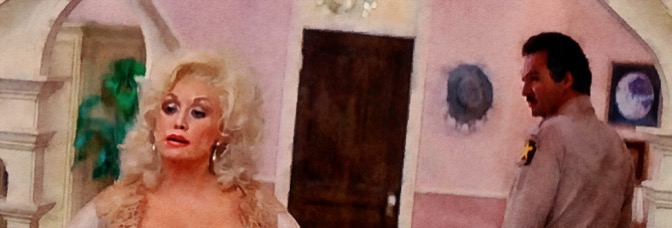
  • The Best Little Whorehouse in Texas (1982, Colin Higgins)

    The funny thing about The Best Little Whorehouse in Texas is how much doesn’t actually work and how much of it appears to be entirely director Higgins’s fault. Higgins is no good at storytelling in summary (affable but bland narrator Jim Nabors can’t be helping things), and the musical numbers suggest he’s more an occasionally lucky enthusiast and not a musical director. For instance, Higgins’s direction of star Dolly Parton’s last song is a complete misfire and only saved thanks to Parton and Burt Reynolds. Worse, it comes right after Higgins and (well, maybe mostly) songwriter Parton save the previous song. So Higgins can do it; he just doesn’t do it when it theoretically counts most.
    But only theoretically, thank goodness, because the most crucial scene for Parton and Reynolds comes much earlier. They go out on a very long date, no singing, no antics, just the two of them hanging out, drinking beers in the back of Reynolds’s pickup, and talking about how much they dig each other. It’s a fantastic scene, and you spend the rest of the movie wishing there’d be another one.

    Reynolds is the town sheriff, Parton’s the town madam. When the present action starts, they’ve been frequent but not exclusive lovers for several years. There’s a lengthy, awkward opening narration montage with Nabors explaining the history of the whorehouse, from before Texas became white Christian nationalist (versus just white nationalist). The house hosts everyone—presidents, farmers, football players—and Parton gives readily to local charities; also, how could anyone not like Parton?

    So when trouble comes, it’s from out-of-town in the delightful form of Dom DeLuise. He’s a consumer advocate (Whorehouse demonizes Ralph Nader, which is something to behold) who’s out to get the whorehouse closed down. DeLuise is obnoxious, energetic, and quite good. However, he finds himself in some of Higgins’s worst musical numbers, as DeLuise has a musical theater entourage who follows him around and performs. Higgins can’t crack the absurdism of it.

    Also quite good is Charles Durning as the Texas governor who hides out instead of answering questions about DeLuise v. Parton: Dolly of Justice. He gets a great song and dance number, perhaps the film’s only example of good editing. Whorehouse has four credited editors and lots of assistants.

    Occasionally, the musical numbers will succeed despite themselves. There’s a way too long “football players dancing excitedly about going to the brothel” sequence, except the dancing’s so good, and Higgins knows it, so it works out. It’s incredible since the song’s terrible. Whorehouse has at least two good songs, and they’re Parton’s, not the musical’s. None of the musical’s songs stand out except Parton and Reynolds’s duet, which is more cute than good. The film then ends with a reprise of an early song, and it’s just a reminder the song isn’t very good.

    Acting-wise, Reynolds is probably the better of the two leads. Parton seems occasionally lost, which makes sense, but it’s always only temporary, and she’s infinitely likable. Unfortunately, neither really gets an arc, though Reynolds gets more to do (outside busty musical numbers).

    None of Parton’s girls get characters, but housekeeper Theresa Merritt is good. Reynolds’s supporting cast is mostly town leaders; none stand out except Barry Corbin, who’s got a minimal, but distinctive role.

    The Best Little Whorehouse in Texas seems like a can’t miss, but Higgins’s inability to do a musical hurts it. Plus, the songs. The original songs aren’t great. They should’ve had Parton rewrite the thing.

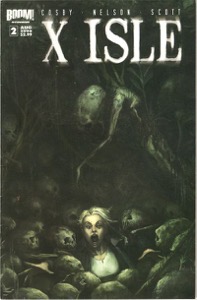
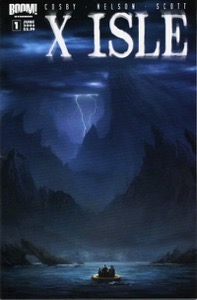
  • X Isle (2006) #2

    X2

    Well, I figured out the secret of X Isle’s seemingly full issues: no transitions. The action cuts ahead minutes, hours, across miles. Writers Andrew Cosby and Michael Alan Nelson do the whole thing in quick summary, which gives the impression of content regardless of their actual success.

    This issue has the first casualty, a kidnapping, a big twist, and some character moments. Not character development precisely because the characters are paper thin. Sam Jackson will make the Black scientist guy work in the movie, the Rock for the first mate, and so on. A few times, it looks like artist Greg Scott is photo-referencing Tim Allen for the lead. Tim Allen as a scientist. I mean, sure.

    The comic’s selling point is the art. Scott’s graceless when it comes to transitions, not just between scenes in a montage sequence but between panels in an action sequence. But he’s got several decent panels. X Isle’s a very moody book; most of this issue takes place at night, in the perilous jungle. Half the issue there’s a rain storm, which contributes even more mood though not any rain-related action.
    The dialogue’s almost entirely atrocious, with the comic avoiding the science of the terrifying tropical island with its monsters and so on, but it avoids all the character stuff too. There’s definitely supposed to be character stuff—Tim Allen’s daughter, who’s easily the worst written character, falling for his lab assistant. But then Sam Jackson gets jealous the assistant gives her a foot massage. They should’ve had Sam Jackson looking directly into the camera and mumbling some Pulp Fiction quotes.

    I wasn’t expecting much from X Isle but it’s not even clearing that short bar. However, to borrow a frequent phrase from the comic, it is indeed fascinating to see how the summary pacing works.

  • Evil (2019) s03e08 – The Demon of Parenthood

    As the end of season three approaches, “Evil” seemingly does a soft reset and closes off two big outstanding story arcs. The mysterious, demonic fertility clinic–which the gang discovered, I think, in the first season and have been waiting seasons to resolve–might finally be done. And then Li Jun Li’s maybe reincarnated Jesus, a Chinese woman imprisoned in a labor camp. What’s strange about the closures is the show not really getting anything else going in their place, especially since they just wound down the Andrea Martin arc without any fanfare.

    I mean, Kurt Fuller’s continued dalliances with Michael Emerson in pursuit of literary success at demonic cost. And then Katja Herbers and Mike Colter are in a fight after she realizes he’s been keeping important things from her (and Aasif Mandvi, who doesn’t seem to care). But they’re not on the outs; they’re just trying radical honesty, including about Colter hanging out with Vatican secret agent Brian d’Arcy James.

    Colter’s mission this episode involves giving James a code word, only Colter mistakenly gives him the wrong code word by accident. Although Colter’s good and Aisha Tyler’s direction is solid, it’s a somewhat sophomoric arc.

    Meanwhile, Herbers finds out her missing egg has been implanted into a woman, Lauren Norvelle, who is rapidly approaching her due date. Norvelle’s husband, Charlie Semine, is pretty sure the baby’s demonic. And Herbers is having night terrors involving daughter Maddy Crocco (who everyone just assumes is demonic) and demon Marti Matulis.

    Crocco’s got her own subplot with Christine Lahti, who takes Crocco to work to show her the demonic boss (also Matulis, unfortunately, they missed a great chance at a Ted Danson cameo). The fallout from that meeting could change the entire trajectory of the main plot.

    The series’ main plot, not the episode main plot, which is ostensibly about demonic toys from a toy shop. People are buying toys, taking them home, then discovering they’ve changed to be in some way frightening. They don’t spend much time on the investigation besides Mandvi’s forensic stuff because it’s all a red herring to set up Colter’s secret agent arc.

    Herbers’s nightmarish arc with the expecting couple offsets Colter’s antics pretty well, but if “Evil” keeps going in this new direction… it’s hard to say what next season may hold. It’ll depend on what arcs make it. About the only one they have left is Herbers’s husband, Patrick Bramell, who Emerson and Lahti are torturing for eternity.

    Get that one wrapped up, and it’s back to square one.

    Oh, the script—credit to Sarah Acosta—is sometimes silly and usually too perfunctory, but it’s got the best cursing in the show since its move to streaming.

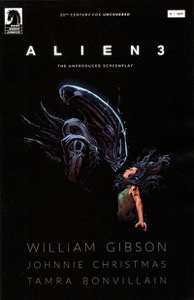
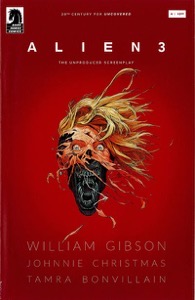
  • William Gibson’s Alien 3 (2018) #5

    A5

    Presumably, the very, very important Communist character would’ve had a more significant part in the movie. However, in the comic adaptation—in Johnnie Christmas’s adaptation, anyway—not so much. Maybe because their story is entirely the Aliens thriller and suspense sections. It’s unfortunate, though, only because the conclusion—where they talk about how we’re supposed to share these new worlds in peace or whatever—doesn’t work without having better emphasized the Soviets. Or whatever they’re called.

    To get over rough spots—where he doesn’t have time for the action sequences—Christmas once again lets Alien 3 feel like a comic adaptation, not an adaptation of an unproduced screenplay. Christmas rushes through the alien action sequences, as they keep breaking out, page after page, as the survivors realize there are a lot more aliens around than they thought. Luckily, Hicks has a weapon—“you have no weapons of any kind”—so they’re not helpless.

    There’s also what should be a tense action sequence for Lance Henriksen’s Bishop, who gets a far better arc in this version than the produced movie. Unfortunately, it’s not particularly tense in the comic. The action’s just the wrong type, or Christmas just doesn’t have the pages. You’d need maybe three all-action issues to get through everything in this issue. And maybe it would read better in a single sitting. Alien 3 never can catch any breaks.

    As is, this issue needs another five pages. There aren’t so many aliens we can’t keep track, so Christmas needed to keep better track instead of summarizing. Especially when they start in-fighting; no spoilers, but it’s a precursor to Alien Resurrection.

    There’s one other big surprise to the comic. Again, no spoilers. But the Alien³ they made closed off a franchise; this Alien 3 they didn’t make… it opened it up.

    It’s not unimaginable; with a good director and some decent script doctoring (Alien producers Walter Hill and David Giler probably could’ve handled it easily), this version would’ve been superior to the theatrical version (which I like okay). But it’s hard to tell from William Gibson’s Alien 3. It’s an okay Elseworlds Aliens comic. It’s unique due to its context, not its content. Christmas’s distinctive, but at the end of the day, he’s just adapting.

    I was expecting more, but I’m not disappointed.

    Like I said, Alien 3 can never catch a break.

  • All Rise (2019) s03e08 – Lola Through the Looking Glass

    I never watched “Ally McBeal,” but is a dream episode something it might have done? I wonder if it was better suited for the diversion than “All Rise.”

    Though… even when “Rise”’s cast has been wanting in terms of performances, they’ve always been amiable, so having them play various absurd roles in Simone Missick’s dream is entertaining. The episode begins with no resolution to the elevator cliffhanger, where Missick and law school beau Sean Blakemore find themselves trapped. But they don’t kiss and canoodle or decide never to kiss and canoodle, which makes the cliffhanger even cheaper than before.

    This episode opens with Missick getting an invitation to a prestigious law event. It turns out Blakemore’s the hosting lawyer, so it seems like he’s trying to get her away for a conference weekend at a resort. Before falling asleep and having her wild dream, Missick argues with her still primary caregiving husband, Christian Keyes, about childcare stuff. Then she and Wilson Bethel fight about him giving her relationship advice. As in, stay away from Blakemore’s resort invitation.

    The dream has Missick giving up the law to marry Blakemore and living the good life. They’ve got three kids, who don’t figure into the story at all, and Missick’s trying to get elected national chairperson to a Black women’s legal society. She and Bethel are on the outs; he’s the judge now and apparently… gay and married to J. Alex Brinson. Jessica Camacho (who’s fantastic) is their brash, brassy, slutty, drunky surrogate. Lindsey Gort’s her doula.

    Missick’s attraction to Blakemore is retroactively completely reasonable once he’s got his shirt off, which the dream sequence leads with. Keyes is also around, married to Ryan Michelle Bathe, now Missick’s nemesis. Missick stole Blakemore from Bathe in law school and ended up with Keyes, who had some kind of attraction with Missick back then. Now Keyes wants to leave Bathe and Bathe’s going to destroy Missick in the legal society election….

    And there’s a law school reunion, where everyone gets together. Almost everyone. Marg Helgenberger’s cameo is short, ditto Samantha Marie Ware and Roger Guenveur Smith. Ian Anthony Dale, however, displays unseen comic chops as a horny drunk, while Lindsay Mendez and Ruthie Ann Miles get to sing.

    Some things work better than others—Brinson’s a tad broad–but shaking things up does liven the cast. Only for it all to turn out to be filler; stay tuned for next episode and the actual resolution. Maybe.

    “All Rise” has let the Blakemore subplot entirely dominate the second half of the season, and it’s getting nothing out of it. Such strange, constant missteps.

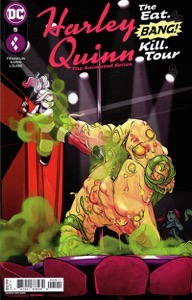
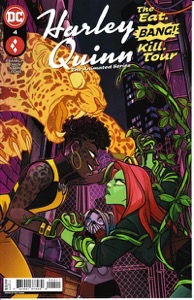
  • Harley Quinn: The Animated Series: The Eat. Bang! Kill. Tour (2021) #5

    Hq5

    Regular artist Max Sarin is back this issue, which strangely doesn’t really matter. I guess when you’re trying to fit an existing animation style, who’s doing it doesn’t make much difference. Though the issue’s also… underwhelming for a penultimate entry.

    I’d come to terms with Eat. Bang! Kill. not being able to do too much with character development because—regards of its continuity status—most “Harley Quinn: The Animated Series” viewers aren’t going to have read the comic. Some twenty years into the cross-platform franchise experiment, no one’s made it happen.

    Anyway.

    This issue has a bunch with Ivy regarding character work, but it’s still minimal. Harley’s finally had enough of Ivy being mad at her this series—this time, they’re fighting about Ivy not wanting to kill the last industrial polluter CEO—and heads out to the strip club for some me time. Ivy’s invited, of course, but Ivy’s stinging from their fight with Vixen last issue.

    Vixen and Justice League Detroit start this issue, resolving the skunk smell and wild animals, and it’s clear from that first scene something’s off. Lots of decent dialogue and characterization, but there’s no real reason for it: why are the guest stars getting so much attention? Especially since they’re guest stars for two pages.

    Writer Tee Franklin takes the eventual relationship drama seriously, but it’s as seriously as you can take something with so many constraints. Sarin’s visualizing of that subplot also runs into some problems. Then throw in the book has stalled out in Detroit, with the first half being a “road trip” and the second half being stuck in a somewhat dull location. It doesn’t help the new villain of the series—an annoying, stinky, toxic blob monster called Mephitic—comes off too static in a comic book.

    The bad smell thing, however, wouldn’t work on the show either, but motion might. Also, Mephitic’s got an imagined rivalry with Poison Ivy, entirely separate from her character development arc, and it muddles things.

    The comic remains an amiable read, with fine characterizations of its leads, but it’s ready to be done.

  • Battle of the Worlds (1961, Antonio Margheriti), the American version

    Battle of the Worlds is, thankfully, fifteen minutes or so shorter in its dubbed American version than the original Italian. While the film’s got its low budget, early sci-fi charms… another fifteen minutes would’ve been long. Though they might have sorted out Umberto Orsini’s seeming love triangle with Maya Brent and Carol Danell, which actually starts the film.

    Brent is running around the island astronomy observatory where she’s stationed with Orsini; she just got permission to leave with him to get married. They start making out, then Danell interrupts them and then asks them to continue so she can watch.

    Later on, Orsini and Brent break up so they can have human conflict for the finale—and give Brent a chance for girl talk with another wife, Jacqueline Derval—but when they’re on the outs, Danell can’t keep her hands off Orsini. Then there’s the whole “is twenty-something Brent supposed to be in love with sixty-something boss Claude Rains” question. Brent spends the movie making eyes at him, but she’s pretty bad, so it’s unclear what they’re supposed to mean.

    Worlds has some impressively bad acting, both the dubbing actors and the physical ones. Brent’s somewhat sympathetic even though she’s bad. Second-billed Bill Carter is not, and he’s seemingly dubbing himself. Rains too, and a handful of the rest of the cast appears to have been speaking English. Brent and Orsini not.

    Orsini seems like he’s going to be pretty bad in the first act, but once Carter starts getting more to do, it’s clear he’s going to be the worst. It’s also clear every scene with Rains, as a blowhard math genius who can predict the future’s future, is going to be delightful. At least for Rains. He consumes the scenery, chewing through it with barely a bite, then on to the next thing. There’s this whole subplot about him hating everyone about Brent, and he tells everyone what he thinks of them, so it’s this cheap, silly, sci-fi movie with “mean” Rains. Quotation marks because whenever he starts a scene, the music’s cute and cartoonish. It’s strange and just what the movie needs to maintain.

    Ennio De Concini’s script is terrible, but the plot’s all right. He’s got a decent enough sense of an action sci-fi story. In the future, when Earth has colonized the moon and Mars, a rogue asteroid travels to Earth, surprising everyone when it goes into orbit around the planet. Oddball genius Rains warns them to blow it up before something bad happens—he can tell it’s inevitable from the calculus—and they don’t listen to him until it’s too late.

    By then, they’re all going to have to go to the asteroid with a collection of ragtag deep sea miners to blow… wrong movie.

    There’s a big, thoughtful sci-fi finish, terribly executed because they don’t have anywhere near the budget for the story if the technology even existed.

    It’s bad, sure, but it’s not insincere. Great music by Mario Migliardi, who ranges from Rains’s goofy themes to jazzy otherworldly ones to plain old melodrama. Worlds gets very melodramatic. But De Concini’s good ideas also extend to some of the scenes; director Margheriti doesn’t direct them well, but there’s clearly wasted potential.

    But, whatever, Rains is an absolute hoot.

    Plus, Worlds's future appears to be one where the Soviets won.

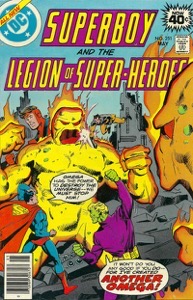
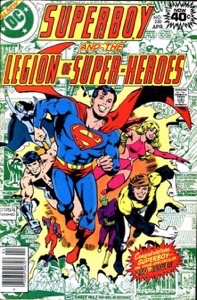
  • Superboy and the Legion of Super-Heroes (1977) #251

    Slsh251

    According to tops three minutes of Internet research, the Steve Apollo credit for this issue is actually both Jim Starlin and Joe Staton. Starlin had his name taken off the previous issue and this one because he wanted the story to appear in an over-size special release. Apparently, post-Starlin, they rearranged this half—adding a new page from Staton, making it even less what Starlin intended. Unfortunately, though, no rearranging is going to help this issue. Especially not with the art.

    I think Starlin’s trying to do Jack Kirby and just failing miserably. The giant cosmic monster walking through space seems like only something Kirby could get away with in a superhero comic. But Starlin, inked by Dave Hunt, isn’t cutting it. The monster’s headed towards Earth on a singular mission—to discover how it was created, which turns out to be a good question. It’s got a lousy answer, but the question was ripe with potential.

    The creator in question is Brainiac 5, who has been under a lot of stress lately due to a lack of positive reinforcement. When he lost the election to be Legion leader, he decided he’d create a monster to kill every single living creature in the universe. But he wanted to toy with the Legion first, so he made the monster; now, the monster is going to use the machine Brainiac 5 used to make the monster to destroy the universe. Brainiac 5 could’ve just destroyed the universe, but no, instead, we had to get this stagnant story.

    Paul Levitz scripts from Starlin’s story. There’s a lot of exposition, with Levitz introducing every character in narration like… it’s a DC Special Series issue, and there might be fresh eyes on the Legion. But, as a regular issue, it’s too much, especially when there’s never any pay-off to anything. Except Superboy chastising Wildfire for being a Debbie downer, which is an entirely new characterization for both of them.

    This issue’s Paul Levitz’s last Legion for a couple years.

    Not a good finish.

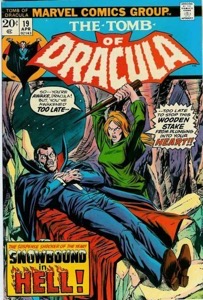
  • Tomb of Dracula (1972) #19

    Tod19

    I’ve read Tomb of Dracula before, but I have an incredibly vivid memory of this issue, which has Dracula and Rachel Van Helsing stranded in the Carpathian Mountains during a days-long blizzard. Dracula’s keeping her alive as a blood bag insurance. She’s injured and too weak to try to kill him (or so he thinks). The art’s fantastic, the writing’s pretty good, and it’s a memorable, outstanding comic. I just wish I understood the nostalgia.

    The issue begins with Drac and Rachel already slogging through the snow. Writer Marv Wolfman waits until the fifth page to recap what’s happened since the end of last issue, giving the duo a chance to hate banter at each other, both in the storm and then in shelter for the night. Err, day. They rest during the day because Dracula can’t be out in the sun. But he doesn’t need a coffin because he’s on his own country’s soil, which Wolfman never addresses but assumes the reader will get it. The situation drastically changes Tomb’s rules. It’s awesome.

    Last issue ended with Dracula chasing Rachel in a helicopter. He’d been fighting Werewolf by Night in an underwhelming crossover—in both series—for the werewolf’s dad’s secret journal. There are anti-vampire spells in it; Rachel grabs it and makes off into the chopper and the storm. Dracula catches up, makes some bad decisions, then they crash.

    They’re heading towards civilization, but Rachel knows it’s her best chance to kill him; Dracula’s keeping her on proverbial ice for a meal of last resort, meaning he’s drinking foul animal blood to avoid ruining the last meal. Dracula talks about the arrangement at length, one of Wolfman’s most successful recurring dialogue bits. There’s some awkward dialogue—Dracula’s always monologuing to himself, sometimes far less successfully than other times—but it works out. It’d be impossible for it not to work out with the gorgeous art from penciler Gene Colan, inker Tom Palmer, and colorist Glynis Wein; it’s a beautiful comic.

    Wolfman checks in on a couple existing subplots—“Vampire Brand” going through his training and testing for the mysterious Doctor Sun, then Quincy Harker and Blade having an exposition dump of a conversation about how Blade’s origin reveal is going to affect things going forward. Speaking of origins, the comic—perhaps unknowingly—breaks with the historical Dracula; Tomb’s Dracula had fun winters with his parents like it was Doctor Zhivago or whatever. The real Dracula spent his childhood a hostage.

    Anyway. Historical trivia.

    Doesn’t matter; exceptional comic.

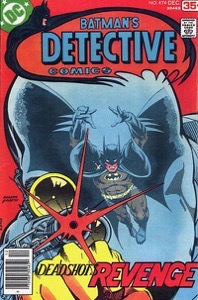
  • Detective Comics (1937) #474

    Dc474

    When I was eleven, I first read this comic in the Greatest Batman Stories Ever Told hardcover. Then there was the next part in Greatest Joker. It’d be years before I could read the complete Steve Englehart, Marshall Rogers, and Terry Austin arc. But this issue is where it all started.

    So as I break through the bonds of my earthly confinement, traveling through time and space to remember… “Batman: The TV Show” was still a thing back then. It regularly reran. Bad Batman-related narration was a thing. Hell, it might’ve saved the Schumacher movies.

    Because while I’m not going to strain myself singing this issue’s praises, it’s the best issue of Detective I’ve read so far from this era. Like, lots happens. Englehart’s pacing is a lot better. Rogers is finally able to do quick action sequences, which means the issue’s got at least four action beats. Five. See, so many I forget them.

    The issue opens with Batman and Robin wrestling in the Batcave because bros. Then there’s something about Robin being a ladies’ man just like Bruce, which is problematic, but it sets up Bruce Wayne as having an emotional arc this issue. Englehart doesn’t do a great job, but it’s not bad either. The way he plots the arc is outstanding. The central drama this issue is Bruce becoming convinced Silver St. Cloud suspects he’s Batman and being awkward through lunch with her.

    Well, and Deadshot breaking out of prison for the first time since Batman locked him up twenty-five years earlier or something. It ties into the Penguin’s arrest after last issue. Everyone makes fun of the Penguin in this issue, but in ableist, shitty ways. It’s weird.

    Deadshot gets a flash new costume—his last outfit was a society dandy with a top hat and Zorro mask—and goes Batman-hunting. They have a delightful six-page fight ending in Silver’s convention hall. She’s a convention organizer because Bruce Wayne’s not falling for an unaccomplished gal. Englehart’s never written Silver particularly well, so this issue’s probably the best; she gets to talk the most she’s ever talked, interrogating Bruce about his history with Batman.

    There is a lot of bad writing from Englehart, though. Lots of the narration is terrible.

    But it’s Rogers’s best issue so far. He does a better job breaking down the page, how the panels interact with each other, not just how they exist on their own. Still very design-oriented, but learning. Fast learning.

    Or maybe I’m still just ten years old reading it.

  • The Orville (2017) s03e09 – Domino

    Once again, I don’t know how “The Orville” gets away with it. A lesser show would be entirely undone by the strange John Debney score. It’s bombastic and enthusiastic but altogether over-the-top. Despite Domino being a not-even-loose remake of Episode VII, ending with a combination Deaths Star and Starkiller Base homage (the latter already being an homage to the former), Debney doesn’t do a Star Wars score. He does a… I don’t know what.

    And then, at some point… it starts working.

    Because Debney’s score doesn’t have to handle the gravitas of the situation, the situation’s got its gravitas. The first half of the episode is awkward, too; the plotting’s rushed, and director Jon Cassar’s got no summary flow. So the episode digs itself a relative hole (especially since it isn’t as obviously strong as last episode) and then launches itself out to excellence. Not the best episode of the season, but in serious contention for second and a phenomenal hour and twenty minutes of television.

    Domino is very much television. The commercial breaks in the action are very noticeable and sometimes jerky in this episode. The smoothness and gracefulness they’ve found with the “network on streaming” format are gone here. It’s very much commercial break for emphasis stuff. But it still works by the end. It’s marvelous.

    The episode starts with the Krill and Moclans making peace; if the Moclans can handle having a female partner in Krill chancellor and Orville captain Seth MacFarlane’s baby’s mama, Michaela McManus. They’re both sick of the Union and their progressive ideals, which the episode will put to the test because the supervillain team-up is only half the main plot. The other half has MacFarlane and crew making a Kaylon maker. The Krill and Moclans are teamed up against both the Union and the Kaylon, but the Kaylon’s are after all biological lifeforms.

    Anne Winters, this season’s new cast addition, hates the Kaylon. Her being shitty to Kaylon defector and “Orville” Data Mark Jackson has been the main subplot this season. Except it’s not really a subplot because it ends up tied directly to the main plot, as she’s got to deal with the Union wanting to take her Kaylon-killing super weapon and not use it to wipe out the robotic aliens.

    The second half is two parts Death Star homage (because there’s the space battle alongside the trench runs), one-quarter Adrianne Palicki action hero stuff (I really hope she does something good next), one-quarter Winters and Jackson working their shit out on a Kobayashi Maru. Even though it’s kind of obvious where the episode’s going the entire time—including the traitor’s identity—it’s obvious because it’s the right story. Cassar, the writers (script credited to Brannon Braga and André Bormanis), and the cast do a fantastic job.

    There’s some terrific acting from Jackson this episode, and MacFarlane does well with the more than usual he has this episode, though he’s still primarily support.

    It’s great. I can’t believe they got away with it.

    The bar’s even higher for next week’s season (and de facto series) finale.

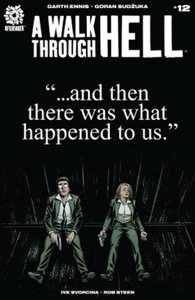
  • A Walk Through Hell (2018) #12

    Hell12

    A Walk Through Hell has a surprisingly affective final issue. Not because anything in it connects, but because everything in it does not, and then it becomes clear writer Garth Ennis isn’t just having a laugh; he put thought into it. And it all comes out bad. For most of the issue, Hell #12 feels like the talky conclusion to a lousy movie starring Patton Oswalt and Charlize Theron, like Ennis had a script in a drawer and turned it into a comic.

    Something from when he was primarily known for writing Preacher. Think Seven meets the most realistic, not funny parts of Preacher. It’s talky, disappointing, a little sad, but not off the rails. The stakes are all theoretical.

    But then it gets very, very current with Ennis making all sorts of commentary on 2018 politics and becomes a spiritual sequel to his old series, 303 (when Bush was president). Hell’s a significant downgrade from that series. Worse, Ennis has the perfect ending to the comic, and he doesn’t see it. He’s got the moment in his grasp to at least make the last couple of issues pay off. Not the whole, disastrous waste of money, but at least the finish would be effective.

    He misses it, of course. Of course, he misses it. Walk Through Hell’s the hells of missed opportunities and bad plot choices.

    Only it’s not over. There’s the final punchline: Ennis pretends he wrote a good comic with great characters, and it’s wretched. Especially since Goran Sudžuka’s art looks like he’s drawing stylized toys, not people. It’s a lousy finish to an already lousy series.

    It’s been a long time since Ennis has made anything quite this bad. I hope it’s a long time until he does it again.

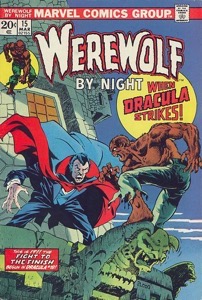
  • Werewolf by Night (1972) #15

    Wbn15

    I’d like to say there are a few pages where Frank Chiarmonte’s inks don’t mess up Mike Ploog’s pencils. I can’t because there’s probably only a page and a half, and not sequentially. Werewolf by Night versus Tomb of Dracula comes to its conclusion here, a better comic than the first installment, which had writer Marv Wolfman (who’s been writing both books) doing a Werewolf issue for a Dracula reader. This finish reads like a jumping-on point; the Tomb of Dracula readers need to be convinced to stay with Werewolf.

    There is a bunch of Werewolf housekeeping, though. We get the secret origin of the Russoff family werewolf curse, which involves Dracula. It does not involve–breaking series continuity–a literal curse from Satan. No religiosity here, just a plain angry dude with a stake and a comely lass with a secret. It’s like an old horror comic, only perfunctorily done. Though at least a couple panels are some of the better art in the issue. Not enough of them, but the werewolf reveal is good.

    Though, can’t forget… Wolfman has werewolves biting people to change them like vampires. I can’t imagine they’re going to keep that detail going for long. Though there is once again mention of Jack’s sister Lissa maybe getting the curse, which the comic’s been ignoring for a while.

    Dracula’s got his own subplot about getting Jack’s dad’s diary; apparently, there are even more powerful spells in it than in the Darkhold, which I don’t think this issue even mentions. Maybe once. But Drac’s after the “Book of Second Sins” or something, which is a weird subtitle for the dad’s diary.

    Frank Drake and Rachel Van Helsing also guest star; they’ve got their rental helicopter and are after Dracula. Ploog and Chiarmonte’s Frank Drake looks like Jack Russell with different hair. Rachel Van Helsing’s scar becomes her defining feature here, though maybe they wanted to keep her straight from the other blonde lady, Topaz.

    Topaz’s Jack’s accessory this issue. I hope that situation improves.

    Ploog and Chiarmonte do get to do a “Dracula attacks girl on countryside” panel, which Tomb of Dracula did fairly regularly for its first half dozen issues (ish). It’s a fun nod to the trope. Then there’s the cartoonish Dracula bat, which I feel Ploog would’ve done wonders with, inking himself.

    The ending’s contrived, but so’s the entire issue; it fits. It’s fine. It’s not great, but it’s much better than the first installment. When Wolfman’s writing’s good, it’s good. When it’s not, it’s just mediocre, never worse.

  • Kill or Be Killed (2016) #18

    Kbk18

    Writer Ed Brubaker, apparently unknowingly, cracks the Kill or Be Killed conundrum this issue. How could he tell the series and have it work? Individual issues about characters. Without Dylan’s terrible narration, obviously. Got to get rid of the narration.

    But this issue’s a return to detective Lily Sharpe. Unfortunately, it’s nowhere near as good as the first Lily Sharpe issue, which was a very traditional police procedural but with more personality than the series had been exhibiting. This is a very traditional police procedural with a twist with the tepid personality the book’s been showing for ages now.

    Lily is investigating the death of the vigilante, who Dylan and the reader know isn’t the real killer. Unless we think Dylan somehow astral projected and created a double, which is the opening narration topic. It’s eye-widening bad. Brubaker actually gets away with the twist at the end, he actually manages to do some effective narrative dodging, but he’s starting from one of his pits on the book. Brubaker does seem to understand Dylan’s a dipshit, but he doesn’t seem to understand reading a dipshit’s narration, issue after issue, is exasperating. It never improves.

    Then again, nothing ever improved on Kill or Be Killed. It stopped hemorrhaging a while ago, but it’s been a dull, steady bleed since. And artist Sean Phillips is done trying. The art this issue is… not good. The more time spent reading the comic, the worse the art will be. Phillips barely quarter-asses it. What’s less than quarter-assing? Eighth-assing? There’s some eighth-assing. Lily’s partner, who we’ve never met, looks like Robert De Niro half the time, then Sam Elliot the other half of the time. Dylan’s mom looks like a Hitchcock villain. So there’s less than eighth-assing. There’s teenie-assing. It’s so sad to see Phillips churn this out.

    This issue tells the story of the imposter vigilante, then how Lily will bring it back to Dylan.

    I imagine the next two issues will go wild, desperate, and disappointing places.

    However, to go out on a high point… excellent pacing this issue. Brubaker knows how to write this issue, which brings it around to how to do the series better—issues focusing on the people involved with the story. There’s a more extensive cast than it seems, with varied connections, and it would’ve avoided the awful mishandling of the protagonist.

  • Evil (2019) s03e07 – The Demon of Cults

    In addition to “Evil”'s most acute religion observation in the entire series, this episode is also an Aasif Mandvi episode, which gets it all sorts of goodwill. It’s also got a handful of concerning developments, principally Kurt Fuller falling in with Michael Emerson. Fuller decides he’s going to write a book about seeing the demon and goes to ask nun Andrea Martin for help on the subject. Martin tells him to get some Jesus and stop being a white guy about it. So Emerson approaches Fuller to offer the Dark Lord’s help.

    And Fuller goes for it, kicking off what’s inevitably going to be a significant subplot… someday. It’s bewildering because Fuller’s always been, in addition to functionally atheist, an okay guy. So immediately giving in to temptation—in the form of Emerson, no less—is a surprise.

    Speaking of significant subplots someday… this episode finally reveals what put lead Katja Herbers in Emerson’s sights, way back before the pilot. It’s got to do with daughter Maddy Crocco being fertilized at a demon clinic. Vatican troubleshooter Brian d’Arcy James—i.e., child rape and murder cover-upper—comes to visit Mike Colter and asks him to sneak a monitoring device into Crocco’s room. Of course, Colter says no but then gets suspicious of Crocco when over for dinner.

    There’s eventually a showdown between Colter and James on the subject, with a big twist—James is fine appealing to Herbers, not Colter. This scene would be excellent if it weren’t immediately invalidated by the next one; after Herbers storms out after shaming the Patriarchy, she gets a call about the episode’s case (off-screen) and completely calms down. End of character development. It’s something else they can put off.

    Without the decompressed, pseudo-procedural plotting, I wonder if “Evil” even has enough story for a season.

    Anyway.

    The main case involves a possessed Christian hippie. When Colter, Herbers, and Mandvi go to investigate, it turns out Mandvi already knows the reincarnated Yeshua (as in Heysus). She’s scientist Gia Crovatin, and she’s very hot for Mandvi’s bod. So Mandvi’s got this weird, cult-investigation and sexual thriller episode while Colter and Herbers futz around with the subplots.

    It’s a fairly exploitative, manipulative episode but well-executed. Good direction from Yap Fong-yee, low middling script credited to Louisa Hill. Fred Murphy’s photography goes a lot moodier and darker for some of the episode, which hasn’t been the norm. Maybe it’s representative of Colter’s suspicions and fears… just unsuccessfully.

    So, mixed bag, some big highlights, though.

  • All Rise (2019) s03e07 – Through the Fire

    So, even after going through a whole episode to close off the Sean Blakemore arc—he’s Simone Missick’s law school love, and he’s around again; it’s causing feelings, which are always awkward because Blakemore and Missick haven’t got any chemistry together. Returning guest star Ronak Gandhi does a great job pretending he’s in the middle of a chemistry-soaked scene when it’s ice-cold flirting. It’s nice to have Gandhi back, especially since there’s the inexplicable Blakemore.

    Blakemore’s defending a wealthy client’s son in a drunk driving case. Gandhi was supposed to plea it down, but things got screwed up. It’s a tedious case, with only Gandhi keeping it going. Though when Lindsey Gort’s still involved (she and Blakemore are partners now), she does fine. It’s Blakemore and Missick. This arc’s exasperating.

    The good case this episode is J. Alex Brinson’s. He’s defending an ex-con who’s experiencing homelessness and charged with lighting fires in encampments. Nick Fink plays the kid; he’s okay, nothing more. T.J. Ramini plays the district attorney, an obnoxious British guy who’s never lost a case in his career. If the character’s supposed to be annoying and incompetent, Ramini does a fine job. The real surprise is Roger Guenveur Smith. He’s the judge. And he’s great. Smith’s been incredibly uneven this season, but he’s outstanding.

    The episode’s mostly a Brinson showcase, outside Missick’s shenanigans. Lindsay Mendez gets a largely thankless subplot about a client—she’s a victim counselor for the D.A.—punching her out in a courtroom. She starts questioning her place in the halls of justice and even… wait for it… no-calls, no-shows to go to brunch with Jessica Camacho.

    Wilson Bethel’s got very little to do, playing manager to Mendez, witnessing the Missick courtroom’s car accident (putting him on the stand), and getting a perfunctory exposition sequence with Gort. They can only have a good time for so long before Bethel (like always) brings up Gort’s not impending enough divorce. It’s most of Bethel’s personality at this point.

    Oh, and there’s a very weird hangout scene for Bethel and Missick. It makes a little bit of sense because he’s a witness in her courtroom, but the joke they can’t find a new place to hang out is very tired seven episodes into the season. Especially since it’s a fourth-tier subplot.

    There are the definite minuses, but Brinson’s case is “All Rise” at its earnest best.

    And it’s great to see Gandhi again.

  • The Orville (2017) s03e08 – Midnight Blue

    Midnight Blue is less an extended regular episode than a combined two-parter or even an “Orville” TV movie. It’s entirely dependent on previously established subplots and story details—going back to season one of the show—but it’s also completely self-contained. It’s an incredible hour and a half.

    Jon Cassar directs, contributing his best work on the show so far. He doesn’t have much time left to top it. There’s a great score from Joel McNeely, also his season best. But the script—credited to Brannon Braga and André Bormanis—is the far and ahead winner of the episode, which brings closure to the season’s subtly developing Moclan arc. The Moclans are the all-male (they just surgically alter the occasional female to be male at birth) warrior society in the Union. Everyone’s getting sick of them being gross and physically and psychologically abusing their children, but the Union needs them to stand up to the Kaylon.

    I swear “Orville” makes spelling the alien species names worse than any other franchise.

    Anyway.

    This episode’s all about Imani Pullum, who was born in the show’s first season and grew up to her tweenage years incredibly fast. She’s a Moclan female who was surgically altered and who’s recently been restored. She’s also the season’s protagonist; at first, it seemed like it’d be Penny Johnson Jerald (who’s reduced to a cameo here), but it’s definitely Pullum. Including her asking her first crush out to dinner in a phenomenally awkward scene. And the episode’s only comedic relief. They open with it, clearing the room of distress vapors, then just pour in the tension.

    In addition to Pullum, this episode’s main characters are Adrianne Palicki, Peter Macon, guest star Rena Owen, and then Seth MacFarlane in a distant fifth. Everyone else gets a story arc; MacFarlane’s just the captain. Owen’s a Moclan female who started a colony for the other females; she’s a repeat guest star, basically once a season. The sanctuary is a political minefield for the Union and the Moclans. First officer Palicki and recently divorced now single parent to a daughter Moclan Macon are going to inspect the sanctuary. Pullum wants to go; Palicki helps her talk Macon into it.

    While the trip is inspiring for Pullum, things soon go wrong—the Union inspection is timed with the Moclan inspection—and the sanctuary quickly becomes dangerous. Palicki and Macon will execute an impromptu “black bodysuit” “Star Trek: The Next Generation” mission while MacFarlane finds himself in a diplomatic nightmare thanks to Owen, who’s obstinately no help.

    Good thing the show’s got a baller guest star to drop.

    It’s a taut action and political thriller. Many of the scene setups harken back to Star Trek IV and VI, with a fantastic Tony Todd cameo as the Moclan ambassador. Excellent acting from Owen, Pullum, Macon, and Palicki. While Pullum’s the de facto season protagonist, Palicki’s the show protagonist. She’s gotten really good at this part. Hopefully, it translates to something else in the future. And Macon’s acting-in-makeup is sublime.

    Only two more “New Horizons” to go… Midnight Blue’s raised expectations for them.

  • Dracula Lives (1973) #8

    Dl8

    I may be committing sacrilege, but I’m not a fan of Pablo Marcos’s Dracula. Sure, the outfit looks good, but Dracula himself—with his seventies stash—looks more like a plumber than the prince of darkness. The issue opens with a Marcos pin-up; I’m not just taking the chance to gripe.

    In other words, I was again concerned a few pages into Dracula Lives. Would the book continue its seemingly inevitable downward trajectory?

    Nope.

    There are still causes for concern. The issue has even less content than the previous one, with no movie review, no Atlas horror reprint, just an even longer prose piece. Chris Claremont has the honors this time. He’s better than many of the prose writers—possibly the best even—but it’s still… a prose piece in a comic book. Also, Claremont repeats the same paragraph structure every third or fourth one, which leaps out. Marcos contributes the art.

    And the Bram Stoker’s Dracula adaptation is losing momentum, primarily because of Dick Giordano. This issue’s entry involves Jonathan Harker loitering around Castle Dracula, waiting for the story to take off; Giordano’s got very little enthusiasm for Jonathan Harker. I get it; lack of enthusiasm for Jonathan Harker is the big problem with Dracula.

    Harker spends most of this chapter alone, during the day, no vampires in sight. I’m guessing Roy Thomas faithfully adapted the novel because the doldrums are familiar. It’s not a horror story right now; it’s a Victorian hostage thriller; Giordano’s not the guy for Victorian hostage thrillers.

    Just like all Dracula adaptations, they promise once Drac gets to London next issue, it’ll start getting good.

    But the issue’s also got two excellent original stories. The first is from Doug Moench and Tony DeZuñiga. DeZuñiga’s art is lush and gorgeous and a perfect fit for the plot. Though I just realized the story’s somewhat out-of-order; it’s a “Dracula’s U.S. Vacation,” which Lives has been loosely doing, only I thought he already went home.

    Anyway.

    Drac’s in New York to get back the artifacts Americans grave robbed from his castle. Moench’s got a simultaneously thin and potent subplot about Dracula becoming a pop icon and everyone being fascinated with him. Neither Lives nor Tomb addresses the general Marvel-616 public’s reaction to Dracula being real. I’m not even sure Moench’s making that flex (it’s thin, after all), but there’s also potential.

    But this one’s not about the artifacts (maybe next time). Instead, it’s Dracula versus New York beat cop. Moench cuts from Dracula’s perspective to this copper’s; he hates his job, hates the working poor, and wants to quit; just one more night. And, wouldn’t you know it, Dracula attacks the streetwalker the copper didn’t arrest, and the cop intervenes.

    It quickly becomes an action piece; the cop injures Dracula (slightly), but enough Dracula decides to destroy the cop. But he’s also hungry.

    Great art from DeZuñiga, good script from Moench. It’s really effective.

    The second original is from Len Wein, Gene Colan, and Ernie Chan. Once again, Chan proves a perfectly able inker for Colan—at least in black and white—which continues to surprise.

    Thank goodness for the art. Wein’s script is surprisingly okay, but the story’s absolutely goofy. The year is 1936, and Dracula is in Rome. He’s hitting on the ladies, even when those ladies belong to the local mob bosses.

    Except these mob bosses aren’t like the Sicilians from The Godfather Part II; they’re 1930s Hollywood gangster types. In the extremis. Incredibly, Colan and Chan can get away with it even as the story lends itself more to a spoofy style. It ought to be absurd comedy; thanks to the art, it’s not.

    The more interesting part of the story is Dracula and the ladies. Wein writes brief flirtation and courtship scenes for Dracula and his lady victims, only without Dracula—in his thought balloons—acknowledging he’s going to kill them. They’ll be dead, and he’ll wonder what happened to that lovely Italian gal he liked so much. Still, there are some stories only Len Wein could write, and this story is one of them. Multiple times it seems like it ought to be entirely derailed, only Wein’s chugging along just fine.

    Also, Colan and Chan’s Rome is absolutely incredible. Such good art.

    Even as its problems continue piling up, Dracula Lives remains a very worthy read.

  • X Isle (2006) #1

    Xisle1

    X Isle is a mildly interesting remnant of the aughts; when indie comic book companies no longer tried to make it with licenses to genre franchises or old toys, but when they tried to get movie deals, presumably repurposing movie scripts or pitches into comic books. It worked a few times. But no one ever turned X Isle into a movie.

    The comic is mixing “Lost” (a recent phenomenon at the time) with Jurassic Park and, I don’t know, The Abyss or something. It’s kind of a pitch for a Roland Emmerich movie; it’s not Spielberg, it’s a Spielberg knock-off; it’s not James Cameron, it’s a Cameron knock-off. The artist, Greg Scott, is nice enough to base a few of the characters on working actors to give you an idea of who might get attached. There’s a part for Dwayne “The Rock” Johnson back when they might’ve been able to get him (though he never really did supporting parts). There’s a very prominent part for Sam Jackson—in the most interesting twist, the white people get outwardly racist to Sam Jackson and then say it was the heat. X Isle forecast academic Karens quite well.

    The female lead sometimes looks a little like Rachel McAdams, but I might be projecting. Sam Jackson’s a hundred percent intentional, the Rock, I’d say fifty-fifty, Rachel McAdams; it might just be photo reference.

    The McAdams character is a scientist’s daughter. She’s given up her European vacation to hang out with her busy dad, who’s on his way out into the ocean hunting mysterious, recently discovered sea creatures. Sam Jackson’s another scientist. The Rock’s the first mate. The captain’s Michael Biehn from The Abyss but probably a different actor. Not sure about McAdams’s bad dad, who ignores his daughter. Of course, the daughter expects his devoted attention when there are actual real-life monsters. The comic’s got exceedingly bad dialogue; it’s either exposition or quippy. The racist white lady’s a combination.

    Scott’s art is pretty decent, though, and the comic does move incredibly well. Somehow writers Andrew Cosby and Michael A. Nelson (I assume Cosby wrote the script or treatment and Nelson adapted) get the pacing right. I kept expecting the comic to end, but they keep getting in more and more scenes.

    I’m not sure what the deal is with the title: no way anyone sees X Isle and doesn’t think X-Men.

  • William Gibson’s Alien 3 (2018) #4

    A34

    Thirteen or so pages of this issue are the best work Johnnie Christmas has done on William Gibson’s Alien 3. There’s a lot of action at the start of the issue; the company suits finding out there might be an alien onboard, the alien arriving and killing, the crew panicking. It’s a slightly new kind of alien, “hatching” fully formed from the human host. There’s eventually a Thing 1982 reference with it. Not sure if it’s the source script or Christmas, but Alien 3’s gorier and, presumably, even slimier than any of the movies.

    But then Christmas finds this tempo and rhythm as he rushes through the second act of the series. Starting with Hicks sending Ripley off safely to the next sequel, the issue is beautifully paced. Christmas takes his time on a lot of the action; he’s not conservative with his panels. The action scenes get at least a full page more than they need, including the cliffhanger, which is slightly disappointing just because I didn’t want the issue to end. Still… outstanding work.

    I’d read most of Gibson’s Alien 3 before, and I thought I’d been more enthusiastic last time, but getting through this issue, I see I just needed to get to this issue. It’s an outstanding comic; all the herky-jerky storytelling of the first three issues pays off here. The relatively short resolutions throughout this issue—as the alien starts attacking—and the lengthy earlier introductions; somehow, Christmas makes them balance. It’s excellent comics adapting.

    Christmas also does another comics adapting device I like; mixing in call-forwards in addition to callbacks. Except, of course, with something like Gibson’s Alien 3, calling forward to the fourth Alien movie hops continuities. The alien here looks a little like the skull alien in Resurrection, but also the original Kenner toy for the first Alien with the predominant skull peering through the membrane. Scary looking thing.

    I’d started second-guessing myself on this series. I’m glad I was right the first time. Can’t wait to see how it finishes.

  • Harley Quinn: The Animated Series: The Eat. Bang! Kill. Tour (2021) #4

    Harley4

    It’s a solid issue. There’s some decent but repetitive character development for Ivy. She realizes Harley’s impetuousness annoys her, gets mad at Harley, sulks, reconciles in time for a superhero fight. This time she’s angry they got busted crashing uninvited at someone’s house. It’s very too impetuous girlfriend stuff, with some extremes.

    See, they’re crashing at Nightfall’s place because Nightfall’s locked up in Arkham because of the shenanigans at Ivy’s wedding. Only Nightfall’s ex-girlfriend Livewire is there and probably shouldn’t be either. It’s all very awkward, very complicated, with some supervillain powers thrown in. And Harley being unhelpful, whether through inappropriate humor or too much truth.

    Writer Tee Franklin’s got the relationship drama down, but she’s rehashing it in every issue. We’re four issues into Eat. Bang! Kill. and I’m pretty sure it’s happened four times. If not more, because Ivy might get re-mad at Harley during the issue. The different settings and supporting cast “help,” but the series is running into its “in-continuity but not required reading” status.

    This issue introduces the “Harleyverse” JLA Detroit, with Zatanna, Vixen, and Cyborg fighting a new toxic waste villain who wants to poison Lake Michigan. He’s trying to surpass Ivy as the most poisonous supervillain; she and Harley head to Detroit to stop him (Ivy wants to do something good) and eventually run afoul of Vixen. Franklin gives Vixen a brief subplot, establishing Batman annoying her while she’s out on a date at a society function. It’s good, quick character work.

    The book’s got a new artist for most of the issue. Regular artist Max Sarin does a page before Erich Owen takes over. When Owen’s mimicking Sarin, he’s almost indistinguishable. When Owen’s doing his own thing, he’s better. The figures have a lot more fluidity and the faces personality. But once he starts getting going, he reins it back in to match the Sarin style.

    The comic’s got lots of good moments, lots of good dialogue. It’s just stuck in neutral.

  • Superboy and the Legion of Super-Heroes (1977) #250

    Slsh250

    Oh, I’m sorry, I was expecting them to finish the story this issue. What was I thinking?

    I was actually thinking it’s the 250th issue, and they’d do a double-size spectacular, concluding a lengthy story arc involving an evil Legionnaire plotting against the group. The issue’s got a plot and pencils by Jim Starlin (under a pseudonym, Steve Apollo), script by Paul Levitz, finishes by Dave Hunt. The outer space stuff—the literal outer space stuff, planets, star fields—is glorious. Beautiful colors from Gene D’Angelo. The space monster is pretty great. The rest of the art, not so much.

    But some of it’s gorgeous.

    The story’s good. Even from the start, it’s clear the story will probably be pretty good, and Starlin and Hunt will make some weird art choices. The bizarre art choices are obvious because Chameleon Boy looks very strange. Kind of like a leprechaun but the wrong color. It’s an intentional move, it’s got a lot of personality, good or not, but once the rest of the Legion shows up, the art gets bland.

    Chameleon Boy’s going to reveal the traitorous villain to Wildfire, only someone attacks Chameleon Boy. So Wildfire assembles the Legion to update them. Starlin and Hunt do okay on Wildfire because he doesn’t have a face, and his costume has many ridges. When the art’s on a flat, human superhero? Yawn.

    Though the action scene with Superboy and Mon-El’s pretty good in long shots. They can’t do the close-ups of the heroes, including a super silly expression one of Mon-El, but the space monster fight’s surprisingly exciting. Especially since the monster’s really goofy. It’s a monster called Omega; it’s a construct, walking through the universe to Earth to destroy the Legion at their headquarters. It really hates the Legion.

    Somehow—thanks to the villain reveal—Levitz is able to make all of it palatable. Even compelling. The mystery itself’s compelling, especially since Wildfire’s an excellent straight man, but the space monster with goofy dialogue is the second guest bad guy. An evil hologram in an executioner’s outfit shows up at Legion headquarters to tell the Legionnaires their days are numbered. It’s too absurd and would be more concerning if Levitz didn’t pull things for the mid-issue space action, then the reveals and fallout.

    Levitz (and Starlin) do a great job with Wildfire’s arc this issue. It ends up being a strong enough backbone.

    I just wish they’d gotten the resolve over with. Levitz’s dragging it out too much.