Category: 2019
-

Infinity 8 has quite the conclusion. The issue opens with a flashback, an origin story—of sorts—for both the time-hopping captain and his faithful sidekick, Lieutenant Reffo. Reffo’s been the guy creeping on all of the female agents and, occasionally, recapping the mission. We find out in the flashback he’s been trained for just this position…
-

Symbolic Guerilla is my favorite Infinity 8 so far. I’ve read this one before, but not while going through the series, so I couldn’t really compare. Now, I can. It’s for two obvious reasons: protagonist Patty Stardust is the best agent so far, and Martin Trystram’s art is fascinating. Unlike the previous stories, there are…
-
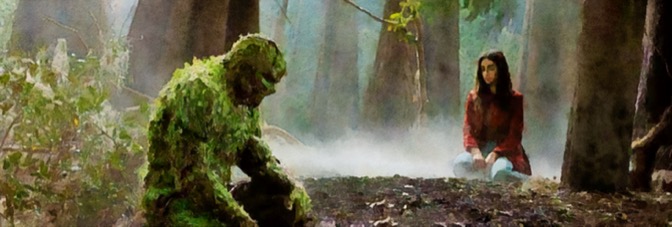
The saga of the 2019 “Swamp Thing” ends with a reasonably good season finale. It’s not a series finale; the episode’s oddly reductive by the end, low-key revealing they never really had the budget. It’s a “who will survive, and what will be left of them” type of finish, clearing out all the old business.…
-

Asterisks about Writer’s Guild credit rules, I knew when Mark Verheiden’s name came up on this penultimate episode’s opening titles, The Anatomy Lesson was in trouble. It’s not a lot of trouble, but there are definite backslides. The script’s not interested in Crystal Reed’s experience at all; on the one hand, she’s the action hero…
-

All right, the show’s definitely intentionally traipsing into the endgame, which is a hopeful sign they’ll be able to wrap it in the remaining ninety minutes. Crystal Reed returns to Atlanta with the sample of “the rot” and finds best friend Leonardo Nam less supportive than expected. And Reed’s got a new boss, Adrienne Barbeau,…
-

It appears to be the end of act two for “Swamp Thing: The De Facto Mini-Series,” with one character presumed dead at the end, another three saying goodbye to Marais or at least seriously considering it, and a big twist revealed. Maybe multiple big twists. But it’s hard to keep track of the double-crosses when…
-

So, “Swamp Thing” keeps the momentum. It’s not a breakout episode like last time, with a combination of action and reveals. This episode’s got the reveals and developments—the show’s not taking its time with subplots. Not sure if it’s because their order got cut or if they were just unsteady in the “pilot” episodes, but…
-

Wait, did “Swamp Thing” just get good? I mean, this episode’s definitely good. It’s a combination of season arcs progressing and culminating, better than normal writing (credited to Franklin jin Rho), and better directing of the actors. Greg Beeman directs. I’m not sure I’ve seen anything he’s done since License to Drive in 1988. But…
-

I’ve been trying really hard with Maria Sten, who plays Crystal Reed’s bestie. Sten’s just in the show to ask Reed what she’s going to do next or what she’s just done. Last episode, it seemed like Sten was going to have a reporter subplot, but it was just to set up Will Patton for…
-

They do bugs. In the nearly fifty-year history of Swamp Thing, I don’t think there’s anything ickier than the bugs. Including when he fought like blood monsters who use intestines as tentacles or whatever. The bugs were worse. Just pages and pages of bugs sent from Hell to torment the living. Yuck. And this episode…
-

“Swamp Thing” reveals one of the many superhero tv show caveats: an origin episode isn’t the same thing as a pilot episode. Yes, last episode introduced the various characters, but this episode—in addition to introducing more supporting characters (well, at least one)—sets up what they’re going to be doing on the show. For example, Virginia…
-

I can’t get the “Swamp Thing” theme out of my head; a subtle but undeniable earworm courtesy composer Brian Tyler. It is not at all related to any of the previous themes—well, it could be from the 1990 show, I don’t remember; I did wonder how the Swamp Thing movie score would work over the…
-

Presumably, the very, very important Communist character would’ve had a more significant part in the movie. However, in the comic adaptation—in Johnnie Christmas’s adaptation, anyway—not so much. Maybe because their story is entirely the Aliens thriller and suspense sections. It’s unfortunate, though, only because the conclusion—where they talk about how we’re supposed to share these…
-

A Walk Through Hell has a surprisingly affective final issue. Not because anything in it connects, but because everything in it does not, and then it becomes clear writer Garth Ennis isn’t just having a laugh; he put thought into it. And it all comes out bad. For most of the issue, Hell #12 feels…
-

Thirteen or so pages of this issue are the best work Johnnie Christmas has done on William Gibson’s Alien 3. There’s a lot of action at the start of the issue; the company suits finding out there might be an alien onboard, the alien arriving and killing, the crew panicking. It’s a slightly new kind…
-

Goran Sudžuka made it until issue eleven to rush the art. Before, when he stopped putting effort into the inks, it was noticeable and unfortunate because Walk Through Hell lost its greatest asset. It wasn’t bad; it just lost the charm. Though, obviously, it’s not clear anything could’ve brought Walk “charm.” Anyway. This issue Sudžuka’s…
-

It’s old home week this issue; not only do Newt and Hicks have (relatively) big scenes this issue, but Bishop is also back in one piece. All of a sudden, it feels more like a sequel to Aliens, but only slightly. This Alien 3 hasn’t got any time for a kid, so Newt’s got to…
-
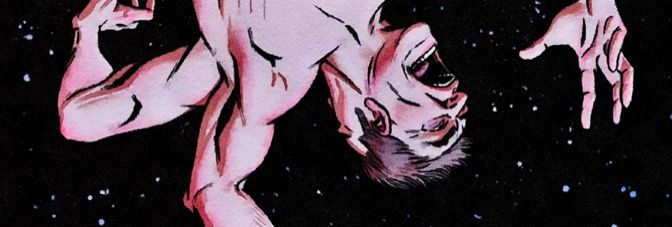
I’m not sure this issue takes more than five minutes to read—there’s a lot of dialogue to pad it out—and, at this point in A Walk Through Hell, it’s fine. The shorter the read, the better. It’s a flashback issue to FBI agent McGregor’s high school years and something terrible. But the something terrible isn’t…
-

Umm. I feel bad for writer Garth Ennis. I feel bad he did this issue. There are desperate ways to stretch out a series, to pad an issue, to make the right count for a trade. But somehow, Ennis surpasses all of them with this unconditional waste of time issue. I feel bad for Goran…
-

It’s a very talky, very unpleasant issue. Walk Through Hell has been gross before, it’s been mean before, but this issue, writer Garth Ennis turns it up to eleven. The bad guy—who maybe thinks he’s the Anti-Christ (we don’t get there yet, which will seem like burying the lede)—recounts his life history, starting with killing…
-

When I started this profoundly underwhelming Walk Through Hell, I observed sometimes writer Garth Ennis makes a radical save after some lackluster first issues. He doesn’t make any such save in Hell, but he does turn out to have a vaguely interesting twist, which comes way too late in the comic. We’re just over halfway…
-
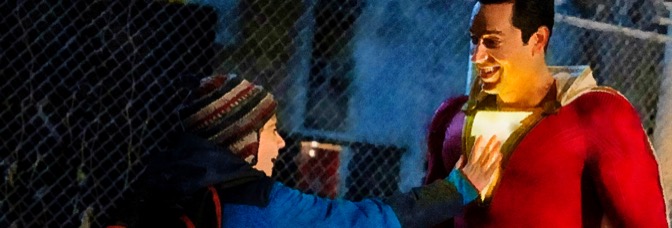
At its very best, for a few minutes Shazam! seems like a Wes Anderson-esque superhero movie gone wrong. Like they lost the music they wanted at the last minute but had still cut the sequence together. Specifically, it’s Zachary Levi’s superhero training YouTubes, set to Queen’s Don’t Stop Me Now. The song has no meaning…
-

The Lions of Leningrad is European without being Russian, albeit then translated (from French) into English. But it’s a Russian tragedy, complete with a love quadrangle, flashbacks, gulags, and revenge. The comic opens in Leningrad, 1962. The police arrest an indigent who’s broken into a concert hall. Only the arresting officer is a nitwit who…
-
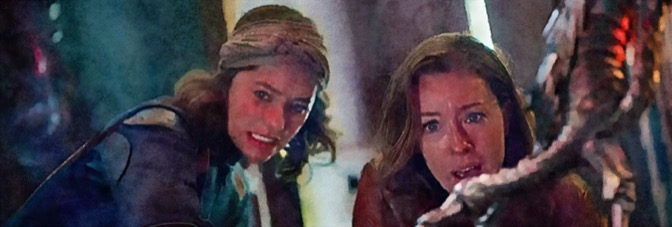
After spending most of the season away, this episode’s writing credit goes to reboot creators Matt Sazama and Burk Sharpless. I figured they were back to get the show in shape for season three, but I didn’t realize it’s all they were going to do. Sure, they spend fourteen minutes to resolve all the cliffhangers…
-

This episode may be the perfect example of “Lost in Space: Season Two.” It’s got a bunch of problems, and they’re all ginned up and exacerbated by the main cast. Mostly Toby Stephens and Molly Parker because they’re the parents. But this device—ignore an obvious problem and then act surprised when it becomes a dire…
-

There are a couple moments in this episode where characters could’ve easily gotten away saying, “That’s white of him” or, down a notch, “That’s not very cricket.” Once when Toby Stephens—who gets top-billing again in the irregularly included opening credits–is having his episode-long chitchat with newly revealed series villain Douglas Hodge. Hodge isn’t just the…
-

Well, the robot’s back. Only took seven episodes. As Maxwell Jenkins teaches the robot how to care for horses, the episode flashback to JJ Feild’s intentions—cripple the robot and force it to fly the mothership to a new galaxy. Juxtaposed against the robot trying to tell Jenkins it’s not nice to subjugate other beings. And…
-

JJ Feild is shaping up to be more likable than I was expecting, but also far flatter. “Lost in Space” shrugs through its male casting too much. He spends the episode being secretive about his plans if the robot-finding expedition is successful. He’s down on the planet with Molly Parker and Maxwell Jenkins, horseback riding…
-

It’s nearly a concept episode of “Lost in Space.” John Robinson (Toby Stephens) is stuck at the bottom of a mine shaft, injured, without medical attention. Daughter Judy Robinson (Taylor Russell) is racing to get to him but her SUV breaks down. They’re on an alien planet and there are metal termites. She’s going to…
-
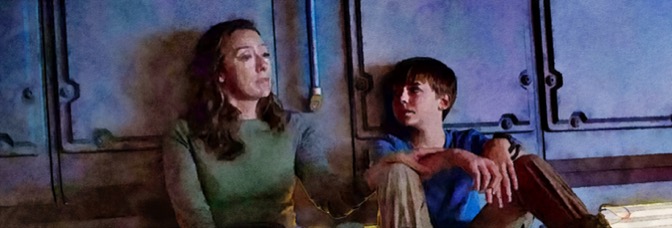
Since this episode doesn’t have the opening titles, I spent the entire thing terrified Leslie Hope directed it too (she did the excellent job last episode), and that goodness was somehow a fluke. Nope, those intolerable, endless, pointless low-angle shots are courtesy director Jon East. It’s the worst direction on the show ever. I should’ve…
 The Stop Button