Category: 2003
-
Somewhere near the end of the second act, Good Bye Lenin! starts having some narration problems. At first they seem like a little bit too lazy writing or, given Lenin has five screenwriters, a too many hands situation. There’s just a disconnect between protagonist and narrator Daniel Brühl’s experience and what the film’s doing. Then,…
-

Sometimes the snow comes down in June, and all that business because out of nowhere… Archangel is really good. It’s not the best of writer Garth Ennis’s War Story: Volume Two, which is only not a joke award because of that David Lloyd story, but Archangel definitely makes up for the previous couple entries. Now,…
-
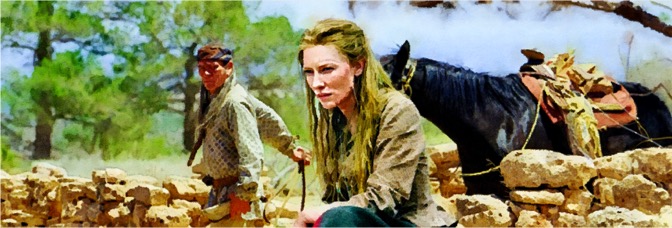
There’s a moment in The Missing when Tommy Lee Jones appears to be dead-panning at the camera, clearly as exasperated being in the film as the people watching him in the film. He’s tired because The Missing makes sure to keep him busy, but he easily soldiers on because Jones is in Missing to soldier…
-

After Condors, I’m even more decided on the idea—Garth Ennis wanted to write a play. I’m not sure if he wanted to be a playwright or just write a play, but Condors is a play. The entire comic takes place in a bomb crater with four different soldiers fighting in the Spanish Civil War. Only…
-

I think I figured out why The Reivers, the first issue of the second War Story volume, doesn’t start the collection. Because you might stop reading the collection. It’s kind of actually bad, but it’s also a slog. Writer Garth Ennis churns out dialogue to get through the comic. The artist is Cam Kennedy, who…
-

I meant to read War Stories in order of publication. Unfortunately, I got out of order here with J For Jenny, the second issue in the second volume but the first story in the collection. Because it’s David Lloyd on art again and, unlike the first volume, which ends with its Lloyd-illustrated story, War Stories:…
-

Well, I remembered the twist ending of Beware the Creeper, but without the problematic, reductive, low-key, passive misogynist, ableist context. For a while, it’s a surprisingly good issue. Writer Jason Hall has finally gotten his bland white guy police detective narration down. Not for the resolution epilogue, of course; there’s nothing to be done with…
-

The cop’s narrating again. Not sure why, not after he took an issue and a half off. Writer Jason Hall puts too much on the cop, especially since he gets tricked twice in the issue. One’s plainly clear; the other he should’ve figured out since it happened during the war. But he lacked the critical…
-

Almost nothing happens this issue. The cop starts investigating the missing sister, thinking she’s the Creeper. He teams up with her twin, Maddy, for a combination walking tour of Paris and detective snoop. He discovers all the things we saw happen last issue, which isn’t great plotting from writer Jason Hall. Depending on the final…
-

Now, here’s the great Cliff Chiang art I remember on **Beware the Creeper**. He maintains quality with faces while still doing all the great Parisian street scenes. He’s got a lovely sequence with a girl, apparently living on the street, waking up and starting her day. It’s charming, which **Creeper** can often be, when writer…
-

Beware the Creeper gets by immediately on charm, though it opens with a violent assault on a sex worker, so it takes a few pages. Writer Jason Hall begins with an “It was the best of times, it was the worst of times,” establishing the setting. It’s post-World War I, pre-Great Depression Paris. The comic’s…
-
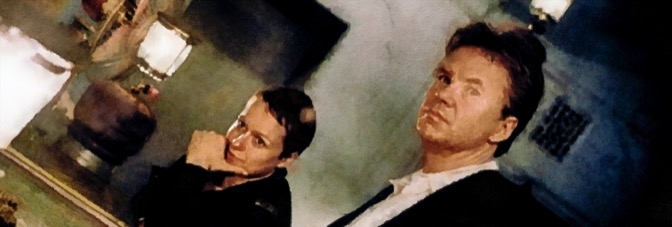
Code 46 is a budget future-noir, down to the male lead being a fraud investigator (though it’s unclear why there’d be a third-party contractor investigating identity theft). But it’s not just a budget future-noir; it’s also a future eugenics thriller; the title refers to the legal code forbidding procreating with your near relatives. Cousins would…
-

This issue came out over a year after the previous one, and creator Beto Hernandez does some deck cleaning, mostly for Luba and Khamo’s so-far series-long arc about him being in trouble with the police. But first, there’s a Steve Stransky story; Steve’s been in Luba before (and maybe New Love) as Guadalupe’s friend, but…
-

I understand there are reasons for The Matrix Revolutions. If that one rumor is true, it’s basically Keanu Reeves didn’t want to do sequels forever, and the Wachowskis wanted to do a long-running franchise. Old Internet gossip (oddly more reliably than some later Internet gossip, but still… Internet gossip). And then the costume changes… the…
-

I’m trying to think of something nice to say about The Matrix Reloaded. None of the returning good guys give bad performances? None of the leading returning good guys? Like, Gloria Foster’s back and, while she doesn’t give a bad performance, it’s an utterly charmless one heavily leveraging her charm in the last movie. But…
-
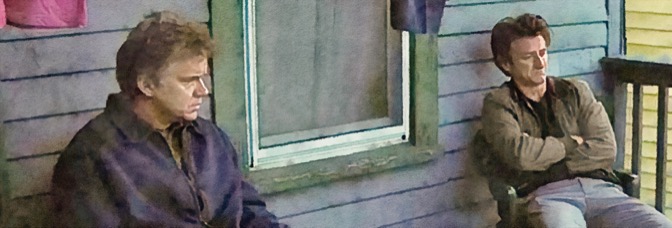
Mystic River is at all times a very American tragedy. Eastwood approaches it as such, both as director and composer (it’s Aaron Copland levels of romanticized, you eventually just have to go with it because Eastwood’s committed). But it’s also really just MacBeth in Bah-ston. A very, very cynical one. There’s not a single moment…
-

Overnight is occasionally amusing, often mortifying, never contextualized enough to be interesting, and always compelling. But it’s compelling only if you’re somewhat familiar with the subject of the film, Troy Duffy. Specifically, Duffy’s directorial debut, The Boondock Saints. In 1997, Harvey Weinstein bought the script for Duffy to direct at Miramax and less than a…
-

Some of Sleeper doesn’t age well. There’s a whole plot line about the secret society running the world and, in 2020, it seems like a very dated trope. To be fair, it was dated in 2003 when Sleeper came out, but writer Ed Brubaker was at least utilizing the trope to sabotage it. There’s also…
-

Timeline is really bad. The opening sequence starts Donner regular Steve Kahan in a terrible bit part but at least there’s the stunt casting; the rest of the poorly edited sequence has ER doctors and anonymous law enforcement looking into the mysterious death of a man who appeared in the middle of the highway for…
-

Batman: Dead End goes far in validating the idea of cosplay as successful costuming for film—well, not Andrew Koenig’s Joker—but definitely the Batman outfit. Costume designer Michael MacFarlane, cinematographer Vincent E. Toto, and director Collora do figure out a way to do a “comics accurate” (if you’re reading comics illustrated by Alex Ross) Batman costume.…
-

The first volume of Planetes has five different stories. They’re vignettes. I’ve read this volume before, I remembered the vignettes. Even if the first story doesn’t feel much like a vignette. The story opens with a spaceship disaster. Actually it opens with a cute married couple and then the disaster, because it’s sad when disaster…
-

I have no idea how I’m going to talk about Small Favors; it’s my first “erotic” comic. Possibly ever. (The first edition of Lost Girls is sitting on my shelf, still unread). The collection’s subtitle is “The Definitive Girly Porno Collection.” I’m just worried what kind of SEO I’m going to get from frequent usages…
-

Born does not end well. #4 might have the most consistent look for Frank, but only because his face is in shadow most of the time. There’s some okay action gore, but it’s not the point of the issue. Ennis and Robertson spend about as much time resolving Stevie’s story as they do showing The…
-

Well, the Voice is back. And Ennis tries to do something really ambitious with Stevie, which has nothing to do with the Voice, nothing to do with Frank, nothing to do with Born really, and literally gets cut-off because there’s not enough room for it. Not with the Voice stuff, not with the conclusion. But…
-

This issue—titled The Second Day, so we can guess what the next two issue’s titles are going to be—focuses more on Stevie. Or at least, it’s always from Stevie’s perspective. Frank has a big money shot action sequence, but it’s still Stevie seeing (and reacting). Ennis also reveals a bit more about Stevie’s experience in…
-

Born is, twenty-nine years after his first appearance, the secret origin of The Punisher. How did Frank Castle go from being a regular Marine to being an unstoppable, relentless killing machine. Only, as the narrator explains, Frank was never a regular Marine. The narrator’s name is Stevie Goodwin, which seems like it’s got to be…
-
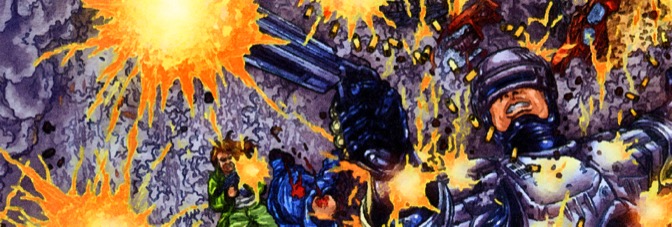
Like most media with a Frank Miller credit on it, Frank Miller’s Robocop does not aged well. More accurately, as far as Robocop goes anyway, it doesn’t improve with age or maturity. It was always as bad as it is now, every reading another bloody stab at nostalgia. Frank Miller’s Robocop is an adaptation of…
-

Johnny English runs just under ninety minutes, which is one of the film’s secret weapons–nothing ever goes on too long, not the good stuff, not the bad stuff, not the mediocre stuff. There’s not a lot of bad stuff–more varying degrees of mediocre; when things then get better, when things finally pay off, it’s a…
-

The Station Agent is not a character study. It does try, at almost exactly the one hour mark (it runs a breezy, but deliberate eighty-nine minutes), to become a character study, but it is not a character study. It is actually a perfect example of how to not make a character study. Writer-director McCarthy spends…
-

Sweatshop is a workplace situation comedy. While there are only six issues, creator, writer, oftentimes artist Peter Bagge gets in ten stories. The first four issues each have a couple stories. Bagge’s methodical about how he introduces the characters. They’re all comically unlikable, each with a certain charm. If not in the character, then just…
 The Stop Button