The Stop Button
blogging by Andrew Wickliffe
Category: 1997
-
Buddy is in desperate need of some contextualizing. The film takes place—roughly—between 1928 and 1933. Given that timeline, it’s a little weird the Great Depression doesn’t start, but Buddy’s also really strange about when it decides to be grown-up and when it doesn’t. The film tells the story of eccentric socialite Gertrude Lintz, who raised…
-
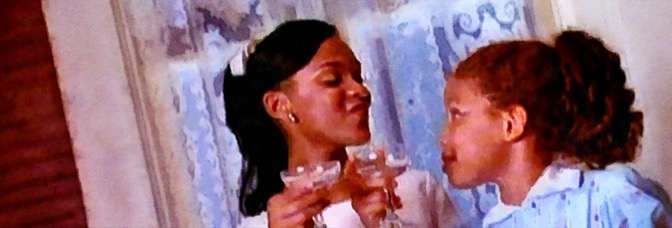
Eve’s Bayou is Southern Gothic, but it’s got a kids’ summer story grafted onto it; by the end, the two genres are working together to great effect. I mean, the end’s got problems, but the way the film gets to it is captivating. The film opens with Tamara Tunie narrating from the future—when she was…
-
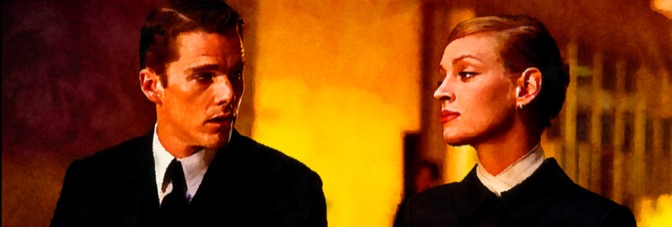
Gattaca is a science fiction triptych character study by way of film noir. And while the film’s a murder mystery, it only uses the film noir device—narration—for a non-mystery section of the film. The narration ends with the murder mystery, not coming back until the finale. It’s an absolutely fantastic structure from writer and director…
-
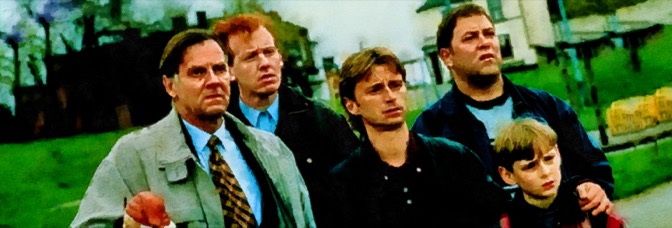
During The Full Monty’s opening titles, an old promotional film plays, establishing the setting. Sheffield during its glory days, when they produced the best steel in the world. Or at least could make a promotional film saying they did. In the present, the steel mills have closed—and been closed about six months—and the former employees…
-
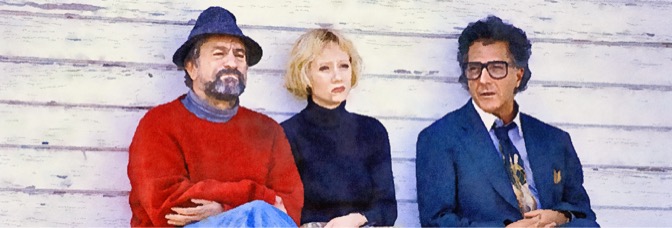
Wag the Dog is a relic from the unrevealed world. Though prescient enough to know sexual misconduct isn’t enough to derail a president from either U.S. political party. As an old—who saw it in the theater, probably opening day—it’s hard to imagine how it plays to someone who’s grown up with Republicans spewing lies and…
-
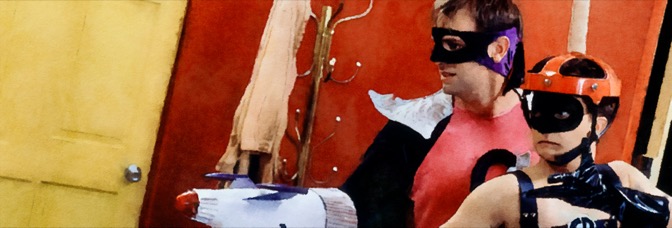
The best thing about Orgazmo is the opening title’s song, Now You’re a Man. Unfortunately, once the song’s over, there are ninety more minutes of movie. Orgazmo tells the simple tale of a Mormon missionary (co-writer and director Parker) who happens upon a porn set and ends up the star of a superhero porno (also…
-
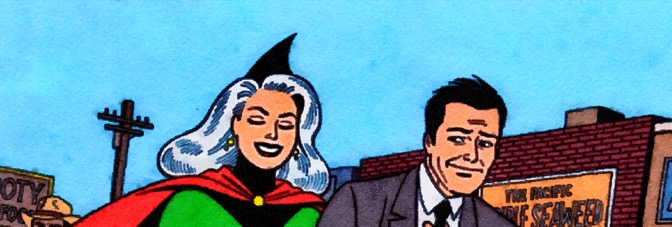
I had to go back and check old Love and Rockets to see if I’d somehow forgotten Ray (Maggie’s most serious boyfriend) had a subplot about mad-crushing on Penny Century. Nope, doesn’t look like it. First, I wasn’t expecting Penny Century to open with a story about someone knowing Penny Century, not Penny herself. Second,…
-

Maggie and Hopey Color Special (or Maggie and Hopey Color Fun, per the cover, not the indicia) delivers exactly what the cover title promises—a fun Maggie and Hopey comic in color. The comic’s not just the Maggie and Hopey feature either; creator Jaime Hernandez does three different strips, all of them showcasing the color, including…
-

As expected (and predicted), creator Gilbert Hernandez delivers a fantastic close to New Love. And even though I figured he had it coming, Beto makes a bunch of surprise moves and callbacks, making New Love a cohesive series instead of just an anthology. First comes the “Letters from Venus” entry, which I’m tempted to call…
-
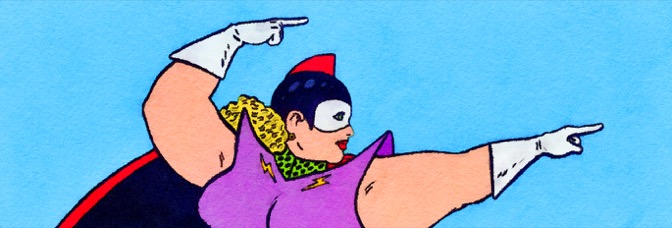
I’m trying not to be too hard on this issue of New Love, but it definitely seems like the one where creator Gilbert Hernandez ran out of momentum, if not enthusiasm. It’s strange because last issue had a teaser for the stories in this one, then these strips are kind of blah. There are some…
-

New Love #4 doesn’t really have a feature story. There’s a “Letters from Venus,” where creator Gilbert Hernandez checks in on the latest drama surrounding the strip’s young protagonist, and it’s six pages (twice the length of any other strip); it just doesn’t feel like a feature. The episode’s a grab bag with some echoing…
-

Creator Gilbert Hernandez starts the issue with the “Letters From Venus” entry, the second feature (as in the second half of a double feature). At six pages, it’s the second-longest story. Besides the A feature, “Venus” is the only other story longer than a page. Beto’s got two and a half other single-page strips in…
-

Having read Garth Ennis for so long, I can get a sense of his structure. He’s traditionally too rushed in three-issue arcs, much more comfortable with four or more. Hitman: Ace of Killers collects a six-issue arc and then two done-in-ones. The main story is a siege story, too, with the heroes getting pinned down…
-

Local Heroes collects two story arcs; the first is the Local Heroes one, about metahuman hitman Tommy having to team up with Kyle Rayner Green Lantern to take on the C.I.A. The C.I.A. wants to start controlling the supes, and suddenly it's like The Boys in here. I hadn't realized writer Garth Ennis worked through…
-

So when I said I was going to keep going with Hitman after reading the first volume last June, I meant it. I did not go back and reread it (though I’ve perused since finishing this second collection) and was able to mostly follow the story so Hitman can withstand a sixteen-and-a-half-month break, which is…
-
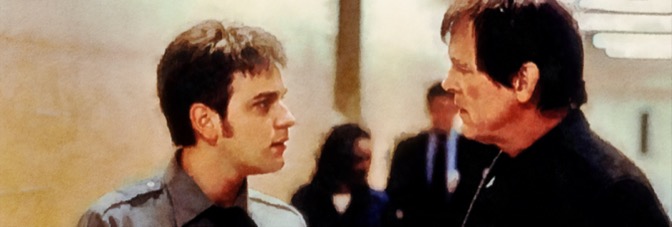
Thanks to a weak performance from lead Ewan McGregor and an obviously altered ending, Nightwatch straddles being a reasonably perverse suspense thriller and a scalding commentary on middle-class white male masculinity. McGregor is a third-year law school student who takes a job at the morgue to help pay for he and girlfriend Patricia Arquette’s giant…
-

Perspectives on Christmas is an exceptionally easy episode, starting with the title. There’s even a plot point about someone not trying hard enough with Christmas presents after making a big deal about trying hard with Christmas presents, which seems to be some kind of meta plea to be allowed an easy Christmas episode from writer…
-

After surviving a whole episode as Kelsey Grammer’s love interest, Lindsay Frost dumps him at the beginning of this one, setting Grammer off on a self-reflection whine arc for the whole show. It’s an on-point episode as far as the character goes—Grammer’s done an obsessing episode at least once before, if not twice. Last time…
-

Frasier (Kelsey Grammer) finally gets to end an episode without driving away his latest love interest—this time it’s Lindsay Frost, guest starring as a high powered attorney who’s in town to try a sensational case and she and Grammer have a meet cute where she helps him get a purse returned. See, Peri Gilpin’s pregnant…
-
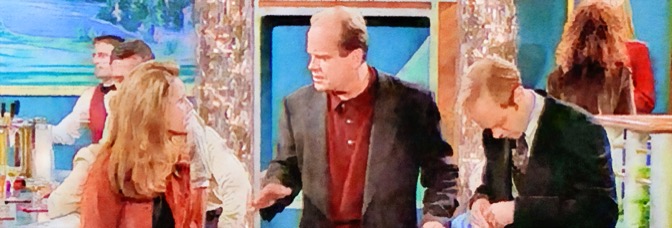
It’s a particularly excellent episode, with the cast—minus Jane Leeves, who gets one great showcase scene and is then out—going on an Alaskan cruise. Peri Gilpin’s got a friend looking to book a celebrity entertainer and after some mild cajoling (and Gore Vidal-name dropping), Kelsey Grammer agrees to go and give a speech. David Hyde…
-

I glazed over the director credit—I knew it was David Lee, but David Lee turns in particularly distinctive episodes, usually just competent ones. But this time he gets to do something special—half the episode is shot on location in Seattle (the only time in the series, apparently), with David Hyde Pierce and Kesley Grammer walking…
-

In addition to the omnipresent Christmas theme, the episode also showcases a bunch of new second unit location shooting of New York—including, possibly, even David Caruso and guest star Helen Slater on location there. Maybe they filled in somewhere else. It’s fairly convincing, especially since every other time there’s a suggested street scene it doesn’t…
-

This episode picks up the morning after last episode, with Kelsey Grammer having to apologize to Peri Gilpin—who’s already decided she’s keeping the baby—for telling a party full of strangers about it. Grammer’s supportive, but thinks Gilpin needs to tell the dad. Skip ahead to the apartment and David Hyde Pierce is also apologizing—him for…
-
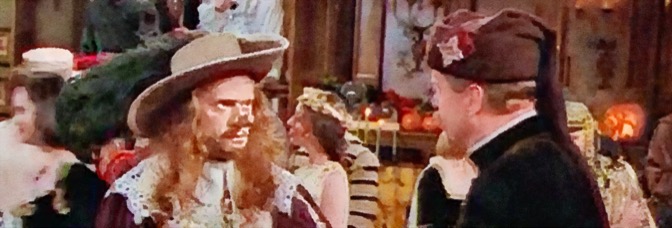
Halloween buries the lede. The episode opens with David Hyde Pierce arriving at the apartment and talking with John Mahoney about costume problems. Hyde Pierce is throwing a costume party and isn’t having any luck finding Mahoney a Sherlock Holmes outfit. From background to foreground come Kelsey Grammer and Jane Leeves, who are giggling as…
-
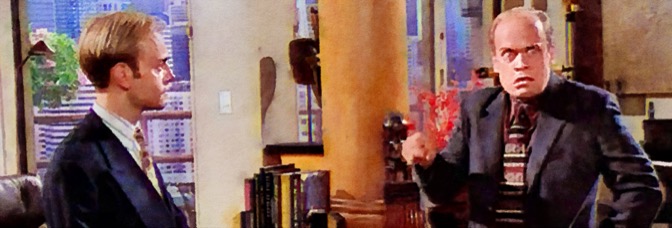
The Gift Horse is from a one-time writer (Ron Darian), which might explain the soft retcon regarding John Mahoney’s birthdays on the show. This episode turns the gift giving into a competition between Kelsey Grammer and David Hyde Pierce, as each tries to out do the other on the gift, leading to Grammer going all…
-

There’s very little as satisfying as the season premiere immediately addressing my problems with the previous season’s finale and remedying them. That episode ended with Kelsey Grammer, lovelorn, following a woman (Lisa Guerrero) onto an airplane and pretending he was always on her flight. This episode opens with Guerrero getting very creeped out by Grammer’s…
-

It’s not a great season finale. Not a good season finale. I’m low fine on it? So adequate. Not inadequate. Odd Man Out is a not inadequate season finale. But this season has been great. It’s been the best season of “Frasier” so far; long stretches of consistence excellence. It didn’t even start falling apart…
-

Dan Cohen and F.J. Pratt wrote another episode (a really good one) but I didn’t recognize their names when the writing credit came up here. I don’t think if I’d remembered it would’ve led to a more generous viewing. This episode’s first swing and miss is in the first thirty seconds and it’s a big…
-
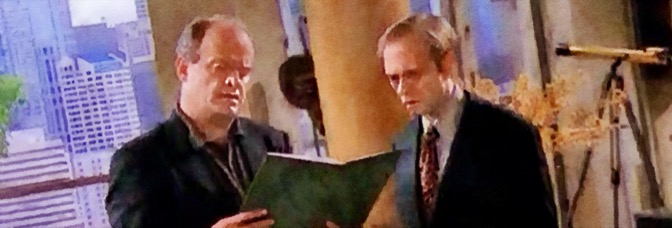
When I saw William Lucas Walker on the script credit, I figured there were going to be some easy, probably sexist jokes and Walker does not disappoint in hitting his standards, but it’s a successful episode overall. The eventual plot—after getting through the intro where Kelsey Grammer thinks only riff-raff hug each other (not sure…
-

The curse of the John Romano co-writing credit continues. Otherwise it’s an excellent episode about David Caruso’s old cop partner, Scott Lawrence, coming for help. An FBI informant (a slimy but not too slimy—or not in it enough to be too slimy—Alan Blumenfeld) is threatening fetching bank teller Tracy Douglas over bad checks. Douglas goes…
 The Stop Button