Category: 1994
-

It’s a packed, but never frantic episode–Chuck Ranberg and Anne Flett-Giordano are the “Frasier” all-star writers right now and they’ve got a lot of inventive work here, both the plotting and character arcs. Every development is combination delight and surprise. The episode starts with Frasier (Kelsey Grammer) and Roz (Peri Gilpin) dreading having to return…
-

It’s incredible how well Kelsey Grammer is able to play Frasier making social faux pas. It should run counter to his character, but never does. When Grammer’s digging himself his deeper and deeper hole this episode—as Peri Gilpin looks on, astonished—it just makes sense. Of course he’s going to do it. What else would he…
-
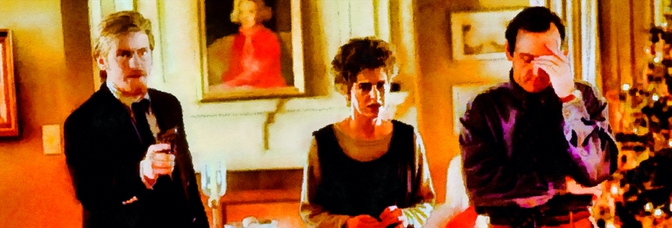
Every once in a while, The Ref lets you forget it’s just a comedy vehicle for stand-up comic Denis Leary and so doesn’t need to actually be a good drama and just lets you enjoy the acting. Demme’s direction is simultaneously detached, thoughtful, and sincere. He and editor Jeffrey Wolf craft these wonderful comedic scenes.…
-

Nobody’s Fool takes place during a particularly busy December for protagonist Paul Newman. He’s got a lot going on all at once, but mostly the reappearance of son Dylan Walsh and family. They’re in town at the beginning for Thanksgiving, but Walsh’s marriage is in a troubled state—we’re never privy to the exact details, as…
-

Either Evan Dorkin’s got the Eltingville TV rights back or whoever has them is a complete numbskull because the book’s so relevant you could subtitle it “An Incel Fable” and it’d be totally appropriate, narratively speaking. But it’d be somewhat intellectually dishonest, as Dorkin started The Eltingville Club long before the incels had a self-identity…
-

Crooklyn is a series of memories. They’re mostly the main character’s memories—and if they’re not, they’re definitely from her perception. The memories start in the spring and go through the summer. Director Lee and his cowriters—and siblings (Crooklyn is semi-autobiographical) Joie Lee and Cinqué Lee frequently change the pace of the memories. Some are long…
-

Chungking Express has two parts. First part is lonely young plainclothes cop Kaneshiro Takeshi counting down the days to his birthday, which is also thirty days since his girlfriend of five years dumped him. Simultaneously, sort of middle person drug trafficker Brigitte Lin loses her latest batch of mules (once they’re loaded up with the…
-

Even with Beto doing the centerpiece, Love and Rockets #46 is (technically) a Jaime issue. The issue opens with Maggie/Perla (it gets even more confusing because there’s a flashback to pre-Love and Rockets #1 days) and Esther hanging out at Vicki’s wrestling training camp. There are three Butt Sisters stories, but they’re really just one…
-

Beto’s only got one story this issue. Sure, it’s eleven or so pages–so almost twice as long as most of Jaime’s–but Jaime’s got four stories. There’s a lot from Hoppers. And a lot of Hoppers. I guess I’m talking about Jaime’s stories first. So he’s got two stories with Maggie (Perla) and Esther. The first…
-

For the first time in either a very long time or ever, there are only two stories in the issue. One Beto, one Jaime. First up is Jaime’s, which has Maggie’s sister Esther visiting her in Texas. Well, it starts with Esther visiting their dad, then going to see Maggie and pals but their dad…
-

This Unfamiliar Place is content in search of presentation. Director Brzeski’s father survived the Nazi attack and occupation of Poland. He never talked about it. Then there’s an unspecified earthquake (maybe the San Francisco-Oakland one of 1989, but it’s sort of immaterial because Brzeski’s not living there at the time). She thinks somehow this place…
-

Puppet Master 5 opens with the series’s (unfortunately) standard lengthy opening title sequences. There’s nothing exciting about it, just white text on black and Richard Band’s theme in the background. The film’s single surprise in the titles is Band just getting an “original music by” credit. Michael Wetherwax is here to adapt it. He’s the…
-

Timecop is deceptively competent. Sort of. There’s often something off about it, but then director Hyams will do something else decent and distract. Hyams also manages to get a perfectly serviceable performance out of lead Jean-Claude Van Damme. Van Damme’s unsure, cautious performance–he tries to understate his terrible attempts at one-liners–is a great counter to…
-

There are a lot of things going on in Muriel’s Wedding, so many writer-director Hogan’s script gets to the point he’s constantly raveling and unraveling foreground and background threads. The threads are all wrapped around the film’s center–lead Toni Collette’s complicated desire to change herself. She mostly accomplishes it through various lies, though cheque fraud…
-

There are no good parts to Trancers 5: Sudden Deth. The best parts, however, are when you forget you’re watching an actual motion picture–or even a direct-to-video release on a name label–and think you’re instead watching some terrible fantasy movie shot by the staff of a renaissance fair. At one point there’s a magic map…
-

I’m not sure where to start with Trancers 4 except I don’t recommend anyone else ever watch this film. Especially not if you like Trancers or even Tim Thomerson. That definite discouragement aside, for a direct-to-video sequel shot in Romania and set in a different universe like an episode of the original “Star Trek” just…
-

There’s a lot of great moments in Pulp Fiction. There’s not a lot of great filmmaking–the taxi ride conversation between Bruce Willis and Angela Jones is about as close as director Tarantino gets to it–but there are definitely a lot of great moments. There’s the chemistry between John Travolta and Samuel L. Jackson. There’s the…
-
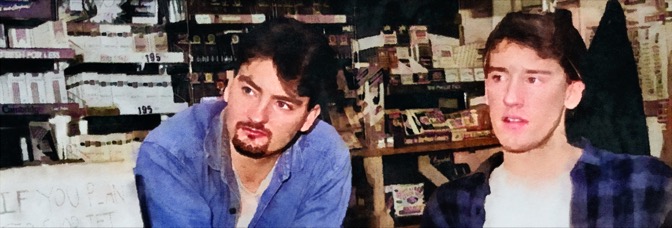
Clerks operates on intensity. But it’s mostly dialogue and there’s not a lot of action. So director Smith relies on surprises, whether visual, in dialogue, in plot. At its best, Clerks is creative with its constraints. At its worst, Clerks is lead Brian O’Halloran whining (badly, I might add). There’s a lot of whining. Only…
-
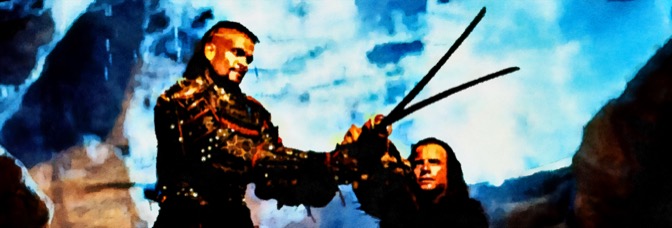
About the only complementary thing in Highlander: The Final Dimension is Steven Chivers’s photography. The film’s got a terrible color palette, which isn’t a surprise since all of director Morahan’s decisions are bad, but Chivers never lets the film look cheap. It’s clearly cheap, but Chivers refuses to acknowledge it. It’s kind of cool. But…
-

In the Mouth of Madness is a rarity. It’s a film with some terrible, terrible parts, yet it needs to be longer. There needs to be more terribleness for it to be better. And it can’t even be much better, because those terrible parts break it, but it would be somewhat better. It would definitely…
-

Star Trek: Generations has one good sequence in it. The Enterprise has a space battle with the Klingons. It’s too short, paced wrong, but it’s good. Peter E. Berger’s editing for the film is never better and director Carson manages to shoot it well. He doesn’t manage to shoot a lot of Generations well (he’s…
-

New Nightmare should be a little bit better. The film has this fantastic second act and goes into the third strong but director Craven’s resolution is tone deaf. He’s making a movie about movies he was involved with, incredibly popular movies he was involved with, and he sacrifices the actual good work he’d been doing…
-

Quiz Show is a story about pride and envy. The film’s main plot is about the quiz show scandals in the fifties–big media taking the American public for a ride–and I suppose it could be seen as a loss of innocence thing. But it isn’t. It’s about pride and envy. John Turturro’s working class Jewish…
-

Shallow Grave has bold colors. The production design–by Kave Quinn–isn’t particularly good. Over ninety percent of the film takes place in a rather boring apartment. But that boring apartment has a lot of bold colors. Sure, photographer Brian Tufano doesn’t know how to shoot those bold colors to make them effective, but he doesn’t know…
-

Bullets Over Broadway has a lot going for it. Between Chazz Palminteri, Jennifer Tilly and Dianne Wiest, there’s a lot of great acting and great moments. There are a decided lack of great scenes, however, thanks to director Allen’s choice of John Cusack as leading man. Cusack doesn’t so much give a performance as imitate…
-

Nearly seventy percent of Captives is a fantastic romantic drama. Julia Ormond is a newly divorced dentist who starts working part-time at a minimum security prison, where she begins a liaison with inmate Tim Roth. Frank Deasy's script concentrates primarily on Ormond and her experiences–with occasions scenes for Roth amongst the inmates, but that first…
-

Mike Nichols has a very peculiar technique in Wolf. He does these intense close-ups, sometimes zooming into them, sometimes zooming out of them. He fixates on his actors–usually Jack Nicholson and Michelle Pfeiffer, but all of the actors get at least one intense close-up (except maybe Eileen Atkins). It’s like he’s drawing attention to the…
-

Disclosure is not a serious film. It’s a sensational, workplace thriller with crowd-pleasing moments. There are occasional hints at seriousness, but director Levinson and screenwriter Paul Attanasio (not to mention source novel author Michael Crichton) are more focused on providing entertainment than anything else. Michael Douglas’s protagonist is the least developed character in the entire…
-
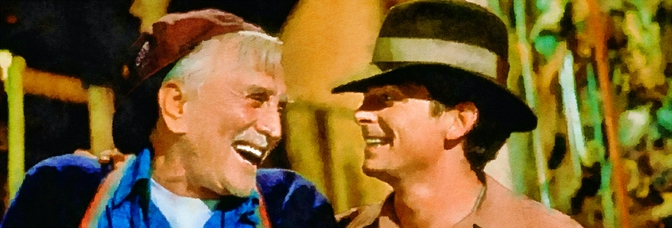
Greedy would be a mess if it weren’t so thoughtfully arranged. It’s not good, but it’s definitely intentional. The film opens with Ed Begley Jr. and his family–with Mary Ellen Trainor as his wife–going to his rich uncle’s house for a family gathering. There, the film introduces second-billed Kirk Douglas as the rich uncle and…
-

The Parliament of Stones? What’s the Parliament of Stones? Morrison and Millar end the issue on a couple ominous notes, the aforementioned new Parliament being one of them. They also have the handful of strange guys playing handheld video games (the video games have to do with Alec’s quest). The rest of the issue is…
 The Stop Button