Category: 1993
-

Short Cuts is about a weekend in Los Angeles. It’s a Robert Altman ensemble piece with twenty-two principle characters (though at least six of them are questionable–it really has three stories and then some tangents). It’s “based on the ‘writings’ of Raymond Carver” (emphasis mine), but I’m pretty sure it’s just an adaptation of his…
-
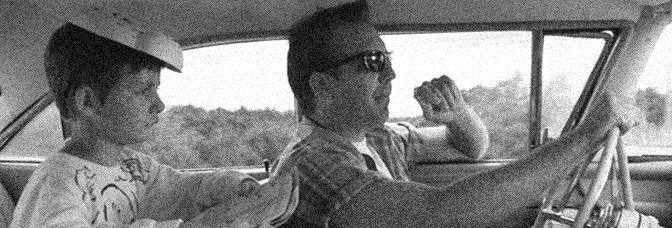
A Perfect World runs almost two hours and twenty minutes (it does with end credits). The last act of the film is a seventeen or so minute showdown in real time. Until that point in the film, John Lee Hancock’s script flirts with occasional sequences in real time, but there’s a lot of summary, a…
-

There are a lot of excellent things in Batman: Mask of the Phantasm, but maybe my favorite thing is the end credits music. It’s smooth jazz. It’s this smooth jazz love song over the cast and when you see names like Abe Vigoda and Dick Miller and John P. Ryan in an animated Batman movie,…
-
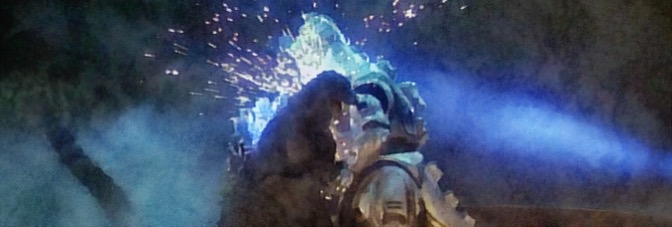
Godzilla vs. Mechagodzilla is outrageous spectacle. The film has the perfect combination of story, director and special effects. The film allows its giant monsters limited personalities, feasible motivations. It even manages to raise questions of morality as this version’s Mechagodzilla is piloted by the anti-Godzilla task force. They’re blowing up just as much as the…
-
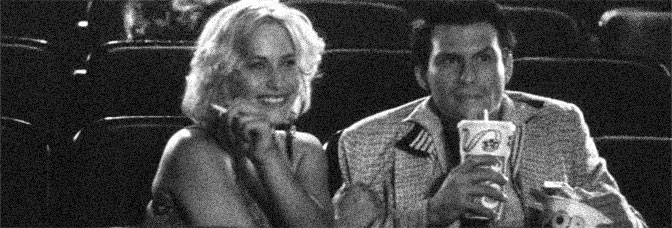
The best thing about True Romance is some of the acting. The biggest problem with the film is who’s doing that great acting. It’s not leads Christian Slater and Patricia Arquette, who the film eventually just ignores in order to further its supporting cast (which is sort of fine, as they’re better–especially than Slater–but it…
-

Besides an occasional good performance and a lot of charming ones, Dazed and Confused only has so much going for it. Director Linklater is far more concerned with the script than he is with the direction. He doesn’t give the actors much to do and then doesn’t seem to want to spend much time with…
-

Jason Goes to Hell is terrible. It’s terribly made, it’s terribly written, it’s terribly acted. It’s so terrible I wish the word “terrible” was in the title just so I could continue to make terrible jokes instead of trying to write about the movie. There’s something interesting about it. And not just how the movie…
-

From the first few minutes of Blue, the entire thing seems conventional. Not exactly predictable, though it’s often somewhat predictable, but definitely conventional. And when it veers away from being conventional, it soon returns to it. Director Kieslowski figures out punctuation marks to draw the viewer’s attention to lead Juliette Binoche’s conflict and reuses them…
-

In the Name of the Father falls into most true story adaptation traps. It has a really long present action, which is unevenly distributed through the runtime. There’s a framing device introducing Emma Thompson’s appeals lawyer first thing–with her popping in from time to time to remind the viewer of the device. That device helps…
-

Director Joanou definitely familiarized himself with film noir before directing Dead-End for Delia (an episode of noir anthology “Fallen Angels”) but apparently didn’t realized doing it in color would break the shots. Especially since cinematographer Declan Quinn often just boosts the contrast to hide modern background elements. But Scott Frank’s script is also a problem.…
-

For a late night cable movie–how’s that description for a euphemism–Lake Consequence is shockingly okay. It runs ninety minutes (to facilitate more airings, undoubtedly) and it actually runs too long. The film’s at its best during the final third, when hunky tree trimmer Billy Zane has to get the bored housewife he’s been dallying around…
-

Sliver is a beautiful film. It’s got Vilmos Zsigmond photography, it’s got Phillip Noyce directing, it’s got a great score from Howard Shore–it’s just a bad movie. The story has two things going on. First is Sharon Stone’s recent divorcee moving into a high rise apartment building where she discovers there have been a bunch…
-

Abby gets busy with the mindless clone Alec left–apparently all he programmed it to do was get busy, as it does nothing else all issue (and Collins’s understanding of Alec and Abby’s sex life is totally different from Moore or Veitch’s). There’s a lot of narration from Alec about the Green and pollution and other…
-

Desire is supposedly to be an erotic thriller, which means the title should have some plot significance. It does, but not really. The title refers to a perfume, Desire, which is at the center of the murder mystery. McDonald quickly establishes the murder sequences as disturbing, not erotic, so having three of them just means…
-

I think Trail Mix-Up is supposed to be zany, what with the inclusion of an adorable beaver and a cuddly bear in Roger Rabbit and Baby Herman’s trek through the wilderness. It’s not very good, of course. Besides Droopy’s Jaws-related cameo and Jessica Rabbit showing up for a moment, there’s nothing memorable about it until…
-

What’s Eating Gilbert Grape does something very unscrupulous… it relies on the viewer’s affection for its characters to get away with being a wolf in sheep’s clothing. In terms of narrative honesty, I mean. Gilbert Grape is, for the majority of its run time, a lyrical character study. Yes, it takes place in a summer…
-

A House in the Hills is, for the majority of its running time, pretty darn funny. It’s a romance novel run through a black comedy filter, with Helen Slater playing the lead. The film takes place in LA; Slater’s an actress and ends up being the one character the film never actually explains. It’s one…
-

Two big things I noticed about Jurassic Park. First, it’s still a superior use of CG. It really shows how digital effects do not get better with technology or budget or whatever; being used by a good filmmaker makes all the difference. And Spielberg does a fine job with Jurassic Park. It’s an incredibly impersonal…
-

I can’t remember any good Hollywood remakes of recent foreign films. Point of No Return was supposed to be a big deal–Bridget Fonda getting the coveted lead was a big deal (she went on to say she’d never read reviews again after No Return). The film’s basically a shot for shot remake of Nikita; besides…
-

It’s been a while since I last saw The Fugitive. I remember it didn’t impress me much, particularly Andrew Davis’s direction. Needless to say, I was very wrong. I don’t think I’ve ever appreciated the film as much as I did this viewing. Davis’s direction is the finest action thriller direction I can recall. The…
-

If you’re ever stuck watching The Pelican Brief, you can amuse yourself wondering if the film would be better had Pakula shot it 1.85 as opposed to Panavision. Pakula shoots it empty Panavision, the right and left sides of the frame empty for easier pan-and-scanning. It’s an inexplicable choice from Pakula, but not as inexplicable…
-

Oh, Trevor Jones did the music. I was going to say it sounded like some really good Hans Zimmer (with some plagiarism of Alan Silvestri’s Predator score), but Jones does good work so I guess it’s not a surprise. Cliffhanger is such a technical marvel it’s hard to get upset about the problems (writing and…
-

The problem with Amos & Andrew is the execution. Frye has a good concept—a black professional moves to an island community filled with guilty white liberals and suffers thanks to their community interest, finding he has more in common with a two bit criminal than his neighbors. And the stuff between Samuel L. Jackson and…
-

Wow, what an exceptionally depressing piece of work. Ware has little Jimmy Corrigan stories and bigger ones. The bigger ones tend to be more affecting. There’s a Big Tex story in here too and it’s the closest thing to played for laughs Acme Novelty Library gets. Having heard about it for years, but not read…
-
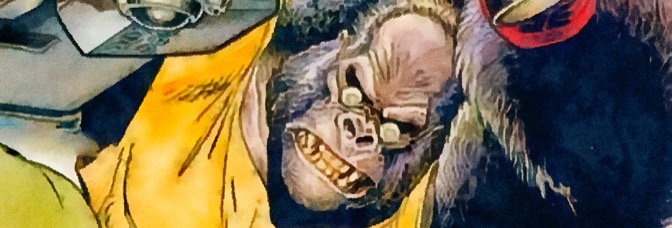
Are there Art Adams fans out there? He’s not bad, but his faces are awful. I’ve never seen someone vary his perspective of a face so much—it’s like he does these three dimensional faces, except the nose. The nose is 2D. I guess he drew the monsters well. Monkeyman & O’Brien is not terrible. It’s…
-

Ever have a friend who could draw really well? Moeller’s art on Shadow Empires is like a friend who can draw well. He takes time with it, he works at it… but it’s still totally not ready for the big leagues. It’s somehow even rougher than some of the worse art Presents has published. The…
-

Yolen and Vess have an absolutely fantastic fairy tale story here. It’s not technically a fairy tale (it’s layered, a nursemaid tells the story to a child, who it directly concerns) but it’s just wonderful. Vess’s art here is superior–he’s able to convey action, antiquity and fear. There’s one moment where it confuses, then it…
-

Oh, I finally get it. Paleolove means love in the Paleolithic era. To pay Davis a complement (my first?), he’s never tried so deliberately to tug on the heartstrings until now so I never really gave the title a thought. What amazes me is the artwork. He hasn’t gotten any better with figures since his…
-

Madwoman sort of whimpers off to its end. Jordorowsky tries to do way too much–he introduces two new characters and kind of changes up the point of the story. He also introduces the possibility its all about getting a drug princess out of jail. It doesn’t even have a solid ending, instead making a joke…
-
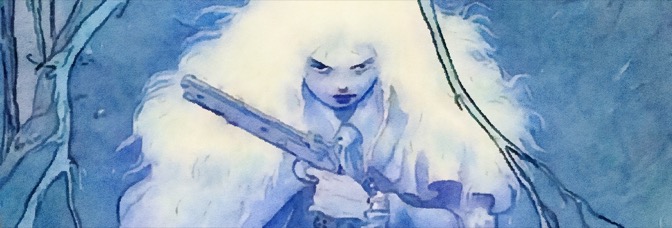
Another mediocre issue. DeLint and Vess’s Savoy story, about a woman masquerading as a highway robber to confirm her man’s fidelity, ought to be a lot better. Vess has some great panels, but he occasionally will have some indiscernible action sequences. With DeLint writing a “ballad,” he doesn’t exactly make things clear. Once the narrative…
 The Stop Button