Category: 1991
-
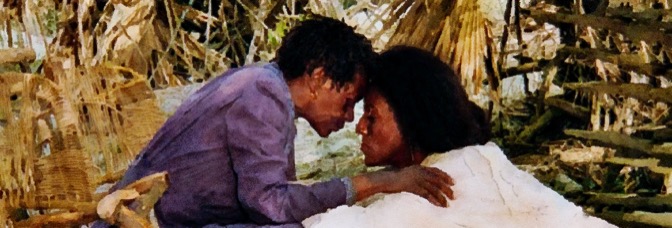
Daughters of the Dust is an epical story told lyrically. Set in 1902, the film tells the story about the time a specific Gullah family headed to the mainland and north into the twentieth century. It opens with Cheryl Lynn Bruce returning home to make the crossing, bringing along photographer Tommy Redmond Hicks to document…
-
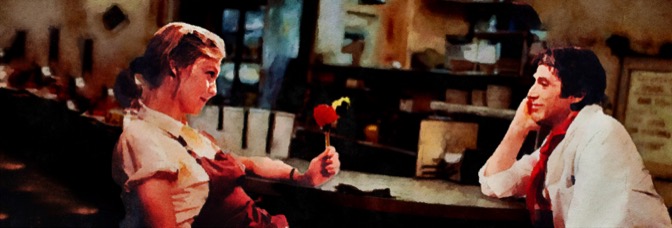
Besides the sex scene, set to Rickie Lee Jones singing, “It Must Be Love” (which means Al Pacino sings it later as he gleefully reminisces), Frankie and Johnny avoids revealing too much about the private tenderness between Pacino and romantic interest Michelle Pfeiffer. At one point, he says something to her as their first date…
-

I think this issue of Birdland is the best? I mean, I haven't really worked out what constitutes "best" for a porn comic, but Gilbert Hernandez has got a lot of variety in the art here. Like, combinations-wise. Literal orbiting orgy with issue's entire cast. Though not the series's cast. One of the characters from…
-

Oh, good grief. Either I missed it, or creator Gilbert Hernandez didn’t make it clear enough—the guy in love with Fritz is her brother-in-law. It’s important to this issue because it turns out the brother-in-law, Simon, is carrying on with Fritz’s sister, Petra, who’s in love with Mark. Mark being Fritz’s husband and Simon’s brother.…
-

I watched most of The Linguini Incident’s 108-minute runtime waiting to go read the IMDb trivia page and discover what wealthy New Yorker bankrolled a movie for their kid to star in with Hollywood actors. Except there’s no such item on the trivia page, and it doesn’t appear to be the backstory to the film’s…
-

So last issue was a surprise as far as creator Marc Hansen’s plotting for Doctor Gorpon goes and this issue is no different. The issue opens having to resolve three cliffhangers—all of the monsters Gorpon has captured over the years has gelled into sentient ooze bent on destroying him, his former assistant is at the…
-

I was expecting Doctor Gorpon #2 to be gross and funny—and it is both gross and funny—but not have much of a story. Instead, creator Marc Hansen has a bunch of it. In fact, the story even overshadows the gross and some of the funny. Everyone who survived the first issue is back. Gorpon’s struggling…
-

Doctor Gorpon is a nice bit of gross-out gore. Creator Marc Hansen’s cartooning has these thick inks, which perfectly complement the tentacles and intestines the title character is pulling out of monsters throughout the issue. Doctor Gorpon is a monster hunter, one who charges for his services whether they’re requested or not (his first target…
-

The last time I read Foolkiller, almost fifteen years ago, I really liked it. I wish I knew what I’d liked about it because it’s really not good. Even back then I know I thought the art—Joe Brozowski on pencils, Tony DeZuniga then Vince Giarrano on the inks—was bad. And the art’s bad. It appears…
-
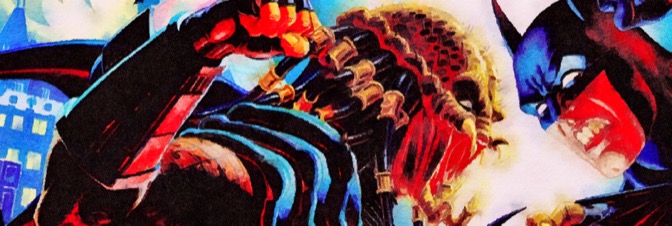
Batman Versus Predator, in case the title doesn’t give it away, is bad. It’s real bad. It could be worse, sure, but it’s real bad. It doesn’t open terribly—sure, the Kubert Brothers art is pretty bland from go, but the subject matter is at least sort of interesting (compared to where it goes later). And…
-

Either Beto is going to explain all the conspiracies apparently running through Poison River or he’s not. This installment resolves almost every outstanding story thread. It also doesn’t have anything to do with that Pedro cartoon character. He was big in the last installment. Nothing here. Ditto various innuendos. Instead, Luba’s pregnant. And refusing to…
-

This issue is kind of strange because both Jaime and Beto are in the middle of stories. Parts Three, Five, and Seven. There’s nothing stand alone at all about it, except maybe the sketchbook pages at the end, but even those sketches refer to the stories in progress. Jaime’s up first with Wig Wam Bam…
-

She Don’t Fade opens with Zoie Strauss sitting down in front of the camera and directly addresses the viewer. She talks about how we’re going to see a video from the director, Dunye, and then Fade cuts to a shot of Dunye cleaning up a sidewalk vending table. The title card gradually comes up. Then…
-

Delicatessen is often adorable. There’s a romance between Dominique Pinon and Marie-Laure Dougnac; they’re both adorable, so Delicatessen is often adorable. They’re star-crossed, though Pinon doesn’t know it (Dougnac does), living in a post-apocalyptic future where people eat people (though there are some vegetarians, but they’re considered terrorists). I suppose they’d actually be vegan, give…
-

Puppet Master III: Toulon’s Revenge is Puppet Master Origins. Set in WWII Berlin, Guy Rolfe is a concerned old man. He sees his neighbors in fear of the Nazis so he got some string and he got some wood, he did some carving and he was good. Anti-Nazi civilians–mostly kids–came running so they could hear…
-
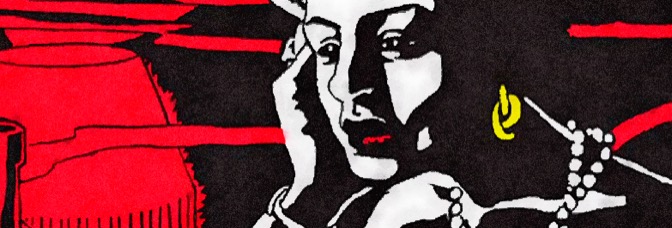
Billie Holiday begins with a biographical essay by Francis Marmande. It’s from the 2000 Casterman edition. The original trademark is 1991, so Billie Holiday has had some editions, some revisions. At least in the packaging. Because Marmande’s essay, glancing through it, appears to give the reader a thoughtful, understanding quick biography of Billie Holliday. The…
-

Doin’ Time in Times Square is forty minutes of footage Ahearn shot out of his Times Square apartment building’s window. Shot over three years, Ahearn cuts the street scenes with home movie footage. Life inside the apartment. Ahearn’s adorable family growing, holidays, parties, sitcoms. Meanwhile, outside is urban blight. Except it can’t all be urban…
-

Excluding prologue and epilogue, Oscar has a present action of roughly four hours. The movie runs just shy of two hours. A lot happens with a lot of characters. And, while the film’s based on a play–which explains the limited setting–and even though it’s not like director Landis does anything spectacular except keep the trains…
-

JFK is a protracted experience. It runs over three hours, it has no real narrative structure–the film opens with the Kennedy assassination and an introduction to the principal characters (and some of the possible conspirators, always played quite well by a guest star), then jumps ahead three years where it starts chronicling lead Kevin Costner’s…
-

Director James Cameron opens Terminator 2: Judgment Day with a couple things the audience has to think about when watching the film and isn’t going to see or hear again for a while, so they need to have it in mind to recall it later. Because Terminator 2 is an amazing kind of sequel to…
-
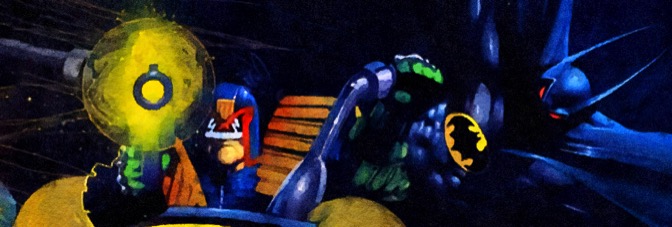
Batman. Judge Dredd. They ought to be an interesting team-up, right? Judge Dredd is the law, Batman isn’t. There’s a lot of gristle for competing philosophies, if one wanted to do a story with a lot of gristle. The Batman/Judge Dredd Files consists of three one-shots and a two-parter. It took DC eight years to…
-

Without its cast, Trancers II couldn’t possibly succeed. It’s an unfortunately limited success as is, but without everyone’s enthusiasm–regardless whether they have a good role or not–the film just couldn’t work. There’s a whole bunch of charm to Trancers II, but only the cast is actually able to deliver on any of its potential. Jackson…
-

Highlander II: The Quickening has had a reputation as a sequel disaster since its release. Outside of “Starlog” write-ups, did anyone ever pretend to be excited about this film? But since its initial release (and multiple home video re-releases with different editing), The Quickening has actually gotten to be a wonderful time capsule of its…
-

Not much goes right in Godzilla vs. King Ghidorah. Director Ohmori has a strange way of being boastful about really lame ideas and even worse technical executions. He spends a lot of time–and the film’s not short, it runs an hour and forty-three–trying to show off the film’s big ideas. It’s a bunch of time…
-

I didn’t hate watching Out of Justice. I didn’t even dislike watching it some of the time. It’s never good, but it’s really dumb and director Flynn knows how to direct a dumb action movie. It feels like it could be a cheap seventies exploitation film–cop hunting gangster on killing spree. Only it’s not exactly…
-

For the first third of Freddy’s Dead, I blamed Lisa Zane’s bad performance on Talalay’s truly awful direction and Michael De Luca’s lame, if enthusiastic, screenplay. During the middle third, when the film flips between exposition and poorly done dream sequences, I started to change my mind. Not in the positive; Zane never connects with…
-

From the second scene of the Star Trek VI: The Undiscovered Country, it's clear director Meyer is going to be somewhat merciless in how he presents the film. It's not just a story about a sea change in the franchise's mythology or about the familiar cast members retiring, it's also about it being the final…
-

It’s kind of amazing what Fractals doesn’t have going for it. At best, it has really interesting location shooting around Scranton, Pennsylvania. Tomasz Magierski doesn’t seem to have the best film stock to deal with, but he shoots the daytime exteriors well. Even if the film doesn’t have any personality, it seems–on these rare occasions–like…
-

Abby’s story comes to its predictable cliffhanger. Wheeler foreshadowed it way too early and then spends the rest of the issue building it into a cliffhanger for the whole issue. He never brings Abby and Tefé back to the others, so now Alec’s got to go on a rescue mission. There’s also a reasonably good…
-

From the opening titles, it’s clear The Hard Way is going to have a lot of technical personality. The opening is set to the sounds of a street festival, the New York streets wet with rain and the neon lights vibrant. Director Badham’s composition is excellent, Frank Morriss and Tony Lombardo’s editing is tight and…
 The Stop Button