Category: 1990
-
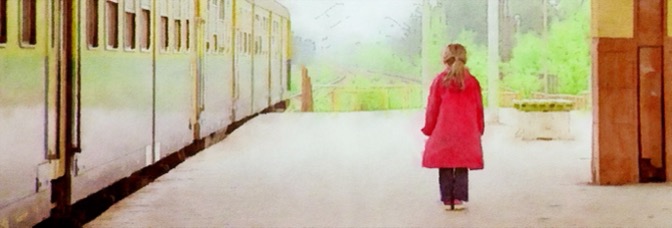
Seven is definitely one of the stronger “Dekalog” films, but Kieslowski can’t figure out what his best angle is into the story. The story is the thing of melodrama and soap opera–Maja Barelkowska’s character had a secret baby (fathered by her young teacher, Boguslaw Linda); her mother (Anna Polony) raised her granddaughter as her daughter.…
-

Six is a mess and it shouldn’t be, because at the center of it director Kieslowski has this phenomenal performance from Grazyna Szapolowska. He opens with her (doing some hippy thing where she “blesses” her food), then moves the story to her stalker, played by Olaf Lubaszenko. Now, what eventually happens is Janet Leigh comes…
-
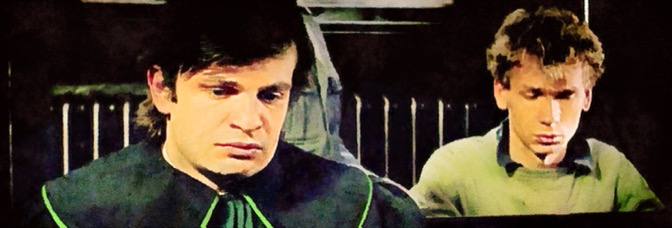
One has to admire Kieslowski’s dedication to his goal. Sure, Five–which is the “Thou shall not kill” episode of “Dekalog”–is a terrible rumination on the death penalty, but Kieslowski is all in. For his flashback, he does a whole sepia tone filter thing. It’s not good in terms of how it shapes the film, but…
-

With Four, Kieslowski engages with the television format of “Dekalog” more than he has done before. No pun intended. Four has a young woman discovering her father might not be her father, a fact he isn’t aware of either. Kieslowski and co-writer Piesiewicz don’t go so much for thought-provoking as discussion-provoking. Each moment in the…
-

How much one likes Three might be related to how much manipulation one is willing to put up with from a filmmaker. Kieslowski is masterful with manipulation this episode, so much so he doesn’t even pause when visibly guiding the viewer through. He isn’t ashamed, he isn’t proud, it’s just how he does things. It’s…
-

This episode of “Dekalog” is a quiet, thoughtful story about a doctor and the wife of one of his patients. They’re neighbors, which puts them in an uncomfortable proximity as the wife has a secret from her husband and forces the doctor into her confidence. The scenes between these characters–the doctor played by Aleksander Bardini,…
-

Everything director Moyle does in Pump Up the Volume builds the rest of the film. It’s not exactly he’s building good will, he’s shaping the possibilities of the film. It makes for a film where you can have a car chase, a comic relief moment, an inspirational message and a quiet character moment all in…
-

A lot of Miller’s Crossing is left unsaid. Between the hard boiled dialogue disguising character motivations and the lengthy shots of Gabriel Byrne silently reflecting, the Coen Brothers invite examination and rumination. They invite it a little too much. The film’s a perfect object, whether it’s how the opening titles figure into revealing conversation and…
-

Director Renny Harlin often takes an interesting approach to conversations in Die Hard 2. He’ll have a character look off screen and interact with what they see, without ever establishing what they’re seeing. Oftentimes it happens with someone interacting with star Bruce Willis–Harlin only gives Willis this treatment once; it both focuses attention on Willis,…
-

It’s a busy day for Gabe and Jennifer in this Special issue. What makes it special–besides the three interconnected stories, the reprint of Barr’s ashcan for Maze Agency and the extra pages–is the art. Each story has incredibly different artwork. The first has Joe Staton (inked by Rick Magyar). Shockingly, it works out well. His…
-
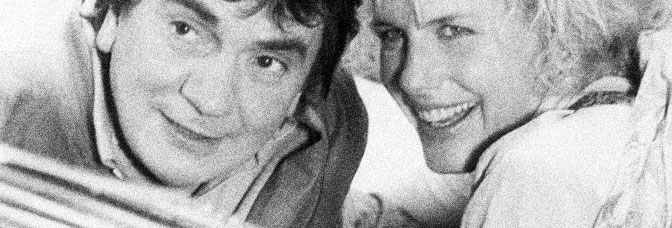
Crazy People is distressingly tepid. It has a number of fine performances–Dudley Moore’s sturdy and likable in the lead, Daryl Hannah’s outstanding as his love interest and the supporting cast’s so good I’m going to wait a while to talk about them to go out on an up note. But the film itself? Very tepid.…
-

Okay, the shaman does have a name but only Alec uses it. The whole character’s a mistake, so why dwell. This issue has social commentary, a magic ceremony to encourage Tefé to regrow her body, Swamp Thing fighting monsters and a few other things. There’s even a new supporting cast member who Wheeler doesn’t take…
-

With all the monologues–there aren’t any conversations, just one character talking while another listens–in The Fourth War, it feels like an adaptation of a play. It’s not. It’s based on a novel, which must be a brief read since War is plodding at ninety minutes. Given Frankenheimer got his start in television–adapting plays–one might think…
-

Roller Coaster Rabbit is exceptionally overproduced. The animation is technically outstanding, just without any gags–Roger Rabbit makes a terrible cartoon protagonist because he’s an unlikable moron–but at the end it takes an odd turn towards the CG. There are some fire effects, there are a lot of spark effects, it’s as though Minkoff gave his…
-
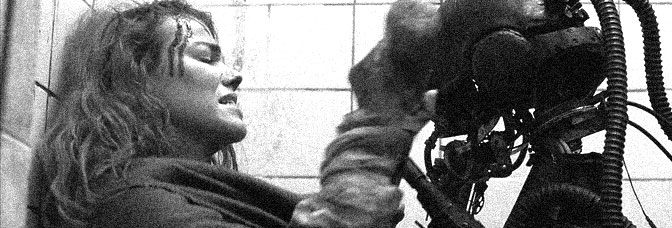
Hardware looks a lot like an A-ha music video… but not in a bad way. Richard Stanley is a decent enough director. The plot’s pretty simple, beneath all the sci-fi decorations. It’s the end of a slasher movie, when the hero or heroine has to fight the villain all by him or herself. There’s no…
-

Besides an absurd reliance on flip and pan transitions, director Armitage does an often excellent job directing Miami Blues. His script–adapting a novel, so who knows how much is his fault–is a different story. Blues is the story of a charismatic psychopath (Alec Baldwin) fresh from prison who wrecks havoc in the Miami area. The…
-
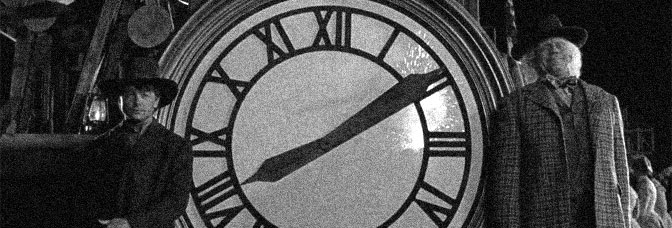
Apparently, all Robert Zemeckis and Bob Gale needed for a Back to the Future sequel was a story. Part III, unlike the second installment, has a lot going on and it’s not all tied into the original’s storyline. Instead, Michael J. Fox finds himself in the Old West, trying to save Christopher Lloyd. Zemeckis and…
-

Apparently, Ivan Reitman didn’t think anyone would be familiar with Arnold Schwarzenegger and, therefore, Schwarzenegger would need a big introduction as a tough guy in a movie called Kindergarten Cop. So the first fifteen minutes are a terrible cop movie, wasting cinematographer Michael Chapman on something less realistic than a syndicated eighties cop show. Once…
-

Watching Moon 44, one can imagine Roland Emmerich sitting in a Bonn theater during Blade Runner, loudly opining he can do the same thing. Only with an incompetent German crew. There’s nothing good about Moon 44, as it doesn’t turn out to be a romance between nebbish Dean Devlin and brooding Michael Paré. If it…
-

Narrow Margin plays like a TV pilot for Gene Hackman as a crusading (but big mouthed) district attorney. There’s not a lot of depth to the characters and Hyams is never able, even with some great Panavision composition throughout, to make it feel cinematic. Maybe it’s the lack of establishing shots. Most of the film…
-

Is John Goodman doing an impression of Bill Murray from Caddyshack? Arachnophobia is so all over the place, it wouldn’t be a surprise to find out Frank Marshall directed him along those lines. The movie’s a mix between The Birds and a little Gremlins. Not to mention some proto-Jurassic Park. Unfortunately, Marshall doesn’t bring these…
-

Teenage Mutant Ninja Turtles uses Central Park as an establishing shot for an apartment at 11th and Bleecker. I’ll let you Google Map that one. The film’s worth talking about for four reasons—the amazing animatronics, the editing, the anti-Japanese sentiment and Judith Hoag. It’s also amusing to watch for Sam Rockwell sightings, but that one…
-
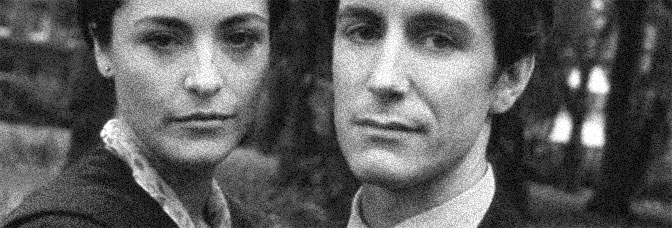
Until the third act, when it painfully changes course, Paper Mask is excellent. Hospital employee—it’s never clear his exact position—Paul McGann assumes the identity of his ex-girlfriend’s dead doctor boyfriend and heads off to practice medicine. The events don’t unfold as simply as that sentence suggests, but the process McGann goes through is what makes…
-

Memphis Belle runs just around an hour and fifty minutes. It takes the film about a half hour before it’s even clear the titular plane is going to have a mission in the narrative. It opens with a masterful introduction to the characters and the situation (a bomber has one more mission before the crew…
-

Captain America actually has a few interesting ideas. First is how Carla Cassola’s scientist (she creates the villain, Scott Paulin’s Red Skull, and Captain America—played by Matt Salinger) almost serves as a surrogate mother to the two boys. Well, they’re supposed to be boys when they change. Cassola probably gives the film’s best performance; she…
-

Total Recall opens with some of the best music Jerry Goldsmith has ever scored. It then moves on to a sci-fi sequence, set on Mars, and Verhoeven soon gets in his first animatronic head. There are a lot of animatronic heads, which get exposed to atmosphere and explode or get turned into grenades and so…
-

There’s something profoundly wrong with Loose Cannons. Actually, it’s hard to find anything about the film right. I’ll just start rattling off. Stan Cole’s editing is terrible. I love how he cuts to medium shots and the actors’ expressions have completely changed. I guess he gets the basic positioning right. Some of the fault for…
-

I could, but will not, get into the idea Presumed Innocent is what studios were making as popular summer entertainment in the nineties. It’s simply to depressing to start that discussion. Instead, I’ll start with the film’s strengths. Even though the second half is very strong–how did Raul Julia not get nominated for this one…
-

How can Cohen do such amazing New York location shooting, but not be able to direct whatsoever? His composition is a disaster, but so is every dolly and pan. Luckily, his script is decent and his cast is phenomenal. So, even with the direction, The Ambulance is outstanding. While Cohen’s dialogue is occasionally a tad…
-
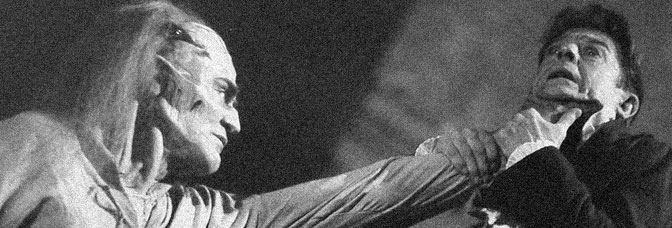
After destroying the future trying to save the environment, scientist John Hurt goes into the past where he finds the events of Frankenstein (the novel) unfolding around him, with Mary Shelley (Bridget Fonda) witnessing Dr. Frankenstein’s descent into madness. Raul Julia’s an amazing Frankenstein, Nick Brimble’s an amazing monster. Hurt’s a tad passive but very…
 The Stop Button