Category: 1990
-

As a pilot movie, The Flash is a success. It establishes its regular cast—John Wesley Shipp, Amanda Pays, Alex Désert, Paula Marshall (who wasn’t back, but sure seemed like she would be)—and doing an admirable, post-Burton Batman live-action superhero. Danny Elfman even contributes the theme, while composer Shirley Walker keeps the rest in Elfmanesque line.…
-

I’m trying to imagine how Leather Underwear would’ve read when it dropped in 1990, one of the first comics from then early twenty-something creator Roger Langridge. The comic is entirely a riff on religion, specifically Christian, more specifically Catholic, starting with a strip about the Catholic abortion service run by one Sister Knuckles. She’ll be…
-
Joe Versus the Volcano’s final punchline comes during the end credits when it turns out Industrial Light and Magic did the special effects. Volcano’s got terrible special effects, especially for an Amblin production, but for ILM to have done them? Yikes. Now, the film’s an absurdist riff on sixties comedies, so the obvious artifice could…
-

So, I wasn’t actually aware Birdland is a porno comic. I also wasn’t aware it was from during Love and Rockets: Volume One’s run and not immediately following it, meaning Fritz Herrera from Birdland goes on to become Luba’s half-sister in Love and Rockets. I was also unaware strippers Inez and Bang Bang are from the…
-
I Come in Peace is a Dolph Lundgren versus alien movie. It’s from the period before Lundgren went to acting classes but had gotten rid of his Swedish accent, which ends up working against the picture. The terrible one-liners might have some personality if Lundgren had some accented inflection. Or if he just lost the…
-

Avalon is not a success. It very frustratingly waits until the very end of the picture to clearly not succeed. After trying real hard, there’s just nothing to it. Writer and director Levinson makes a whole bunch of big swings in how he directs the narrative, which is an attempt at doing lyrical structure–just one based…
-

I spent much of Flatliners’s first half trying to figure out if there was anything technically redeeming about Jan de Bont’s photography. While it’s easy to qualify certain failings—with Schumacher’s bad directing, with Eugenio Zanetti’s obnoxiously ostentatious production design, could de Bont actually shoot it well? No, he couldn’t. But it also doesn’t somehow excuse…
-
The Match Factory Girl is a hyper-focused character study. It opens with the visually fascinating process of a match factory before introducing lead Kati Outinen. Technically protagonist, obviously more subject. She quite noticeably doesn’t talk for the first twenty minutes or so, which says more about her situation than her character—no one’s interested in what…
-

Sean Connery, who’s so important to the workings of Hunt for Red October he could easily be “and special guest star” credit instead of top-billed, has his last scene on the bridge of his ship, giving a very Captain Kirk read of a quote. It’s something about sailing and it’s got to break the cultural…
-

The last time I read Foolkiller, almost fifteen years ago, I really liked it. I wish I knew what I’d liked about it because it’s really not good. Even back then I know I thought the art—Joe Brozowski on pencils, Tony DeZuniga then Vince Giarrano on the inks—was bad. And the art’s bad. It appears…
-

A Shock to the System is almost a success. It’s real close. It has all the right pieces, it just doesn’t have enough time at the end to put them away in their new arrangement. Everything’s in disarray because the film changes into a thriller—with a different protagonist—for a while in the third act. After…
-

Here’s an all-encompassing theory to explain The Godfather Part III, based only on on-screen evidence (i.e. ignoring production woes, casting woes, rewrites, budget and schedule comprises, and whatever else). Francis Ford Coppola and Mario Puzo hate everyone in the film and everyone who will ever watch the film—maybe Coppola didn’t cast daughter Sofia Coppola in…
-

In all… Love and Rockets #34 is the least successful issue of the comic book so far. It’s still a good comic. With great art. But as far as what Los Bros do and get done? It’s distracted and erratic. Or just downright problematic. The first story, Beto’s Poison River installment, jumps all over the…
-

Both Jaime and Beto get a lot done this issue, but Jaime’s is a little more subtle. In his Locas, he addresses something more directly than usual– Maggie and Hopey as a couple–as well as introducing racism (against Hispanic Maggie) for the first time? For what seems to be the first time. Not only her…
-

The issue opens with Beto and Poison River. It’s set in 1970, during Luba and Peter’s honeymoon. In four pages, Beto develops Luba from a scared teenager to a domineering trophy bride (sort of trophy bride). She learns to have fun, she learns to demand. At the same time, Peter’s getting into club management and…
-
Janine is shot–and edited–on video. So when Dunye cuts to an insert shot for mood, there’s a jerky quality. She does a lot of freeze frames and the format just means it can’t gracefully return to motion. Seeing the cuts as Dunye relates the story–of Janine–causes attention to refocus. If your attention was waning for…
-

Ident is an unpleasant five minutes. Intentionally unpleasant. Even the dog is unpleasant, but mostly because the protagonist finds the dog unpleasant. The protagonist is unpleasant himself; the dog seems mostly innocent. The short is claymation and takes place in a labyrinthine city. It’s not clear it’s a city for a while, it just seems…
-

The last twenty or so minutes of Darkman are when director Raimi finally lets loose. He’s been building to it, hinting at how wacky the movie’s going to get, but it doesn’t all come together until the end. And the end is when Darkman has the most standard action sequences. There are big set pieces.…
-

Puppet Master II opens with a mostly successful animate puppets resurrect their long-dead master in scary graveyard sequence. It’s a mix of stop motion and live effects; it just has a nice tone about it. Then the endless opening titles start up and the film loses track of that tone. The Richard Band music doesn’t…
-

Most of Goodfellas is told in summary. After an opening scene introducing leads Robert De Niro, Ray Liotta, and Joe Pesci, the action flashes back to Liotta’s childhood. Liotta narrates. Christopher Serrone plays the younger version. Liotta’s narration guides Serrone around the neighborhood, letting the film introduce all the mobsters Serrone is enamoured with. Scorsese…
-
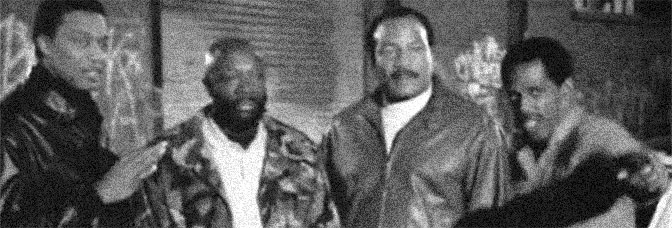
Hammer, Slammer, & Slade is a television pilot spin-off of a movie (I’m Gonna Git You Sucka). It has the same writer as the movie–Keenan Ivory Wayans–and much of the movie’s cast. The three “leads” all return from the movie–Bernie Casey is Slade, Jim Brown is Slammer, and Isaac Hayes is Hammer. Slade, Slammer, &…
-
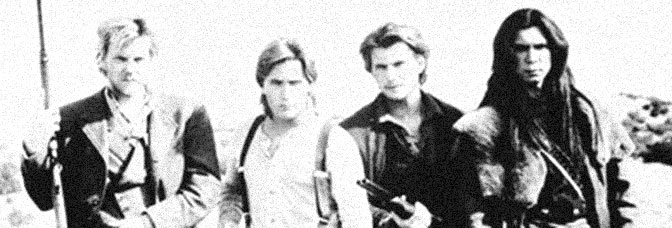
In many ways, Young Guns II is an improvement over the first. Geoff Murphy knows how to direct a Western, at least until he has to do a showdown scene and then he’s in trouble, but if it’s general Western action, he can do it. And he’s got the same cinematographer as the first movie,…
-
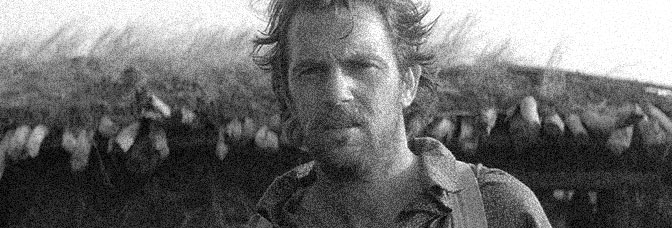
From the start, director Costner embrues Dances with Wolves with melancholic tragedy. Even as Costner’s protagonist–a Union soldier reassigned to the frontier–travels west, seeing startling natural beauty, which Costner and cinematographer Dean Semler visualize carefully, enthusiastically, perfectly, there’s dread. Most of it comes from John Barry’s lush and haunting score, but Costner does make sure…
-

The beginning of Marked for Death is nearly all right. It’s a prologue, with lead Steven Seagal–as a DEA agent–in Mexico, doing an undercover drug buy. Things go wrong. Until things go wrong, it’s not bad. Director Little has a lot of motion (which is fine when people are moving around, much less when he’s…
-

Director Wong crafts Days of Being Wild as a series of vignettes, only with the film’s principal character never the protagonist of any of these vignettes. Wong and editors Kai Kit-wai and Patrick Tam go for lyrical transitions (or none at all); combined with the emptiness of Wild’s Hong Kong (busy places at times they…
-

The best thing about Hard to Kill is how hard supporting player Frederick Coffin tries. He doesn’t have much of a part, but it’s got some soap opera dramatics to it and Coffin goes for it. There’s nothing to the script and there’s no support from director Malmuth, so Coffin flops. Quite literally skidding on…
-

The Exorcist III is a weird movie. It’s a somewhat surreal detective story–one seeped in Exorcist continuity, only without the original cast (mostly) returning. That disconnect from the original, along with its incredibly uneven tone (the opening titles cut between a big action sequence with helicopters and some scary church imagery), actually helps the film.…
-

Part of me desperately wants Ten to be intentionally over the top. The episode opens with a song about breaking the Ten Commandments. “Dekalog.” And then the rest of it is just more of wondering if director Kieslowski and co-writer Krzysztof Piesiewicz are serious. The episode is about two brothers–straight-laced, boring Jerzy Stuhr and–literally–a punk…
-

With Nine, writers Krzysztof Piesiewicz and Krzysztof Kieslowski have finally figured out how to parody themselves and the rest of “Dekalog.” This entry, overwrought from the opening titles, is awful, but Piesiewicz and Kieslowski never quite commit to the more melodramatic, soap opera plotting they could. And Nine suffers for it. Piotr Machalica is a…
-

Eight is, unquestionably, great. At a certain point, it got good. And then Kieslowski didn’t screw up it being good. It started with problems, of course. The episode opens with Maria Koscialkowska as a lonely old college professor. Until Teresa Marczewska, a younger woman, shows up out of the blue to observe a class, it’s…
 The Stop Button