Category: 1983
-
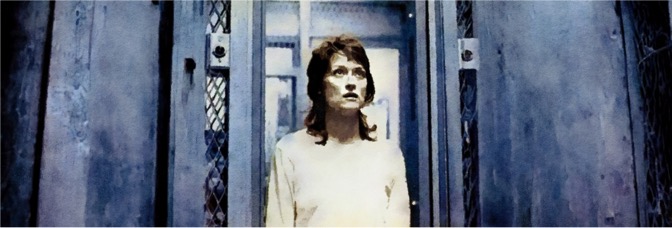
I wholeheartedly recommend Silkwood. It’s beautifully made, with a singular performance from Meryl Streep and great performances from its astounding ensemble. I need to remember to list all the supporting actors in the film. But I caution against reading up on the actual history. The film’s very accurate; the problem isn’t with veracity; it’s with…
-

Approximately three-quarters of the way through Mr. Mom (approximately because the movie is a series of sitcom set pieces, not necessarily in sound narrative order), I realized it wasn’t just about sitcom set pieces; the whole thing is a situation comedy. With very low stakes. When the third act has to gin up the big…
-

At least a third of Sudden Impact is director, producer, and star Eastwood doing a Hitchcock homage starring Sondra Locke. Locke doesn’t speak during the Hitchcock homage sequences; she just walks silently, staring at various things, remembering her horrific origin story, then shooting some rapist in the balls and then the head. Now, Sudden Impact…
-

As Staying Alive celebrates its fortieth birthday, I’m sure there’s information on the web to answer some of my most burning questions. For instance, did they shoot John Travolta and Finola Hughes singing numbers for the in-movie Broadway show (Satan’s Alley), or was it always a rock ballet? And what about the Frank Stallone songs—did…
-

Scarface is a film with a lot of problems. Most consequentially, there’s no character development for Al Pacino; any time there’s ostensibly character development, the film cuts ahead a month or three, or there’s a montage sequence. But the film is incredibly hands-off with Pacino’s character and arc. It leaves Pacino to vamp throughout to…
-

All WarGames really needs to be better is a good script rewrite, a better director (apparently there are some leftover shots from when Martin Brest tried directing it but got fired), and more John Wood. The Arthur B. Rubinstein music is a little iffy too but has its charms. And WarGames has its charms. Matthew…
-

The Man with Two Brains does not age well. It’s a case study in not aging well, even more so because when the three writers—director Reiner, star Steve Martin, and George Gipe—can’t figure out how to do an ending so they just do an extended fat joke… well, it’s hard to continuing giving the film…
-

What Have We Learned, Charlie Brown? is exceedingly intense. It doesn’t start intense, though it does start a little different. There’s this gradual shot–with Judy Munsen’s lovely score accompanying–moving through all the toys in Charlie Brown’s house before it gets to his bookshelf. The books with visible spines are heady classic novels; but Charlie Brown…
-

Despite being an anthology of eight different stories, It’s an Adventure, Charlie Brown does not have many adventures. Well, not in the adventurous sense. They’re still good, they’re just not… adventures. The special runs forty-seven minutes, with the eight stories having differing lengths. The first three stories are the most substantial. There are two Charlie…
-

Is This Goodbye, Charlie Brown? opens with this gag of Linus and Snoopy fighting over Linus’s blanket. It doesn’t relate to the special’s story and has a completely different tone–and an almost cruel Linus (Jeremy Schoenberg)–but it does echo later on a little. Goodbye is about Linus and Lucy (Angela Lee Sloan) moving away; Linus…
-

Love and Rockets #4 opens with Jaime and 100 Rooms, a Locas story. The first page is a recap, sort of, of the previous Mechanics and Locas stories. It’s an introduction from Isabel Ortiz Ruebens, who appears to be a nun. She’s not Izzy (as in Maggie and Hopey’s friend) but maybe she’s the author…
-

Love and Rockets #3 opens with a Jaime story. It’s just called Love and Rockets. A car stopped on the train tracks, its driver reminiscing about a lost love. Then the lost love thing takes a comic book-related twist. And then Jaime goes crazy with the intensity of an oncoming train and the driver’s endurance.…
-

Love and Rockets #2 has Mechanics. Mechanics is a forty-ish page story by Jaime. Maggie is in foreign Zhato on a job with Rand Race, Duke, and Gak. Gak might not even have any lines in the whole story. Most of the story–at least at the start–is text. Maggie’s letters back home to Hopey. While…
-
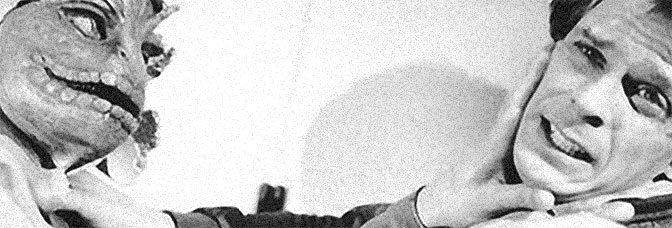
About half of V is quite good. Unfortunately, V was a two-night mini-series and the first half is good part. The second half, not so much. The first half has human-like alien visitors arriving on Earth, in hopes of making a chemical compound to take back home to save their planet. Turns out they’re lying…
-

Ragnarok is a “video [comic] strip.” There’s no animation, though occasionally there are electric crackles, just panning, scanning, and zooming across illustrations while three voice actors perform multiple roles. There are sound effects–minimal ones, which sometimes works to great effect, sometimes doesn’t. There’s no credited director or editor. The illustrators get credit, as does writer…
-

The Wind in the Willows has an undeniable charm about it. Directors Hall and Taylor send the first act of the film focusing on lovely details. Wind is stop motion, with a lot of intricate “set” decoration. And they do occasionally utilize their control over performers and location to get some excellent shots. Unfortunately, none…
-

Terry Jones’s The Meaning of Life is a seven-part rumination on The Meaning of Life. At least the title cards for each part suggest its a seven-part rumination on the Meaning of Life. Not to spoil anything, but if the film does get around to addressing said meaning… well, it acknowledges you don’t need to…
-

In his foreword, writer and publisher Bruce Jones talks about his goals for Somerset Holmes. It’s a lot of text and a lot of ego, but I think the point is he wanted to go to Hollywood and thanks to Brent Anderson’s amazing artwork, he was able to get there on Somerset Holmes. Though I’m…
-

Nothing connects with Something Wicked This Way Comes, though Jonathan Pryce’s performance is probably the closest thing to a complete success. Jason Robards is often quite good, but he’s both protagonist and subject of the film, which neither director Clayton nor writer Ray Bradbury (adapting his own novel) really seem to know how to transition…
-

Sleepaway Camp has two things going for it on a consistent basis–Benjamin Davis’s cinematography (it’s not flashy, but it’s exceptionally competent) and the special effects. There aren’t a lot of gore shots in Camp, but director Hiltzik makes sure they count. He can’t do the suspense sequences, which is a bit of a problem, but…
-
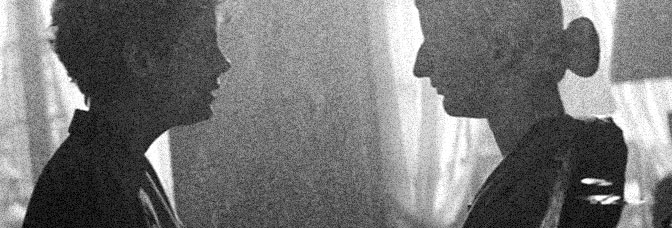
A lot of The Hunger is so exquisitely directed by Scott, it almost seems like there’s nothing the narrative could do to mess it up. His Panavision composition is precise, fixated on the small detail, whether it’s David Bowie’s stubble or Catherine Deneuve’s sunglasses. These details become larger than life, filling the frame, but Scott…
-

Nothing really works out in Return of the Jedi. Even the opening, which is about as good as it can be with director Marquand’s inability to direct the actors and do the special effects, doesn’t exactly work out. Jedi’s problems keep bumping into each other, knocking over the good stuff. What good stuff? Jabba the…
-

Even though it’s terrible, Flashdance at least sticks with protagonist Jennifer Beals for most of the film. She’s a steel worker who dances at a club and starts dating her boss (at the steel mill, not the club, which is actually a bar). For a while, director Lyne and screenwriters Thomas Hedley Jr. and Joe…
-

Jaws 3-D is one part advertisement for Sea World, one part disaster movie, one part monster movie, then figure the rest is character stuff. It does really well as the Sea World ad, not so well as a disaster movie, a little better as a monster movie… and shockingly well on the character stuff. Alves’s…
-

Lovesick is an unassuming comedy. Director Brickman will occasionally bring in frantic, sitcom-like plotting to jazz things up momentarily, but otherwise the film’s exceedingly calm and measured. It only runs ninety-some minutes; it’s gradual, without much conflict at all–in fact, when there’s conflict introduced, Dudley Moore’s protagonist will actually relieve pressure on the situation. It’s…
-

For almost fifty percent of its run time, every shot one of Michael Mann and Alex Thomson’s shots in The Keep is extraordinary. Mann’s seems more concerned with precise composition than he does narrative and Thomson’s photography perfectly complements it. So, while the film isn’t much good in its first half, at least it’s wondrous…
-

What a difference a cast makes. Barry Levinson’s pilot for a “Diner” television series reunites some of the film crew–editor Stu Linder does a wonderful job–but the only returning actors are Paul Reiser and Jessica James. Both are good–and Alison La Placa and Mady Kaplan are great as the wives (Levinson’s best writing is for…
-

Upon hearing John Barry’s beautiful opening titles music, I realized it was unlikely High Road to China would live up to its score. It does not. It does, however, at times, come rather close. The film takes place in the twenties, with Bess Armstrong as a flapper who hires WWI veteran Tom Selleck to fly…
-

With The Big Chill, Kasdan tries to be profound, heart-warming and cynical. He doesn’t succeed. For a film so much about introspection, Kasdan is surprisingly unaware at the inherent artifice. The film’s cast of characters are–if they’re male–extraordinary. There’s some lip service to the women’s successes (doctor, lawyer) but the men are rich or famous.…
-

John Carpenter does some amazing work on Christine. He’s got help from his cinematographer, Donald M. Morgan, but the first forty-five or fifty minutes of the film are simply masterful. Carpenter has a wide variety of scenes–high school, ominous, family scenes, conversations–and all of them are magnificent. It’s just too bad Bill Phillips’s script falls…
 The Stop Button