The Stop Button
blogging by Andrew Wickliffe
Category: 1977
-
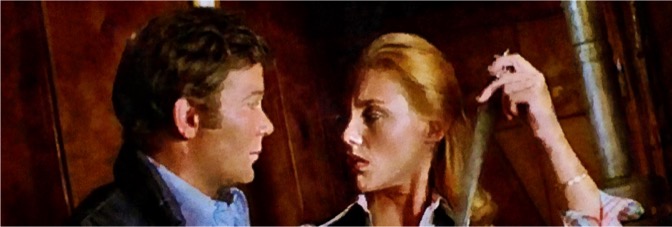
Kingdom of the Spiders opens with some scary music for the title reveal, then an original country song by Dorsey Burnette starts playing over the titles, extolling the virtues of Verde Valley, where Kingdom takes place. It’s a terrible opening titles sequence, followed by the film’s first failed attempt at suspense. Unfortunately, it will not…
-
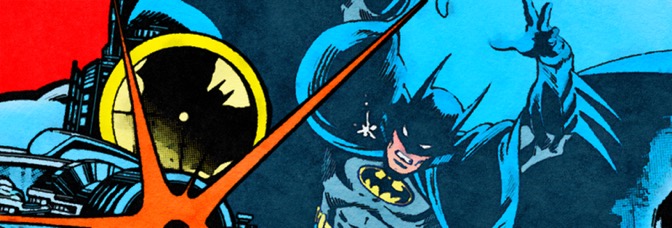
When I was eleven, I first read this comic in the Greatest Batman Stories Ever Told hardcover. Then there was the next part in Greatest Joker. It’d be years before I could read the complete Steve Englehart, Marshall Rogers, and Terry Austin arc. But this issue is where it all started. So as I break…
-

Steve Englehart writes Bruce Wayne as a narcissistic asshole who bullies and psychologically abuses ward Dick Grayson. Grayson, for his part, has drunk the Kool-Aid; at one point, he talks about how mental illness is no excuse, and at another, he waxes on about Batman’s such a great man. It’s such weird, bad writing. Though…
-

I’ve the sneaking suspicion last issue, when the evil nurse commented on Hugo Strange and Batman complementing each other’s physical and mental prowess when they should be fighting, it wasn’t writer Steve Englehart acknowledging the absurdity of the machismo; it was him making fun of the silly woman for not getting it. There’s a scene…
-
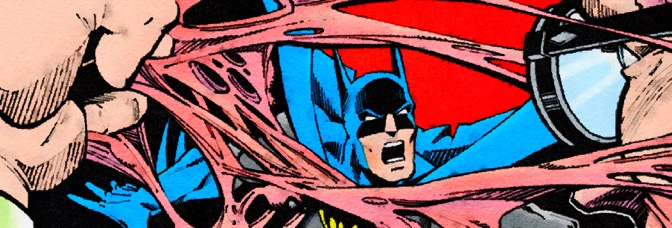
So, I figured out where Steve Englehart and Marshall Rogers’s Detective Comics belongs. As a comic strip in late seventies Playboy. Seriously. Rogers’s art is detailed but plain, intricately designed but not artsy. Englehart’s exposition is childish—“comic book-ish”—and treats Batman as a fascist action figure, but it’s incredibly consistent. Lots! Of! Declarative! Statements! Plus, this…
-

There’s a lot to be said about this issue, but the “highlight” has got to be when writer Steve Englehart describes Batman as the “pensive prince of shadows.” This line comes just before Batman goes to the Batcave and yells, “I’m the goddamn Batman,” to himself as a positive self-reinforcement. I’m only slightly exaggerating; Englehart…
-
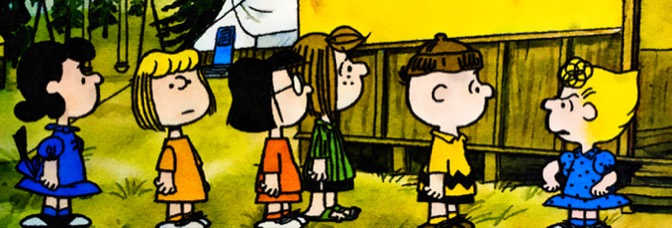
There’s only one adult referenced in Race for Your Life, Charlie Brown. When the bus leaves Charlie Brown (voiced by Duncan Watson) stranded, they’ve established the driver’s silhouette. Not having any adults makes a lot of sense since, somehow, the Peanuts parents all decided to send their kids to a camp on the other side…
-

Why does Steve Englehart’s writing sound like he’s doing a spec script for “Batman: The TV Show” cliffhanger narration? I can’t decide if it’d be better if he’s serious and thinks it’s good writing to treat your readers as infantile or if he’s doing it because he’s being condescending to the material. Either way… lousy…
-
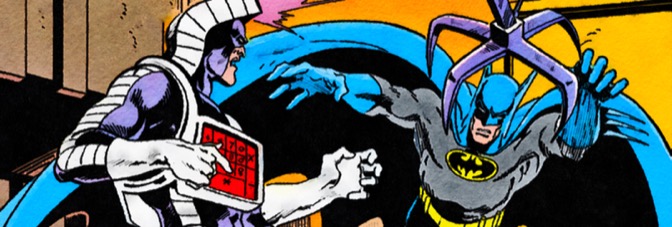
At least the art’s better. I can’t imagine how this issue would read without it. Marshall Rogers is still way too design-focused, with most of the action taking place against blank backgrounds, but when there is scenery, it’s excellent. And Terry Austin’s thin, dark inks are perfect, particularly on the Batman pages. But the writing’s…
-

In my youth, I never liked these “solve-the-mystery-yourself” stories. To the degree, I negatively associated them with writer Bob Rozakis. However, I got over it eventually, instead associating Rozakis with bland, cloying stories, much like the feature he contributes to this issue. The art’s from John Calnan, and the inks are Vince Colletta. I’m unfamiliar…
-

I’m going with DC’s current conventional wisdom on where to start reading Paul Levitz Legion of Super-Heroes (based on their latest collection of those issues), and I’m not surprised to see the first issue in that run written by Gerry Conway. Back to the seventies, where creator runs were short and had to be nimble.…
-
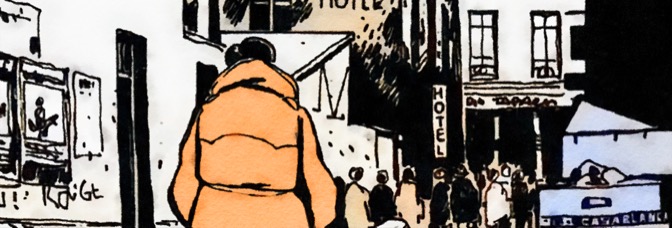
Griffu has all the trappings of hard-boiled detective fiction–a reluctant “hero,” in this case the titular Griffu, whose not a private investigator but a “legal advisor” (read, apparently, debt collector), a femme fatale (or three), and an intricate plot line involving corruption and class—only set in seventies Paris. And, of course, there’s the omnipresent narration.…
-

I was waiting for Bronze Age to get to the Batman Family reprints, assuming since DC moved Batgirl from backups to an anthology—and even a feature or two—the stories must be better. Surely Elliot S. Maggin and Bob Rozakis had to be better at writing her comics than Frank Robbins. Silly me. Most of the…
-
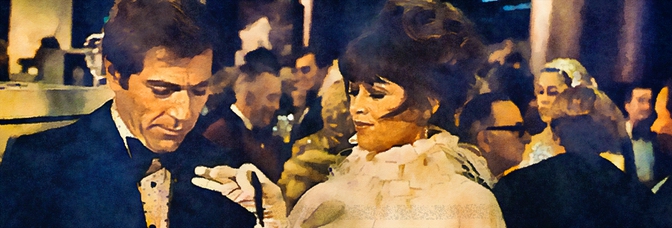
Every once in a while, Jane Fonda will say a line just right and Fun with Dick and Jane will be, well, fun for a moment. Not a long moment. Sometimes it approaches funny, sometimes it’s just fun. But it’s something. Because fun and funny are in short supply in Dick and Jane. Somehow the…
-
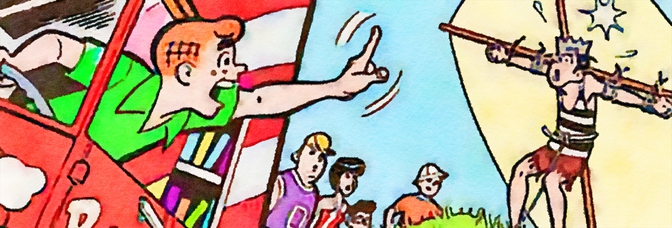
Are Christian comics better or worse since Archie Gets a Job! (from 1977)? The comic promotes a combination of functional illiteracy and profound ignorance, not to mention encouraging teasing of people’s appearances, particularly fat-shaming. Just like Jesus, no doubt. The comic’s all about Archie and Jughead getting summer jobs at school teacher Mr. Weatherbee’s beach-front…
-

It’s Your First Kiss, Charlie Brown is a little weird. Not only because the opening establishing shot has adults (albeit in extreme long shot) but also because Snoopy’s helicoptering around on his ears and Woodstock is his cameraperson. And it’s about the homecoming game, where Charlie Brown is the star kicker. And Snoopy’s both ref…
-
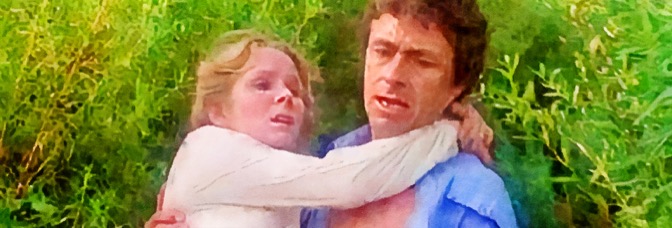
The Return of the Incredible Hulk is the second pilot movie for the subsequent “Incredible Hulk” TV series. It aired three weeks after the first pilot, which featured the origin of the Hulk–scientist Bruce Bixby turns himself into green-skinned musclebound grotesque Lou Ferrigno thanks to gamma rays–and his pursuer, annoying, uninformed tabloid reporter Jack Colvin.…
-

The Goodbye Girl is excessively genial. Usually at the expense of lead Marsha Mason. It’s her movie too. Not hers to lose, because it’s so much her movie–she’s The Goodbye Girl–instead hers to be taken away. And take it away writer Neil Simon does. The film starts being about single mom Mason getting dumped by…
-

The Incredible Hulk opens with a montage of lead Bill Bixby’s martial bliss. It goes on for quite a while, just Bixby and (an uncredited) Lara Parker being a happy married couple. Then tragedy strikes. Like most tragedies in The Incredible Hulk, it involves a car tire blowing out. There are three such instances in…
-

For most of its runtime, Suspiria builds. It increases suspense, it increases terror, it increases discomfort. Director Argento and cinematographer Luciano Tovoli shoot these long shots with slightly fish-eyed backgrounds. Combined with Giuseppe Bassan’s jawdroppingly awesome production design, the film gives the impression of having no depth. No perspective. The actors move in front of…
-

Someone is mind-controlling upstanding citizens and making them commit daredevil bank robberies in broad daylight. While New York’s finest detectives–cigar-chewing Michael Pataki and his nitwit sidekick Robert Hastings–are on the case, they soon get some valuable assistance from Spider-Man! This television movie–a pilot for a series–introduces Nicholas Hammond as the hero. He’s a vaguely annoying,…
-

Oh, no, Ennio Morricone did the music for Exorcist II: The Heretic. I feel kind of bad now because the music is not good and I like Ennio Morricone. I’m sure I’ve liked something cinematographer William A. Fraker photographed too, but his photography in Heretic is atrocious. Because it’s Exorcist II: The Heretic, everything about…
-

Bong’s still a dumb villain, but the rest of the issue is strange enough to get it through. While Bev is off getting married to Bong, Howard has been changed into a human and is escaping Bong’s castle in the company of a duck-girl, one of Bong’s other experiments. The early highpoint of the issue…
-

It’s incredible how much concern director William Friedkin is able to get for his characters in Sorcerer. Now, the film’s really kind of like four or five movies in one–there are four prologues, with very full ones for Bruno Cremer and Roy Scheider, then there’s the story of Cremer, Scheider and Amidou (who also gets…
-

One of the best parts of Bunco–and there’s actually a lot of good stuff in it–is how director Signer composes his shots of “leads” Robert Urich and Tom Selleck. Even though Urich’s top-billed and has a little more to do, Singer makes sure to get both men in each shot. So there’s some occasionally awesome…
-

Good grief it’s a bad one. The only good story is the Dredd one. Wagner packs way too much action into its pages; even though Ian Gibson tries hard, he’s too rushed. But it’s still a solid story. The Invasion story isn’t terrible, but it’s got a frantic pace too. And it’s dumb–the peaceful nuclear…
-

Where does one even start with Planet of Dinosaurs? The only good thing about the film is some of the scenery… and maybe some of the music from Kelly Lammers and John O’Verlin. Most of the music is quite bad, but the film’s “theme” is this electronic piece and it adds both a sense of…
-

The Strange Case of the End of the World as We Know It was a TV special, which might explain for the awkward structure. It has the elements of a strong spoof and some excellent scenes, but the pacing is dreadfully off. It opens with Ron Moody’s Henry Kissinger stand-in being assassinated (no spoilers, it’s…
-

Christopher Plummer makes a strange Sherlock Holmes—he’s almost too much of a movie star to play him. Plummer has a great time, creating a mildly mischievous Holmes who willfully appears eccentric. It’s too bad he’s the only interesting thing about Silver Blaze. I suppose some of Davies’s establishing shots are good, but it’s not him,…
-
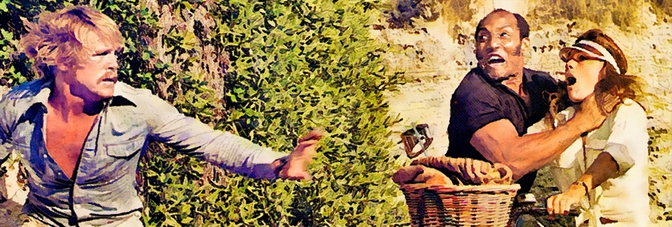
I’m a little surprised Donna Summer did the theme song for The Deep, seeing as how she’s black and, according to The Deep, every black person is a villain of some kind or another. Even with his blond locks, I’ve never thought of Nick Nolte as particularly aryan (maybe because his eyes are so brown),…
 The Stop Button