Category: 1974
-

This issue starts with the Roy Thomas and Dick Giordano adaptation of Bram Stoker’s Dracula, which I read in reprint. I’m not going to check the original novel, but I’m not sure Stoker had Jonathan Harker be a shitty racist about China (complaining about how their trains ran in 1897). Harker writes in his diary…
-
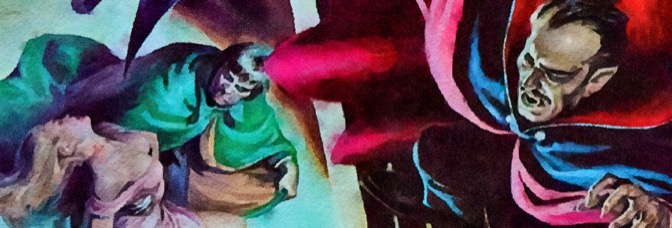
I’m getting to be such a Mike Ploog snob. Seeing him ink his own pencils, then seeing others ink his pencils… the latter always seems to come with qualifications, asterisks, and compromises. Ploog pencils this issue’s first story, written by Marv Wolfman, with Ernie Chan inking him. Chan keeps much of the detail, even much…
-

If Lenny has a single highlight scene, it’s at the end of the second act, when comedian Lenny Bruce (played by Dustin Hoffman) does a set on dope. The film’s got a fractured narrative, simultaneously showing posthumous interview clips with the people in his life—ex-wife Valerie Perrine, mom Jan Miner, and agent Stanley Beck—recounting Bruce’s…
-

Parade somehow loses the plot after intermission. Given the plot is just a night at the circus, usually showcasing director Tati’s pantomiming, it shouldn’t be possible to lose such a thing. But Parade does. Maybe intermission not coming halfway through the film should be a sign. And at least the post-intermission material sails by relatively…
-
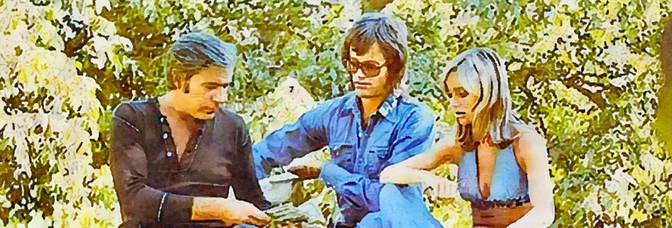
I’m not sure how Dirty Mary Crazy Larry played on its original release—like, did audiences actually sympathize with “leads” Peter Fonda and Susan George—but whatever shine time has scrubbed off it has left something of an endurance test. Fonda and Adam Roarke (who’s more the protagonist than Fonda and often more than George) are a…
-

After setting up Goldie Hawn and William Atherton as the protagonists, Sugarland Express takes about an hour to get back to them. Hawn and Atherton have an amazing setup–he’s about to get out of prison and has been transferred to pre-release. Hawn comes to visiting day but to break him out. She’s just gotten out…
-

Easter Beagle has a really strong script from Charles M. Schulz. Everything is balanced just right. It’s not balanced equally. The proportions are just right. Besides the lovely musical sequences–where Beagle goes for being lovely and graceful (lots of dancing Snoopy, set Vince Guaraldi, some Bach, and some Beethoven)–most of the special is spent with…
-

It’s a Mystery, Charlie Brown opens with this adorable five minute Woodstock sequence. He builds a new nest, then goes and takes a swim in a bird bath. A storm comes in–whatever its faults, Mystery does have some rather ambitious animation for a “Charlie Brown” special–the tranquil clouds changing into storm clouds looks awesome. Woodstock…
-
Sister Street Fighter should be campy. With the constant horns in Kikuchi Shunsuke’s score, lead Shiomi Etsuko’s colorful outfit, villain Amatsu Bin doing an Elvis impersonation, the countless and intentionally weird martial arts villains… it ought to be campy. But it’s not, because somehow Sister Street Fighter manages to keep its melodrama sincere. Lead Shiomi…
-
The title, The Street Fighter’s Last Revenge, doesn’t really refer to anything in the film itself. The Street Fighter is Sonny Chiba. He’s gone for psychotic killer karate man (from the first film, Last Revenge is the third) to suave, romantic ladies man. Complete with a secret room to put on his disguises. He also…
-

Return of the Street Fighter almost stages a third act rally. It comes so close, then it doesn’t. After a string of boring fight scenes, director Ozawa finally gets in a couple good ones. Lead Sonny Chiba against one adversary, instead of a half dozen, two dozen, or four dozen. The failure to do big…
-

The Texas Chain Saw Massacre is either terrifying or horrifying. Sometimes it’s a combination of the two. Sometimes it’s visual terror or horror, sometimes it’s audial, sometimes it’s just implied. Director Hooper has three different styles–daytime, nighttime, indoor–and each goes from terror to horror multiple times. The film takes place over less than twenty-four hours,…
-

Voodoo Black Exorcist is exasperatingly dull. In the first scene, which is before the opening titles, after a few seconds it becomes clear seventh century Haitian lovers Aldo Sambrell and Eva León aren’t just star-crossed, they’re also in blackface. Voodoo Exorcist Black is not a Blaxploitation horror film, but a (dubbed) Spanish remake of The…
-

Thunderbolt and Lightfoot is the story of men in all their complexities. Their desire for money, their desire for women, their desire for stylish clothes. Whether a young man–Jeff Bridges–or an older man–Clint Eastwood–how can any of us truly understand these deep, complex beings. I wish the film had that level of pretense, but it…
-

Maybe the first two-thirds of Blazing Saddles are really funny, getting great performances out of lead Cleavon Little, his sidekick Gene Wilder and especially Harvey Korman’s villain. Wilder’s almost an add-on character; he’s around so Little, in addition to being funny and likable, doesn’t also have to be an accomplished gunslinger. It’s one of the…
-

Phantom of the Paradise has all the trappings of a failed passion project, only not a lot of passion for the project. Director De Palma, with a couple notable exceptions, doesn’t have much interest in directing a musical. When I say couple, I mean two–there are two scenes where he seems to care about directing…
-

I want to be more enthusiastic about Godzilla vs. Mechagodzilla. It has a number of good moments, often involving giant monsters, which is impressive. Godzilla facing off against a mechanical Godzilla (not to mention a flesh-covered cyborg–nothing dead will go), it’s a great visual. Director Fukuda milks it and he milks it well. The film…
-

Wonder Woman doesn’t work out, but it should. And lead Cathy Lee Crosby is so serious about her performance and the role, even when it’s underwritten, it’s hard not to be sympathetic. John D.F. Black’s simultaneously awful and inventive teleplay recasts Wonder Woman as a spy, only one who works as a secretary. Her boss…
-

There’s not much story to The Streetfighter. There’s some, but it’s usually dumb. Director Ozawa isn’t interested in developing lead Sonny Chiba as a character. He’s one of the best “karate men” (I really wonder if that term’s just the subtitles) in Japan and he’s a mercenary. He’s got a chubby, lovable sidekick, Yamada Goichi,…
-

Black Christmas has a lot of significant problems, but the film’s strengths make up for (or just distract from) a lot of them. But then there’s director Clark. He can’t make the film scary. He can make it disturbing–and often does, even when it’s not successful otherwise–but he never makes it scary. And when Olivia…
-

Not quite halfway through The Parallax View, the film loses its footing. Director Pakula keeps the audience a good three car lengths from not just the action of the film–with long shots in Panavision–but also understanding the action of the film. Parallax even goes so far to introduce protagonist Warren Beatty with a proverbial wink.…
-

It’s hard to know where to start with Romance with a Double Bass. I suppose one could call it a comedy of errors, but the error in question is skinny dipping. First John Cleese, as a musician, goes skinny dipping and then Connie Booth, as the princess whose betrothal ball he is engaged to play…
-

Even though the issue ends with a teaser of the next one, it reads a little like Wein was preparing for it to be Swamp Thing’s finale. Swamp Thing reveals his identity to Matt Cable and then, instead of setting off with Matt to adventure, heads back to the swamp. It takes Swamp Thing a…
-

I’ve decided what Redondo does so differently from Wrightson (and how it effects the book). He draws Swamp Thing not as a muscle-bound, ideal specimen… but rather a lumpy, awkward creature. No wonder he looks forlorn all the time. It changes how the book plays. One wouldn’t think Arcane would be after Swamp Thing’s body…
-
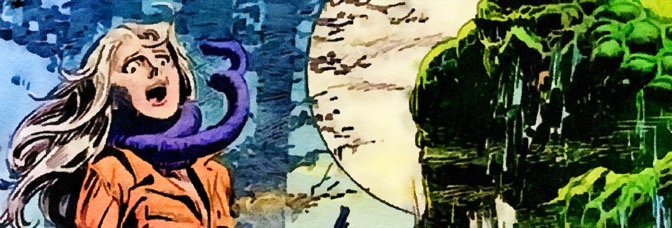
Nestor Redondo has the somewhat impossible task of following Bernie Wrightson. He does pretty well, though he could have gotten more help from Wein. Redondo recasts Swamp Thing as more of a lumbering superhero (Redondo’s expressions of Swamp Thing’s frequent dismay are startling, given the character is genetically predisposed to stoicism). But he does fine.…
-

I love this issue. I only sort of remembered it, but I love what Wein and Wrightson do with it. Wrightson gets a story credit so maybe he’s the one who came up with the concept. Swamp Thing’s back in his swamp, basically just hanging around, when he comes across an old black woman. A…
-

Wein and Wrightson (he has some amazing panels this issue, whether Matt and Abby at the beach or a captured alien) are back on task this issue. While Wein still overwrites, the plotting is so good it doesn’t matter again. This issue brings Swamp Thinig back to the swamp where he was created and Wein…
-

While the cover—Swamp Thing versus green tentacles—might be memorable, this issue is the first where Wein doesn’t come up with something distinctive as far as narrative. It’s Swamp Thing not versus green tentacles but versus a Lovecraftian god. A really, really weak one who lives in a mine and eats people to get stronger. Swampy…
-
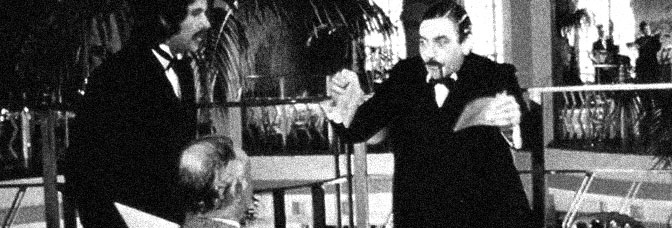
There are two significant problems with Murder on the Orient Express. Unfortunately, both of them are aspects of the film’s genre. Well, one of them is an aspect of the genre and the other is related to the film’s extremely high quality acting. So, neither of them are “problems” in the traditional sense. First, the…
-

So this crappy story is dedicated to the memory of Bill Finger. I guess it’s best to have a crappy story dedicated to your memory rather than you, since if you’re still alive, you might have to read it. This second team-up between Batman and the Shadow is amusingly weak (but better than the first,…
 The Stop Button