Category: 1971
-

This issue’s based on a Howard poem; it’s hard to say how much Thomas added on his own without reading the poem. It seems like he includes it at one point and, if he does, he added a lot. Thomas’s approach is a little different than before–five issues in, the series doesn’t have a consistent…
-

Well, Thomas avoids falling into the trap of predictable plot developments this issue. He’s adapting Howard’s The Tower of the Elephant, which gives the issue a somewhat different Conan than usual. As opposed to being a really active force in the story, Conan’s more an explorer here. Yes, at the end he’s responsible for bringing…
-

Thomas runs into a not insignificant problem this issue. Though the details are different, he has a lot of the same dramatics he used in the previous issue, especially when it comes to Conan’s friend and Conan’s friend’s wife. Having the same plot point in both issues… Thomas isn’t just making the series predictable, he’s…
-

The Pseudo-Superman story comes to its close with Superman choosing to be de-powered. It’s a strange move, since he’s still really, really powerful. Maybe not Silver Age powerful, but he hadn’t really been doing those feats during the rest of the issues… it’s a little confusing. It’s an effective scene, but it doesn’t hold up…
-

I guess Wonder Woman wasn’t much of a draw back in the early 1970s because her guest appearance is a surprise (there’s no mention on the cover) and she’s practically in the issue more than Superman. Following up on Superman’s epiphany from the previous issue (he’d prefer to live a normal life), Wonder Woman’s Indian…
-

Superman’s powers finally go this issue, burning out as he uses them more and more. It’s a very awkward issue, with Supes coming across almost like Spider-Man at times, he’s so depressed. He discovers, for example, average people don’t really care about him. Without his powers, he’s an object for their scorn. Given the Pre-Crisis…
-

Superman finally decides he can’t go around on half-power–but there’s a great butt shot from Swan on the first page for the ladies when he’s leaping instead of flying–at the end of the issue. His sand-double has been sucking his powers away and worse, the sand-double isn’t willing to help as Superman has to save…
-

Here’s a packed issue. Superman even comments on it–he rescues a rocket, Lois crashes, there are killer ants, his sand-double is around, he’s a carrier of some strange space bug–it goes on and on. O’Neil fits it all in with barely any room for anything else. Only when Superman decides he’s going to leave Earth…
-

The issue ends with Superman in Metropolis Stadium attempting a heart-to-heart with his sand-double. It’s a really awkward moment, since the Colosseum’s full of people. O’Neil doesn’t get a single reaction shot in this sequence, after getting them in an opening action sequence at the Colosseum. It’s off. I mean, Lois should have a reaction,…
-

Ok, here’s where it’s a little hokey. Both stories actually (there’s another history of Krypton back-up, which has a goofy villain reveal at the end). O’Neil has Superman trying to stop a volcano, but he doesn’t want to trespass on the land to do so. While I kind of get O’Neil making it “real,” he…
-

What a pleasure it is to read a Superman comic book where he’s not supposed to be perpetually thirty-one or whatever goofy age DC pins on him. The more mature Clark Kent, here becoming a television personality as the Daily Planet goes through changes, brings something else to the comic. I hate to sound like…
-

Little known fact: the British Tourist Authority actually funded for Straw Dogs. They were sick of Americans moving over. Obviously not true, but it would explain a lot. Not many films have such singularly evil human beings as those portrayed in Straw Dogs, but then few feature such textured evil human beings either. The film’s…
-

I had all sorts of plans on how to start off this post, but the idiotic ending has hindered them. I mean, the whole film suffers from being incredibly stupid (Argento’s characters are the most unbelievable I can remember seeing in recent memory), but the ending actually goes for a kind–not an aspiration for high…
-
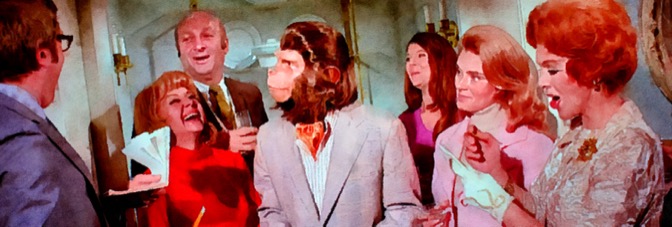
I occasionally–or often, depending on the films I’m going through–start a post saying how much I was dreading the film and how well it turned out. Usually, these are films I used to love and haven’t seen in ten years and was worried about them. I wasn’t dreading Escape from the Planet of the Apes,…
 The Stop Button