The Stop Button
blogging by Andrew Wickliffe
Category: 1968
-
The first twenty-five minutes of The Thomas Crown Affair is a bank heist. Starting with its planning. After opening titles suggesting the film is about stars Steve McQueen and Faye Dunaway doing fashion advertising, we meet future wheelman Jack Weston. Weston gets hired by a mystery man to do a job. We jump forward in…
-
Even when The Odd Couple plods, it never feels stagey, which is impressive since it’s from a stage play (Neil Simon adapted his own play), it mostly takes place in the same location, and many of those sequences are just stars Walter Matthau and Jack Lemmon following each other around and bickering. The one thing…
-
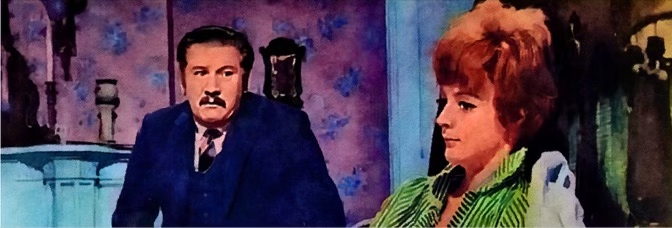
Hot Millions is an entirely amiable, often charming light comedy about career embezzler Peter Ustinov’s attempt to keep embezzling in the computer age. The film starts with Ustinov getting out of prison, late for his exit because he’s busy doing the warden’s taxes. He was caught by the computer last time, and he’s out to…
-
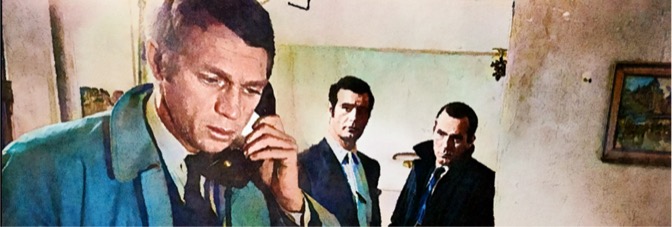
Bullitt is from the period when Hollywood wasn’t calling the Mafia the Mafia yet—it’s “The Organization” here—and none of the mobsters had Italian names, but they are mostly Italian (heritage) actors. It’s especially funny because part of Bullitt’s conceit hangs on WASPs like up-and-coming senator Robert Vaughn not being able to tell Italians apart. But…
-
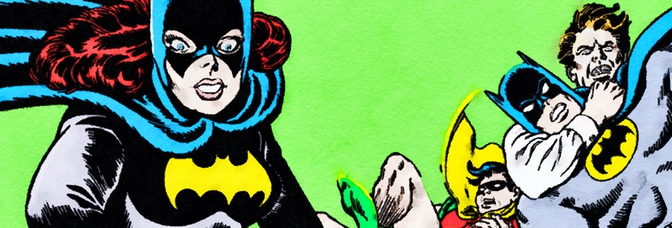
The strangest thing about the first five stories in Omnibus Volume 1 isn’t how writer Gardner Fox uses Barbara Gordon’s position at the Gotham Public Library to explain how she somehow targets criminals. She violates professional privacy standards—if not laws (it was the late sixties, who knows)—to figure out where the bad guys are going…
-
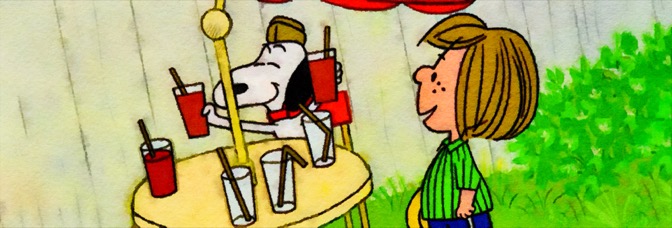
He’s Your Dog, Charlie Brown opens with Snoopy terrorizing the kids. He’s indiscriminately vicious, leading to the kids complaining to Charlie Brown about it. Charlie Brown’s solution is to send Snoopy off to the puppy farm for reeducation. Snoopy is Dog’s draw. His worst moments are the initial terrorizing and even those are perfectly good.…
-
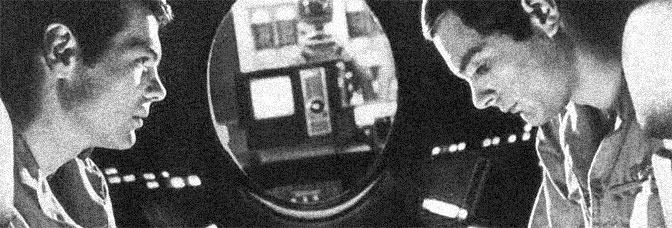
Phenomenal science fiction epic chronicling humanity’s (sometimes unknown) interactions with a mysterious interstellar slab; it shows up at a couple salient historical points. The second, in the title year, kicks off a space exploration mission, which then becomes backdrop to ruminations about the human condition. A technical pinnacle–direction, editing, photography, special effects–and a singular performance…
-
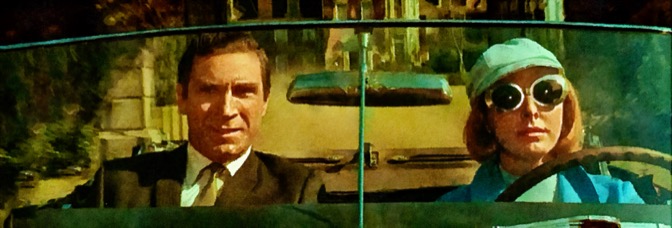
It takes a long seventy-five minutes to get there, but How to Steal the World does have some good moments in its finale. World is a theatrical release of a “Man from U.N.C.L.E.” television two-parter. It leads to an often boring ninety minutes, which improves in the second half just for momentum’s sake, leading up…
-
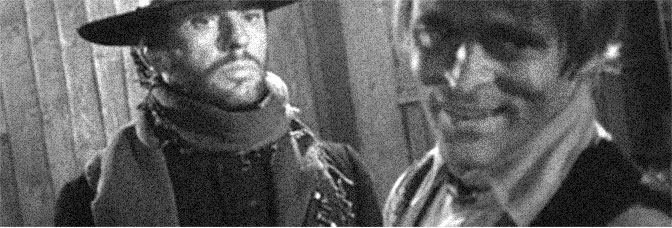
The first act of The Great Silence at least implies some traditional Western tropes. Jean-Louis Trintignant is a gunslinger who fights with evil bounty hunters. Frank Wolff is the new sheriff. Klaus Kinski is one of the evil bounty hunters. Wolff’s got political stuff, or at least the script implies there’s going to be political…
-
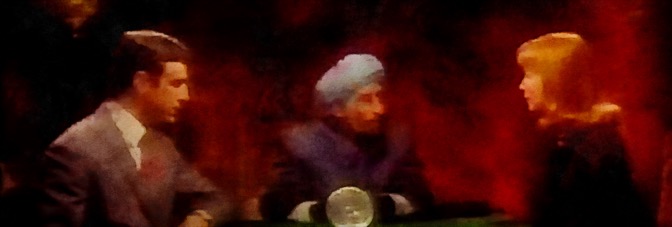
The Indian Spirit Guide is an odd amalgam of two plot lines; at least by the end of the episode. Until the end, Robert Bloch’s teleplay juxtaposes them perfectly with just the right amount of interweaving. Julie Harris plays a wealthy widow romanced by her “paranormal investigator,” played by Tom Adams (who’s a delightful sleaze).…
-
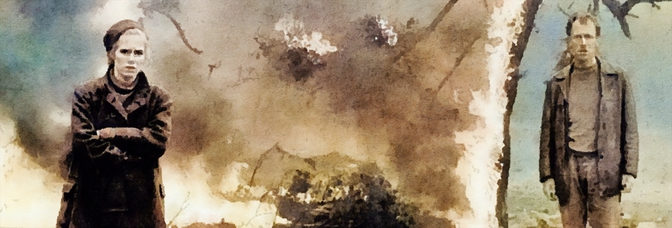
Shame has three or four sections. Director Bergman doesn’t draw a lot of attention to the transition between the first parts, he hides it in the narrative. Liv Ullmann and Max von Sydow are a married couple living on an island following a war. Not much information about the war, but they’re concert violinists turned…
-
Jane Brown’s Body uses resurrection science to explore a melodrama. Anthony Skene’s teleplay isn’t bad, it’s just a little obvious in its plotting. But there’s a definite, subconscious patriarchy thing playing out and it makes for an interesting time. Stefanie Powers has lost her memory (after being brought back from the dead). The doctor–Alan MacNaughton–isn’t…
-
For all of its problems, Eve rarely feels stagy. Director Robert Stevens makes the most of his location shooting, whether it’s town or country, and there are enough scenes out doors to make up for the utter lack of establishing shots. It’s for television, it’s on a budget. It’s also got a rather poorly conceived…
-
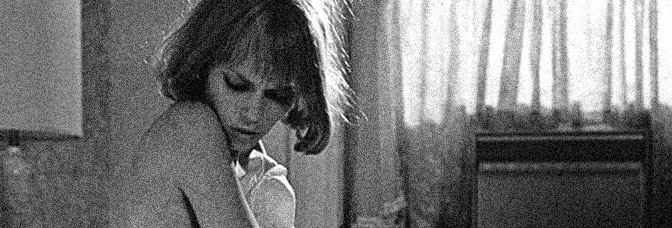
From the first scene of Rosemary’s Baby, Roman Polanski establishes the style he’s going to use until the big reveal at the end. He shoots a lot of over-the-shoulder shots with people moving around out of frame, causing a startling effect when the viewer finds out they’re now in a completely different location. He does…
-
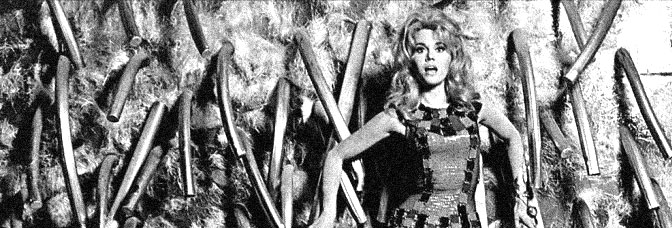
In terms of badness, Barbarella is phenomenal. One could spend his or her time on the gender politics–someone must have in the last forty years. The film takes place in a post-gender future, where Jane Fonda’s titular character is the most relied upon person in the galaxy. However, the president (Claude Dauphin) spends the entire…
-
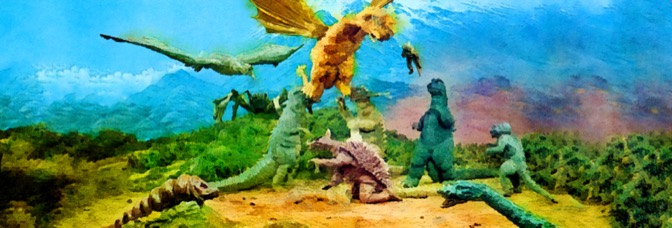
Wow, it ends with Godzilla and Minya (Godzilla’s son for those unfamiliar–there’s no mama; I’m pretty sure Godzilla’s asexual) waving to the camera. How sweet. Destroy All Monsters is barely a Godzilla movie, really. The monster only shows up at the beginning for the establishing of the ground situation–the narrator explains it is a near…
-
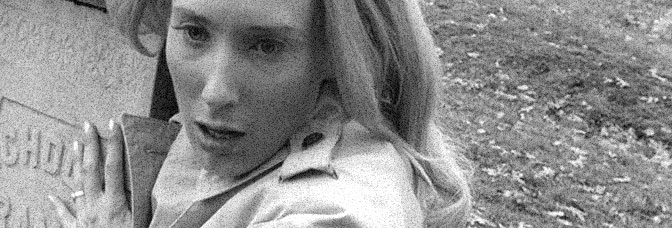
What a lame ending. If it weren’t for the sufficiently uncanny end credits, I’d finish Night of the Living Dead thinking it was supposed to be a comedy. Actually, if it weren’t for that lame ending, I’d be starting this response much differently. Night of the Living Dead has one of the most sublime opening…
-
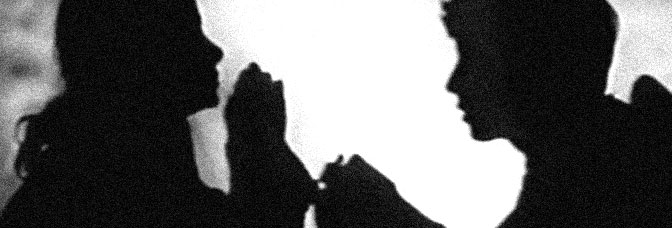
Amblin’ might have more charm if I cared about hippies. The film should be called, The Adventures of Two Hitchhiking Hippies. Or one and a half hippies. I’m not even sure they’re supposed to be hippies, maybe just kind of hippies. There’s no dialogue in the film (oddly, it’s not even implied the two protagonists…
-
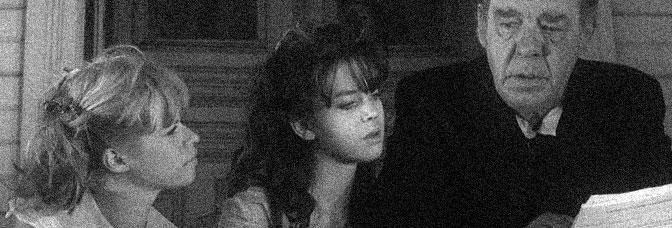
Spider Baby might not be “the maddest story ever told,” but it comes somewhat close. The film’s a strange mix of haunted house, 1950s sci-fi and cartoon humor–I don’t think I’ve ever seen such a live action cartoon; it’s like “Scooby Doo” on expired sleeping pills. It opens with that 1950s sci-fi introduction, the erudite…
-
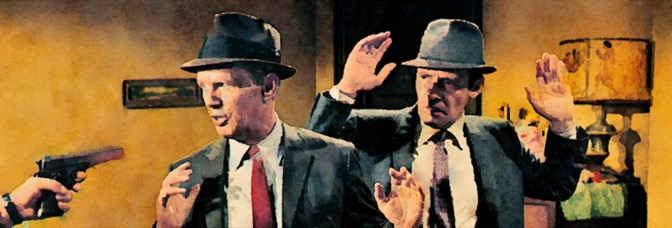
Madigan ends really well, deceptively well, but the whole film is rather well-written. The problems are plot and production related. I suppose there’s some problems with unbelievable character relationships too–for example, Richard Widmark’s workaholic cop and Inger Stevens’s would-be social climber are never a credible couple. There’s also a big problem with the brief implication…
-
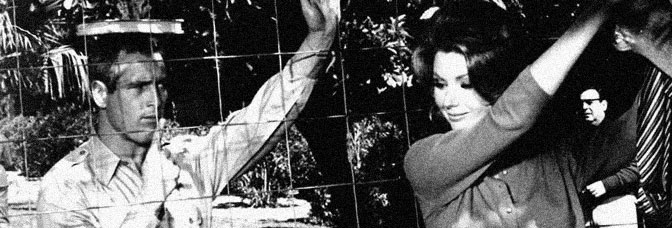
Paul Newman can’t play stupid. Harry Frigg is, for the first thirty to forty minutes of the movie, stupid. Even after he’s not stupid anymore–Sylva Koscina, quite believably, inspires him to improve himself–Newman’s stuck with the dumb, New Jersey from a Planters Peanut commercial accent. It doesn’t bother much in the scenes with Koscina, since…
-
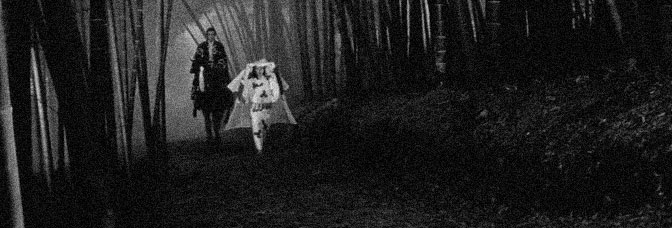
I thought I was going to start this post with a witty remark regarding the film’s use of repetitiveness to excellent overall effect, but then the movie ended and, by that time, much of the excellence had drained. Kuroneko is a gorgeous film–Shindo uses theatrical lighting effects for ghostly emphasis, which really works–and for a…
-
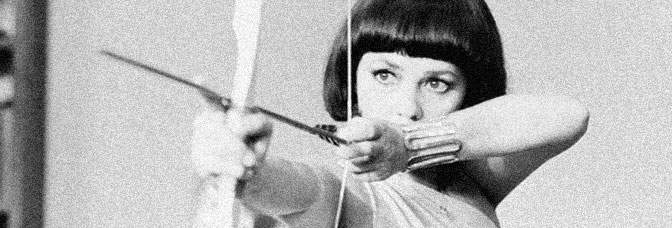
I watched this film on a recommendation, since I’ve mostly sworn off Truffaut. I’d read it was one of his Hitchcock homages (and anything has to be better than Mississippi Mermaid) but I really wasn’t expecting so much “homage.” Besides the Bernard Herrmann score, which is identical to his more famous Hitchcock scores, mostly Vertigo,…
-
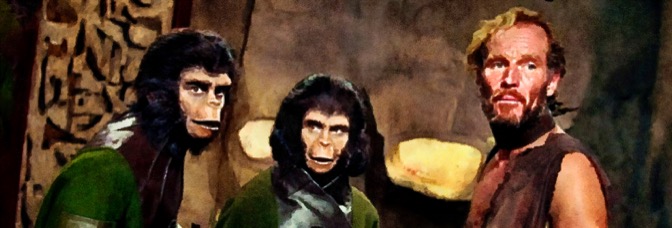
Planet of the Apes is, I’m fairly sure, the first film I’ve ever watched and known the director started in television. Franklin J. Schaffner has a lot of dynamic shots–helicopter shots, three dimensional motion and camera movement (which is rarer than one would think)–but none of them go together. It’s like watching a different movie…
-
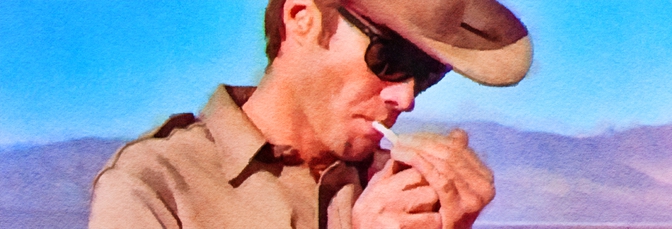
Arizona sheriff’s deputy Clint Eastwood goes to New York in pursuit of fugitive Don Stroud; his macho demeanor causes friction with New York cop Lee J. Cobb as well as sizzles with probation officer Susan Clark. More a character study than an action/thriller, though the Hollywood hippies stuff doesn’t age well. Nice performances from Eastwood…
 The Stop Button