Category: 1964
-
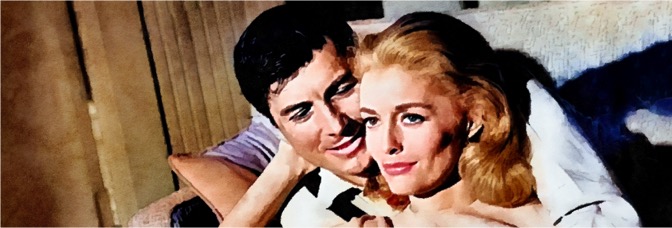
The Naked Kiss is an exceptional motion picture. However, it’s never not without its problems: it’s an astoundingly classy exploitation picture about an ex-prostitute (Constance Towers) who tries going straight, only to discover the other side of the tracks just hides their secrets in different places. The film will also explore the lack of honor…
-

A Fistful of Dollars opens with a long, primarily dialogue-free sequence introducing the star—Clint Eastwood—and the setting, the desolate near-border Mexican town of San Miguel. The sequence introduces the town to Eastwood and Eastwood to the viewer. He quietly watches the goings on, principally Marianne Koch’s family troubles. She’s living in a little house under…
-

Becket has some genre constraints. Significant ones. It’s a king-sized 70mm Panavision English history epic only it doesn’t feature any big battles. In fact, it goes out of its way not to show battles. It’s also an early sixties historical epic and it’s trying to be a little edgy in how it shows the relationship…
-
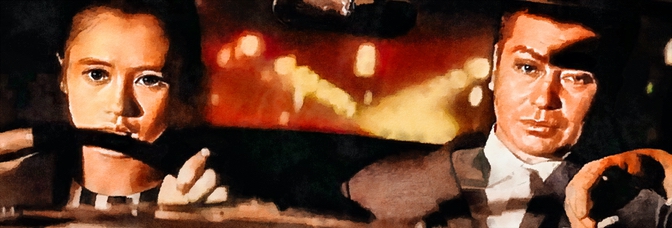
Pale Flower opens with lead Ikebe Ryô narrating his first day out of prison. Not what he does—we get to see what he does—but how he feels about being out, what he notices. He’s killed a man, been in prison for three years, and nothing has changed in Tokyo. The dead man’s absence doesn’t matter,…
-

Night Call’s pre-Rod Serling tag has lead Gladys Cooper having trouble sleeping through a thunderstorm. She then gets two phone calls at 2 a.m., with just static on the line. The next day, after the Serling intro promising Cooper’s in for a momentous event, Cooper tries reporting the phone calls to the phone company but…
-

Screenwriter Rod Serling really likes to employ monologues in Seven Days in May. John Frankenheimer likes to direct them too. And the actors like to give them. Because they’re good monologues. The monologues give all then actors fantastic material. Everyone except George Macready, who isn’t the right kind of scenery chewer for Seven Days. Maybe…
-

Watching Panic Button, two adjectives came to mind repeatedly. Anemic and stupefying. It’s incredible the things the film can’t make funny–like Maurice Chevalier, Carlo Croccolo and Eleanor Parker dressed up as nuns trying to make it to a Venice film festival. Not the Venice Film Festival, because the one in Panic Button also shows TV…
-
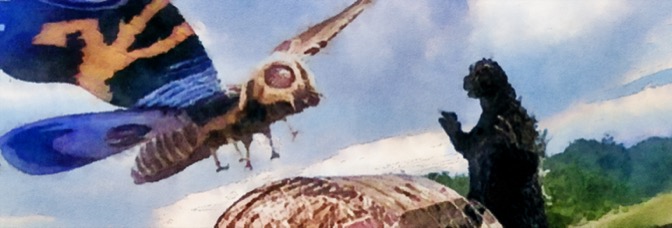
I’m not sure if Mothra vs. Godzilla should be much better, but it certainly should be somewhat better. There are constant problems with the film; little things, big things, but clearly fixable things. Like the composite shots. They’re terrible. Director Honda, seemingly overwhelmed with all the landscape sets, relies on occasional composite shots to give…
-

Robinson Crusoe on Mars is silly. It’s inconsistent and silly. The film survives a weak first act–the narrative trick of opening with one character (played, poorly, by Adam West) and then transferring to another (Paul Mantee) is fine, only Mantee doesn’t get any good material for quite a while. Mars, which–as the title suggests–is about…
-
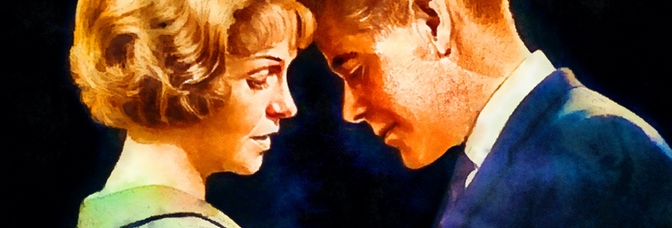
Dear Heart starts awkwardly and ends awkwardly. At the beginning, director Mann and writer Tad Mosel are very deliberately setting up their protagonists and the setting. The awkwardness makes sense. That very solid foundation allows for everything following. The ending, which plays–at least for Geraldine Page’s character–like a reverse of the opening for a while,…
-

Knight’s Gambit plays a little like a serious, American James Bond variation. Roger Smith is a former CIA agent–he inherited hundreds of millions and quit–out to seduce Eleanor Parker for information. Parker is a disgraced politician’s secretary; they’re living in Spain, in exile. The spy stuff is terrible. Smith’s boss–Murray Matheson–wears around long shorts and…
-

What do penguins and bees have in common? They both show up in Larry Jordan’s transfixing collage animation Duo Concertantes. I know, they’re also both animals too. I’ve never seen any Jordan before and Concertantes might not be the best place to start, but it’s a phenomenal nine minutes. There’s practically a narrative for the…
-

Winter is a music video for Vivaldi’s violin concerto of the same name. Kamler does an amazing job with the video–it’s technically unbelievable at times–but it’s just a music video. The concerto, the parts Kamler uses, is in three segments. The first two segments have identical visual accompaniment. The third is a little different, but…
-

Engaging enough thriller about American journalist in London Stephen Boyd investigating the death of his psychologist and developing a friendship with the psychologist’s daughter, played by Pamela Franklin. Both Boyd and Franklin are excellent; the supporting cast is strong. Unfortunately, the mystery angle isn’t particularly compelling (which almost seems like a conscious choice on the…
-
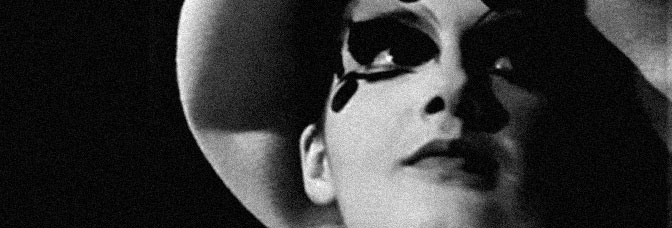
The title credit card of 21-87 is a human skull and the second clip (the film is a collection of somewhat unrelated clips edited together) is of an autopsy. It’s hard not to think about mortality while watching it, especially once the accompanying soundtrack—usually interviews unrelated to the clips—starts talking about religion. The short enters…
-

It’s hard not to watch It’s Not Just You, Murray! without keeping Scorsese’s subsequent career in mind. The film’s got some moments out of Goodfellas, but also a couple where one wonders if Francis Ford Coppola saw the short before he made the Godfather films. Not to mention Scorsese ends the film with a Fellini…
-

Don Siegel can compose no matter what ratio, so his shots in The Self-Improvement of Salvadore Ross are all fine. There’s a lack of coverage and the edits are occasionally off, but it’s a TV show (an episode of “The Twilight Zone”); it’s expected. And Siegel does get in the occasional fantastic shot. He’s got…
-

Peter appears to be pushing Betty away at this point, but he might just be obtuse. The first appearance of Mysterio is decent, but not anything special. Lee spends a lot of time on Mysterio’s origin and the nature of his outfit–Lee’s pacing is great here, the amount of story he fits into the issue,…
-

I can’t believe no one’s ever talked about Lee’s plotting pattern. It’s pretty apparent here, twelve issues in–Spider-Man somehow gets beat in the first fight, wins in the second. Meaning there have to be at least two fights a comic book. How things have changed… Marvel comics now do a cliffhanger in the middle of…
-
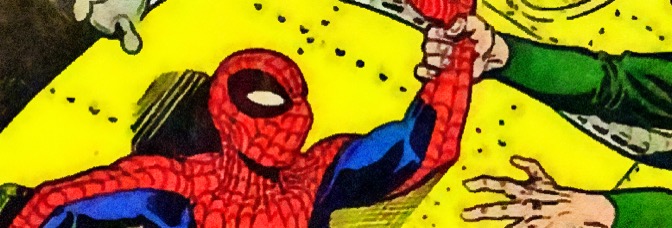
I always forget how small the Marvel Universe is–if you’re going to get broken out of jail, might as well have Doctor Octopus do it. If you’re going to be a mobster and have a lawyer, it might as well be a lawyer whose sister is Spider-Man’s girlfriend. There’s a lot of cool action in…
-

So I’m not imagining things–Lee was getting sick of the high school constraints. He sends Aunt May (all better after her operation, though she does need a blood transfusion, which apparently weakens Spider-Man, but it’s hard to gauge his abilities since… well, Lee always fluctuates them anyway to add drama to a fight) off the…
-

I was going to open with a smart remark about Lee calling this issue a “book-length” story, but he really does fit a lot in. The whole arc with Electro, with lots of fight scenes, heist scenes, an origin and a prison break, plays second fiddle to the Peter Parker story. Lee puts Aunt May…
-

So, there’s a point to about seventy percent of this issue. The rest is a back-up with Spider-Man battling the Human Torch, then the rest of the Fantastic Four, because Spider-Man wanted to show off for the Torch’s girlfriend. It’s an addle-brained waste of pages. The only possible purpose would be if Sue Storm ever…
-

Maybe half of Ghidorah is interesting. Or has the potential to be interesting. After the giant monster-heavy opening credits (stills of Godzilla and Rodan in battle), that aspect disappears for a while. Instead, Ghidorah is a strange mix of reporter and political intrigue movies. Hoshi Yuriko is a reporter for a news program covering strange…
-
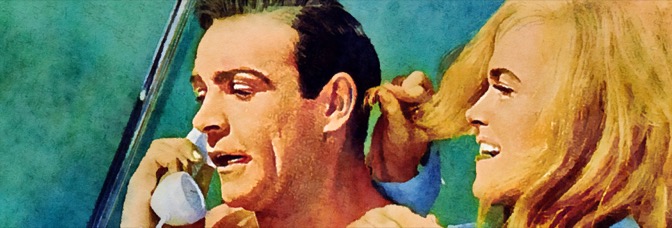
How can a film, with such a beautiful, awe-inspiring fight scene (Bond and Oddjob), have such terrible editing overall? In fact, how can the technical side be so contradictory… terrible direction from Guy Hamilton on most scenes, but fine or excellent when he’s on set. Terrible editing for most of it, but then the rest…
-

Episodes of the “Twilight Zone” ran thirty minutes, or whatever without commercials, for a very good reason. Stretching a one-note story out to an hour would be too exasperating. Woman in the Dunes stretches it out to, I guess, two and a half hours. The film starts interestingly enough. An entomologist looking for bugs finds…
 The Stop Button