Category: 1953
-
Pickup on South Street is not based on a novel; the opening titles have a story by credit for Dwight Taylor, with director Fuller getting the screenplay one. The film’s got a peculiar plotting and roving protagonist, plus some terrific monologues, and I was wondering if they were Fuller or someone else. They’re Fuller. Fuller…
-

Niagara has some noir-ish elements to it—femme fatale wife Marilyn Monroe stepping out on war veteran husband Joseph Cotten—but it’s not about the darkness, it’s about the light. And its location shooting. Niagara takes full advantage of the falls, not just for scenery but for multiple story elements (we find out Monroe’s stepping out because…
-
Pat (no pun intended) television play about sweet old Pat (Gene Lockhart) who desperately wants to see Ireland again before he dies but might need to help struggling youngster James Dean instead. Dean’s phenomenal enough to carry the rest. DVD, Streaming.Continue reading →
-

Flashback heavy noir suffers Horner’s frequently inept, always disinterested direction, a bad script (from Dwight Taylor), and a horribly miscast Richard Boone. Boone’s an obsessive but ostensibly wimpy detective who takes on the murder case of title character Jean Peters. No spoilers, it’s in the opening credits. Elliott Reid is the prime suspect, Jeanne Crain…
-

Stalag 17 opens with narration explaining the film isn’t going to be like those other WWII pictures, where the soldiers are superhuman and the film bleeds patriotism. No, Stalag 17 is going to be something different—first off, it takes place not on the battlefield, but a German prison camp. Through coincidence, the camp is entirely…
-

William Holden never seems out of place in The Moon Is Blue, but occasionally the film seems out of place having William Holden in its lead role. He’s not mundane, he’s a star. The film isn’t about the mundane but it needs to acknowledge the possibility of it. Holden ain’t it. He’s top-billed but not…
-
Dorothy Gish isn’t just top-billed in Harvest, host (and narrator) Robert Montgomery introduces the episode hyping her presence. So it’s a tad disappointing when it turns out Gish gets less and less to do throughout the hour-long television play. When she does get things to do, they happen off-screen. Instead of giving her an arc,…
-
A Long Time Till Dawn is usually able to keep disbelief completely suspended. It’s a television play and Rod Serling’s teleplay is more ambitious than the budget or the constraints of the medium. Most of the sets are interiors and fine–a diner, a living room, a bedroom. They can even get away with a front…
-

Sentence of Death unfolds gradually. The action mostly follows Betsy Palmer, playing a naughty blue blood who the tabloids love to cover. She’s slumming it and having a nice private dinner at a drug store. She’s there when someone holds it up and kills the owner. Enter cops Gene Lyons and Ralph Dunn. Lyons is…
-
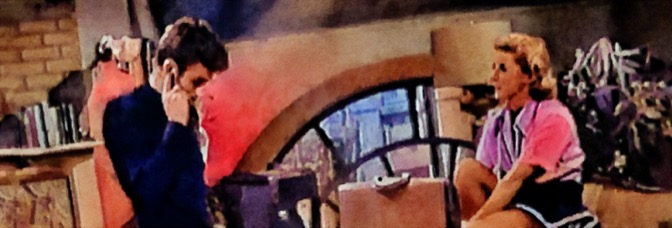
Almost half good TV play about fresh-out-of-prison James Dean pulling one last score before going straight… mugging struggling ballerina Susan Douglas Rubes. Uneven script to say the least, but Dean and Rubes are pretty good. DVD.Continue reading →
-
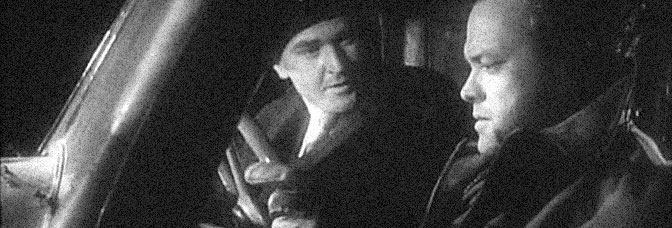
Orson Welles stars in Return to Glennascaul as himself. He’s acting as a combination presenter and narrator. Amusing, he says he’s not going to be around for long, he’s busy making Othello after all. But then when star Michael Laurence starts telling Welles his story, Welles can’t let someone else do the narrating, so he…
-
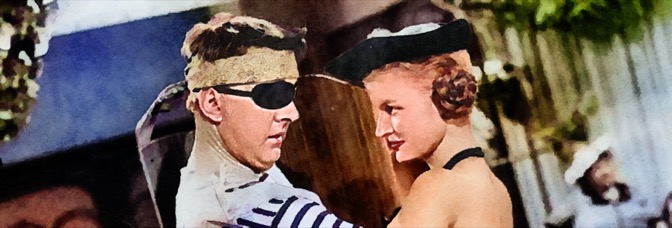
A certain amount of Mr. Hulot’s Holiday is pure slapstick. Except it’s slapstick through director Tati’s decidedly careful lensing. Tati holds the shot on the slapstick punchline a beat too long, giving the viewer time to consider the joke, the punchline, and his or her amusement. Far from condemning slapstick, Tati shows how it would…
-
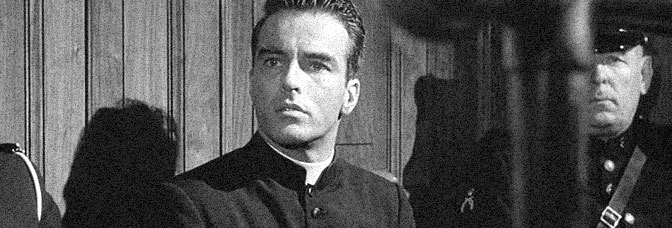
I Confess is unwieldy. Director Hitchcock is extremely precise in his composition, the same goes for Robert Burks' photography (especially the photography) and Rudi Fehr's editing (which changes in harshness based on the story's tone); sure, Dimitri Tiomkin's music is all over the place and intrusive, but it fits the script. George Tabori and William…
-
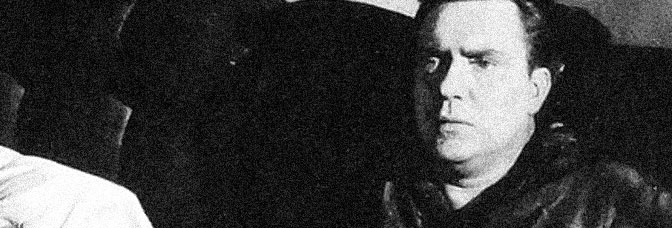
With a sensational title like The Bigamist, one might expect something lurid and exploitative from the film. Definitely from the titular lead, Edmond O’Brien. But, no, poor O’Brien is just a married traveling salesman with a barren, work-oriented wife (Joan Fontaine) so who can blame him for stepping out. And he only did it once;…
-
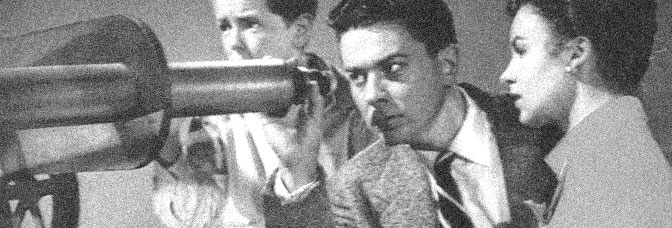
About halfway through Invaders from Mars, the army mobilizes to come to the aid of the protagonists (who have discovered an alien invasion). These mobilization scenes are all stock footage–later tank footage is stock too–but director Menzies uses it for a long time, like an actual scene. While dragging down the midsection of the picture,…
-

As if Donald Duck couldn’t get weirder, he’s apparently got the hots for a female elephant in Working for Peanuts. But it’s not actually a Donald cartoon, it’s a Chip and Dale cartoon. The boys are after the peanuts–a delicacy they’ve just discovered–and the zoo has them. Donald’s the zookeeper, the elephant’s got the peanuts.…
-
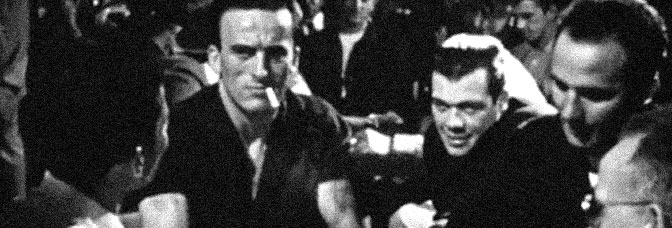
Only half of The Seafarers really feels like Kubrick. While he handled photography and editing on the entire film, the second half moves out of his comfort zone (or interest level). The film’s a promotional for the Seafarers International Union; the second half has most of that promoting. Kubrick stays interested during the first half,…
-

Duck Amuck is either very memorable or very predictable. If I have ever seen it, it was fifteen plus years ago. Yet I could guess a bunch of the plot twists, including the final one. That final reveal, which might make Amuck memorable, also undoes a lot of the neat stuff the cartoon does otherwise.…
-
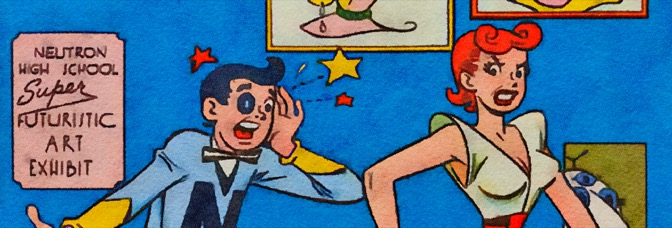
Jetta goes out with a whimper. DeCarlo’s art is iffy on the first and third stories, with only the second really being up to par with what he’s previously done on the title. Also problematic is the writing. While the first story, though it has nothing to do with Jetta, is rather charming, the third…
-
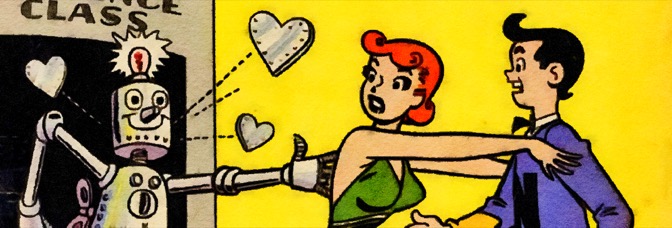
The second issue of Jetta is something of a disappointment. There’s very good art for two-thirds of the issue (if I forget to mention it later, the third story’s artwork is surprisingly weak, like DeCarlo was in a real hurry), but the charm is lost. The stories aren’t really about Jetta the space age teenage…
-
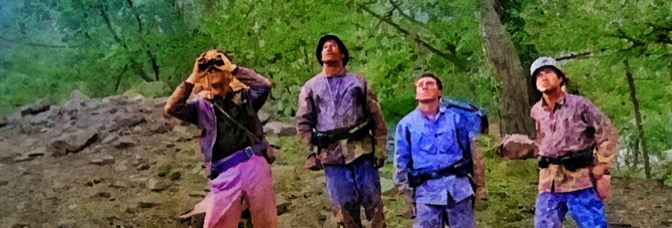
Fear and Desire‘s a mess to be sure, but it’s hard to understand why Kubrick later strove to have it willfully forgotten. The film’s greatest faults–the script and the acting–pale when compared to Kubrick’s success as a director and editor. He described the film as amateurish and that adjective certainly does describe the script well…
-

Torpid isn’t an adjective I get to use often, but I can’t think of a better one to describe The Mississippi Gambler. It’s a boring melodrama, trading entirely on the charisma of its cast–Tyrone Power might have been able to handle the weight, but the film concentrates on the loveless marriage of Piper Laurie (as…
-

It took me a second to remember what the ominous theme in Count the Hours reminded me of—Plan 9 from Outer Space. Count the Hours seems like it was done on the cheap, something about the first half’s composition suggests Siegel had to be real careful with what he got in (or kept out of)…
-

Twenty-one years after they made RED DUST, director Ford, star Clark Gable, and screenwriter John Lee Mahin reunite for another adaptation of the Wilson Collison’s play. This time the action is in Africa (beautifully filmed on location) and Gable’s now 25 years older than his love interests (Ava Gardner and Grace Kelly). Great performance from…
-

Richard Carlson and Barbara Rush see a spaceship crash and can’t get anyone to believe them until it’s too late and the aliens start messing with the townsfolk. Arnold’s got a few big directing missteps (he races through every scene and doesn’t know how to compose shots on his sets). Simultaneously too short (at eighty…
-

Outstanding Civil War Western with William Holden as the hard-ass Union prison camp captain who falls for visiting Eleanor Parker. Only her ex is Confederate captain John Forsythe, who breaks out while she’s there and she lambs it out with him. So Holden goes after them only for an Indian tribe to ambush them. Great…
 The Stop Button