Category: 1951
-

On the Riviera ends abruptly. The film promises an amping-up of its mistaken identity, only to immediately chuck it and do another musical number. It’s a solid musical number, but the film was on the rise with the comedy. It was about to get really good. The ending features a double scene for star Danny…
-

The Steel Helmet is an admirable effort from writer, director, and producer Fuller. However, from the start, it’s clear some of the film’s successes will come with qualifications. Fuller, for example, has a great shot a quarter of the time, a terrible shot a quarter of the time, and okay shots half the time. Lousy…
-

No Highway in the Sky has a peculiar structure. It starts with Jack Hawkins; he’s just starting at a British aircraft manufacturer and, during his tour, meets scientist James Stewart, who’s hypothesized a catastrophic, inevitable failure for the latest, greatest plane. Stewart’s convinced the tails will rattle off the planes, which are made with a…
-
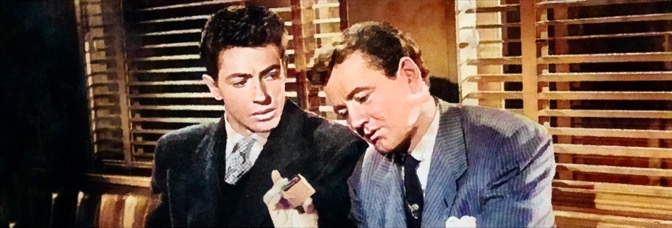
Strangers on a Train is many things, but it’s principally an action thriller. Director Hitchcock never quite ignores any of its other aspects; he’s just most enthusiastic about the action he and editor William H. Ziegler execute. For example, the third act is entirely action set pieces, one to another, with an occasional bit of…
-

The first act of Flight to Mars is quirky enough and soapy enough I had hopes for the finish. The film’s about the first crewed expedition to Mars, and I knew it had them landing there and meeting Martians, so I figured there’d be time for more quirkiness and soapiness at the end. It seemed…
-

About two minutes after I had the thought, “Oh, no, what if the morale of Fixed Bayonets! is ‘it isn’t the generals who are the heroes but the men,’” the film reveals the morale to be it isn’t the generals who are the heroes but the men. The film opens with a title card establishing…
-
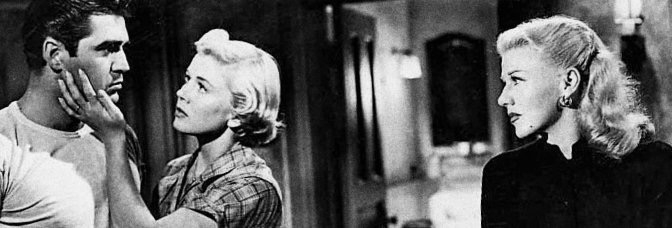
One of Storm Warning’s failings is its attempt to carefully navigate the story content so I’m just going to be lead-footed and get right to things, which probably would’ve helped the movie though not the ending. Storm Warning is about Ginger Rogers visiting sister Doris Day and witnessing the Ku Klux Klan murdering someone. Rogers…
-

Flying Padre has three types of impressive shots. The first two types involve an airplane. The short is about a New Mexico priest who flies around his 4,000-square mile parish. There are interior and exterior shots of the plane and director Kubrick gets some fantastic shots from inside out. He’s also got some great shots…
-

Chicken in the Rough is constantly charming. It feels incomplete, but it’s still constantly charming. Chip ‘n’ Dale are collecting nuts near a farm. On that farm, the rooster is waiting for a hen’s eggs to hatch. Anthropomorphizing roosters and hens is one heck of a thing, incidentally. Just the relationship and the implied expectant…
-

For most of An American in Paris, Gene Kelly’s charm makes up for his lack of acting ability. Even after it turns out the story’s about him stalking Leslie Caron until she agrees to go out with him. It’s okay after that point because she falls immediately in love with Kelly once she does. He…
-

The Day the Earth Stood Still opens with these sensational titles. 3D text jumping out, set against the backdrop of space, Bernard Herrmann’s score at its loudest; the titles suggest the film is going to be something grandiose. It is and it isn’t. For the first act, director Wise moves quickly, short scenes setting up…
-

Last (after QUARTET and TRIO) and most successful entry in trilogy of anthologies of W. Somerset Maugham adaptations. Three stories, all of them well-directed, at least one of them well-written, and all of them rather well-acted even when the writing’s not there. Great performances from Nigel Patrick, Roland Culver, Glynis Johns, and others. Maugham pointlessly…
-

Valentino opens with lead Anthony Dexter (whose resemblance to Valentino got him the job, not his acting abilities) doing the tango. It’s the troupe’s rehearsal and it’s fine. It’s not concerning, which is sort of cool for the film, because most of the scenes are concerning. George Bruce’s screenplay–based on his own story, “Valentino As…
-

Detective Story, the film, is William Wyler’s “production” of Sidney Kingsley’s play of the same title. Philip Yordan and Robert Wyler adapted the play. Wyler directed and produced the film. It is a stage adaptation and proud of it. The phrasing above is directly adapted from how the film opens and credits Wyler and Kingsley…
-

Ace in the Hole moves while the script–from director Wilder, Lesser Samuels and Walter Newman–never races. In fact, it’s deliberate and methodical, maybe even redundant at times (especially in the first act). The redundant moments aren’t actually a problem since Kirk Douglas is in almost every scene of the film and, even when he doesn’t…
-

Diary of a Country Priest is a somewhat trying experience, as so much of the viewer’s experience watching the film requires him or her to empathize with the titular protagonist, something that character is apparently incapable of doing. Much in the film is made of the protagonist’s inexperience–something Claude Laydu plays perfectly–and director Bresson does…
-
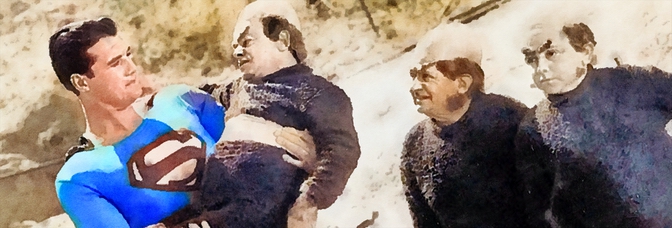
Superman and the Mole Men is somewhat hard to watch–and not because of the goofy mole people costumes. The bad guys in the film aren’t the mole men, but the evil redneck townspeople who hunt them down. Mole Men runs less than an hour (a theatrical pilot for the “Adventures of Superman” TV series) but…
-

The Secret of Convict Lake is a depressing affair. I knew it was Glenn Ford and Gene Tierney, but Ethel Barrymore’s in it too. So you have these three fantastic actors—Ford and Tierney even muster enough chemistry to accomplish their ludicrous romance—and an otherwise lousy Western. The film opens and closes with some useless narration,…
-

The Mating Season is an awkward social comedy of errors. I say awkward because to make the plot work, Gene Tierney has to act selfishly every time she’s supposed to be garnering sympathy. Thinking about it now, the film never even resolves her flirtations with the guy out to ruin her husband (and their marriage).…
-

The Thing from Another World is a singular motion picture. It’s a combination of Howard Hawks’s fast-paced, overlapping dialogue and 1950s science fiction. It might even be the first of the 1950s sci-fi genre, the one setting the standard. There is a lot of supposition about the director’s chair–it is hard to believe television director…
-
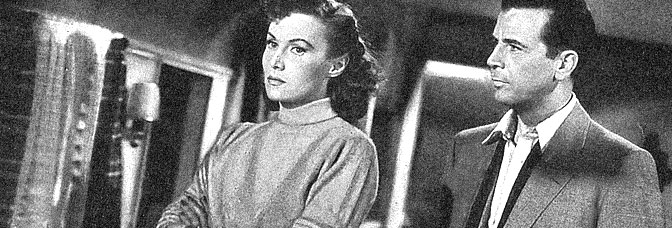
Cry Danger is a strange film noir… it takes place almost exclusively during the day. It also relies almost solely on humor to move itself along through the first act–not Dick Powell, who spends the whole film with a slightly bemused look on his face, but Richard Erdman. Erdman’s the whole reason to watch Cry…
-

A Millionaire for Christy exemplifies why the screwball comedy doesn’t work outside its era without a lot of tinkering. I can’t even think of a good example of one working outside the 1930s right now, but I’m pretty sure there have been some. Maybe even recently. But Christy adapts a regular screwball comedy script for…
-

Despite the description–Robert Taylor guiding a hundred mail-order brides from the Middle West to California in 1851–having the potential for a lot of cute comedy, the film is anything but. It’s a rough, indifferent narrative (outside the romance subplot), where no one is safe from the harsh realities of the trip. Great Taylor performance, strong…
-

Mark Robson made some great films. I first saw Bright Victory before I knew who he was (I think Victory was probably my first Robson, actually). I saw it on AMC in 1997 probably. Julie Adams is in it and maybe I had AMC flagged for Julie Adams movies somehow. I can’t remember if they…
-

Absolutely gorgeous staging of Jules Barbier opera is completely lacking, dramatically speaking. Powell and Pressburger do color German expressionism, which–again–looks great. They also haven’t got any interest in making a film out of the opera. Might be more of a success if you’re in the mood to watch an opera and not, you know, a…
-
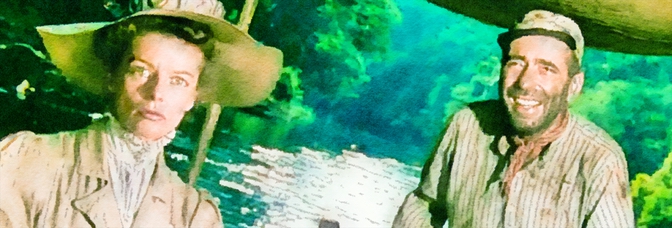
Awesome adventure/romance set in WWI Africa; Katharine Hepburn’s a British missionary hitching a ride with American ex-pat steamer captain Humphrey Bogart. After a first act where Bogart seems like a guest star, the movie really gets going as Hepburn convinces Bogie it’s their duty to take on a German gunboat. Incredible performance from Hepburn, amazing…
 The Stop Button