Category: 1950
-
Superman Flies Again establishes a few things I’m very curious to see if Atom Man vs. Superman keeps going with over the course of the serial. Firstly, is Pierre Watkin always completely wrong about everything. Playing newspaper editor Perry White, Watkin calls his staff–Kirk Alyn, Noel Neill, Tommy Bond–into the office (they can all hear…
-
Second (after QUARTET) in a trilogy of anthologies adapting W. Somerset Maugham short stories has good acting, okay writing, and some excellent direction (from Annakin not French) but just doesn’t quite work out due to its lopsided attentions. Maugham introduces the stories, sometimes getting cut off mid-sentence, which is sort of funny, sort of not.…
-

Where to start with Rashomon? Starting at the beginning means talking about the bookends–three strangers stranded in the rain, two telling the third different versions of the same story, each ostensibly true. The rain pours down around them, drowning out their voices. Rashomon is a film without a protagonist; it eschews the very idea of…
-

Max Steiner does the music for Caged, which is strange to think about because Caged barely has any music. Director Cromwell instead emphasizes the silence, especially as the film opens. Right after the opening credits, which do have music, Caged gets very quiet. “Silence” reads all the walls in the women’s prison where protagonist Eleanor…
-

D.O.A. is a wonderful example of a gimmick having nowhere to go. Edmond O’Brien is a small town accountant who decides to spend a week in San Francisco drinking and carousing (leaving girlfriend and secretary Pamela Britton back home). Out of the blue, he gets poisoned and has to solve his own murder. His investigation…
-

The Flame and the Arrow is an unfortunate effort. Most of the fault is Waldo Salt’s strangely tone-deaf screenplay. There’s narrative rhyme and reason, but none of it takes the actual resulting film into account–characters played by actors with no chemistry get thrown together. Director Tourneur doesn’t seem suited for the material. It’s a big…
-
Rio Grande doesn’t have much going for it. The best performance is probably Ben Johnson, who isn’t even very good, he’s just not as bad as everyone else. Harry Carey Jr. and Victor McLaglen aren’t good, but they’re likable. Carey’s performance is just weak, while McLaglen gets saddled with the silly, comic relief role of…
-
Quicksand is a film noir with room for cream and about five sugars. The genre often has a morality element to it, but this entry goes way too far with it. Or it might just be how the film treats lead Mickey Rooney. Most film noir male protagonists are overconfident simpletons taken in by devious…
-
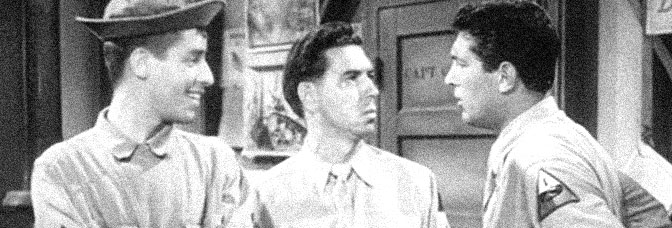
I wonder what At War with the Army would be like if it were funny. I also wonder what it would be like if director Walker could figure out how to open up a scene. Sure, the whole thing is shot on limited exteriors and then the same interiors–it takes place on an army base–but…
-

Father of the Bride is such a constant delight, it’s practically over before its problems become clear. First off, it’s definitely about the titular Father–a wonderful Spencer Tracy–who not only narrates but is in almost every scene. The wedding reception, when he’s chasing around daughter Elizabeth Taylor to say goodbye, is about the only time…
-

From the title, Little Tiger’s Can-Can Bug, one has to assume there is something lost in translation. The cartoon concerns two little tiger kittens who are working on a ship. They sing and they’re precious, but they don’t do much in Bug. There’s a grown-up tiger, a tuna boat captain–apparently the boat the two kittens…
-
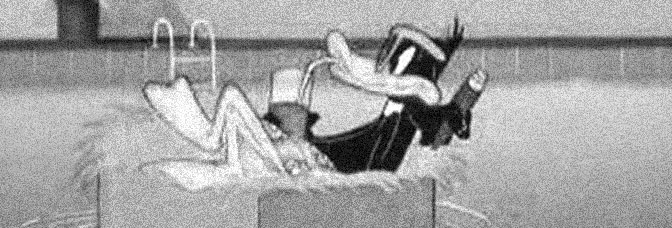
Once again, the boys at Warner Bros. have some problems with basic gender realities. Not only does Daffy Duck lay eggs (something he strongly infers in Golden Yeggs without getting graphic), neither do ganders. That incredible plot problem aside, Yeggs is a lot of fun. It starts on Porky Pig’s farm with a gander laying…
-

Food for Feudin’ has some really strong animation, but also some weak. There’s a great sequence where Chip and Dale crawl into these gardening gloves and confuse the heck out of Pluto. During that sequence, the animation is spectacular. Earlier, when the chipmunks are gathering nuts… not so spectacular. The cartoon isn’t particularly charming during…
-

Either Alan Ladd was in a bunch of makeup or he’d just had his eyes done because the way his eyebrows don’t move is disturbing. There are a few scenes where Liesen, presumably in an attempt to keep down the expository dialogue, has Ladd try to communicate with his eyes. They fail. Those scenes, and…
-
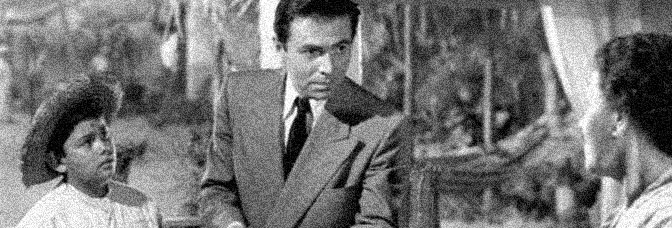
Here’s a goofy one–the title also could be The Doctor in the Sombrero–with James Mason as a mob doctor who makes off with two hundred grand and the boss’s girl, only to end up in rural Mexico, healing horses. It’s all pretty standard stuff, down to the excursion to Mexico, but Mason and Dan Duryea…
-

The premise behind The Killer That Stalked New York (shouldn’t it be Who?) is almost beyond goofy. The movie mixes one part film noir and one part medical thriller and… I mean, I don’t even know what to say about the story. It’s such a ludicrous idea (the fate of the city, under threat from…
-

Both critically and popularly, Chain Lightning gets classified as one of Bogart’s lesser, late 1940s films. While the film certainly is a star vehicle for Bogart, it’s only “lesser” if one compares it to Bogart’s stellar films (basically, the ones everyone remembers). On its own, Chain Lightning is far from perfect, but it’s a fine…
-
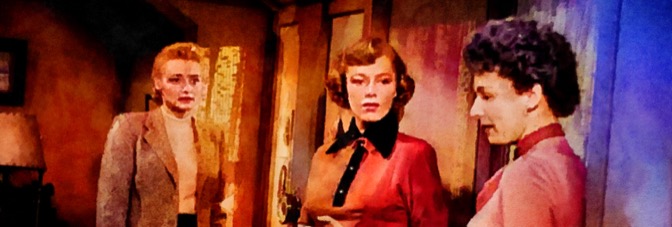
Three Secrets plays like a knock-off of A Letter to Three Wives, only without the writing. Secrets‘s problem is mostly with the writing. There are the three women–all of whom have secrets, except actually only two of them–played by Eleanor Parker, Patricia Neal, and Ruth Roman. The secret is each put a child up for…
-

Scandal presents an incredibly humane side of Kurosawa, one his historical pictures don’t convey. He shows the desperate sadness of people and offers little visible hope throughout. There’s one scene, when the protagonist (played by Mifune Toshirô) and the main character (Shimura Takashi) come across a pond reflecting the stars and Mifune comments about the…
 The Stop Button