Category: 1934
-
The Scarlet Letter’s opening title card explains while the Puritan customs might be atrocious to modern eyes, “they were a necessity of the times and helped shape the destiny of a nation.” Not on board with the former, but it’s definitely accurate for the latter. Especially since this version of Letter is about a white…
-
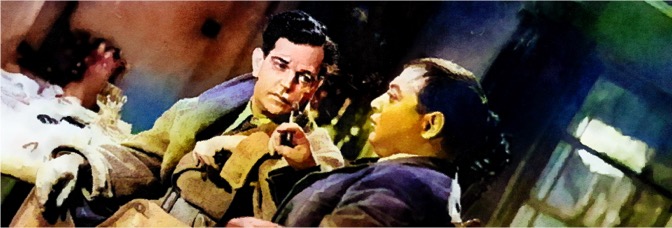
The Man Who Knew Too Much is an action thriller. It doesn’t start as an action thriller—it begins with an English family (dad Leslie Banks, mom Edna Best, daughter Nova Pilbeam) vacationing in Switzerland. Their vacation has almost come to an end, and they’re saying goodbye to some of their trip friends. Their good trip…
-

Woman in the Dark is literally a movie from before they knew how to make movies like Woman in the Dark. The film’s also fairly obviously done on the cheap, and director Rosen doesn’t bring anything to it. But it’s a film noir story trapped in a Pre-Code romantic drama. For a while, it’s a…
-
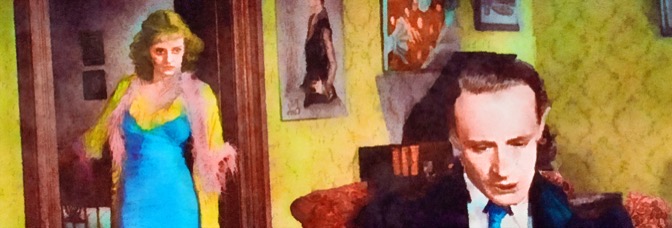
The best performance in Of Human Bondage is Frances Dee; despite doing a lot of close-up one-shots with the actors staring directly into the camera, the only time director Cromwell ever gives one anything to do is Dee. She’s mooning over Leslie Howard, which just draws attention to how little Howard mooned over anyone in…
-
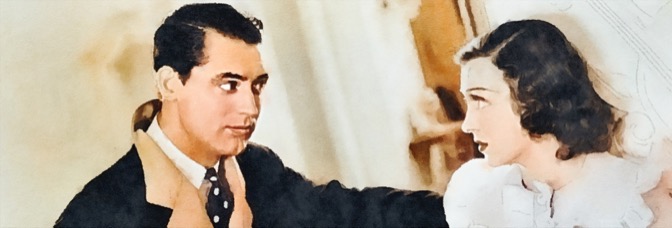
There’s a funny moment in Ladies Should Listen. As in a singular one funny moment. I can’t remember the joke because it wasn’t very good and was too busy being shocked at something vaguely amusing in the film, especially coming from Rafael Corio, who has the distinguished honor of giving the worst performance in a…
-

L’Atalante begins with a wedding procession; village girl Dita Parlo has married commercial barge captain Jean Dasté and is going off to live with him on the barge. The wedding guests drop all these details through exposition—we’re not privy to the newlyweds’ conversations as they walk through the village to the barge. Juxtaposed, first mate…
-

It makes sense director Lorenze never made any other films after Back Page because there’s no easy way to describe the disinterested direction. Well, outside Lorenze and cinematographer James S. Brown Jr. using the same exact camera composition for what seems like ninety percent of the film. When there’s an actual reaction close-up of someone…
-

Magnificent comedy about successful Broadway producer John Barrymore finding his muse in untrained lingerie model Carole Lombard. The film charts the rise and fall of their partnership, which gets romantic, in the first half, spends the second half giving them a chance to reunite (in a train-set screwball comedy). Awesome performance from Barrymore, great one…
-

The Black Cat has a lot going on. It’s the story of two American honeymooners–David Manners and Julie Bishop–who, for whatever reason, decide Hungary is better than Niagara Falls. It’s also the story of a recently freed Hungarian soldier Bela Lugosi, who went into the war a happily married psychiatrist, only to lose his family…
-

For a film called Tarzan and His Mate, Johnny Weissmuller’s Tarzan doesn’t get much to do. He spends the film rescuing Maureen O’Sullivan (which is one of the more frustrating aspects of the film–she doesn’t exhibit any jungle survival skills until the finale) from a variety of animals. These sequences are often exciting, especially since…
-

The Hearts of Age is a funny short film. It’s weird funny, but it’s also funny funny. The weird has these grotesquely made up people–the film centers on an old woman, sitting on a bell, being pulled from below by this servant (in blackface). People pass her, going down these stairs. She watches them. Then…
-
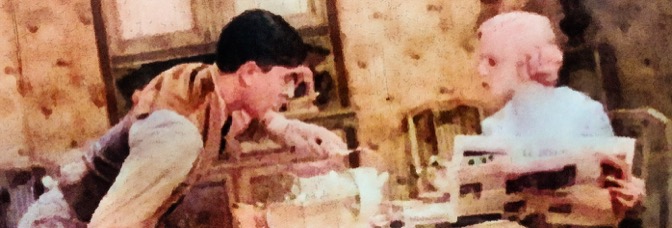
Quite a bit of Brute Wanted is rather funny. The whole idea is funny–dimwitted, failing actor (Jacques Tati) goes for an audition and it turns out he’s agreeing to wrestle a musclebound Russian grotesque. Tati’s got a nagging wife (Hélène Pépée) who also manages him. A lot of the short is spent on the fight…
-

While enough cannot be said about the efficiency of W.S. Van Dyke’s direction of the The Thin Man, the efficiency of the script deserves an equal amount of praise. Albert Hackett and Frances Goodrich get in so much little character stuff for the supporting cast, it’s hard to imagine how the film could possibly function…
-

As its title suggests, Murder on the Blackboard concerns a murder in a school, specifically an elementary school. Only one student appears; Blackboard concentrates on the rather shady goings-ons of the staff. There’s a drunk janitor, a lecherous principal, not to mention a love triangle between teachers. And, one mustn’t forget, Edna May Oliver’s Ms.…
-

Phenomenally well-made but exceptionally racist thriller about a Caribbean voodoo cult brainwashing Dorothy Burgess into a sleeper agent. Jack Holt’s her unknowing husband, Cora Sue Collins is their daughter. Second-billed Fay Wray is the good White lady versus suspected race traitor Burgess. Like I said, racist; really, willfully racist. Holt’s great, so’s Collins. Great finale…
-

Watching Oliver Hardy muddle through Oliver the Eighth‘s terrible dialogue makes one wonder if the short truly did not have a writer–there isn’t one credited–or if the actors just made it up on the spot. Given the rampant stupidity in Eighth, the latter seems more likely. The short’s idiotic “writing” hampers it more than enough…
-
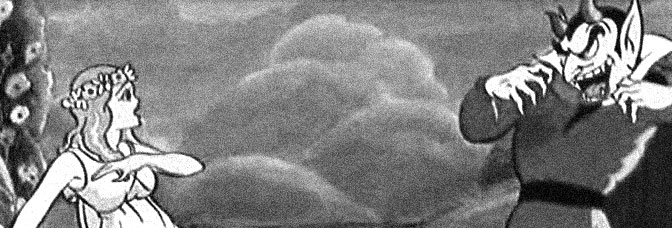
The Goddess of Spring is the story of Persephone and Pluto. She’s the Goddess of Spring, he’s the Lord of the Underworld. He kidnaps her, life on Earth gets very cold. The cartoon’s striking because of the movement. It’s hard to describe the animation. The figures are problematic (Persephone doesn’t have working elbows) but the…
-
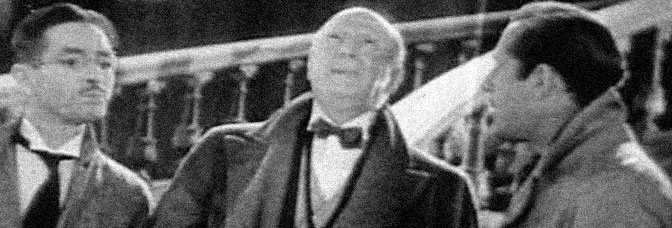
I’m not sure when the “old dark house” mystery film started–I haven’t seen any silent entries in the genre but I imagine there must be some, especially since the genre also appears to have been popular on stage. The Ghost Walks, in 1934–five years into talkies–shows the genre staling already. In an inventive plot development,…
-
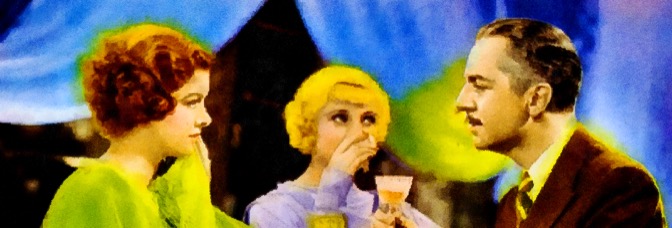
Evelyn Prentice only runs eighty minutes, but it goes on forever. At seventeen minutes alone, it’s getting tiring. The big problem is the lack of thoughtful approach. It’s constantly revealing big twists, twists to shock the audience, but they just end up detracting from the film’s possibilities. Because Evelyn Prentice is not a deep study…
-

There’s something particularly tragic about It Happened One Night: somehow, Capra and Riskin let it get away from them. It’s possible–likely even–the awkward conclusion was a result of not having access to the stars (Gable and Colbert were both on loan to Columbia), but it doesn’t really matter. Riskin went from a deliberate pace–the majority…
-

Upperworld starts incredibly strong–Warren William and his son (I knew I’d seen Dickie Moore’s name in credits before–he’s in Out of the Past) feeling abandoned by Mary Astor, who’s more interested in throwing costume parties than spending time with her husband and son. The scenes with William and Moore are great throughout, even after the…
-
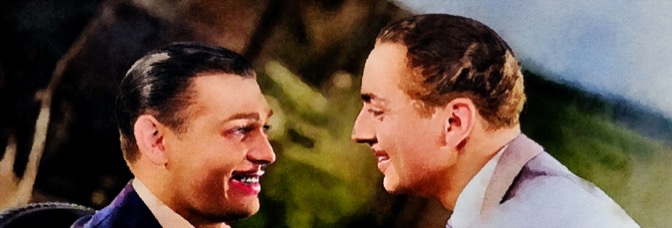
It’s funny how obvious writers’ contributions can be in certain films. For instance, Joseph L. Mankiewicz very likely wrote some of the best scenes in Manhattan Melodrama and Oliver H.P. Garrett wrote some of the worst. The clue is the dialogue. Mankiewicz has distinctive dialogue, even in a film relatively early in his career, and…
 The Stop Button