Category: 1933
-

There are a handful of Pre-Code elements in Professional Sweetheart it doesn’t seem like the Code broke so much as saved movies from. For instance, when Ginger Rogers needs to break out of her Stepford Wives mindset—Kentucky cracker Norman Foster has beaten her into it—all the city boys need to do is put her former…
-

The Eagle and the Hawk starts light and ends very heavy. Astoundingly—and appropriately—heavy. Eagle is a WWI flying ace picture, all about a group of British fliers who go to France only to discover war isn’t like playing polo actually. Right after an inventive segue from opening titles to the present action, the film has…
-
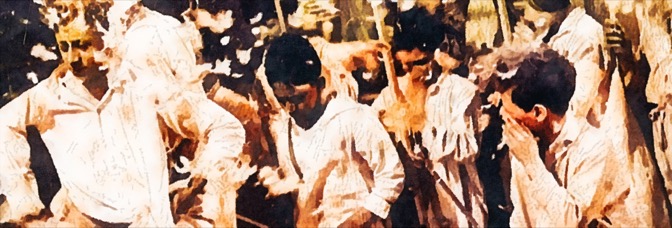
There are some truly excellent moments in Zero for Conduct, usually when director Vigo slows down the film (literally) and focuses attention on how the characters are experiencing said moments. The biggest one—though maybe not best—comes during the prelude to insurrection, when the students in a boys’ school are marching towards… well, it turns out…
-

If it weren’t for the “fallen woman” third act, Deluge would probably stay afloat at the end. Instead, it flops out in the really protracted finale, which involves a survivor camp deciding on a credit system in an effort to get capitalism back. It’s a real let down considering the second act is all about…
-

It’s hard to have worse written characters than dialogue. Like, how can character motivation be worse than what the characters speak to show their motivation. The Sin of Nora Moran shows what it’s like to have worse characterizations than dialogue. It’s not pretty. What’s sort of frustrating is the occasional bursts of interest. They seem…
-
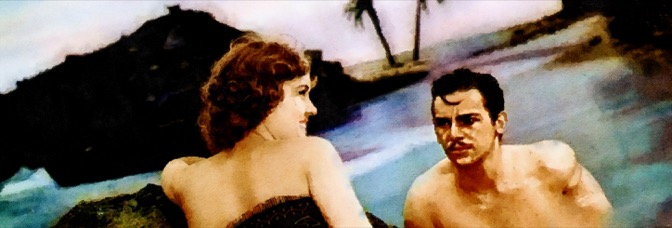
The Narrow Corner runs seventy minutes; it speeds along. Robert Presnell Sr.’s script has somewhat lengthy, complicated scenes where he tries to fit in information. The movie doesn’t need all that information–the subplot about Reginald Owen translating a Portuguese epic poem–because director Green isn’t going to do anything with it. The film has a somewhat…
-

Duck Soup is madness. It’s not divine madness or sublime madness. It’s comedic madness, which is fine, but it’s a tad frantic and a tad distracted. The film opens with Margaret Dumont’s wealthy widow getting Groucho Marx installed as a head of state. Turns out evil Louis Calhern–a neighboring country’s ambassador–wants to create unrest and…
-

Penthouse is a lean mystery masquerading as a class melodrama. Most of that class melodrama stuff comes at the front–and is only really ever alluded to later–making the film front-heavy. Unfortunately, so much time goes towards the melodrama, the mystery suffers. Luckily, there’s a whole bunch of charm–from the cast, from the script, from director…
-

Supernatural is a strange little film. I say little just because it's just over an hour; it has a great pace, however, and always feels full. Maybe because it introduces two subplots before getting to top-billed Carole Lombard. Then Lombard sort of encounters one of the subplots and the other one merges with her own…
-

The Invisible Man is a filmmaking marvel. First off, R.C. Sherriff’s screenplay sets things up speedily and without much exposition. The film introduces Claude Rains’s character through everyone else’s point of view–first the strangers he meets, then his familiars–all while Rains is front and center in the film. Even though he is, after all, invisible.…
-

Like most lame melodramas, Disgraced‘s plot only works because characters all of a sudden act completely differently than the story has previously established them. Disgraced concerns a department store model (Helen Twelvetrees) who starts hanging around a regular customer’s fiancé. Romance ensues. She’s got to hide the affair from her father, who would rather she…
-

With her cane and big goofy hat, it’s hard not to think of Lon Chaney in Phantom of the Opera when Mae West breaks out into her first song in She Done Him Wrong. While West wrote the film’s source, a play, it seems like the film would play better as a silent. Her acting…
-

Blind Adventure is a genial, nearly successful comedy thriller. Robert Armstrong, playing an unexpectedly wealthy working class American who’s vacationing in London, heads out into the fog and finds himself on a wild night. He encounters espionage, British society, a damsel in distress (Helen Mack) and trifle. Armstrong and Mack are wonderful together (they soon…
-

As it turns out–it’s hard to tell from the first ten minutes–The Fatal Glass of Beer is something of a spoof of melodramas. Those first ten minutes though are mostly just W.C. Fields being a gold prospector in a snow storm. There’s very little narrative. Fields introduces one recurring gag and it shouldn’t work, but…
-

For the first twenty minutes or so–it runs just over an hour–A Shriek in the Night seems like it might be a decent, b mystery. Ginger Rogers is appealing as the reporter undercover as a murder victim’s secretary and Purnell Pratt is great as the police inspector on the case. Unfortunately, it isn’t about the…
-

Ralph Bellamy gets top billing here, but he doesn’t deserve it. I’m always stunned when, with a reasonably early feature motion picture like Before Midnight, the filmmakers are clearly exhausted with the genre. Midnight‘s a big house mystery (enclosed setting, certain number of suspects) but the opening establishes the majority of the film is set…
-
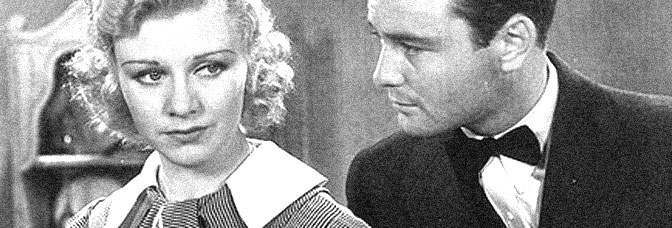
Ayres is a degenerate gambler (who cleans up nice) and Rogers is the girl who loves him, despite herself, of course, in this breezy melodrama. In terms of particulars, it has almost nothing to recommend it. Ayres is a little bit too believable as the callous lead, who purposely eschews all advice as he lucks…
-
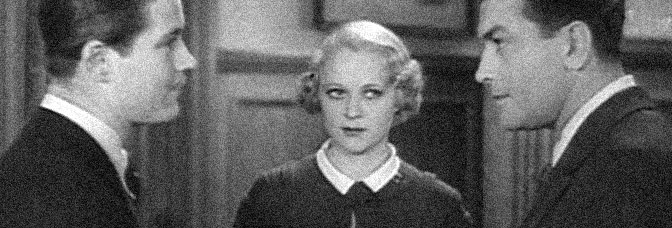
Maybe the film should have been called The Lecher, the Floozie and the Rube, because Central Airport doesn’t have anything to do with the plot. I kept waiting for it to turn into a Grand Hotel at an airport, but it’s really a soaper about pilot Richard Barthelmess who romances air show parachuter Sally Eilers…
-

It’s hard not to be, at least, somewhat impressed with The Vampire Bat, if only because it came out in 1933 as a knockoff Universal horror picture. Except at this point, there’d only been Frankenstein, Dracula and The Mummy. The Vampire Bat brilliantly resembles a Universal horror picture in every way but the filmmaking. There’s…
-

The Prizefighter and the Lady mixes a couple genres–the philandering husband whose wife can’t stop loving him standard and, additionally, stunt casting. Heavyweight contender Max Baer stars as a heavyweight contender, who fights the champ, played by champ Primo Carnera. Myrna Loy plays the suffering wife, while Walter Huston and Otto Kruger finish the supporting…
-

From the first third of Design for Living, it’s impossible to think it might not be absolutely fantastic throughout. Eventually it does hit a dry period and it’s impossible to think it’s going to pull out of it. Then it does and it’s impossible to think… well, you get the idea. I don’t know why…
-

Below the Sea really should be good. It’s got a great–somewhat startling when viewed today–opening, it’s got excellent special effects and Albert S. Rogell has some fantastic composition. But it all goes wrong. The opening is set in 1917 on a German U-boat. It’s carrying gold through the Caribbean and gets sunk following a battle…
-

King Kong opened in April 1933, The Son of Kong opened for Christmas 1933. The rush shows. The special effects really suffer–for whatever reason, when Robert Armstrong and Helen Mack are added to the little Kong’s shots, it’s fine, but when little Kong is added to Armstrong and Mack’s… it’s not. It’s like the focus…
-

King Kong is a perfect film. I don’t think I’d realized before. It’s always hard to talk about films like Kong, influential standards of American cinema. I want to talk about how its structure still sets the tone for modern films–the gradual lead-in (it’s forty-some minutes before Kong shows up), the non-stop action of the…
-

One Sunday Afternoon suffers from some of the standard play-to-film problems. The scenes go on too long, especially in the first half, which only contains three real scenes. The opening, which is a lengthy, seemingly direct adaptation from the play, features Gary Cooper and Roscoe Karns talking to each other as way of establishing the…
-
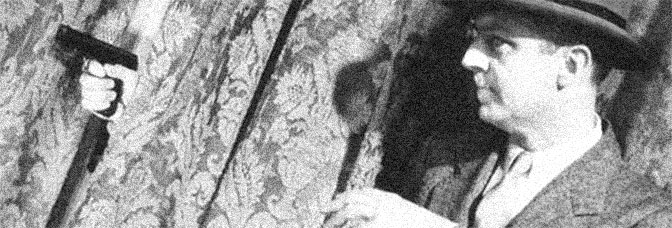
Private Detective 62 is not much of a mystery. Except perhaps the title, which has nothing to do with the film so far as I could tell. Instead, it’s an interesting drama taking place at a detective agency. William Powell plays a diplomatic agent who gets busted by the French while on assignment and gets…
-

Good performances can’t save tedious, stagy play adaptation about various blue bloods preparing to attend a dinner party. It starts okay then doesn’t go anywhere. Barrymores John and Lionel, Wallace Beery, Billie Burke (as the hostess), and Jean Harlow are standouts DVD, Blu-ray, Streaming.Continue reading →
 The Stop Button