The Stop Button
blogging by Andrew Wickliffe
Category: 1914
-

What remains of The Perils of Pauline is not The Perils of Pauline. This European version is a condensation of the actual serial. The nine chapter European version is about half the original length of the serial. And it’s also not a good translation. English to French to English again. So the European version of…
-
The Floating Coffin starts as most Perils of Pauline chapters start. Villain Paul Panzer is loitering around lovebirds Pearl White and Crane Wilbur, trying to figure out a way to off White. This time they’re yachting and White wants to go off on her own in a motorboat. Unlike every other chapter of Pauline, she…
-

The Floating Coffin starts as most Perils of Pauline chapters start. Villain Paul Panzer is loitering around lovebirds Pearl White and Crane Wilbur, trying to figure out a way to off White. This time they’re yachting and White wants to go off on her own in a motorboat. Unlike every other chapter of Pauline, she…
-
The Serpent in the Flowers only refers to one of the many things in this penultimate chapter of The Perils of Pauline. It comes towards the middle, after Paul Panzer has hired gypsy Clifford Bruce to again do away with Pearl White. Panzer senses he’s running out of time to kill White (according to the…
-
The Serpent in the Flowers only refers to one of the many things in this penultimate chapter of The Perils of Pauline. It comes towards the middle, after Paul Panzer has hired gypsy Clifford Bruce to again do away with Pearl White. Panzer senses he’s running out of time to kill White (according to the…
-
This chapter involves the world of international espionage, with leads Pearl White, Crane Wilbur, and Paul Panzer meeting a submarine designer (Jack Standing) who offers White a tour of his latest boat. Conveniently, Standing’s (unfortunately uncredited) fiancée is a foreign agent out to steal his latest plans. While at dinner, she and Panzer get seated…
-

This chapter involves the world of international espionage, with leads Pearl White, Crane Wilbur, and Paul Panzer meeting a submarine designer (Jack Standing) who offers White a tour of his latest boat. Conveniently, Standing’s (unfortunately uncredited) fiancée is a foreign agent out to steal his latest plans. While at dinner, she and Panzer get seated…
-
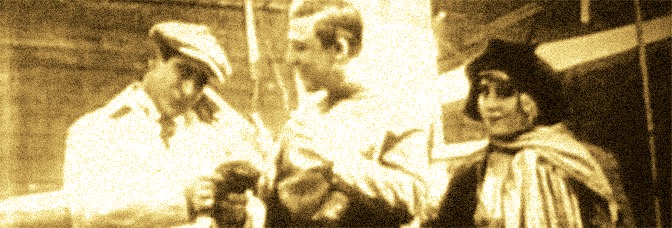
The Shattered Plane title to this chapter kind of gives things away. Is there going to be a shattering of a plane? Has it already shattered? Villain Paul Panzer talks his ward, Pearl White, into going out to the airfield and trying to get aboard a plane. There’s going to be a race. White loves…
-

The Shattered Plane title to this chapter kind of gives things away. Is there going to be a shattering of a plane? Has it already shattered? Villain Paul Panzer talks his ward, Pearl White, into going out to the airfield and trying to get aboard a plane. There’s going to be a race. White loves…
-
A Watery Doom opens with scheming villain Paul Panzer hiring a “gypsy” (honestly, calling them Romani in this context seems inappropriate), played by Clifford Bruce, to drown his ward, Pearl White. But Panzer’s worried her fiancé Crane Wilbur will come along and save her at the last minute. So at least Panzer’s learned the structure…
-

A Watery Doom opens with scheming villain Paul Panzer hiring a “gypsy” (honestly, calling them Romani in this context seems inappropriate), played by Clifford Bruce, to drown his ward, Pearl White. But Panzer’s worried her fiancé Crane Wilbur will come along and save her at the last minute. So at least Panzer’s learned the structure…
-

The Deadly Turning starts with what seems like a lot of corrective potential. Pearl White has signed up for a car race without telling beau Crane Wilbur or guardian Paul Panzer. Once she’s accepted, she tells them at once, setting she and Wilbur on their plot line and Panzer on his. Wilbur begs White not…
-

The Deadly Turning starts with what seems like a lot of corrective potential. Pearl White has signed up for a car race without telling beau Crane Wilbur or guardian Paul Panzer. Once she’s accepted, she tells them at once, setting she and Wilbur on their plot line and Panzer on his. Wilbur begs White not…
-
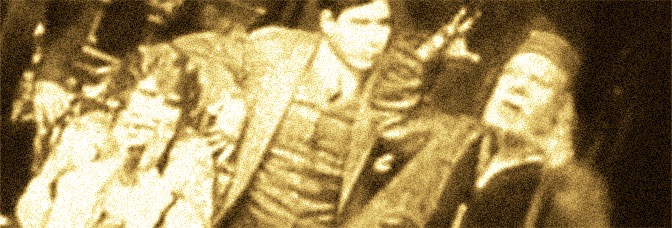
The Pirate Treasure doesn’t give Pearl White anything more to do than usual in Pauline, despite her playing Pauline, but it’s one heck of an amusing chapter. Villains Paul Panzer and Francis Carlyle (who really ought to be top-billed since they have the most to do every chapter–so far) are walking along trying to figure…
-

Tired of being in the public eye–presumably since she escaped a terrible fate in the previous chapter–Pearl White decides to go visit some friends out west. Suitor and pal Crane Wilbur can’t go with her (which is initially a blessing); unfortunately, villain Paul Panzer discovers her plans and schemes to once again kill her for…
-
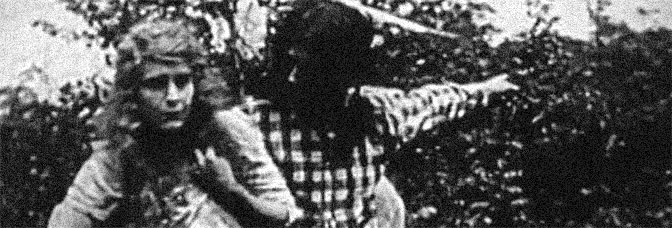
Tired of being in the public eye–presumably since she escaped a terrible fate in the previous chapter–Pearl White decides to go visit some friends out west. Suitor and pal Crane Wilbur can’t go with her (which is initially a blessing); unfortunately, villain Paul Panzer discovers her plans and schemes to once again kill her for…
-

Trial by Fire takes a while to get to its first Peril for (sort of) lead Pauline (Pearl White). She’s a young heiress who wants to live a life of adventure–at least for a year–before she marries her guardian’s son. That son, Crane Wilbur, doesn’t really want Pauline to take this year off, but he…
-
Trial by Fire takes a while to get to its first Peril for (sort of) lead Pauline (Pearl White). She’s a young heiress who wants to live a life of adventure–at least for a year–before she marries her guardian’s son. That son, Crane Wilbur, doesn’t really want Pauline to take this year off, but he…
-

Chaplin’s got a real problem with visual continuity in Recreation. At first, he does really well. The actors move–through a park–from left to right. Helen Carruthers is on a bench with a prospective beau (Charles Bennett), then she leaves him and moves right. Chaplin (as the Tramp) enters and moves right to follow her. Eventually…
-

Cruel, Cruel Love has a lot of possibilities. Sadly, director Nichols doesn’t realize any of them. He’s interested in broad physical humor–wrestling, actually–and having Charlie Chaplin mug for the camera. Chaplin does a fine enough job mugging, but it goes on forever. Love concerns an engaged couple, Chaplin and Minta Durfee. When Durfee sees him…
-

The best thing about His Trysting Place is probably Frank D. Williams’s photography. Chaplin’s athletics are impressive, but he doesn’t have much use for them. They’re most exciting during his food fight with Mack Swain. The food fight itself isn’t particularly funny–until the end–but Chaplin looks like he’s flying at times. Trysting is about two…
-
Hearts and Diamonds involves a lovable fat man (John Bunny) out to marry a rich woman. Eventually it becomes all about baseball, which makes very little sense. It turns out the woman, played by Flora Finch, loves baseball so Bunny ends up holding a game to impress her. Until the game, which drags on and…
-

Chaplin opens His Prehistoric Past setting it up as a dream sequence, which lets the viewer know the outcome can’t be too dramatic. But the setup is immediate–Chaplin falls asleep on a park bench–so the more relatable elements in the dream don’t have much substance. In the dream (the majority of Past), Chaplin is a…
-
The Miracle Water is so exceptionally confusing–and it’s only ten minutes–I wonder if something had been lost or if the theaters handed out a plot summary. In fact, it’s so confounding, I read some descriptions online and they characterize the film as family friendly fare. A husband wants children, ships the wife off to the…
-
Okay, Kid Auto Races at Venice makes a little more sense now… it was ad-libbed. Charlie Chaplin really was just doing annoying gags in front of people who are watching a baby-cart race. Most the film consists of Chaplin acting like a jerk. He’s funny and appealing enough, but the short’s particular because of its…
-
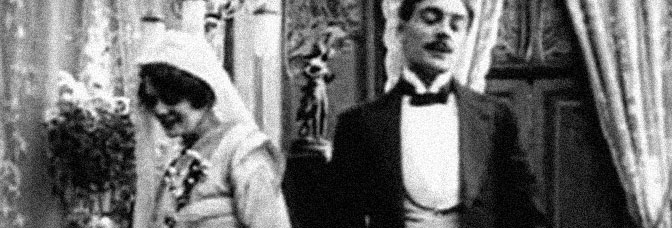
I don’t think I’ve ever seen a silent comedic actor ever mug for the camera quite as much as Max Linder. In Max Sets the Style, he’s a bumbling (we assume… it’s never clear) fellow on his way to a party. It might be a wedding, but it seems more like a party. It’s unclear.…
-
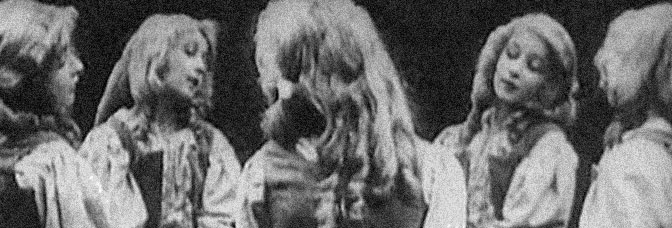
I was going to say it was odd Frank Baum wrote the screenplay, but I guess he wrote a bunch of them back in the teens. The Magic Cloak of Oz is a silly little film–I’m assuming the target audience was children–and a lot of fun. Baum has a good time with the title cards…
 The Stop Button