 Nitz closes up the limited with just enough good will. Galusha doesn’t hack the talking heads scenes any better than he does the action scenes and there are lots of both this issue. All of a sudden Dream Thief has these ineptly composed sequences, something the comic just can’t support.
The fault isn’t entirely Galusha’s either; Nitz seems like he’s ready for the Escape series to be done. He rushes through the big action finale, something he’s been promising for all four issues of this series and even hinted at during the first series. He hasn’t introduced much of a supporting cast this series and, as he closes it down, he’s setting Dream Thief up for a much different continuation.
And, thanks to Galusha’s unfamiliar–and inconsistent from page to page–art, it seems like a perfectly good idea.
It’s too bad this series wasn’t great, but good enough works.
B
CREDITS
Writer, Jai Nitz; artist, Tadd Galusha; colorist, Tamra Bonvillain; editors, Everett Patterson and Patrick Thorpe; publisher, Dark Horse Comics.
 Things take an unexpected turn when John’s sidekick takes him hostage (after he’s been possessed). It’s a bit of a spin on the Dream Thief standard but Nitz also has a new artist on the book–Tadd Galusha–and everything feels a little different.
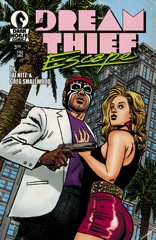 Nitz is wrapping everything together rather nicely, but then he goes a little overboard. He explains the plan in detail only to throw a significant wrench in it. That wrench is another ghost possessing protagonist John; presumably this act of vengeance will make things difficult for the A plot.
 You know, I’ve been talking about limited series spending too much time in their last issue setting up the sequel series but, dang, if Jai Nitz and Greg Smallwood don’t pull it off beautiful for Dream Thief: Escape.
 Nitz and Smallwood do the improbable–they close off Dream Thief all right. It’s a difficult proposition because Nitz has been running the series episodically and he’s only got one issue to wrap everything up. Most of the previous issues have nothing to do with this one, except their subplots.
 You know a comic is good when the writer can introduce an unbelievable amount of characters names in the first three pages and you still love it.
 Okay, so the lead doesn’t kill people, he gets possessed by wronged people and they kill people. Nitz wasn’t clear though before. This explanation gets the lead off the hook a little for killing his girlfriend. He was possessed by the guy she’d murdered.
 This issue of Dream Thief isn’t just better than the first, Nitz sets a high bar for the series and its ambitions.
 I’m not what I’m supposed to think of Dream Thief. Not to spoil too much but the protagonist kills his girlfriend–the day after cheating on her–because she’s just mistakenly killed someone she suspects of breaking into her house and tying her up and threatening to kill her.