The Stop Button
blogging by Andrew Wickliffe
Category: Detective Comics
-

I wasn’t expecting much from this issue; the team of writer Len Wein, penciller Marshall Rogers, and inker Dick Giordano hasn’t impressed in their one-and-a-fifth (they did a bookend on a reprint) issues of Detective so far. Wein’s writing a sequel to Rogers’s arc with Steve Englehart, trying to maintain continuity, like Batman hallucinating a…
-

When Steve Englehart started his Detective run, he quickly settled on a fascist, macho narration style to describe Batman and his male perfection. When Hugo Strange showed up and proved to be just as cut, the two men complimented each other’s physiques and prowesses, with Strange’s evil assistant lady making fun of them. At the…
-

Despite my youthful indiscretions in reading the famed Steve Englehart and Marshall Rogers, I had no idea what came after it. Turns out neither did DC at the time, since this issue’s got Len Wein, Rogers, and new inker Dick Giordano doing three new pages around a reprint from 1971. Batman and Commissioner Gordon go…
-
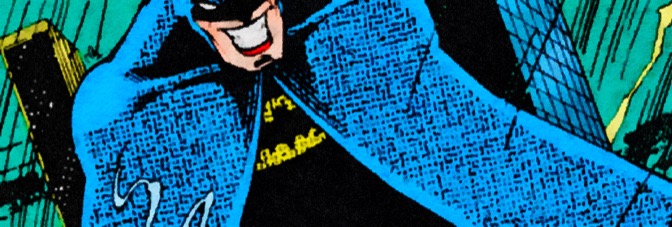
I either made a crack about Steve Englehart writing the narration for Detective Comics for the “Batman: The TV Show” announcer, or I thought about making the crack. This issue Englehart’s back at it, ad nauseam. Then Chief O’Hara shows up doing banter, and maybe it’s supposed to be a grim and gritty remake of…
-

So, reading this issue—the first of the Joker Laughing Fish two-parter—it’s clear why the comic’s got such an excellent reputation. Even with the utterly banal, fascist narration and Batman talking like a tool, it’s a great comic. Four things happen in the comic, all excellent for one reason or another. First, Batman goes to confront…
-
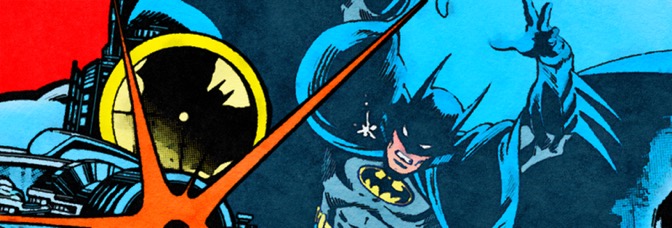
When I was eleven, I first read this comic in the Greatest Batman Stories Ever Told hardcover. Then there was the next part in Greatest Joker. It’d be years before I could read the complete Steve Englehart, Marshall Rogers, and Terry Austin arc. But this issue is where it all started. So as I break…
-

Steve Englehart writes Bruce Wayne as a narcissistic asshole who bullies and psychologically abuses ward Dick Grayson. Grayson, for his part, has drunk the Kool-Aid; at one point, he talks about how mental illness is no excuse, and at another, he waxes on about Batman’s such a great man. It’s such weird, bad writing. Though…
-

I’ve the sneaking suspicion last issue, when the evil nurse commented on Hugo Strange and Batman complementing each other’s physical and mental prowess when they should be fighting, it wasn’t writer Steve Englehart acknowledging the absurdity of the machismo; it was him making fun of the silly woman for not getting it. There’s a scene…
-
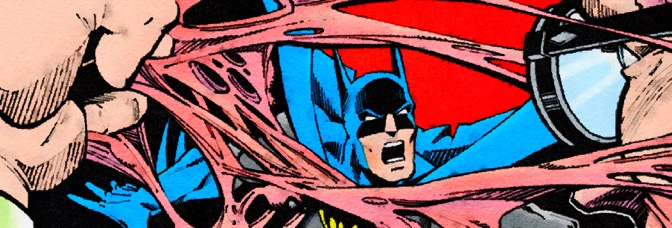
So, I figured out where Steve Englehart and Marshall Rogers’s Detective Comics belongs. As a comic strip in late seventies Playboy. Seriously. Rogers’s art is detailed but plain, intricately designed but not artsy. Englehart’s exposition is childish—“comic book-ish”—and treats Batman as a fascist action figure, but it’s incredibly consistent. Lots! Of! Declarative! Statements! Plus, this…
-

There’s a lot to be said about this issue, but the “highlight” has got to be when writer Steve Englehart describes Batman as the “pensive prince of shadows.” This line comes just before Batman goes to the Batcave and yells, “I’m the goddamn Batman,” to himself as a positive self-reinforcement. I’m only slightly exaggerating; Englehart…
-

Why does Steve Englehart’s writing sound like he’s doing a spec script for “Batman: The TV Show” cliffhanger narration? I can’t decide if it’d be better if he’s serious and thinks it’s good writing to treat your readers as infantile or if he’s doing it because he’s being condescending to the material. Either way… lousy…
-
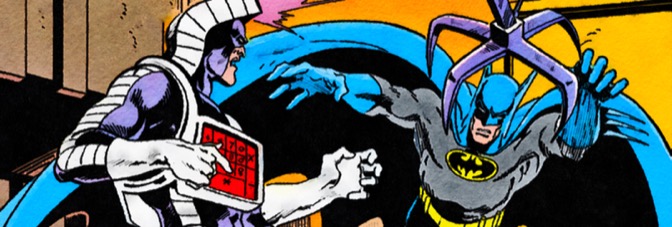
At least the art’s better. I can’t imagine how this issue would read without it. Marshall Rogers is still way too design-focused, with most of the action taking place against blank backgrounds, but when there is scenery, it’s excellent. And Terry Austin’s thin, dark inks are perfect, particularly on the Batman pages. But the writing’s…
-

In my youth, I never liked these “solve-the-mystery-yourself” stories. To the degree, I negatively associated them with writer Bob Rozakis. However, I got over it eventually, instead associating Rozakis with bland, cloying stories, much like the feature he contributes to this issue. The art’s from John Calnan, and the inks are Vince Colletta. I’m unfamiliar…
-

The feature has Ernie Chan and Vince Colletta art and all the visual failings such a pairing promises. But the story’s… oddly… good? A Silver Age Batman villain—The Signalman—returns for a bunch of themed heists. What makes it interesting is how well Signalman does against Bats. Len Wein writes; Signalman has a lot of bravado…
-

I’ve never heard of writer David Vern before, but I hope it’s a while before I read another of his comics. The Batman feature’s not the worst thing in the world, but it’s pretty annoying thanks to the Ernie Chan and Frank Giacola art. Also, the story’s written like a Hostess Fruit Pie advertisement, like…
-

I went into this issue expecting the back-up—Black Canary versus the Calculator, continuing writer Bob Rozakis’s back-up from last issue—to be better than the feature, which wraps up guest star vigilante the Black Spider’s first appearance. I was wrong. While the feature is not good at all, the back-up is even worse. The feature starts…
-

The feature has art by Ernie Chan and Frank McLaughlin. Chan’s figure drawing is rough. Batman looks silly and uncomfortable, contorting his way through the story. Gerry Conway’s got the script credit, so when the mystery villain turns out to be a Punisher clone called the Black Spider… well, at least they got Conway to…
-

I wish they had done a recap issue back when Colan was at the top of his game. This issue sets up the big anniversary special over in Batman, with he and Robin going over the villain files in the Batcave. Gordon got an ominous note. One might think Batman should do that work during…
-

There’s some fantastic art from Colan and Smith this issue. Moench’s still got his weird relationship between Jason and Nocturna, but Colan sure does draw it well. When Batman finally shows up–after discovering Nocturna is a crime boss–and Moench’s script has him inexplicably drawn to her… the art is what sells the scene. The Nocturna…
-

Gene Colan and Bob Smith are back on the art and it’s a strange return for Colan. It’s a lot of action and Colan goes a lot more dynamic than he usually does. There are some fantastic panels in this issue. Nice page layouts too. It’s a winner on the art. Moench writes Jason’s diary;…
-

It’s an issue of amazing art. Klaus Janson isn’t doing a lot of detail on faces, which is not good, but his composition is breathtaking. The way he translates Moench’s script–sort of sapping out the sentimentality and enthusiasm–this issue is a mix between superhero idealism and melancholy cynicism. It’s beautiful. Janson’s also got the best…
-

Moench goes a little too high concept for this one, especially since Broderick isn’t really the artist to do a protracted chase sequence. A small-time thug runs across the rooftops, Batman in close pursuit, and Moench flashes back to all the things in his life to bring the thug to this point. It’s a little…
-

So Batman finds this rock Indiana Jones once lost and it turns you into a violent superman. While under its influence, he kills a helicopter pilot who’s being held hostage. Bolles is such a crappy writer, he doesn’t even seem to acknowledge it once the helicopter explodes. Moments later, Batman has the good old “no,…
-

This issue doesn’t just have bad writing. Bad writing the art and pacing could probably surmount. Mike Lilly’s pencils aren’t the greatest, but Sean Parsons and Dan Davis give them a nice inking and it all moves pretty well visually. But Paul Bolles’s script? It’s exceptionally incompetent. He writes all this third person narration, very…
-

One could just read this issue for the art. Alcala beautifully complements Gene Colan. He sort of brings out the lusciousness, but reigns it in just enough. Colan’s never too lush; Alcala is never reductive. The story’s not bad, but Moench doesn’t quite sell Jason Todd, detective. He investigates, but without any finesse. The scenes…
-

I try to be open-minded about Cavalieri and Cullins’s Green Arrow back-ups, but this one peeved me. Moench doesn’t get enough time with his Batman story–which is his fault for not pacing it out right–but come on. Who carries about Green Arrow’s lame villain? Though inker Frank Giacoia does ruin Cullins’s pencils in sometimes amusing…
-

Gene Colan’s first issue on Detective (with Moench) is unexpected. There’s a dreamy, otherworldly, emotive quality to it. Harvey Bullock oozes repulsiveness; the symbolism becomes clear at the startling conclusion. Moench knows how to surprise–even if the cliffhanger isn’t exactly unexpected, its degree is a shock. The issue closes up–after Batman’s adventures with Man-Bat–the new…
-

Doug Moench sure does like exposition this issue. Batman can’t stop thinking about all the problems in his life (though he manages not to detect Gordon’s heart problem). But there’s also the regular narrative exposition, which Moench overwrites. It makes me wonder if he’s gearing Detective towards a younger audience. He’s not particularly confident; he…
-
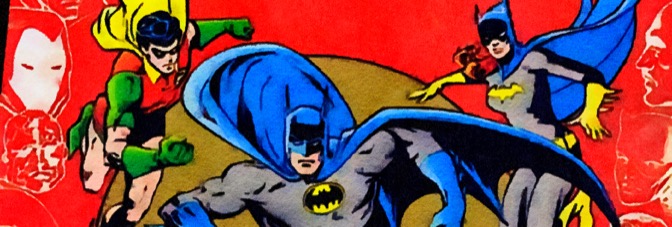
It’s a gorgeous issue. Newton and Alcala doing Batman’s rogues gallery is possibly an unsurpassable event. Maybe eight pages in, they have this incomparable Joker close-up. DC ought to reprint the issue oversized just so one can really look at it. But it’s also a really good issue. Besides Jason Todd’s endless thought balloons–not bad,…
-

Hmm. Young Dan Jurgens. Guess it’s why Bruce looks like Clark Kent without glasses. I’m curious to see Conway’s original script–he includes expository scene after expository scene, all the fill in space–and there only good scene is incomplete. Bruce breaks it off with Vicki by acting like a thoughtless ass, but it’s never made clear…
 The Stop Button