The Stop Button
blogging by Andrew Wickliffe
Category: Black Hammer
-
Black Hammer goes Vertigo. At least Lucy’s half of the comic. Not only does she go Vertigo and to Hell, she meets a former costumed hero-type who’s now in Hell as well. Lots of almost rhyming, sorry. Wasn’t a former hero type in Hell a Swamp Thing plot point back in the day? Lucy’s story…
-
I suppose this issue–where Doctor Star discovers he’s inadvertently inspired the creation of the Green Lantern Corps (different name, same exact idea)–is the best so far in the series. There’s a lot of dramatics and a lot of interstellar stuff. The dramatics are more flashbacks with Doctor Star coming home. He argues with his wife,…
-
What’s really bad is I barely have any memory of Doctor Star #1 other than it not being particularly good and a Starman homage, certainly not for a Black Hammer brand title. The second issue isn’t much better but it’s at least got space aliens. Doctor Star is a terrible father. Well, not exactly. Not…
-
Doctor Star and The Kingdom of Lost Tomorrows is a Black Hammer tie-in book–more a sidequel, with the WWII setting showing Abraham Slam and Golden Gail in their respective youths. It starts out a Starman homage (I assume, I’ve never read it but the protagonist’s name is James Robinson and his outfit is similar so……
-
I wasn’t particularly concerned about Sherlock Frankenstein #4 going into it. I knew Lemire would have something good cooked up. And he does. He and Rubín don’t just do the history of Sherlock Frankenstein, they do the history of the Black Hammer universe, at least in the twentieth century. It goes from Golden to Silver…
-
The only thing wrong with Sherlock Frankenstein is realizing it’s almost over. I don’t know why I thought it was six issues; just being hopeful, I guess. Lucy’s investigation continues, even after someone has attacked her in the sanctuary. Real quick–apparently Black Hammer (the character) got his powers from the New Gods? I don’t think…
-
Lemire just won the Cthulhu game. For over ten years, comic book companies–usually indie ones–have been doing Cthulhu stuff. Boom!, Avatar (obviously), Archie, Dark Horse, Image. And Lemire just won it for Dark Horse with this issue of Sherlock Frankenstein. In searching for her father, Lucy Weber meets Cthu-Lou II. He’s a sewer varient of…
-
The panel composition. David Rubín sometimes spirals the panels in double-page spreads, sometimes just moves action horizontal, always guiding the reader’s eye. It’s a visual treat, which is particularly awesome given it’s a talking heads issue. Set before Lucy Weber joins Black Hammer, Sherlock Frankenstein and Legion of Evil has her investigating arch-villain Sherlock Frankenstein…
-

This issue wraps up the second arc. I haven’t decided if I’m going to wait for the trade or just read the second arc again in one sitting, because Black Hammer has arrived. Lemire and Ormston do New Gods, they do Darkseid (sort of), they do a big climatic finish, and it all works. Even…
-
This issue wraps up the second arc. I haven’t decided if I’m going to wait for the trade or just read the second arc again in one sitting, because Black Hammer has arrived. Lemire and Ormston do New Gods, they do Darkseid (sort of), they do a big climatic finish, and it all works. Even…
-

David Rubín returns for another issue (maybe a few), with Lemire doing an origin story for Lucy Weber. The entire thing is flashback, starting when Lucy’s a kid (right after the heroes’ disappearance) and going until she starts investigating it as an adult. There’s some talking heads, some exposition, some foreshadowing; Rubín beautifully visualizes it…
-
David Rubín returns for another issue (maybe a few), with Lemire doing an origin story for Lucy Weber. The entire thing is flashback, starting when Lucy’s a kid (right after the heroes’ disappearance) and going until she starts investigating it as an adult. There’s some talking heads, some exposition, some foreshadowing; Rubín beautifully visualizes it…
-

It’s a bridging issue–though it’s still unclear what Lemire’s setting up. Lucy Weber continues her investigation, sort of recapping everything. Nothing new exactly, just some rather nice Ormston art. Barbalien has a showdown–both in the present and in flashback; it’s well-written, but it’s character development, not progressing the overall narrative. Again, some great Ormston art.…
-
It’s a bridging issue–though it’s still unclear what Lemire’s setting up. Lucy Weber continues her investigation, sort of recapping everything. Nothing new exactly, just some rather nice Ormston art. Barbalien has a showdown–both in the present and in flashback; it’s well-written, but it’s character development, not progressing the overall narrative. Again, some great Ormston art.…
-
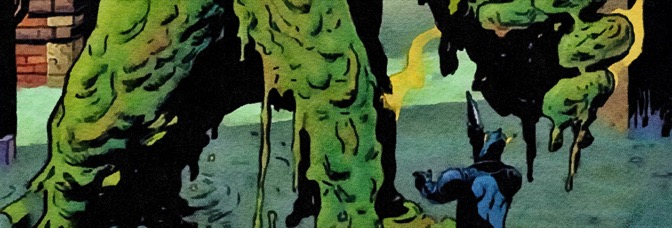
Has Black Hammer not had a big issue lately? Because this issue gives me the “momentous reveal” chills I got reading the first trade. Lemire works the whole thing on multiple levels–you get big moment on a character level for Barbalien, but there’s also a whole “what’s the mystery of Black Hammer” thing going on.…
-
Has Black Hammer not had a big issue lately? Because this issue gives me the “momentous reveal” chills I got reading the first trade. Lemire works the whole thing on multiple levels–you get big moment on a character level for Barbalien, but there’s also a whole “what’s the mystery of Black Hammer” thing going on.…
-
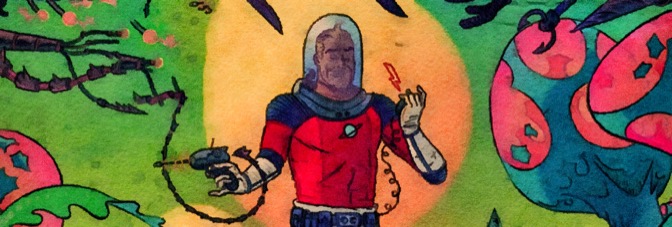
It’s a depressing issue. Lemire knows he’s going to do a depressing issue–he set it up with the previous issue’s cliffhanger–but he just drags the reader through it all. David Rubín fills in on the art, which is a fantastic mix of psychedelic and cartooning. His expressions on Colonel Weird, in a flashback to the…
-
It’s a depressing issue. Lemire knows he’s going to do a depressing issue–he set it up with the previous issue’s cliffhanger–but he just drags the reader through it all. David Rubín fills in on the art, which is a fantastic mix of psychedelic and cartooning. His expressions on Colonel Weird, in a flashback to the…
-
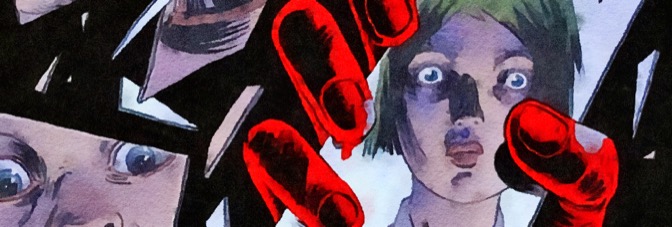
The strangest thing about Black Hammer, which I can’t believe I hadn’t noticed before–or did and didn’t comment on (or worse, did and did comment on)–is how both Lemire and Ormston excel at the tragedy. The comic is at its best when the characters are suffering their worst. This issue has a little bit of…
-
The strangest thing about Black Hammer, which I can’t believe I hadn’t noticed before–or did and didn’t comment on (or worse, did and did comment on)–is how both Lemire and Ormston excel at the tragedy. The comic is at its best when the characters are suffering their worst. This issue has a little bit of…
-
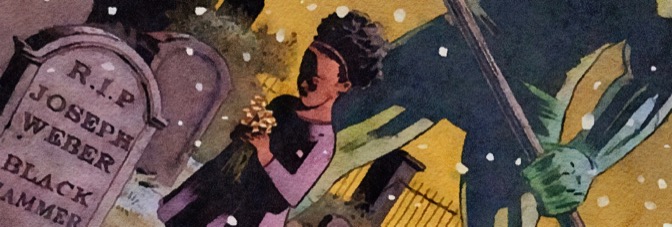
Lemire gets Hammer’s second storyline–with Black Hammer’s (the dead hero, not the comic itself) daughter showing up in the farm. There’s a lot of comedy, there’s a lot of tenderness (which Lemire and Ormston handle quite well), there’s a lot of flashback on Black Hammer. It’s a great issue with a way too effective soft…
-
Lemire gets Hammer’s second storyline–with Black Hammer’s (the dead hero, not the comic itself) daughter showing up in the farm. There’s a lot of comedy, there’s a lot of tenderness (which Lemire and Ormston handle quite well), there’s a lot of flashback on Black Hammer. It’s a great issue with a way too effective soft…
-
It’s a double-sized (or at least over-sized) annual for Black Hammer, yay. Colonel Weird goes through the Paraverse pursuing a creature (who looks a bit like Starro) and going into flashbacks with each of the characters, with different artists. It’s good art, it’s sad superheroes, there’s lots of implied depth, it’s moody, it’s Black Hammer.…
-
Black Hammer looks like a horror comic. Dean Ormston’s art always suggests there’s something darker going on, even if writer Jeff Lemire didn’t hint at it all the time. There’s something creepy about the comic’s world; the cast of characters doesn’t know what’s going on, the reader doesn’t know what’s going on, Lemire doesn’t really…
 The Stop Button