Category: ★★★★
-

While Tom Hanks, Bill Paxton and Kevin Bacon’s characters are the only ones in danger in Apollo 13, they remain calm for almost the entire runtime. There’s no point to panicking, something Hanks points out in dialogue. Instead, director Howard focuses on an exceptional assortment of character actors–as the NASA Mission Control–for the dramatic parts.…
-

While the low budget undoubtedly plays a hand in it, Mad Max is the epitome of narrative efficiency. It should have a big concept–a slightly post-apocalyptic future (but people still vacation and get ice cream and the beaches are nice) where the big cities are (probably) gone and the rural highways are run by gangs,…
-
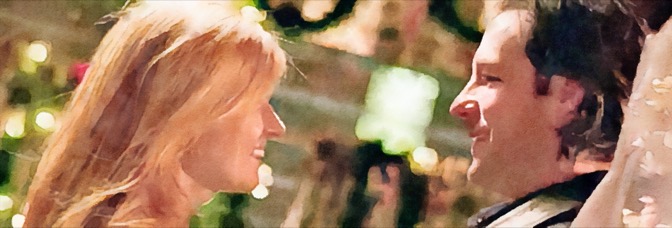
The Fitzgerald Family Christmas is going to be frustrating to talk about. Burns contrives a melodrama and then proceeds to remove all the melodramatic fluff. During the scenes when–after the first act concludes–more of these melodramatic events occur, there’s a brief recognition of what he’s achieved. At some point in the second act, after three…
-
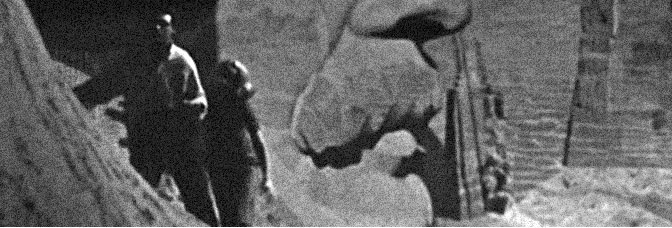
North by Northwest seems a little like a Technicolor version of an early Hollywood Hitchcock–the regular man combating the bad guys against incredible odds (at an American monument no less), but it’s a lot more. The film’s a tightly constructed proto-blockbuster; there’s not a bad frame in the film, not an imperfect scene. North moves…
-

It takes about seventeen minutes for Monkey Business to start. The first seventeen minutes are the Brothers running around a cruise ship, on the run from the ship’s officers. In those seventeen minutes–about a fifth of the picture–they manage to get in a number of gags, including Zeppo discreetly laying the groundwork for his romance…
-

The Glass Key‘s a murder mystery, but its solution–and even its investigation–is incidental to the rest of the picture. From about seven minutes in, director Heisler defines Key as something quite different. Leading man Alan Ladd isn’t a detective, he isn’t even particularly interested in solving the murder. Seven minutes in is when Ladd has…
-

Silver Streak is a wonderful film. It opens with all these little scenes on a train between Gene Wilder and Ned Beatty and then Jill Clayburgh. At this point, Streak seems like a very intelligent romantic comedy. There’s no drama yet, just excellent dialogue from Colin Higgins’s script. If he didn’t write it for Wilder–who…
-

Foul Play ends with a celebration of itself. Over the end credits, clips of some of the film’s more memorable moments and characters play. It’s incredibly egotistical–I mean, Foul Play is director Higgins’s directorial debut, it’s Chevy Chase’s first leading man role… it’s an unproven commodity. Except, of course, Higgins has every right to be…
-

In a practical sense, one can just watch Poltergeist and be in awe of the technical qualities. Hooper’s Panavision composition and Matthew F. Leonetti’s photography alone are enough to make it a singular experience. But then there are Hooper’s additional touches–like how a scene’s establishing shot is usually the third shot in the scene, the…
-
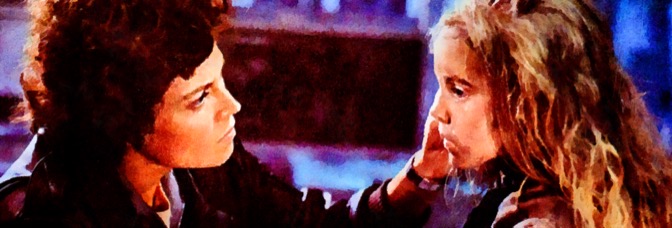
I always think of Aliens as a precisely choreographed ballet. Director Cameron moves his large cast–though it does winnow over time–around in these cramped sets and everyone has something to do; Cameron draws the viewer’s attention to one character, but the rest are in motion setting up the next moment in the scene. Watching the…
-
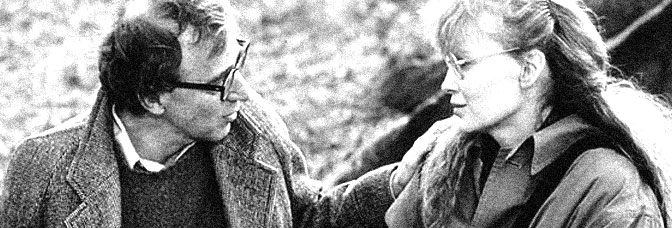
Crimes and Misdemeanors is not a particularly nice film. It juxtaposes two men in crisis–Martin Landau’s successful ophthalmologist has a girlfriend (Angelica Huston) who is threatening to tell his wife and Woody Allen’s failing filmmaker is crushing on the producer (Mia Farrow) of the his project. Allen’s only on the project, a biography of his…
-

While The Artist is a silent film about the silent film era, it quickly moves into the talking era. Probably in the first third of the film. Hazanavicius technically engages the transition a little–a dream sequence for protagonist Jean Dujardin–but for the majority of the film, it’s set in the late thirties and still told…
-

The actor playing Josh Hartnett’s mother (and Martin Sheen’s wife) doesn’t get a credit in O. She doesn’t have any lines, doesn’t really make any noise, just looks down at the dinner table during a scene. But she’s a perfect example of how Nelson paints subtlety and sadness into the film’s canvas. She’s mentioned once…
-

Clockers opens with actual crime scene photos juxtaposed against filmed sequences of a crowd gathering to watch as the police arrive. Lee is dealing with a lot in the film and opening with that startling sequence—against a beautiful song—at least shocks the viewer into paying attention. Though the film is too apolitical to be “about”…
-
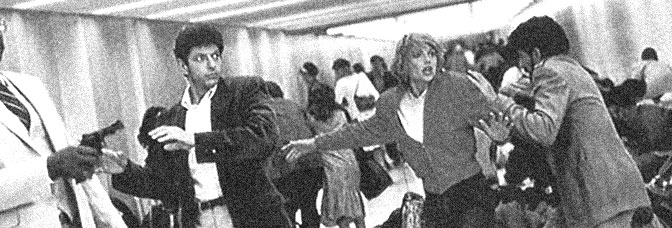
Into the Night is so strong, even Landis’s bad directorial impulses can’t hurt it. One impulse, casting a bunch of directors (including himself) in roles, only fails in the case of Paul Mazursky. Mazursky has a reasonably sized supporting role and he gives a terrible performance. The other bad impulse is casting as well. Dan…
-
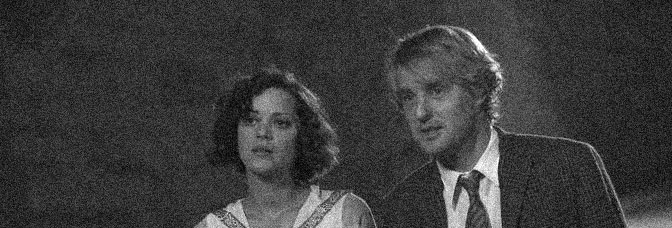
Midnight in Paris is one of Allen’s single stroke films. There are some painters in it, so using the paint stroke metaphor works rather nicely. The film’s about one thing; it’s about Owen Wilson’s Hollywood screenwriter who wants to be a novelist learning to take an active role in his life. There’s a lot going…
-
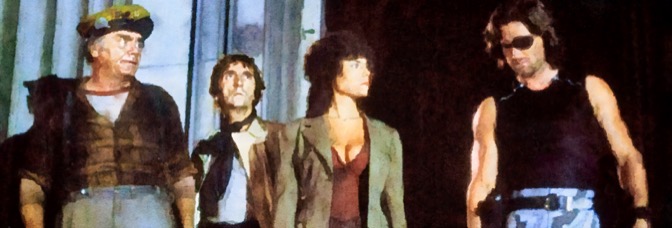
Man and boy, I’ve probably seen Escape from New York ten times. This viewing might be the first where I noticed the film’s quietness. Carpenter uses the relative silence to make the first third (even before Isaac Hayes shows up), the most memorable parts of the film. Some of that memorable quality has more to…
-

It’s been a while since I last saw The Fugitive. I remember it didn’t impress me much, particularly Andrew Davis’s direction. Needless to say, I was very wrong. I don’t think I’ve ever appreciated the film as much as I did this viewing. Davis’s direction is the finest action thriller direction I can recall. The…
-

I’ve been avoiding seeing Purple Violets for almost four years–I thought it was going to be one of Burns’s lesser works. So, obviously, it shouldn’t be a surprise it’s his best film (it’s also his best film as a director). I’m having some trouble trying to figure out how to start talking about it. It’s…
-

One Night Stand is such an emotionally exhausting film, one of the few moments of relief comes when Wesley Snipes, Ming-Na (as his wife), Nastassja Kinski (she and Snipes had a one night affair) and Kyle MacLachlan (as Kinski’s husband) go out to dinner together. It’s awkward in a far more comfortable way than the…
-

I always thought Gina Gershon got top billing for Bound–even though she’s only the lead for the first third or so–but it’s actually Jennifer Tilly, which is somewhat more appropriate. I say somewhat because at a certain point, Tilly too loses the spotlight. For a good twenty minutes in the middle, the film belongs to…
-

I’ve seen Bachelor Mother at least twice before but didn’t remember the most salient feature of the film. I even forgot what a big part Donald Duck plays in it (though I did remember David Niven’s watching the clock to wait to say “good afternoon” as opposed to “good morning”). No, what I forgot was…
-

I suppose it would be possible for Trees Lounge to be more depressing. It’s a character study; the epical part of the narrative forces the protagonist (writer, director, star Buscemi) to realize he does not just dislike himself, he’s never really liked himself, and he’s not just hurting people now, he’s always been hurting people.…
-
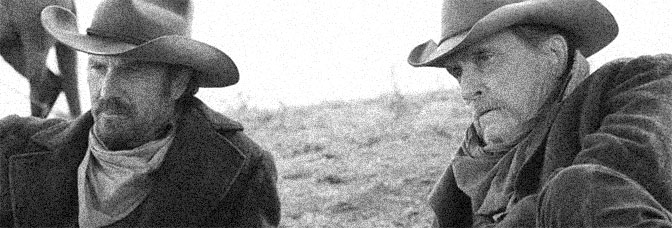
Because I’m a cynic, I have to point out the following–in order to revive the Western, that most American of genres (sort of), Costner had to film Open Range in Canada. It’s hard to think of a more traditional Western than Open Range. But the way Costner films it, it’s nouveau-Technicolor–the sky impossibly blue, the…
-

I hate responding to films like Black Swan because I don’t know where to start. From the first sequence, Aronofsky defines his approach as singular. Except for that first sequence, he never tries to film a ballet. He’s always filming a ballet performance. But he manages, filming those performances, which he tends to shoot in…
-
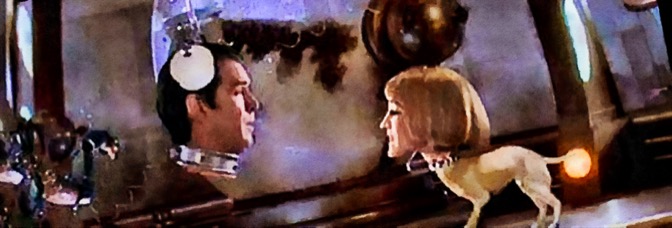
I remember seeing Mars Attacks! in the theater–in those days, the pre-Sleepy Hollow days, I was quite the Tim Burton aficionado. That affection has changed (changed is the polite word) in the last fourteen years, but Mars Attacks! has just gotten better and better on each viewing. At present, it’s my vote for Burton’s most…
-
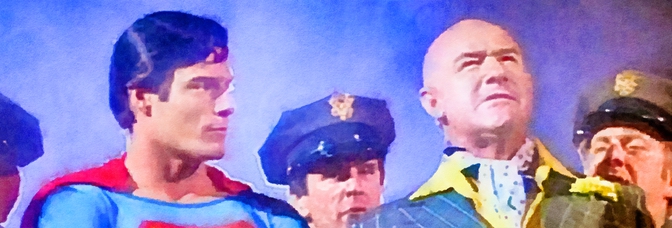
If watching Richard Donner’s director’s cuts have taught me one thing, it’s Donner probably shouldn’t have final cut. His director’s cut of Lethal Weapon, for example, is atrocious. He adds about nine minutes to Superman and, much like Coppola’s revision of Apocalypse Now, it’s a testament to the original film it can weather the additions.…
-

If someone had told me, I don’t think I would have believed Anton Corbijn got his start directing music videos. His direction of the American is so gentle and deliberate–so forcibly detached from his characters–it just doesn’t seem possible. Maybe they were all really well-directed music videos. I hadn’t originally planned on rushing to see…
-
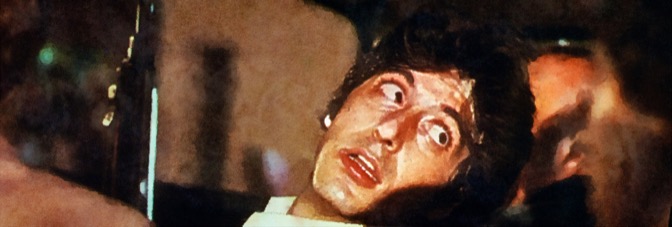
Besides Al Pacino, there are other actors in Dog Day Afternoon. Some of them give fantastic performances too. But, even with those fantastic performances, every time Pacino is alone on screen, whether closeup or not, monologue or not, it feels like there’s no one else in the film besides him. He doesn’t command it or…
-
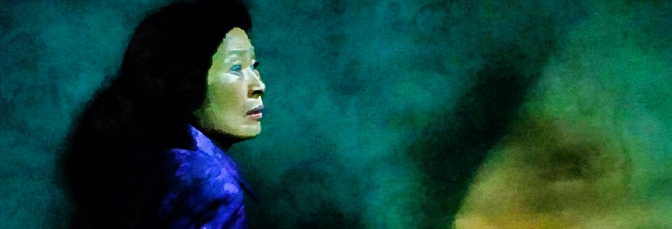
At the end of Mother, there’s the moment where the film’s got the big moment where Bong’s either going to make something transcendent or something simply excellent. Not a strange moment, lots of films have this moment. Throughout, especially in the second and third act, Bong ratchets it up a notch or two, making these…
 The Stop Button