Category: ★★★★
-

While The Great Escape runs nearly three hours, director Sturges and screenwriters James Clavell and W.R. Burnett never let it feel too long. Part of the quick pace comes from the first half hour being told in something like real time and another big part of it is the aftermath of the escape taking up…
-

From the lengthy opening credits to the big action finale, it's always clear sound is important in The Getaway. Editor Robert L. Wolfe does some wonderful transitions with sound foreshadowing the cut and the next scene, but there's something more to it. That something more is the isolation theme running through the film–Steve McQueen starts…
-

At some point during Innocent Blood–I think it was the lengthy sequence with recently resurrected Robert Loggia wrecking havoc at attorney Don Rickles's house–I realized it was hilarious. The movie moves so fast, director Landis never lets up long enough for a laugh. There's one other really good pause spot a few minutes earlier involving…
-
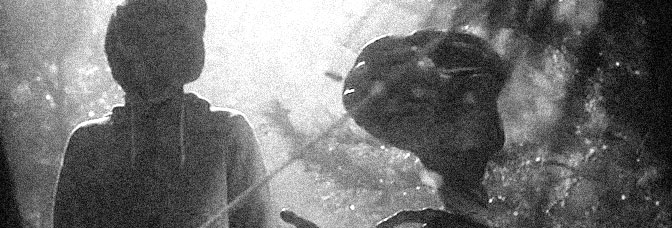
For E.T., Spielberg takes an incredible approach–every scene has to be iconic, every scene has to create a sense of nostalgia for it. It requires absolute control of the viewer and Spielberg’s only able to accomplish that control thanks to John Williams’s score. Every note in the score–and its corresponding image on screen–is perfect. As…
-

Sabotage demands the viewer's attention. It opens with a dictionary definition of Sabotage, forcing the viewer to read something and then immediately relate it to the rapidly edited sabotage of a power station. This sequence, which sets off the first act of the film, takes place in maybe a minute, maybe less. Charles Frend's editing…
-

The Invisible Man is a filmmaking marvel. First off, R.C. Sherriff’s screenplay sets things up speedily and without much exposition. The film introduces Claude Rains’s character through everyone else’s point of view–first the strangers he meets, then his familiars–all while Rains is front and center in the film. Even though he is, after all, invisible.…
-

Robert Rodriguez gives his actors a lot of time in The Faculty. The supporting cast–mostly the titular faculty of a high school (albeit one suffering an alien invasion)–gets to be showy. The film opens with a great showcase for Bebe Neuwirth, Robert Patrick and Piper Laurie. The main cast of kids trying not to be…
-

Scaramouche is a deliberately constructed film. I’m curious if screenwriters Ronald Millar and George Froeschel followed the source novel’s plot structure, because it’s a very peculiar series of events. It doesn’t open with the leading man, instead starting out with villain Mel Ferrer. Janet Leigh, as his love interest, gets introduced long before Eleanor Parker–who’s…
-
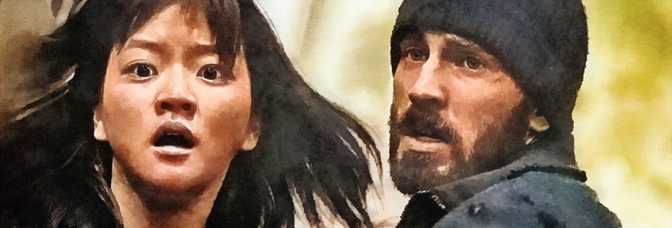
Snowpiercer is relentless. There are three quiet moments; I’m not estimating, I’m counting. The final quiet moment comes with some commentary on the earlier quiet moments. The relentlessness is appropriate, as the film concerns a train traveling through a frozen wasteland housing the last survivors of the human race. It’s a post-apocalyptic rumination on remorse…
-

The Bohemian Life is almost a farce. Kaurismäki is doing a version of the La bohème story–though he’s not concerned with it being a modernization as much as filming it in modernity–and his use of symbolism is exaggerated. He’s making sure the viewer knows what he’s doing and why. These moments of exaggeration don’t come…
-

There are a lot of acknowledged accomplishments to Robocop. Pretty much everyone identifies Rob Bottin and Phil Tippett. Bottin handled the startling makeup, Tippett did the awesome stop motion. Director Verhoeven gets a lot of credit–rightly so–and Basil Poledouris’s score is essential. Big scene or small, whenever Poledouris’s music kicks in, the film hits every…
-
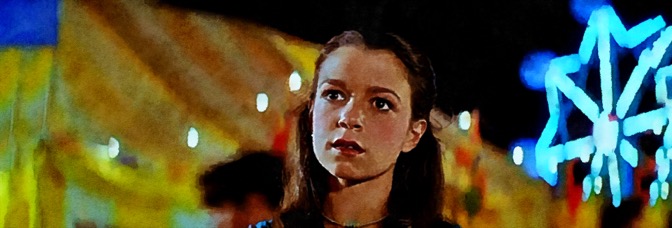
The Funhouse is terrifying. Director Hooper opens the film with a dual homage to Halloween and Psycho and then proceeds to do something entirely different in the end of this film. Like those two films, he takes a while to get to the violent acts. He does, however, announce he’s going to terrify the audience…
-
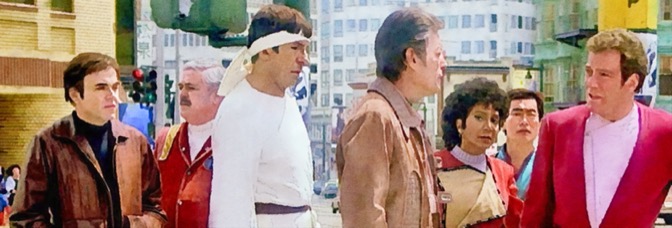
In Star Trek IV: The Voyage Home, director Leonard Nimoy establishes a light-hearted, but very high stakes, action-packed environment. Voyage Home is in no way an action movie–the action sequences mostly consist of chases and comedic subterfuges–but there’s a new one every few minutes. The screenwriters came up with a scenario where there’s always danger,…
-
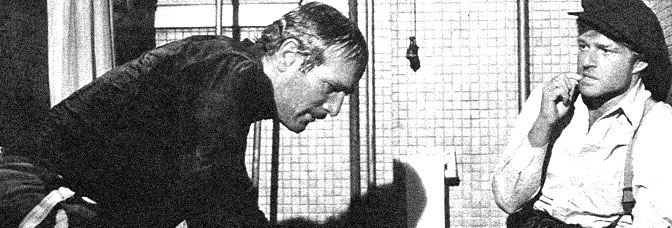
There are two immediate peculiar things about The Sting. The opening credits introduce the cast with scenes from the film, so one watches the picture waiting for a particular actor to come up. While it might have been done to get Paul Newman’s face onscreen sooner (he takes about fifteen minutes or more to appear),…
-
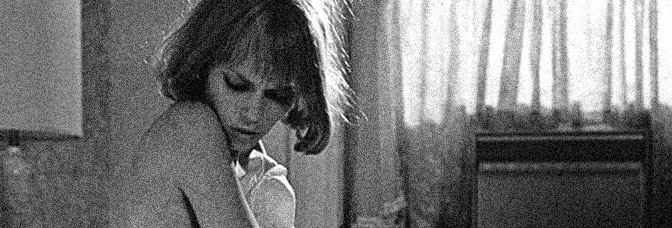
From the first scene of Rosemary’s Baby, Roman Polanski establishes the style he’s going to use until the big reveal at the end. He shoots a lot of over-the-shoulder shots with people moving around out of frame, causing a startling effect when the viewer finds out they’re now in a completely different location. He does…
-

I’ve probably seen Diner ten times but I still don’t know where to start with it. Barry Levinson sets the present action between Christmas and New Year’s, so one probably could sit down and chart out what happens on each day. There’s a big basketball bet driving some of the narrative, but mostly just for…
-

Smile is the story of the week of a regional beauty pageant in a northern California town. It’s not exactly the story of the pageant, though it does look at some of the contestants, but it also looks at how the event affects the locals. Bruce Dern gets top billing and he does tie most…
-

Who would have thought a movie just called Drug War would be so amazing? The original Chinese title appears to be just as simple, director To and his amazing batch of writers–War is the probably the best four person scripted film ever–must have known they didn’t really need a flashy title. To’s direction is astoundingly…
-

The Last Temptation of Christ opens with a passage presumably from the introduction to the novel, as it’s the novel’s writer talking about his own feelings. It’s an odd choice, since it somehow removes the drive for the picture from the filmmakers and puts it on someone else. It’s a very intentional move from Scorsese;…
-

The Devil and Miss Jones has three or four stages in the narrative, but director Sam Wood basically has three. The first phase–covering the first two narrative stages–feature this singular composition technique. For close-ups, Wood either gives his actors a lot of headroom (fifty percent of the frame) or almost none. Harry Stradling Sr. shoots…
-

Director Villeneuve takes a very interesting approach to how a thriller works with Prisoners. He ignores it. During the first act, there are quite a few flirtations with thriller standards. But the film almost always immediately dismisses them–like Villeneuve and writer Aaron Guzikowski are holding up a standard, tossing it away. Jóhann Jóhannsson’s music helps…
-
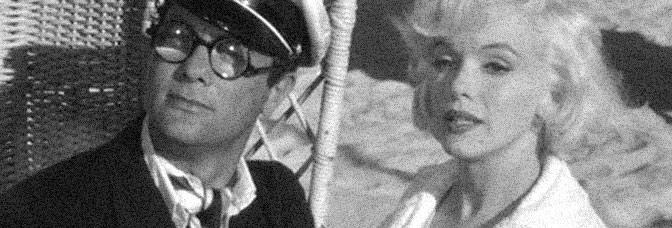
Some Like It Hot is perfectly constructed. Billy Wilder and I.A.L. Diamond’s script precisely sets up gags, even as the film moves through its three stages. For example, there’s a joke about matching blood types–type o–near the beginning and it keeps echoing throughout. It’s just in dialogue, but for another one, Wilder and Diamond cross…
-

A Single Shot is the best film noir I’ve seen in a long time. Director Rosenthal eschews trying to make a neo-noir and just sets a film noir in some backwoods region. It’s never specified and it doesn’t really matter. It’s beautiful and dangerous. From the first hunting sequence, there’s always danger in Shot. Sam…
-

There are a lot of interesting things Woody Allen does with Blue Jasmine–genre shifts, a somewhat fractured narrative style where he reveals lead Cate Blanchett’s past in glimpses–but the most surprising one has to be when she ceases to be the film’s protagonist and becomes its subject. Blanchett sort of shares the picture with Sally…
-

Batman Returns is one of those films I always hope will end a little differently. Tim Burton gets such wonderful performances out of Michael Keaton and Michelle Pfeiffer, their penultimate scene always has this glimmer of a different outcome. There’s so much energy between the two actors, such rich characters, it’s tragically unfair they don’t…
-
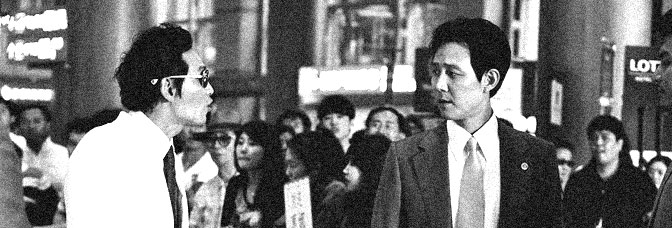
It never occurred to me there might still be significant mileage in the undercover cop melodrama. Or, for that matter, in the gangster melodrama. New World proves me uninformed on both points. Writer-director Park mixes both genres, somewhat unequally, and creates this unbelievably good film. I use the adjective “unbelievably” because, for the most part,…
-

With The Tower, director Kim redefines the possibilities of the fictional disaster genre. He maintains many genre standards, like the occasional laugh to relieve stress, a fair amount of melodrama, along with the greedy capitalists and the politicking city officials, while throwing in some gore and a breakneck action movie pace. But he mixes in…
-

While The Tailor of Panama is on firm ground in and of itself, it’s difficult not to think about in the context of James Bond. Pierce Brosnan plays a brutal, womanizing British secret agent and sort of gives cinema it’s only realistic Bond movie. Of course, mentioning James Bond is something to get out of…
-

The titular assault in Assault on Precinct 13 doesn’t start until just over halfway through (and not at Precinct 13, but whatever). Until that point, Carpenter methodically lays out the elements to synthesize at the sieged police station. He introduces a tense gang situation, a new lieutenant (Austin Stoker), a convict being transferred to death…
-

For a “traditional” underdog story, Breaking Away is exceeding complex. It opens with Dennis Christopher, Dennis Quaid, Daniel Stern and Jackie Earle Haley; neither Steve Tesich’s script nor Yates’s direction emphasizes any over another. Actually, Quaid’s loudmouth gets the most emphasis. Then the film introduces Barbara Barrie and Paul Dooley as Christopher’s parents and it…
 The Stop Button